
Summary
Editor's rating
Are they worth the money?
Classic leather boot design with a few modern tweaks
Comfort on real walks: break-in, fit and all-day wear
Leather, Gore‑Tex and a chunky EVA sole: what’s under your feet
Built to last… if you actually look after them
Grip, support and waterproofing out on the trail
What you actually get when you open the box
Pros
- Very good waterproofing when combined with regular leather waxing
- Comfortable fit with short break-in and decent room in the toe box
- Solid grip and support on wet, muddy and uneven ground
Cons
- Heavier and warmer than modern fabric or trail shoes
- Reports of inner lining wear with heavy daily use
- Needs regular cleaning and waxing to maintain leather and performance

Specifications
View full product page →| Brand | Berghaus |
Serious boots for grim weather walks
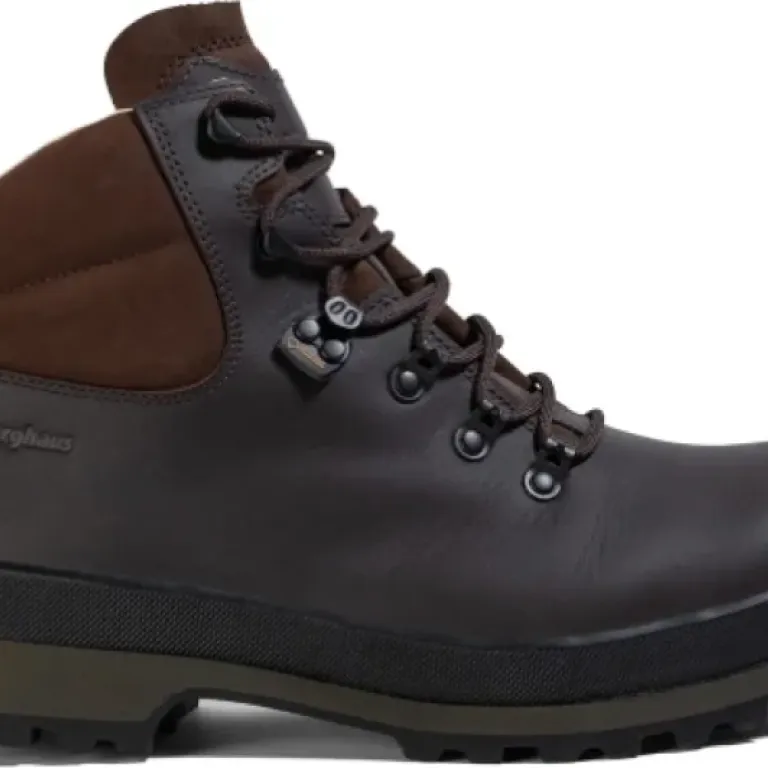
I’ve been using the Berghaus Hillmaster II GTX (size 10 UK, Coffee Brown) for a mix of dog walks, muddy fields and a couple of long hikes over the last weeks. Think wet grass, churned up bridleways, some rocky paths and the usual British drizzle that turns into sideways rain when you’re furthest from the car. I bought them as a replacement for an older pair of leather Scarpas that finally gave up on waterproofing.
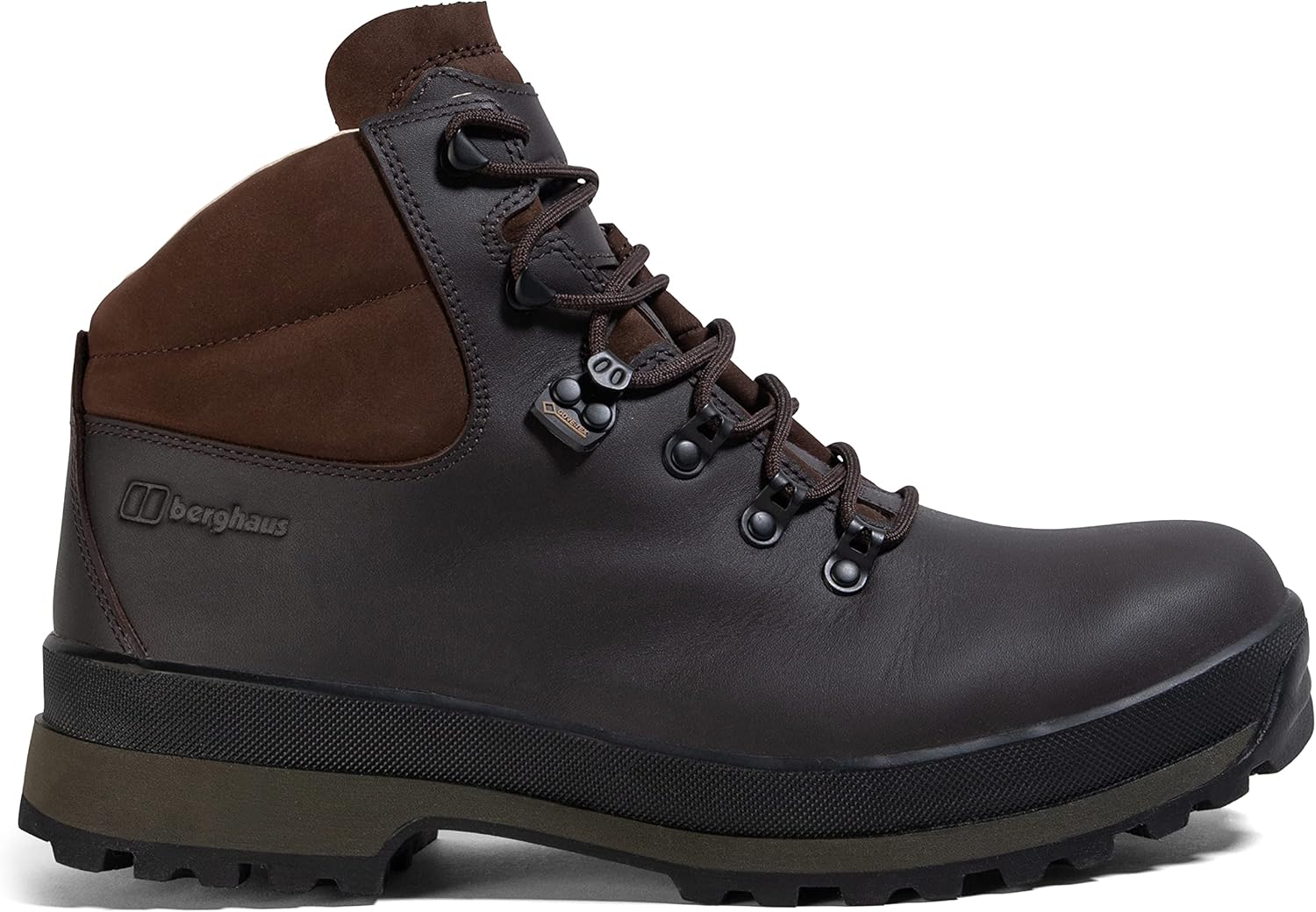
Right out of the box, these feel like proper old-school leather boots: fairly chunky, high ankle, decent weight in the hand. They’re not some lightweight trail shoe pretending to be a boot. You put them on and you know you’ve got something solid on your feet. First impressions were that they’re built more for reliability than style, which is exactly what I was after.
I’ve done several 8–10 km walks in them, plus daily 30–40 minute loops on wet fields. No break-in horror stories, no heel blisters, and my socks have stayed dry even when I’ve been standing in wet grass and shallow puddles for a while. I did give them a good wax before the first proper outing, which I’d strongly recommend if you buy them.
They’re not perfect. They’re on the heavy side compared to modern fabric boots, they run a bit warm, and the inside heel area already shows light wear from my slightly sloppy lacing on the first few walks. But overall, they feel like serious boots for people who actually walk in rubbish weather, not just for posing in the car park at the trailhead.
Are they worth the money?
Price-wise, the Hillmaster II GTX usually sits in that mid-to-upper range for hiking boots. Not bargain basement, but not top-end Italian prices either. For what you get – full leather, Gore‑Tex, Vibram outsole, decent build quality – I’d say the value is pretty solid, especially if you can catch them on sale, which seems to happen fairly often. You’re paying for a proper boot that can handle real weather, not a fashion item.
Compared to cheaper synthetic boots I’ve tried, these feel more supportive, more protective and more likely to survive a few winters. On the other hand, they are heavier and warmer, so if you mostly walk in dry, mild conditions, you’re paying for waterproofing and durability you might not really need. In that case, a lighter, cheaper fabric boot could make more sense and feel nicer on your feet.
Against other leather boots in the same price bracket (Scarpa, Meindl, etc.), the Berghaus sits in a good middle ground. It’s not as stiff as some full-on mountain boots, so it’s more comfortable for general walking, but still solid enough for rougher trails. Some of those brands might edge it on long-term lining durability, but they often cost more too. So you’re trading a bit of potential lifespan for a lower price and good out-of-the-box comfort.
If you’re the sort of person who:
- walks regularly in wet UK/Ireland-style weather,
- is prepared to clean and wax leather,
- wants one boot that can do dog walks, hills and winter trails,
then the value is there. If you want something ultra-light, low maintenance and mostly for summer, this isn’t the smartest way to spend your money. Overall, I think the price is fair for what it offers, but it’s not a steal – you still need to look after them to get your money’s worth.
Classic leather boot design with a few modern tweaks
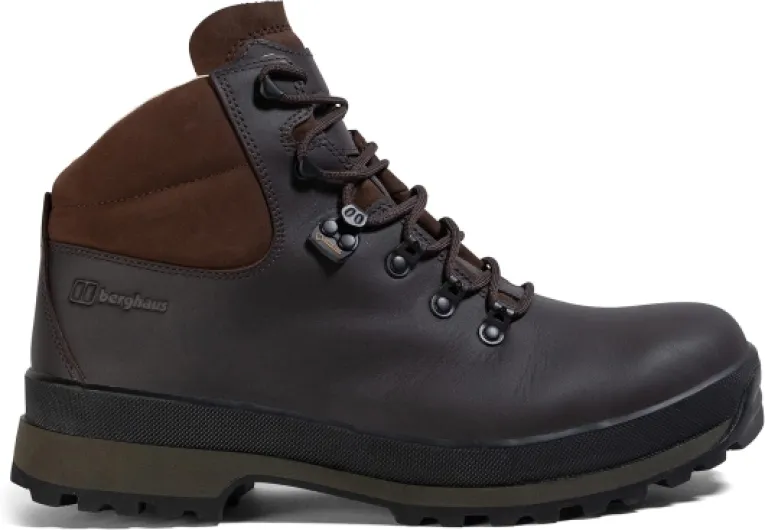
The design is very straightforward: mid/high cut leather upper, flat heel, round toe, Vibram-style sole pattern. No crazy heel drop, no aggressive rocker. If you’ve worn old-school leather boots before, you’ll feel at home in these. The ankle height is enough to give support without feeling like a ski boot. On uneven ground and side slopes, that extra cuff height is handy, especially if your ankles are not the strongest.
The toe box is reasonably roomy. I don’t have super wide feet, but I’m not narrow either, and I had enough space for medium-thick hiking socks without feeling squeezed. There’s some protection at the front, but it’s not a big rubber toe bumper like you see on some more modern boots. You still get enough structure there that stubbing your toe on a rock isn’t a disaster, but if you’re constantly kicking boulders you might want something more reinforced.
One thing I do like is the engineered heel support. You can feel that the heel cup holds you in place pretty well. On steep descents, my foot wasn’t sliding forward and mashing my toes, which is something I’ve had with softer boots. The lacing layout is simple but lets you do a tighter upper and slightly looser forefoot if you want, although I do miss a locking eyelet halfway up for better tension control.
Visually, there’s nothing fancy: solid brown leather, minimal branding. This is either a plus or a minus depending on your taste. For me, it’s a plus. These look like they’re built to walk, not to star in Instagram photos. If you want a modern, technical look with coloured panels and mesh everywhere, this isn’t that. If you want a boot that looks like it could have existed 15 years ago and will probably still make sense in 10 years, this fits that bill.
Comfort on real walks: break-in, fit and all-day wear
Comfort was my main concern because leather boots can be a pain (literally) for the first few weeks. With the Hillmaster II GTX, break-in was fairly short. I did a couple of shorter dog walks first, then went straight into an 8–9 km mixed-terrain route. No blisters, just a bit of that usual new-boot stiffness around the ankle, which eased off after a few outings. Compared to my old Scarpas, these were friendlier out of the box.
The fit is on the regular-to-slightly-roomy side. I’m a standard 10 UK and that size worked fine with proper hiking socks. There’s enough toe room for downhill sections without your nails getting smashed, but the heel is locked in well enough that I didn’t get hot spots. If you have very narrow feet, you might need to play with thicker socks or different insoles to take up space. If you’ve got slightly wide feet or a bit of a bunion, these will probably be more forgiving than many narrow Italian boots.
Underfoot, the cushioning is good for a leather boot. You still feel like you’re in a solid hiking boot, not trainers, but long tarmac stretches don’t kill your feet. I did swap the stock insole for my usual aftermarket one after a few longer walks because I like a bit more arch support; the original insole is okay but nothing special. The memory foam collar is genuinely comfortable – no rubbing on the ankle bones, no digging in at the front of the shin even when laced fairly tight.
The downside: they’re not light. After several hours you are aware you’re wearing proper boots, especially if you’re used to trail shoes. Also, because of the Gore‑Tex and leather, they run a bit warm. In cool, wet weather they’re ideal. In warmer, drier conditions, they’re overkill and your feet will feel it. Overall though, for classic leather boots used in typical UK autumn/winter conditions, comfort is one of their strong points.
Leather, Gore‑Tex and a chunky EVA sole: what’s under your feet
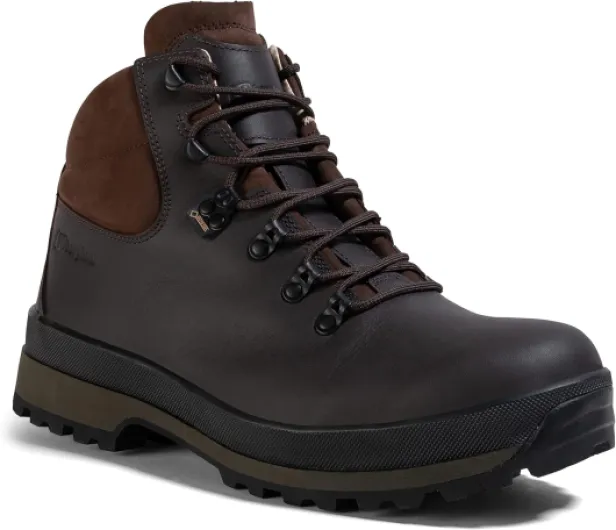
Material-wise, Berghaus has gone with a full leather upper plus a GORE‑TEX performance comfort membrane, and an EVA midsole with a Vibram rubber outsole. In practice, that means the outside is tough and reasonably easy to maintain, the inside is sealed against water, and the sole has decent cushioning without being too soft. The leather on my pair feels thick enough to inspire confidence, not that thin shiny stuff you sometimes see on cheaper boots.
The Gore‑Tex lining has done its job so far. I’ve walked through wet grass, shallow streams, standing puddles and general winter slop, and my socks have stayed dry. As usual with any waterproof membrane, your feet will get a bit warm when you’re working hard, but that’s the trade-off. Breathability is decent but not magic. On cold, damp days it’s perfect; on warmer days you notice the heat build-up more.
The EVA midsole is there to absorb shock. Compared to my older leather boots with a stiffer sole, these feel a bit more forgiving underfoot, especially on hard tracks and tarmac sections. At the same time, they’re not floppy – there’s still decent torsional stiffness, so your foot doesn’t twist all over the place on rocky ground. The Vibram-style rubber outsole grips well on wet rock and mud. It’s not ice-proof (nothing really is without spikes), but on greasy paths and wet stone stiles it felt reliable.
Inside, the memory foam collar and tongue are comfortable, but be aware that foam like this can compress over time. I can already feel it starting to mould to my ankle shape, which is what you want, but it also means you’ll have to keep an eye on how the fit changes over a year or two. Overall, the materials are what you’d expect at this price point: not cheap, not ultra-premium, but pretty solid and focused on durability and weather protection rather than being ultra-light.
Built to last… if you actually look after them
These are leather boots, so durability is heavily tied to how you treat them. Out of the box, the construction feels robust: thick leather, solid stitching, a proper sole. After several weeks of regular use in wet, muddy conditions, the leather on mine still looks good. No cracking, no splitting, just the usual creasing where the boot flexes. I’ve been cleaning them after muddy walks and using wax (Nikwax and dubbin) which definitely helps the leather stay supple and keeps the water beading off.
The outsole shows minimal wear so far. The rubber feels like a decent balance between grip and longevity – not that super-soft stuff that disappears in a season, but also not rock-hard plastic. I’d expect the sole to last a good while for typical hiking and dog walking. The midsole hasn’t packed out noticeably yet, and the boot still feels as supportive as on day one.
Where I have a few doubts is the inner lining and collar area. You can see from some user reviews that people doing heavy daily mileage have had the lining break down after 6–12 months. On my pair, there’s light fuzzing on the inside heel where my socks rub, which is normal at this stage, but it matches those concerns. The memory foam around the ankle is slowly moulding to shape, which is expected, but I can imagine that a couple of years of hard use might compress it more than some people like.
Overall, I’d say: if you’re willing to clean, dry and wax them regularly, these boots should last several seasons of normal use. If you just kick them off wet in the hallway and never treat the leather, don’t be surprised if they age badly. They’re not indestructible, but they feel more durable than most fabric boots I’ve used. Just don’t ignore them and then blame the boot when the leather cracks and the lining gives up.
Grip, support and waterproofing out on the trail
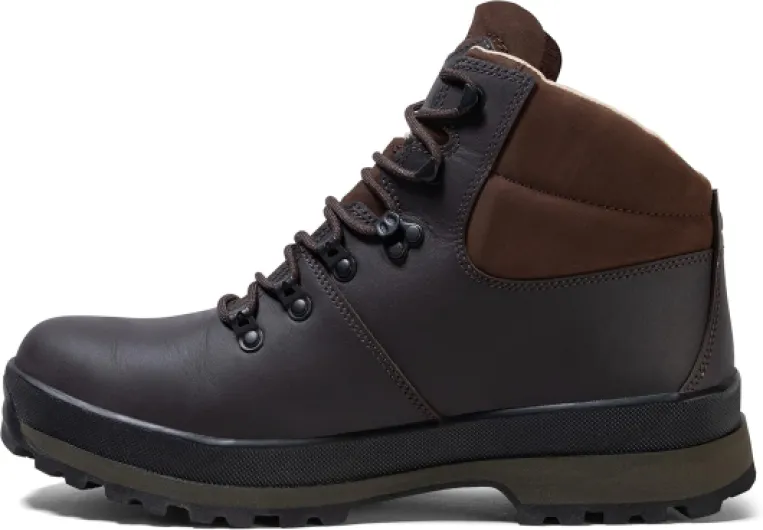
On actual walks, the Hillmaster II GTX performs pretty well where it counts. The outsole has a decent lug pattern that bites into soft ground. In mud, they clear reasonably well; you don’t end up carrying half the field on your soles. On wet rock and slabs, grip has been solid. I’ve crossed wet stone bridges and stepped on greasy roots without any nasty surprises. You still need to watch your footing, but I never felt like the boots were letting me down.
Support-wise, the ankle and heel structure are good. On uneven ground, side slopes and rocky steps, my ankles felt stable. If you’re used to low-cut shoes, you really notice the advantage here. I’ve done a few steeper descents with a small daypack and had no real issues with my toes bashing the front, which tells me the heel hold and lacing system are doing their job. The flat heel design also feels predictable on descents – no weird pitching forward.
Waterproofing has been the main highlight. Between the Gore‑Tex membrane and decent leather with wax, I’ve had no water ingress so far. I’ve stood in ankle-deep wet grass for 20–30 minutes throwing a ball for the dog, walked through shallow streams and hit multiple deep puddles. Each time, socks have stayed bone dry. Obviously, if you go over the top of the cuff, water will get in, but that’s user error, not the boot.
The only performance concern is long-term inner lining durability. Some Amazon reviews mention the lining wearing or tearing after several months of heavy daily use. I can already see a slight roughening on the inside heel where my socks rub. It’s not failing yet, but if you’re doing 5–10 km every single day, that’s something to watch. For weekend hikes and regular dog walks, I think they’ll hold up fine, but for professional daily use you might wear that inner fabric faster than the leather or sole.
What you actually get when you open the box
Out of the box, the Hillmaster II GTX looks exactly like what it is: a traditional leather hiking boot. No flashy colours, no weird shapes, just brown leather with a small Berghaus logo. In Coffee Brown they sit in that middle ground between outdoorsy and boring, which is fine by me. You can wear them into the pub after a walk and not look like you’re heading to base camp.
The finish on my pair was pretty solid. Stitching was straight, no loose threads, no glue blobs, and the leather had a consistent colour and thickness. The lacing system is basic but functional: standard eyelets at the bottom, then hooks at the top. Nothing fancy like locking eyelets, but it works. The tongue is fully gusseted, so water and mud don’t just pour straight into the boot when you hit a deep puddle.
Inside, you’ve got a memory foam collar and tongue and a fairly standard insole. The foam around the ankle feels cushy without being floppy. It does give that snug, padded feel that you normally only get once a boot has moulded to your foot over time. The insole is ok but nothing special; I ended up swapping it for my usual aftermarket insoles after a few longer walks for a bit more arch support.
In terms of first impression, they give off a “serious kit” vibe without screaming for attention. If you like classic leather boots, you’ll probably like the look. If you’re more into ultralight trainers and trail runners, these will feel a bit old-school. Personally, I prefer this low-key, functional style for hiking boots – I’m more interested in dry feet than fancy design tricks.
Pros
- Very good waterproofing when combined with regular leather waxing
- Comfortable fit with short break-in and decent room in the toe box
- Solid grip and support on wet, muddy and uneven ground
Cons
- Heavier and warmer than modern fabric or trail shoes
- Reports of inner lining wear with heavy daily use
- Needs regular cleaning and waxing to maintain leather and performance
Conclusion
Editor's rating
The Berghaus Hillmaster II GTX is a solid, traditional leather hiking boot that does the basics well: it keeps your feet dry, gives good support, and feels comfortable after a short break-in. It’s clearly built with wet, muddy conditions in mind, and in that environment it makes a lot of sense. If your weekends involve soggy fields, boggy paths and miserable weather, these boots fit right in. They’re not flashy, but they feel trustworthy underfoot.
They’re not perfect. They’re on the heavier side, they run warm, and there are some valid concerns about the inner lining if you hammer them every single day for months. You also need to accept the leather boot maintenance routine – cleaning and waxing is part of the deal. If you skip that, you’ll shorten their life and probably end up disappointed. But if you’re prepared to look after them, they offer good value for a leather/Gore‑Tex boot and should handle a few hard seasons of real use.
I’d recommend these to walkers, dog owners and hikers who want one boot to cover most autumn/winter and wet-weather outings, and who prefer a classic feel over ultra-light shoes. If you mainly walk on dry paths in summer, or you hate heavy footwear, you’re better off with a lighter synthetic option. For everyone else who just wants a dependable, waterproof leather boot that gets the job done without fuss, the Hillmaster II GTX is a sensible, no-nonsense choice.