
Summary
Editor's rating
Value: not cheap, but fair if you actually use them hard
Design: technical look, functional choices
Comfort: stiff at first, then pretty solid on long days
Materials: synthetic-heavy, tough but not luxurious
Durability: built to be kicked around
Performance: shines on rough, mixed terrain
What you actually get with these boots
Pros
- Very good support and heel hold thanks to stiff sole and long lacing
- Reliable waterproofing and decent grip from Vibram WTC sole
- Robust construction with protective rand and durable synthetic upper
Cons
- Stiff out of the box and overkill for easy, flat walks
- Fit runs on the snug side and may not suit wide feet
- Not the cheapest option if you only hike occasionally

Specifications
View full product page →| Brand | Salewa |
A mid-boot that means business
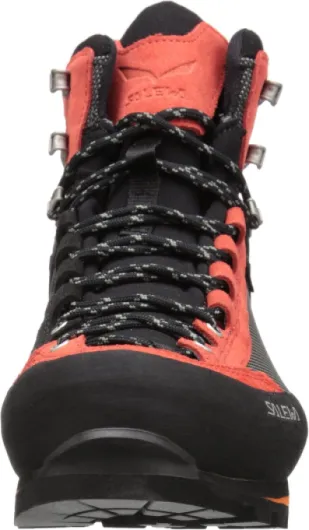
I’ve been using the Salewa Mountain Trainer Mid Gore-Tex (men’s, 9.5 UK, Black Sulphur Spring) as my main hiking boot for a while now. I bought them mainly for UK-style hikes: wet trails, rocky stuff in the Lakes, and some longer backpacking days where I’m carrying a decent load. I’m not sponsored, I paid for them, and I’m usually more of a Meindl / Scarpa person, so I wasn’t sure what to expect from Salewa.
First thing: this is a proper trekking boot, not a casual walking shoe. Out of the box they feel fairly stiff, both in the sole and around the upper. If you’re coming from soft trail runners or light hiking shoes, they’ll feel a bit like overkill at first. But after a few outings, that stiffness starts to make sense, especially when you hit rock, wet grass, or steep descents with a pack on your back.
I’ve used them for mixed days: muddy forest paths, rocky ridges, wet grass, and a couple of sloppy boggy sections where I basically accepted my feet would get soaked. They actually held up better than I expected. The Gore-Tex liner did its job as long as the water didn’t go over the ankle, and the boot feels built to take abuse – scraping on rock, kicking steps in soft snow, that kind of thing.
Overall, my first impression was: solid, protective, slightly overbuilt for easy lowland walks but really at home on rougher terrain. If you mostly stroll around flat gravel paths, they’re probably too much. If you like long days in the hills or you’re rough on your footwear, they start to make more sense. Not perfect, but clearly designed by people who actually go into the mountains.
Value: not cheap, but fair if you actually use them hard
Price-wise, the Salewa Mountain Trainer Mid GTX usually sits in the mid-to-upper range of hiking boots, below some high-end leather models but above basic entry-level stuff. If you only look at the price tag and compare them to cheaper Decathlon or generic boots, they might seem expensive. But you have to factor in what you’re getting: Gore-Tex, Vibram sole, solid build, and a design aimed at proper mountain use.
Compared to something like Meindl or Scarpa leather boots, they can actually be a bit cheaper, especially with discounts. You lose that classic leather feel but gain faster drying and a slightly lighter, more technical boot. If you’re mainly doing UK hillwalking with regular wet conditions, I think the trade-off is reasonable. For me, they sit in that zone of “not a bargain, but fair for what they offer”.
If you’re the type who buys one pair of boots and keeps them for years, and you regularly hike on tough terrain, then the cost starts to make sense. You’re paying for support, grip, and durability rather than looks. On the other hand, if your use is mostly dog walks on flat paths and the odd easy hike, you’re probably overbuying. A cheaper, lighter boot would do the job and be more comfortable for casual use.
So in terms of value, I’d say: good value if you actually take them into the hills and use their capabilities, average value if you mainly walk on easy ground. They sit in a sensible spot in the market: not budget, not luxury, but a solid, technical boot that earns its price once you start pushing it on proper terrain.
Design: technical look, functional choices
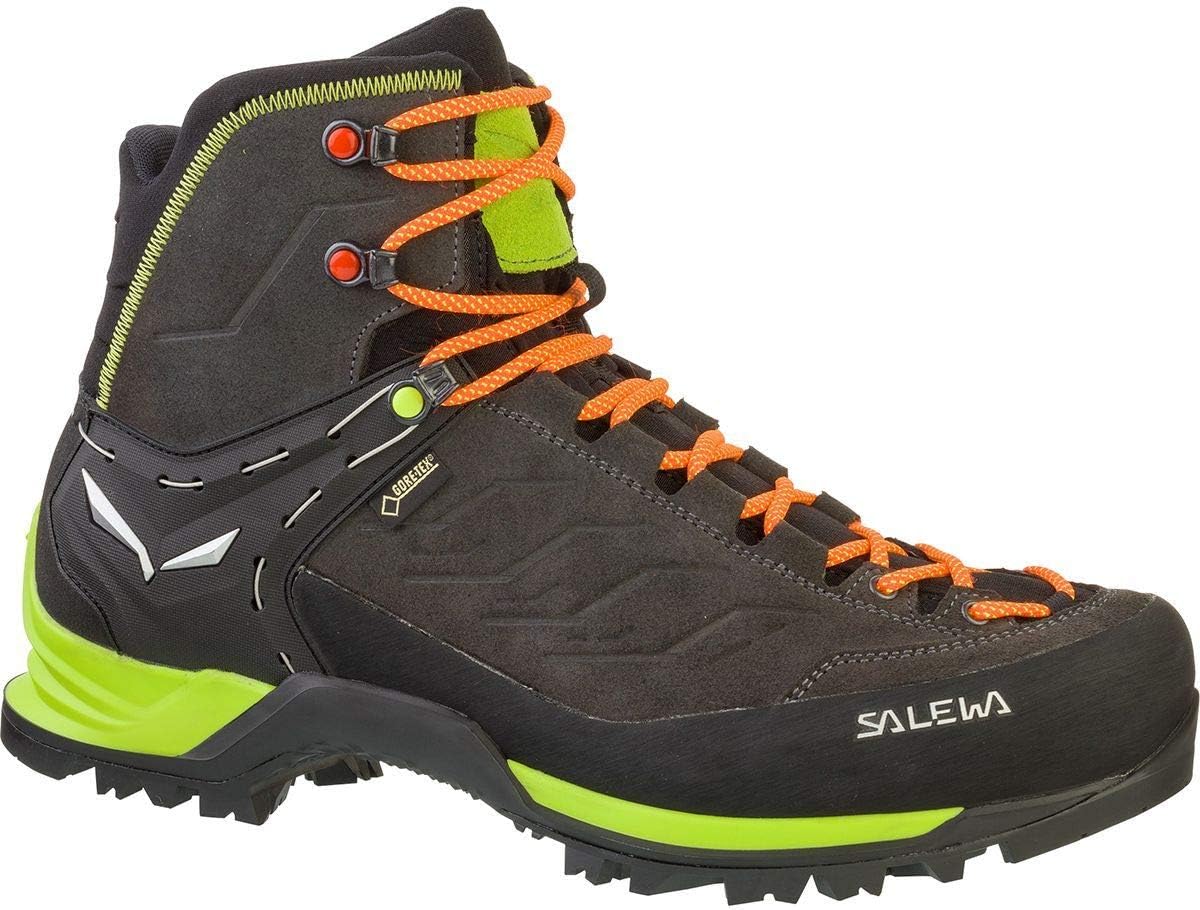
Design-wise, these are clearly more on the technical side than on the lifestyle side. The Black Sulphur Spring colour is basically a dark boot with some brighter accents – they look like something you’d wear in the Alps, not to the pub. That’s fine by me; I’d rather they work well than look like fashion trainers. The shape is slightly pointed and quite snug around the midfoot, with a bit more volume in the toe box, which helps on descents when your toes want space.
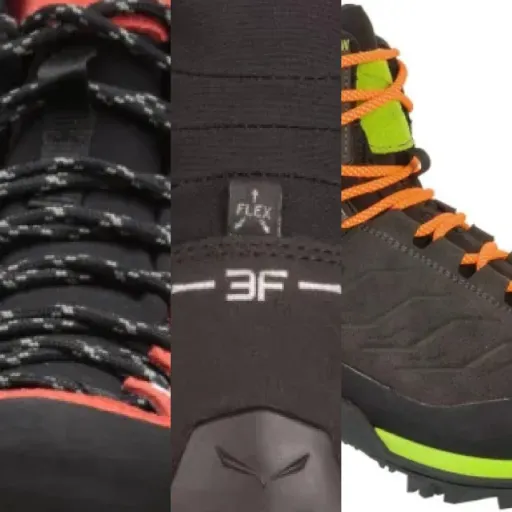
One thing I noticed is the lacing goes very far down the front, almost like a climbing approach shoe. In practice, that’s useful: you can crank down the lower laces for more precision on rocky ground, or leave them a bit looser for longer, flatter walks. The ankle has this Flex Collar cut-out at the back. It’s basically a lowered, curved section that lets your ankle move more when you’re dropping your heel on descents. Compared to some stiffer leather boots I own, it does feel less restrictive when walking downhill with a pack.
The sole has a noticeable heel drop and an aggressive tread pattern. The Vibram WTC outsole looks chunky, but not like a full-on mountaineering sole. On the foot, I’d say it’s stiff enough for edge support on rock and kicking into soft snow, but you can still roll through your stride without feeling like you’re on planks. There’s also a solid rubber rand around the front and sides, which has already saved the upper from a few rock scrapes.
If I have a criticism on design, it’s that they look a bit busy: lots of panels, stitching, and branding. Not a deal-breaker, but if you like very clean, simple boots, these are a bit noisy visually. Still, all the main design elements (long lacing, flex collar, big rand, aggressive sole) make sense when you’re actually out on the hill. It feels like function was genuinely prioritised over style, which is what I want from this type of boot.
Comfort: stiff at first, then pretty solid on long days
Comfort is where people will either like these or give up on them. Out of the box, they’re noticeably stiff, especially if you’re used to softer hiking shoes. My first walk was about 2 hours on mixed paths: tarmac, fields, some rocky sections. I felt the rigidity under the foot right away, and the upper felt a bit tight around the midfoot. No blisters, but it wasn’t that “slipper-like” feel some people expect from day one.
After a few outings, the story changed. The upper loosened a bit, the ankle collar softened, and they started to feel more natural. On a 15–20 km day with some proper climbs and descents, the support really paid off. My feet were less tired than in softer shoes, especially when carrying a heavier pack. The heel hold is genuinely good – that 3F system plus the long lacing means my heel didn’t lift, even on steep uphills. That’s a big deal if you’re prone to blisters on the back of your heel.
In terms of fit, they run a bit on the snug side for me. I’m usually a 9.5 UK; that size works, but it’s not roomy. With mid-weight socks they’re fine; with thick winter socks they feel quite snug. If you’re between sizes or like extra toe room on descents, I’d consider going up half a size. The toe box isn’t cramped, but this is not a wide boot. Wide-footed hikers might struggle a bit unless they really play around with the lacing.
Breathability is average for a Gore-Tex boot. On cool, wet days, they feel great. On warm days, feet get warm but not unbearable. I wouldn’t pick them for hot summer hikes in southern Europe, but for UK spring/summer/autumn conditions, they’re fine. Overall, once broken in, I find them comfortable for long mountain days, but there is definitely a break-in period and they won’t suit people who want a very soft, trainer-like feel.
Materials: synthetic-heavy, tough but not luxurious
The upper on mine is mostly synthetic with some suede-style panels. It doesn’t have that classic full-grain leather feel you get from Meindl or Scarpa leather boots. If you like that traditional, supple leather vibe, you won’t find it here. On the flip side, synthetic tends to dry faster and deal better with constant wet/dry cycles, which is exactly what you get in typical UK weather. I’ve had them soaked in wet grass and mud, hosed them off, and they’ve bounced back fine.
Inside, you’ve got the Gore-Tex Performance Comfort lining. It’s the usual story: it keeps water out as long as it doesn’t go over the cuff, and it breathes “okay” but not magically. My feet stayed dry from the outside, but on long, hot days I still ended up with some sweat. That’s normal; any waterproof boot will do that. The insole is basic, nothing special, but not terrible either. I eventually swapped it for a slightly more supportive one, which made long days more comfortable.
The sole is a synthetic midsole with the Bilight 2-layer construction and a Vibram WTC outsole. In practice, the midsole feels firm and supportive rather than bouncy. If you’re expecting running-shoe style cushioning, this is not it. It’s more about protection and stability. The Vibram rubber seems decent – no early chunks tearing off, and it hasn’t worn flat quickly despite quite a bit of rocky mileage.
Overall, the materials feel robust and practical, but not premium in the leather-boot sense. You get toughness and faster drying at the cost of that plush leather feel and maybe a bit of long-term moulding to your foot. For wet, muddy, rocky hikes where your boots get abused, I think the material choice makes sense. If you want something that feels more “traditional” and rich, you might prefer a leather boot instead.
Durability: built to be kicked around
Durability has been one of the stronger points so far. The rubber rand around the toe and sides has taken a lot of abuse from rocks and roots and is still firmly attached. No peeling, no big cuts. The synthetic upper also hides scuffs better than softer leather – it doesn’t look pretty and polished, but it doesn’t look wrecked either. For someone who doesn’t baby their gear, that’s a plus.
The outsole wear is reasonable. After a bunch of hikes on mixed terrain (gravel, rock, mud, some road sections), the lugs are still in good shape. They’ve rounded slightly, but nothing dramatic. I’ve had cheaper boots where the sole started to lose chunks or flatten after a season; these look like they’ll easily go multiple seasons of regular use. The midsole hasn’t collapsed or gone mushy either, which matters if you’re carrying weight.
The stitching and bonding between panels are holding up well so far. No loose threads, no random glue failures. The only minor wear I’ve noticed is on the inside of the heel where the lining always rubs a bit from putting them on and off. That’s normal and not yet at the stage of causing issues. The laces are still fine and haven’t frayed, which sounds minor but is annoying when it happens on cheaper boots.
Of course, long-term durability will depend on how you use them. If you’re out every weekend on sharp rock, they’ll age faster than someone who hikes once a month on soft trails. But compared to other boots I’ve owned in the same category, they feel on the tougher side. I’d happily take them on multi-day trips without worrying they’ll fall apart mid-way. Not indestructible, but clearly built for regular, serious use rather than just the odd Sunday stroll.
Performance: shines on rough, mixed terrain
This is where the Mountain Trainer Mid GTX actually makes sense. On rough, mixed terrain, they feel very secure. The Vibram WTC sole has deep enough lugs to bite into wet grass and mud, and the heel brake helps on steep descents. I’ve used them on rocky paths, wet rock, and sloppy hillside tracks, and the grip has been generally trustworthy. They’re not magic on greasy wet rock (nothing is), but they’re definitely better than softer, more flexible hiking trainers I’ve used.
The stiff sole is great when you’re edging on rocks or crossing scree. You don’t feel every sharp stone digging into your foot, and you can place your foot on smaller edges without the sole folding. That’s something my lighter trail shoes struggle with. On long descents with a pack, the support under the arch and around the ankle really reduces fatigue. I’ve noticed less foot ache at the end of a big day compared to softer boots.
Waterproofing has been solid. I’ve walked through wet grass, shallow streams, and muddy puddles and my feet stayed dry as long as the water level stayed below the cuff. No leaks so far, and I haven’t babied them. I just rinse off mud and let them dry at room temperature. The only time my feet got wet was from sweat on a hot, humid day, which is just part of wearing a waterproof boot.
On the downside, this performance comes with a cost: they’re overkill for easy, flat walks. On tarmac or simple forest tracks, they feel a bit clunky and stiff compared to lighter shoes. If 80% of your walking is dog walks on paths and only 20% is proper hill days, you might be better off with something softer. But if you regularly head into the hills, especially with a pack, the overall performance is pretty solid and matches what Salewa claims.
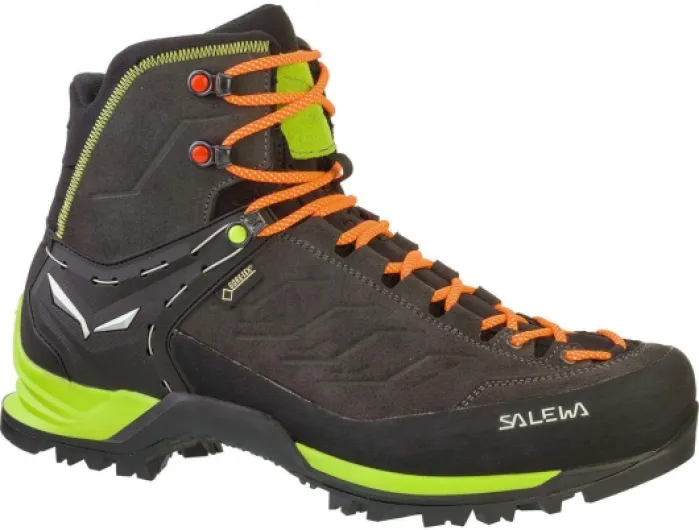
What you actually get with these boots
The Salewa Mountain Trainer Mid GTX is sold as a lightweight trekking boot, but keep in mind “lightweight” here is relative to other proper mountain boots, not to running shoes. A single boot is quoted around 670–700 g, which feels about right in hand. On foot, they feel lighter than a full leather B1/B2 boot, but clearly heavier than a mid-cut trail runner. So you’re in that middle ground: enough structure for serious hikes without being a total brick.
On paper you get: a synthetic/suede style upper (mine looks and feels mostly synthetic), Gore-Tex Performance Comfort lining, Vibram WTC outsole, and Salewa’s 3F system that links the heel, lacing, and sole. Marketing aside, the idea is more heel hold and less rubbing. They’re mid-height, so they give decent ankle coverage without feeling like an alpine boot. The official use case is “alpine trekking, mixed terrain, long hikes with a pack”. That lines up pretty well with how they behave in real life.
Out of the box, they don’t come with anything fancy: just the boots and standard insoles. No extra laces, no spare footbeds. The laces themselves feel decent, slightly textured so they stay tied, and the lacing runs quite far down towards the toe, almost like an approach shoe. That’s handy if you’ve got narrow feet or want to fine-tune the front of the boot for scrambling or edging on rock.
If you’re the type who likes a simple, no-nonsense boot that looks a bit technical, this fits the bill. The product page talks a lot about “blister-free from the first step” and technical systems, which I always take with a pinch of salt. In practice, they needed a bit of breaking in but not weeks of pain. On the whole, the presentation matches the reality: a mid-cut, semi-rigid trekking boot built more for mountain days than casual walks.
Pros
- Very good support and heel hold thanks to stiff sole and long lacing
- Reliable waterproofing and decent grip from Vibram WTC sole
- Robust construction with protective rand and durable synthetic upper
Cons
- Stiff out of the box and overkill for easy, flat walks
- Fit runs on the snug side and may not suit wide feet
- Not the cheapest option if you only hike occasionally
Conclusion
Editor's rating
The Salewa Mountain Trainer Mid Gore-Tex is a solid, technical trekking boot that makes the most sense for people who actually spend time on rough, mixed terrain. It’s stiff, supportive, and clearly built with rocky paths, wet grass, and long descents in mind. Once broken in, the comfort is good, the heel hold is excellent, and the grip and protection are more than enough for typical UK and alpine-style hikes. Waterproofing has been reliable, and the build quality feels tough enough to handle several seasons of regular use.
It’s not a perfect boot. Out of the box, it’s fairly stiff and not everyone will like that. The fit is on the snug side, especially in standard width, so wide-footed hikers might struggle unless they size up or really tweak the lacing. For casual, flat walks, they’re honestly overkill and can feel a bit clunky compared to lighter hiking shoes or trail runners. And while the price is reasonable for the category, it’s not cheap if you’re only going to use them a few times a year on easy trails.
If you’re a regular hillwalker, carrying a pack, and you want a boot that can take abuse on rock and mud without falling apart, these are a pretty solid option. If you mainly want something for gentle walks and the odd low-level hike, I’d look at something lighter and softer instead. They do what they’re designed to do, and they do it well enough to justify the cost for serious use.