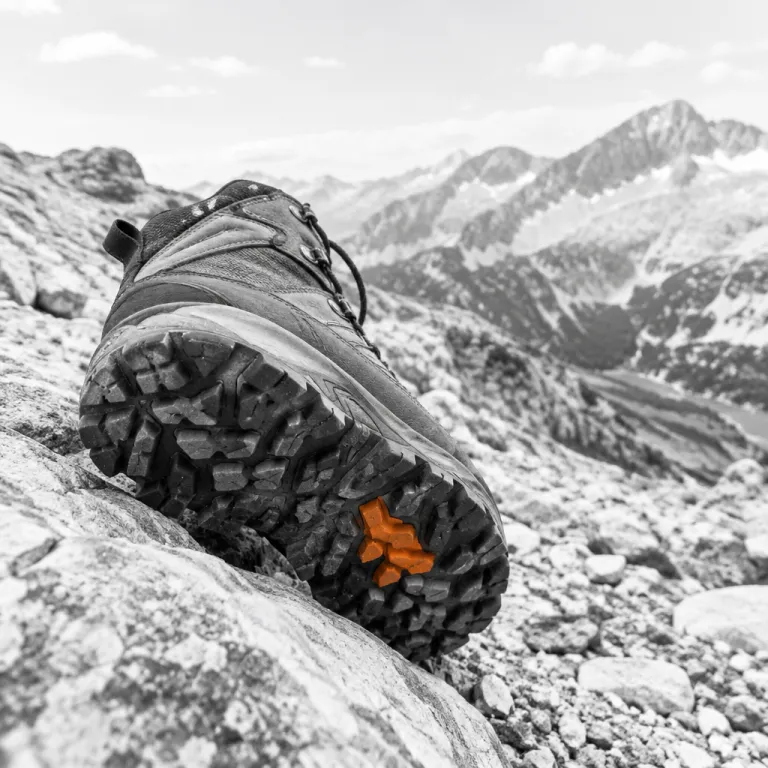
Section 1 – Why boot lug geometry matters above the treeline
On steep alpine trails, the shape of every boot lug under your foot decides how confidently you move. A technical hiking boot with a deep lug sole grips wet granite, loose scree, and packed snow very differently from a city pair of chelsea boots with shallow tread. When you compare soles side by side, the spacing, depth, and orientation of the lugs explain why some boots feel locked in while others skate unpredictably.
For outdoor enthusiasts and mountaineers, the sole is not just rubber; it is a precision interface between terrain and body. Aggressive lug soles with 4 to 6 millimetres of depth shed mud efficiently, while flatter outsoles tend to clog and lose friction on clay or wet leaves. A high quality hiking boot with a defined heel brake and multi directional lugs lets you edge on narrow ledges, descend loose gullies, and arrest slips before they become falls.
Experienced hikers quickly notice how wear and tear reshapes each lug and gradually changes performance. After several seasons, the rear lugs on men’s mountain boots often round off, reducing downhill control on gravel and snow. Rotating a pair between long treks and shorter day hikes slows this wear, preserves the original lug pattern, and keeps the boot lug profile sharp where you need it most.
Section 2 – Matching boot lug patterns to terrain, routes, and objectives
Choosing the right boot lug pattern starts with your objective, not with fashion or sale price. If you are booking a demanding trek such as Kilimanjaro or the Inca Trail, your boot timeline for big expeditions must allow time to test how the soles behave on mixed ground. A lug sole designed for soft forest soil can feel skittish on volcanic scree, while a dense alpine pattern may feel harsh on long, flat approaches.
On muddy European long distance paths, hikers benefit from boots with open lug soles that clear debris quickly. In contrast, for dry high altitude ridges, many men prefer leather mountain boots with slightly lower lugs and stiffer midsoles for edging on rock. When you evaluate different lug configurations in a shop, press the sole into a textured surface and twist; a stable boot resists torsion while each lug still flexes enough to bite.
Trail workers and guides who spend long days on their feet often choose lace up boots with a pronounced heel lug block for controlled descents while carrying heavy loads. For them, the right boot lug pattern is as much about long term comfort as about immediate grip, especially when the work involves repeated climbs on eroded steps. Matching the sole design to your specific route profile, pack weight, and expected weather is the most reliable way to avoid painful surprises halfway through a remote traverse.
- 4–5 mm lugs – mixed trails, forest paths, and long approaches; ideal for trekking boots and supportive day-hiking footwear.
- 5–6 mm lugs – steep alpine routes, loose scree, and wet rock; suited to technical mountaineering boots with firm midsoles.
- Under 4 mm lugs – urban walking and light travel; typical of fashion chelsea boots and casual leather shoes, not serious mountain use.
Section 3 – Construction details that make lug soles last in real mountain use
Under sustained alpine use, the way a boot is built matters as much as the lug design itself. Goodyear welted construction, where the upper, welt, and sole are stitched together, allows resoling once the lug soles are worn but the full grain leather uppers remain sound. This approach appeals to experienced mountaineers who treat a trusted pair as long term equipment rather than disposable fashion.
Some welted chelsea designs and traditional lace up boots borrow ideas from equestrian footwear, and serious hikers can learn from these riding boot construction principles. A robust shank, full length cushioning, and carefully profiled hiking soles help distribute pressure from each lug across the foot, reducing hot spots on long traverses. When combined with cushioned insoles that match your arch, this structure lets the boot lug pattern work effectively without bruising the metatarsals.
Mountaineers who favour black boots for their understated style should still prioritise high quality materials over pure footwear fashion. Full grain leather resists wear and tear from scree and crampon straps far better than thin split leather, keeping the interface between upper and lug sole intact. Regular cleaning and conditioning prevent the leather from drying and separating at the welt, which would otherwise compromise both waterproofing and the stability of the lugs.
Section 4 – Balancing comfort, weight, and style in technical lugged boots
Comfort on multi day routes depends on more than just how aggressive the boot lug looks on the shelf. Inside the boot, cushioned insoles and a supportive midsole must work with the outsole, not against it, to spread impact forces from each lug strike. When this system is tuned correctly, a pair of men’s hiking boots can feel surprisingly forgiving even with a rigid platform designed for crampon compatibility.
Some hikers are tempted by sleek chelsea boots or minimalist black leather styles for their urban look, then try to repurpose them for mountain use. While these fashion oriented choices may offer light weight and a refined silhouette, their shallow lug soles and softer compounds rarely provide the security needed on wet rock or snow. A better compromise is a welted chelsea boot built specifically for outdoor use, with a defined heel brake, deeper lugs, and discreet technical features hidden beneath a clean upper.
Lug styling considerations still matter, because gear you enjoy wearing is gear you will actually use. Many brands now offer leather trekking boots that blend classic mountain aesthetics with modern materials, giving men options that look appropriate both in a hut and in town. When evaluating any boot, flex it in hand, check how each lug deforms, and imagine how that translates to comfort over a 20 kilometre day with 1 000 metres of ascent.
Section 5 – Practical buying strategies, pricing, and online orders
Serious hikers approach boot purchases the way they plan routes, with clear criteria and a realistic budget. The price of a high quality boot with a durable lug sole often reflects better rubber compounds, stronger stitching, and the option to resole rather than replace. Over a decade of use, a premium pair can deliver a lower effective cost per expedition than a series of cheaper boots that fail early.
When shopping online, pay close attention to how retailers describe the soles and lug pattern, not just the colour or leather type. Look for detailed photos of the boot lugs from multiple angles, and read whether the brand specifies lug depth, rubber hardness, and resoling options. Many specialist shops now offer free shipping and easy returns, which allows you to order two sizes of the same model, test them at home on stairs, then send back the less precise fit.
During seasonal sale periods, it is tempting to prioritise the lowest price over technical suitability. A discounted pair can be excellent value if the lug soles, upper materials, and fit align with your objectives, but a bargain boot that blisters or slips is expensive in lost trips. Whenever you see an attractive sale tag, cross check the specifications, confirm that the soles match your terrain, and remember that reliable grip is never truly free.
Section 6 – Field maintenance, gaiters, and extending lug performance life
Once you have invested in a boot with a well designed lug sole, field care becomes part of your safety system. After muddy hikes, use a stick or brush to clear each lug, because compacted soil hardens and permanently alters the sole profile if left to dry. On snow or clay, periodically stamping and flexing the boots helps eject buildup and keeps the lug edges sharp.
Protective accessories can dramatically reduce wear and tear on both the upper and the soles. Gaiters, especially models designed for low cut shoes and mid height boots, keep grit and wet debris from grinding between the boot lugs and the ground, and a detailed guide to using gaiters with technical footwear explains how this simple layer preserves traction. On long traverses with mixed snow and rock, many guides rotate between two pairs to let the cushioned insoles dry fully overnight, which maintains comfort and reduces internal abrasion.
Storage habits also influence how long soles and uppers stay functional. Never leave leather hiking boots near direct heat sources, because rapid drying can crack the leather and weaken the bond to the lug soles. Instead, remove insoles, stuff the boots with newspaper, and let them air dry at room temperature, preserving both the boot lug structure and the overall fit for many seasons.
Key figures on lugged hiking boots and mountain safety
- The American Alpine Club’s Accidents in North American Climbing 2022 notes that many non technical alpine incidents involve slips or falls on comparatively easy ground, underscoring how critical reliable sole and lug design is for experienced climbers.
- Vibram has reported in internal wet rock trials using inclined granite plates and controlled water films that deep, self cleaning lug patterns can deliver markedly higher friction coefficients than flat rubber soles, although exact percentage gains vary with compound and protocol.
- Consumer surveys summarised by the Outdoor Industry Association in recent participation and gear studies indicate that hikers who invest in resolable, Goodyear welted boots tend to keep a favourite pair for many seasons, which can reduce long term equipment costs and waste compared with frequently replacing cheaper models.
- Field tests by European alpine clubs, including multi season boot fit and fatigue projects, have found that replacing worn cushioned insoles after roughly 800 to 1 000 kilometres of use can noticeably reduce perceived foot fatigue, especially in boots with stiff midsoles and aggressive lugs.
FAQ
How deep should boot lugs be for serious mountain hiking ?
For demanding mountain routes, lug depth between 4 and 6 millimetres offers a strong balance between grip and stability. Deeper lugs bite well into mud and soft snow, while still remaining precise enough for edging on rock. Anything much shallower tends to clog quickly and loses traction on steep, loose ground.
When is it time to replace or resole lugged hiking boots ?
You should consider resoling when the heel and forefoot lugs are visibly rounded and the original pattern is difficult to distinguish. If the leather upper, lining, and midsole remain structurally sound, a Goodyear welted boot can usually accept a new sole. When cracks appear in the midsole or the upper separates from the welt, full replacement is often safer.
Are chelsea style hiking boots reliable enough for alpine use ?
Most fashion oriented chelsea boots lack the lug depth, ankle structure, and midsole stiffness required for alpine terrain. However, some specialised welted chelsea designs use technical rubber compounds and aggressive soles that perform comparably to traditional lace up boots. Always evaluate the outsole pattern, heel brake, and overall support rather than relying on style alone.
How can I improve comfort in stiff, lugged mountaineering boots ?
Upgrading to high quality cushioned insoles that match your arch profile often transforms comfort in stiff boots. Wearing appropriate hiking socks, lacing carefully to avoid pressure points, and gradually breaking in the leather also help. If pain persists after several outings, the last shape or volume may simply not suit your foot, and a different model is advisable.
Do heavier lugged soles always mean better traction ?
Heavier soles sometimes indicate more rubber and deeper lugs, but weight alone does not guarantee grip. The rubber compound, lug geometry, and how the sole flexes under load are more important than mass. A well designed, moderately light sole can outperform a heavier but poorly profiled alternative on real mountain terrain.
References : American Alpine Club, Accidents in North American Climbing 2022; Outdoor Industry Association participation and gear studies; Vibram technical documentation on outsole performance and wet traction testing; testing summaries from European alpine clubs on boot fit, insole wear, and fatigue.