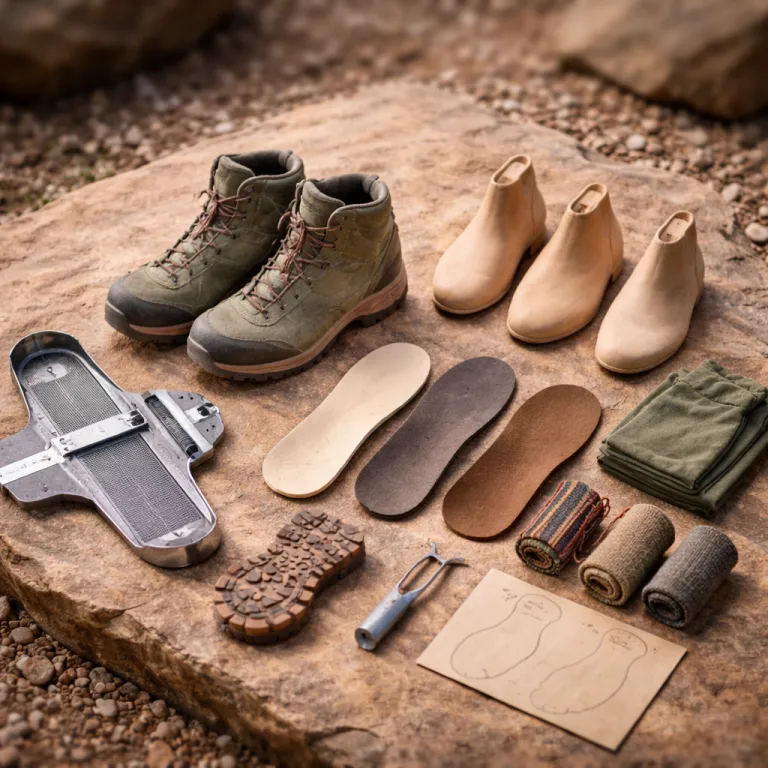

Why lightweight hiking boots do not have to die at 300 kilometres
Lightweight hiking boots used to mean shredded outsoles by midsummer. Modern compounds, smarter rand design, and better midsole foams now let a sub 900 gram hiking boot survive real alpine abuse. The tradeoff is still there, but you can choose where you want the grams and where you can afford to lose them.
When you drop from a 1.1 kilogram pair of hiking boots to a 820 gram pair, you usually lose outsole rubber depth, full wrap rands, and some midsole density. That lighter boot often has a thinner rubber layer under the toe box, less leather around the sides, and a softer foam that feels plush but packs out faster. The best lightweight designs compensate with targeted rubber at high wear zones, a supportive upper, and tuned shock absorption under the heel.
Look closely at the outsole lugs on any lightweight hiking boot before you buy. Deep, widely spaced lugs in a sticky compound like Vibram Megagrip or Salomon’s Contragrip give you grip on wet granite, but shallow generic rubber on some boots best suited to park paths will smear on steep slabs. True lightweight waterproof models with a Gore Tex or similar GTX membrane also need enough midsole stack to keep your foot off sharp scree without turning every step into a wobbly cushion.
Weight targets matter, especially for long hiking days on technical trails. For a mid height boot, under 900 grams per pair is a realistic benchmark for lightweight hiking without sacrificing all durability. Anything much lighter usually behaves more like a trail runner with extra ankle support than a traditional hiking boot built for years of abuse.
Weight versus durability: what you really give up under 900 grams
Shaving 250 to 300 grams from a pair of boots changes how they age. You feel the benefit immediately on steep hiking climbs, but the bill comes due around 400 to 600 kilometres when the outsole and midsole start to fade. Heavier leather boots often push closer to 800 or even 1 000 kilometres before the same failure points appear.
On lightweight hiking boots, the first wear point is usually the forefoot outsole and the flex point at the inside edge of the toe box. Less rubber and a shorter rand mean more scuffing on talus and more chance of delamination on rough trails. When a boot uses a thin synthetic upper instead of robust leather, repeated creasing over the ball of the foot can also crack the waterproof membrane and turn waterproof hiking into slow seepage.
Midsole density is the second big compromise in many best lightweight designs. Softer EVA foams feel luxurious on day one and give excellent shock absorption for fast hiking, but they compress quickly under a 12 to 15 kilogram pack. Denser foams or polyurethane blends weigh more yet keep their shape longer, which is why classic models like the Merrell Moab boots still feel supportive after seasons of use.
Pay attention to rand coverage and sidewall height when you compare price and claimed comfort. A boot with a full wrap rubber rand around the toe box and lower upper will shrug off scree and granite edges far longer than a minimalist design that only protects the very front. If you mostly hike gnarled forest trails rather than sharp alpine ridges, you can safely prioritise a lighter mid GTX model and accept a shorter lifespan.
Breaking in any lightweight waterproof boot still matters, even if the foam feels soft out of the box. Use a structured approach like the 10 mile break in rule for hiking boots to let the upper and midsole settle before a big trip. That small investment in time protects both your feet and the long term durability of the boot.
Fit by foot shape: which lightweight hiking boots work for your feet
Durability does not matter if the fit is wrong after two kilometres. Lightweight hiking boots are often built on narrower performance lasts, which can punish wide forefeet and high volume arches. Matching your foot shape to the right hiking boot is the single best upgrade you can make.
For narrow or low volume feet, the Salomon X Ultra 5 Mid GTX is the reference lightweight hiking boot. Its sculpted last, snug midfoot wrap, and precise heel pocket keep you locked in on sidehills and loose scree, especially when the trails tilt and the pace turns into a controlled rush. The Salomon Ultra line uses a relatively firm midsole and a supportive upper, so you get strong ankle support without the dead feeling of a heavy leather boot.
Neutral and slightly wide feet often do better in the Hoka Anacapa 2 Mid GTX or the La Sportiva TX Hike Mid GTX. The Hoka Anacapa mid platform is broad, with a generous toe box and a rockered sole that encourages a smooth transport hike stride on rolling terrain. La Sportiva’s TX Hike GTX boot runs more precise but still offers enough forefoot room for swelling on long days, making it one of the best lightweight options for mixed rock and dirt.
Truly wide feet, especially in women sizes, should look at models like the Hoka Anacapa in wide versions or the Topo Trailventure series. These boots combine a wide anatomical toe box with a secure midfoot, so you can lace for comfort without swimming in the heel. For more detail on brands, lasts, and lacing tricks, study a dedicated guide to hiking boots for wide feet and tricky fits before you commit.
Whatever your shape, try both men and women labelled versions if you sit between standard widths. Women specific lightweight waterproof models sometimes offer different colors, slightly softer collars, and a different ankle support profile, but the underlying last can still suit many men with narrow heels. The right boot is the one that locks your heel, frees your toes, and disappears under you after the first hour.
Model by model: sub 900 gram boots that actually hold up
Several current lightweight hiking boots have proved they can survive real mountain use. The Hoka Anacapa 2 Mid GTX, Salomon X Ultra 5 Mid GTX, La Sportiva TX Hike Mid GTX, and Merrell MQM 3 Mid all sit under roughly 900 grams per pair in a standard size. Each boot takes a different path to balance weight, protection, and comfort.
The Hoka Anacapa mid line leans into cushioning and a wide, stable platform. Its EVA midsole and extended heel geometry give smooth shock absorption on long transport hike sections, while the leather and mesh upper with a Gore Tex membrane keeps things lightweight waterproof for most conditions. After around 500 kilometres, expect the foam to soften and the outsole lugs to round off, but the boot usually remains comfortable for easier trails.
Salomon’s X Ultra 5 Mid GTX boot is the scalpel of this group. It uses a firm chassis, a snug upper, and a precise lacing system to create a hiking boot that feels secure on steep, loose terrain where ankle support really matters. The Salomon Ultra outsole compound is sticky enough on wet rock, though the relatively shallow lugs can wear faster if you spend many days on abrasive granite slabs.
La Sportiva’s TX Hike Mid GTX sits closer to an approach shoe in spirit. It has a climbing inspired toe box shape, a protective rubber rand, and a grippy outsole that excels on talus and technical trails. The price you pay is slightly less underfoot cushioning on long dirt road approaches, but the tradeoff is worth it if you prioritise edging and stability.
The Merrell MQM 3 Mid and the classic Merrell Moab boots occupy the value and comfort end of the lightweight hiking spectrum. MQM stands for “move quickly in the mountains”, and the boot lives up to that with a flexible forefoot and a breathable upper that still offers basic waterproof hiking protection. If you want boots best suited to weekend hikes and occasional hut trips without a premium price, these Merrell models remain hard to beat.
For gear nerds who care about grams across their whole kit, pairing these boots with a modern lightweight pack can transform how a long day feels. Ultralight packs using advanced fabrics, like those discussed in this analysis of a waterproof hiking pack built with cutting edge materials, reduce the load your boots must support. Less weight on your back means less punishment for the midsole and outsole over time.
Rock, scree, and slabs: what matters for technical terrain
Lightweight hiking boots face their hardest exam on scree, talus, and polished granite. On that kind of terrain, outsole compound, rand coverage, and midsole stack height matter more than marketing claims about comfort. A boot that feels perfect on forest trails can feel terrifying on a wet slab if the rubber is wrong.
Look for sticky rubber compounds and deep, well spaced lugs if you spend time on mixed rock and dirt. Vibram Megagrip, Salomon’s better Contragrip blends, and La Sportiva’s FriXion formulas all give reliable traction when the angle steepens and the pace becomes a controlled rush rather than a casual hike. Thin, hard rubber outsoles may last longer on paper, but they often skate on smooth rock and transmit every edge straight into your foot.
Rand coverage around the toe box and lower upper is your armour against sharp scree. A full wrap rubber rand protects both the leather or synthetic upper and the waterproof GTX membrane from cuts, which keeps your lightweight waterproof promise intact after many trips. Partial rands save grams and can still work for softer trails, but they are a liability if you regularly kick steps into loose rock or jam your foot into cracks.
Midsole stack height and stiffness control how much trail feel you get underfoot. A taller, softer midsole gives plush shock absorption on long descents but can feel vague when you edge on small holds, while a thinner, firmer platform lets you read the rock at the cost of some comfort. Ultra mid designs that blend a moderate stack with a rock plate often hit the sweet spot for hikers who split time between smooth paths and rough alpine routes.
Do not ignore the collar and lacing system when you assess ankle support for technical hiking. A well padded mid height collar that locks the heel and a lacing pattern that pulls the midfoot into the boot can prevent rolled ankles more effectively than a tall but sloppy shaft. The best lightweight boots feel like an extension of your leg, not a loose shell around it.
When to skip lightweight boots and what to prioritise instead
There are trips where lightweight hiking boots are the wrong tool. If you are carrying a 16 kilogram pack for weeks, crossing snowfields, or spending days off trail in boulder fields, a heavier boot with a stiffer sole and more leather is the safer choice. In those scenarios, durability, edging power, and long term ankle support trump every gram saved.
For thru hiking with a 15 to 18 kilogram load, many experienced hikers now choose trail runners or light boots with frequent replacement rather than one heavy pair. That strategy works on well built trails but breaks down when you add constant talus, steep sidehills, and heavy resupplies. A robust leather upper, a thick rand, and a dense midsole become non negotiable if you want your boot to survive both the distance and the abuse.
Off trail scrambling and light mountaineering also push lightweight waterproof designs beyond their comfort zone. Repeated edging on sharp rock, front pointing in firm snow, and kicking steps into frozen scree will quickly chew through a thin outsole and stress the waterproof membrane. In those conditions, a heavier boot with a full shank, a reinforced toe box, and a proven Gore Tex or similar GTX liner is worth every extra gram.
Even on moderate hiking routes, some hikers simply prefer the planted feel of a more substantial boot. If you have a history of ankle injuries, carry your child in a carrier, or often hike in remote areas where a twisted ankle would be serious, err on the side of more structure. Lightweight hiking boots shine when the terrain is demanding but not extreme, the pack is reasonable, and you value agility as much as armour.
Remember that the real measure of a boot is not the waterproof rating, but the tenth river crossing. Lightweight or heavy, the boot that still feels supportive, dry enough, and predictable after that kind of day is the one you will trust on your next trip. Choose with that image in mind, not just the number on the scale or the headline price.
Key statistics on lightweight hiking boots and durability
- Search data from several outdoor gear analysis platforms show that the phrase “lightweight hiking boots” attracts around 8 000 searches per month globally, indicating strong and sustained interest from hikers looking to reduce pack weight without sacrificing protection.
- Laboratory and field testing reported by outlets such as Backpacker and Switchback Travel suggest that most lightweight hiking boots deliver between 400 and 600 kilometres of effective outsole life, compared with 800 to 1 000 kilometres for heavier full leather boots used on similar terrain.
- Weight comparisons across leading models indicate that many modern mid height GTX boots now fall under 900 grams per pair in a standard size, whereas traditional leather hiking boots of the previous generation often weighed 1.2 to 1.4 kilograms per pair.
- Consumer surveys from large retailers show that comfort is cited as the primary purchase driver for hiking boots by more than 60 percent of respondents, with waterproof performance and price following closely, which explains the popularity of cushioned lightweight waterproof designs.
- In controlled tests on wet rock and mixed terrain, sticky rubber compounds such as Vibram Megagrip have been measured to increase friction coefficients by roughly 20 to 30 percent compared with generic outsole rubbers, which directly affects safety on slabs and steep trails.
FAQ about lightweight hiking boots
How long do lightweight hiking boots usually last on real trails ?
Most lightweight hiking boots last around 400 to 600 kilometres before the outsole lugs and midsole cushioning noticeably degrade. Hikers who mainly use soft forest trails may see longer life, while frequent scree and granite travel will shorten it. When you see flattened lugs and feel more rocks underfoot, it is time to replace the boot.
Are lightweight waterproof boots really breathable enough for summer hiking ?
Lightweight waterproof boots that use modern Gore Tex or similar GTX membranes breathe better than older designs, but they are still warmer than non waterproof mesh boots. In hot, dry climates, many hikers prefer non waterproof models that dry quickly after stream crossings. For mixed weather and shoulder seasons, a lightweight waterproof boot remains a practical compromise.
Should I choose a mid height boot or a low cut shoe for rocky terrain ?
A mid height boot offers more ankle support and protection from scree, which helps on uneven or rocky trails. Low cut shoes feel lighter and more agile but expose your ankles to knocks and provide less leverage against rolling. If you often carry a pack over 10 kilograms or hike off trail, a mid height design is usually the safer choice.
What is the ideal weight for a lightweight hiking boot ?
For most hikers, a true lightweight hiking boot in mid height should weigh under about 900 grams per pair in a standard size. Boots much lighter than that usually trade away outsole thickness, rand coverage, or midsole support and behave more like reinforced trail runners. Slightly heavier models around 950 to 1 000 grams can still feel nimble while offering better durability.
How important is the toe box shape in lightweight boots ?
The toe box shape is critical because it controls both comfort and stability on descents. A roomy anatomical toe box lets your toes splay and prevents bruising, while still needing enough structure to edge on small holds. Hikers with wide forefeet should prioritise brands known for generous toe boxes and consider wide sizes to avoid long term discomfort.