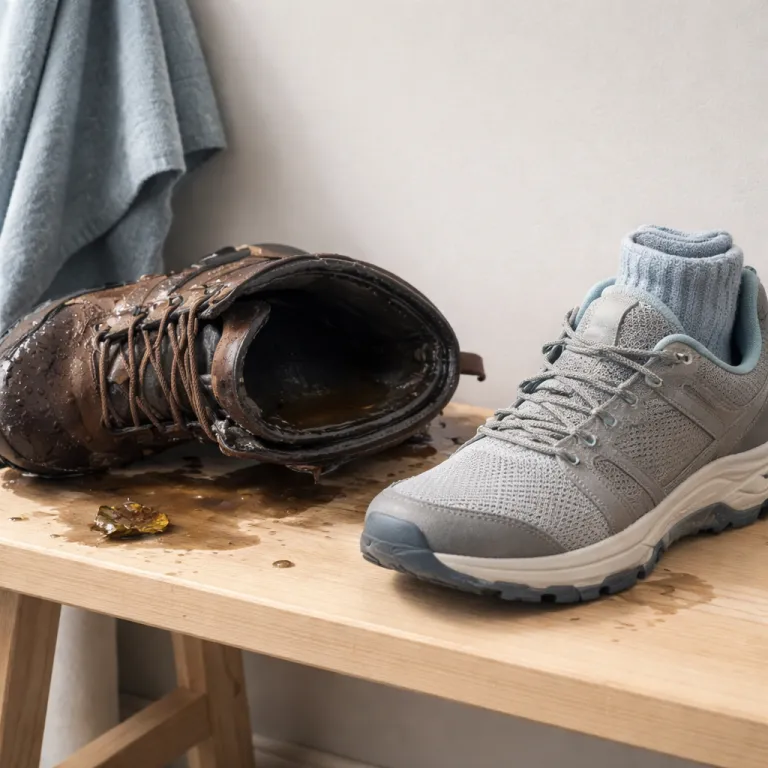

Waterproof hiking boots: when they help, when they hurt, and what to buy instead
TL;DR: For most short to moderate hikes in mild weather, breathable non-waterproof hiking boots or trail shoes keep your feet drier and more comfortable than waterproof models. Save full Gore‑Tex (GTX) boots for cold rain, wet snow, slush and multi‑day storms where external moisture is the main threat.
| Quick decision guide | Choose this |
|---|---|
| Typical hike: short to moderate trails in mild weather | Breathable, non-waterproof hiking boots or trail shoes |
| Typical hike: cold rain, wet snow, slush, or multi-day storms | Waterproof hiking boots with a Gore-Tex (GTX) or similar membrane |
| Priority: comfort and dry feet over a full day | Lighter, fast-drying non-waterproof footwear with good socks |
Why waterproof hiking boots feel great in the shop and heavy on the trail
Waterproof hiking boots sound like the safest choice when you stand on carpet at a retail store. Once you put those hiking boots on a muddy trail for three hours, the extra weight of the waterproof membrane and the reduced breathability start to matter. For most weekend hiking plans, a lighter hiking boot or trail shoe without a waterproof layer will keep your feet drier and more comfortable by the end of the day.
Think about the average weekend loop you hike, maybe 8 kilometres with rolling terrain and a few shallow puddles. A mesh hiking boot or even a robust trail runner lets sweat escape quickly, while a waterproof boot built with a dense upper and a sealed waterproof membrane traps moisture inside once you start climbing. When your socks soak from the inside, the marketing promise of waterproof hiking turns into a clammy, blister friendly reality that lasts for hours.
Most waterproof hiking boots use some form of waterproof-breathable laminate, often branded as Gore-Tex or a similar GTX technology. That Gore-Tex or tex layer is a thin film laminated to fabric, designed to block liquid water while allowing water vapour to pass, but physics sets hard limits on how much vapour can move through. Lab-style breathability tests reported by outlets such as Switchback Travel (for example, their Merrell Moab 3 and Salomon X Ultra 4 reviews) and Outdoor Life (notably their 2023 and 2024 hiking boot test roundups), along with manufacturer data sheets from brands like Salomon, Merrell and La Sportiva, show that a GTX or comparable waterproof membrane can cut real world moisture transport by roughly one third in warm conditions, which is exactly when many men and women head out for casual hiking. Those figures typically come from controlled bench tests of moisture vapour transmission combined with timed field walks in warm, dry air.
Weight is the second hidden cost of many waterproof hiking boots, especially in mid cut designs. Adding a GTX bootie, denser foams and more protective overlays often adds 170 to 280 grams per pair compared with the same hiking boot in a non waterproof version, a difference you can confirm by comparing manufacturer spec sheets for models such as the Merrell Moab 3 (Vent vs GTX), Salomon Quest 4 (standard vs Gore-Tex) and La Sportiva Ultra Raptor (mesh vs Mid GTX). On a long trail day, that extra mass on every step feels like a tax on comfort, support and stability that you keep paying with every kilometre.
Retail staff at big chains such as REI are trained to present waterproof hiking boots as the best default upgrade for nervous buyers. The sales script leans on fear of wet feet, not on an honest comparison of how a mid waterproof boot behaves after five hours of steady hiking in mixed weather. When you ask pointed questions about drying time, long term comfort and the real price of trapped sweat, the conversation around which boots are best for your trail changes quickly.
Brand marketing also blurs the line between alpine mountaineering and average day hiking. A burly TRK GTX model built for multi day glacier travel in the Alps is overkill for a forest hike near town, yet the same Gore-Tex logo appears on both boots and reassures buyers who rarely leave waymarked paths. That is how many hikers end up with a heavy GTX hiking boot that feels secure in the shop but punishing on a warm, humid climb.
Look closely at popular models such as the Merrell Moab series, which comes in both waterproof and non waterproof hiking boot versions for men and for women. The non waterproof Moab hiking boots breathe better, dry faster and usually cost less, while the Moab GTX boot adds a waterproof membrane and a higher price without improving underfoot comfort on most dry trail days. For an average hiker who avoids deep snow, the lighter boot is often the best long term partner.
Fit and ankle support complicate the picture, because many hikers equate a mid cut collar with safety. A mid GTX boot with a tall cuff can feel reassuring around the ankle, yet the same design traps more heat and sweat compared with a low cut trail shoe or a non waterproof mid boot. True stability comes more from the platform, the shank and the midsole compound than from a padded collar that holds warm, moist air around your socks.
Premium brands such as Salomon, La Sportiva and Scarpa know this, which is why they quietly offer both waterproof and non waterproof versions of their key hiking boots. The Salomon X Ultra and Quest series, for example, include GTX boots and airy mesh boots that share the same chassis, so you can choose between waterproof support and maximum ventilation. When you compare the price tags, published weights and drying times side by side using manufacturer spec pages and long term reviews from Switchback Travel or Outdoor Life, the non waterproof hiking boot often looks like the smarter buy for three season trail use.
Leather complicates the waterproof story further, especially when you look at nubuck leather boots. A nubuck leather hiking boot with a wax treatment can resist light rain and wet grass without any GTX layer, while still breathing better than a fully sealed waterproof boot. For many hikers who value durability and support, a well maintained nubuck leather boot offers a balanced middle ground between bare mesh and full Gore-Tex construction.
The breathability math and why your gtx boots stay wet all day
Once you leave the shop and start hiking in real weather, the numbers behind waterproof hiking boots become painfully clear. A mesh trail shoe or non waterproof hiking boot can shed water and sweat quickly because the fabric allows air to move freely through the upper. In contrast, a GTX boot with a laminated waterproof membrane behaves more like a damp thermos once it is saturated from the inside.
Think about a summer trail where the air temperature sits around 22 degrees and humidity hovers near 60 percent. Your feet sweat into the socks, that moisture tries to move through the lining and then hits the Gore-Tex or similar tex layer, which slows vapour transfer dramatically. When the outer fabric of the hiking boot also gets wet from rain or puddles, the effective breathability of the waterproof membrane drops even further and your socks stay wet for the rest of the hike.
Lab tests and field reports from outlets such as Switchback Travel and Outdoor Life converge on the same pattern. A mesh trail runner or non waterproof hiking boot can go from soaked to comfortably damp in about 20 to 40 minutes of walking in dry air, because evaporation happens directly through the fabric. A GTX hiking boot, once fully wet inside, can take six to eight hours to feel dry again according to timed drying tests in those reviews, which typically involve soaking the footwear in water for several minutes, then measuring weight loss and in-shoe humidity over time while walking in controlled conditions around 18 to 24 degrees with moderate humidity. That gap in drying time, repeatedly documented in comparative tests of models like the Merrell Moab 3, Salomon X Ultra 4 and La Sportiva Ultra Raptor Mid GTX, means one bad creek crossing can ruin the comfort of an entire day on the trail.
That drying time gap matters most for the average weekend hiker who does not carry spare boots. If your waterproof hiking boots fill with water during a river crossing that reaches above the mid cut cuff, the Gore-Tex membrane cannot magically push that liquid back out. You end up carrying a personal aquarium around each foot, with skin pruning, reduced stability and higher blister risk as the hours pass.
Weight compounds the problem, because water is heavy and a saturated GTX boot holds more of it. A mid waterproof boot with thick foam, a full waterproof membrane and dense overlays can easily gain several hundred grams of water weight after repeated puddle stomps. That extra mass swings at the end of each leg, increasing fatigue and subtly degrading your balance on uneven trail surfaces.
Terrain plays a decisive role in whether waterproof hiking boots make sense for you. On cold winter hikes, slushy forest roads or wet snow approaches to alpine huts, a GTX hiking boot keeps meltwater out and pairs well with warm socks for both men and women. In those conditions, the reduced breathability of the waterproof membrane is a fair trade for insulation and protection, especially when the air itself is dry and your sweat rate is lower.
Now picture a hot desert trail, a humid jungle path or a rocky ridge with frequent over ankle stream crossings. In those environments, non waterproof hiking boots or even trail shoes shine, because they let water flow in and out freely while the sun and wind handle drying duty. A waterproof boot in the same setting traps heat, slows drying and turns every creek into a penalty box for your feet.
Mountaineering style models such as the La Sportiva Trk GTX or the Rush Trk GTX sit at the far end of this spectrum. These boots use robust uppers, stiff midsoles and a full Gore-Tex waterproof membrane to handle snow, scree and heavy loads, which makes sense for technical routes but feels excessive for a short hike mid week on local hills. When you read a detailed test of dedicated mountaineering boots such as the Crow Gore-Tex men’s model in long form reviews from Outdoor Life or similar outlets, you see how much design effort goes into edge hold, crampon compatibility and ankle support for steep terrain, not into all day comfort on a casual forest trail.
Trail focused models such as the Ultra Raptor and Ultra Raptor Mid from La Sportiva show a different balance. The Sportiva Ultra Raptor Mid GTX boot offers strong ankle support, a sticky outsole and a waterproof membrane for rough, wet mountain hiking, while the non waterproof Ultra Raptor trail shoe breathes far better for dry summer runs. Choosing between these boots and shoes should start with your terrain and climate, not with a reflexive preference for any GTX label.
Salomon’s line up tells the same story, from the Salomon Ultra series to the Salomon Quest backpacking boots. The Salomon Quest GTX boot provides excellent support and stability for heavy pack trekking in wet climates, but the non waterproof Quest variant feels cooler and more forgiving on long, dry trails. When you compare the price and weight of these boots using manufacturer spec sheets or in depth model reviews that list measured weights and drying times, the non waterproof versions often look like the best value for the average hiker who rarely faces days of cold rain.
When waterproof hiking boots earn their keep and when they quietly punish you
Not every hiker should abandon waterproof hiking boots, because some conditions reward a full waterproof membrane. Cold rain, wet snow and slushy shoulder season trails are where a GTX hiking boot shines, especially for people who run cold or who hike slowly with frequent stops. In those scenarios, keeping external moisture out matters more than maximum breathability, and a mid waterproof boot paired with wool socks can feel like a small furnace around your toes.
Winter day hiking in the mountains is the clearest use case for a waterproof boot. When temperatures hover around freezing and the trail alternates between packed snow and shallow meltwater, a Gore-Tex or similar tex laminate in your boots prevents repeated soaking and refreezing of your socks. The result is better comfort, more consistent support and less risk of numb feet that undermine your stability on icy descents.
Cold, windy ridgelines also favour waterproof hiking boots, because the same membrane that blocks liquid water also blocks convective heat loss. A GTX hiking boot with a snug collar and good ankle support acts like a windproof shell for your feet, which matters when you are above tree line for hours. In that environment, the breathability penalty of the waterproof membrane is offset by the protection it provides against wind chill and spindrift.
There are also specific technical routes where a burly TRK GTX or Rush Trk GTX boot is the right call. Steep, loose scree, glacier approaches and mixed snow rock scrambles demand torsional stability, edging power and a secure heel cup that many lighter hiking boots cannot match. For these missions, the extra weight, higher price and reduced ventilation of a waterproof boot are acceptable trade offs for safety and control.
Now shift back to the life of a typical weekend hiker who works in a city and escapes to local hills. A five mile loop after rain on a forest trail does not require Gore-Tex boots, it requires a non waterproof hiking boot and twenty minutes of newspaper stuffed inside at home to finish the drying job. In that context, a mesh or leather hiking boot without a waterproof membrane will feel cooler, lighter and more forgiving on your joints.
Desert hiking is another place where waterproof hiking boots quietly punish you. Sand, heat and sparse water crossings mean that your main enemy is trapped sweat, not external rain, so a non waterproof hiking boot or even a trail runner is usually the best choice for both men and women. Wearing a GTX boot in that environment is like wearing a rain jacket on a sunny run, and the price you pay is swollen feet, reduced stability and a higher risk of blisters.
For mixed terrain with brush and occasional poison ivy, the smarter upgrade is often protective clothing rather than a waterproof boot. Long pants, gaiters and purpose built poison ivy protective gear for serious hikers and mountaineers do more to keep your skin safe than any Gore-Tex label on your boots. Pair that leg protection with breathable hiking boots and you get both comfort and safety without locking your feet inside a sauna.
One honest counterpoint comes from those days when the forecast lies and a dry hike turns into a cold, driving rain. I have been saved more than once by a pair of mid GTX boots that kept my feet warm and functional while my shell jacket and gloves struggled to keep up. On those days, the extra grams and the higher price of waterproof hiking boots felt like a bargain compared with the misery of numb toes and sloppy footwork on slick roots.
Regulation and materials are also shifting under our feet, especially around PFAS chemicals used in some waterproof membranes and durable water repellent coatings. New ePE versions of Gore-Tex reduce some environmental concerns but do not erase the basic breathability trade off that comes with any waterproof layer. If you want to understand how upcoming rules will affect waterproof hiking boots and labels on the shelf, it is worth reading a detailed guide to PFAS labels and what future state regulations mean before you buy your next pair.
Sales patterns at major retailers show that waterproof hiking boots still dominate the wall, often with prominent sale tags that make the GTX versions look like the best deal. The non waterproof boots, including excellent models such as the Merrell Moab, Hoka Anacapa and various Salomon Ultra variants, tend to sit on lower shelves or in smaller size runs. That merchandising bias nudges both men and women toward waterproof hiking options even when their real world trail use would be better served by breathable boots.
What to buy instead and how to choose the right boot for your trails
Choosing between waterproof hiking boots and non waterproof models starts with an honest audit of your terrain, climate and hiking style. If most of your hikes are short to moderate loops on established trails in mild weather, a breathable hiking boot or even a trail shoe will almost always serve you better than a GTX boot. Reserve full waterproof hiking boots for cold, wet or snow heavy trips where external moisture is the main threat.
For men and women who want one do everything pair, look at non waterproof versions of proven models before you default to Gore-Tex. The Merrell Moab in its ventilated form, the Hoka Anacapa without a waterproof membrane and the airy versions of the Salomon Ultra series all offer strong support and stability for backpacking while drying far faster than their GTX siblings. These hiking boots usually cost less as well, which means you can allocate more of your budget to quality socks, insoles or even a second pair of lighter trail shoes.
Three step buying checklist
- Match footwear to climate and terrain first: hot, mixed or shallow water = breathable; cold, prolonged wet or snow = waterproof.
- Prioritise fit and support: test heel hold, midfoot security and downhill toe room in both boots and trail shoes.
- Compare weight and drying time within the same model line using spec sheets and detailed reviews before paying extra for GTX.
Fit should trump every other factor when you choose hiking boots, because no amount of waterproofing can fix a bad last. Try on both boots and shoes late in the day when your feet are slightly swollen, and pay attention to heel hold, midfoot wrap and toe room on descents. A well fitted non waterproof hiking boot with good ankle support will keep you safer on rough trail than a sloppy GTX boot that lets your foot slide inside with every step.
Foot shape and use case also influence whether you lean toward mid cut boots or low cut shoes. Hikers with previous ankle injuries or those who carry heavy packs may appreciate the extra leverage and ankle support of a mid hiking boot, while lighter day hikers often prefer the agility of a low cut trail shoe. In both categories, you will find waterproof and non waterproof options, so decide on cut and fit first, then choose the membrane only if your climate demands it.
Specific models illustrate these trade offs clearly, especially in the La Sportiva line. The Sportiva hike oriented Ultra Raptor and Ultra Raptor Mid offer aggressive traction and strong lateral support, with GTX and non waterproof versions available for different climates. The Rush Trk GTX and Trk GTX boots step up stiffness and protection for rough alpine hiking, but they feel like overkill for an average forest trail where a lighter hiking boot would be the best match.
Salomon’s backpacking range offers similar choices, from the Salomon Quest GTX to non waterproof Quest boots that share the same chassis. The Salomon Quest GTX boot is a powerhouse for long, wet treks with heavy loads, while the non waterproof Quest feels cooler and more forgiving on dry, rocky trails. When you compare the price, weight and drying time of these boots, many weekend hikers will find that the non waterproof versions deliver better comfort and value.
Women should ignore any lingering myth that boots for women must be softer or less supportive. Many brands now build women specific hiking boots on dedicated lasts that respect narrower heels and different instep shapes without sacrificing stability or ankle support. Whether you choose women specific models or unisex designs, the same logic applies, start with fit and terrain, then decide whether a waterproof membrane is truly necessary.
Men face their own traps, especially the temptation to buy the burliest GTX boot on sale because it looks tough. That heavy waterproof hiking boot may feel reassuring in your living room but will punish your knees and hips on long descents if you rarely carry more than a light daypack. A lighter non waterproof hiking boot with solid support often lets you hike farther with less fatigue, which is the real measure of performance on the trail.
Care and maintenance can extend the life and performance of any hiking boot, waterproof or not. Regular cleaning, occasional reproofing of leather and timely replacement of worn insoles preserve both comfort and stability, while letting the upper materials breathe as designed. In the end, what keeps you moving is not the waterproof rating on the hang tag but the tenth river crossing when your boots still feel like an ally instead of an anchor.
Key figures on waterproof hiking boots and trail footwear performance
- Industry testing reported by Switchback Travel and Outdoor Life, along with manufacturer spec sheets, indicates that adding a Gore-Tex or similar GTX waterproof membrane to hiking boots typically reduces real world breathability by about 30 to 40 percent in warm conditions, which directly affects comfort on summer trails. These values usually combine laboratory moisture vapour transmission measurements with controlled hiking tests in warm, dry air using comparable waterproof and non waterproof versions of the same model.
- Waterproof hiking boots that use a full GTX bootie and denser upper materials often weigh 170 to 280 grams more per pair than their non waterproof counterparts, a difference that becomes significant over thousands of steps on a long hike.
- Field observations and timed drying tests from reviewers show that non waterproof mesh trail shoes and hiking boots can dry from soaked to comfortably damp in roughly 20 to 40 minutes of walking in dry air, while fully saturated GTX boots may remain wet inside for six to eight hours. These drying times are usually recorded by soaking footwear in water, then tracking weight loss and in-shoe humidity at set intervals at room temperature with moderate humidity.
- Search volume data from widely used SEO tools for the term waterproof hiking boots sits around 22,000 queries per month with strong commercial intent, which helps explain why retailers and brands continue to prioritise waterproof models on shelves and in marketing campaigns.
- New ePE based versions of Gore-Tex membranes are now PFAS free, addressing some environmental concerns, but they still involve the same fundamental trade off between waterproof protection and reduced breathability compared with non membrane hiking boots.
| Model | Membrane | Approx. weight (pair) | Typical drying time | Best use case |
|---|---|---|---|---|
| Merrell Moab (vent) | None | ~900–1000 g | 20–40 min from soaked | Three season day hikes, dry to mixed trails |
| Merrell Moab GTX | Gore-Tex | ~1050–1200 g | 6–8 hours once saturated | Cool, wet weather, light snow |
| La Sportiva Ultra Raptor | None | ~800–900 g | 20–40 min from soaked | Warm weather mountain trails, fast hiking |
| La Sportiva Ultra Raptor Mid GTX | Gore-Tex | ~1000–1100 g | Several hours once wet inside | Wet alpine routes, shoulder season |
| Salomon Quest (non waterproof) | None | ~1200–1300 g | Under 1 hour in dry air | Backpacking in mostly dry climates |
| Salomon Quest GTX | Gore-Tex | ~1300–1400 g | 6+ hours if fully soaked | Heavy pack trekking in wet, cold weather |
Common questions about waterproof hiking boots and real trail needs
Do I really need waterproof hiking boots for short weekend hikes ?
Most short weekend hikes on established trails in mild weather do not require waterproof hiking boots, and a breathable non waterproof hiking boot or trail shoe will usually keep your feet drier overall. Unless you expect prolonged cold rain, wet snow or deep mud, the faster drying and better ventilation of non waterproof boots outweigh the benefits of a waterproof membrane. For many hikers, a simple routine of drying boots at home after a wet hike is more effective than relying on Gore-Tex for everyday outings.
When are gtx waterproof boots the better choice on the trail ?
GTX waterproof boots are the better choice when you face cold, sustained precipitation, wet snow or slushy mixed conditions where external moisture is the main threat. In those environments, a waterproof membrane paired with warm socks keeps your feet warmer and more stable, especially on long days above tree line or on winter forest roads. For technical alpine routes, glacier approaches or heavy pack trekking in wet climates, a robust TRK GTX or Rush Trk GTX boot can be the safest and most comfortable option.
Why do my waterproof hiking boots stay wet for so long after a river crossing ?
Waterproof hiking boots stay wet for a long time after a river crossing because the Gore-Tex or similar waterproof membrane is designed to block liquid water from the outside, not to drain water that has poured in from above the cuff. Once the interior foam, lining and socks are saturated, evaporation has to push moisture back out through the same restricted pathways that limit breathability in normal use. That slow drying process can take six to eight hours, which is why a single over ankle crossing can leave your GTX boots soggy for the rest of the day.
Are non waterproof hiking boots durable enough for rough mountain trails ?
Non waterproof hiking boots can be just as durable as GTX models when they use robust uppers, quality stitching and well designed midsoles. Many alpine capable boots, including some versions of the Ultra Raptor and Salomon Ultra series, come in breathable configurations that handle rocky, technical terrain without relying on a waterproof membrane. Durability depends more on materials, construction and maintenance than on whether the boot includes Gore-Tex.
How should I choose between mid cut boots and low cut trail shoes ?
The choice between mid cut boots and low cut trail shoes should start with your ankle history, pack weight and terrain rather than with waterproofing. Hikers who carry heavy loads or who have previous ankle injuries may benefit from the extra leverage and ankle support of a mid hiking boot, while lighter day hikers on moderate trails often prefer the agility and ventilation of low cut shoes. In both categories, you can find waterproof and non waterproof options, so decide on cut and fit first, then add a waterproof membrane only if your climate and routes truly demand it.