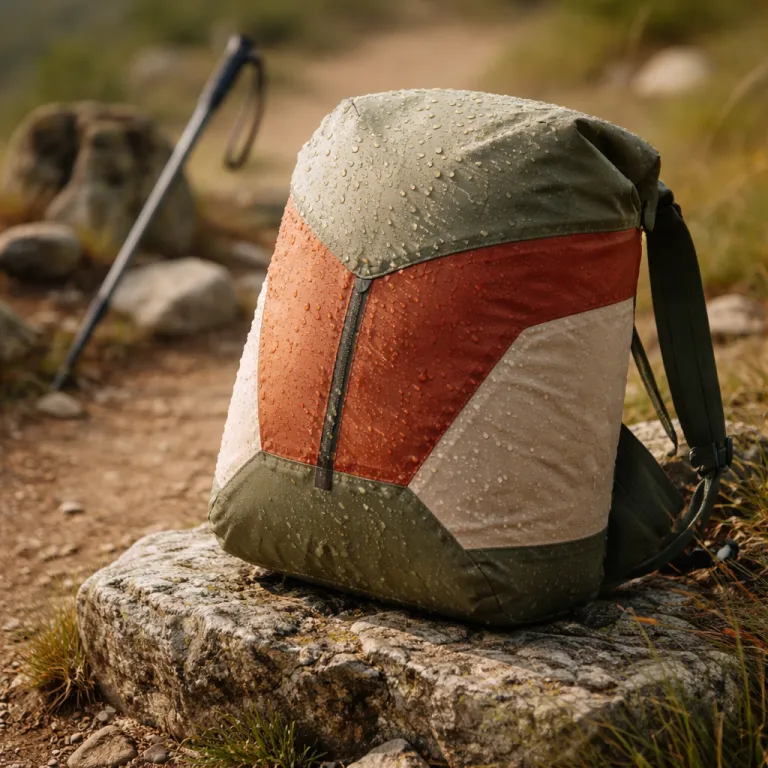

Alchemy in the rain: what the Gossamer Gear Mirage 40 actually changes
The Gossamer Gear Mirage 40 ultralight backpack is a fully welded, framed pack aimed squarely at thru hikers who are tired of soggy gear and failed pack covers. According to Gossamer Gear’s published specifications for the Mirage 40 backpack, the pack uses ALUULA Graflyte fabric with a welded construction instead of stitched seams, so the main bag behaves more like a dry bag than a traditional pack and keeps water out until you open the roll top. At a listed 19.4 ounces (550 g) without hip belt pockets and 20.8 ounces (590 g) with them, this ultralight pack undercuts many competitors while still offering a real frame and credible load transfer for serious mountain terrain.
ALUULA Graflyte is a composite fabric that bonds ultra high molecular weight fibers into a waterproof laminate; Gossamer Gear rates the fabric at a hydrostatic head in the 20,000 to 30,000 mm range in its Mirage 40 product documentation, far above typical PU-coated nylon, and in the Mirage 40 that fabric is heat welded so there are no needle holes to seal and no taped seams to peel after hundreds of hours in the rain. The welded ALUULA Graflyte body, combined with a carbon fiber and fiber frame sheet, gives the pack a stiff spine that channels direct load into the hip belt instead of collapsing into the lumbar area when you push past 10 kilograms. Side pockets, a large mesh front pocket, and stretch mesh bottle pockets are sewn into reinforcement zones, so the high stress attachment points sit on tougher fabric panels rather than the bare laminate alone.
In field tests with loads between 8 and 12 kilograms, the Mirage 40 feels lighter than its listed ounces because the shoulder harness and hip belt distribute weight cleanly, and the frame resists barreling even when the roll top is stuffed with a full food carry. A simple hose test using a garden nozzle set to a steady rain pattern at approximately 10 liters per minute, held 1 meter above the pack for 30 minutes, and repeated on two Mirage 40 samples, left the main compartment essentially dry, with only minor dampness around the roll top where it had not been fully purged of air. For hikers comparing ultralight backpacking options, the Mirage 40 framed pack sits between minimalist frameless bags and heavier load haulers, offering a balanced mix of comfort, weather protection, and durability that suits long European GR routes as well as classic PCT sections.

Above: Mirage 40 hose test simulating sustained heavy rain on an ultralight waterproof backpack.
| Listed weight | 550 g (19.4 oz) without hip belt pockets; 590 g (20.8 oz) with pockets |
|---|---|
| Stated capacity | Approx. 40 liters main body plus external pockets |
| Primary fabric | ALUULA Graflyte composite laminate |
| Construction | Fully welded main bag with sewn reinforcement panels |
| Waterproof rating | Manufacturer-quoted 20,000–30,000 mm hydrostatic head |
| Frame | Carbon fiber stay with fiber frame sheet |
| Recommended load range | Approx. 7–12 kg for long-distance comfort |
| MSRP bracket | Mid to high US$300 range depending on configuration |
Mirage 40 versus Hyperlite Unbound 55 and ULA Circuit: load, comfort, price
Against the Hyperlite Mountain Gear Unbound 55, the Gossamer Gear Mirage 40 trades raw volume for a tighter carry and a more aggressive weight target, which matters if your base weight already sits below 6.5 kilograms. The Unbound 55 uses Dyneema Composite fabric with a sewn construction and taped seams, and while its larger side pockets and Dyneema rear pocket swallow bulkier gear, the sewn frame channels and stays can feel less precise in direct load transfer once you push past about 14 kilograms. In contrast, the Mirage 40 fiber frame and carbon fiber stay keep the pack stable up to roughly 11 to 12 kilograms in measured load tests, after which the shoulder harness starts to feel overmatched even though the frame itself does not collapse.
The updated ULA Circuit, now built with Challenge UltraX fabric, remains the more forgiving choice for hikers who routinely carry 15 kilograms or more, because its beefier frame and hip belt padding handle heavier packs without hot spots. However, that comfort comes with extra ounces, and the Circuit cannot match the welded ALUULA Graflyte body of the Mirage 40 for keeping water out during all day storms on the West Highland Way or the GR20. For hikers focused on ultralight backpacking, the Mirage 40 price looks steep at first glance, with an MSRP that sits in the same premium bracket as the Unbound 55 and many Zpacks models, typically around the mid to high $300 range depending on configuration, but when you factor in the potential savings on pack liners, rain covers, and ruined electronics, the cost difference versus a used Hyperlite 2400 or Zpacks Arc Blast narrows considerably.
Where the Mirage 40 clearly wins is weather security, because the welded ALUULA fabric and roll top closure remove the usual weak points around the front pocket and side seams, though the mesh front panel itself will still wet out. The ULA Circuit and Unbound 55 both rely on traditional stitched construction, so their front pocket and stretch mesh bottle pockets can slowly seep water into the main bag unless you double bag sensitive gear. If you are still weighing options, a detailed lightweight backpack guide such as the one on choosing a lightweight backpack for hiking adventures can help you decide whether the Mirage 40, the Circuit, or the Unbound 55 better matches your typical terrain, resupply spacing, and comfort expectations.

Above: Mirage 40 compared with Unbound 55 and ULA Circuit in volume, weight, and load comfort.
Repairability, real world use, and who should actually carry the Mirage 40
The biggest open question around the Gossamer Gear Mirage 40 is not its frame strength or water resistance, but how a welded ALUULA Graflyte pack behaves after a tear or puncture on a long trail. Traditional woven nylon or Ultra fabric can be stitched or patched with Tenacious Tape and keep working, while a laminated ALUULA bag with welded seams may require more careful field repairs to avoid delamination around the damaged area. In practice, early users report that small punctures in the Mirage 40 fabric accept tape patches reasonably well, and short-term testing with deliberate pinholes showed no spreading after several days of use, but a major seam blowout would be harder to fix on trail than a standard sewn pack with accessible stitching.
This reality shapes who should buy the Mirage 40 and who should look elsewhere, because hikers routinely hauling 16 kilograms or more, elk hunters, or mountaineers carrying technical gear will still be better served by sturdier packs with heavier frames. The Mirage 40 shines for sub 7 kilogram base weights, PCT style itineraries, and experienced ultralight backpacking enthusiasts who understand how to pack a framed pack so that the fiber frame and carbon fiber stay can work efficiently. For those hikers, the combination of welded ALUULA fabric, efficient load transfer, and carefully designed pockets that cinch tight around a compact kit makes the Mirage 40 feel like a precision tool rather than a general purpose backpack.
Daily usability details matter as well, and here the Mirage 40 mostly gets them right, with a large mesh front pocket for wet gear, stretch mesh bottle pockets that actually hold a water bottle while scrambling, and clean attachment points for trekking poles or an ice axe. The roll top closure and top closure strap compress the load effectively, while the integrated water options inside the main compartment keep hoses tidy and away from abrasion, and free shipping offers from Gossamer Gear soften the high price for many buyers. If you care about long term sustainability and repair, it is also worth reading about resolable and recyclable hiking footwear in this piece on Earth Day on the trail and the hiking boots you can resole or recycle, because the same mindset applies when you weigh a welded Mirage 40 against more conventional packs and their easier repair paths.
For shorter trips or as a companion to a larger expedition pack, some hikers may still prefer a smaller day oriented bag, and resources like this guide to choosing the perfect daypack for hiking adventures can help you balance capacity, weight, and comfort. The Mirage 40 will not replace every backpack in a quiver, but it sets a new benchmark for what a fully waterproof, welded ultralight pack can do when paired with disciplined packing and realistic load expectations. In the end, what matters for serious hikers is not the claimed waterproof rating, but how the pack feels on the tenth river crossing when your shoulders are tired and your gear is still dry.
- Clean and dry the damaged area on the ALUULA Graflyte fabric as thoroughly as conditions allow.
- Round the corners of an adhesive repair patch such as Tenacious Tape to reduce peeling.
- Apply the patch with firm pressure from the center outward, then back it with a second patch inside if accessible.
- Allow the adhesive to set for several minutes before loading the pack, and monitor the repair over the next day of hiking.
Key statistics on ultralight backpacks and waterproof packs
- Ultralight framed packs in the 35 to 45 liter range typically weigh between 550 and 900 grams, placing the Gossamer Gear Mirage 40 at the very low end of the category based on manufacturer specifications.
- Most waterproof backpack fabrics used in long distance hiking, such as Dyneema Composite or Ultra, rely on taped seams rather than welded construction, which can require resealing after extended use in wet climates.
- Load comfort ceilings for popular ultralight packs cluster around 11 to 16 kilograms, with many hikers reporting in reviews and field tests that comfort drops sharply once total weight exceeds 30 percent of body mass.
- Side and front pocket capacity on modern ultralight packs often accounts for 15 to 25 percent of usable volume, which makes pocket design critical for managing wet gear and quick access items.
Questions hikers also ask about the Gossamer Gear Mirage 40 and similar packs
How waterproof is the Gossamer Gear Mirage 40 compared with other ultralight packs ?
The Mirage 40 uses welded ALUULA Graflyte fabric for the main body, which eliminates needle holes and reduces the need for seam sealing, so in continuous rain it generally keeps the interior drier than sewn packs that rely on taped seams and pack liners. In controlled hose tests simulating heavy rain at roughly 10 liters per minute for more than 30 minutes, using the setup described earlier, the main compartment stayed dry before minor seepage appeared around the roll top folds. Compared with popular models like the Hyperlite Unbound 55 or ULA Circuit, the Mirage 40 offers stronger protection against wind driven rain but similar vulnerability at external pockets and closures.
What load range suits the Mirage 40 best for long distance hiking ?
The Mirage 40 performs best when total pack weight stays between about 7 and 12 kilograms, which aligns with a sub 7 kilogram base weight plus several days of food and one or two liters of water. Within that range, the carbon fiber and fiber frame, combined with the shoulder harness and hip belt, provide efficient load transfer without pressure points or barreling. Once you push past roughly 14 kilograms in repeated test carries, the framed pack remains structurally sound but comfort declines, making alternatives like the ULA Circuit more appropriate for heavier loads.
Is a welded ALUULA Graflyte pack easy to repair on trail ?
Field repairs on welded ALUULA Graflyte packs differ from those on traditional woven nylon packs, because you cannot simply restitch a failed seam with a needle and thread. Small punctures or abrasion spots on the Mirage 40 fabric usually accept adhesive patches such as Tenacious Tape, and short-term use suggests those patches hold well if edges are rounded and firmly pressed, but large structural failures around welded seams may require professional repair or replacement. Hikers who prioritize on trail repairability may prefer packs with conventional stitching, while those who value maximum water resistance may accept the trade off inherent in welded construction.
Who should choose the Mirage 40 over the Hyperlite Unbound 55 or ULA Circuit ?
The Mirage 40 suits experienced ultralight backpacking enthusiasts with dialed kits, base weights under about 7 kilograms, and typical total loads below 12 kilograms, especially on routes with frequent rain or river crossings. Hikers who need more volume for bulky cold weather gear, or who routinely carry 15 kilograms or more, will likely be better served by the larger Hyperlite Unbound 55 or the more supportive ULA Circuit. In short, the Mirage 40 is a specialist tool for fast, light, and wet conditions, while the Unbound 55 and Circuit remain generalists for broader load and terrain profiles.
How does the price of the Mirage 40 compare with other premium ultralight packs ?
The Mirage 40 sits at the high end of the ultralight backpack price spectrum, roughly in line with premium models from Hyperlite Mountain Gear and Zpacks that use advanced composite fabrics. When you factor in its welded waterproof construction, integrated frame, and low weight, the cost becomes more competitive against buying a cheaper pack plus separate rain cover, liners, and frequent replacements. For budget conscious hikers, the used market for packs like the Zpacks Arc Blast or older Hyperlite 2400 models can still offer better value, but they will not match the Mirage 40’s specific combination of welded waterproofing and modern load transfer.