
Summary
Editor's rating
Value for money: budget gear that earns its place in the bag
Design focused on grip first, comfort second
Comfort: fine on snow, annoying on bare ground
Silicone harness and stainless spikes: decent mix for the price
Early signs on wear and tear
What you actually get out of the box
Grip and safety: where they actually shine
Pros
- Very good grip on ice and compact snow thanks to 24 stainless steel spikes per foot
- Flexible silicone harness that stays usable in the cold and fits different boots
- Good price-to-performance ratio with storage bag and velcro straps included
Cons
- Uncomfortable and unstable on bare tarmac or indoor floors, need frequent on/off
- Snow can ball up under the spikes in wet conditions and needs clearing
- Unknown brand and likely shorter lifespan than premium mountaineering crampons for heavy users

Specifications
View full product page →| Brand | Piscorush |
Cheap insurance against icy falls
I picked up these Piscorush 24-spike crampons mainly as “winter insurance”. I’m not a pro mountaineer, but I hike a lot, walk the dog on icy paths, and I’m tired of doing accidental skating moves on frozen pavements. I didn’t want to drop big money on branded crampons, so this unknown brand at a mid-range price looked like a decent compromise. The 4.4/5 rating on Amazon with people using them in places like Ben Nevis and Tromsø also pushed me to try them.
In practice, I’ve used them on three types of terrain so far: frozen city pavements and car parks, a couple of icy hill walks with some packed snow, and a short hike on a muddy, slippery trail. I mounted them on two pairs of boots: fairly stiff hiking boots and more casual winter boots. That gave me a good idea of how they behave on different soles and in real-world situations, not just a quick try in the garden.
My overall feeling: they do the job for grip. When they’re on, you feel the spikes bite into the ice and you stop thinking about falling every two seconds. They’re not magic, you still need to watch where you put your feet, but compared to walking without them it’s night and day. On the other hand, they’re not as comfy or as refined as higher-end mountaineering crampons, and you can tell it’s a budget product in some small details.
If you’re expecting professional gear for technical climbing, this isn’t it. But if you want something to throw in your backpack for winter hikes, dog walks, basic mountain trails or a trip to a snowy city, they make sense. I’ll break down what worked well for me, what annoyed me a bit, and where I think they sit compared to more expensive brands.
Value for money: budget gear that earns its place in the bag
Price-wise, these sit in that mid/low range where you’re clearly not paying for a big brand name, but you’re also not down in the absolute bargain-bin junk. Considering you get 24 spikes per foot, stainless steel chains, a silicone harness, velcro straps, and a storage bag, the value is pretty solid. If these were from a big outdoor brand, they’d easily cost more.
What matters to me is: do they justify the cost by preventing even one bad fall? For ice and compact snow, yes. One slip on a staircase or a steep path can mean a hospital visit, and these reduce that risk a lot. The fact that multiple reviewers used them on Ben Nevis, Austrian mountains, and Tromsø streets and were happy with the grip lines up with my experience. They’re not fancy, but they do the main job they’re sold for.
There are cheaper options with fewer spikes and thinner rubber. I’ve tried some of those in the past, and they either broke quickly or the studs were too small to really help on proper ice. On the other side, proper mountaineering crampons cost several times more and are overkill for most casual users. These sit nicely in between: more serious than basic city grips, but much cheaper and easier to use than full technical crampons.
Taking into account the 180-day refund/replacement promise and the decent Amazon rating, I’d say they’re good value if you need winter traction a few times a year. If you’re out in serious winter mountains every weekend, I’d invest in something higher-end. But for regular hikers, travellers to snowy countries, or anyone who just wants to stop skating on icy pavements, the price-to-performance ratio is hard to complain about.
Design focused on grip first, comfort second
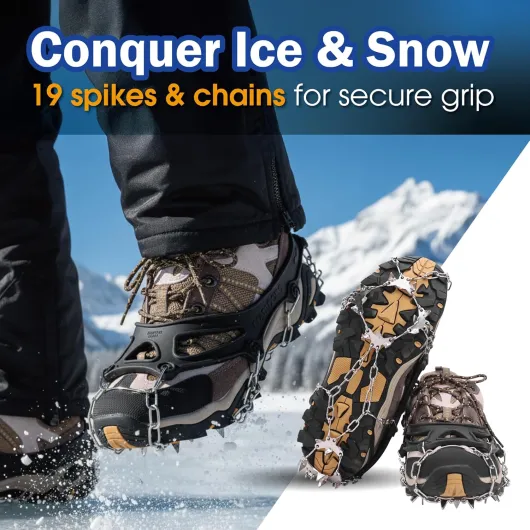
The general design is simple but fairly aggressive: 24 short stainless steel spikes per foot, linked by a double chain system. Compared to lighter city ice grips that have maybe 6–10 studs, these feel much more serious. Under the forefoot you’ve got a proper cluster of spikes that really bite into hard ice. Under the heel, there are enough spikes that you don’t feel like you’re balancing on a couple of points – the weight spreads out okay.
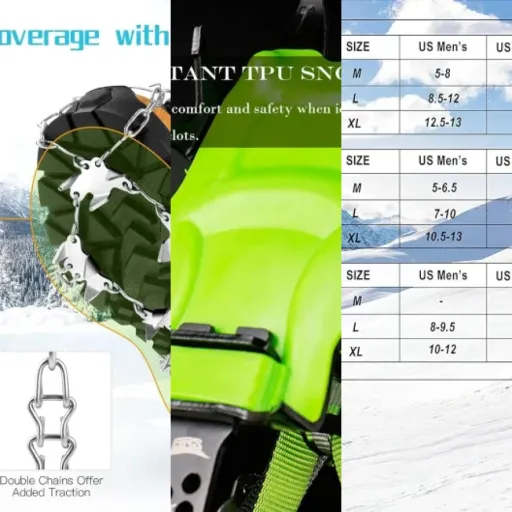
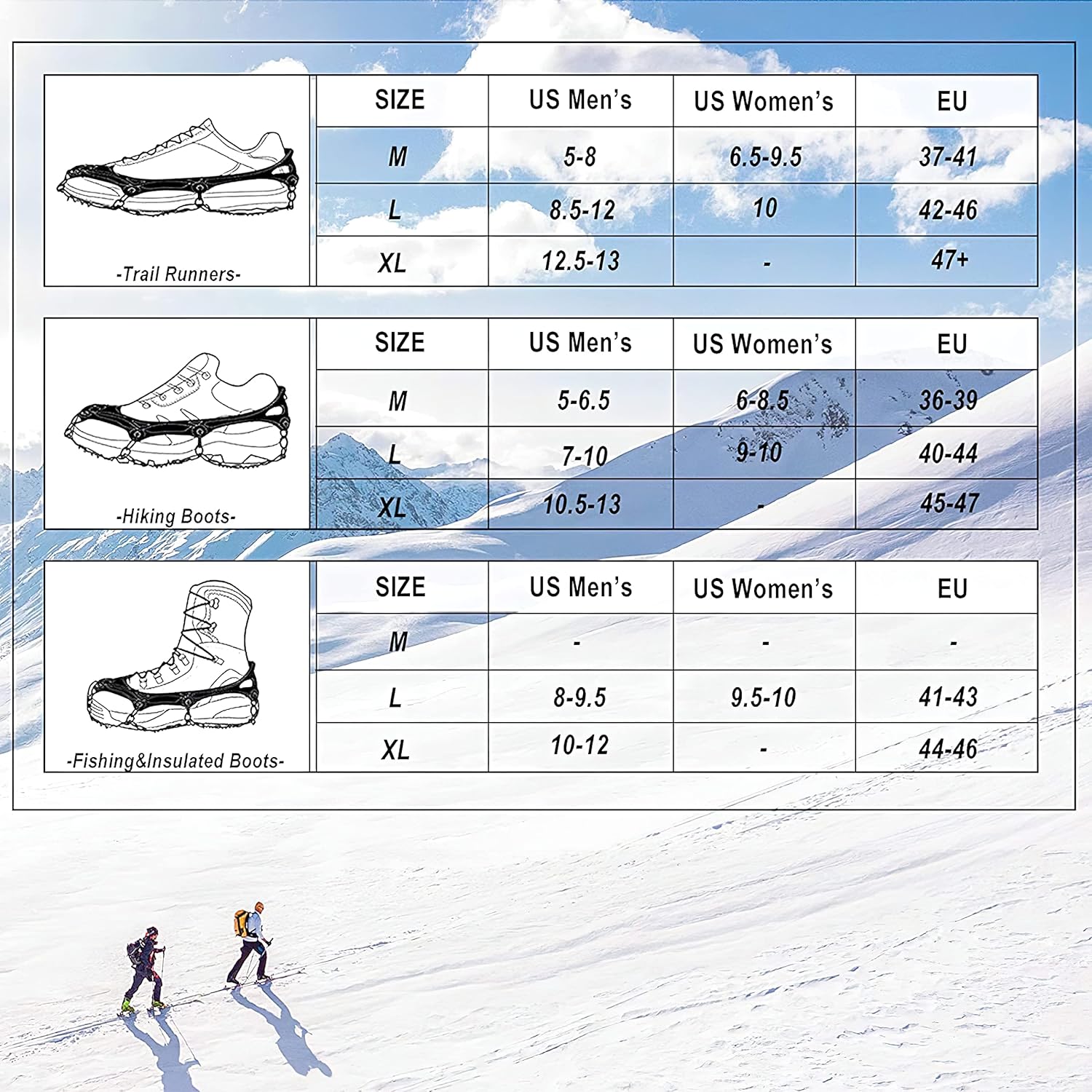
I like that the harness comes up quite high around the sides of the boot. Once stretched over, it wraps the boot fairly snugly, and with the velcro strap on top, it doesn’t really move around. On my mid-cut hiking boots, the design felt well-balanced. On chunkier winter boots with a wider profile, I had to stretch them a bit more, but they still sat in place. The XL size is meant for bigger boots; if you’re on the edge between sizes, I’d go up rather than down, because overtension is how you end up tearing these things.
The downside of this design is that you feel the spikes on hard ground. On ice and packed snow it’s fine, you barely notice them because they sink in. But on bare tarmac or a shop floor (if you forget to take them off), it’s noisy, a bit unstable, and frankly annoying. That’s not really a design flaw, it’s just how metal spikes work. But it means these are not the type of grips you leave on all day walking around town. They’re more for “put them on when it’s bad, take them off when you hit normal pavement or indoors”.
One thing I did notice is that, in wet snow around zero degrees, snow can ball up a bit between the spikes. That matches one of the Amazon reviews. It’s not catastrophic, but every now and then you need to bang your boots against a rock or stomp to clear them. More expensive technical crampons often manage this a bit better with anti-balling plates, but at this price point, I’m not shocked they didn’t include that kind of feature. Overall, the design is practical and focused on traction, not on looking pretty or being super discreet.
Comfort: fine on snow, annoying on bare ground
In terms of comfort, you have to remember what they are: metal spikes under your boots. On proper winter ground – ice, compact snow, frozen mud – they feel surprisingly normal. The spikes dig in, so your foot sits fairly flat, and you don’t feel like you’re walking on stilts. I did a few hours of hiking with them on icy paths and my feet weren’t more tired than usual. The traction actually reduces the constant micro-tension from trying not to slip, which is nice.
Where comfort drops is on hard, bare surfaces: tarmac, concrete, shop floors, tiles. You’re basically walking on 24 tiny metal points per foot, so every step is a bit unstable and noisy. One reviewer mentioned having to take boots off when going into shops in Tromsø; I get that. I tried walking into a petrol station without taking them off, and you immediately feel out of place and slightly wobbly on the smooth floor. So for mixed routes (city + trail), you’ll be stopping to take them on and off fairly often.
On the top of the foot and around the sides, the silicone harness is comfortable enough. It doesn’t dig into the boot or cut into the leather. I didn’t feel any pressure points on my feet themselves, but that’s also because my boots are reasonably stiff. On softer shoes or trainers, I could see the chains being a bit more noticeable underfoot, especially if the soles are thin. I’d strongly recommend using these with proper hiking boots or solid winter boots, not with light sneakers.
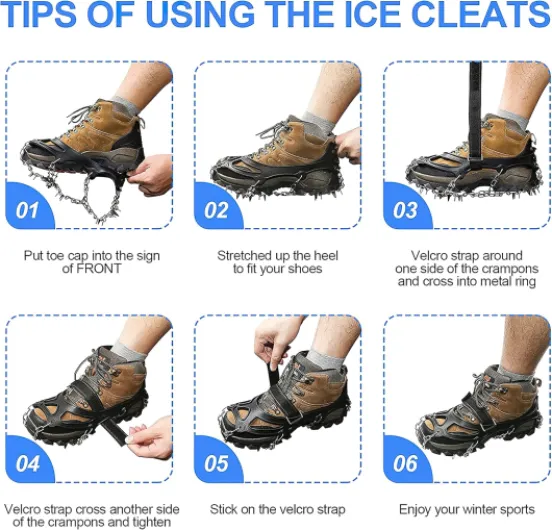
Putting them on and off is okay once you get the hang of it. The stretch is strong but not brutal, so you’re not fighting them for five minutes in the cold. I’d still say: adjust them at home the first time and figure out how they sit on your boots before trying to do it in a blizzard. Overall, comfort is fine for what they are, but they’re clearly designed to be worn only when needed, not as an all-day attachment.
Silicone harness and stainless spikes: decent mix for the price
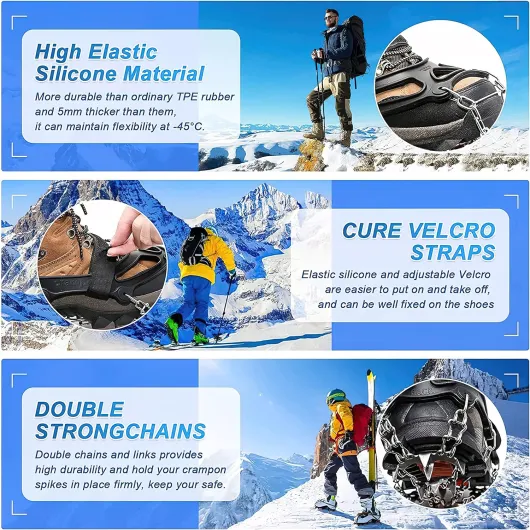
The harness is made from silicone instead of the classic TPE, and you can feel the difference. It’s more supple, stretches more easily, and doesn’t get as stiff in the cold. I used them in temperatures around -8°C to -10°C, and the rubber stayed flexible enough that I didn’t think it was going to crack. The brand claims it stays flexible down to -70°C; I obviously didn’t test that, but for normal winter use it seems more than enough.
The chains and spikes are stainless steel (201 steel according to the description). That’s not the highest grade like some pro crampons use, but for casual hiking and walking it’s okay. After a few outings on mixed ice, snow, and some rock, I saw minor cosmetic scratches on the spikes, which is expected, but no bent spikes or broken links. I did step on some bare rock quite a few times on a Scottish-style rocky path, and while you hear and feel it, the hardware held up fine.
Weight-wise, they’re light enough (around 430g for the pair) that they’re not a burden in the pack. You do notice the extra weight on your feet compared to normal walking, but it’s not like wearing heavy mountaineering crampons. The compromise between strength and weight seems reasonable. For a budget-friendly product from a lesser-known brand, I was honestly expecting cheaper-feeling metal, but it’s actually pretty solid.
Only real concern long-term is how the silicone and metal connections will hold up after a couple of winters of stretching, cold, and dirt. That’s where well-known brands usually win. For now, after several uses, there are no cracks, no tearing around the metal eyelets, and no rust. If you rinse and dry them after really wet or salty conditions, they should last a while. I’d call the materials good enough for regular winter use, even if they’re not built like industrial gear.
Early signs on wear and tear
I’ve not owned them for years, obviously, but after several uses on mixed terrain, I can say a few things about durability. First, the silicone harness still looks intact. No cracks, no whitening, no signs of tearing around the metal connection points. That’s usually where cheap grips fail – the rubber splits near the chain. I stretched them quite a bit on my wider winter boots and they snapped back fine each time.
The stainless steel spikes have some cosmetic wear – small scratches and slight rounding on a few tips from rocks – but nothing dramatic. None of the spikes bent or snapped. The double-link chain system also looks okay: no open links, no deformation. I did check them carefully after the first rocky hike because I was half-expecting at least one link to look sketchy. So far, nothing worrying.
Realistically, if you’re using them heavily every winter on rough mountains, I wouldn’t expect them to last as long as a premium brand with thicker metal and more robust harnesses. But for occasional hikes, winter dog walks, and some trips to icy countries, they feel like they’ll last several seasons if you treat them decently. Rinsing off road salt and mud and letting them dry properly will help keep rust at bay and stop the silicone from degrading too quickly.
If I had to sum it up: solid durability for the price bracket, but they’re still a consumable item in my head, not a lifetime piece of gear. I’d be happy if they give me a few winters of regular use without a failure. So far, nothing suggests they won’t.
What you actually get out of the box
Out of the box, you get: one pair of crampons, a pair of velcro straps, and a small storage bag. Nothing fancy, but it’s practical. The bag is basic nylon, light and thin, but it’s enough to keep the spikes from ripping up the rest of your gear in your backpack. I wouldn’t expect the bag to last 10 years, but for tossing in a daypack it’s fine.
The crampons themselves are the typical rubber/silicone harness with a stainless steel chain and spikes underneath. Each foot has 24 small spikes, spread across the forefoot and heel. It’s more like the aggressive trail traction style than full mountaineering crampons, but that’s exactly what you want for walking and easy hiking. The brand calls the material silicone, and it does feel softer and stretchier than the usual cheap TPE rubber you see on discount grips.
One important detail: there’s an “L” stamped on the harness, and the brand even warns that it means Large size, not Left foot. So you don’t have a left and right crampon; they’re symmetrical. It’s not a big deal, but good to know so you don’t overthink it when putting them on in the cold. The velcro straps go over the top of your boot to help hold everything in place, especially if you’re doing steeper or more uneven terrain.
On paper, they’re rated for all kinds of surfaces: ice, snow, mud, wet grass, and so on. After using them, I’d say that’s mostly accurate. They shine on hard ice and packed snow, they help a bit in mud, and they’re overkill (and noisy) on bare tarmac. Overall presentation is pretty straightforward: no gimmicks, just spikes, chains, and stretchy rubber. Feels like a tool, not a toy.
Grip and safety: where they actually shine
This is the main point: do they stop you from slipping? For me, yes – by quite a lot. On frozen pavements where I normally shuffle like a penguin, I could walk almost normally. You feel the spikes scratching into the ice and the sense of security is much better. I still watched my steps on steep slopes, but I didn’t have any unexpected slides, even when I deliberately put more weight on the heel going downhill.
On an icy, partly rocky hill walk, they also did their job. On sections with compact snow or old ice, the spikes bit in and I had stable footing. On bare rock, obviously, they’re less useful and more about not twisting an ankle, but they didn’t skate out from under me. The double-link chain system seems to help distribute the load so a single spike isn’t taking all the force. I did notice some snow balling up under the foot in wet conditions, just like one Amazon reviewer mentioned. Every few hundred meters, a quick stomp or tap on a rock sorted it.
On mud and wet grass, they’re helpful but not as dramatic. They give you extra bite, especially on slopes, but you can still slide a bit if you’re careless. I’d say they turn a “this is sketchy” slope into “this is manageable”, but they don’t turn mud into a dry path. That’s fine; I bought them mainly for ice anyway. Compared to cheaper rubber-sole grips with a few studs, these feel much more secure on proper winter terrain.
Overall, in terms of sheer effectiveness, I’m satisfied. They don’t make you invincible, but they reduce the risk of a nasty fall a lot. For older people, kids, or anyone who’s not super sure-footed, I can see them being really helpful on icy days. Just remember: they’re not a replacement for real technical crampons on serious alpine routes. For hiking, walking, and light mountaineering-style outings, they’re solid.
Pros
- Very good grip on ice and compact snow thanks to 24 stainless steel spikes per foot
- Flexible silicone harness that stays usable in the cold and fits different boots
- Good price-to-performance ratio with storage bag and velcro straps included
Cons
- Uncomfortable and unstable on bare tarmac or indoor floors, need frequent on/off
- Snow can ball up under the spikes in wet conditions and needs clearing
- Unknown brand and likely shorter lifespan than premium mountaineering crampons for heavy users
Conclusion
Editor's rating
For an unknown brand, these Piscorush 24-spike crampons are better than I expected. The grip on ice and compact snow is genuinely good, and that’s the main reason to buy them. The silicone harness is easy enough to pull over boots, even in the cold, and it feels tougher and more flexible than the cheap TPE you see on low-end models. The stainless steel spikes and chains have handled rocky sections and several outings without bending or breaking, which is reassuring.
They’re not perfect. You really don’t want to walk on bare tarmac or indoor floors with them on; it’s uncomfortable, noisy, and a bit unstable. In wet snow, you sometimes get snow building up underneath and you need to knock it off. And while the build seems decent, I still see them as a medium-term tool, not something I’ll pass down in my will. But at this price, that’s acceptable.
If you’re a casual hiker, dog walker, or traveller heading somewhere icy like Norway, Scotland in winter, or alpine towns, they make sense and give good peace of mind. Older people or anyone nervous about slipping on ice will probably appreciate the extra security. If you’re doing technical climbing or serious mountaineering, I’d skip these and go for proper crampons from a specialist brand. For everyday winter use and moderate mountain outings, though, they’re a practical, no-nonsense option that gets the job done without emptying your wallet.