
Summary
Editor's rating
Value for money: more expensive than budget grips, but you feel where the money goes
Design: closer to real crampons than cheap rubber spikes
Comfort and ease of use: secure once on, but not the quickest to fit
Materials: steel teeth and chunky rubber that feel ready for abuse
Durability after several outings: promising, but not bulletproof
Performance on ice, snow and mud: where they shine and where they’re overkill
What you actually get out of the box
Pros
- Very good grip on compacted snow and ice thanks to 16 steel points
- Sturdy rubber harness and steel construction feel more solid than cheap slip-on grips
- Comes with a pouch, packs reasonably well, and stays stable on the boot once fitted
Cons
- Heavier and bulkier than basic micro-spikes, overkill for city or light use
- Fitting can be fiddly with cold hands and the rear strap/handle doesn’t inspire full confidence

Specifications
View full product page →| Brand | Grivel |
Serious grip for winter hikes, not Sunday strolls
I’ve been using these Grivel Explorer M micro-crampons (size L, the yellow version) for a handful of winter outings, mostly on icy paths and compacted snow, not full-on alpine climbing. I’m not a guide or a pro, just someone who hikes a fair bit and is tired of skating around on frozen trails. I bought these after cheap rubber slip-ons kept tearing or rolling off my boots at the worst time.
The first thing to say is that these are closer to "real" crampons than the usual budget ice grips you see at supermarkets. They have proper steel points, 16 of them, and you feel it as soon as you stand on hard ice. It’s not subtle: you hear and feel the teeth bite into the ground, which is exactly what I wanted for winter hill walks.
I’ve mainly used them on frozen, trampled paths and some mixed stuff: patches of ice, thin snow over rock, and muddy sections lower down. In those conditions they get the job done really well. I stopped doing the weird penguin walk I usually do when I’m scared of slipping. I could walk at a normal pace and focus on the route instead of every single step.
They’re not perfect though. They’re heavier and bulkier than basic micro-spikes, and putting them on with cold hands isn’t as quick as I’d like. Also, the rear strap system feels a bit fragile considering one Amazon reviewer had the handle break on first use. Mine are still intact, but I baby them a bit because of that. Overall, they feel like a solid piece of kit for people who actually go out on hills, not just to fetch a newspaper in light frost.
Value for money: more expensive than budget grips, but you feel where the money goes
Price-wise, these sit above the cheap, no-name slip-on grips but below full technical crampons. For what you get, I’d call the value good but not mind-blowing. You’re paying for a known mountaineering brand (Grivel), decent materials, and a design that’s clearly aimed at real winter hiking, not just walking the dog on a frosty pavement. If you only go out a couple of times a year on light snow, they’re probably overkill for your needs and budget.
Compared to the discount grips I used before, the difference in stability and confidence is big. Those cheaper ones either tore or rolled off my boots after a few outings, which basically made them false economy. With the Grivels, I actually trust them on a frozen hill path. That trust and the fact I’m less likely to fall and hurt myself is worth paying a bit more, at least in my book. A trip to A&E because you saved 20–30 euros on traction isn’t great value.
Where the value is less clear is if you’re already into proper mountaineering and own full crampons. In that case, these sit in an awkward middle ground: better than nothing for easy stuff, but you might prefer just going straight to real crampons for more serious routes. For a regular hiker who wants one solid winter option without going full alpinist, they hit a sweet spot between performance and price.
So, in practice, I’d say: good value for frequent winter hikers and hill walkers, acceptable value for occasional users, and not the best choice if you only want something for urban pavements. There are cheaper, lighter and simpler devices for that. Here, you’re paying for more grip, more robustness, and a bit of brand reliability, and you do feel that difference once you’re actually on ice.
Design: closer to real crampons than cheap rubber spikes
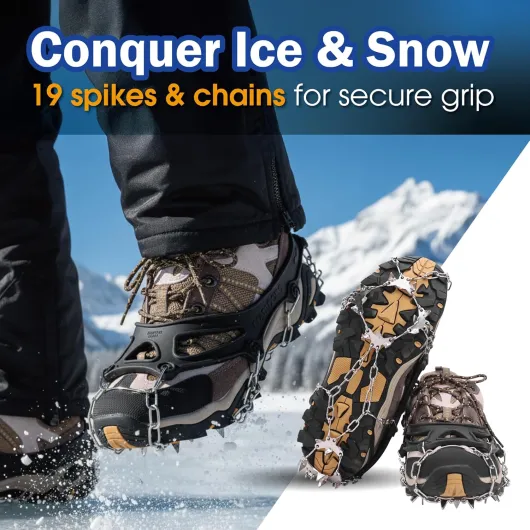
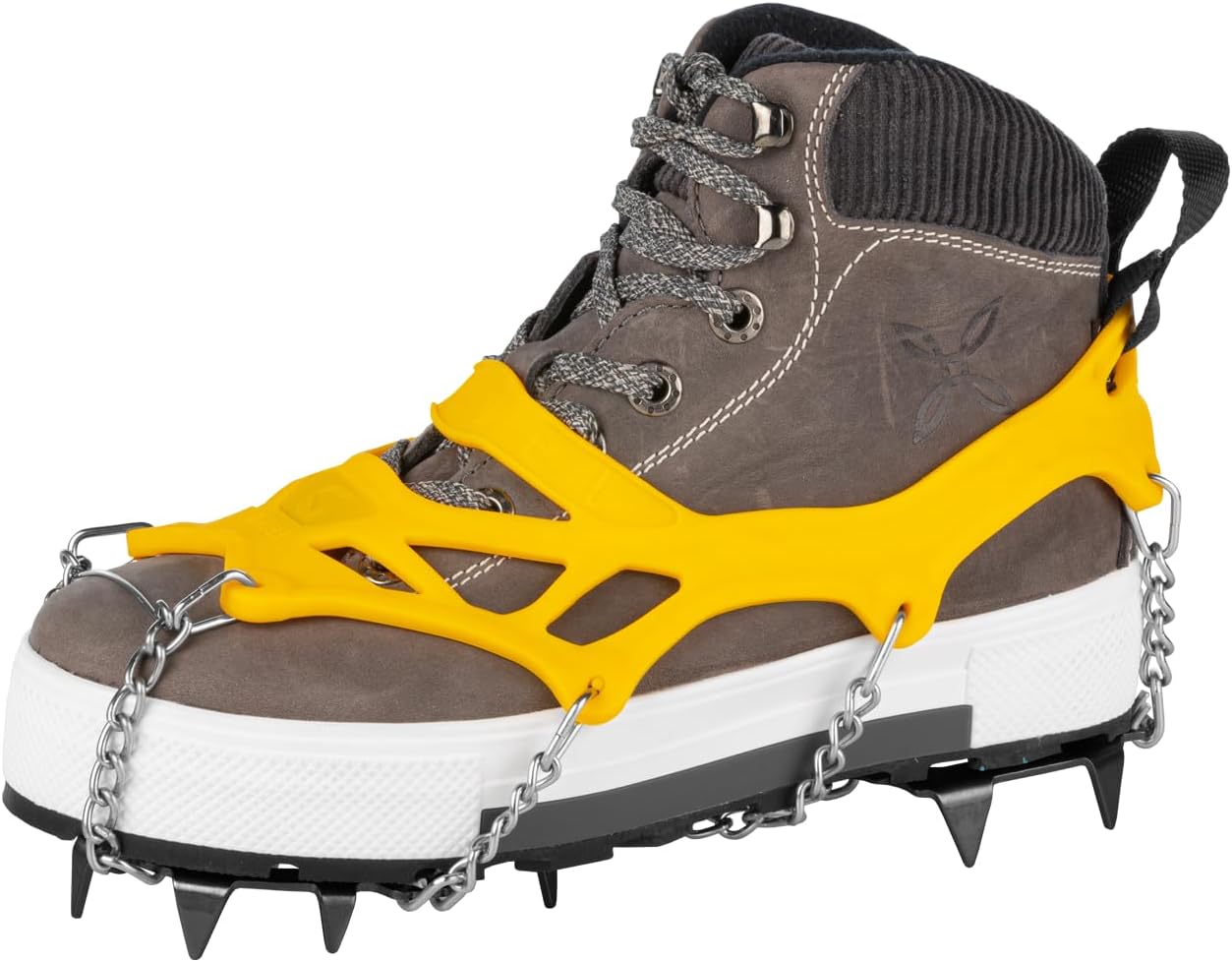
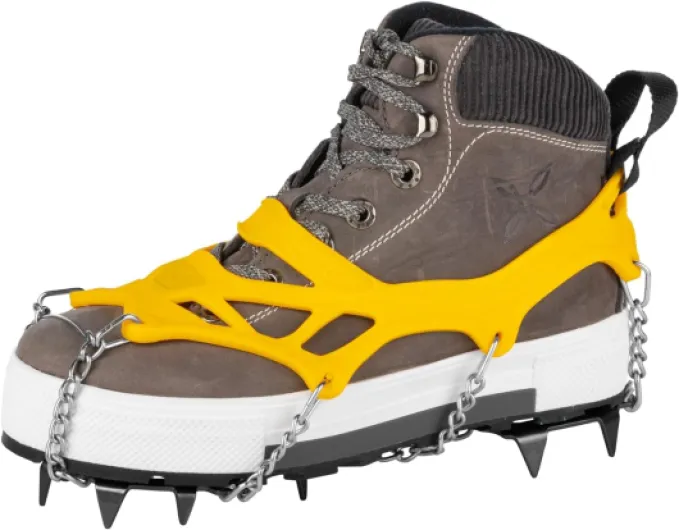
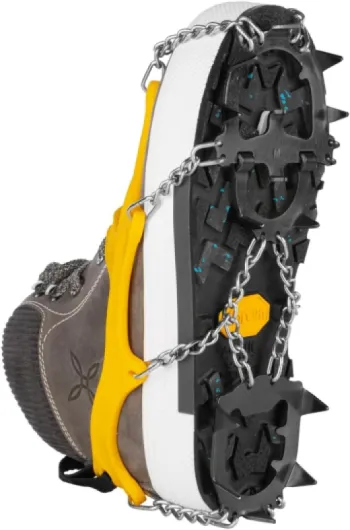
The key design point here is that the Grivel Explorer uses a rubber harness with 16 steel points underneath. The rubber runs around the boot and hooks over the toe and heel, and there’s a rear strap to help with tension and fitting. Compared to the ultra-basic anti-slip overboots I had before, this feels much more secure. Once they’re in place, they hug the boot pretty tightly and don’t slide around, even when side-hilling on hard snow.
The 16 points are distributed under the forefoot and heel, so you get grip both when going uphill and downhill. On steep, icy descents I noticed the back points really biting in when I put weight on my heels. The points aren’t as long or sharp as technical crampons, but for compacted paths and light mountaineering they’re more than enough. On mixed ground (bits of rock poking through) they’re short enough that you’re not constantly tripping or catching them, as long as you don’t stomp around blindly.
The bright yellow colour looks a bit flashy but there is a practical side: you can quickly see if they’re properly seated on your boots and spot them in your bag. When you’re tired and it’s cold, that small detail is nice. The downside is they do look a bit like toy gear at first glance, but once you handle them, the steel and overall build feel more serious than the colour suggests.
On the negative side, the rear handle/strap system doesn’t inspire full confidence. Mine is fine so far, but after reading the review about the handle breaking on the first fitting, I was careful not to yank too hard, especially in the cold when plastic and rubber can be more brittle. Also, putting them on while standing is awkward; I usually sit down or lean on something. So yes, the design is effective and pretty solid, but not perfect, and there are a few spots where I feel they could have beefed things up slightly.
Comfort and ease of use: secure once on, but not the quickest to fit
Comfort with this kind of product is more about how they affect your walking and how annoying they are to put on and take off. On the feet, over my usual winter boots, they feel pretty stable and neutral. There’s a bit of a “crunchy” feeling and extra noise on hard surfaces, but no weird pressure points. The rubber doesn’t dig into the leather or my toes, and I didn’t feel any hotspots even after a few hours of stop-and-go walking in cold conditions.
Where they’re less comfortable is the fitting process. With warm hands and time, it’s fine: you hook the front, pull the rubber over the heel, adjust the rear strap, and you’re done. But when it’s windy and your fingers are freezing, stretching the rubber and fiddling with the heel can be annoying. I had one moment where I thought, “If this rubber snaps now, I’m going to be very unhappy,” especially after reading that negative review about the handle breaking. Mine held, but it made me more gentle than I’d normally be with gear that’s supposed to be tough.
Walking-wise, on ice and snow they actually reduce fatigue a bit because you’re not constantly tensing your legs to avoid slipping. I noticed my pace became more relaxed, and mentally it’s less tiring when you trust your footing. On mixed ground, where you’re taking them off and putting them back on several times, the faff factor goes up. They’re not as quick to slip on as those tiny city grips, so you end up thinking twice: "Is this section icy enough to bother?"
In short, comfort is good once they’re on and you’re staying mostly on snow/ice. They’re less pleasant if you’re constantly transitioning between surfaces or putting them on in harsh weather. I wouldn’t call them painful or anything like that, just a bit of a hassle at times. If you’re planning long winter hikes with continuous icy sections, they’re fine. For short, patchy sections, the on/off routine can get a bit old.
Materials: steel teeth and chunky rubber that feel ready for abuse
The materials are quite straightforward: alloy steel for the points and thick rubber for the harness. You feel the difference immediately compared to cheaper grips that use thinner, softer rubber and almost decorative metal studs. Here, the steel chains and plates that hold the points together feel solid in the hand. After a few outings on mixed terrain, including some unavoidable rock, the points show scratches but no bending or rounding off yet.
Grivel mentions an anti-corrosion treatment. I can’t scientifically verify that, but I’ve thrown them wet into the pouch, forgotten them overnight, and only shaken them out the next day. So far, there’s no rust, just some superficial marks from use. If you actually dry them properly and don’t store them soaked for weeks, I don’t see corrosion being a big issue. Compared to a no-name pair I had before that started rusting after two wet walks, these seem a lot more resistant.
The rubber part is quite chunky. It stretches, but with some resistance, which is good because it means it holds tight once on the boot. In temps around -5°C to -8°C, it stayed flexible enough to pull on without feeling like it would snap. That said, I always worry a bit about rubber longevity: UV, mud, and repeated stretching eventually kill it. After a short testing period I can’t say how it will hold up over several winters, but nothing so far suggests early failure. No cracks, no whitening, no weird deformation.
In practice, the materials feel geared towards real outdoor use rather than occasional city walking. They’re not lightweight aluminium or anything fancy; they’re closer to workhorse steel with a tough harness. The trade-off is weight: around 450 g is noticeable in the pack compared to super light micro-spikes, but for the grip and stability you get, I think it’s a fair compromise. If your priority is durability and grip over shaving every gram, the material choice makes sense.
Durability after several outings: promising, but not bulletproof
In terms of durability, so far they’ve held up well for me, but with some caveats. After a few winter hikes on mixed ground (ice, compacted snow, some rock, some mud), the steel points are scratched but still sharp. None of them are bent, and the chains and metal plates that link everything together look solid. I haven’t babied them, but I also haven’t gone out of my way to stomp on bare rock for no reason.
The rubber harness is usually the weak spot on this type of gear. On mine, there are no cracks, tears, or visible thinning yet. The elasticity feels the same as when I first unboxed them. I’ve stretched them over different boots a few times, always in cold conditions, and they’ve bounced back fine. That said, I’m aware that rubber ages, and I wouldn’t be shocked if after a few seasons of heavy use it started to show its age. For now, though, they feel robust enough for regular winter hiking.
The only real red flag for durability is that Amazon review about the handle breaking on first fitting. I haven’t had that issue, but it’s enough to make me a bit more cautious when pulling on the rear section. I avoid yanking the strap like a maniac, especially when it’s really cold. It might have been a one-off defect, but it’s worth keeping in mind if you tend to be rough with your gear. The 2-year manufacturer guarantee is reassuring, but having something break at the trailhead is still a pain, warranty or not.
Overall, I’d say durability looks pretty solid for the price and category, but I’m not going to pretend they’re indestructible. Steel points and chains: good. Rubber: good so far, but time will tell. If you use them a few times each winter on sensible terrain and store them dry, I expect they’ll last several seasons. If you treat them like full mountaineering crampons on sharp rock every weekend, you’ll probably shorten their life quite a bit.
Performance on ice, snow and mud: where they shine and where they’re overkill
Performance-wise, these feel like proper gear. On compacted snow and ice, which is where I mainly used them, the grip is a big step up from budget anti-slip devices. On a frozen, well-trodden path in the hills, I could walk at a normal pace without constantly checking every step. Downhill on icy sections, I deliberately tried to put my weight on my heels to see if they’d skate; instead, the rear points dug in and I felt secure. That lines up with the Amazon reviews from people using them on Scafell Pike and in the Lakes.
On fresh soft snow that isn’t icy yet, they’re honestly a bit overkill. You get some extra bite, but standard hiking boots with a decent sole are often enough there. Where they really help is when that snow has been stomped down, thawed a bit and refrozen into a shiny, slippery mess. On that kind of surface, without spikes I’d be sliding around or turning back; with these on, it becomes walkable. I wouldn’t call it comfortable like dry summer trails, but it’s controlled instead of sketchy.
On muddy trails, they’re a mixed bag. In sticky mud they pack up a bit, and the points don’t do much once clogged. In thinner, more slippery mud over a firm base, they help, but not as much as on ice. I’d say they’re mainly ice/snow tools with a side benefit in some muddy conditions, not the other way around. On bare rock and tarmac, they’re annoying and a bit unsafe: they can skid or catch, and you feel like you’re scratching everything. I usually take them off as soon as I’m off the icy part.
Overall, performance is strong for winter hill walking and easy mountaineering, but they’re not a replacement for full crampons if you’re going onto steep, technical ground. For normal hikers who just want more security on winter routes, they’re more than enough. For walking to the local shop in light frost, they’re too heavy and too aggressive; cheaper, smaller studs would make more sense there.
What you actually get out of the box
Out of the box, the Grivel Explorer M in size L looks like a compact, no-nonsense set of micro-crampons. You get the micro-crampons themselves plus a small zippered pouch. The pouch is simple but handy: I can throw the wet, spiky mess into my pack without shredding everything else. It’s not padded or fancy, just a basic zip bag that does the job and fits easily in a daypack.
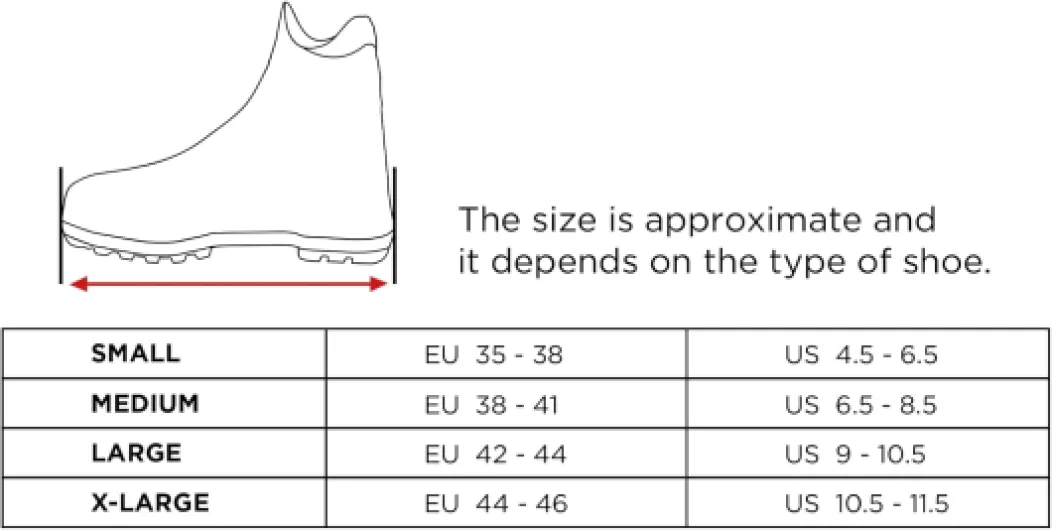
The size L is meant for EU 41–45. I’ve used them on two pairs: a pair of EU 43 winter hiking boots and a pair of EU 44 slightly bulkier leather boots. On both, the rubber frame stretched over fine. There’s enough elasticity to cope with different shapes, but you still need to pull a bit to seat them correctly, especially around the heel. If you’re near the top of the size range and have wide boots, I’d double-check and maybe go up a size, because one reviewer mentioned sizing being important.
On the ground, they sit somewhere between classic micro-spikes and full crampons. The steel points are short compared to technical crampons, but much more aggressive than those small studs you get on cheap slip-on grips. They’re clearly made for snow, ice and muddy trails, not bare rock. On wet tarmac they feel overkill and a bit awkward, like you’re walking on nails. That’s consistent with one review saying they’re too much just for going to the local shops.
Overall, the presentation is pretty straightforward: no fancy packaging, no gimmicks, just a practical set of micro-crampons and a pouch. If you expect a big manual or lots of guidance, you won’t find it. I had to rely on common sense and past crampon use to figure out the best way to fit and adjust them. For a beginner, a small fit diagram in the bag would have been useful, but it’s not a deal-breaker.
Pros
- Very good grip on compacted snow and ice thanks to 16 steel points
- Sturdy rubber harness and steel construction feel more solid than cheap slip-on grips
- Comes with a pouch, packs reasonably well, and stays stable on the boot once fitted
Cons
- Heavier and bulkier than basic micro-spikes, overkill for city or light use
- Fitting can be fiddly with cold hands and the rear strap/handle doesn’t inspire full confidence
Conclusion
Editor's rating
Overall, the Grivel Explorer M micro-crampons in size L are a solid option for people who actually hike in winter, not just walk around town. The 16 steel points, sturdy rubber harness and decent build quality give you real grip on compacted snow and ice. On frozen hill paths, they made a night-and-day difference to my confidence and pace compared to cheap slip-on grips. They feel closer to scaled-down crampons than to basic anti-slip gadgets.
They’re not perfect. They’re heavier and bulkier than minimalist micro-spikes, the fitting process with cold hands can be a bit of a pain, and that one report of the handle breaking is enough to make you treat the rear strap with some care. For mixed routes where you’re constantly switching between bare ground and ice, the on/off hassle is noticeable. And if your main use is city pavements or the occasional frosty morning, they’re simply too much tool for the job and not the best value.
If you’re a regular hill walker or light mountaineer who wants extra security on icy paths, moderate slopes and snowy trails, they’re a good, no-nonsense choice. If you need gear for real alpine routes, go for full crampons. If you just want something for the supermarket car park in winter, look for a cheaper, smaller set of grips. For that middle group—people doing winter hikes in places like the Lakes, Scotland, or similar terrain—these Grivels hit a practical balance between grip, durability and price.