
Summary
Editor's rating
Good value if you want grip without paying premium-brand prices
Simple microspike design that mostly focuses on function
Comfort is fine on boots, a bit less on thin trail shoes
Stainless steel and tough rubber, but not bulletproof
Holding up well so far, but long-term will depend on how you use them
Grip on ice and snow: where they actually shine
What you actually get in the box
Pros
- Very good grip on ice and packed snow for hiking and everyday use
- Stainless-steel spikes and chains with a harness that stays flexible in cold
- Top strap and snug fit keep them from twisting or slipping off the boot
Cons
- Not suitable for steep, technical mountaineering due to lack of front points
- Can feel the metal plate more on thin-soled trail runners, less comfortable than on boots

Specifications
View full product page →| Brand | TREKOLOGY |
Cheap insurance for icy trails
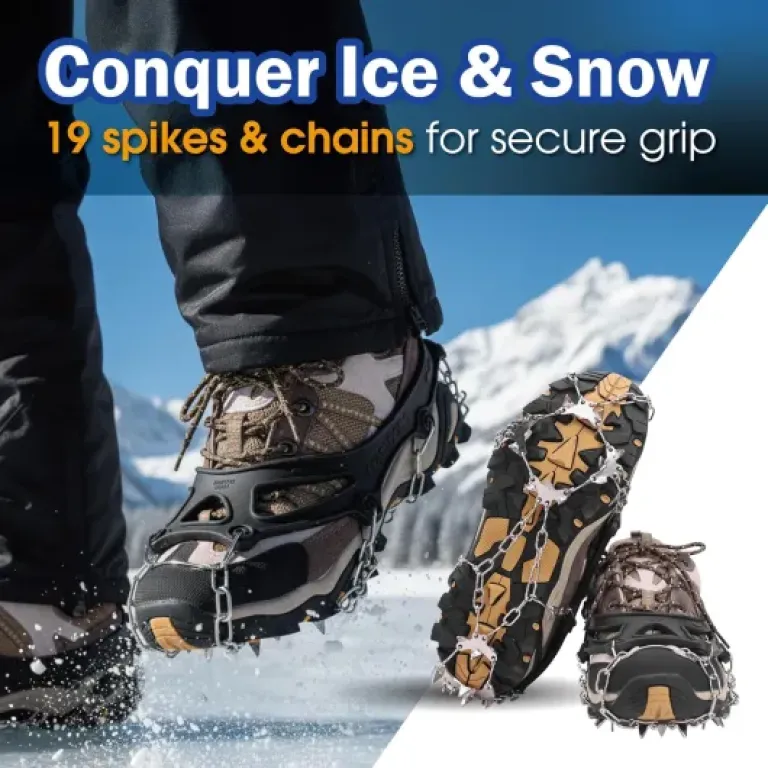
I bought these TREKOLOGY microspikes mainly as “winter insurance” for hiking and dog walks, not for hardcore mountaineering. I’ve used similar chains-and-spikes setups before (Kahtoola-style), but didn’t feel like dropping that kind of money again for something I only use a few months a year. So I went for these, size M, to use on my mid-cut hiking boots and a pair of trail runners. I’ve had them on packed snow, icy paths, and a couple of short, steeper sections where the trail turned into a frozen slide.
In everyday use, they do what I wanted: they stop you from skating around like Bambi on ice. The grip is solid on frozen pavements and forest trails, and I felt comfortable walking at a normal pace instead of shuffling carefully. They’re not magic crampons for climbing vertical ice, and they don’t pretend to be. Think of them more as “winter claws” that you slap on quickly when the ground looks sketchy.
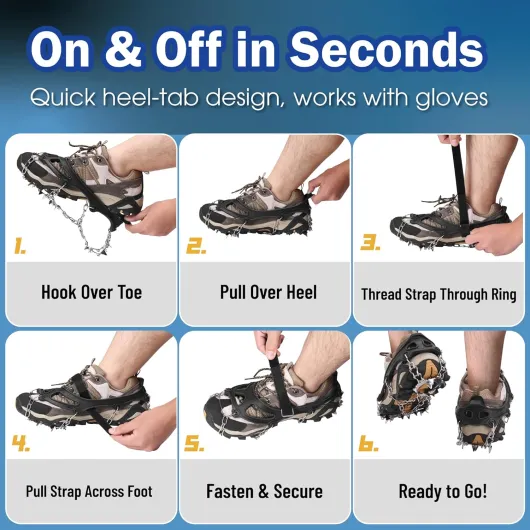
What struck me most the first few times was how quick they are to put on. I’ve had older models where you fight the rubber in the cold and swear a lot. With these, you still have to pull a bit, but the heel tab and the strap help. I can get them on and adjusted in under a minute per boot now, even with gloves. Taking them off is even faster, which is nice when you’re going from trail to bare rock or tarmac.
They’re not perfect though. They’re a bit on the heavy side compared to more premium options, and the metal plates underfoot are noticeable if your shoe soles are thin. Also, if you’re thinking of using them for serious mountaineering or very steep, icy gullies, that’s not what they’re built for. But for winter hikes, icy car parks, and general snow days, they’re pretty solid for the price.
Good value if you want grip without paying premium-brand prices
On the value side, these Trekology crampons sit in a nice spot. They’re clearly cheaper than the big-name microspikes that everyone talks about, but they don’t feel like throwaway junk either. For what I paid, getting stainless steel spikes, a proper harness with a top strap, and a carry bag is decent. They’re rated 4.5/5 on Amazon with quite a few reviews, and based on my use, I get why people are generally positive.
If you only need something for occasional winter hikes, dog walks on icy mornings, or trips to places like Scotland, North Wales, or similar, I think the price-to-performance ratio is good. You get reliable grip, acceptable comfort, and materials that seem up to regular use. Compared to going for premium brands at double the price, the main things you give up are maybe slightly cleaner finishing, a bit less weight, and the long track record of the expensive brands. For a lot of people, that trade-off is fine.
There are cheaper chain/spike copies out there, but in my experience those often skip the top strap, use thinner rubber, or cheap metal that rusts quickly. Trekology sits a notch above that “random no-name” tier. They’re not luxury gear, but they feel like they were at least designed with real use in mind. The one-year warranty is a small bonus, though I haven’t had to use it.
So from a value perspective: if you’re a casual to regular winter hiker and don’t want to spend big, these are a sensible choice. If you’re doing serious mountaineering or daily heavy use, you might want to invest in higher-end crampons and treat these more as a backup or for less demanding days.
Simple microspike design that mostly focuses on function
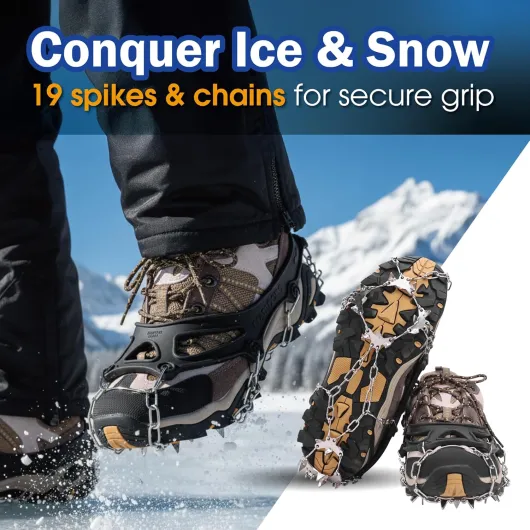
Design-wise, these crampons are very much in the “no nonsense” category. You’ve got the rubber harness that wraps around the boot, stainless-steel chains, and 19 spikes per foot. The spikes are not huge; they’re enough to bite into ice and packed snow without feeling like you’re walking on stilts. On flat or gently rolling terrain, that’s exactly what you want: grip without feeling unstable. There are no front points like on real mountaineering crampons, so on very steep slopes you hit the limit pretty fast, but for normal winter hiking they’re fine.
The layout of the spikes is decent. You get a good cluster under the forefoot and a set under the heel, so you’re covered for both braking and pushing off. On icy paths and verglas-covered rock, I felt them grab reliably. On mixed terrain (patchy snow, rocks, and mud), you obviously notice them more, and I tend to take them off if there’s too much bare rock just to avoid wearing the points down. The chains link the plates in a way that lets the sole flex naturally, so you don’t feel like your boot is turning into a ski.
The strap on top is a small but useful detail. Some cheaper models skip it and rely only on the rubber harness, which can let the crampon creep off the heel over time. With the strap tightened, these stayed locked in place for me, even when I was side-stepping on a slightly angled, icy slope. It’s Velcro, so nothing high-tech, but it works. Just be careful not to overtighten it on softer shoes or you’ll feel a pressure point.
One thing I noticed: on lower-profile trail runners, the metal plate under the ball of the foot is more noticeable than on boots. On firm ground (frozen car parks, rock), you can feel the plate through the sole a bit, like stepping on a bar. It’s not painful, but you’re aware of it. With stiffer hiking boots, I basically forgot about it. So if you’re planning to use these mainly on soft-soled running shoes, just know that comfort is a bit better on proper boots.
Comfort is fine on boots, a bit less on thin trail shoes
Comfort with this kind of gear is mostly about how they sit on the boot and whether they make your gait weird. On my mid-cut hiking boots, once they’re on properly, I barely think about them. The rubber harness hugs the boot without pinching, and the strap keeps the heel from slipping, so there’s no feeling of the crampon rotating around the sole. Walking on packed snow feels natural, just with more confidence. I didn’t get any hotspots or weird pressure points on my feet from using them for a couple of hours at a time.
On trail running shoes, it’s a bit different. Because the soles are thinner and more flexible, you feel the metal plate and spikes a bit more, especially on hard surfaces like frozen paths or bare rock. It’s not unbearable, but you’re aware something rigid is under there. If you mainly hike rather than run, I’d pair these with boots or at least a sturdier shoe. Also, if you overtighten the top strap on soft shoes, you can feel the pressure across the top of your foot, so it’s worth taking a second to adjust it properly.
Another point is noise and feel on mixed terrain. On pure snow and ice, they’re quiet and smooth. On gravel, tarmac, or rock, you get the usual clacking sound and a slightly awkward sensation, like you’re wearing football studs on a tiled floor. That’s normal for microspikes, but it does make you want to take them off when you hit long sections of bare ground. For short patches, I just slow down and accept the clank.
Overall, comfort is decent. They’re obviously not something you keep on all day on dry ground, but in actual winter conditions they’re easy to forget about once you find the right strap tension. If you’re sensitive to feeling metal under your feet, go for a stiffer boot and you’ll be fine.
Stainless steel and tough rubber, but not bulletproof
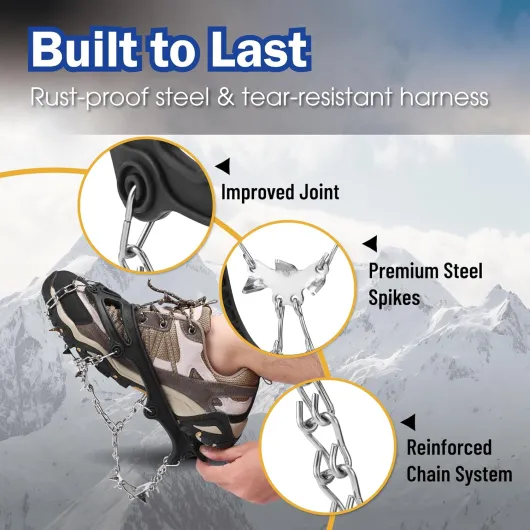
The materials are pretty standard for this type of gear, but in a good way. The chains and spikes are stainless steel, which is what you want for wet, salty winter conditions. I’ve used them on slushy roads and muddy, half-frozen trails, then tossed them back in the bag and frankly forgot to dry them properly a couple of times. So far, no rust spots or weird discoloration. The spikes still look sharp enough, just with the usual scuff marks from rocks and pavement.
The rubber harness feels thick and reasonably stretchy. In cold weather around –10°C, it stayed flexible enough to pull over my boots without feeling like it was going to crack. That’s important, because some cheaper elastomers get stiff and you end up fighting them. I’ve stretched these on and off quite a few times now, and I don’t see any tears or white stress marks forming around the edges or the eyelets where the chains attach. The brand claims they stay flexible down to –45°C; I haven’t tested that low, but at regular European winter temps they’re fine.
The Velcro straps are the only part that feels a bit more budget. They hold, but the stitching and the Velcro itself don’t scream “lifetime gear”. For the price, I’m not shocked, and they’re easy to replace with generic straps if they ever fail. The metal rings and connectors between chain and rubber look decent and haven’t bent or opened up, even after stepping on some awkward, rocky sections where all the weight went on a few spikes.
In short, the materials give a sense of “solid enough for frequent winter use” rather than “indestructible mountaineering kit”. If you’re using them on mixed terrain and avoid grinding them on bare rock all day, they should last several seasons. If you’re rough and use them like full crampons in rocky gullies, you’ll probably chew through the spikes faster. For normal winter hiking and city use, I’m comfortable with how they’re built.
Holding up well so far, but long-term will depend on how you use them
Durability is always the question with budget microspikes: are they a one-winter thing or can they last a few seasons? After several outings, including some abuse on rocky sections where I should have taken them off earlier, these Trekology crampons are holding up better than I expected. The stainless-steel spikes are scratched but not rounded off, and none of them are bent. The chains haven’t stretched or deformed, and the connectors between chain and rubber are still tight.
The rubber harness is usually the weak point on cheaper models, but here it still looks solid. I checked around all the holes where the chains attach, and I don’t see any tearing or major stretching yet. I’ve pulled them over fairly chunky boots a number of times, and while you can feel the tension, it doesn’t feel like they’re on the edge of ripping. I’m not babying them either; they get yanked off, tossed in the bag, and left in the car overnight in the cold.
That said, if you spend a lot of time walking on bare rock, concrete, or gravel with these on, you will wear the spikes down faster. That’s true for any microspike, not just this brand. They’re made for snow and ice, not as permanent studs for city walking. I try to take them off when I hit long non-icy stretches, and I think that’s the main reason they still look pretty fresh.
Given the build and how they’ve handled a few weeks of mixed winter use, I’d expect them to last several seasons for an average hiker who uses them on weekends and during cold snaps. If you’re out every day on rough terrain, you might eventually run into worn-down spikes or a torn harness, but at this price point that’s acceptable. So far, I’d call the durability “pretty solid” for what they cost.
Grip on ice and snow: where they actually shine
In terms of pure performance on ice and snow, these microspikes do the job very well for their category. On icy pavements and compacted snow on forest tracks, the difference between wearing them and not wearing them is huge. Without them, I was tiptoeing and sliding; with them, I could walk at a normal pace, even slightly downhill, without feeling like I was about to go on my backside. The 19 spikes per foot spread the load nicely, so you get grip whether you’re on your heel or forefoot.
I tested them on a short, steeper section where a mountain path had turned into hard, frozen snow with a light ice layer. They held up nicely as long as I kept my steps flat and deliberate. You can feel the spikes biting in, and there was no noticeable slipping. The limit appears when the slope gets steeper and you’d want proper front points to kick in. Here, you’re reminded these are microspikes, not full crampons: if you try to climb something too vertical, they just don’t have the geometry for it. For normal UK or European winter hiking trails, though, they’re more than enough.
On mixed terrain, with alternating ice patches, rocks, and mud, they stay in place and don’t twist, which is important. I’ve had cheap models before where a side step would cause the whole thing to rotate and dump the spikes on the side of the boot. With the Trekology ones, the combination of a decent harness and the top strap kept everything aligned. After a few kilometers, the spikes had the usual scuffs but no bent points or broken chains.
So performance-wise, they’re strong on their intended use: walking and hiking on icy, snowy surfaces. They’re not tools for technical mountaineering, and if you respect that limit, they feel safe and reliable. For winter dog walks, hill hikes, and icy car parks, they give you a lot more confidence than just “good winter boots” alone.
What you actually get in the box
Out of the box, you get the two crampons, a pair of Velcro top straps, and a small rip-stop carry bag. Nothing fancy, but it’s practical. The bag is big enough to slide the spikes in without playing Tetris, even when they’re wet or a bit snowy. I like that because I usually just toss them in my backpack and don’t want them chewing through other gear. The bag feels thin but not flimsy, and after a few trips it hasn’t torn or frayed.
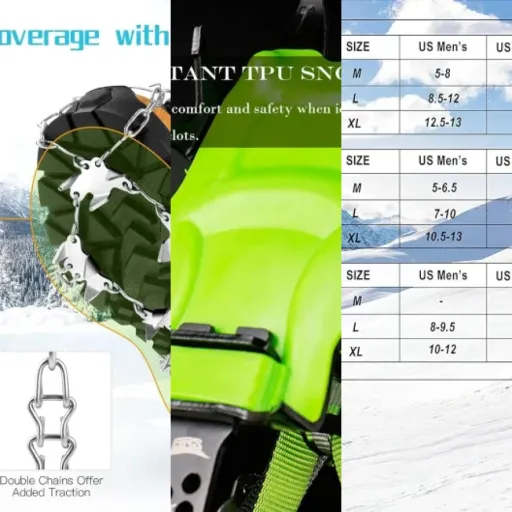
The crampons themselves are pretty straightforward: an elastomer harness (black rubber) that stretches over your boots, stainless-steel chains underfoot, and 19 spikes per foot. The spikes are grouped on small plates at the forefoot and heel. There’s also an adjustable strap that goes over the top of your boot to keep everything in place. No weird mechanisms, no moving parts, so not much to go wrong. It’s the classic microspike design that already exists on the market, just with Trekology’s branding.
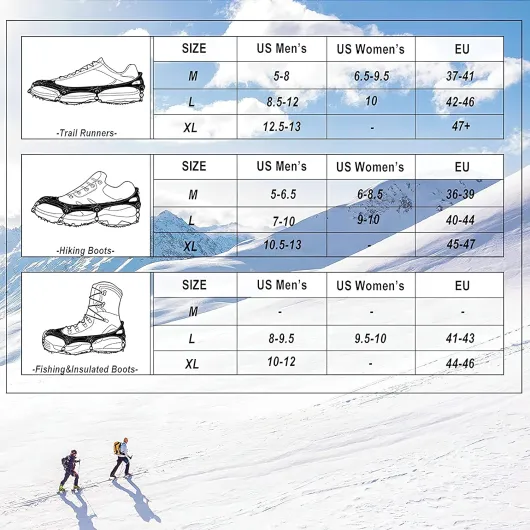
They come in different sizes; mine are M, and they fit my EU 42 hiking boots and trail runners fine. The brand says to size up if you’re at the top of the range or using chunky winter boots, and I’d agree. I tried them on a friend’s insulated boots that are bulkier, and M was borderline tight. The good thing is once they’re on, they sit snug and don’t twist around. On my boots they stayed aligned even when side-hilling on a sloped, icy track.
Overall, the presentation matches the price point: simple but functional. No premium unboxing experience or anything, but you do get everything you need to throw them in a car kit or backpack and keep them ready for bad weather. For something that’s going to be covered in mud, snow, and salt, I don’t really need more than that.
Pros
- Very good grip on ice and packed snow for hiking and everyday use
- Stainless-steel spikes and chains with a harness that stays flexible in cold
- Top strap and snug fit keep them from twisting or slipping off the boot
Cons
- Not suitable for steep, technical mountaineering due to lack of front points
- Can feel the metal plate more on thin-soled trail runners, less comfortable than on boots
Conclusion
Editor's rating
Overall, the Trekology 19-spike microspikes are a solid, no-drama option if you want more security on ice and snow without paying premium-brand prices. They grip well on the kind of terrain most people actually face in winter: icy pavements, frozen forest tracks, and snowy hill paths. The stainless-steel spikes and chains feel robust, the rubber harness stays flexible in the cold, and the top strap keeps everything in place. Comfort is good on proper hiking boots and acceptable on trail runners, as long as you accept that you’ll feel the metal a bit more with thinner soles.
They’re not perfect. They’re a bit heavier than some high-end competitors, the straps feel more budget, and they’re definitely not a substitute for real crampons on steep, technical terrain. If you walk a lot on bare rock or concrete with them on, you’ll wear the spikes faster, just like with any microspikes. But for average winter hikers, dog walkers, and anyone who hates slipping on ice in the car park, they offer good value and dependable performance.
If you’re a mountaineer or plan to tackle very steep, icy routes, I’d skip these and look at real crampons with front points. If you just want something you can throw in your pack or car and slap on whenever the ground looks sketchy, these Trekology crampons get the job done and don’t hurt the wallet too much.