
Summary
Editor's rating
Value: okay if you catch a discount, less convincing at full price
Design: more loafer than boot, and a bit confusing
Comfort: decent for short days, not really “orthopaedic”
Materials: leather in the title, but the specs are all over the place
Durability: feels okay short-term, long-term is questionable
Performance: grip is decent, “waterproof” is a stretch
What you actually get when you open the box
Pros
- Simple, neutral design that works with jeans and casual office outfits
- Slip-on style is practical for commuting and driving once broken in
- Decent grip and moisture resistance for everyday city use
Cons
- Marketing oversells them: not truly orthopaedic or fully waterproof
- Materials and build feel budget, with questionable long-term durability
- Confusing and inconsistent product specs reduce trust in what you’re actually getting

Specifications
View full product page →| Brand | QCHAOLI |
Loafers, boots… whatever they are, I wore them for a few weeks
I picked these up mostly out of curiosity. The title promises a lot: handcrafted leather, waterproof, non-slip, orthopaedic, ankle boots, loafers… it’s like they threw every keyword at the wall. I wore them on and off for about three weeks for work, driving, and errands, just to see if they’re actually decent or just another random cheap pair from a no-name brand.
Right away, I’ll say this: they’re not total garbage, but they’re also not the miracle shoe the description tries to sell. They sit somewhere in the “okay if you get them cheap and don’t expect too much” category. I’ve worn Clarks and Skechers loafers before, and compared to those, these feel more like budget stand-ins than proper daily shoes you’d rely on for years.
What got my attention was the mix of features: supposedly leather upper, orthopaedic comfort, non-slip rubber sole, and a slip-on design. On paper, that’s pretty much what I want for work and driving. In practice, some of that is true, some of it feels exaggerated, and some spec details on the listing are just plain weird, like saying the outer material is “paper” and the shaft is “above the knee”. Clearly the listing isn’t super clean.
If you’re thinking about buying them, the short version is: they can work as cheap everyday shoes if you’re not too picky, but there are a few red flags and compromises you should know first. I’ll break down what actually worked for me and what felt off, so you don’t go in expecting too much from a random brand you’ve never heard of.
Value: okay if you catch a discount, less convincing at full price
Value really depends on how much you actually pay for these. Online, this kind of no-name shoe tends to float around the budget to lower mid-range price bracket. In that zone, you usually accept a few compromises on materials and finish. For what they offer—simple style, slip-on convenience, basic comfort, and decent grip—they’re good enough if the price stays low.
Compared to more established brands: my Clarks slip-ons cost more, but the leather is clearly better, the insole has real support, and they’re still going strong after a couple of years. My Skechers loafers are also more comfortable out of the box and feel more breathable. So if the QCHAOLI shoes are close in price to those, I’d say they’re not worth it. But if they’re significantly cheaper—say, half the price or less—they start to make sense as a budget option or a backup pair you don’t mind scuffing.
One thing to factor in is the confusing product description. Claims like “waterproof,” “handcrafted leather,” and “orthopaedic” set expectations that the shoe doesn’t fully meet. If you buy them thinking you’re getting something on the same level as a proper orthopaedic or waterproof brand, you’ll be disappointed. If you go in thinking “cheap casual loafers that look okay and will last me a while,” the value feels more reasonable.
So in terms of value: they’re decent but nothing more. Worth considering if the price is low, you like the simple look, and you just need an everyday beater pair for commuting and errands. If you care a lot about material quality, proper support, and long-term durability, you’re better off spending a bit more on a known brand and treating that as an investment instead of gambling on a random listing.
Design: more loafer than boot, and a bit confusing
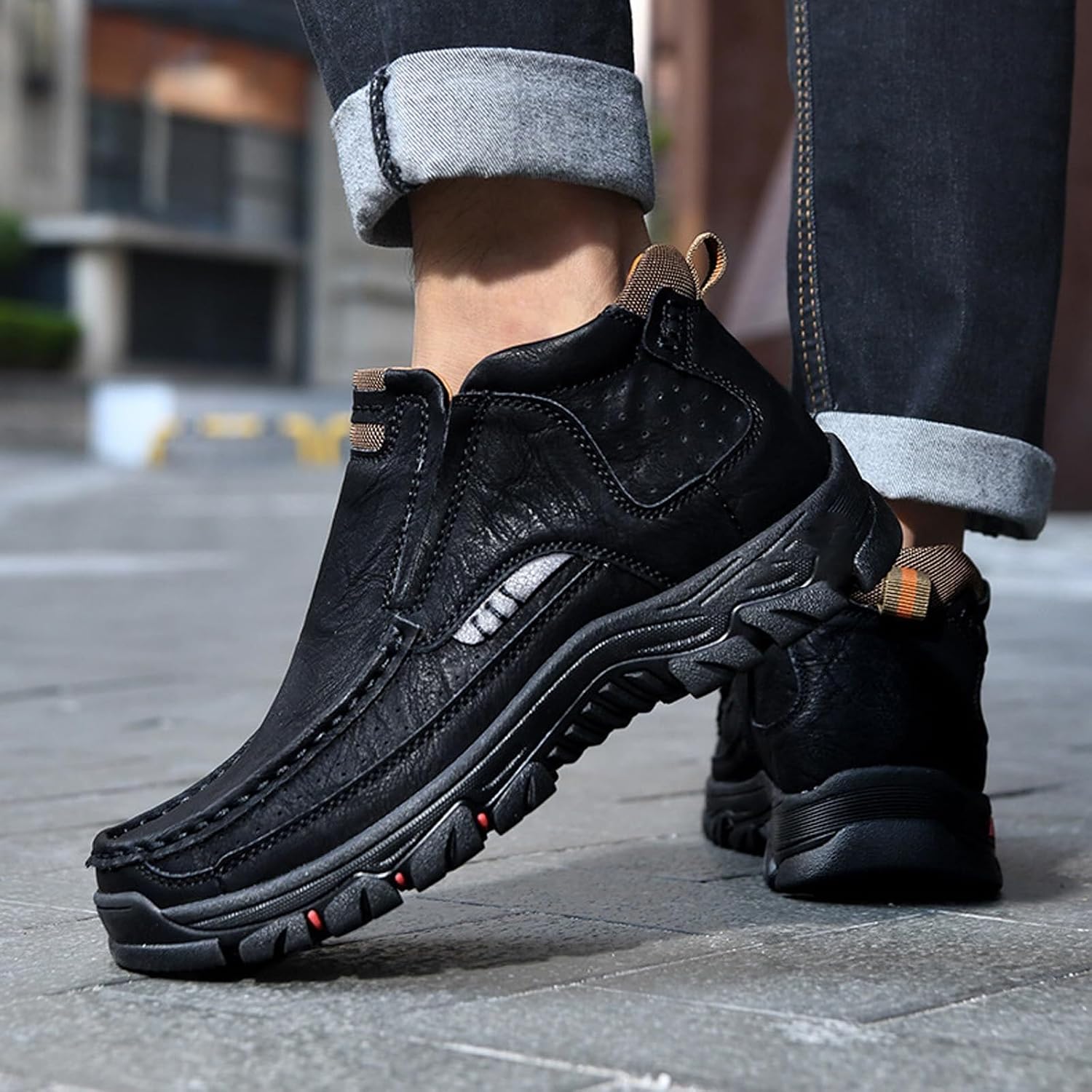
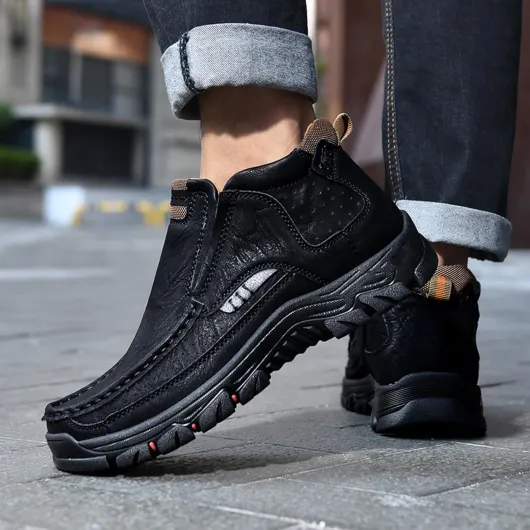
The design is where the marketing and reality don’t fully match. The listing calls them “ankle boots” and “loafers” in the same breath, which already sounds odd. On the foot, they’re clearly more of a slip-on loafer with a slightly higher cut, not a boot. They cover the top of the foot but don’t give that locked-in ankle feeling you get from actual ankle boots with laces or a higher shaft.
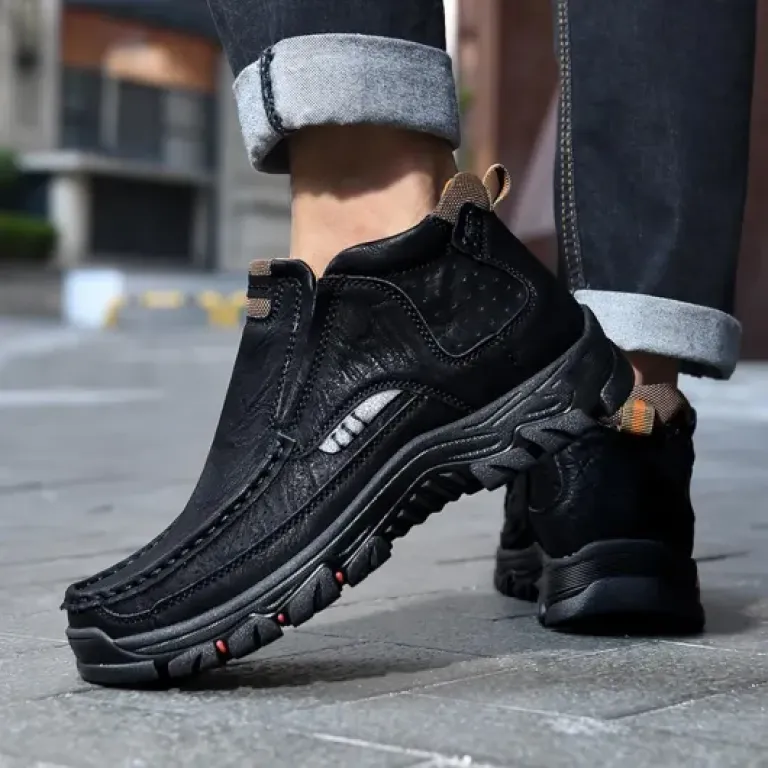
Style-wise, they’re pretty neutral. Plain black, almond toe, no flashy stitching patterns or logos. You’ve got some visible hand-style stitching around the front and sides, which gives them a bit of a “handcrafted” look, but it’s more cosmetic than anything. The shape is slightly rounded and not too pointy, so they don’t look dressy like office oxfords, but also not sloppy like house slippers. With jeans, they look totally fine. With chinos or business-casual trousers, they pass as simple work shoes if your office isn’t too strict.
One thing I noticed is that the slip-on design is actually practical, but the opening is a bit narrow. The first couple of times putting them on, I had to tug pretty hard at the heel to slide my foot in. There’s no elastic gore panels on the sides like you get on many loafers, just a slightly flexible upper. After a few days, it loosened up, but if you have a high instep, you might struggle a bit more. On the inside, the design is plain: basic lining, simple insole, nothing fancy like arch contouring you’d expect from “orthopaedic” marketing.
In short, the design is low-key and wearable, but the product name oversells it. If you want a clean, no-logo black slip-on for casual or semi-casual wear, the look is decent. If you’re actually looking for ankle boots with strong ankle support or something that matches a more formal outfit, this design isn’t really that. It’s more of a casual loafer that’s trying to sound more technical than it really is.
Comfort: decent for short days, not really “orthopaedic”
The brand throws the word “orthopaedic” in the title, which raised my expectations a bit. I’ve worn actual orthopaedic-style shoes before with proper arch support and cushioned midsoles, so I was curious. After wearing these for full workdays and some longer walks, I’d say the comfort is okay but nowhere near what I’d call true orthopaedic support.
The insole is lightly cushioned and soft enough under the heel. When you first step in, it feels fine: not too hard, not super plush. For a couple of hours of errands or a half day in the office, they’re comfortable enough. My feet didn’t feel cramped, and the toe box has reasonable room. I have average-width feet; people with very wide feet might find them a bit snug at first, but the upper loosens slightly after a few wears. There’s no major rubbing at the heel for me, though the collar is a bit stiff out of the box and softened after about three days.
Where they fall short is long-term support. On days when I wore them for 7–8 hours with a lot of standing, I started to feel the lack of proper arch support. The midfoot feels pretty flat, and the firm ABS sole doesn’t absorb shock as well as better rubber or foam soles. My lower back and heels felt more tired compared to when I wear my Skechers or Clarks loafers. If you have plantar fasciitis or need strong arch support, you’ll probably want to throw in your own orthotic insole, assuming there’s enough space (there is just enough volume to swap the insole, but it gets snug).
As for breathability, they’re okay but a bit warm. After a full day in a heated office, my socks were slightly damp, but not soaked. The lining doesn’t feel super breathable like mesh, more like a basic textile. For cooler months or mild weather, that’s fine. In hot summer, I’d probably avoid wearing these all day. So, overall comfort: fine for casual use and short to medium wear, but the “orthopaedic” label is overselling it. For proper all-day support, there are better options, especially from brands that actually specialize in comfort footwear.
Materials: leather in the title, but the specs are all over the place
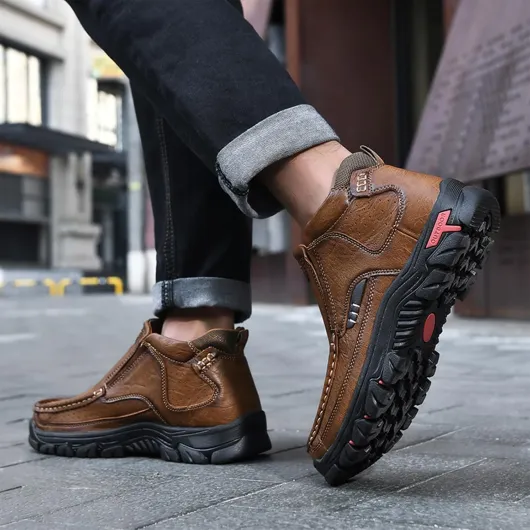
The materials are honestly a bit of a puzzle. The title says “handcrafted leather” and “premium leather upper,” but the spec sheet also says “outer material: paper” and the sole is ABS plastic. Obviously, nobody is walking around in paper shoes, so I’m assuming that part of the listing is wrong or copy-pasted from something else. Based on what I felt and smelled, the upper seems like a thin layer of coated leather or a leather-like synthetic. It has that slight leather smell, but it’s not as strong or natural as my full-grain leather boots.
To test it a bit, I bent the upper with my hands and wore them for a few days in mild drizzle. The material flexes without cracking and didn’t soak through instantly, which is good. But I wouldn’t call it fully “waterproof” like proper leather boots with sealed seams. It’s more “moisture resistant,” which actually matches the spec line. Light rain and wet pavements were fine for me; heavy downpour or walking through puddles would probably push them past their limit. The stitching around the toe and sides held up during my test, but you can see it’s not heavy-duty thread.
The sole is listed as ABS, which is a type of plastic. On foot, it feels harder and less rubbery than typical rubber soles from better brands. There is some textured pattern underneath that gives grip, but the overall feel is quite firm and a bit plasticky when you tap it. On smoother indoor floors, I didn’t slip, but you don’t get that cushioned bounce you get from real rubber or EVA-based soles. It’s more like wearing a firm platform with a bit of give from the insole.
Overall, the materials are what I’d expect at the lower price end: usable, but not premium. The leather claim is probably partially true (maybe bonded or low-grade leather with a coating), and the sole is a basic plastic compound that gets the job done but doesn’t feel high-end. If you’re picky about genuine leather quality and long-term aging, this pair will probably disappoint you. If you just need something that looks like leather from a distance and survives normal daily wear, it should be acceptable, as long as you don’t believe the “waterproof” and “handcrafted” wording too literally.
Durability: feels okay short-term, long-term is questionable
I’ve only had these for a few weeks, so I can’t pretend I’ve stress-tested them for years, but I can at least comment on the early signs. After about three weeks of on-and-off use (3–4 days a week, normal city walking, no rough terrain), the shoes are holding together. No seams have popped, and the sole is still firmly attached to the upper. That’s the good news.
Looking closer, you can see where corners were cut. The stitching isn’t perfectly even, and in a couple of spots you can see loose thread ends that were just cut instead of properly finished. The glue line around the sole is visible, and while it hasn’t separated on mine, you can tell it’s not the most robust build. The upper material has creased across the toe area, which is normal, but the creases look a bit sharper than on proper leather. That usually means the top layer might eventually crack faster over time, especially if you don’t care for them.
The sole material (ABS) also raises some questions for long-term use. Harder plastic soles can wear down in a weird way: instead of slowly grinding down like rubber, they can chip or get flat spots if you’re rough with them. So far, the tread on mine is still intact, but I only walked on normal pavements and floors. I’d avoid using these as your only pair of shoes if you walk a lot every single day. They feel more like a backup or occasional pair than a daily workhorse meant to last several seasons.
Based on what I’m seeing, I’d say they’ll probably survive a season or two of light use if you rotate them with other shoes and don’t beat them up. If you’re hoping for multi-year, heavy-duty durability, I’d look at better-known brands with proven build quality. These are okay for the price, but they don’t give that “buy once and forget about it” confidence.
Performance: grip is decent, “waterproof” is a stretch
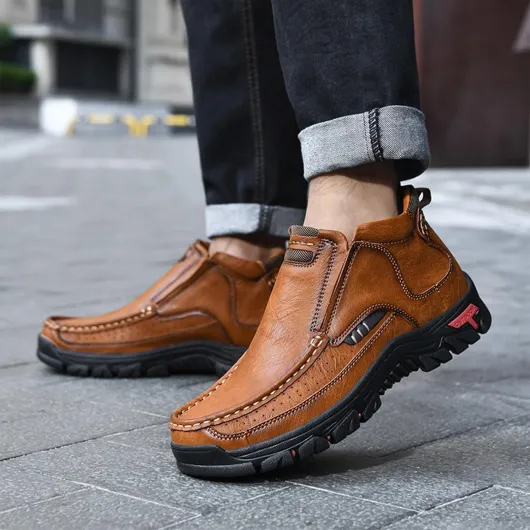
I tested these mainly in typical city conditions: pavements, tiled floors, a bit of wet ground after light rain, and driving. The outsole has a textured pattern that does provide some grip. On dry surfaces, there were no issues at all. On slightly wet pavements and supermarket tiles, I didn’t feel like I was skating, which is already better than some cheap smooth-soled shoes I’ve had before. I wouldn’t call the grip outstanding, but for daily use it’s pretty solid.
The brand talks about “non-slip rubber sole,” but the specs say ABS, and the feel is closer to hard rubberized plastic than soft rubber. That means you get stability, but not much cushioning from the sole itself. On longer walks, you feel more of the ground impact coming up through your heel. If you mainly use them for driving and walking from the car to the office or shops, you’ll probably be fine. If you plan to walk 10–15k steps a day, you’ll start noticing the firmness.
On the water resistance side, I’d call them “splash-proof” at best. I wore them in light drizzle and walked through some shallow puddles (just enough to get the sole wet and a bit up the side). My socks stayed dry, and the upper didn’t absorb water instantly. But if you stand in a puddle or walk in heavy rain, I wouldn’t trust the seams or the tongue area to keep water out. There’s no visible sealing or gusseting like you see on proper waterproof boots. So, the “waterproof” word in the title is definitely generous; “moisture resistant,” as written in the specs, is closer to reality.
For driving, they’re actually quite good. The slip-on design makes them easy to take on and off, and the firm sole gives a clear pedal feel. The heel shape also sits nicely on the car mat and doesn’t catch. So in terms of everyday performance: fine for commuting, office, and light walking; not a hiking boot, not a true rain boot, and not a sports shoe. If you match your expectations to that, they get the job done reasonably well.
What you actually get when you open the box
When the shoes arrived, the first impression was “okay, budget shoes, nothing fancy.” The packaging was basic: a plain cardboard box, thin paper wrapping, and that’s about it. No extras, no spare insoles, no care instructions beyond the usual generic slip. For the price range these usually sit in, I wasn’t expecting much anyway, so that part didn’t bother me.
Out of the box, they look more like casual loafers than proper ankle boots. The title says “ankle boots” and the specs even say “above-the-knee” shaft, which is obviously nonsense. On my foot, they sit just below the ankle bone, more like a low-cut slip-on shoe. If you’re expecting something that covers and supports your ankle like a chukka boot, you’re not getting that here. Visually, they pass for simple black casual shoes you can wear with jeans or chinos.
The finish is mixed. From a distance, they look fine: black, solid color, a bit of a vintage vibe like the listing says. Up close, you can see some uneven stitching and a few glue marks where the upper meets the sole. Nothing fell apart on me, but it’s clear you’re not dealing with a premium brand. The branding is super minimal: just a small label inside with QCHAOLI and the size. No big logos or flashy bits, which I actually liked.
Overall, the presentation matches the price: basic box, basic protection, shoes that look okay at first glance but don’t scream quality when you start inspecting them. If you’re buying them as a gift, they’ll look fine, but they won’t impress anyone who’s used to mid-range brands like Clarks, Ecco, or similar. For a pair you grab online and forget about, the presentation is acceptable but nothing more.
Pros
- Simple, neutral design that works with jeans and casual office outfits
- Slip-on style is practical for commuting and driving once broken in
- Decent grip and moisture resistance for everyday city use
Cons
- Marketing oversells them: not truly orthopaedic or fully waterproof
- Materials and build feel budget, with questionable long-term durability
- Confusing and inconsistent product specs reduce trust in what you’re actually getting
Conclusion
Editor's rating
After a few weeks with these Men’s “handcrafted leather” orthopaedic loafers/ankle boots, my take is pretty straightforward: they’re usable budget shoes with overhyped marketing. They look fine from a distance, slip on easily once broken in, and are comfortable enough for short to medium days of normal use. The grip on everyday surfaces is okay, and they handle light rain without soaking your feet. For commuting, driving, and casual office wear, they do the job as long as you don’t push them too hard.
On the downside, the build and materials clearly sit in the low-cost category. The “orthopaedic” label is more buzzword than reality, the “waterproof” claim is exaggerated, and the weird specs (like “outer material: paper” and “above-the-knee” shaft) don’t inspire much confidence. Durability feels acceptable for light use but not something I’d trust as my only daily pair for years. If you find them at a good discount and just want simple black slip-ons you won’t cry over if they wear out, they’re fine. If you expect real leather quality, strong support, and long-term reliability, I’d skip these and put the money toward a better-known comfort brand.