
Summary
Editor's rating
Value: more performance than the price suggests
Design: more like real crampons than rubber slip-ons
Comfort: fine for a few hours, but you feel the spikes
Materials: budget feel, but not flimsy
Durability so far: feels ready for a few winters
Performance on ice and snow: grip is the strong point
What you actually get out of the box
Pros
- Strong grip on ice and packed snow thanks to 14 long steel teeth
- Secure strap system that stays in place once adjusted correctly
- Good value for money compared to both cheap cleats and big-brand crampons
Cons
- Initial adjustment is a bit fiddly and there’s no clear instruction sheet
- Finishing is basic, with some rough edges compared to premium brands

Specifications
View full product page →| Brand | Generic |
Cheap crampons I actually trust on ice?
I bought these BRS-S1A crampons as a backup pair for winter hikes and icy commutes, fully expecting them to feel like generic budget gear. Unknown brand, basic listing, price on the low side – I wasn’t exactly confident. But I wanted something I could throw in my pack for those days when the trail turns into a skating rink halfway up the hill. I’ve tried a few rubber slip-on cleats before and most of them either snapped in the cold or rolled off my boots at the worst moment.
I’ve used these now on a couple of frosty morning walks, one proper icy hill day, and a few short tests on compacted snow and slushy pavements. Nothing extreme like vertical ice climbing, but enough mixed conditions to see where they shine and where they’re just “okay”. I mainly wore them on mid-ankle hiking boots (UK 9) and once on chunky trail runners.
Overall, the first impression is: these feel more serious than the price and the generic branding suggest. They’re not mountaineering crampons for technical stuff, but for typical winter hiking, hillwalking, or walking the dog on icy paths, they did the job better than I expected. Grip is strong, fitting is a bit fiddly at first but secure once dialled in, and they didn’t feel like they were going to fall apart after one outing.
They’re not perfect. There are some small annoyances, mainly around the straps and the fact that they’re a bit overkill for flat city use. But if you want something you can trust on frozen trails without spending big-brand money, they’re honestly pretty solid. Below I’ll break down what worked, what didn’t, and whether I’d buy them again.
Value: more performance than the price suggests
In terms of value, these sit in a nice sweet spot. They’re clearly cheaper than big-name crampons from brands like Grivel, Petzl, etc., but they offer more serious traction than basic £15 rubber ice cleats. For someone who does regular winter walks, hill days, or the occasional easy mountaineering route, they give you solid grip without destroying your budget.
What you’re paying for here is: 14 proper steel teeth, a metal frame, TPU anti-snow plates, and a strap system that actually holds. You do give up some things compared to premium crampons – nicer finishing, brand reputation, more precise sizing, and probably better long-term proven durability. But if you’re realistic about your use (winter hiking rather than technical climbing), the performance-to-price ratio is pretty good.
Compared to the cheap rubber slip-on spikes I’ve used before, these feel like a clear upgrade. Those cheaper ones are fine for icy pavements but sketchy on steeper slopes and tend to break after a season. These feel like they’ll last longer and give you more confidence on proper hills. So if you’re choosing between spending a bit more on these or saving a tenner and getting basic cleats, I’d say these justify the extra cost.
They’re still not the right choice if you’re planning serious alpine trips or vertical ice – in that case, you should bite the bullet and pay for a well-known technical crampon. But for UK-style winter walking, snowy holidays, or travel where you might hit icy trails, I’d call the value good. You get gear that feels capable without having to buy into a big brand name.
Design: more like real crampons than rubber slip-ons
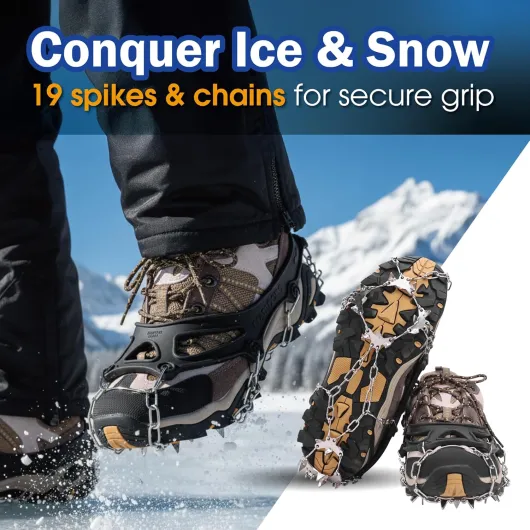
Design-wise, these sit somewhere between full-on mountaineering crampons and simple rubber microspikes. You’ve got a rigid-ish metal frame with 14 teeth underneath, plus a mix of TPU and nylon straps on top. The teeth are arranged so you’ve got plenty under the forefoot and a decent cluster under the heel. On steeper icy sections, I could feel the front and mid-foot spikes digging in rather than just the heel scraping around, which gave me more confidence to put weight forward.
The heel section uses woven nylon straps and buckles that wrap over and around your boot. Once adjusted, they sit pretty snug. I yanked pretty hard on them to see if anything would slip, and they stayed put. The front is held more by the TPU and linkage bar. It’s not the fastest on/off system in the world, but it feels secure. I didn’t have any instances of a crampon twisting off to the side, which I’ve had with cheaper all-rubber designs.
One thing I did notice: on narrow shoes (like my trail runners), there’s a bit more side play than on chunky hiking boots. Not enough to be dangerous, but you can feel the crampon isn’t perfectly matched to that slimmer shape. On normal hiking boots, the fit is better and feels more natural. So if you mainly use thin trainers, just be aware you might need to really cinch the straps down.
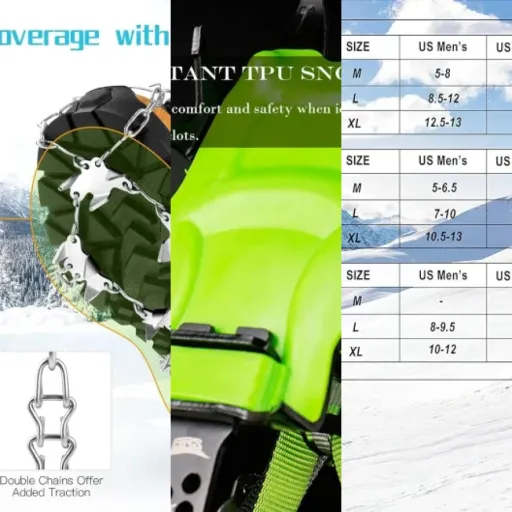
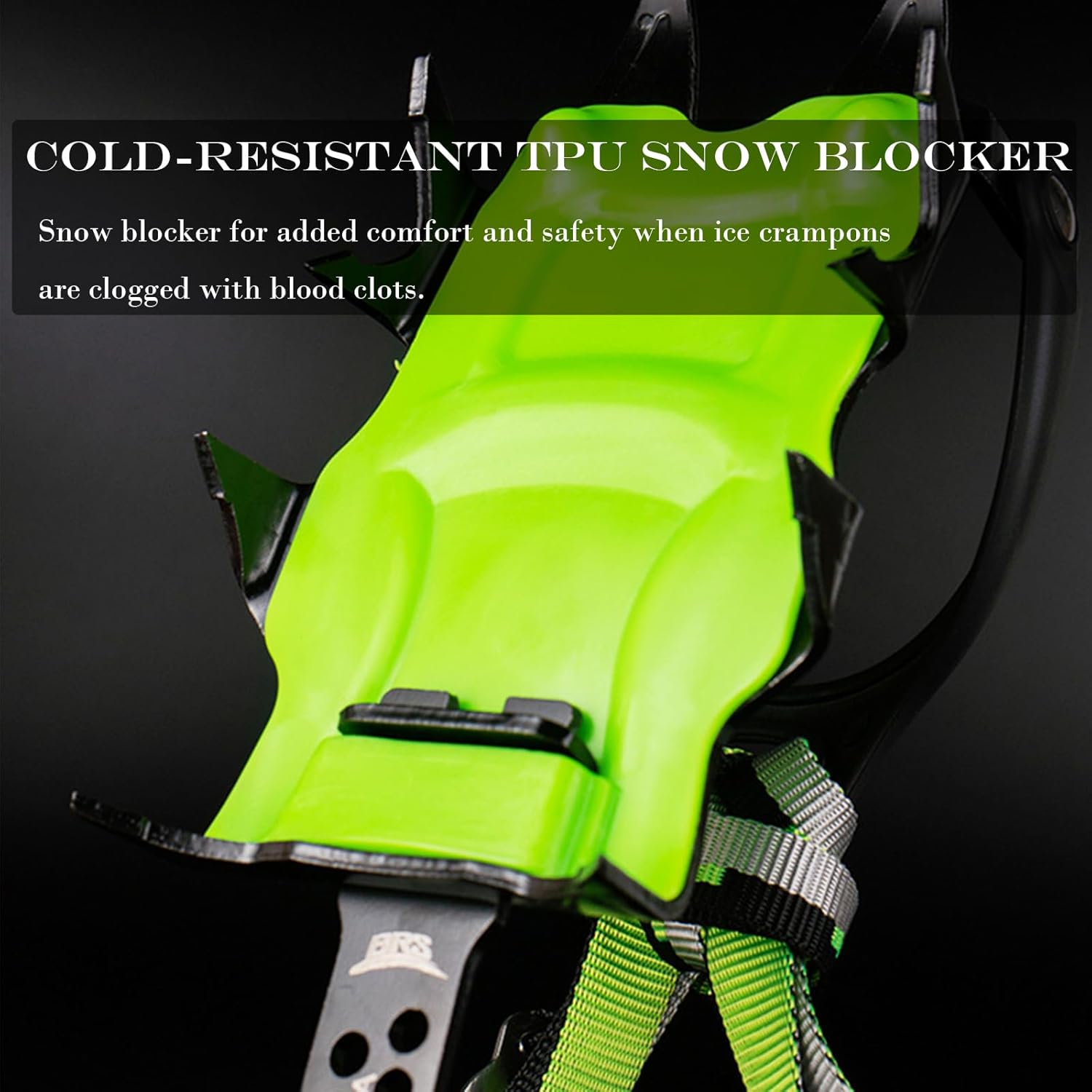
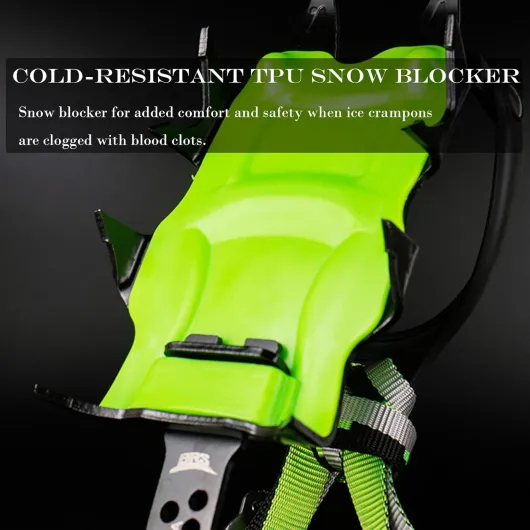
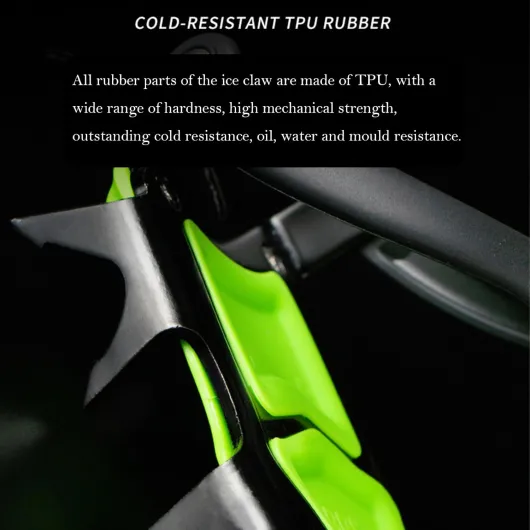
The integrated TPU anti-snow plates underfoot are a nice touch. They’re basically flexible plastic plates that help stop snow balling up between the teeth. On wet snow, I still got some build-up, but it was much less than with older crampons I own that don’t have plates. The bright green colour is slightly loud, but at least they’re easy to spot in a messy gear pile. In short, the design is focused more on function than looks, and for this kind of product, that’s exactly what I want.
Comfort: fine for a few hours, but you feel the spikes
Comfort with crampons is always a bit relative – you’re strapping metal spikes to your boots, so it’s never going to feel like trainers on tarmac. With these BRS-S1A, I did a 3-hour walk on mixed snow, ice and some bare path, and my feet felt okay at the end. No hotspots from the straps, no weird pressure points on top of the boot. The nylon straps spread the pressure fairly well, and the buckles didn’t dig in anywhere.
Underfoot, you definitely feel the stiffness. On solid ice and firm snow, that actually feels reassuring because the boot-crampon combo acts as one solid unit. On bare rock or short road sections, you feel a bit clunky and noisy, which is normal. I wouldn’t want to walk long distances on hard surfaces with these – not so much for comfort, but because it’s pointless wear on the spikes and a bit tiring for your ankles.
One thing I appreciated is that they didn’t wobble or twist once I had the fit dialled in. With some stretchy rubber cleats, your foot can roll slightly inside the crampon when you side-step or traverse, and that’s tiring and unnerving. Here, the more structured frame keeps everything aligned. I did a few short side-hill traverses on a hard icy slope, and my boots stayed nicely centred over the spikes.
If you’re very sensitive to weight on your feet, these will feel heavier than minimalist microspikes. But for what they are, I found the comfort perfectly acceptable. My tip: spend a few minutes at home adjusting the length and strap tension for your main boots. Once you’ve done that, putting them on in the cold is quicker, and you avoid over-tightening, which is what usually causes discomfort.
Materials: budget feel, but not flimsy
The listing is a bit confusing on materials – it mentions manganese steel, TPU and nylon, then in the specs it also says aluminium. From handling them, the teeth themselves feel like steel (they’re magnetic and have that solid, sharp feel), and the frame parts could be aluminium or a similar alloy. Either way, the important bit: the spikes are hard enough to bite into ice without deforming. After a few hours on mixed icy rock and compacted snow, I didn’t see any bent teeth or obvious damage.
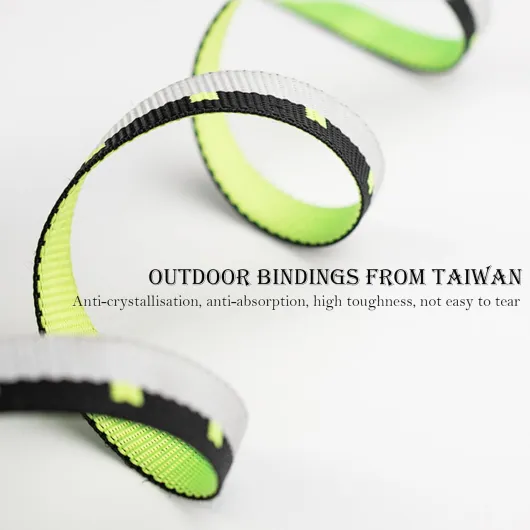
The TPU parts (the flexible plastic around the sides and under the anti-snow plates) stay flexible in the cold. I used them around -5°C and they never went stiff or brittle. I’ve had cheap rubber cleats literally crack in similar temps, so this is a positive. The nylon straps are pretty standard webbing – not luxurious, but they don’t feel like they’ll fray after two uses. The buckles are metal, not plastic, which is reassuring when you’re yanking them tight with gloves on.
One small downside: there are a few slightly rough edges on the metal frame in places. Nothing that cut my hands, but you can tell the finishing isn’t at the same level as premium brands. I’d avoid throwing them loose into a bag with a down jacket – better to keep them in the supplied pouch so they don’t catch on fabric. The welds and joints, though, look solid enough. I tugged and twisted the frame a bit to see if anything creaked, and it all stayed firm.
In practice, the materials feel good enough for regular winter hiking. I wouldn’t use these as my only crampons for very serious alpine trips, but for UK-style winter walking, frozen trails, and the odd snowy ridge, they’re absolutely fine. They give off a “budget but dependable” vibe rather than “cheap and disposable”, which is honestly what I was hoping for at this price point.
Durability so far: feels ready for a few winters
I haven’t had these for years obviously, but after a few proper outings and some deliberate abuse, they’re holding up better than I thought they would. No teeth have bent or snapped, the frame hasn’t warped, and the straps still look almost new. I spent some time walking over mixed terrain – ice, snow, a bit of gravel and the odd exposed rock – specifically to see if the spikes would deform. They’ve got some light cosmetic scratching, but the points are still sharp and straight.
The TPU parts are usually the weak point on cheaper crampons, especially in cold conditions. So far, no cracking or white stress marks, even after flexing them a bit by hand when cold. The nylon straps haven’t frayed at the edges yet, and the stitching looks tidy enough. The buckles still operate smoothly, and nothing has rusted, even after I stupidly left them to dry in a slightly damp shed for a couple of days.
I’d still treat them with basic care: rinse off salt and grit if you’ve used them on treated roads, let them dry properly, and store them in the supplied bag. If you just chuck them loose into a bag with other metal gear, you’ll probably end up with more cosmetic damage than necessary. But there’s nothing so delicate here that you feel like you need to baby them.
Given the price and the generic branding, I expected “one or two seasons then bin them”. After handling and using them, I’d say they should comfortably last several winters of regular hiking use, as long as you’re not doing hardcore alpine routes every weekend. There’s a 1-year warranty listed, which is standard, but based on what I’ve seen so far, I’d be surprised if they failed that quickly under normal use.
Performance on ice and snow: grip is the strong point
This is where these crampons actually impressed me. On hard, compacted ice, the 14 teeth dig in nicely. I tested them on a steep-ish forest track that had been walked on, frozen, then lightly dusted with new snow – basically a slide without traction. With normal boots I was skating; with these on, I could walk at a normal pace, even stop and turn without that nervous slipping feeling. The longish 40 mm spikes bite enough that you feel locked in, especially under the forefoot.
On packed snow and wet snow, grip was still good. I did get some snow balling under the foot in very wet, sticky snow, but less than with older, plate-less crampons I own. The TPU anti-snow plates aren’t magic, but they clearly help. Every now and then I’d knock my boots together to clear them, but it wasn’t a constant battle. On mixed sections where ice alternated with rocky patches, the spikes held up without bending, and I didn’t notice any teeth snapping or loosening.
For gentle mountaineering or winter hillwalking, they feel more than capable. I wouldn’t personally use them for technical routes or serious alpine climbing – partly because of the generic brand and partly because they’re not designed with front-pointing or super steep terrain in mind. But for UK hills, frozen paths, and general winter hiking, I felt confident in them. The one Amazon review mentioning they stayed secure even on wet snow matches my experience – once on, they stay put.
On flat urban pavements, they’re honestly overkill. Yes, you get great grip, but walking on bare tarmac with these spikes is awkward and noisy, and you risk wearing the points down. For city use, I’d go for smaller cleats. But if your main use case is trails, hills, and icy countryside paths, performance is pretty solid for the price.
What you actually get out of the box
When you open the package, it’s fairly simple: two crampons and a small mesh/nylon storage bag. No fancy branding, no glossy booklet, just a basic tag and that’s it. The bag is more useful than it looks – it’s breathable, so if the crampons are a bit damp or snowy when you pack them, they don’t stay soggy forever. I’ve tossed the bag in my pack a few times, and it hasn’t ripped or snagged yet.
The crampons come pre-assembled, so there’s no DIY setup. The 14 steel teeth are already mounted on the metal frame, and the TPU and nylon strap system is all attached. The first time you handle them, you immediately notice the spikes are quite long (up to 40 mm according to the listing). They look more like light mountaineering crampons than the tiny nubs you see on cheap city ice grips. That’s good for grip, but it also means these are clearly meant for trails and hills, not supermarket tiles.
The fit range is listed as UK 3–11.5 (EU 36–46), and I tried them on UK 6 trail shoes and UK 9 boots. They adjusted fine to both, but you do need to play with the double-hole steel linkage bar to get the length right. First time took me a few minutes because there’s no real instruction sheet, so you’re just figuring it out by trial and error. Once set for a particular pair of boots, it’s faster next time.
Overall, the presentation is no-frills, but functional. No fancy branding, but also nothing obviously cheap or broken out of the box. If you’re used to big outdoor brands with detailed manuals and diagrams, this feels a bit barebones. But in practice, you get everything you need: crampons that are ready to go, and a bag so they don’t shred the inside of your backpack.
Pros
- Strong grip on ice and packed snow thanks to 14 long steel teeth
- Secure strap system that stays in place once adjusted correctly
- Good value for money compared to both cheap cleats and big-brand crampons
Cons
- Initial adjustment is a bit fiddly and there’s no clear instruction sheet
- Finishing is basic, with some rough edges compared to premium brands
Conclusion
Editor's rating
After a few outings with the BRS-S1A crampons, my overall take is pretty simple: they’re honest, no-frills winter spikes that do the job well for typical hiking and walking. Grip on ice and packed snow is strong, the 14 teeth feel secure underfoot, and once you’ve adjusted the straps to your boots, they stay put. They feel more serious than the usual budget rubber cleats and give you the confidence to tackle frozen trails without constantly worrying about slipping.
They’re not perfect. The finishing is basic, the first setup is a bit fiddly, and they’re overkill for flat city pavements. If you’re into technical mountaineering or steep ice climbing, I’d still go with a known specialist brand. But for winter hillwalking, dog walks on icy tracks, or travel to snowy areas where you want solid traction without spending a fortune, they make a lot of sense.
If you want a budget-friendly crampon that feels reliable enough for regular winter use, these are worth a look. If you’re the type who pushes gear to the extreme or wants the lightest, most polished setup out there, you’ll probably be happier spending more on a big-name model. For everyday hikers and walkers who just want to stay upright on ice and snow, I’d say these are a pretty solid choice.