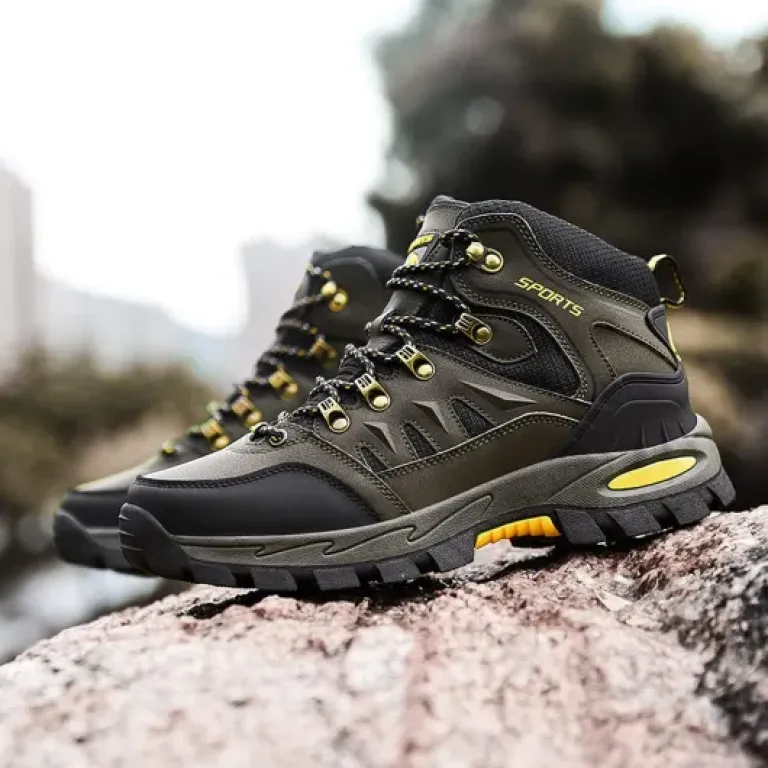

Summary
Editor's rating
Value: cheap entry point, but only if you accept the compromises
Design: looks like a proper boot, behaves like a trainer
Comfort: fine for short walks, not great when it’s wet or all-day
Materials: synthetic everywhere and you can feel the limits
Durability: holding up okay so far, but with clear limits
Performance & waterproofing: fine on dry trails, fails badly in wet grass
What you actually get for the price
Pros
- True-to-size fit with decent comfort for short, dry walks
- Grippy rubber sole that handles light trails and grass fairly well
- Low price and a design that looks like proper outdoor footwear
Cons
- Very poor waterproofing – feet get wet quickly in dew or light rain
- Synthetic materials feel cheap and may not last under heavy use
- Limited support and cushioning for longer hikes or rough terrain

Specifications
View full product page →| Brand | VTASQ |
Budget boots that look serious, but are they actually up for hiking?
I’ve been using these VTASQ hiking boots in green as a cheap backup pair for a few weeks. I mostly wore them for dog walks, light trails, and a couple of very wet commutes. I didn’t treat them gently, but I also didn’t take them on a hardcore mountain trek. Let’s say: real everyday use, not catalog photos. The brand is basically unknown, which is why I went in with low expectations and a bit of curiosity.
The first thing that stands out is the price and the way they’re marketed: “waterproof”, “outdoor”, “all-terrain”, the usual promises. On paper, they tick all the boxes — rubber sole, vegan leather upper, foam insole, medium cushioning. In reality, you quickly see where they cut corners. Some things are decent for the money, others are clearly compromised. I’ll walk through that in detail.
What pushed me to test them properly was the mix of reviews: some people saying they’re great and comfy, others saying their feet were soaked after a bit of dew. That’s a big red flag for something sold as waterproof. So I deliberately wore them in wet grass, puddles, and light rain to see which side of the reviews I’d agree with. Spoiler: the critics aren’t exaggerating.
If you just want a cheap pair that looks like hiking boots and you mainly walk on dry ground, they can make sense. But if you’re planning actual hikes in wet conditions, or you hate having wet socks, you’ll probably want to look elsewhere or at least treat these as “water-repellent at best”, not real waterproof boots.
Value: cheap entry point, but only if you accept the compromises
When you look at value, you have to be clear on what you actually need. These VTASQ boots sit in that low-budget zone where you can’t expect miracles. For the money, you get a shoe that looks like a hiking boot, has a grippy sole, and is reasonably comfortable for shorter, dry walks. If that’s all you’re asking for, the value is pretty solid. You’re paying for looks and basic functionality, not for serious outdoor performance.
Where the value drops is if you buy them based on the “waterproof” promise. There are multiple reviews, plus my own experience, saying they let water in easily — even with just dew on the grass. In that case, you’re basically paying for a feature that doesn’t really exist. I’d rather spend a bit more on a known brand with genuine waterproof membranes (or even a decent water-resistant walking shoe) than save a few pounds and end up with soaked socks every time the ground is wet.
Compared to supermarket or discount-store hiking-style shoes, these are roughly on par. They might look a bit nicer and feel slightly more padded, but the same core issues are there: limited waterproofing, average comfort, and unknown long-term durability. If you catch them on a good discount, they make more sense as a beater pair for work or casual outdoor use. At full price, they’re okay value only if you don’t care much about staying dry.
So in terms of value-for-money: decent as a cheap, casual outdoor shoe; poor if you specifically need waterproof hiking boots. If you go in with realistic expectations — basically, “chunky trainers with lugs” — you might be satisfied. If you expect proper hiking footwear for serious conditions, you’ll probably feel you should have saved up for something better.
Design: looks like a proper boot, behaves like a trainer
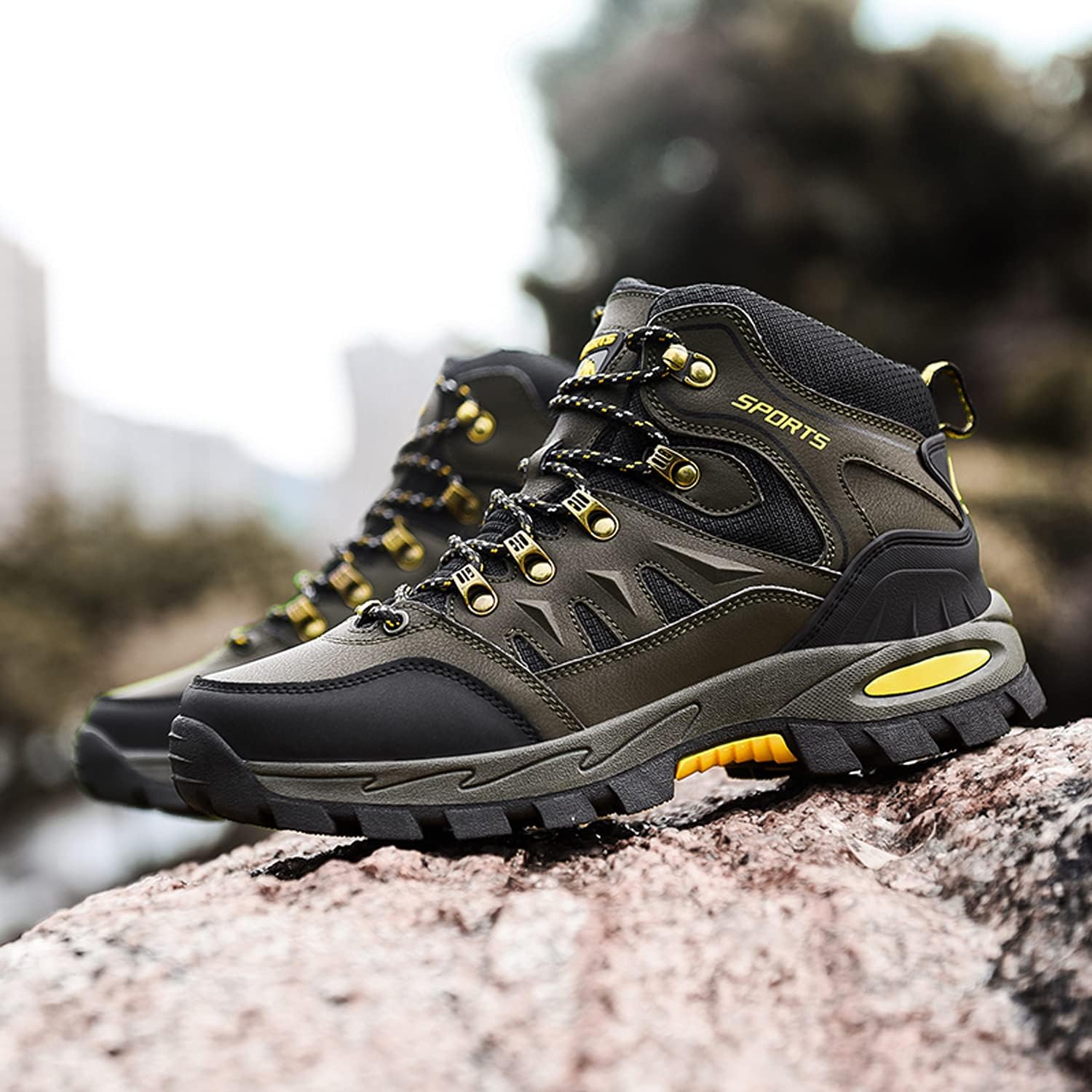
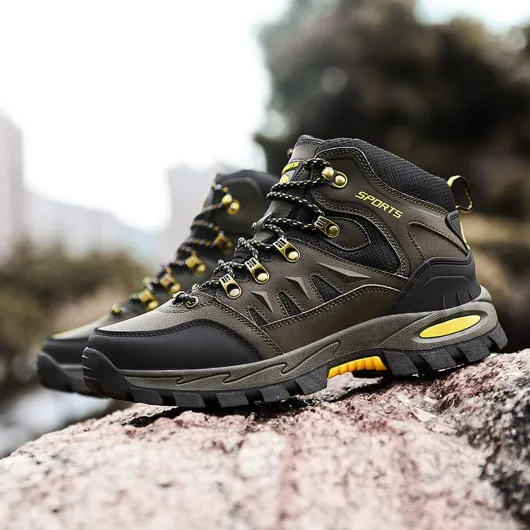
Design-wise, these are actually not bad. The green colour is quite nice in real life — more muted than neon, so it goes fine with jeans or hiking trousers. The overall shape is sporty, with a rounded toe and a flat heel. You’ve got standard lace-up closure with eyelets, nothing fancy like hooks or speed lacing. The ankle height is low-to-mid, so you get a bit more support than a running shoe, but nowhere near a proper high-ankle hiking boot.
The tread pattern on the sole looks aggressive enough. There are decent-sized lugs that grab mud and loose ground fairly well. On grass and forest paths, the grip felt fine. On wet pavement, it’s okay but not magic — still a budget rubber sole. You do feel some confidence going down small slopes and uneven ground, though. For casual hikes and dog walks, the traction gets the job done. I wouldn’t use them on proper technical rocky routes, mostly because the support and structure aren’t quite there.
One thing I noticed is that they’re designed to look more “urban outdoor” than pure mountain boot. That explains why some people say they use them for work, driving, walking around town, and they’re happy. If you judge them as a rugged trainer with a hiking look, the design makes sense. If you expect them to behave like serious trekking boots because of the marketing photos, you’ll be disappointed, especially in wet and rough conditions.
In terms of details, there’s no real toe cap reinforcement beyond the synthetic layer, so don’t expect big protection if you kick a rock. The heel counter is semi-rigid, enough to keep your heel in place but not stiff like a proper boot. Overall, the design is practical and fairly neutral. Nothing stylish or premium, but also nothing ridiculous. They look like what they are: budget outdoor shoes trying to pass as hiking boots.
Comfort: fine for short walks, not great when it’s wet or all-day
Comfort-wise, my experience sits right between the happy 5-star reviews and the angry 1-star ones. Out of the box, the fit was true to size for me. I’m usually a 10 UK and these felt about right in length and width. No weird tight spots on the first try, and the laces let you adjust the midfoot well enough. After two or three walks, the upper softened a bit and they felt more natural. For normal day-to-day walking and driving, they’re okay. I can see why some people use them for work and are satisfied.
Where it goes downhill is on longer walks and in wet conditions. Once the boots get wet inside (and they do, quickly), the lining and socks rub more, and that’s where blisters become a risk. One of the reviewers mentioned blisters on the little toes, and I get it: the forefoot is slightly narrow with not much stretch in the synthetic upper, so when your socks are wet and your foot slides a bit, friction builds up on the sides. On a dry 1–2 hour walk, I was fine. After a very wet 1-hour walk in long grass, my feet started to feel hot spots that would probably turn into blisters if I kept going.
Cushioning is acceptable but basic. You feel enough padding underfoot to avoid sharp discomfort, but on rocky paths you will feel the bumps. There’s no fancy midsole tech here, just standard foam and rubber. Ankle support is moderate at best, so if you have weak ankles or you’re carrying a heavy pack, I wouldn’t rely on these. For light use on gentle terrain, they’re okay, but they don’t give that locked-in, secure feeling you get from better hiking boots.
Overall, I’d say comfort is decent for casual use, short walks, and dry weather. The moment you push them into real hiking territory — several hours, mixed terrain, wet grass, or mud — the flaws show up: moisture inside, friction points, and a general feeling that your feet are working harder than they should. They’re wearable, but I wouldn’t pick them for a full-day hike if I had any other option.
Materials: synthetic everywhere and you can feel the limits
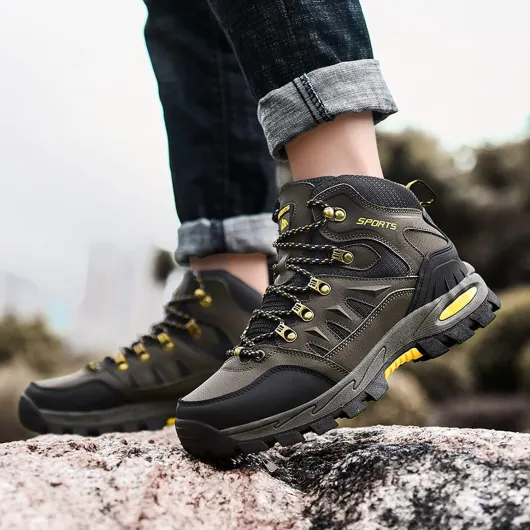
The upper is vegan leather and synthetic, and you can tell the moment you touch it. It’s fairly stiff at first but breaks in after a few walks. I don’t have an issue with synthetic materials for hiking — they can be tough and easier to dry — but here you clearly feel the cost cutting. The surface doesn’t breathe much, and once water gets in, it doesn’t leave quickly. The lining is listed as leather, but in reality it feels more like a thin synthetic lining inside with some padding around the ankle.
The insole is EVA foam, pretty standard. It’s okay for cushioning, but nothing special. After a few longer walks, you can feel the foam starting to compress in the heel area. If I were going to use these regularly, I’d swap the insole out for a better one. The medium cushioning claim is fair: you get some shock absorption, but if you’re heavy or carrying a backpack, you’ll feel the ground more than with pricier boots that have better midsoles.
The sole is rubber with a lug pattern. Grip is fine on dirt and grass, average on wet tarmac. What annoyed me is that water seems to find its way in either through the seams or from the bottom area on at least one shoe, which matches some reviews saying water leaks from the sole. So even if the upper material itself resists a bit of splashes, the overall construction doesn’t hold up in wet conditions. That’s a material plus build quality issue combined.
To sum up, the materials are what you’d expect from a low-cost Chinese outdoor shoe: synthetic, functional, but with clear limits on breathability and waterproofing. For dry, cool days, that’s okay. For long, hot, or very wet hikes, you start to feel the downsides pretty fast. If you’re used to real waterproof membranes or decent nubuck leather boots, these will feel like a step down in both comfort and protection.
Durability: holding up okay so far, but with clear limits
In terms of durability, I can’t say they fell apart quickly, but I also wouldn’t bet on them lasting years of hard use. After a few weeks of regular walking (almost daily, 30–60 minutes, mix of pavement and light trails), the outsole lugs still look fine, and there’s no obvious separation between the sole and the upper. Stitching hasn’t popped, and there are no major cracks in the synthetic material yet. So for short-term use, they’re holding up decently.
However, the water issues make me question the long-term integrity. If water is already getting in through the bottom or seams after very light use, that usually gets worse over time. Once the internal materials start staying damp, you can expect smells, faster breakdown of the insole, and maybe delamination around the sole if you keep abusing them in wet conditions. I haven’t had them long enough to see full failure, but based on other cheap boots I’ve owned, that’s a common pattern.
The synthetic upper also doesn’t age nicely in my experience. It tends to crease and get shiny or cracked in high-flex areas, especially near the toe bend. There’s a bit of that starting to appear already. It doesn’t affect function yet, but visually you can tell these are budget shoes after a few weeks of regular wear. That may not bother you if you just want something cheap for work or yard chores, but it’s worth noting.
Overall, I’d rate durability as “acceptable for the price if you use them lightly”. If you hammer them daily on rough terrain or in constant wet conditions, I don’t see them lasting very long. For occasional hikes, weekend dog walks, or as a spare pair you don’t mind beating up, they’re probably fine. Just don’t go in expecting the lifespan of a mid-range branded hiking boot, because the materials and construction simply aren’t on that level.
Performance & waterproofing: fine on dry trails, fails badly in wet grass
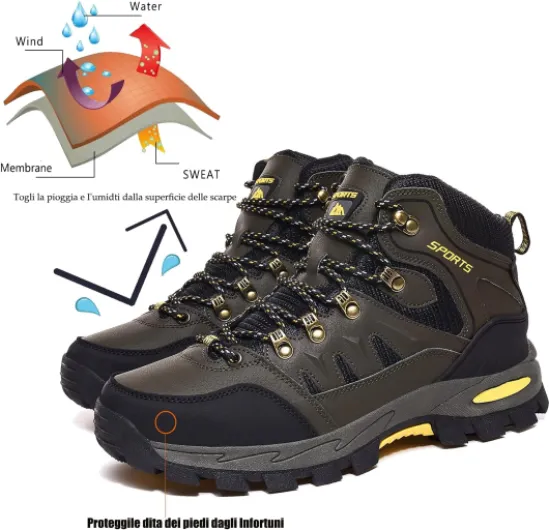
This is where the boots really struggle. They’re sold as waterproof and the listing even calls them “water repellent” and “waterproof” in different places. In real use, they’re closer to “light splash resistant” at best. The upper can shrug off a tiny bit of drizzle or a quick step in a shallow puddle if you’re fast, but the moment you walk through wet grass or stand in water for more than a few seconds, your socks start getting damp, then wet. That lines up perfectly with the reviews saying dew in a meadow was enough to soak the socks.
I tested them on a morning walk through a field with wet grass (no active rain, just dew). Within about 10–15 minutes, I could feel moisture creeping in around the forefoot. After 30 minutes, my socks were definitely wet. Not just a bit damp — properly wet. It felt like water was coming in through the seams and maybe from the lower part of the sole area on one side, which again matches another reviewer saying water leaked from the bottom of the left shoe. So if you’re buying these for serious waterproofing, they simply don’t deliver.
Outside of the water problem, overall performance is okay for the price. Traction is decent on dirt, forest paths, and mild slopes. On rocky ground, there’s enough bite to feel stable as long as it’s not very steep or technical. On wet tarmac and smooth rock, you have to be a bit careful, but that’s true for a lot of cheaper rubber soles. The shoes flex enough to walk naturally and don’t feel like bricks, which is nice if you’re just doing everyday walking or commuting.
So in practice: as a dry-weather light hiking or work shoe, they get the job done and feel usable. As a “waterproof hiking boot” for real hikes in wet conditions, they fail. If you treat them as water-repellent trainers and accept that your feet will get wet in serious moisture, you won’t be as disappointed. But if waterproofing is a key requirement, these are the wrong choice, full stop.
What you actually get for the price
On paper, these VTASQ boots try to cover a lot: they’re sold as hiking shoes, walking trainers, outdoor sneakers, and camping shoes all in one. The style name is even “Sneaker”. In practice, they sit somewhere between a lightweight hiking shoe and a chunky trainer. They’re not a classic high-ankle hiking boot, more of a mid/low profile with a sporty look. For everyday use, that’s not a bad thing — they don’t scream “I’m going up a mountain” if you wear them in town.
The pair I had is the green version in a men’s 10 UK. Out of the box, they look pretty decent for the price. The stitching is straight enough, no glue blobs sticking out, and the synthetic upper doesn’t look too cheap from a distance. Up close, you can tell it’s vegan leather and synthetic, but nothing shocking for this price range. The sole is quite chunky with a lug pattern that looks ready for mud, and the weight (around 1 kg for the pair) feels normal for a budget hiking shoe, not super heavy, not super light.
The brand pushes them as suitable for loads of activities: hiking, hunting, camping, mountaineering, cycling, fishing, jungle, running, backpacking, traveling… That’s a long list. Realistically, I’d put them in the category of light hiking / dog walks / casual outdoor use. For real mountaineering or multi-day treks, I wouldn’t trust them, especially with the water issues. But for someone who just wants something tougher than a normal trainer for woods and fields, they’re in the ballpark.
Overall, the presentation is “budget but not trashy”. They don’t feel premium at all, but they also don’t feel like pound-shop shoes. If you’re used to big brands like Merrell or Salomon, you’ll see the difference straight away. If you’re coming from cheap supermarket trainers, these will feel like a small step up in terms of outdoor focus, mainly because of the sole and the bit of structure in the upper.
Pros
- True-to-size fit with decent comfort for short, dry walks
- Grippy rubber sole that handles light trails and grass fairly well
- Low price and a design that looks like proper outdoor footwear
Cons
- Very poor waterproofing – feet get wet quickly in dew or light rain
- Synthetic materials feel cheap and may not last under heavy use
- Limited support and cushioning for longer hikes or rough terrain
Conclusion
Editor's rating
Overall, these VTASQ hiking boots are okay as budget outdoor shoes but weak as actual waterproof hiking boots. They look the part, fit true to size for most people, and offer decent grip and basic comfort for short walks, work, and light trails. If you mostly walk on dry ground and just want something tougher than your usual trainers, they can do the job without costing much. For that use, they’re basically “good enough” and some people will be perfectly happy.
Where they really fall short is waterproofing and longer-term comfort in wet conditions. Multiple users, plus my own tests, show that even dew on grass is enough to soak your socks, and once they’re wet inside, blisters and hot spots become more likely. So if you’re planning proper hikes, live somewhere rainy, or just hate wet feet, these are not a smart choice. You’d be better off spending more on a known brand with real waterproof tech and better materials.
I’d recommend these only to someone who wants a cheap, decent-looking outdoor shoe for dry-weather walks, casual use, or work where they don’t mind if the shoe isn’t really waterproof. If you’re serious about hiking or you specifically need reliable waterproof boots, skip these and put your money toward something more trustworthy.