
Summary
Editor's rating
Budget hiking boots that try to do it all
Value: makes sense if you’re on a budget and know the limits
Design: practical enough, but clearly budget
Comfort: wide and cushioned, but not true orthopedic
Materials: synthetic and rubber, with clear cost-cutting
Durability: looks acceptable short-term, unknown long-term
Waterproofing: fine for rain and puddles, not for deep or all-day soak
Performance: okay for light hiking, not for real mountains
What you actually get when you open the box
Pros
- Wide toe box that actually suits wider feet and reduces toe squeezing
- Decent waterproofing for rain, wet grass, and shallow puddles
- Lightweight and reasonably comfortable for short to medium walks
Cons
- Limited arch support and only average heel hold despite the "orthopedic" claim
- Breathability is poor, feet can feel warm and damp on longer walks
- Build quality and materials feel budget, long-term durability is uncertain

Specifications
View full product page →| Brand | Generic |
Budget hiking boots that try to do it all
I’ve been using these generic waterproof hiking boots for about three weeks now, mostly for dog walks in muddy fields, a couple of 10–12 km hikes, and general winter errands. I grabbed them mainly because they were cheap, wide fit, and claimed to be waterproof and orthopedic. I wasn’t expecting miracles, just something that would keep my feet dry and not destroy my ankles.
Right away, you can tell these are not from a big outdoor brand. No fancy logo, no big reputation, just a long title and a pile of promises: waterproof, ankle support, memory foam, wide toe box, non-slip, lightweight, unisex. Basically, they try to tick every box on the product page. In real life, they get some of it right, and some of it is just marketing text slapped on a budget boot.
I tested them mostly in typical UK-style bad weather: wet grass, muddy paths, a bit of light rain, a few shallow puddles, and cold mornings around 2–6°C. No hardcore mountain stuff, but enough to see if they’re decent as everyday hiking/walking boots. I also wore them indoors for a full workday to check comfort and heat buildup, because some cheap boots cook your feet after a few hours.
Overall, they’re okay for the price, but not some hidden gem. They’re fine for casual walking and light trails, especially if you need a wider fit, but I wouldn’t trust them for long mountain treks or multi-day hikes. If you treat them as budget walking boots and not as professional hiking gear, they make more sense and are easier to judge fairly.
Value: makes sense if you’re on a budget and know the limits
Value-wise, these boots sit in that cheap but usable category. You’re not paying for a logo or big brand research; you’re basically paying for a functional, wide-fit, synthetic hiking-style boot that covers the basics. If the price stays on the lower side of the hiking boot market, they’re reasonable. If they creep up into the range of entry-level big-brand boots, I’d skip them and go with something better-known.
The main things you’re getting for your money are: a wide toe box, basic waterproofing, ankle-height protection, and a sole that’s better than plain trainers for mud and grass. If you have wide feet and a small budget, that combination alone might make them worth it. You also don’t feel too bad about trashing them in bad weather because they’re not expensive. For occasional hikers or people who mainly walk dogs in fields and parks, the cost-to-utility ratio is decent.
Where the value drops is if you expect them to replace proper hiking boots for serious use. The “orthopedic” and “mountain” marketing is misleading. The support is average, the materials are clearly budget, and long-term durability is a question mark. If you know you’ll be doing long treks, rocky terrain, or multi-day trips, it makes more financial sense to spend more once than to keep replacing cheaper boots every season.
So in simple terms: if you want cheap, wide, reasonably waterproof boots for light use, the value is good. If you want serious outdoor gear, these are more of a stopgap solution than a smart long-term buy. Personally, I’d keep them as backup or for dirty, wet days when I don’t want to wreck my better boots, rather than as my main hiking footwear.
Design: practical enough, but clearly budget
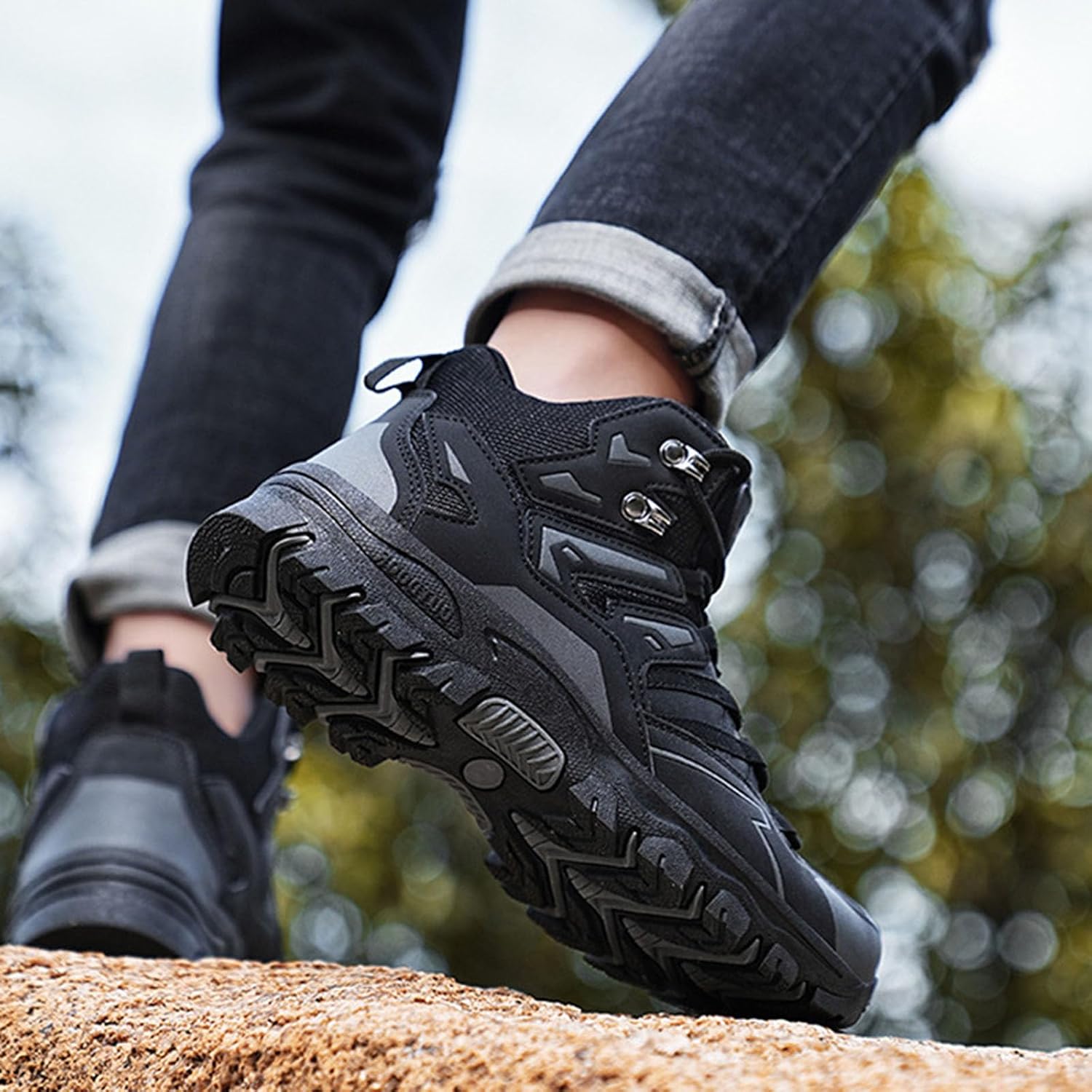
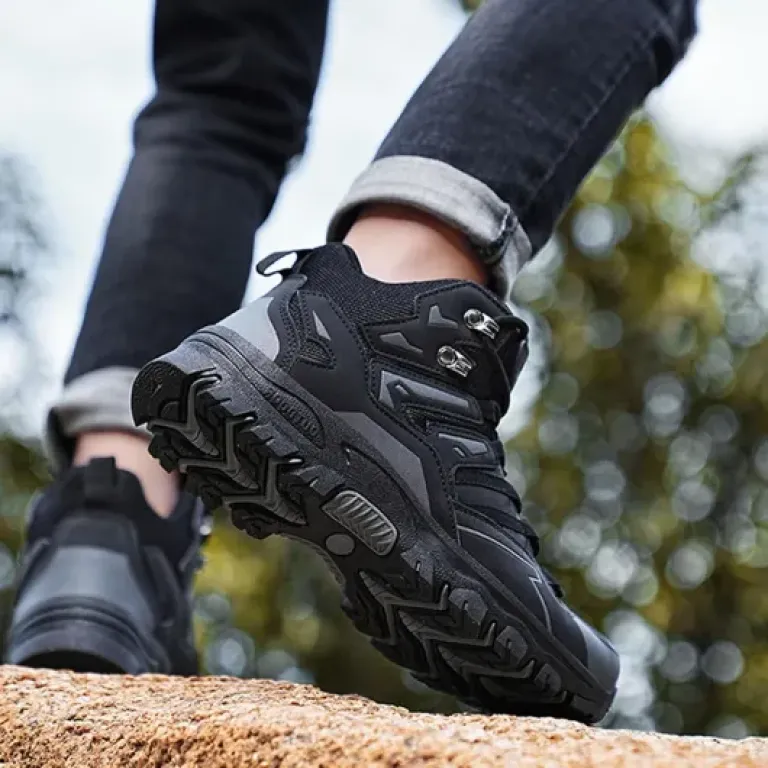
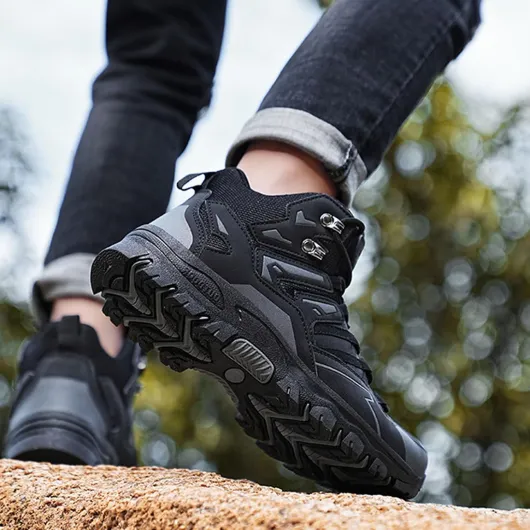
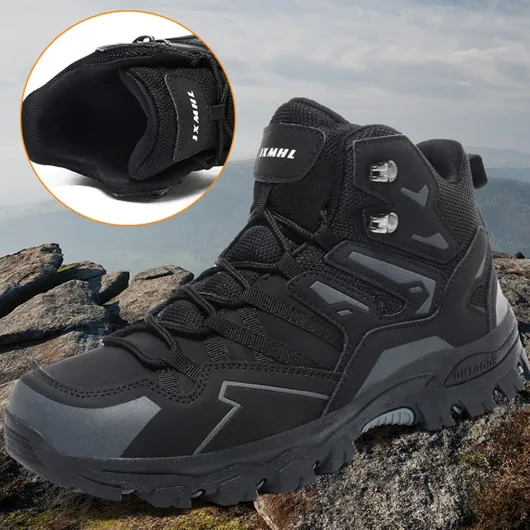
The design is pretty straightforward: ankle-high, lace-up, flat heel, black upper, and a rubber sole with a chunky tread. It’s clearly made to be practical first, style second. If you want something that looks great in city outfits, this is just okay. It works fine with jeans or hiking trousers, but it’s not going to impress anyone. On the plus side, being all black means mud doesn’t show as much, and they don’t clash with anything.
The ankle collar is slightly higher than a typical trainer, and there’s some reinforcement, but it’s not as stiff as a real mountain boot. I could still twist my ankle a bit if I tried on uneven ground, so don’t expect hardcore support. For normal paths and light trails, the support is enough to feel safer than in running shoes, but not rigid. The lacing system is simple: regular eyelets all the way up, no metal hooks. That keeps things simple but also means you can’t cinch the top as tightly or adjust tension in zones as easily.
One design choice I liked is the wide forefoot. You can actually spread your toes instead of being squeezed in. For me, that meant no rubbing on the little toe after longer walks, which I often get with narrower boots. However, the boot volume overall feels a bit high, so if you have low-volume feet, you may need an extra insole or thick socks to fill the space, otherwise your heel might lift slightly on steep slopes.
Visually, it’s very obvious this is a generic brand: no real logo, no clear model name on the boot, and the stitching lines are functional rather than stylish. Some seams look a bit chunky, and a couple of threads were loose on mine out of the box (nothing major, but it adds to the budget feel). For someone who just wants a black boot that doesn’t stand out and gets the job done, the design is fine. If you care a lot about aesthetics or brand image, you’ll probably find them a bit dull and cheap-looking.
Comfort: wide and cushioned, but not true orthopedic
Comfort-wise, these boots are better than cheap supermarket boots, but not on the level of real orthopedic or branded hiking footwear. The wide fit is the main strong point. I have slightly wide feet, and in many women’s boots my little toes get crushed after a few hours. In these, I had room to wiggle my toes, even with thicker hiking socks. That made a noticeable difference on a 12 km walk: no hotspots on the sides of my feet, which I usually expect from new boots.
The memory foam insole does help with general cushioning. Standing around for a couple of hours at an outdoor event, my feet felt reasonably okay. However, there isn’t much arch support. If you have flat feet or need real orthopedic structure, you’ll probably want to replace the insole with something better. After about 8 km, I started to feel some tiredness in the arch area, which I don’t get with my more supportive hiking boots. So the “orthopedic” claim is a stretch. It’s more like a soft, generic insole than something properly shaped.
The boots are fairly light for their size, which is nice. They definitely feel lighter than my leather boots from a known brand. Over longer walks, that helps reduce leg fatigue a bit. The ankle padding is soft and didn’t rub, but the heel hold could be tighter. On steep downhill sections, my heel lifted slightly, which can lead to blisters if you’re doing longer hikes. I didn’t get full blisters, but I felt some rubbing after a longer descent. Thicker socks helped, but then my feet got hotter.
Temperature-wise, they’re fine for autumn and mild winter. In temperatures around 3–8°C, my feet stayed warm with normal socks. Indoors or on warmer days (10–12°C), they start to feel a bit stuffy after a while. The upper doesn’t breathe that well, so moisture builds up on longer walks. Not enough to soak your socks, but enough to feel damp when you take them off. Overall, comfort is decent but not standout. Good for casual use and moderate walks, not ideal for serious hiking or people who need strong arch support.
Materials: synthetic and rubber, with clear cost-cutting
The upper feels like a synthetic leather / fabric mix, not real leather. That’s expected at this price, but you can feel it right away: slightly plasticky texture, not much natural flex. The advantage is that it’s easy to clean; I literally wiped mud off with a damp cloth and they looked fine again. The downside is breathability and long-term comfort. After a few hours, especially indoors or on mild days, my feet felt warmer than in my leather hiking boots from better-known brands.
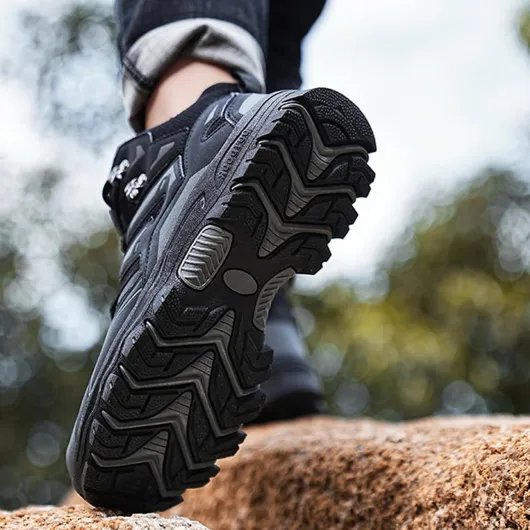
The sole is basic rubber. Grip-wise, it’s okay on wet grass and mud at walking speed. I did a couple of short, steeper slopes in a local park, and they held up fine as long as I wasn’t rushing. On wet, smooth pavement, they can still be a bit slippery if you hit a painted line or metal cover, so they’re not magic. The rubber compound doesn’t feel particularly soft or sticky, which is probably why it doesn’t grip as well on very smooth surfaces, but it might help it last a bit longer on normal paths.
Inside, the “dual layer memory foam” insole is there, but I wouldn’t call it thick or plush. It’s more like a medium-density foam with a thin softer layer on top. It does help a bit with pressure under the heel and ball of the foot, but if you’re used to quality orthopedic insoles, this one feels basic. The lining fabric is a generic mesh that’s fairly smooth, so it doesn’t rub much with normal socks. However, it doesn’t feel particularly breathable, and on one longer walk my socks were definitely on the damp side when I took the boots off.
Overall, the materials are what you’d expect for a low to mid-range no-name boot: functional, not luxurious, a bit plasticky, but not outright terrible. If you’re picky about natural materials or want something that molds to your foot over time, this is not it. If you just want something you don’t mind beating up in mud and rain without worrying too much, the materials are good enough, as long as you understand they won’t feel as nice or durable as higher-end options.
Durability: looks acceptable short-term, unknown long-term
I haven’t had these for months, so I can’t pretend I know exactly how they’ll hold up long-term, but after about three weeks of fairly regular use, a few things stand out. The outsole tread still looks almost new, which is good. No chunks missing, no obvious smoothing yet, even after a bunch of muddy walks and some pavement. That suggests the rubber is on the harder side, which should wear slower but also explains why grip on smooth wet surfaces isn’t fantastic.
The upper so far hasn’t cracked or peeled, but you can see where the synthetic material creases at the flex points near the toes. That’s normal, but with cheaper synthetics, those creases can turn into cracks over time. A couple of stitching points look a bit rough, especially around the tongue and side panels. No actual failures yet, but it doesn’t give that rock-solid feeling you get from more premium boots. I also noticed a tiny bit of glue visible where the sole meets the upper on one shoe. It’s holding fine for now, but it’s a reminder that quality control is not top-tier.
Inside, the insole is already starting to show slight flattening under the heel. If you’re heavier or walk a lot, I wouldn’t be surprised if the memory foam loses its bounce in a few months. That’s easy to fix with a replacement insole, but it’s something to keep in mind. The lining fabric is holding up fine so far, no pilling or tearing, and no seams have rubbed through my socks.
Overall, I’d rate durability as acceptable for the price, but not something I’d rely on for years of heavy use. If you want boots to wear every day for work or serious hiking, I’d invest in a better-known brand. If you just need something for weekend walks and occasional hikes, and you’re okay if they last a season or two rather than five years, these are probably fine. Just don’t expect miracles from a generic boot made with budget materials.
Waterproofing: fine for rain and puddles, not for deep or all-day soak
The waterproof claim was one of the main reasons I tried these, and they’re better than basic trainers, but not completely bulletproof. In light to moderate rain, wet grass, and shallow puddles (up to just below the laces), my feet stayed dry. I did several walks of 1–2 hours in wet fields, and no water came through the upper or seams in that time. So for everyday bad weather, they do what they say.
The upper feels like it has some kind of coating, and the seams look taped or at least sealed from the outside. Water beads up and rolls off at first. After a while, the outer material does start to look damp, but it didn’t immediately soak through to my socks. That’s fine for normal use. I did a small test standing in a shallow puddle for a few minutes, and they held up okay. When I pushed it and stayed longer, and let the water reach closer to the tongue area, I started to feel a bit of dampness near the forefoot. Not a flood, but clearly not fully sealed like a proper high-end waterproof boot.
Breathability is the trade-off. Because the waterproofing is basically a coated synthetic upper, moisture from sweat has a hard time escaping. On colder days, that’s not a big deal and your feet stay warm and mostly dry. On milder days or longer walks, socks end up slightly damp from sweat even if no water got in from outside. So your feet can feel clammy after a couple of hours, which isn’t ideal if you’re planning long hikes.
In summary, waterproofing is good enough for normal rain and everyday wet conditions, but I wouldn’t trust these for all-day hikes in heavy rain, deep puddles, or streams. If you treat them as water-resistant walking boots rather than hardcore waterproof mountain boots, you’ll be less disappointed. For dog walks, commuting in wet weather, and casual hikes, they’re fine. For serious winter mountain trips, I’d want something more reliable.
Performance: okay for light hiking, not for real mountains
In actual use, these boots handle light hiking and daily walking reasonably well. On typical park trails, forest paths, and muddy fields, they did the job. The tread pattern bites into soft ground enough that I didn’t feel like I was slipping all the time. Going up and down small hills, they felt stable as long as I kept a normal walking pace and didn’t try to jog. On rocky terrain, they’re less convincing: the sole is a bit too flexible, and I could feel some sharper stones through the footbed on rougher paths.
The ankle support is better than trainers but nowhere near a true trekking boot. I twisted slightly stepping on a hidden rock in mud, and while the collar helped a bit, it didn’t fully lock the ankle. For casual countryside walks, it’s fine. For serious mountain trails with heavy backpacks, I’d want something stiffer and more supportive. The flat heel is comfortable for everyday wear, but again, it doesn’t give that locked-in feel you get from more technical gear.
One thing I did notice is that the grip on wet, smooth surfaces is just average. On wet pavement and especially on painted lines or metal covers, you still need to be careful. The “2X stability” claim compared to standard outdoor shoes feels pretty exaggerated. Compared to my normal trainers, yes, the tread helps in mud and grass. Compared to mid-range hiking shoes from known brands, the difference is either small or in favor of the branded ones, especially on mixed terrain.
For longer walks (10–15 km), the boots are okay but not perfect. The light weight helps, but the basic arch support and slightly loose heel hold start to show. I’d personally keep these for shorter local hikes, dog walking, and general winter use rather than full-day mountain routes. So in terms of performance: fine for casual outdoor use, not what I’d choose for anything technical or demanding.
What you actually get when you open the box
Out of the box, these look like generic black hiking boots you’d see in a supermarket or discount sports shop. No fancy branding, just a plain synthetic upper, rubber sole, and standard laces. The product page makes it sound like some high-tech mountain boot, but in hand it feels more like an everyday walking boot with a bit of ankle support. That’s not a bad thing, just set your expectations there.
They’re sold as unisex, and that checks out. The shape is pretty neutral, not especially feminine or masculine. The pair I got is a UK 5 wide fit, and the toe box really is noticeably wider than most standard women’s boots I’ve tried. If you have wide feet or bunions, that’s actually a big plus. If you have narrow feet, you’ll probably float around unless you wear thicker socks or add an insole.
There’s some padding around the ankle collar and tongue, but nothing fancy. The insole is removable and labeled as memory foam. It does have some give, but it’s not the thick, premium type you get in more expensive brands. The sole has a fairly aggressive tread pattern with those 3D-style lugs and angled grooves they mention. It looks like it should grip well in mud and on wet ground, and in basic use, it does a decent job.
In terms of first impression, I’d call them basic but acceptable. They don’t scream quality, but they also don’t look like cheap plastic toys. If you’re used to big brands like Merrell or Salomon, you’ll immediately notice the difference in finish. If you’re upgrading from everyday trainers or supermarket boots, these will feel like a small step up in support and grip, but nothing more than that.
Pros
- Wide toe box that actually suits wider feet and reduces toe squeezing
- Decent waterproofing for rain, wet grass, and shallow puddles
- Lightweight and reasonably comfortable for short to medium walks
Cons
- Limited arch support and only average heel hold despite the "orthopedic" claim
- Breathability is poor, feet can feel warm and damp on longer walks
- Build quality and materials feel budget, long-term durability is uncertain
Conclusion
Editor's rating
These generic waterproof hiking boots are budget-friendly, wide-fit walking boots that handle everyday outdoor use fairly well, as long as you don’t expect them to behave like premium mountain gear. They’re comfortable enough for short to medium walks, the wide toe box is a real plus if you have broader feet, and the waterproofing is decent for normal rain, wet grass, and shallow puddles. Grip in mud and on soft ground is okay, and they feel lighter than many stiff leather boots, which helps reduce fatigue on casual walks.
Where they fall short is in proper support, breathability, and long-term confidence. The "orthopedic" label is optimistic; the insole is soft but doesn’t offer strong arch support, and heel hold is only average. On wet, smooth surfaces, they’re not much better than basic outdoor shoes, and the synthetic materials feel clearly budget. Durability looks acceptable so far, but I wouldn’t count on them for years of hard use. They make more sense as a cheap option for dog walking, weekend countryside strolls, or as a spare pair for bad-weather chores.
So, who are these for? People with wide feet, a tight budget, and mostly light-use plans: parks, fields, easy trails, winter errands. Who should skip them? Anyone doing serious hiking, long mountain routes, or who needs strong orthopedic support and top-tier waterproofing. If you go in knowing they’re cheap, basic, and functional, you’ll probably be satisfied. If you expect them to compete with big outdoor brands, you’ll notice the compromises pretty quickly.