
Summary
Editor's rating
Is Grangers G‑Wax worth the money?
Beeswax-based and what that means in real life
Tin, no nonsense – but a couple of quirks
How long it lasts on the boots and in the tin
Real-world use: hikes, rain, and everyday abuse
What you actually get in the tin
Waterproofing and conditioning: does it actually work?
Pros
- Very good waterproofing and conditioning for full‑grain leather boots
- One small tin lasts a long time, making it good value for money
- Beeswax-based, VOC‑free, with no harsh smell and easy to work in with a bit of warmth
Cons
- Darkens leather and can change the finish, especially on lighter colours
- Takes a bit of time and effort to apply properly, especially if you want deep penetration

Specifications
View full product page →| Brand | Granger's |
Old-school tin, still worth it?
I’ve been messing around with different products on my leather boots for years – Nikwax, dubbin, random supermarket polishes – and Grangers G‑Wax keeps popping up in outdoor forums and from boot manufacturers. So I grabbed an 80 g tin to see if it’s actually any better, or just another wax in a fancy tin. I used it mainly on a pair of full-grain leather hiking boots that were starting to look dry and a bit tired, plus an older pair of work boots that see a lot of rain and mud.
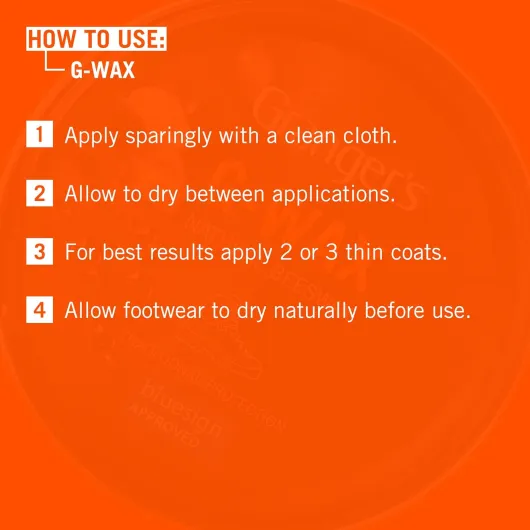
My routine with it was pretty simple: clean the boots with a damp cloth and brush, let them dry, then apply G‑Wax with a cloth and sometimes my fingers, and finally warm it gently with a hair dryer so it soaks in. I did this a couple of times over a few weeks, including before a couple of wet hikes and some all‑day use in the city in heavy rain. So this isn’t a lab test – it’s just how someone who actually wears their boots would use it.
Overall, I’d say G‑Wax is a classic, no‑nonsense product. It doesn’t feel like some high‑tech miracle, but it does what you expect: it makes leather darker, more supple, and more water‑resistant. You can tell it’s beeswax‑based from the feel – slightly sticky when you dig into the tin, then it softens nicely with a bit of warmth. It’s closer to a traditional dubbin than a modern liquid waterproofing spray.
It’s not perfect. It will darken light leathers, it’s easy to overdo it and end up with slightly greasy boots, and it’s not the fastest product to apply if you want it to penetrate properly. But for the price and the amount of use you get from one tin, it’s pretty solid. If you’re expecting shiny dress‑shoe polish, this isn’t that. If you want your hiking or work boots to stay flexible and keep water out, it’s much more in its element.
Is Grangers G‑Wax worth the money?
In terms of price, G‑Wax sits in a very reasonable spot. It’s usually cheaper than some of the more heavily marketed modern waterproofing sprays and about on par with other traditional waxes and dubbins. Considering how little you use per application and how long one tin lasts, the cost per treatment is low. If you look after your boots properly, that small tin can easily stretch over a lot of months, maybe longer if you’re not constantly soaking your footwear.
Compared to something like Nikwax Aqueous Wax or similar water‑based products, I’d say G‑Wax gives you more heavy-duty protection per euro spent, especially for full‑grain leather boots. The trade‑off is that it darkens the leather more and is less suited to fancy finishes or very light colours. If you’re trying to keep a certain look on your shoes, you may prefer something lighter. But if the main goal is function over fashion – dry feet, softer leather, longer boot life – the value is hard to argue with.
Where the value really shows is in how it can extend the life of boots that are starting to dry out. My older work boots were heading towards the “retire soon” pile. After a couple of treatments, they’re not new, but they feel less brittle and more comfortable again. Delaying a boot replacement by even a few months basically pays for the wax several times over. Obviously, it won’t fix totally destroyed leather, but as preventive maintenance it’s cost‑effective.
It’s not the only good product on the market – there are decent dubbins, oils, and water‑based treatments too. But G‑Wax hits a nice middle ground: affordable, reliable, and versatile enough for hiking boots, work boots, and even some casual leather shoes if you don’t mind the darkening. If you’re on a tight budget and want one product to keep your leather footwear in good working shape, this is a sensible choice. If you’re super picky about appearance or have exotic leathers, you might want more specialized stuff, but for everyday use, the value is strong.
Beeswax-based and what that means in real life
Grangers pushes the fact that G‑Wax uses all‑natural beeswax and is VOC‑free. In practice, that mostly shows up in the texture and how it behaves on leather. Compared to some synthetic waxes or silicone sprays I’ve tried, this feels more like a conditioning product than just a surface coating. When I worked it into my boots, especially with a bit of heat, you could actually see it soaking in rather than just sitting on top as a shiny layer.
I’ve used mink oil in the past, and this feels like a cleaner alternative. Mink oil always left me a bit uneasy because of its origin, and it tended to make my boots feel slightly greasy for days. G‑Wax is still waxy (obviously), but once it’s absorbed and you buff the surface, the boots don’t feel sticky or oily. They just feel slightly richer and more supple. On one old pair with cracked creases, it didn’t magically fix the cracks, but the leather around them clearly softened and stopped looking like it was about to split further.
Because it’s wax‑heavy, you do need to accept that it will change the leather’s look. On my medium‑brown boots, it deepened the colour by a shade or two and added a mild sheen. On lighter leather (I tested a bit on an old tan belt), it darkened it quite a bit. So if you’re picky about keeping the original colour or a matte nubuck finish, this isn’t ideal. That’s not a defect in the product – that’s just how waxes and oils behave on leather.
One thing I liked is that there’s no obvious chemical smell or stinging sensation on the hands. I often just ended up using my fingers to push the wax into seams and stitching. After washing my hands, there was no lingering odour or dryness, which I’ve had with more synthetic products. Overall, the material choice feels geared to nourishing and protecting rather than just throwing a plastic-like waterproof film on top, and if you care about the leather aging well, that’s a plus.
Tin, no nonsense – but a couple of quirks
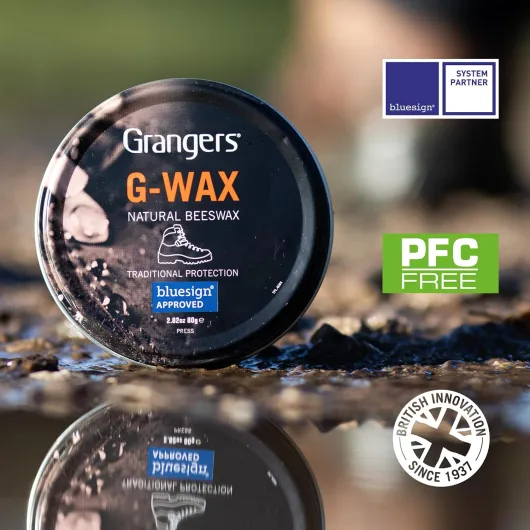
The packaging is very straightforward: a round metal tin with a press‑on lid. No plastic pumps, no aerosols, no fancy mechanisms to break. That’s good because it’s hard to ruin, and even if it gets a bit dented, the product inside is probably fine. The size is small enough to toss into a backpack or toolbox if you want to do a quick re‑wax on a trip, though in reality most people will just keep it at home.
Opening and closing it is easy – the lid isn’t so tight that you need a tool, but it’s snug enough that it doesn’t randomly pop off. I chucked it in a bag with other gear and it didn’t leak or open. Since it’s wax and not liquid, even if the tin somehow did open, you’re not going to have a disaster on your hands. Worst case, you get a bit of wax on the inside of your bag, which is annoying but not catastrophic.
The label is basic but clear: product name, use, a few claims like waterproofing and protection, and that it’s beeswax‑based and VOC‑free. There’s not a step‑by‑step guide with pictures, but if you’ve ever used any kind of polish or dubbin, you’ll figure it out. For someone completely new, a tiny bit more instruction on the tin wouldn’t hurt (like recommending thin layers and warming it in), but that’s nitpicking.
One minor downside: when the tin gets cold, the wax feels quite firm, and if you try to dig in with a soft cloth you might just smear the cloth instead of picking up much product. I ended up warming the tin a bit in my hands or near a radiator before use, which made it easier to scoop and apply. Not a big deal, but something to know. Overall, the packaging matches the product: simple, functional, and built to be thrown around a bit without falling apart.
How long it lasts on the boots and in the tin
Durability is where G‑Wax quietly does well. On the boots, a thorough application easily lasted me several wet outings before I felt the need to reapply. I’m not talking about one walk in light drizzle – I’m talking about proper soggy grass, muddy trails, and standing water up to the lower lacing. After 3–4 such trips, the beading effect on the leather was still there, just a bit less pronounced. That’s usually my sign it’s time for a light top‑up, not a full deep treatment.
On my work boots, which see more scraping and abuse, the wax wore off faster on the toes and outer sides where they rub against things. That’s normal. The nice part is that it’s easy to spot: when the leather starts looking dull and absorbs water instead of beading, you know where to reapply. I never felt like I had to strip anything off; I just added a bit more where it was needed, warmed it in, and the boots were back in shape.
In terms of how long the tin itself lasts, it’s pretty efficient. After multiple treatments on two pairs of boots and a couple of test patches on belts and older shoes, I’d barely made a dent into the 80 g tin. If you’re just looking after one or two pairs of boots, this could easily last you a season or more, depending how obsessively you maintain them. The wax in the tin doesn’t seem to dry out or crack either – I left it for a few weeks between uses and it looked and felt the same.
Storage-wise, the metal tin holds up fine. The lid still closes tightly, no warping, no weird crust forming on top of the wax. You might get a bit of dust on the lid if you keep it in a garage or shed, but inside the product stays usable. So from a durability standpoint, both on the leather and in the tin, G‑Wax is low‑maintenance and long‑lasting. You’re not constantly re‑buying or throwing away half‑dried product, which helps the overall value.
Real-world use: hikes, rain, and everyday abuse
I tested G‑Wax in a few different situations: a couple of 10–15 km hikes in wet UK weather, some city walking in heavy rain, and general yard work where boots get muddy and then hosed off. The main thing I noticed was how consistent it was. After treating the boots properly, I didn’t get that patchy waterproofing you sometimes see where the toes are fine but the sides slowly soak through. The whole boot seemed evenly protected, especially around the stitching where water usually sneaks in.
After each wet outing, I rinsed the boots, let them dry at room temperature, and checked the leather. It didn’t show that pale, dried‑out look you often get after repeated soaking and drying. Instead, it still had a bit of a waxy feel and a slight sheen. I didn’t have to reapply after every single use – roughly every 3–4 wet hikes felt about right. For boots used daily in rain or mud, I’d probably touch them up a bit more often, focusing on high‑wear areas like the toe and flex points.
On breathability, I didn’t notice any major sweating increase compared to when I had them treated with Nikwax. My socks were slightly damp from general exertion, but not like a sauna. These boots are Gore‑Tex lined, and G‑Wax didn’t seem to kill the breathability completely. That said, if you smear on thick layers again and again, you’re obviously sealing the leather more, so it’s about moderation. A thin, well‑worked‑in layer seems to keep a good balance between water repellency and breathability.
One practical detail: it also holds up well against oil and stains. I accidentally stepped in some oily puddle in a car park, and it wiped off without leaving a dark patch. Same with mud – it didn’t cling as much as on untreated leather. Over a few weeks of use, the boots looked used but not wrecked, which is kind of the whole point. From a performance standpoint, especially for the price, I’d say it’s more than decent – it’s reliable, predictable, and doesn’t need babying once applied correctly.
What you actually get in the tin
Grangers G‑Wax comes in a small 80 g metal tin. It’s light, compact, and honestly looks like something you’d find in an old-school cobbler’s drawer. Nothing fancy: basic branding, basic text, no pointless extras. The lid pops off easily but doesn’t feel loose, so you can throw it in a gear box or drawer without worrying it’ll pop open and smear wax everywhere. For something that will probably last months, the size is fine unless you’re treating loads of boots.
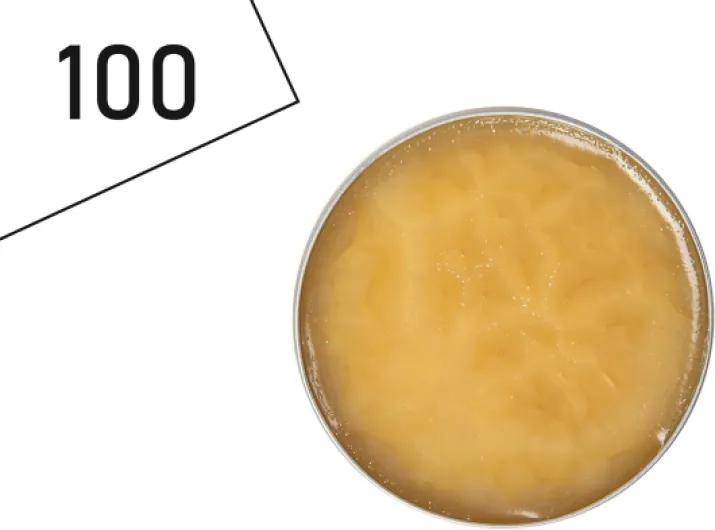
Inside, the wax is a pale, off‑white solid block. It’s not rock‑hard like some old dubbins; you can scrape it with a finger or cloth without too much effort. When you rub it, it softens quickly, and with a bit of heat from your hands or a hair dryer it becomes almost oily and spreads better. That’s where the beeswax base shows – it feels a bit grippy at first but turns smooth when warmed.
There’s no strong or annoying fragrance. Just a mild waxy smell that doesn’t stick around. I could use it indoors without the room smelling weird, which I can’t say for some silicone‑heavy sprays or solvent‑based stuff. The label mentions it’s VOC‑free and Bluesign certified, and while I’m not obsessing over certifications, it’s at least nice to know it’s not some harsh solvent bomb.
In use, one tin goes a long way. On my mid‑height hiking boots, a light coat barely made a dent in the surface of the tin. If you’re generous, you’ll still get multiple full treatments out of it. For the price bracket it sits in, the amount of product and the way it spreads make it feel good value. There are no brushes or applicators included – you’ll need an old cloth or sponge, but that’s pretty standard for this type of product.
Waterproofing and conditioning: does it actually work?
On the waterproofing side, G‑Wax is solid. After a full treatment on my main hiking boots – cleaning, a thin even coat, then warming it in with a hair dryer – I stood in a shallow stream and walked through wet grass for about 40 minutes. Water beaded on the surface and rolled off. No dark wet patches appeared in the leather, and my socks stayed dry. That’s exactly what I wanted. Before waxing, those same boots were starting to show damp spots around the flex points after a similar walk.
Conditioning-wise, it also does a decent job. The leather on my older work boots was stiff and a bit greyed out. After one good application and a night to soak in, the next day they felt noticeably softer when flexing, especially across the toe bend. I didn’t get any cracking noises or that dry, cardboard feel. After two or three uses over a few weeks, the boots looked less tired and the creases looked less sharp. It’s not leather surgery, but it clearly slows down the drying and cracking.
One thing to keep in mind: if you cake it on too thick, you’ll get a slightly greasy finish that picks up dust. The trick is thin layers. I found that applying a light coat, warming it gently, and then wiping off excess with a clean cloth gave the best balance between waterproofing and not turning your boots into wax magnets. Also, don’t expect a high‑gloss shine like proper shoe polish – you’ll get a mild sheen at best.
Compared to water‑based products like Nikwax Aqueous, G‑Wax feels more heavy‑duty. The water‑based ones soak in nicely but can wear off faster in my experience, especially on boots that see mud and scraping. G‑Wax feels more like a semi‑permanent treatment that you top up every few hikes or weeks, depending how hard you are on your boots. For heavy use, I’d trust this more than a simple spray‑on. For very breathable boots or if you’re obsessed with maximum breathability, you might want to combine it with lighter products – but for full‑leather hiking or work boots, it gets the job done well.
Pros
- Very good waterproofing and conditioning for full‑grain leather boots
- One small tin lasts a long time, making it good value for money
- Beeswax-based, VOC‑free, with no harsh smell and easy to work in with a bit of warmth
Cons
- Darkens leather and can change the finish, especially on lighter colours
- Takes a bit of time and effort to apply properly, especially if you want deep penetration
Conclusion
Editor's rating
Grangers G‑Wax is a straightforward, old‑school style wax that actually does what it says: it protects, waterproofs, and conditions leather boots without any drama. After using it on hiking and work boots in real wet conditions, I ended up trusting it. Water beads up, the leather stays softer, and one small tin lasts a long time. It darkens the leather and adds a mild sheen, so you have to be okay with your boots looking a bit richer and less matte, but that’s normal for a wax.
It isn’t flashy and it’s not the quickest if you want a deep treatment – you still need to clean the boots, apply thin layers, and ideally warm it in. But once you’ve done that, you get solid protection that doesn’t vanish after one rainy walk. For the price, the performance and longevity are hard to beat, especially if you’re mainly using it on full‑grain leather hiking or work boots that see proper use, not just occasional city strolls.
I’d recommend G‑Wax for people who actually use their boots hard: hikers, tradespeople, dog walkers in wet fields – anyone who values dry feet and long‑lasting leather more than a pristine factory finish. If you’re dealing with light‑coloured, very dressy shoes, or if you’re obsessed with keeping nubuck perfectly matte, this probably isn’t for you. But if you want a reliable, budget‑friendly wax that you can throw on most leather footwear and forget about for a while, G‑Wax is a solid pick.