
Summary
Editor's rating
Value: where these boots really make sense
Design: more practical than pretty
Comfort: good out of the box, better with new insoles
Materials: built to a price, but not trash
Durability: holding up well, with a few weak points
Performance: waterproof and grippy enough for real-world use
What you actually get for the price
Pros
- Genuinely waterproof in real-world wet conditions
- Comfortable fit out of the box, especially for slightly wider feet
- Good value for money for everyday hiking and dog walking
Cons
- Weak laces that tend to fray and may need early replacement
- Basic, thin insole that benefits from upgrading

Specifications
View full product page →| Brand | Karrimor |
Cheap boots I wasn’t expecting to like this much
I picked up the Karrimor Bodmin Weathertite mainly because I needed a pair of beater boots for dog walks, muddy parks, and the odd weekend hike. I didn’t want to throw £150+ at big-name brands again after killing a pricier pair in under a year. These were sitting at the low end of the price range, with a ton of reviews and a 4.4/5 rating, so I thought, fine, let’s see if they’re just hype or actually decent.
Out of the box, they look like exactly what they are: budget hiking boots. No fancy design, no premium vibe, but they don’t look cheap in a bad way either. Just straightforward suede and mesh, dark brown, ankle height. I’m a size 9 UK and ordered my usual size. First try-on was a nice surprise: no weird pressure points, no stiff heel digging in, just a pretty normal, comfy fit. I wore them around the house for an hour and didn’t feel the urge to rip them off, which is already better than some pricier boots I’ve tried.
My use so far: roughly six weeks of daily dog walks (30–60 minutes), a couple of 3–4 hour hikes on mixed terrain (mud, wet grass, gravel paths), and a few rainy commutes. So not hardcore mountaineering, but not just walking to the shops either. I’ve also had them completely soaked on the outside a few times to see if the waterproof claim holds up. No special care apart from knocking off dried mud and giving them a quick wipe now and then.
Overall first impression: they feel like honest, no-nonsense boots built to a budget, but they perform better than the price suggests. They’re not perfect, there are a few corners clearly cut (especially the laces and insole), but for everyday use and low-level hiking, they’re pretty solid. If you’re expecting premium leather and super plush comfort, you’ll be disappointed. If you just want something that keeps your feet dry and doesn’t fall apart in three weeks, they’re worth a look.
Value: where these boots really make sense
This is where the Karrimor Bodmin Weathertite really makes its case. You’re getting a waterproof, reasonably comfortable, and fairly durable hiking boot that sits way below the price of the big brands. If you look at the Amazon ranking (top in men’s trekking & hiking footwear and a 4.4/5 rating from thousands of reviews), it’s pretty clear a lot of people buy these as no-nonsense everyday boots rather than luxury gear. And that’s exactly how they feel in use.
For the price, the compromises are fairly logical: cheaper insole, weak laces, materials that are solid but not premium. In return, you get a boot that you don’t have to baby. You can stomp through mud, walk the dog in pouring rain, use them for weekend hikes, and not stress about ruining a £200 pair. If they last you a couple of years of that kind of use, the cost per wear is very good. And if they do eventually give up, you won’t feel robbed.
Compared to more expensive boots I’ve owned (big-brand leather models), the main differences are: those had better insoles out of the box, slightly better grip on rock, and thicker leather uppers. But for normal UK lowland walking and general bad weather use, these Karrimors have honestly done 80–90% of the job at a fraction of the price. If you’re not out climbing ridges every weekend, that extra money is often wasted.
So value verdict: for casual hikers, dog walkers, and anyone who just wants dry feet without spending a fortune, they’re good value for money. If you want something for serious multi-day trekking with a heavy pack, or you’re picky about premium materials and long-term durability, you’ll probably be happier spending more. But as a workhorse everyday hiking boot, the price-to-performance ratio is hard to argue with.
Design: more practical than pretty
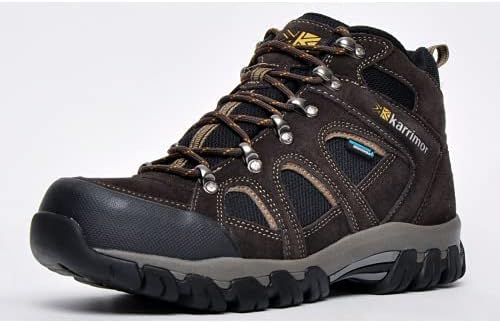
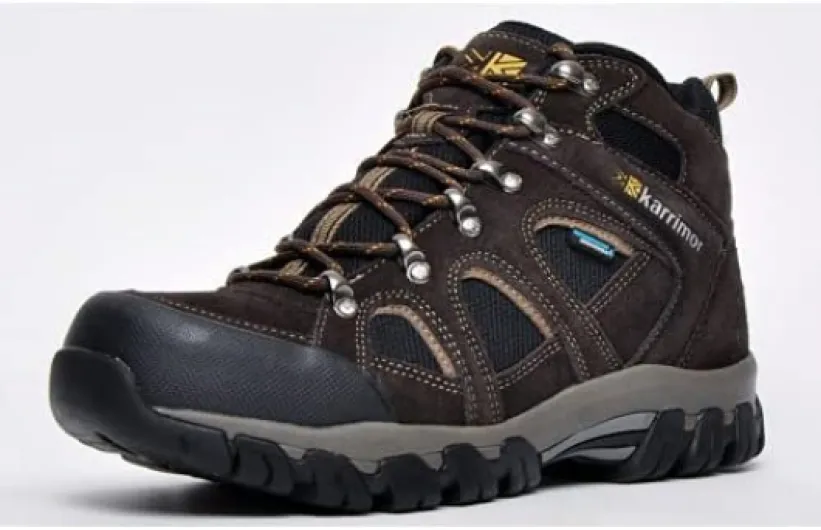
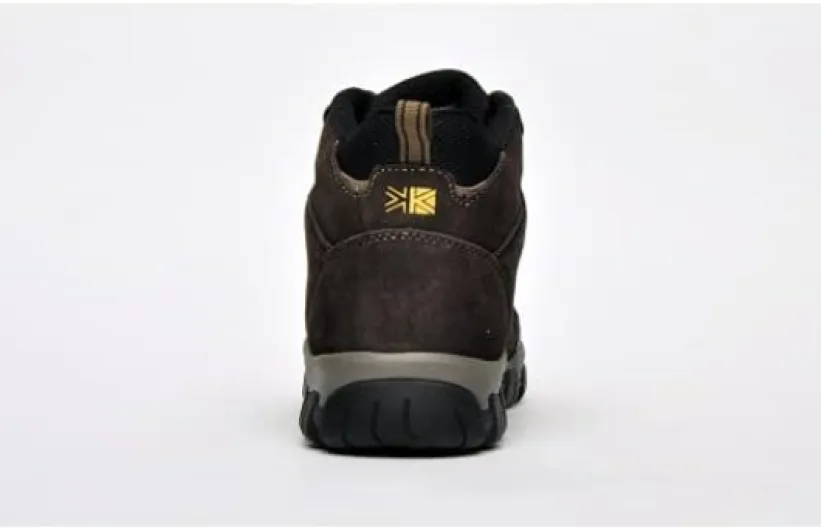
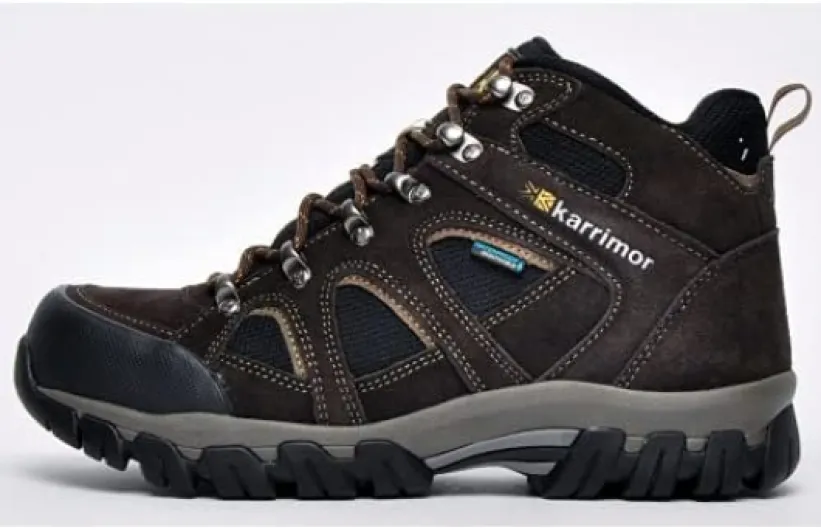
Design-wise, these Bodmin Weathertite boots are pretty straightforward. Dark brown suede with mesh panels, rubber sole, and a standard lace-up system. They look like typical budget hiking boots, which for me is fine. The mesh areas help a bit with breathability, and the suede gives them a slightly more solid look than full fabric boots. There’s a small Karrimor logo, but it’s not screaming for attention. If you’re into low-key gear that doesn’t look flashy, this will suit you.
The cut is ankle height, which gives decent support without feeling like a stiff high-rise boot. Around the ankle there’s some padding, enough to avoid rubbing but not super plush. I never had any chafing, even when I wore them straight out of the box for a 45-minute walk. The tongue is gusseted high enough to stop water and mud getting in unless you really dunk your foot. That’s something I actually tested by standing in a shallow puddle for about 30 seconds; water didn’t creep in from the top, which is good.
One thing that clearly shows the price bracket: the laces. They’re thin and feel a bit cheap. After a few weeks, they started to fuzz up, and I can see why several reviewers complain that they split early. The eyelets themselves are fine; I’ve not had any tearing or metal parts digging into the lace. But if you buy these, I’d honestly plan to replace the laces within the first couple of months. It’s not a big cost, but it’s a weak point in the design.
In day-to-day use, the design works. They’re easy to put on, the laces hold tension well enough once tied, and they don’t feel bulky when driving or walking around town. If I nitpick, the toe area could have had a slightly more reinforced bumper for rocky terrain, but for low-level paths and general use, it’s fine. So, design verdict: functional, a bit boring, but sensible. They’re clearly designed to get muddy, not to win style points on Instagram.
Comfort: good out of the box, better with new insoles
Comfort was the pleasant surprise here. I usually expect a bit of a break-in period with boots, but these were comfortable enough straight out of the box. First walk was about 45 minutes on mixed pavements and a muddy park, and I had zero hot spots, no heel slip, and no rubbing on the ankle. The fit for me (standard width foot, size 9 UK) is slightly on the wider side, which I actually like. If you have very narrow feet, you might find them a bit roomy, but for normal or slightly wide feet, they’re pretty forgiving.
The ankle padding is decent without being bulky. I could tighten the laces for more support on uneven ground without feeling like my circulation was being cut off. The tongue sits nicely and didn’t slide to one side. Inside, as I mentioned, the stock insole is thin and basic. For short walks under an hour, it’s fine. Once I pushed into 3–4 hour hikes, I started to feel a bit of foot fatigue, especially in the forefoot. Swapping to a slightly cushioned insole fixed that. So the boot itself is shaped well; it’s just let down a bit by the cheap insole.
Temperature-wise, they’re interesting. Despite being listed with a warm lining, I’d say they’re more three-season than deep winter unless you pair them with thick socks. In cold, damp UK weather (around 0–5°C), my feet stayed warm enough on the move. Standing still for long periods, I did start to feel a bit of chill around the toes, which matches that Amazon review about the insulation being thin in the toe box. In milder spring weather, they don’t feel overly sweaty, but they’re obviously warmer than a pure mesh shoe.
Weight and flexibility also help comfort. These are lighter and more flexible than full leather boots, which makes them easier to wear all day. They bend naturally with your foot rather than fighting you, so you don’t get that clunky feeling. So comfort verdict: good right away, very good once you upgrade the insole, and fine for everyday use, dog walks, and light hikes. If you regularly do 20+ km days, you’ll probably want something more supportive, but for most casual users, they get the job done.
Materials: built to a price, but not trash
The upper is officially suede leather with mesh, and that matches what you feel in hand. The suede isn’t thick premium stuff – it’s on the thinner side, but not flimsy. The mesh sections break up the upper and help a bit with airflow, though the waterproof membrane obviously limits how much air can actually pass through. It feels like a sensible balance between durability and weight, especially for everyday hiking and dog walking rather than full-on alpine use.
Inside, there’s a manmade insole and a warm lining. The insole is probably the most obviously cheap component. It’s thin and pretty basic. After a few longer walks, I could feel the hardness of the midsole a bit more than I’d like. I ended up swapping in my own insoles from another pair of trainers, and that improved comfort a lot. So yes, the standard footbed is usable, but if you have sensitive feet or do long hikes, budget for aftermarket insoles. The lining itself is soft enough and doesn’t rub, and in colder weather it does keep some warmth in.
The sole is rubber (Dynagrip) with a phylon midsole. The rubber has a decent balance of softness and durability. It’s not rock-hard plastic that slips on everything, and it’s not so soft that it wears down instantly. After several weeks of mixed use, I can see some light wear on the most used lugs, but nothing concerning. The grip pattern has enough depth to handle mud and wet grass reasonably well without clogging up too fast. I’ve used them on wet pavements, grassy banks, and compacted dirt; they behaved as you’d hope.
Overall, the materials are exactly what I’d expect at this price: no premium leather, no fancy Vibram sole, but also not bargain-bin rubbish. The corners are cut on the insole and laces more than on the main structure of the boot, which is honestly the right place to cut if you have to. Replace those two and you’ve got a very usable boot without spending a fortune.
Durability: holding up well, with a few weak points
Durability is always hard to judge long-term, but after several weeks of pretty regular use, I can at least say how they’re aging so far. The upper – both suede and mesh – is holding up better than I expected for the price. No stitching coming loose, no peeling, no obvious weak spots yet. I’ve scraped them against a few rocks and kicked my fair share of roots and curbs, and apart from some cosmetic scuffs on the suede, they still look structurally sound.
The sole wear is reasonable. Looking at the lugs after many muddy walks and a couple of longer hikes, there’s some light smoothing on the most used areas (heel and ball of the foot), but nothing dramatic. If they keep wearing at this rate, I’d expect at least a good year or two of regular casual use, probably more if you’re not hammering them daily. They’re clearly not built like heavy-duty mountain boots that last ten years, but for what they cost, the durability feels fair.
Where the durability drops is in the smaller components. As mentioned a few times, the laces are the weak link. Mine are already fuzzy and slightly split in a couple of spots. This matches several Amazon reviews saying the laces failed within a couple of months. It’s not ideal, but it’s also a cheap fix: replace them with better quality laces and you’re sorted. The insole also compresses pretty quickly, which again pushes you toward buying a better one if you plan to walk a lot.
Waterproofing durability is often where budget boots die, but so far the membrane is still doing its job. No leaks along the flex points yet, which is usually where cracks show up. I’d be realistic though: at this price, I wouldn’t expect the membrane to be perfect for five years. But if you get a couple of solid seasons of regular use out of them, that’s already good value. So durability verdict: main structure and sole are solid for the price; laces and insole are disposable. If you’re okay with that, you’ll likely be satisfied with how long they last.
Performance: waterproof and grippy enough for real-world use
Performance is where these boots actually surprised me in a good way. The big question with cheaper hiking boots is always: do they actually keep water out after a few weeks, or do they give up quickly? With the Bodmin Weathertite, the waterproofing has held up well so far. I’ve walked through wet grass soaked with morning dew, splashed through ankle-deep puddles, and done full walks in steady rain. Each time, when I took them off, my socks were dry. No slow seeping in at the seams, no damp toes. That lines up with a lot of the Amazon reviews saying they’re very waterproof.
Grip is handled by the Dynagrip rubber outsole. It’s not a high-end mountaineering sole, but for typical UK conditions – mud, wet leaves, gravel paths, and the odd bit of compact wet snow – it does the job. On wet pavements they feel stable, not skittish. On grassy slopes, I had maybe one or two small slips when it was really greasy, but nothing alarming. The tread pattern clears mud reasonably well; it doesn’t turn into a solid muddy brick after 10 minutes. I wouldn’t pick these for technical rocky scrambling, but that’s not really what they’re made for.
Support-wise, they’re somewhere in the middle. There’s enough ankle support to feel more secure than in trail runners, but they’re not stiff boots that lock your ankle in place. For low-level hikes and rough paths, that’s fine. If you’re carrying a heavy backpack over very uneven terrain, you might want a stiffer boot. The phylon midsole gives a bit of cushioning but is on the firmer side, which I actually prefer for stability on rough ground. Again, an upgraded insole helps if you want more comfort.
One small downside in performance is the laces. They just don’t hold up well. After a few weeks of regular tightening and loosening, they started to look tired, and I expect them to fail within a couple of months. It’s annoying, but not a deal-breaker – replacement laces are cheap. Overall, performance verdict: for dog walking, weekend hikes, and general bad-weather use, they’re solid. They’re not built for serious mountaineering, but they never pretended to be.
What you actually get for the price
On paper, the specs sound fairly standard: suede and mesh upper, Weathertite waterproof/breathable membrane, Dynagrip outsole, phylon midsole, and a standard footbed. In practice, that translates into a light-ish boot that feels more like a sturdy trainer with ankle support than a heavy mountain boot. Mine in size 9 feel lighter than older leather boots I’ve owned, which I noticed straight away on longer walks.
The boot is ankle height with a closed toe and a lace-up closure. Nothing fancy in the design, no metal hooks halfway up like some trekking boots, just regular eyelets all the way. They’re classed as hiking/trekking footwear, but I’d say they sit in that sweet spot between casual walking shoe and proper hiking boot. I’ve worn them with jeans in town and they don’t scream “I’m off to climb a mountain,” which I like. They pass fine as everyday boots in bad weather.
The waterproof/breathable thing is always a big claim. With these, the weathertite membrane actually does its job. I’ve walked through soaked grass, deep puddles, and sustained rain, and my socks stayed dry. Not just the first week either – even after a month of mud and flexing, they’re still holding up. Breathability is okay, not magical. My feet get a bit warm on longer walks, but nothing extreme. They’re better than cheap rubbery boots, but not as airy as a mesh trail shoe.
So from a pure presentation point of view: you’re getting budget hiking boots that focus on function over looks. The main selling points are waterproofing, decent grip, and light weight. No gimmicks, no hidden tech. If you want something that looks super stylish or hiking-hipster, this isn’t it. If you just want practical boots that can handle wet paths and light trails, this is what they’re built for.
Pros
- Genuinely waterproof in real-world wet conditions
- Comfortable fit out of the box, especially for slightly wider feet
- Good value for money for everyday hiking and dog walking
Cons
- Weak laces that tend to fray and may need early replacement
- Basic, thin insole that benefits from upgrading
Conclusion
Editor's rating
After actually living with the Karrimor Bodmin Weathertite boots for a while, my honest take is this: they’re solid budget hiking boots that do the basics well. They keep your feet dry, they’re comfortable enough out of the box (and genuinely comfy with better insoles), and they’ve handled mud, rain, and everyday abuse without falling apart. They’re not fancy, they don’t look premium, and some parts like the laces and insole feel cheap – but that’s kind of the point. The money has gone into the bits that matter: waterproofing, grip, and basic build quality.
If you’re a casual hiker, walk the dog every day in all weather, or just want a pair of boots you don’t mind getting filthy, these make sense. You’ll probably want to swap the laces and insole fairly early, but even with that extra cost, they still come out cheaper than a lot of big-name boots. On the other hand, if you’re carrying heavy loads, doing technical mountain routes, or want something that will last many years of hard use, I’d say look higher up the range and spend more. These are more “reliable workhorses for everyday use” than “serious expedition gear.”