
Summary
Editor's rating
Value: strong performance for the price, if you accept a few flaws
Design: built more for mud than for Instagram
Comfort: surprisingly good right out of the box
Materials: tough leather and chunky rubber, with a couple of weak spots
Durability: built to last miles, with a few annoying weak links
Performance: grip, support and waterproofing in real-world use
What you actually get when you open the box
Pros
- Genuinely waterproof in real use (rain, wet grass, mud, even snow)
- Comfortable from day one with no real break-in needed
- Durable leather and tough rubber sole that handle lots of miles
Cons
- Metal eyelets can fail and may need cobbler repair
- Inner heel lining wears over time and reduces comfort slightly

Specifications
View full product page →| Brand | Northwest Territory |
Leather boots that don’t freak out at the first puddle
I’ve been using the Northwest Territory Inuvik men’s waterproof leather boots mainly for dog walks, weekend hikes, and the usual UK rain-and-mud routine. I’m not climbing Everest, but I do a fair amount of miles on wet grass, forest paths and grim pavements. I was looking for something simple: proper waterproofing, decent comfort, and not paying the same price as a big-brand boot. These popped up a lot in searches and the 4.3/5 rating on Amazon pushed me to try them.
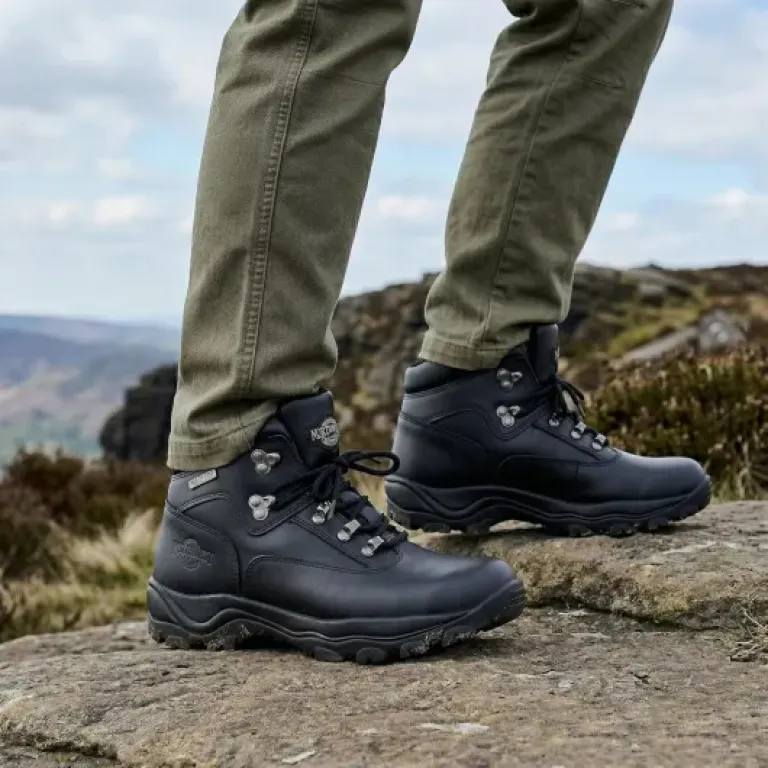
Out of the box, they look like classic leather hiking boots: fairly chunky, ankle-high, and definitely more practical than stylish. First impression on foot: solid and a bit heavy, but no weird pressure points, which is already a good sign for boots in this price range. I wore them straight away for dog walks of 5–8 km with no break-in period, just normal hiking socks.
My use has been mostly: wet grass fields, muddy canal paths, some rocky coastal paths, and a couple of very wet days in proper downpours. No gentle testing here; I treated them like boots I don’t baby: no polishing, no special care beyond knocking off the mud and letting them dry naturally. I wanted to see how they behave when you use them like most people actually will.
Overall, they feel like workhorse boots: not light, not flashy, but they do the basic job well. They’re not perfect – there are some build-quality quirks, especially around the eyelets and inner heel over time – but for the price bracket, they’re pretty solid. If you want a realistic take rather than brochure talk, keep reading.
Value: strong performance for the price, if you accept a few flaws
In terms of value for money, these Inuvik boots sit in a good spot. They’re not bargain-bin cheap, but they cost noticeably less than big-name hiking boots with similar features (leather upper, waterproof membrane, decent sole). For that price, you’re getting boots that are properly waterproof, comfortable for long walks straight out of the box, and tough enough to handle daily dog walks and weekend hikes for a good stretch of time.
Compared to some mid-range brands, you’re clearly giving up a bit of refinement: the eyelets and inner lining are where the cost-cutting shows. But you’re also not paying the premium for a logo. Performance-wise – grip, waterproofing, general comfort – they hold their own against more expensive options. Several people, including me, ended up rebuying them instead of switching brands, simply because you’d have to spend quite a bit more to get a meaningful upgrade.
If you’re a serious hiker doing multi-day treks with heavy loads, I’d say invest more in a higher-end boot with better long-term support, lighter weight, and more robust small parts. But if your use case is: dog walking in all weathers, muddy fields, forest trails, weekend hikes, and the odd wet holiday in the hills, these make a lot of sense. They feel more like reliable tools than fancy gear.
So overall, I’d rate the value as high: they’re not perfect, but they get the main jobs done – keep your feet dry, give you grip, and stay comfortable for long walks – without costing a fortune. If you’re okay with possibly fixing an eyelet down the line and accepting some wear on the inner heel, you’re getting a lot of boot for the money.
Design: built more for mud than for Instagram
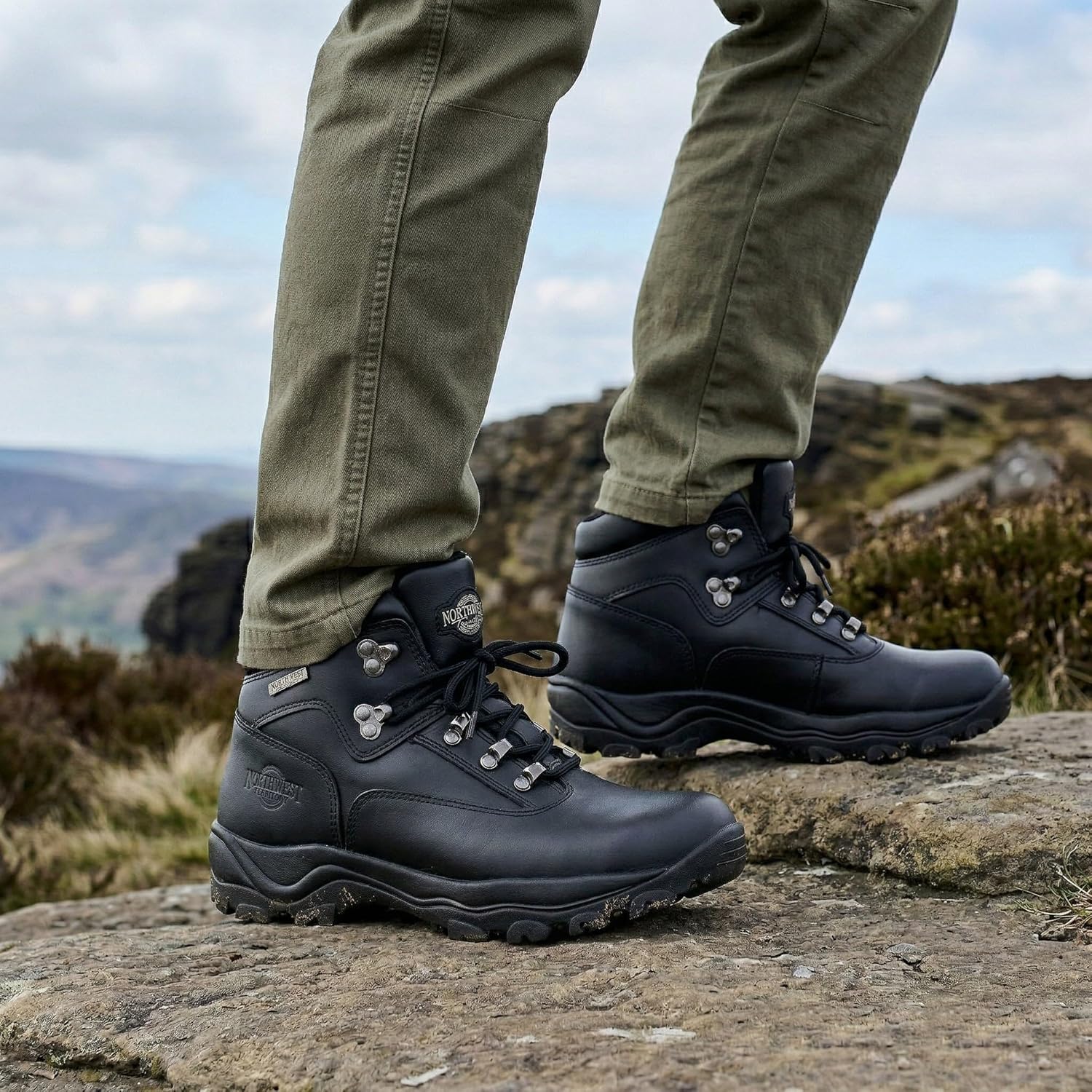
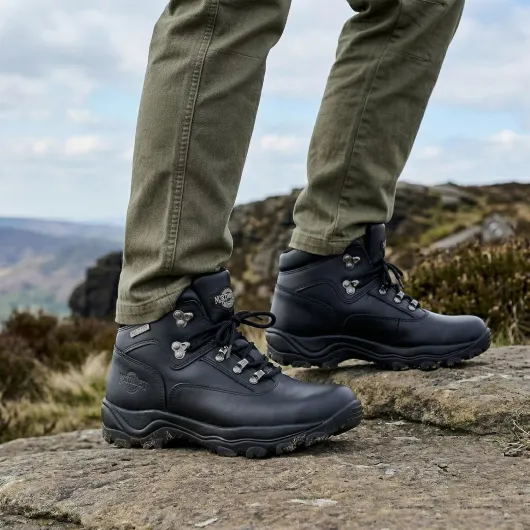
Design-wise, these Inuvik boots are very straightforward. Black leather, round toe, ankle height, and a fairly wide, stable base. There’s no flashy branding or fancy stitching. If you like simple, you’ll probably be fine with them. They look like classic hiking/work boots – which, for me, is exactly what I wanted for dog walking and wet weekend hikes. They blend in with jeans, work trousers, or hiking gear without drawing attention.
The sole design is where they’ve actually thought about real use. The lugs are deep and well spaced, which helps with grip in mud, wet grass, and on rocky paths. I’ve tested them on slippery pavements, grassy slopes, and forest tracks; they grip well enough that I don’t think about my footing all the time. On ice, nothing is perfect, but they held up better than many cheaper boots I’ve had, and other users have said the same – only the odd minor slip on proper ice, which is normal.
The ankle area has a padded collar and a bit of structure, but we’re not talking mountaineering boot levels of support. It’s enough for everyday walking, uneven paths, and mild ankle issues, but if you need serious medical-level support, you’ll probably want something stiffer and more technical. For most people doing dog walks, casual hikes and general outdoor use, it’s a decent balance between flexibility and protection.
My only real gripes with the design are: the metal eyelets feel like the weak link (some have popped or loosened over time, both for me and other buyers), and the boots can feel a bit bulky if you’re used to lighter hiking shoes. But if your priority is function over style, the design is pretty sensible: protective toe, good sole, padded where needed, and nothing too overcomplicated that can break easily – apart from those damn eyelets.
Comfort: surprisingly good right out of the box
Comfort was the pleasant surprise with these. I was expecting a break-in period because of the leather and the chunky build, but honestly, they were wearable from day one. First proper test was a couple of 5–6 km dog walks on mixed terrain – wet grass, pavement, a bit of mud. No hotspots, no heel rub, no blisters. That lines up with a lot of reviews saying they did 10–12 miles straight out of the box without issues.
The padded collar and tongue help a lot. You don’t get that sharp edge digging into your ankle or front of the foot when you flex. Inside, the factory insole is basic but not awful. There’s some cushioning from the EVA midsole; you do feel a bit of bounce, especially compared with cheaper, dead-feeling work boots. Over longer walks, your feet feel supported enough that you’re not dying to take them off as soon as you get home. That said, if you’ve got very high arches or specific foot problems, I’d still recommend dropping in your own insoles – the boot has enough volume to allow that.
In terms of fit, they run slightly on the roomy side in my experience, which actually works well with thicker hiking socks or in winter. If you’re between sizes, I’d say don’t size up. The toe box is reasonably wide, so your toes aren’t crammed together on descents. Ankle support is decent for everyday use – enough for dog walking, general hiking and rough paths – but these are not rigid mountaineering boots, so don’t expect that locked-in ski-boot feel.
Breathability is good enough but not outstanding. On cool and cold days, they’re great: warm but not sweaty. On warmer days with long walks, your feet will feel a bit warm, but nothing unbearable. I never had that swampy, soaked-sock feeling inside. Over time, the inner heel padding started to wear for me, which slightly reduced comfort in that area, but not enough to make them unusable. Overall, for the price and the style, comfort is one of the strong points.
Materials: tough leather and chunky rubber, with a couple of weak spots
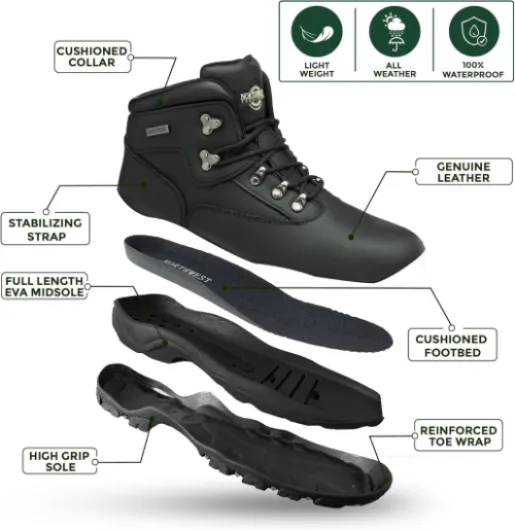
The upper is full leather, which is the main reason I went for these instead of cheaper synthetic boots. Leather, when done decently, usually means better durability and easier waterproofing over time. Out of the box, the leather feels fairly thick and a bit stiff, but it softens quickly after a couple of walks. It’s not luxury leather, but for the price, it feels solid. After months of mud, rain and general abuse, mine has creased and marked (normal), but no cracking, and still keeps water out.
The lining is a basic fabric. It does the job of adding comfort and helping with breathability, but don’t expect the same feel as big-brand Gore-Tex boots. That said, I haven’t had big sweat problems: my feet stayed reasonably dry inside, even on longer walks. In cold weather, paired with decent socks, they keep feet warm enough. They’re autumn/winter boots for sure, but I’ve used them in milder weather too without feeling like my feet were in a sauna.
The sole material is rubber, and it’s chunky. It feels quite abrasion-resistant. Several users mentioned getting thousands of miles before the sole wore out; in my case, wear showed up gradually but evenly after a lot of road and trail use. No bits peeling away, no random chunks missing. If anything, the sole seems more durable than the eyelets and the inner heel padding. The downside of this solid rubber is the weight – they’re not light hikers – but you do feel protected from rocks, roots and rough ground.
Where the materials let things down a bit is in the small components: metal eyelets and inner heel lining. After a few months, the fabric on the inside of the heel started to wear, likely from rubbing when putting them on and off. It’s not catastrophic, but you notice it. Same for the eyelets: one of mine loosened and another user had a couple break completely and had to get them fixed for a small cost. So: big materials (leather, sole) = strong; small materials (eyelets, inner lining) = more fragile. For the price, that trade-off is understandable, but worth knowing.
Durability: built to last miles, with a few annoying weak links
Durability is generally a strong point here, with some caveats. The leather upper itself holds up very well. After months of mud, rain, and general abuse, mine has the usual creases and scuffs, but nothing serious. No cracking, no splitting seams, and they still keep water out. Other users reported getting several thousand miles out of them before the soles finally wore down, which is pretty good for this price bracket. So if you’re mainly worried about the leather giving up early, that doesn’t seem to be the case.
The rubber sole is another plus. It’s thick and seems very abrasion-resistant. The tread on mine has worn gradually but evenly. You don’t get that quick flattening you sometimes see on cheaper boots after a few months of road walking. One user even said the only reason they replaced their first pair was because they eventually wore through the soles after countless miles – and they just bought the same boots again. That says a lot about the long-term value.
Now the downsides. The most common durability issue is the metal eyelets. I’ve had one loosen over time, and other users have had them snap or pull out. It’s not the end of the world – a cobbler can fix an eyelet for a couple of quid – but it’s still annoying on boots that are otherwise pretty tough. If you’re rough when tightening your laces, or you yank them on and off a lot, expect to deal with this at some point.
The inner heel padding/lining is another weak point. After regular use, the fabric inside the heel area started to wear and thin out for me, and some reviewers report the same. Once it goes, you can feel a bit more friction on your socks, which is not ideal. It doesn’t instantly kill the boots, but it does chip away at comfort. Still, considering the price and the lifespan you can get out of them, I’d say durability is overall good value, as long as you accept you might have to repair an eyelet or live with some worn lining towards the end of their life.
Performance: grip, support and waterproofing in real-world use
Let’s talk about how they actually behave outside. Traction is solid. The deep rubber lugs bite well into wet grass, mud and forest trails. On mixed terrain – stones, roots, wet pavements – I felt stable and didn’t have to tiptoe around. On proper ice, nothing short of spikes is perfect, but these did better than my old Merrell MOAB shoes and basic trainers. I had the odd small slip, but no scary moments or falls. For standard UK winter mess, the grip is more than decent.
Waterproofing is where these boots really earn their keep. The NWTDRY membrane plus the leather upper do their job. I’ve walked through soaked fields with long wet grass, puddles, and constant drizzle, and my feet stayed dry. Other reviewers even mention heavy snow and multi-day trips in very wet conditions without leaks. I didn’t baby them either – no regular waxing or special sprays – and they still kept water out. Long-term, if you treat the leather a bit, I can see them staying waterproof for a good while.
In terms of support and stability, they sit in that sweet spot for casual use: the ankle is supported enough that you feel secure on uneven ground, but they’re still flexible enough to be comfortable for everyday walking. If you’ve got a dodgy ankle, you’ll appreciate the extra structure over normal shoes. They’re not technical mountain boots, so if you’re carrying huge loads or doing serious alpine stuff, look elsewhere. But for dog walking, hiking holidays in places like Scotland, or long weekend walks, they feel reliable.
The only performance downsides I’ve noticed are: weight and small component failures. After a full day, you do feel the heft more than you would with lightweight fabric boots. And over time, the metal eyelets and inner heel lining can let you down, which doesn’t affect grip or waterproofing but is annoying. Still, in terms of pure performance – keeping you upright, dry, and reasonably comfortable over long distances – they do the job very well for the money.
What you actually get when you open the box
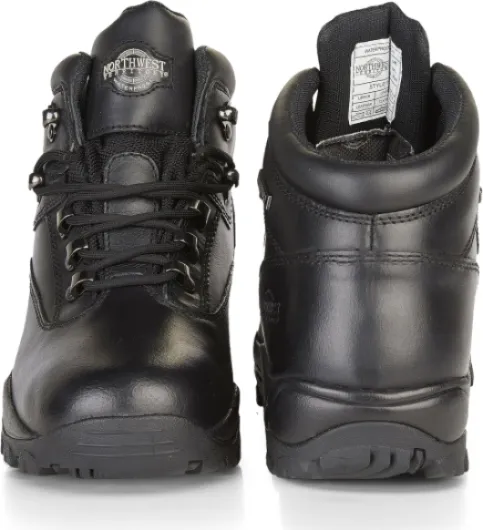
When you open the box, you’re not getting a fashion item, you’re getting a chunky pair of leather hiking boots that look ready to be abused. Mine came in a simple branded box, with a storage bag and a spare pair of laces, which is a nice touch considering how often laces die first on this type of boot. The overall first impression is: sturdy and old-school, more like work boots than trendy trail runners.
The model I tested is the black leather version in size 9 UK. They’re ankle-high, with a padded collar and tongue, and a fairly thick rubber sole with deep lugs. You can tell right away they’re not aiming for lightweight; they feel like they’re built to take a beating. On the scale, they’re not absurd, but you do feel them on your feet compared with something like Merrell MOAB shoes or lightweight fabric hikers. That said, the weight does give a sense of protection and stability.
On the inside, you’ve got a fabric lining and a basic insole. Nothing fancy here, and if you’re picky about arch support, you’ll probably want to swap the insole for your own. The boot closes with standard laces and metal eyelets/hooks. This is where some users (and I) have noticed the main weak point after a few months: the eyelets can loosen or break, especially if you really crank the laces tight every day. It’s fixable by a cobbler, but it’s still a nuisance.
In short, presentation is functional: leather upper, chunky rubber sole, padded bits where you need them, spare laces thrown in. It looks and feels like a no-nonsense hiking boot meant for dog walks, wet trails, and bad weather, not for posing in a café. If you want sleek, this isn’t it; if you want something that looks like it belongs in mud, you’re in the right place.
Pros
- Genuinely waterproof in real use (rain, wet grass, mud, even snow)
- Comfortable from day one with no real break-in needed
- Durable leather and tough rubber sole that handle lots of miles
Cons
- Metal eyelets can fail and may need cobbler repair
- Inner heel lining wears over time and reduces comfort slightly
Conclusion
Editor's rating
The Northwest Territory Inuvik men’s waterproof leather boots are solid workhorses. They’re not light, they’re not stylish, and they’re not perfect, but they do the basics very well: they keep your feet dry, they grip well on wet and muddy ground, and they’re comfortable enough for long walks right from day one. The leather and sole hold up to regular abuse, and you can easily get a lot of miles out of them if you use them like everyday outdoor boots.
The main negatives are around the small details: metal eyelets that can fail over time and inner heel padding that wears down. These issues are annoying, but they don’t completely ruin the boot, and some of it can be repaired cheaply. For the price, that trade-off is acceptable if you mainly care about function. If you want a lighter, more refined boot with better long-term finishing, you’ll need to spend more on a bigger brand.
I’d recommend these to people who do regular dog walking, casual hiking, farm or yard work, and general wet-weather use and want something tough and reasonably priced. If you’re a hardcore hiker with a big pack or very sensitive feet, I’d say look at a higher-end option. For everyone else who just wants a dependable, waterproof leather boot without blowing the budget, these are a pretty solid choice.