
Summary
Editor's rating
Value: worth it if you walk a lot, less so if you’re occasional
Design: classic look, a bit narrow, and a low back you’ll notice
Comfort: great once broken in, but watch the width and insole
Materials: soft suede comfort vs long-term toughness
Durability: built for the long haul, within reason
Performance on the trail: grip, waterproofing, and real use
What you actually get out of the box
Pros
- Comfortable leather boot with short break-in and good ankle padding
- Durable for the price – many users get several years and hundreds of miles
- Good grip and general performance on typical wet, muddy British terrain
Cons
- Fit runs narrow, not ideal for wide feet
- Waterproofing can start to feel damp on very long, constantly wet walks
- Stock insole is flat and basic, most people will want to replace it

Specifications
View full product page →| Brand | Berghaus |
Good, honest leather boots for real-world walking
I’ve been using the Berghaus Men’s Hillwalker II Gore‑Tex in size 9 UK (Chocolate) as my main walking boots for a while now. I’m not a mountaineer, just someone who walks a lot: dog walks, muddy fields, weekend hikes in the Peaks, that kind of thing. Before these I’d gone through a few cheaper pairs that lasted 12–18 months before the sole peeled or the waterproofing gave up. So I went into these looking for something that could actually cope with regular use, not just the odd Sunday stroll.
The first thing I noticed when I pulled them out of the box was that they feel like proper boots but not bricks. The spec says about 1200 g a pair for a size 9, and that matches how they feel in hand: not ultra-light, but fine for all-day walking. They look like classic leather hiking boots, nothing flashy, which I actually prefer. You can wear them on a country walk and then straight into a pub without looking like you’re on an expedition.
I’ve used them in typical British conditions: wet grass, muddy bridleways, gravel paths, some rocky sections, a few shallow streams and a lot of rain. Basically, if it’s grim outside, these are the boots I grab. I also did a couple of 10–12 mile days just to see how my feet felt at the end, and whether any hot spots or rubbing showed up once they were broken in.
Overall, I’d say they’re pretty solid all-rounders with a few clear strengths and a couple of things you need to know before buying: they lean on the narrow side, the waterproofing is good but not perfect in long, soaking conditions, and the suede leather is comfy but not the toughest thing on earth. If you want a blunt, real-world take from someone who actually walks in them, keep reading.
Value: worth it if you walk a lot, less so if you’re occasional
On value, I’d say these are good bang for your buck if you actually use them properly. They usually sit under the £100–£150 mark depending on sales, which is more than budget brands but less than a lot of premium leather boots. When you factor in that people are getting 3+ years and hundreds of miles out of them, the cost per year is pretty reasonable. If you’re walking daily or doing regular hikes, it makes sense to spend a bit more on something that doesn’t fall apart after a season.
Compared to cheaper boots I’ve owned, the difference is mainly in comfort over distance and lifespan. Cheaper pairs might feel okay at first, but the midsole flattens, the waterproofing disappears, and the sole starts peeling. With the Hillwalker II, the EVA midsole still feels cushioned, the grip holds up, and the upper doesn’t collapse into a mess. That said, you do need to accept a few compromises: they’re not the widest boots, the stock insole is basic, and the waterproofing isn’t bulletproof on really long wet days.
If you’re the kind of person who walks a couple of miles once a week on dry paths, these are probably overkill. You won’t use half of what you’re paying for. On the other hand, if you’re like the folks doing 6–7 miles daily or regular 10–12 mile hikes at the weekend, they make financial sense. They sit in a sweet spot where you’re getting proper leather, Gore‑Tex, and decent build quality without jumping into the price bracket of fully resoleable, high-end boots.
So, in plain terms: good value for regular walkers, decent but not mind-blowing for casual users. If you want something that just works, lasts longer than cheap options, and you’re okay with the narrower fit and occasional damp toes on marathon wet days, your money is well spent here.
Design: classic look, a bit narrow, and a low back you’ll notice
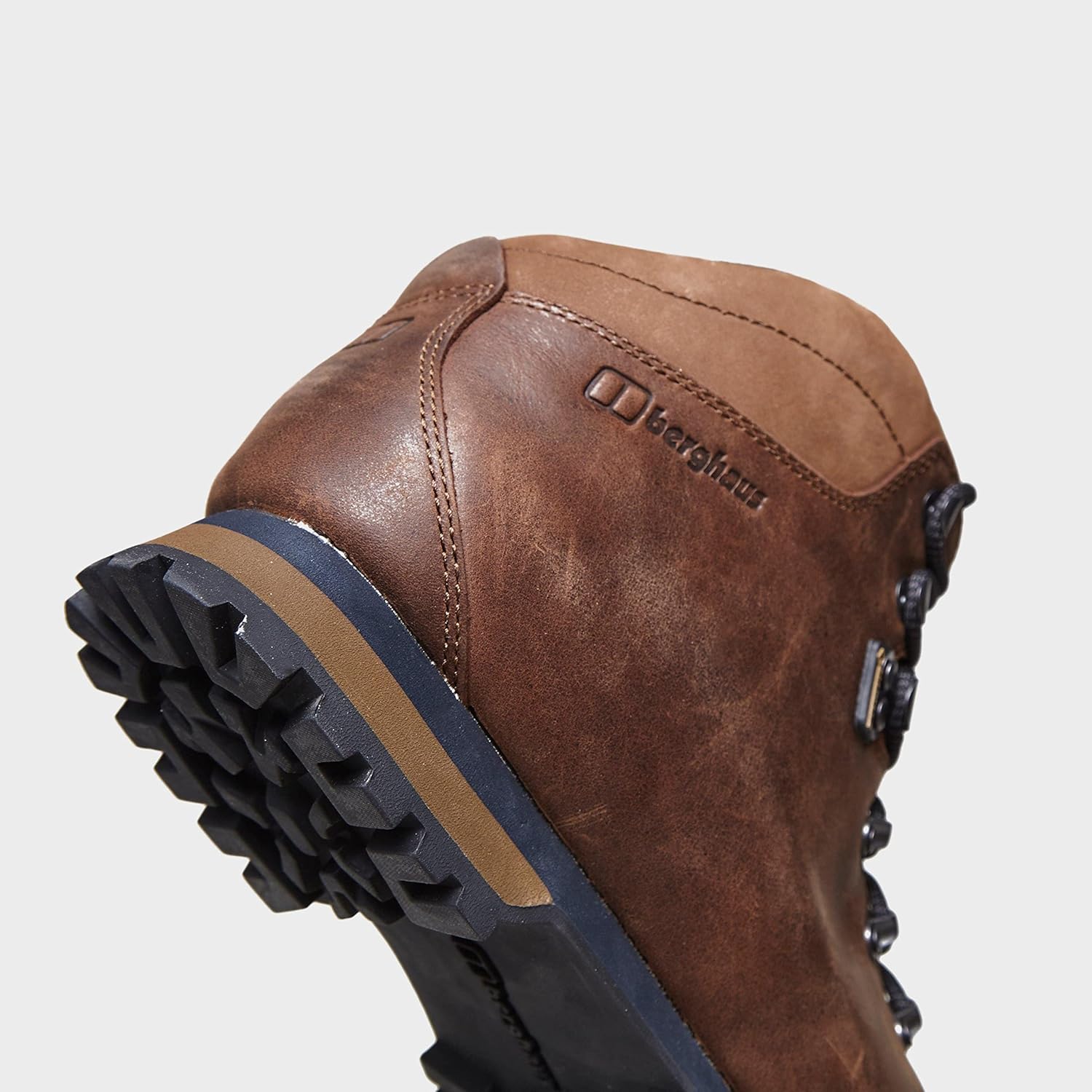
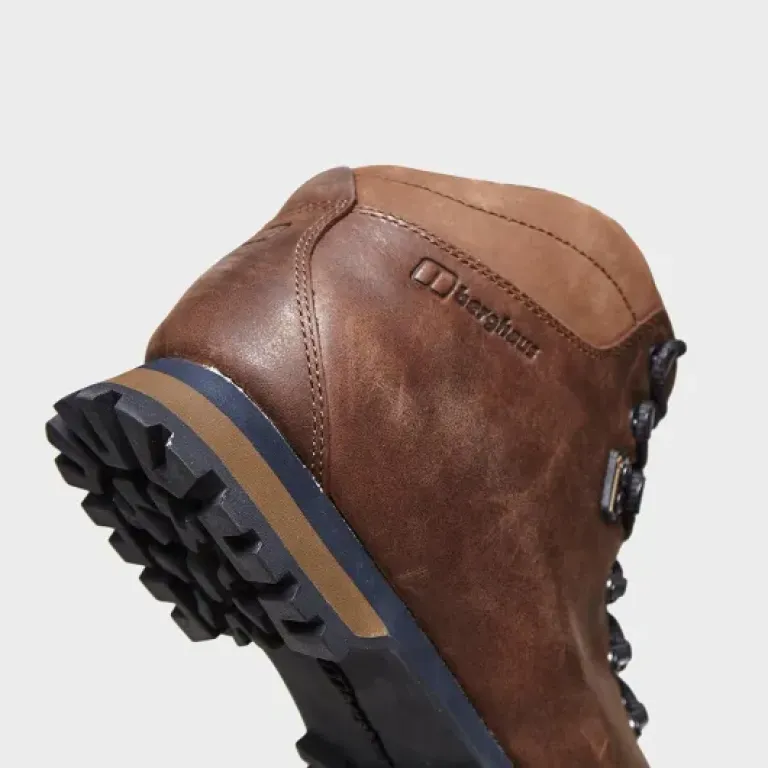
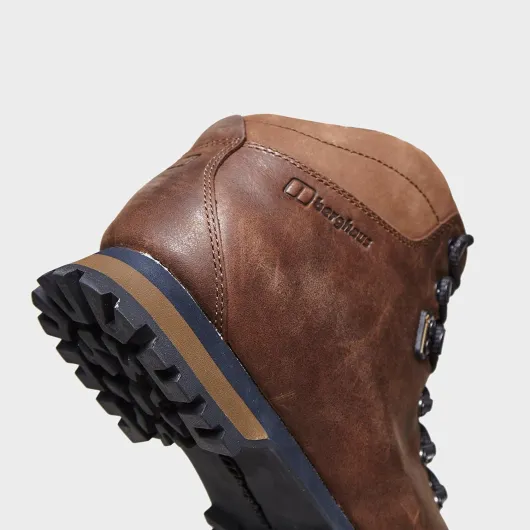
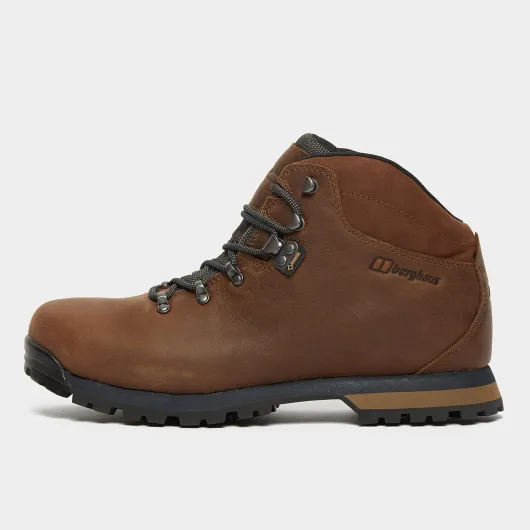
Design-wise, these sit in the “classic British leather boot” camp. Plain toe, solid brown suede, ankle height, and a fairly traditional hiking boot silhouette. If you like the old Brasher style, this is basically that line continued under the Berghaus name. No bright colours, no huge logos – just a small Berghaus badge on the side. It’s the kind of boot you can wear on a muddy hike and then into a café without feeling like you’re in full technical gear.
The key design detail you really feel in use is the low cut at the back of the ankle. When you’re walking uphill or bending at the ankle, it’s quite comfortable because it doesn’t bite into your Achilles. Sitting down, crouching to tie laces, or getting in and out of the car is easier than with some stiff, high-cuff boots. The trade-off is water depth. That lower back gives you a bit less margin before water can pour in over the top, so you have to be a bit more careful in deeper puddles or shallow streams.
The overall shape is fairly streamlined, and that’s where the main drawback comes in: they are on the narrow side. The toe box isn’t crazy tight, but if you’ve got wide or very high-volume feet, you might struggle. I’ve seen people say they had to return them for that reason, and I’m not shocked. For me, going up half a size and using thicker socks worked well. If you usually wear trainers in a wide fit, don’t expect these to feel the same.
Grip-wise, the sole pattern (Berghaus OPTI-STUD) is quite chunky, with decent spacing between lugs. That helps shed mud instead of it turning into a smooth, useless block. On wet rock and greasy paths, they hold on pretty well for a hiking boot. Not magic – you can still slip if you’re careless – but good enough for normal hill and field walking. Overall, the design is sensible: classic look, comfortable ankle movement, but best suited to average or narrow feet rather than wide plates.
Comfort: great once broken in, but watch the width and insole
On comfort, these are very decent once you’ve done a few walks in them. Out of the box they’re already softer than a lot of full-grain leather boots, thanks to the suede and the memory foam around the heel and tongue. For me, the break-in period was short – maybe two or three proper walks before they felt natural. No brutal heel blisters, no shredded ankles, just a bit of standard stiffness that loosened up quickly.
The padding around the ankle and tongue is one of the strong points. The tongue is thick and stays in place, so you don’t get lace pressure digging into the top of your foot. The heel holds you well without feeling like a vice. I did one long 12-mile day just to test them and didn’t get any major hot spots, which is more than I can say for some boots I’ve had in the past. Over several hours, they still feel supportive rather than tiring.
Where things get more mixed is the fit and width. As mentioned earlier, they are on the narrow side. I went half a size up and used a decent hiking sock, and that gave me a snug but comfortable fit. If I’d stuck with my usual size, the forefoot would have been too tight. If your feet are wide or you like wearing two pairs of socks, you might struggle. Also, the stock insoles are quite flat and basic. If you need arch support or you’re heavy on your feet, just budget for better insoles from day one – it makes a big difference to all-day comfort.
In terms of temperature, they’ve been warm enough in winter without feeling like ovens in summer. On cold, damp days my feet stayed warm, and on warmer walks they didn’t feel overly sweaty, as long as I wore half-decent socks. They’re not super breathable like a mesh trail shoe, but for a leather boot with Gore‑Tex, they’re fine. Overall, comfort is a strong point as long as your feet match the shape: if you’re average width and happy to tweak the insole, they’re very good for long, regular walks.
Materials: soft suede comfort vs long-term toughness
The upper is mostly oiled suede leather, not stiff full-grain. That’s why they feel comfy quite quickly, but also why I’d say they’re more “serious walking” than “abuse them on sharp rock every weekend”. The suede has that slightly distressed, pre-worn look from new. After a few walks in mud and rain, it starts to pick up marks and scratches, which personally I don’t mind – they just look like boots that get used. If you want them to stay pretty, you’ll be cleaning and waxing them fairly often.
Inside, you’ve got a Gore‑Tex lining and a basic man-made insole. The stock insole is fine if your feet are neutral, but it’s quite flat. If you need arch support or have any foot issues, I’d just plan to swap it out for something better from day one. A lot of people, including me, end up putting in Scholl or similar insoles for more cushioning and support. It’s not a deal-breaker, but at this price, a slightly better insole out of the box would be nice.
The sole is rubber with the OPTI-STUD pattern, and it feels decently tough. After a good amount of miles, wear on the lugs is there but not dramatic. There are no splits or chunks missing, which is more than I can say for some cheaper boots that start cracking after a year. The downside is these boots aren’t meant to be resoled, unlike something like an Altberg. Once the sole eventually goes, that’s basically the end of the boot, even if the upper still looks fine.
In terms of weather handling, the combo of suede + Gore‑Tex does the job for typical rain, wet grass, and mud. But suede will wet out if you don’t look after it. Regular beeswax or similar waterproofing makes a big difference. I’ve used beeswax on mine and, like other users, it slightly darkens the suede and makes it look closer to full-grain, but it also stops the leather from soaking up water straight away. Overall, the materials are geared towards comfort and decent durability, not bombproof scrambling over sharp rock every weekend.
Durability: built for the long haul, within reason
Durability is where these stand out compared to cheaper boots I’ve burned through. I’ve seen plenty of feedback from people doing 6–7 miles every day and getting 3+ years out of them, which lines up with how they feel in hand and on foot. They’re not indestructible, but they’re clearly a step up from the budget stuff that falls apart after a year of real use. Stitching is tidy and, more importantly, it actually holds up over time – no loose threads or seams blowing out so far.
The suede upper does show marks and scratches fairly quickly, especially around the toes if you’re walking through brambles or kicking rocks. That’s more cosmetic than structural. Most people who maintain them with regular beeswax or similar treatments report that the leather holds its shape well and doesn’t crack. I’ve had cheaper boots where the leather starts folding, splitting or deforming badly; these don’t do that. They clean up surprisingly well after a proper scrub and re-wax, so they don’t end up looking wrecked even after a lot of miles.
The sole durability is also decent. After several hundred kilometres, the tread pattern is still in good shape, with no splits or chunks falling out. The downside is they’re not designed to be resoled like some higher-end boots (e.g. Altberg). So once the sole is done, you’re realistically buying a new pair. If you’re the type who walks thousands of miles a year and wants a boot you can keep re-soling for a decade, these aren’t that. They’re more like a solid 3–4+ year workhorse for regular walkers.
In short, if you treat them half-decently – clean off the mud sometimes, use beeswax or another proofing every few months – you can expect very respectable lifespan for the price. If you just thrash them without any care, they’ll still outlast most cheap boots, but you won’t get the best out of the materials. For most people doing regular walks, they sit in a nice spot between “cheap and disposable” and “premium, fully resoleable mountain boot”.
Performance on the trail: grip, waterproofing, and real use
Out on actual paths, these boots do pretty well across most normal conditions. Grip from the OPTI-STUD sole is solid on typical British terrain: wet grass, muddy ruts, gravel tracks, and rough paths. In heavy mud they don’t turn into complete ice skates, and the lugs clear mud reasonably well instead of turning into one smooth slab. On wet rock they’re decent – you still need to watch your footing, but I’ve had worse. For general hiking, dog walking, and weekend hills, they’re absolutely fine.
Waterproofing is where it gets a bit more nuanced. For short to medium walks in rain, wet grass, and shallow puddles, they hold up well. The Gore‑Tex membrane does its job and your feet stay dry. The issue shows up on longer, properly wet days where the suede soaks and stays soaked. After an hour or two in constant wet conditions, I’ve had slightly damp toes, and other users have said the same. It’s not like you’re sloshing in water, but the feeling is more “a bit damp” than “bone dry”. Regular treatment with beeswax or similar helps a lot, but it’s not magic.
On rocky or scramble sections, they’re okay but you can tell the suede isn’t as tough as a full-grain leather boot built for serious mountaineering. I’ve picked up some scratches and scuffs around the toe from rocks and brambles. So far it’s just cosmetic, but if you were doing a lot of sharp, rocky stuff, I’d probably look at something beefier like the Hillmaster or an Altberg that can also be resoled.
Overall, as all-round hiking boots for mixed terrain, they get the job done very well. They feel stable enough underfoot, there’s good shock absorption from the EVA midsole, and the sole hasn’t worn out quickly even with regular use. They’re not perfect for extreme weather or hardcore scrambling, but for day-to-day walking and typical UK hills, they perform reliably.
What you actually get out of the box
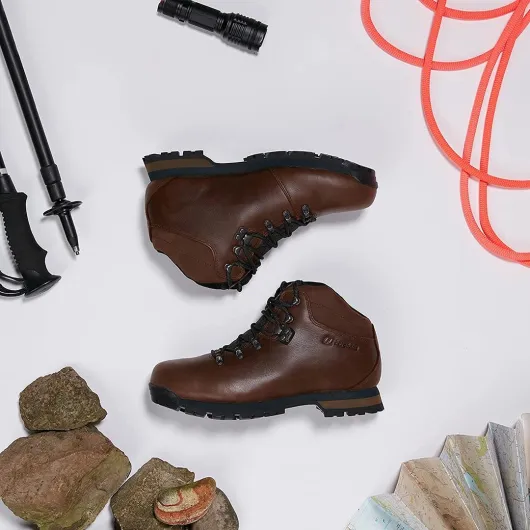
Out of the box, the Hillwalker II look like what they are: mid-height leather hiking boots aimed at normal walkers, not hardcore alpine stuff. You get the boots, basic paper stuffing, and that’s about it. No spare laces, no fancy extras. The colour “Chocolate” is just a dark brown suede leather with a slightly “antique” distressed look. It’s neutral and practical, hides mud fairly well, and doesn’t scream for attention. If you’re used to loud trail shoes with bright colours, these are the opposite of that.
On foot, the cut is ankle-high with a noticeably lower back around the Achilles. That low back is actually quite nice when you’re walking uphill or sitting down because it doesn’t dig into your leg, but it does mean you don’t have the same depth for wading through streams as with some higher-cut boots. It’s a small detail, but you do notice it when you step in deeper puddles and suddenly feel water right at the edge.
The lacing system is simple: standard eyelets at the bottom, then hooks at the top. Nothing fancy, but it works. You can get a snug fit across the mid-foot and loosen the top a bit if you want more ankle flex. I will say they run on the narrow side, especially in the forefoot. I’ve got average width feet and they’re fine for me, but I can see why some reviewers had to return them for being too tight. If you’ve got wide feet, I’d either size up or try them in person first.
In terms of first impression, they feel like boots you’d actually use, not just admire. No gimmicks, no over-the-top branding, just leather, Gore‑Tex lining, and a rubber sole with a fairly aggressive pattern. It’s a functional package. Nothing about the presentation blows you away, but everything is practical and to the point, which is pretty much how the boots behave on the trail too.
Pros
- Comfortable leather boot with short break-in and good ankle padding
- Durable for the price – many users get several years and hundreds of miles
- Good grip and general performance on typical wet, muddy British terrain
Cons
- Fit runs narrow, not ideal for wide feet
- Waterproofing can start to feel damp on very long, constantly wet walks
- Stock insole is flat and basic, most people will want to replace it
Conclusion
Editor's rating
The Berghaus Men’s Hillwalker II Gore‑Tex are solid, no-nonsense leather hiking boots that suit real-world British walking pretty well. They’re comfortable once broken in, reasonably light for leather, and tough enough to handle regular use over several years if you look after them. The grip is reliable on mud, grass and rocky paths, and the Gore‑Tex lining keeps your feet dry in normal rain and wet ground, especially if you keep the suede treated with wax. They’re not flashy, but they feel like proper tools for people who actually get outside a lot.
They’re not perfect. The fit is on the narrow side, so wide-footed people might struggle or need to size up, and the stock insole is basic – most people will want to replace it for better arch support and cushioning. Waterproofing is good but not flawless on very long, soaking days; after a couple of hours in constant wet conditions, you can end up with slightly damp toes. And unlike some higher-end boots, they can’t be resoled, so when the sole is finished, that’s it.
Who are they for? Regular walkers and hikers who want a dependable leather boot under the top-tier price bracket. If you’re doing daily dog walks, weekend hill days, or long countryside routes, they’re a strong option and offer good value over time. Who should skip them? People with wide feet, those who mainly scramble on sharp rock and need full-grain tanks, or anyone who wants a boot they can resole for a decade. For most everyday hikers in the UK, though, they’re a sensible, hard-working choice that gets the job done without fuss.