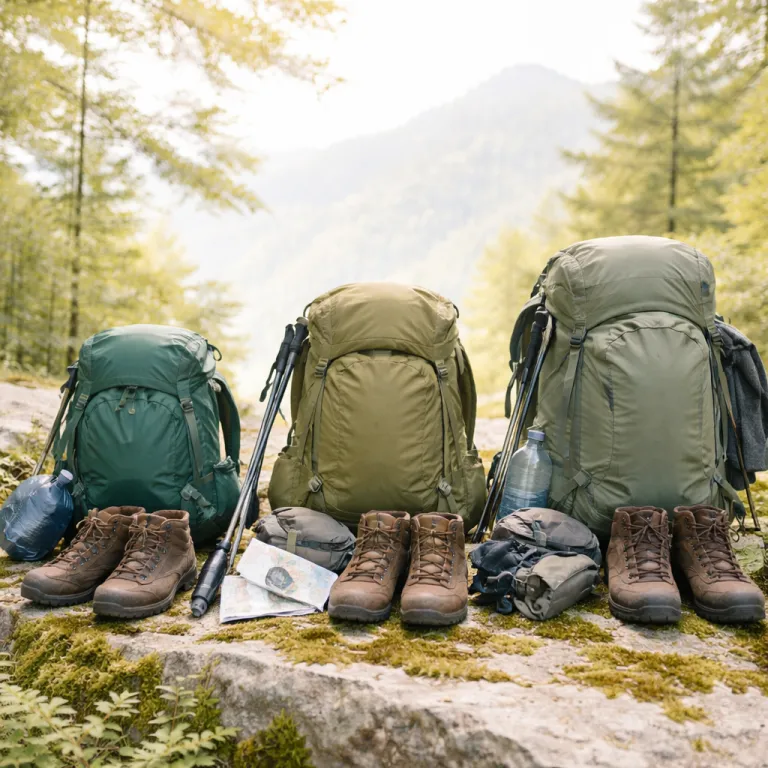
Why the best day hiking backpack starts with your trip system
The best day hiking backpack is not a number on a tag. It is a pack that matches your water strategy, your layers, and the specific hiking terrain you actually walk. When you size daypacks by trip system instead of guesswork, your shoulders, hips, and feet all last longer on long day hikes.
Think about what truly lives in your backpack on a normal day hiking loop, not the fantasy expedition you scroll past online. Your real gear capacity usually comes down to water, insulation, weather protection, food, navigation tools, and a compact first aid kit. Once you map that gear to volume in liters and expected weight in kilograms, the right capacity in liters becomes obvious and you stop chasing oversized packs.
For most hikers, the best day hiking backpack range sits between 18 and 30 liters. Below that, you compromise on safety gear and water, while above that you start hauling contingency items that never leave the pack. The goal is a lightweight hiking daypack that carries beautifully at 5 to 7 kg, not a small overnight pack that tempts you to overpack until the total load creeps into double digits.
Brands like Osprey, Gregory, and REI build daypacks around this idea of a tuned trip system. An Osprey hiking daypack such as the Osprey Daylite or Osprey Stratos line is designed so the frame, shoulder straps, and hip belt work best at a specific liters weight range. REI daypacks like the REI Flash and REI Trail families do the same, pairing gear capacity with smart pockets and a hydration reservoir sleeve that keeps water stable against your spine.
When you treat the best day hiking backpack as part of a full hiking gear system, your boots and poles suddenly feel better too. Less weight on your back means less pounding through your ankles and knees, especially on steep descents. The right pack is not just storage; it is a performance upgrade for every step of your day hikes.
18 liter packs: fast missions and their hard limits
An 18 liter day pack feels fantastic when you first lift it. The weight is low, the profile is compact, and the best day hiking backpack at this size almost disappears on mellow trails. For short day hikes under four hours, with stable weather and easy navigation, these tiny packs can be great tools.
In that 18 liter capacity, you can usually fit one or two water bottles, a single midlayer, snacks, and a slim essentials pouch. Many lightweight daypacks in this range skip a full frame and rely on padded back panels and minimalist shoulder straps, which keeps the liters weight down but limits comfort once you add more gear. Women and smaller framed hikers often love how these packs hug the torso, especially when the hip belt is a simple webbing strap that stabilizes without digging.
The problems start when your hiking daypack needs to carry more than one layer and a single bottle. Add a 2 liter hydration reservoir, a real rain shell, and a proper first aid kit, and suddenly the gear capacity of an 18 liter backpack feels brutally tight. You end up hanging water bottles off carabiners, stuffing gloves into side pockets, and overloading the top panel until the weight shifts awkwardly with every step.
On technical terrain, that overloaded micro pack becomes a liability. Without a supportive hip belt or semi rigid frame, all the weight rides high on your shoulders and tugs you backward on scrambly moves. If you are eyeing more committing routes or considering a waterproof fishing style backpack for mixed river and trail use, read a deeper analysis in this guide on why every hiker should consider a waterproof fishing backpack.
There are still smart ways to use 18 liter packs as part of your hiking gear quiver. Treat them as specialists for hot, low risk days when water is plentiful on route and you can refill a small reservoir or bottles often. Once you start adding microspikes, extra food, or emergency insulation, it is time to admit that the best day hiking backpack for you probably lives in the 26 to 30 liter range instead.
28 liter sweet spot: where most serious day hikers should stop
For real mountain days, the best day hiking backpack usually lands around 28 liters. This capacity gives you room for a 2 liter hydration reservoir, spare layers, and the ten essentials without feeling like a shrunken overnight pack. It is the quiet middle ground where safety, comfort, and weight finally balance.
In a 26 to 30 liter hiking daypack, you can carry a full shell, an insulated midlayer, gloves, hat, and a compact sit pad alongside food and navigation gear. The gear capacity in this range also swallows microspikes, a small repair kit, and a real first aid pouch, which turns shoulder season day hikes into manageable objectives rather than anxious sprints. With a proper frame and padded hip belt, the pack weight can climb toward 8 or 9 kg while still riding comfortably on your hips instead of sawing into your shoulders.
Look for features that matter on trail, not just in product copy. Side stretch pockets should hold a 1 liter bottle securely, hip belt pockets must fit a phone and bars, and the main compartment should leave space above a full reservoir for a puffy jacket. A reservoir compatible sleeve that keeps water tight to your spine is worth more than a gimmicky front pocket you never touch.
Specific models show how this plays out in the real world. The Osprey Stratos 26 and Osprey Stratos 34 are top rated among experienced hikers because their suspended mesh back panel, supportive hip belt, and dialed shoulder straps keep total load under control on long climbs. REI Trail 25 and REI Trail 30 packs offer a more budget friendly take, with clean layouts, reliable zippers, and enough capacity liters for serious day hiking without tempting you into bringing your entire gear closet.
To see how this volume works in practice, imagine a cool weather mountain loop with about 7 kg of gear in a 28 liter pack: 2 liters of water (roughly 2 kg), 600 g of food, a 350 g rain shell, 400 g insulated jacket, 150 g gloves and hat, a 300 g first aid and repair kit, 250 g navigation tools and headlamp, plus small extras like sunscreen and a sit pad. That realistic packing list fills the pack efficiently while leaving a little space for a camera or an extra layer.
38 liter packs, load physics, and when you actually need a frame
Once you cross into 38 liter territory, you are no longer chasing the best day hiking backpack for typical outings. You are either training for backpacking, guiding groups, or packing for every possible contingency on a single day. That extra capacity liters feels comforting at home, but it punishes you on the fifth hour of steep switchbacks.
At 35 to 42 liters, most packs include a more substantial frame sheet or light wire frame, plus a beefier hip belt designed for real load transfer. The physics are simple; once your total pack weight hits roughly 5.5 to 7 kg, you want that mass resting on your pelvis, not hanging from your trapezius muscles. A good frame and hip belt combination moves the center of gravity closer to your body and reduces the torque on your lower back during descents.
On rolling forest trails with under 6 kg of gear, a frameless or lightly framed day pack can feel supple and agile. Take that same backpack onto a rocky ridge with 8 to 10 kg of water, layers, and technical gear, and the flexible frame starts to fold and sway. Every step becomes a micro correction as the load shifts, which is why ridge hikers benefit from stiffer frames while casual trail walkers can stay with softer daypacks.
Models like the REI Traverse 35 and larger Osprey Stratos packs show how a real frame changes the ride. Their shoulder straps are sculpted to spread pressure, the hip belt wraps the iliac crest, and the back panel keeps the hydration reservoir locked in place even when you twist and scramble. Gregory packs in this range, such as the Gregory Nano 30 and larger Nano variants, offer a slightly softer feel but still provide enough structure for heavier water and gear loads.
If you find yourself regularly filling a 38 liter backpack for simple day hikes, use that as a diagnostic tool. Either you are carrying group gear or emergency equipment for others, or you are packing fear instead of realistic needs. The best day hiking backpack for most individuals tops out around 30 liters; beyond that, you are rehearsing for overnight trips and should start thinking about boots, shelter, and load planning as a full system.
Pockets, fit, and three field tested recommendations by use case
Once you know your volume, the best day hiking backpack comes down to fit and pocket layout. A pack that technically holds 28 liters but buries your snacks under a rain shell and stove will feel wrong every single day. Smart organization keeps the gear you touch hourly in reach and the emergency items buried but stable.
Prioritize hip belt pockets that fit your phone, a couple of bars, and maybe a compact sunscreen stick. When those pockets are missing or too small, you stop eating and checking maps because every snack requires a full backpack off move. Side stretch pockets should swallow a 1 liter bottle and still grip it when you lean, while the main compartment should leave clean space above a full hydration reservoir for a puffy and shell.
Fit matters just as much as features, especially for women and smaller framed hikers. Look for women specific versions of Osprey, Gregory, and REI packs, where the shoulder straps curve differently and the hip belt angles match narrower hips. A top rated pack on paper means nothing if the shoulder straps dig into your neck or the hip belt rides on your ribs instead of your pelvis.
For short, rolling day hikes under four hours, an 18 to 22 liter lightweight hiking daypack like the REI Flash 22, Osprey Daylite, or Gregory Nano 18 works beautifully. A typical warm weather load might be around 4 kg: 1.5 liters of water, 300 g of snacks, a 250 g wind shirt, 150 g sun hat and gloves, a 200 g first aid and essentials pouch, plus phone, keys, and a light insulating layer. For alpine style days with a shell, microspikes, and full ten essentials, a 26 to 30 liter pack such as the Osprey Stratos 26, REI Trail 25, or Gregory Nano 22 hits the sweet spot of capacity liters and manageable weight. For a first overnight test trip or hut approach, step up to a 38 to 42 liter model like the REI Traverse 35 or a larger Osprey Stratos, and pair it with supportive hiking boots tested on real terrain, such as those reviewed in this detailed women’s Pyrenees hiking boot test.
In the end, the best day hiking backpack is the one you stop thinking about after the first kilometer. It carries water, food, and layers without drama, keeps your phone and map where your hands naturally fall, and lets your hips, not your shoulders, do the heavy work. What saves your day is rarely the advertised waterproof rating, but the way your pack feels on the tenth river crossing.
FAQ
What size day hiking backpack do I need for most trails ?
Most hikers are best served by a day hiking backpack between 26 and 30 liters. This capacity fits a 2 liter hydration reservoir, extra layers, food, and the ten essentials without encouraging overpacking. Only drop to 18 liters for short, low risk outings, or jump to 38 liters if you are carrying group gear or training for backpacking.
How much weight should I carry in a day pack ?
For comfort and joint health, many outdoor educators suggest keeping total pack weight under roughly 20 percent of your body mass, a rule of thumb echoed across hiking and backpacking literature. Many experienced hikers target 5 to 7 kg for typical three season day hikes, including water. If your weight regularly climbs above 9 or 10 kg, reassess what you are bringing and whether a lighter gear system could reduce strain.
Is a hip belt necessary on a small daypack ?
On very small packs under about 18 liters and 4 kg total weight, a simple webbing hip belt mainly stabilizes the load rather than transferring it. Once your pack weight approaches 6 to 7 kg, a padded hip belt becomes important for moving weight onto your pelvis. If you feel shoulder fatigue or neck tension on hikes, upgrading to a pack with a real hip belt usually helps.
Should I choose bottles or a hydration reservoir for day hikes ?
Hydration reservoirs make it easier to sip regularly, which helps many hikers stay ahead on water intake. Bottles are simpler, more durable, and easier to monitor visually, especially in freezing conditions. Many experienced hikers combine both, using a 2 liter reservoir for baseline hydration and a 0.5 to 1 liter bottle for mixing electrolytes or as a backup.
What features matter most in a best day hiking backpack ?
The most important features are a comfortable harness, a supportive hip belt, and pockets that match how you hike. Look for side stretch pockets that hold real 1 liter bottles, hip belt pockets for snacks and phone, and a reservoir compatible sleeve that keeps water close to your spine. Everything else, from trekking pole loops to extra zippers, is secondary to fit and load stability.