
Summary
Editor's rating
Value for money: fair, but not a bargain
Design: more trail runner than clunky hiking boot
Comfort and fit: decent, but watch the width and the sole feel on tarmac
Materials: fully synthetic, waterproof lining, and a chunky Vibram sole
Durability: early signs are good, and Berghaus has a solid track record
Performance on the trail and in daily use
What you actually get with these Berghaus Revolute Active shoes
Pros
- Very good grip on wet grass, mud, and mixed trails thanks to Vibram OPTI-STUD sole
- Reliable waterproofing that keeps feet dry in rain, wet grass, and puddles
- Durable synthetic build with decent comfort after a short break-in period
Cons
- Fit runs a bit narrow, so not ideal for wide feet without sizing up
- Lug pattern can be felt on hard tarmac, making long urban walks less comfortable

Specifications
View full product page →| Brand | Berghaus |
Trail shoes you can actually wear every day
I’ve been using the Berghaus Men's Revolute Active Walking Hiking Trail Shoes (that full name is ridiculous, let’s just call them Revolute Active) for a few weeks for dog walks, commuting, and a couple of light hikes. I’m not doing Everest, just typical UK mixed weather: wet pavements, muddy paths, a bit of gravel and grass. I wanted something waterproof that didn’t look like a massive hiking boot, and these seemed to fit that gap on paper.
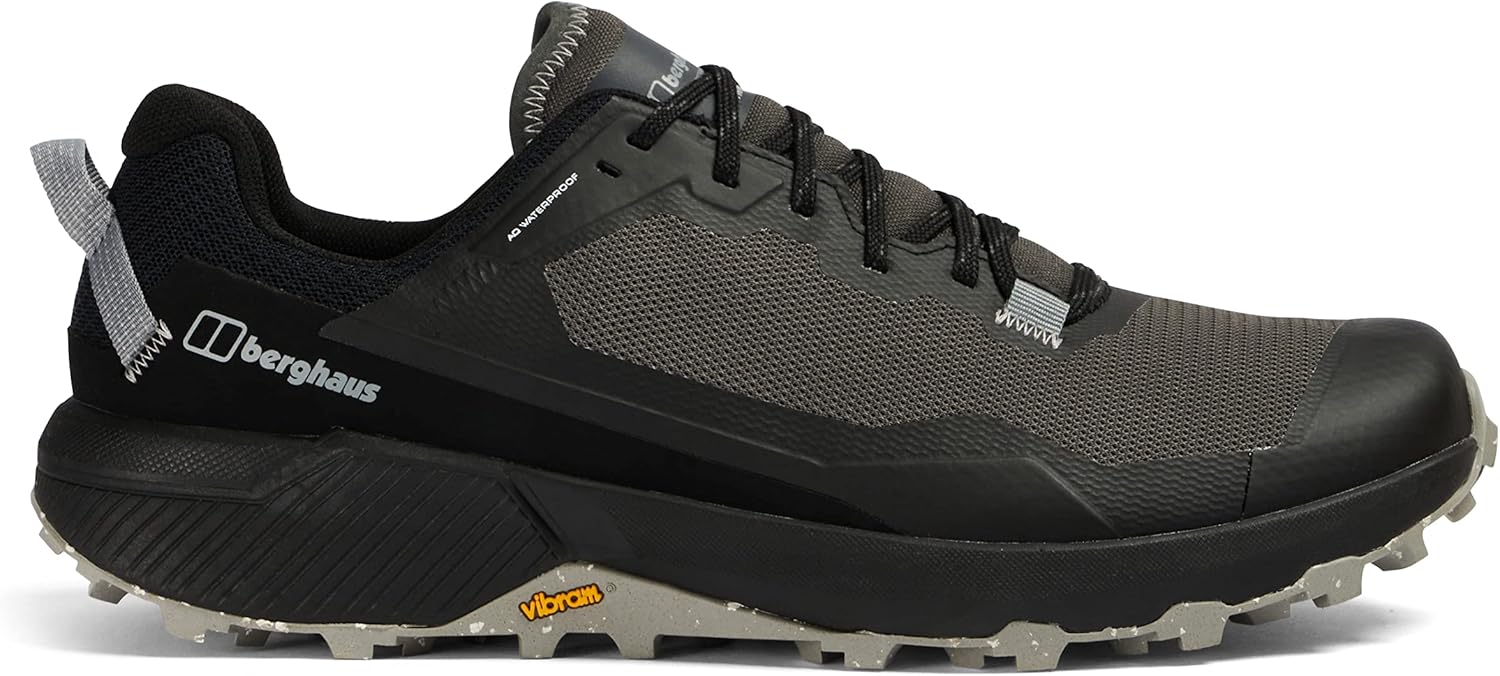
Out of the box, they look more like chunky trainers than classic walking boots. Ankle height is low-to-mid, the sole is pretty aggressive underneath, and the upper is all synthetic with a modern style. First thing I checked was the fit and weight. They don’t feel super heavy on the feet, definitely lighter than leather boots I’ve used before, but not as light as a pure running shoe. For context, my usual shoes are everyday trainers and a pair of older Berghaus boots.
My use has been a mix: 30–60 minute walks most days on tarmac and park paths, plus one longer 6-hour hike with on-and-off rain. So this isn’t a lab test, just real-life use. I’ve had them in puddles, wet grass, a bit of mud, and dry sunny days. I also did a couple of supermarket runs in them just to see how they feel for all-day wear on flat ground.
Overall, they sit in that middle ground: more support and grip than trainers, but not as protective or cushioned as a full hiking boot. There’s a lot to like, especially the waterproofing and grip, but they do have quirks like the slightly narrow fit and how the lugs feel on hard pavement. I’ll break it down by category so you can see if they match what you actually need.
Value for money: fair, but not a bargain
Price-wise, these sit in that mid-range hiking shoe bracket. They’re not budget, but they’re not top-end either. One Amazon reviewer summed it up well: they’re well made and very comfortable, but you could probably get a pair of trainers for half the price that would feel as good – the difference will be in durability and proper outdoor performance. I agree with that take. If you just want something for occasional dry walks on pavement, they’re overkill and not the best value.
Where the price starts to make more sense is if you actually use the features you’re paying for: waterproof membrane, Vibram outsole, synthetic animal-free build, and decent durability. Compared to cheaper “water resistant” trainers, the waterproofing here is clearly better. My feet stayed dry in proper wet grass and puddles, which is usually where cheap shoes give up. The grip is also on another level compared to budget soles, especially on mud and wet surfaces.
The flip side is that they’re not flawless. The slightly narrow fit means some people may have to size up, which is annoying given the price. And the lugs being noticeable on tarmac means they’re not the most comfortable option if you’re mostly in the city. So you’re paying for a trail-focused shoe that also works day-to-day, but it’s not the perfect all-rounder for every situation.
If I look at the overall package – build quality, performance in bad weather, and brand reputation – I’d say the value is pretty solid but not outstanding. If you walk a lot in mixed or wet conditions, the price feels justified. If you mainly stick to dry, flat pavements and just like the look, you can save money with simpler trainers that will feel softer underfoot. For the intended use (regular outdoor walking and light hiking), a 4/5 on value feels fair.
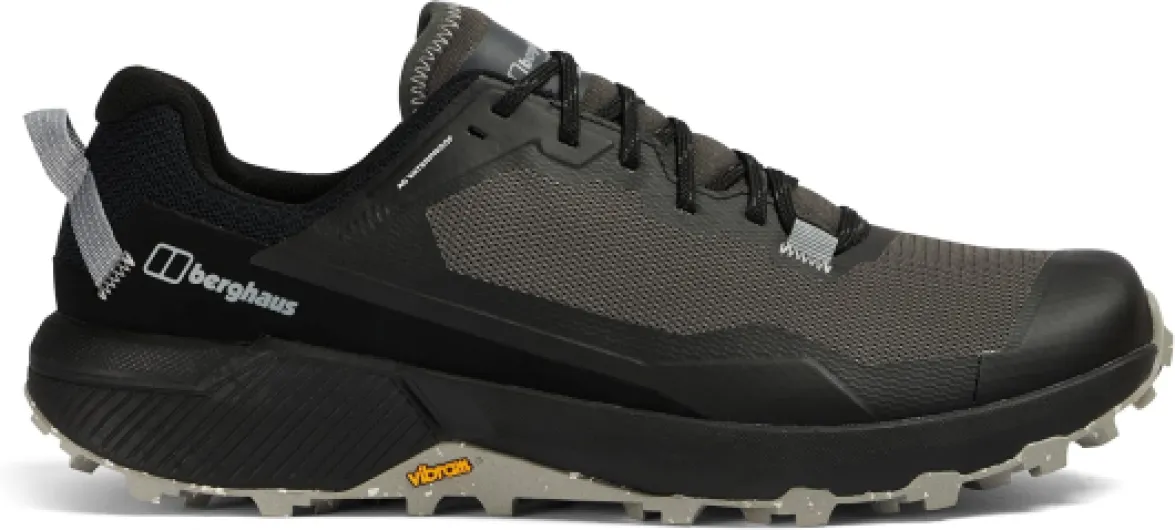
Design: more trail runner than clunky hiking boot
Design-wise, these Revolute Active shoes sit somewhere between a trainer and a light hiking boot. They’re ankle-high, but only just – you don’t get the full ankle lock-in of a proper boot, but you do get a bit more coverage than a low-cut trainer. The overall look is pretty clean: solid colour with some subtle branding, nothing flashy. I wore them with jeans and they didn’t scream “I’m off to climb a mountain”, which is what I wanted for daily use.
The outsole has proper hiking-style lugs. They’re not tiny road-running nubs; they’re chunky enough that you can see and feel them. That’s good on mud and grass, but on tarmac you are aware of them underfoot, especially the first few days. One Amazon reviewer mentioned feeling the lugs through the sole on flat pavement, and I had the same impression on very hard surfaces. It’s not painful, but you notice a slightly knobbly feel if you’re just walking around town for hours.
The upper is all synthetic polyester with some structure around the toe and heel. There’s a closed toe design with some protective overlay, so you don’t feel every rock smashing your toes, but it’s not a steel toe or anything like that. The lace system is straightforward: standard eyelets, no hooks. It holds the foot well enough, but there’s nothing fancy about it. The tongue is padded and gusseted enough to help with waterproofing, and it doesn’t slide around, which is something that annoys me on cheaper shoes.
Colour-wise, if you’re expecting plain black, you might be slightly surprised. It’s more of a dark blue/charcoal. Personally, I liked it – it hides dirt well and doesn’t look too technical. Overall, the design is practical: good grip pattern, low-key looks, and a trail-oriented sole. The only design downside for me is that these are clearly built for off-road first, so if you mainly walk on pavement, the aggressive sole might feel a bit overkill and slightly less smooth than a more urban shoe.
Comfort and fit: decent, but watch the width and the sole feel on tarmac
Comfort is where these shoes are good but not perfect. Out of the box, they felt a bit stiff, especially around the midfoot and heel. That matches one of the reviews saying they were a bit stiff at first. After 3–4 walks (around 20–25 km total), they loosened up noticeably. The upper started to flex more naturally, and the heel didn’t feel as rigid. So there is a short break-in period, but it’s not brutal like some leather boots.
Fit-wise, they run a touch on the narrow side. I’ve got average-width feet, and I was fine, but I can see why some reviewers mention they feel tighter than other walking shoes. One person even said they go for a half size up with Berghaus because they can be snug. In my case, length was true to size, but if you have wide feet or like thicker socks, I’d seriously consider half a size up. The toe box has enough room for my toes to wiggle, but it’s not super wide like some wide-fit brands.
Underfoot comfort is mixed depending on where you walk. On trails, grass, and uneven ground, they feel stable and cushioned enough. The moderate cushioning and firm Vibram sole give you good feedback without feeling like you’re barefoot. On hard tarmac for long stretches, you do start to feel the lugs pattern a bit, especially if you’re in thin socks. Another reviewer mentioned feeling the lugs on flat pavement and suggested thicker socks or insoles, and I’d agree – thicker socks definitely smooth things out.
Breathability is okay for a waterproof shoe, but it’s still a waterproof shoe: in cool, wet conditions my feet stayed comfortable and dry; in warmer weather, they got warm but not unbearable. The OrthoLite insole helps with moisture, but if you run hot, you’ll notice it. Overall, comfort is solid once broken in, with the main caveats being the slightly narrow fit and the firmer feel on pavement. If you mainly walk on mixed terrain, they’re fine. If you spend all day on concrete, you might want something softer.
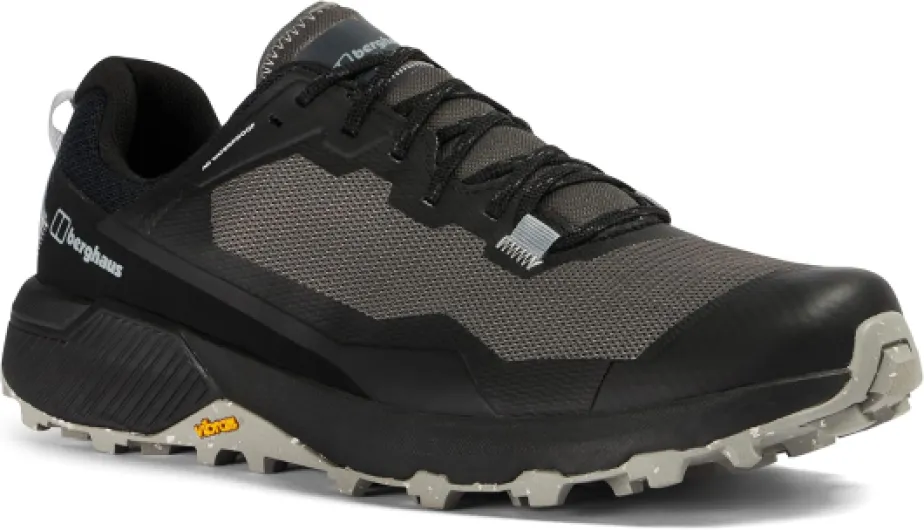
Materials: fully synthetic, waterproof lining, and a chunky Vibram sole
The materials are clearly chosen with durability and weather protection in mind rather than being super soft or plush. The upper is recycled polyester with synthetic overlays, and the lining is a polyurethane-based AQ waterproof membrane. In practice, that means the outside feels like a tough fabric rather than leather, and the inside has that slightly structured, membrane-shoe feel you get with most waterproof hikers.
The sole is rubber with Vibram Ecostep, and Berghaus adds their OPTI-STUD pattern on top. That’s basically their stud layout for better grip on trails. Underfoot, the rubber feels firm and secure, not squishy like a running shoe. On wet grass and muddy footpaths, I had no slipping issues – you can feel the lugs bite in. On wet pavements, grip was still solid; I didn’t get that “ice rink” sensation some cheap soles give you. A reviewer mentioned they handled snow and ice better than their previous shoes, which lines up with how sure-footed they feel in the wet.
Inside, you get a foam OrthoLite footbed. It’s removable, so if you use custom insoles or want more cushioning, you can swap it out. The default insole is fine: medium thickness, decent moisture handling, nothing fancy. Cushioning level overall is listed as moderate, and that matches the feel: there’s enough between you and the ground, but it’s not a soft, bouncy trainer. The rest of the lining is synthetic, and the shoe uses no animal-based material at all, which might matter for some people.
From a materials point of view, these are built to be practical, waterproof, and reasonably tough, not luxurious. After a few weeks, the uppers still look almost new apart from some dirt, and creasing is minimal. No peeling, no loose threads on my pair. The trade-off is that the shoe doesn’t feel super breathable in hot conditions – that’s typical of waterproof membranes. On cooler, wet days they’re spot on; on warm dry days, my feet ran a bit warm. So if you want maximum breathability for summer, a non-waterproof mesh shoe will feel lighter and airier than this.
Durability: early signs are good, and Berghaus has a solid track record
I haven’t had these for a full year, so I can’t pretend I’ve worn them into the ground yet. But based on a few weeks of regular use and what I know from previous Berghaus footwear, durability looks promising. The upper feels tough and hasn’t shown any fraying, even after brushing against branches and kicking a few rocks on the trail. The stitching is clean and still intact everywhere. No glue lines peeling, no obvious weak points so far.
The sole is where you usually see wear first. After several walks on mixed terrain (pavement, gravel, mud), the lugs still look sharp. There’s a bit of smoothing on the heel edges, but nothing that worries me. Vibram rubber tends to hold up better than generic soles, and that seems to be the case here too. One Amazon reviewer even mentioned they “hiked through the soles” of an older pair of Berghaus boots but still kept them as their most comfortable footwear, which matches my own past experience: Berghaus shoes usually last a fair while before they truly die.
The synthetic materials also help with weather resistance. Unlike leather, there’s no need to worry about cracking or heavy maintenance. I’ve just been wiping them with a damp cloth when they get muddy, as the care instructions suggest, and they clean up fine. No colour fading yet either. The waterproof membrane still feels solid; no leaks so far, though of course long-term membrane durability is something you only really judge after a year or two.
Overall, early durability signs are positive: solid build, tough upper, quality sole. I’d expect these to last a good couple of seasons of regular walking if you’re not abusing them every day on rough rocks. They feel more robust than cheap walking trainers you’d get for half the price, but you’re paying for that. If you’re heavy on footwear, you’ll still eventually wear through the sole, but I don’t see any red flags that suggest they’ll fall apart quickly.
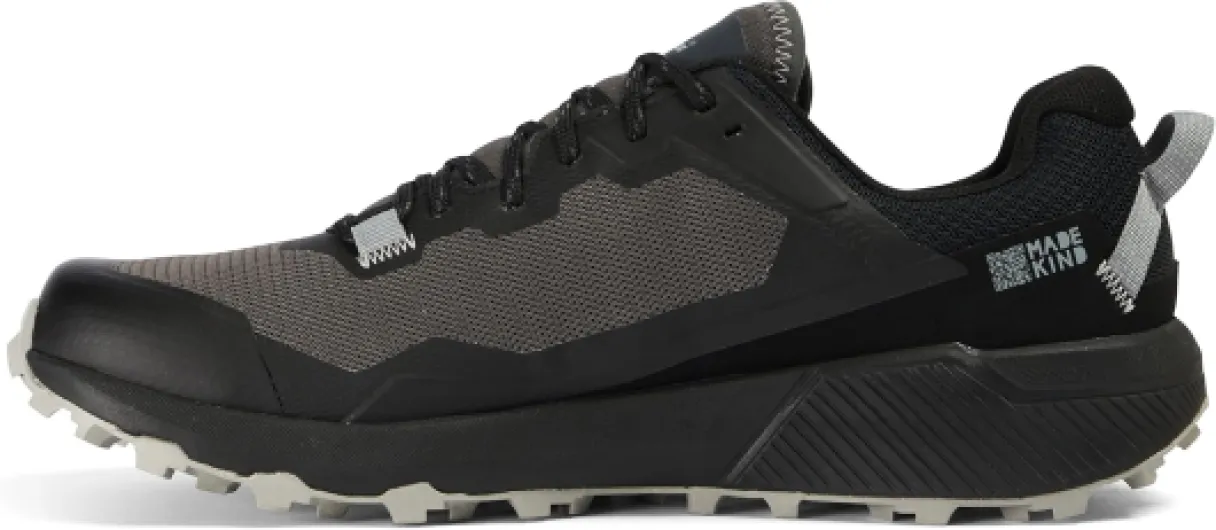
Performance on the trail and in daily use
In terms of performance, these shoes do what they’re supposed to do: keep your feet dry, grip well, and give a stable platform on uneven ground. I walked through wet grass, shallow puddles, and light rain, and the AQ waterproof lining held up. No water got in, and my socks stayed dry. That lines up with the reviews saying the waterproofing is solid, even after long walks. One reviewer mentioned doing 8 hours in the mountains with wool blend socks and staying dry, which gives you an idea of what they can handle.
Grip is one of the strong points. The Vibram Ecostep outsole with the OPTI-STUD layout just feels secure on dirt, gravel, and wet grass. I deliberately tried to push them on a muddy slope where my old trainers would slide, and these bit in much better. On wet pavements and smooth surfaces, they’re still good; I didn’t feel like I was skating around. Another user mentioned they’re much better than their previous pair in snow and ice, and given how they feel on wet surfaces, that sounds believable.
On the downside, that same aggressive sole that’s great off-road is less pleasant if you spend most of your time on flat tarmac. After a couple of hours of city walking, I could feel the lug pattern a bit, especially under the forefoot. It’s not painful, but it’s less smooth than a regular trainer. For me, these are clearly better as “walk to the park / trail and back” shoes than pure urban all-day shoes. For mixed use, they’re fine, but if 90% of your walking is on pavement, you might find them a bit overbuilt.
Overall, performance is strong in the environment they’re designed for: low-level hikes, wet countryside paths, and everyday outdoor use. They’re not technical mountaineering boots, but they don’t claim to be. If you want something that can handle bad weather walks and light hiking without going full boot, these hit that sweet spot pretty well. Just know their strengths are clearly off-road and in the wet, not long urban miles on concrete.
What you actually get with these Berghaus Revolute Active shoes
On paper, these shoes are sold as “active walking / hiking trail shoes” with waterproof AQ lining and a Vibram Ecostep outsole. In real life, that translates to a waterproof trainer-style shoe with a fairly chunky sole and synthetic upper. They come in this oddly named colour (Strlimo Dkshad Mment Harmist), which in reality is more of a dark blue/grey with some contrast details – not pure black. That matches what one reviewer said: the photo looks black, but in person it’s more blue-toned.
The pair I used is a UK men’s size comparable to my normal trainer size. Berghaus lists 734 g for a size 9 pair, which feels about right: not featherlight, but not bricks either. When you pick them up, the sole feels solid and the upper feels like durable synthetic fabric, not floppy mesh. They’re clearly designed more as outdoor shoes than casual lifestyle trainers. You get standard lace-up fastening, no fancy BOA dials or quick laces – just normal laces that stay tied and are easy to adjust.
The product page talks a lot about being 100% synthetic and using recycled polyester, with no animal-based materials. If you care about avoiding leather, that’s a clear point in their favour. They’re aimed at low-level hikes, daily walks, and general outdoor use rather than full-on mountaineering. Think dog walks, countryside paths, wet city commutes, and casual weekend hikes rather than multi-day backpacking in the Alps. That’s also how I’ve used them, and they fit those roles pretty well.
Overall, the presentation matches the promise: a waterproof, synthetic walking shoe that borrows from trail running design. No fancy packaging, no accessories, just the shoes. If you’re expecting a premium unboxing experience, this isn’t that. But if you want something you pull out, lace up, and go straight into a muddy park with, they fit that brief nicely.
Pros
- Very good grip on wet grass, mud, and mixed trails thanks to Vibram OPTI-STUD sole
- Reliable waterproofing that keeps feet dry in rain, wet grass, and puddles
- Durable synthetic build with decent comfort after a short break-in period
Cons
- Fit runs a bit narrow, so not ideal for wide feet without sizing up
- Lug pattern can be felt on hard tarmac, making long urban walks less comfortable
Conclusion
Editor's rating
The Berghaus Men's Revolute Active Walking Hiking Trail Shoes are a solid option if you need a waterproof, trail-capable shoe that still passes for a chunky trainer in daily life. They grip well, keep your feet dry, and feel stable on uneven, wet ground. The fully synthetic build and Vibram outsole give a sense of reliability, and early signs on durability are positive. Once you get past the short break-in period, comfort is good, especially on trails and softer surfaces.
They’re not perfect though. The fit leans slightly narrow, so wide-footed people may need to size up or skip them. On flat tarmac, you can feel the lugs a bit, which makes them less ideal as pure city shoes. Breathability is also just “okay” because of the waterproof membrane – totally fine in cooler, wet weather, but a bit warm in summer. So they’re best for people who actually spend time on paths, parks, and light trails, not just shopping centres.
If you do regular dog walks, countryside strolls, or low-level hikes in mixed weather and want one pair of shoes that can handle all that without going full hiking boot, these make sense and justify their price. If your walking is mostly dry, urban, and on hard pavement, you’ll probably be happier (and spend less) with a softer, non-waterproof trainer. Overall, a competent, no-nonsense walking shoe that gets the job done without being flashy.