
Summary
Editor's rating
Value: good bang for your buck if you’re realistic about your needs
Design: tri-fold that actually fits in a small bag
Comfort: grips and weight are decent for all-day use
Materials: aluminum that feels tough, not fancy
Durability: holds up well so far, with a few realistic limits
Performance on the trail: stable, but not for hardcore mountaineering
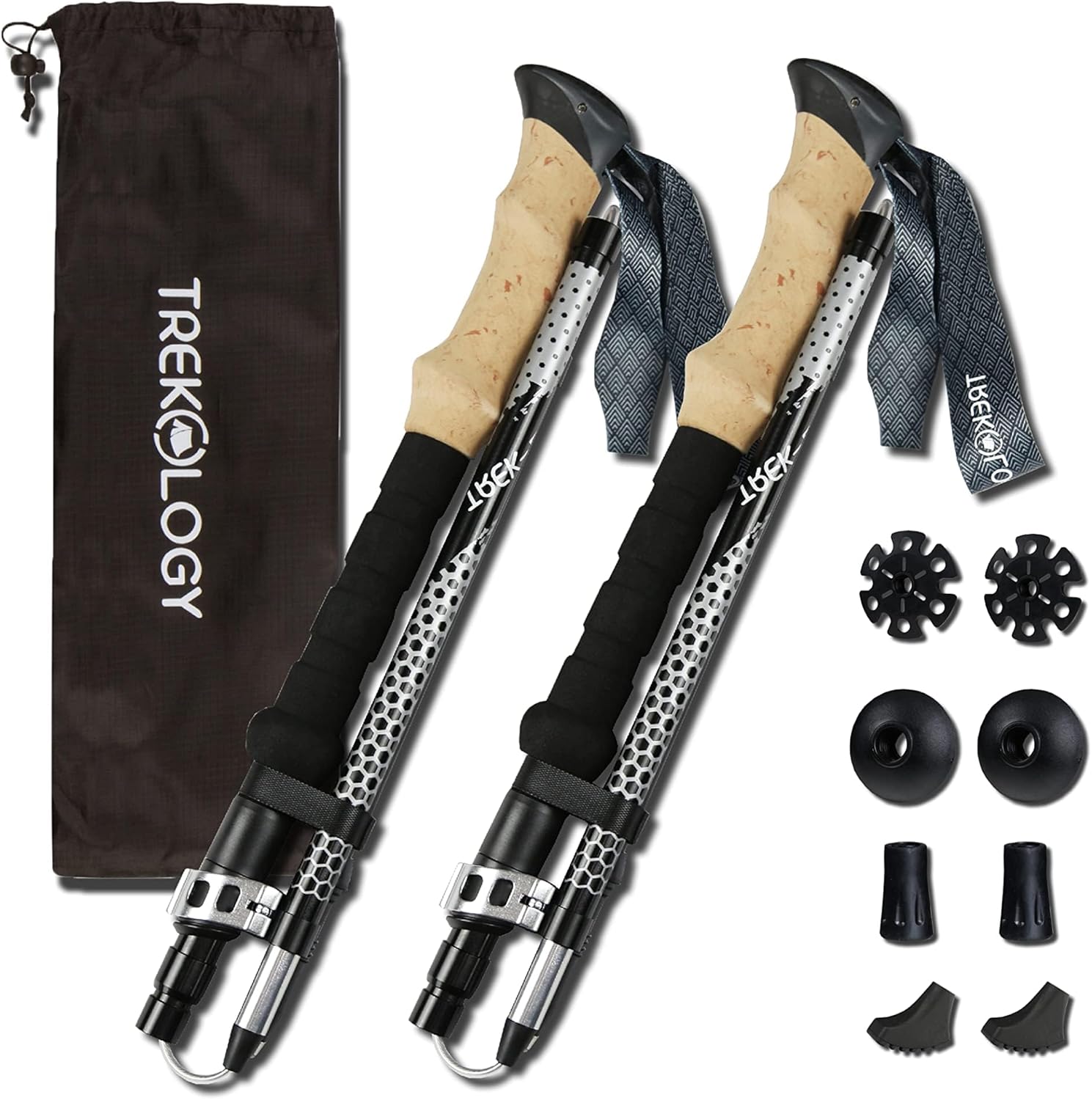
What you actually get in the box
Pros
- Folds down to about 15 inches, easy to pack in daypacks and carry-on luggage
- Aluminum construction with metal flip locks feels stable and durable for casual to moderate use
- Comfortable cork-texture grips and foam extensions work well for sweaty hands and varied terrain
Cons
- Heavier than high-end carbon poles, not ideal for very long or fast hikes
- Storage bag only really works when poles are fully folded, not when just collapsed to user length
- Tri-fold joint design is fine for normal hiking but not the best choice for very technical or extreme use

Specifications
View full product page →| Brand | TREKOLOGY |
Folding poles for real people, not Everest climbers
I picked up the Trekology Trek-Z collapsible poles mainly because I wanted something cheap enough that I wouldn’t cry if the airline lost my bag, but still solid enough to trust on rocky trails. I’m not training for ultra marathons, I’m just someone who hikes on weekends and wanted extra balance on steep or slippery paths. The size I got is the 100–120 cm version, I’m about 5'8", so right in the recommended range.
First impression: they don’t feel like toy poles. A lot of budget trekking poles feel hollow and shaky when you put weight on them. These are aluminum and you can feel that they’re a bit heavier than high-end carbon ones, but in a good way – they feel like they can take a hit. The folding system is the tri-fold style, kind of like some travel tent poles, with a push button to lock the sections.
I’ve used them on a few half-day hikes (3–5 miles) with some steep downhill, plus some urban use for extra support on long walks with uneven sidewalks. I also tested them in wet conditions on muddy trails and on rocky steps. I’m not babying them – I’ve thrown them in a daypack, in a suitcase, and in the trunk with other gear on top. So this is not a “used them once in the living room” kind of review.
Overall, they sit in that middle zone: not fancy, not ultralight, but they get the job done without feeling sketchy. If you expect premium performance like top-end Leki poles, you’ll see the difference. But if you just want something that folds small, feels stable, and doesn’t cost a fortune, they’re actually pretty solid.
Value: good bang for your buck if you’re realistic about your needs
On the value side, I think these Trek-Z poles hit a nice spot. They’re clearly cheaper than high-end brands like Leki or Black Diamond, but they don’t feel like throwaway gear. For someone who hikes occasionally, travels, or just wants extra stability for daily walks, dropping big money on premium poles doesn’t really make sense. These give you most of the practical benefits – support, balance, packability – without the premium price.
Compared to ultra-cheap generic poles, the difference is in the details: the tri-fold design that actually packs small, the metal flip locks, the decent grips, and the overall solid feeling when you lean on them. With the really cheap ones, I’m always half-expecting them to slip or snap. With these, I don’t have that constant doubt. They still aren’t luxury gear, but they feel trustworthy enough that I’m comfortable taking them on real trails, not just flat sidewalks.
There are some compromises: they’re not the lightest, the storage bag is a bit of an afterthought if the poles aren’t fully folded, and they’re not built for extreme use. But if you look at what you pay versus what you get – a pair of folding poles that work well for most normal hikes and travel – the value is pretty strong. You’re basically paying middle-of-the-road money and getting something that behaves closer to the upper end of mid-range, at least for casual use.
If you’re an occasional hiker, a senior wanting better balance, or someone going on a trip where you want poles that can disappear into a suitcase, these are good value for money. If you’re a serious long-distance backpacker or mountain addict, you’ll probably outgrow them and want to invest in lighter, more technical poles. So they’re a smart buy for the majority, but not the final answer for hardcore users.
Design: tri-fold that actually fits in a small bag
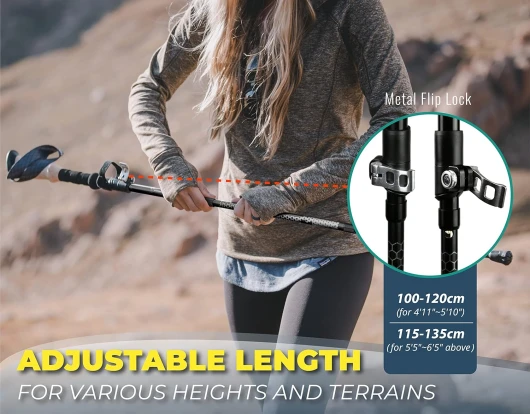
The main thing with these Trek-Z poles is the tri-fold design. Instead of just collapsing telescopically like some cheap poles, they break down into three sections connected by a cable inside, a bit like tent poles. You snap them together, and a metal push-button pops out to lock the sections. Then you use the flip lock to fine-tune the height. Once you’ve done it a couple of times, it’s quick – maybe 10–15 seconds per pole.
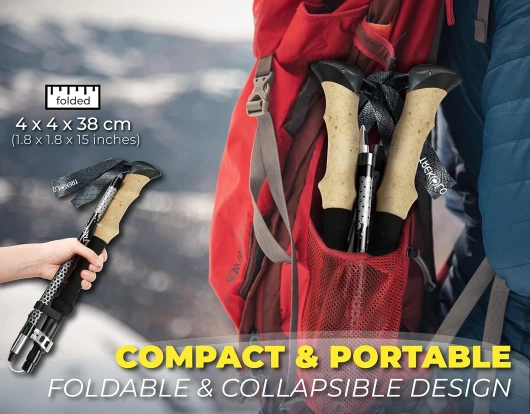
Folded length is around 15 inches (38 cm), which is honestly the main reason I bought them. They actually fit inside my daypack horizontally, so I don’t have poles sticking out the top like antennas. For travel, that’s practical. I’ve put them inside a carry-on suitcase diagonally and they still fit easily. Compared to my older non-folding poles that only collapsed telescopically, these are way easier to pack without having to check a bag or strap them to the outside.
On the trail, the design feels pretty stable. The only thing you need to trust is that push-button joint. Once it’s locked, it doesn’t wiggle much. I didn’t feel any scary flex when putting my weight on them going downhill. They are a bit bulkier at the joints compared to one-piece poles, but that’s the trade-off for being able to fold them this small. Also, the flip locks are metal, not cheap plastic, which is good. They clamp down firmly without me having to overtighten them.
One design downside: the included storage bag is sized for the poles when they’re fully folded. If you just shorten them instead of fully folding them, they stick out of the bag. It’s not a big deal for me because I rarely use the bag, but it does feel like a small design miss. Overall though, for casual hiking and travel, the design is practical and thought-out enough. Not perfect, but clearly better than the super basic straight telescoping poles.
Comfort: grips and weight are decent for all-day use
Comfort-wise, I’d call these “good enough for most people”. The cork-texture grips are shaped well and didn’t give me any hotspots or blisters, even on a 4–5 hour hike. I used them with and without gloves. Bare-handed, the grip feels slightly textured but not rough. When my hands got sweaty, the cork-texture absorbed some moisture instead of turning slick, which is pretty much what you want on warm days.
The EVA foam extension below the main grip is more useful than I expected. On steep uphill sections, I could slide my hands lower instead of stopping to shorten the poles. The foam is soft enough to be comfortable but dense enough that it doesn’t feel like it’s going to crumble after a few trips. I leaned pretty hard on them going downhill, and the grips stayed stable with no twisting or weird flexing.
As for weight, you do notice they’re not ultralight. But for moderate hikes, I didn’t find them tiring to use. I’m not counting grams, I just don’t want my arms to feel dead at the end. After a couple of outings, they basically faded into the background, which is what I want from trekking poles. If you’re doing multi-day backpacking with long distances every day, then yeah, you might want something lighter. For day hikes and travel, it’s fine.
The straps are adjustable and reasonably soft. They’re not the most padded straps I’ve used, but they didn’t cut into my wrists or cause rubbing. You can set them up so your wrist takes part of the load instead of always gripping hard, which helps with fatigue. Overall, comfort is solid: not luxurious, but no obvious pain points either. They feel like gear designed for casual to moderate use, and in that context, they do the job well.
Materials: aluminum that feels tough, not fancy
The Trek-Z poles are made from aircraft-grade aluminum, which in normal-person language just means: metal that feels sturdy and can handle being knocked around. They’re not carbon fiber, so if you’re obsessed with shaving every gram, these aren’t for you. But aluminum has one clear advantage for regular users: it tends to bend before it snaps, which can be the difference between a ruined hike and a minor annoyance.
Weight-wise, the 100–120 cm size is around 294 g (10.4 oz) per pole. You feel them in your hands, but they’re not bricks. After a full afternoon hike, I didn’t think about the weight anymore. Compared to my friend’s super light carbon poles, yes, these are heavier, but not in a way that ruins the experience unless you’re doing very long distances or fastpacking. For normal day hikes, the weight is acceptable.
The grips use a cork-texture material at the top and EVA foam below. The cork-texture area does a decent job with sweat – it doesn’t get slippery, and it doesn’t feel like plastic. It’s not as premium as real cork grips on expensive poles, but it beats the hard rubber handles you see on really cheap models. The EVA foam extension is handy when you’re climbing steep slopes and want to hold the pole lower without changing the length.
Other hardware details: the joints have metal caps and the flip locks are metal too, which is reassuring. I’ve had cheap poles where the plastic lock deformed over time and started slipping; so far, with firm tightening once when new, these haven’t budged. The included tips and baskets are basic plastic and rubber – nothing fancy, but they do the job. Materials overall feel like mid-range gear: not premium, but clearly better than bargain-bin stuff. For the price, I’d say the material choices are sensible and practical.
Durability: holds up well so far, with a few realistic limits
In terms of durability, these have surprised me in a good way. I’ve tossed them in and out of the car, checked them in a suitcase, and used them on rocky sections where the poles constantly hit stones and roots. The aluminum shafts picked up some scratches, which is normal, but no dents or bends yet. For mid-priced poles, that’s what I hope for: cosmetic marks, but no structural damage after normal use.
The joints and locks are where cheaper poles usually fail first. The metal push-button still clicks cleanly after multiple fold/unfold cycles. It doesn’t feel loose or sloppy. The flip locks haven’t slipped on me once, but I did tighten the screws a bit the first time to get the right clamping force. That’s something I’d recommend anyway: set them once at home, then forget about it. I haven’t had to re-tighten on the trail.
The grips and foam also seem to be holding up. No chunks missing, no peeling, no weird smells or sticky feeling in the heat. The straps haven’t frayed. The tips show some wear (again, normal), but they’re not worn down to nubs. For very heavy users, you’ll probably end up replacing tips eventually, but that’s standard maintenance for any pole, not a flaw.
I wouldn’t call these indestructible, and I wouldn’t abuse them with things like using them as tent center poles under heavy load or prying big rocks. But for regular hiking, travel, and stability walking, they feel reliable. Considering the price point, I’d say durability is better than expected, as long as you use them for what they’re designed for and don’t treat them like mountaineering tools.
Performance on the trail: stable, but not for hardcore mountaineering
Out on the trail, the Trek-Z poles perform better than their price suggests, but you have to remember what they’re built for. I used them on rocky trails, muddy sections after rain, and some steep downhill with loose gravel. In all those conditions, they felt stable. The shafts didn’t flex in a worrying way, and the flip locks held firm – no random collapsing when I put my weight on them, which is something I’ve had with really cheap poles.
The push-button joint that connects the three sections is the part I watched most closely. Once it clicks into place, it stays put. I tried deliberately putting more weight on them than I normally would, just to see if they’d shift, and they didn’t. For regular hiking, they feel trustworthy. That said, they’re still three-piece folding poles. If you’re doing very technical stuff or relying on them in dangerous terrain, I’d personally prefer a beefier, maybe non-folding setup.
Traction with the included tips and baskets is fine. The standard carbide tip grips well on dirt and rock. The mud baskets help in softer ground so the pole doesn’t sink too deep. On wet rock, they behave like most poles – you still have to be careful, but there was no weird sliding more than any other set I’ve used. On pavement with the rubber caps, they’re okay for stability walks or city use, though you do feel the impact a bit if you’re really pounding the ground.
Overall, performance is solid for casual to moderate use: day hikes, travel, seniors wanting extra support, people recovering from injuries who want more balance on uneven terrain. If you’re planning long thru-hikes or heavy winter mountaineering, I’d look at higher-end poles. But for what most people actually do – 3–10 km hikes, mixed terrain, occasional trips – these hold up well.
What you actually get in the box
Out of the box, the Trek-Z set is pretty straightforward: two poles, a simple nylon storage bag, some rubber tips and baskets, and that’s about it. No fancy booklet or over-the-top packaging. Honestly, I prefer it that way – less trash to deal with. The poles come folded into three sections with a Velcro strap around each to keep them compact. When folded, they’re around 15 inches long, which is small enough to fit inside a regular daypack or a carry-on suitcase.
The model I’m talking about here is the black 100–120 cm version meant for people roughly 4'11" to 5'10". I’m near the top of that height range and the adjustment still gives me enough room to dial in a comfortable length. The flip-lock system for adjusting the length is pretty familiar if you’ve used trekking poles before. Flip the lever open, slide to length, flip it closed. It’s not fancy, but it works.
In hand, they feel more like mid-range poles than “cheapest on Amazon” ones. The grips are cork-texture (not pure cork, but they do the job), and the lower part of the shaft has EVA foam so you can choke down on steep climbs. The included accessories are standard: different tips/baskets for mud or softer ground, and basic rubber caps for pavement. Nothing mind-blowing, but you’re not left having to buy extras just to start using them.
So in terms of presentation, it’s pretty no-nonsense. You get what you need, nothing more. If you like premium unboxing experiences, this isn’t that. But if you just want to pull them out, adjust them, and hit the trail in five minutes, that’s exactly what you can do here.
Pros
- Folds down to about 15 inches, easy to pack in daypacks and carry-on luggage
- Aluminum construction with metal flip locks feels stable and durable for casual to moderate use
- Comfortable cork-texture grips and foam extensions work well for sweaty hands and varied terrain
Cons
- Heavier than high-end carbon poles, not ideal for very long or fast hikes
- Storage bag only really works when poles are fully folded, not when just collapsed to user length
- Tri-fold joint design is fine for normal hiking but not the best choice for very technical or extreme use
Conclusion
Editor's rating
Overall, the Trekology Trek-Z collapsible poles are solid mid-range trekking poles that suit how most people actually hike. They fold down small, feel stable under normal use, and don’t cost a fortune. The aluminum build, metal flip locks, and cork-texture grips give them a sturdier feel than a lot of budget options, even if they’re not as light or refined as premium brands. For day hikes, travel, and general stability on uneven ground, they do the job without drama.
I’d recommend them to casual and occasional hikers, seniors or anyone wanting better balance, and travelers who need poles that fit inside a backpack or suitcase. They’re also a decent first pair if you’re not sure how often you’ll use trekking poles and don’t want to spend big right away. On the other hand, if you’re planning long multi-day treks, very technical terrain, or you’re picky about weight, you might want to look at higher-end carbon or more robust models. These are more “practical workhorses” than “high-performance toys.”
So, not perfect, but good value and reliable enough for most real-world scenarios. If your expectations match the price – mid-range, not pro gear – you’ll probably be pretty happy with them.