
Summary
Editor's rating
Value for money: strong if you catch them at a good price
Chunky, practical design with real ankle support
Comfort: good once broken in, but size carefully
Synthetic build: practical but not premium
Durability: decent for the price, but not bulletproof
Grip and waterproofing: does the job on wet, muddy ground
What you actually get out of the box
Pros
- Good waterproofing for rain, wet grass, and shallow puddles
- Strong grip thanks to deep, aggressive rubber lugs
- Decent comfort and ankle support once broken in, especially for the price
Cons
- Synthetic build may not last as long as premium leather boots under heavy use
- Ankle and tongue feel stiff at first and need a break-in period

Specifications
View full product page →| Brand | XPETI |
Solid budget boots for wet UK walks?
I’ve been using these XPETI Thermator men’s waterproof hiking boots (size 9 UK, Black H) for a few weeks now on my usual dog walks and weekend hikes. Think classic British weather: wet grass, muddy bridleways, the odd shallow stream, and some gravel paths. I bought them mainly as a cheaper backup to my usual branded boots, expecting them to be “just okay” for winter and bad weather.
First impression when I took them out of the box: they look like proper hiking boots, not fashion trainers pretending to be outdoorsy. The ankle is fairly high, the sole is chunky with deep lugs, and they feel quite light in hand for the size. I wasn’t blown away, but they looked decent and definitely more serious than supermarket boots at the same price range.
On foot, they felt a bit stiff around the ankle on day one, but the cushioning under the heel was better than I expected. I usually walk 6–8 km at a time, and I wanted something that wouldn’t leave my feet sore or soaked by the time I’m back. I also paid attention to whether they rub the heel or dig into the ankle, because that’s usually where cheaper boots annoy me.
Overall, after several wet walks and a couple of longer hikes, I’d say these boots are pretty solid for the price, with some clear pros (grip, waterproofing, comfort once broken in) and some downsides (long-term durability is a question mark, and the fit isn’t for everyone). If you expect premium build like big outdoor brands, you’ll spot the differences, but if you just need something that keeps your feet dry and supported through autumn and winter, they do the job.
Value for money: strong if you catch them at a good price
In terms of value, these XPETI Thermator boots sit in a nice sweet spot between very cheap no-name boots and expensive big-brand hiking footwear. You’re getting proper ankle support, real grip, and effective waterproofing at a price that’s usually lower than the well-known outdoor brands. For someone who needs a reliable pair for dog walks, weekend hikes, or occasional trips in wet weather, they make financial sense.
Where the value question comes up is lifespan. If they last you a solid autumn-winter season or two of regular use, then the cost per month is pretty reasonable. If you’re unlucky and get one of the pairs that splits early like one reviewer mentioned (after four months), then suddenly the value doesn’t look so good. That’s the gamble with budget boots: you get good features for less money, but consistency can vary a bit more than with premium brands.
Compared to cheaper supermarket or generic Amazon boots I’ve tried, these are clearly a step up in comfort, support, and grip. Compared to high-end brands, they obviously don’t feel as refined and may not last as long, but they also cost a lot less. For many people who just want good grip, dry feet, and okay comfort a few times a week, dropping big money on premium boots doesn’t make sense, and that’s where XPETI hits the right spot.
So overall, I’d say value is good, especially if you catch them on offer or at a lower price. They’re not perfect and there are compromises in materials and maybe long-term durability, but for the typical user who needs a solid, waterproof boot for wet months, they’re a sensible buy. Just don’t expect them to replace a top-tier hiking boot if you’re out on the hills five days a week.
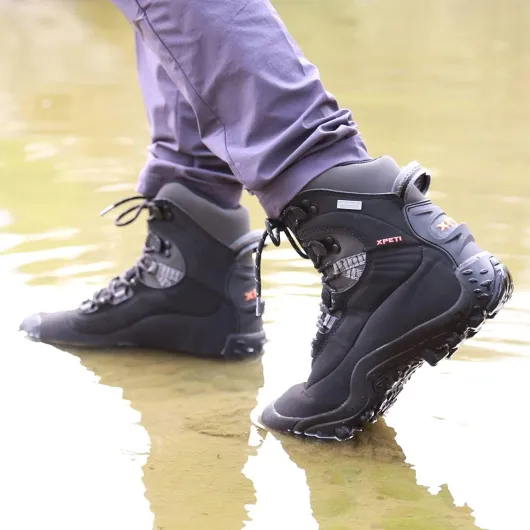
Chunky, practical design with real ankle support
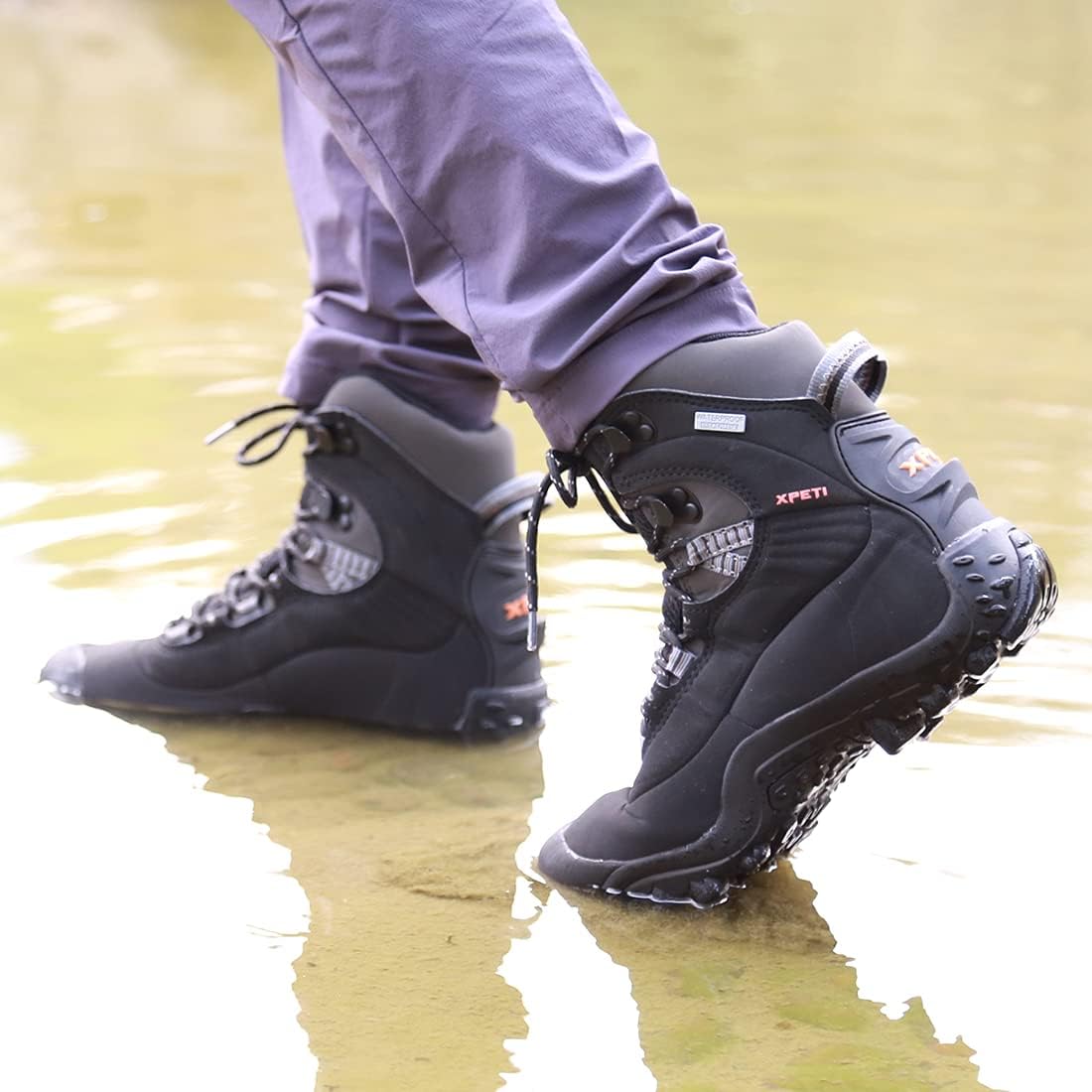
The design is very much “practical first”. These XPETI boots are built around a chunky rubber outsole with 7 mm multi-directional lugs, which you notice immediately. They’re deep, widely spaced, and clearly made for mud and loose ground rather than just pavements. The front has a rubber toe cap that wraps up over the toes, which I’ve already bumped into rocks and tree roots a few times without feeling much impact. For anyone who regularly walks on uneven tracks, that toe protection is actually useful, not just for show.
The ankle section uses a molded TPU support piece, and you can feel it when you tighten the laces. It’s firmer than on many cheap boots and gives a pretty locked-in feeling around the ankle. At first I found it a bit too stiff, especially coming from softer trail shoes, but after a few walks it felt more natural. If you’ve ever twisted an ankle, you’ll probably appreciate this design. If you like a more flexible, trainer-like feel, this might feel overkill.
Looks-wise, the Black H colour is simple: mostly black with some grey details. Nothing flashy. It goes fine with jeans or hiking trousers, and it doesn’t scream “bright hiking gear” when you pop into a shop on the way back from a walk. The stitching patterns and overlays are more functional than stylish; they’re placed where the boot flexes and where it needs reinforcement. It’s not ugly, just clearly built with utility in mind.
One thing I did notice: the tongue is quite padded and gusseted fairly high up, which helps with water resistance but can feel a bit bulky when you first tighten the laces. Once you adjust the lacing pattern to your foot (I skipped one of the top eyelets on longer walks), it’s fine. Overall, the design is no-frills but sensible: good ankle support, proper toe protection, and a sole that clearly prioritises grip over looks.
Comfort: good once broken in, but size carefully
Comfort-wise, these boots surprised me in a good way, but they did need a bit of breaking in. Out of the box, the ankle support felt quite stiff, and the top edge rubbed slightly on my left ankle during the first two walks (about 4–5 km each). After three or four outings, the padding and materials softened up, and that hot spot disappeared. So I’d say don’t judge them on the first 30 minutes; give them a few walks to settle.
The cushioning underfoot is actually one of the stronger points. The EVA midsole and insole combo gives a decent amount of shock absorption, especially under the heel. Compared to a cheap pair of supermarket boots I had before, these are clearly more comfortable for longer distances. I can do a 90-minute dog walk on mixed terrain (tarmac, grass, mud) without feeling that burning pressure under the ball of the foot that I sometimes get in harder boots.
On sizing, I’d strongly recommend going half a size up, like some Amazon reviewers mention. I usually wear an 8.5–9, and the 9 with medium-thick hiking socks fits well. If I’d gone true to size with thicker winter socks, I think my toes would feel cramped on descents. The toe box is not super wide, but it isn’t painfully narrow either. If you have very wide feet, you might find them a bit snug, especially across the forefoot.
Breathability and warmth are decent for autumn and winter. My feet stayed dry and reasonably warm in cold, wet conditions, but I didn’t feel like they were in a sauna either. On longer, faster hikes I could feel some heat, but nothing crazy. Overall, once broken in and sized right, comfort is pretty solid for the price. Not on the same level as high-end boots, but definitely good enough for regular walks and weekend hikes without ending the day with sore feet.
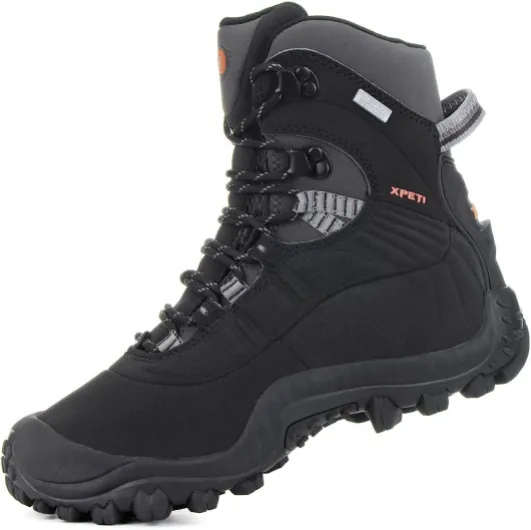
Synthetic build: practical but not premium
These boots are fully synthetic: synthetic upper, rubber sole, EVA midsole, and mesh lining. If you’re coming from full-grain leather boots, you’ll feel the difference straight away. The upper is a mix of waterproof mesh and synthetic overlays, with a membrane underneath to keep water out. It doesn’t feel cheap plastic, but it also doesn’t have that sturdy leather feel. On the plus side, they’re lighter and dry faster if they do get wet on the outside.
The rubber sole is quite firm, with deep lugs that don’t bend much. That stiffness is good for rocky or uneven paths because it stops sharp stones from poking through. The EVA midsole is where most of the cushioning comes from. It’s not super bouncy, but it takes the edge off long walks, especially under the heel. I’ve done a couple of 10 km days in them and my feet felt reasonably fresh, which I’d credit to the midsole and insole combo rather than the upper.
Inside, the mesh lining is breathable enough for cool to mild weather. On cold, wet days, my feet stayed warm without getting sweaty. On a slightly warmer day (around 15°C and dry), I did feel a bit of heat build-up after a long walk, but nothing extreme. I wouldn’t pick these as summer boots, though; they’re clearly more suited to autumn-winter conditions, as the product listing suggests.
In terms of build quality, the stitching and glueing look decent but not bulletproof. I can see why some users mention splitting after several months of heavy use. The flex points around the forefoot are where I’d watch for wear. After a few weeks, mine show normal creasing but no damage yet. So, materials are functional and fit the price, but if you’re expecting years of daily abuse like military-grade boots, you might be asking too much of this level of synthetic construction.
Durability: decent for the price, but not bulletproof
On durability, I’m going to be straightforward: these boots feel good enough for regular use, but I wouldn’t bet on them lasting years of heavy daily abuse. After a few weeks of 4–8 km walks almost every day, mine still look fine: the sole shows minimal wear, the stitching is intact, and the upper has normal creases where the foot bends. Nothing worrying so far. However, some Amazon reviews mention splitting around the flex points after a few months, and I can see where that might happen given the synthetic construction.
The outsole rubber is firm and seems to handle abrasion from gravel paths pretty well. I’ve scuffed the toe cap on rocks and tree roots a few times, and it’s only left cosmetic marks. That part looks like it can take a beating. The potential weak spots are the joints between the sole and upper and the creases across the forefoot. If you’re doing long, daily hikes in rough terrain, that’s where cheaper boots often give up first.
The waterproof membrane has held up perfectly so far, but again, membranes in budget boots often start to fail after a season or two of heavy use. If you’re walking the dog a few times a day and doing a longer hike at weekends, I’d expect these to last a reasonable time, but probably not as long as a premium leather boot that you can reproof and baby along for years.
So, I’d sum it up like this: durability is acceptable for the price bracket. If you see them as a solid pair for one or two wet seasons, especially at the current pricing, they’re fine. If you expect multi-year, hard daily use like ex-military level demands, you might be disappointed and better off spending more upfront. For an average user who wants dry feet and good grip through autumn and winter, the durability is okay, just don’t expect miracles.
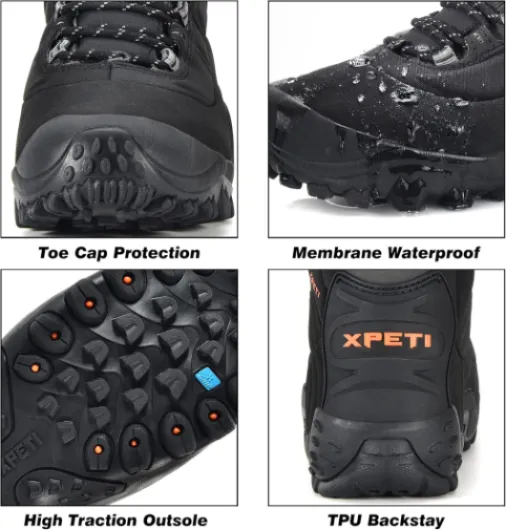
Grip and waterproofing: does the job on wet, muddy ground
In practice, performance is where these XPETI boots justify themselves. The traction is genuinely strong on mud, wet grass, and loose gravel. The 7 mm lugs bite into soft ground well, and I noticed I slipped less compared to my older, more worn-down boots. On very smooth wet rock they’re still a bit sketchy (most boots are), but on typical UK countryside paths they feel secure. I’ve walked through proper mud, small slopes, and wet leaf-covered paths without that constant fear of going on my backside.
Waterproofing has also been solid so far. I’ve walked through wet fields, ankle-deep puddles (not long submersions, just crossing), and steady rain, and my feet stayed dry. The membrane and gusseted tongue seem to do their job. Water beads off the synthetic upper quite well at first; after a few really wet outings, it absorbs a bit more into the surface, but nothing has leaked through to my socks yet. I wouldn’t stand in a stream for ten minutes in them, but for normal hiking and dog walking in bad weather, they’re fine.
Support-wise, the molded TPU ankle support actually makes a difference on uneven ground. On one walk over rough, rutted tracks, I stepped awkwardly a few times, and the boots stopped my ankle from rolling. You do pay for that with a slightly stiffer feel, but if you’re prone to twisting your ankle, it’s a good trade-off. The midsole feels stable when carrying a small backpack; nothing wobbly or too soft.
If I compare them to more expensive brands I’ve used, I’d say grip and waterproofing are close, but the main difference is in long-term consistency. High-end boots keep that performance for longer, while I suspect these XPETIs might lose some waterproofing or structure sooner with heavy daily use. But for the money, performance on the trail is honestly decent. They handle typical weekend hikes, dog walks, and wet commutes across fields without fuss.
What you actually get out of the box
Out of the box, the XPETI Thermator boots look like straightforward hiking footwear: mid-height ankle, synthetic upper, and a big rubber sole with aggressive lugs. No fancy branding all over the place, just a couple of XPETI logos and some stitching details. They come laced but a bit loose, so you’ll probably need to re-lace and tighten them properly before your first walk. There’s no spare laces or extras, just the boots in a basic box.
The pair in size 9 UK feels relatively light for how chunky they look. The product page says around 680 g, and that seems about right. They’re definitely lighter than some full leather boots I’ve used, which you notice on longer walks. The shaft height is around the ankle, not super high like military boots but enough to give support and keep water out of shallow puddles and wet grass. They’re clearly aimed at autumn-winter use, not summer mountain scrambling.
In terms of overall vibe, they sit between budget walking shoes and more technical hiking boots. The lace-up closure gives you space to adjust tightness across the foot and ankle, which I found helpful because the ankle area is quite supportive. They look like they’re made to take some abuse: rubber toe cap, raised sidewall around the front, and a thick sole. At the same time, you can see they’re synthetic rather than full leather, so don’t expect that premium feel when you touch the upper.
If you’re used to big-name brands, you’ll notice the difference in finishing details: stitching is fine but not super neat everywhere, and the materials look more functional than fancy. But for a boot in this price bracket, the presentation is honestly fine. You get what you pay for: a proper hiking boot look, no nonsense, no fancy packaging. It feels like something designed to be worn hard rather than admired on a shelf.
Pros
- Good waterproofing for rain, wet grass, and shallow puddles
- Strong grip thanks to deep, aggressive rubber lugs
- Decent comfort and ankle support once broken in, especially for the price
Cons
- Synthetic build may not last as long as premium leather boots under heavy use
- Ankle and tongue feel stiff at first and need a break-in period
Conclusion
Editor's rating
After using the XPETI Thermator men’s waterproof hiking boots in real, messy conditions, my overall take is that they’re pretty solid budget-friendly boots for wet, muddy walks and casual hiking. They grip well, they’ve kept my feet dry in rain and puddles, and the ankle support feels reassuring on uneven ground. Comfort is good once you’ve broken them in and chosen the right size (I’d go half a size up), and they’re light enough that longer walks don’t feel like a slog.
They’re not perfect, though. The fully synthetic build doesn’t feel as tough or long-lasting as proper leather boots, and there are some question marks around durability over several heavy-use seasons, especially at the flex points. If you’re out on the hills or in rough terrain almost every day, I’d probably invest in something more robust. But if you’re an average user who wants a waterproof, grippy, and comfortable boot for autumn-winter dog walks, weekend trails, or general bad-weather use, these do the job without emptying your wallet.
So, who are they for? People who walk regularly in wet conditions, want real ankle support and traction, and don’t want to pay premium-brand prices. Who should skip them? Hardcore hikers, people who expect multi-year heavy-duty performance, or those with very wide feet who need extra room. For what they cost, I’d happily keep them as my main winter dog-walking and casual hiking boots, and I wouldn’t mind buying another pair if I catch them on discount again.