
Summary
Editor's rating
Value: solid for the money, especially if you walk a lot but don’t want to overspend
Design: practical and a bit chunky, but nothing silly
Comfort: good out of the box, especially for wide feet
Materials: feels tougher than the price suggests, but not premium
Durability: built to last a while, but not forever
Performance: waterproofing and grip do the job
What you actually get for the price
Pros
- Waterproofing works well in real use (puddles, wet grass, light streams) while the boots are still in good condition
- Comfortable out of the box with a slightly wider fit that suits thicker socks or extra insoles
- Good grip and solid toe/heel protection for mixed terrain and light work at a budget-friendly price
Cons
- A bit heavy and warm, especially for longer hikes in mild or hot weather
- Materials at the flex points likely to develop wear and reduce waterproofing after long-term heavy use

Specifications
View full product page →| Brand | NORTIV 8 |
Cheap boots for real walks – do they hold up?
I’ve been using these NORTIV 8 men’s waterproof hiking boots (black, UK 9) as my main walking boots for a few weeks now. I didn’t baby them: dog walks in wet fields, muddy canal paths, a couple of long 10–15 km hikes, and general rainy-day errands. I usually wear mid-range brands like Hi-Tec or Karrimor, so I was curious if these cheaper boots would feel like a downgrade or if they’d be good enough for regular use.
First impression out of the box: they look like standard mid-cut hiking boots, nothing flashy, but they don’t scream “budget” either. I went with my normal size and thick hiking socks, and the fit was okay from the start – no nasty rubbing on the first day, which is already a win for me. I’ve had boots twice the price give me blisters on day one, so that was a pleasant surprise.
In terms of use, I’ve done roughly 80–100 km in them so far, mostly mixed terrain: tarmac, gravel, forest paths, wet grass, and some steep, rocky sections. So not a mountain expedition, but more than just a stroll around the block. I also made a point of walking through puddles and wet grass to see how the waterproofing holds up in real life, not just on the spec sheet.
Overall, my first takeaway is this: they feel like good value boots that punch slightly above their price, but with a few compromises you’d expect at this budget. If you’re coming from premium brands, you’ll notice the differences. If you’re used to cheap supermarket or random no-name boots, these will feel like a decent upgrade. I’ll get into the details below: design, comfort, waterproofing, durability, and whether I think they’re worth buying.
Value: solid for the money, especially if you walk a lot but don’t want to overspend
Price-wise, these NORTIV 8 boots sit in that lower-mid range where you’re not paying peanuts, but you’re also far from premium brands. For what you get – waterproofing that actually works, decent comfort, good grip, and reasonable durability – I’d say the value for money is strong. If you compare them to something twice the price, sure, you’ll get better materials, lighter weight, and probably longer-lasting waterproofing. But not everyone wants to drop that kind of cash, especially if they mainly do dog walks, weekend trails, or occasional trips.
Compared to cheap supermarket or random no-name boots I’ve tried before, these are clearly a step up. Those often start falling apart after a few months, or the soles wear flat quickly. Here, you get a more serious outsole, better construction, and a boot that feels like it’s built for real outdoor use, not just the look. That Amazon rating around 4.2/5 with a lot of reviews lines up with my feeling: not perfect, but generally a good deal.
The main trade-offs for the lower price are: a bit more weight, average breathability, and materials that eventually show their limits at the flex points. If those are dealbreakers for you, you’ll need to spend more. But if you just want something that does the job without hurting your wallet, they’re very decent. I’d happily buy them again as a daily beater boot for autumn and winter, and keep more expensive boots for longer treks.
In short, if your budget is tight but you still want dry feet, decent comfort, and a boot that can take regular abuse, these make sense. If you’re a gear nerd chasing the lightest and most high-tech stuff, you’ll probably find them a bit basic. It really depends on what you expect for the money.
Design: practical and a bit chunky, but nothing silly
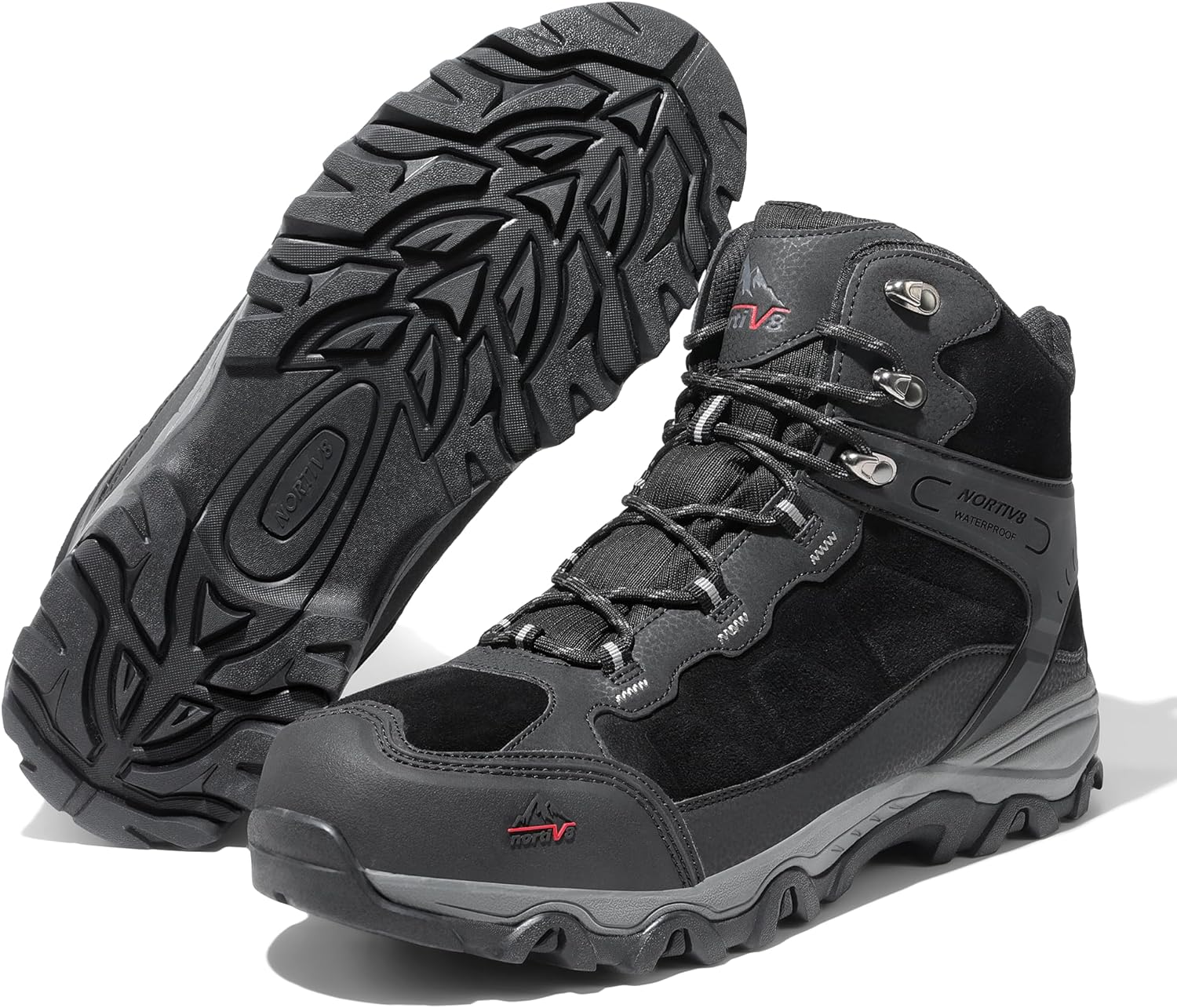
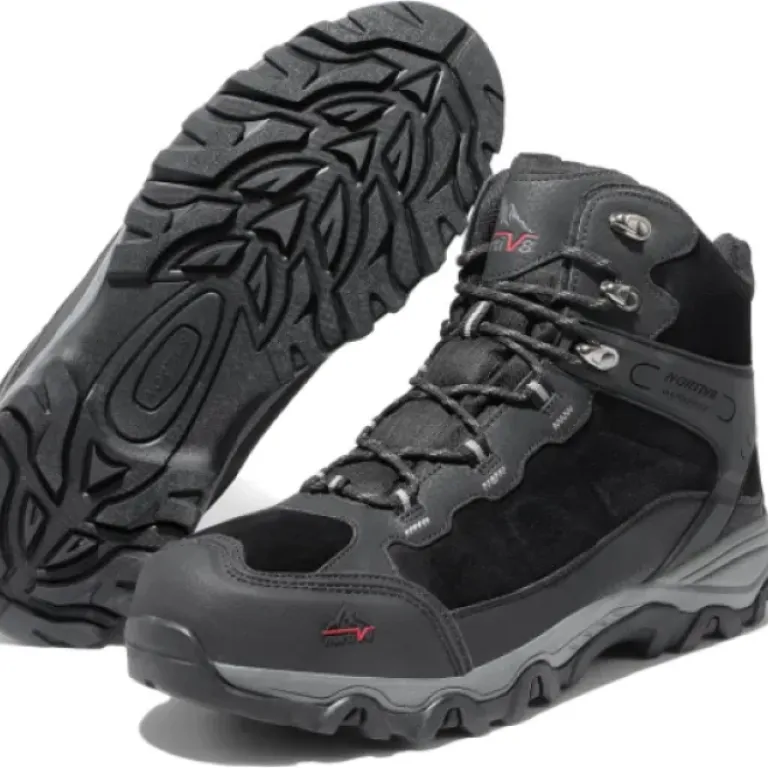
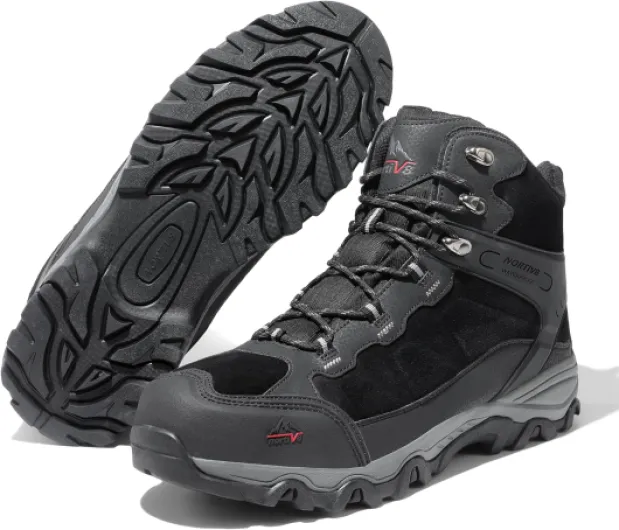
Design-wise, these boots are pretty straightforward. Black colour, solid pattern, no bright neon accents or strange shapes. If you want something that doesn’t draw attention and just looks like a normal pair of hiking boots, they tick that box. I’ve worn them with jeans in town and they didn’t look out of place, which I can’t say for some louder hiking boots I’ve owned.
The cut is mid-ankle, so you get some support but still have enough flexibility to move naturally. The tongue is gusseted (attached higher up the sides), which helps keep water and grit from getting in. After a few muddy walks, I did notice that mud collects in the grooves around the sole, but that’s pretty standard for any boot with decent lugs. A quick rinse under a tap or a stomp in a stream usually clears most of it.
One thing I liked is the toe and heel protection. The rubber toe cap and reinforced heel don’t feel flimsy. I’ve kicked a few rocks by mistake and scraped against edges, and the front hasn’t scuffed badly yet. That gives me a bit more confidence on rocky paths or when I’m not looking where I’m stepping. For building sites or general outdoor work (without needing a steel toe), this is a plus.
On the downside, they are on the chunkier and slightly heavier side compared to lightweight hiking shoes. If you’re used to trainers or trail runners, you’ll feel the extra weight, especially on long days. Personally, I see it as a trade-off: you get more protection and durability, but your legs work a bit harder. For day hikes and dog walks, I don’t mind. For fast hiking or long-distance trekking, I’d maybe look for something lighter.
Comfort: good out of the box, especially for wide feet
Comfort is where these boots surprised me. I usually have to break in hiking boots for a week or two before they stop rubbing my heels. With these, I did a 6–7 km walk on day one and didn’t get any blisters. That doesn’t mean they’re like slippers, but they were wearable straight away, which is already better than some more expensive models I’ve tried.
The fit is on the slightly wider side, which is good news if you have broad feet or like to wear thick hiking socks. My toes had room to move without feeling cramped, and I didn’t get that numbness you sometimes get when boots are too narrow. One Amazon reviewer mentioned buying half a size up to fit cushioned insoles due to joint pain and plantar issues – that makes sense. There is enough room in the forefoot for that without the boot feeling like a boat.
Underfoot, the cushioning is decent. The MD midsole absorbs some shock when walking on stony tracks, and I didn’t feel every rock under my feet. After a 4–5 hour hike, my feet were tired (as usual), but not in pain. The ankle support is noticeable but not restrictive. I could still move my ankle enough for uneven ground, but I felt supported when stepping on side slopes or loose stones.
On the downside, breathability is average at best. With the waterproof membrane and synthetic materials, my feet did get a bit warm and sweaty on longer walks, especially in milder weather. In cold and wet conditions, this is fine, even welcome. In warmer months, you might find them a bit stuffy and want something more ventilated. So for me, they’re more of a autumn/winter/early spring boot than a high-summer option.
Materials: feels tougher than the price suggests, but not premium
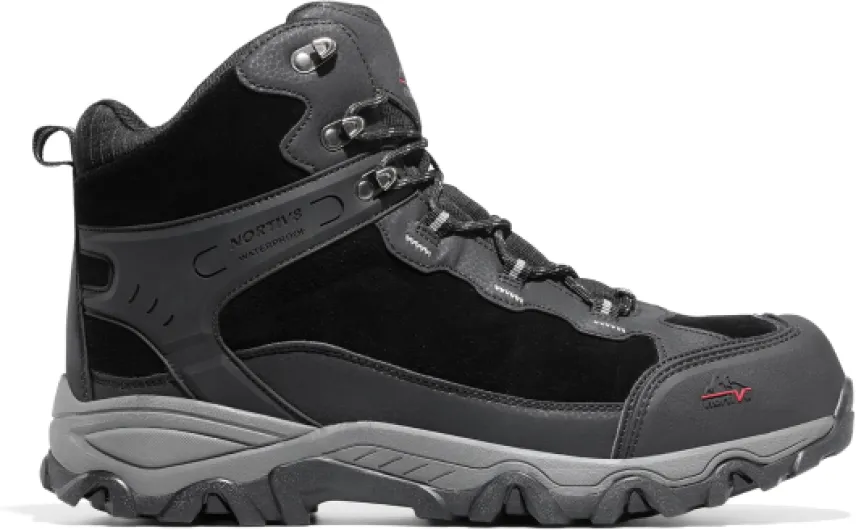
The upper is a mix of suede leather and synthetic PU, with a textile lining inside. To the touch, the suede doesn’t feel like top-tier leather, but it doesn’t feel like cardboard either. It has a bit of give and seems to handle flexing reasonably well. After several long walks, the usual crease marks have appeared around the toe bend, but no cracks so far. From other user reviews, it sounds like tiny holes can eventually appear on those crease lines after a year or so of heavy use, so I’m not expecting them to be indestructible.
The sole is rubber with a fairly aggressive tread pattern. Grip-wise, that’s one of the main strengths of these boots. On wet grass and muddy slopes, I felt secure, and on rocky paths I didn’t have that slipping feeling you sometimes get with cheaper, harder rubber. The midsole is MD foam (a type of EVA-like material), which gives some cushioning and shock absorption. It’s not as bouncy as some high-end boots but it does reduce foot fatigue compared to totally flat, hard soles.
The insole is removable and offers basic arch support, nothing fancy. If you have plantar fasciitis or specific foot issues, you’ll probably want to swap it out for a better insole, but for normal feet it’s okay. I’ve worn them with both the stock insole and my own more cushioned one; the boot has enough volume to handle that without crushing your toes.
Overall, the materials feel honestly decent for the price. You can tell they’re built to a budget: the leather isn’t super soft, the lining is basic textile, and the insole is just okay. But the places that matter – the outsole, the toe cap, the heel reinforcement, and the stitching – feel sturdy enough to handle regular outdoor use. If you’re expecting premium leather and super breathable membranes, you’ll be disappointed. If you just want something that feels robust and doesn’t fall apart after a month, they’re pretty solid.
Durability: built to last a while, but not forever
Durability is always the big question with cheaper boots. So far, after a few weeks and a decent amount of use, mine still look close to new apart from dried mud and a few light scuffs. No stitching has come loose, the sole hasn’t started peeling, and the laces are still in good shape. I’ve tugged them on and off without undoing all the laces (yes, I’m lazy), and nothing has torn or stretched noticeably yet.
Looking at longer-term user feedback, a pattern appears: people who use them a lot (multiple 6-hour walks per week, building sites, fishing trips, etc.) report that the boots hold up well for over a year, sometimes more. The soles tend to wear mainly on the heels, which is normal, and the upper eventually develops small cracks or holes where the boot flexes the most. At that point, waterproofing obviously suffers. But the fact that some users still describe them as going strong after 12–15 months of hard use is a good sign at this price.
I’d rate the durability as better than basic budget boots, but obviously below top-tier brands. The rubber outsole feels tough and doesn’t seem to wear down ridiculously fast, and the metal eyelets haven’t bent or rusted. The only area I’m keeping an eye on is the crease across the toe box, where cheaper materials often give up first. Right now, it’s just a normal crease, no damage.
If you’re expecting a pair of boots to last five years of daily, heavy use, these are not that. But if you want something that will realistically handle regular walks, weekend hikes, and general outdoor use for a year or two without falling apart, they seem up to the task. For the price, that’s good enough in my book.
Performance: waterproofing and grip do the job
In actual use, these boots perform better than I expected for the price. Let’s start with waterproofing. I’ve walked through wet grass, deep puddles, and shallow streams where the water came up just below the laces. My socks stayed dry every time. One user even mentioned thrashing them in a stream after getting them covered in bog mud and still having dry feet, and I’d say that matches my experience so far. As long as the water doesn’t go over the top of the boot, they keep it out.
Of course, waterproof membranes don’t last forever, especially at this price level. Another long-term user said that after about 15 months of heavy use, small holes appeared in the outer shell at the natural crease points, and the waterproofing dropped off. That sounds realistic to me. If you’re using them several times a week for long walks, I’d expect a year or so of solid waterproof performance, then probably some decline. For the price, I can live with that.
Grip is one of the stronger points. The multi-directional tread bites well into mud and soft ground, and I felt sure-footed on wet rocks and loose gravel. I didn’t have any scary slips, even going downhill on damp, stony paths. For dog walking, casual hiking, and even light work on uneven ground, the traction is more than good enough. They’re not mountaineering crampons, obviously, but for normal UK-style trails and fields, they’re fine.
Overall performance: they handle long walks (5–6 hours), varied terrain, and wet conditions without any major issues. They’re a bit heavy for fast hiking, and they run warm in mild weather, but if your main concern is dry feet and solid grip, they deliver. For the money, the balance between waterproofing, support, and traction is pretty solid.
What you actually get for the price
Out of the box, you get exactly what’s advertised: one pair of mid-height men’s hiking boots, black, with a suede/PU upper and a chunky rubber sole. No spare laces, no fancy extras, just the boots. The packaging is basic – a simple branded box and some paper stuffing. Nothing wrong with it, but nothing special either. For the price bracket, that’s fine. I’d rather they put the money into the sole and stitching than into clever packaging.
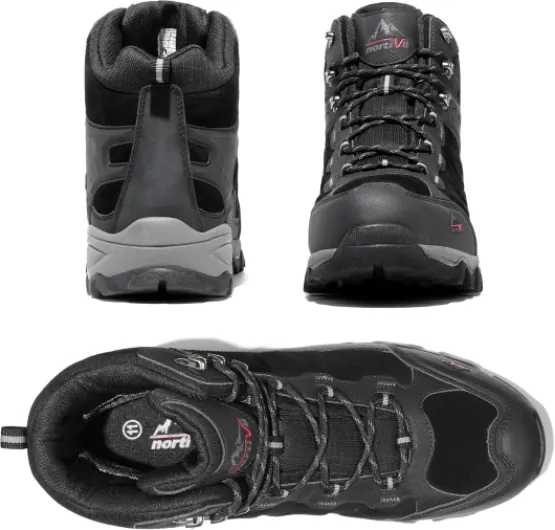
The model is ankle-high, so you get a bit of support around the ankle without it feeling like a full mountaineering boot. The lacing system uses standard metal eyelets and hooks at the top. They feel solid enough; I yanked on them a few times to see if anything would bend or loosen, and so far nothing has moved. The boots come with a textile lining and a removable insole, which is handy if you use your own orthotics or thicker insoles for plantar issues.
They’re sold as waterproof with a membrane and suede leather upper. That’s always something I’m slightly cautious about at this price, because “waterproof” can mean anything from “fine in a light drizzle” to “you can stand in a stream”. In practice, these are closer to the second category, at least while they’re still fairly new. I’ll talk more about that in the waterproofing/performance section.
In terms of positioning, they’re clearly aimed at people who want one boot for a bit of everything: daily walks, weekend hikes, maybe some light work or site visits. They’re not pretending to be ultra-light trail runners or hardcore alpine boots. And honestly, that’s probably their strength: simple, all-round hiking boots at a sensible price. The question is just how long they’ll last and how comfortable they stay over time.
Pros
- Waterproofing works well in real use (puddles, wet grass, light streams) while the boots are still in good condition
- Comfortable out of the box with a slightly wider fit that suits thicker socks or extra insoles
- Good grip and solid toe/heel protection for mixed terrain and light work at a budget-friendly price
Cons
- A bit heavy and warm, especially for longer hikes in mild or hot weather
- Materials at the flex points likely to develop wear and reduce waterproofing after long-term heavy use
Conclusion
Editor's rating
After using the NORTIV 8 men’s waterproof hiking boots in real conditions, my overall opinion is pretty straightforward: they’re good, honest boots for the price, with a few predictable compromises. They keep your feet dry in rain, puddles, and wet grass, they grip well on mud and rocky paths, and they’re comfortable enough for long walks right from the first outings. They feel a bit chunky and run warm in milder weather, but for autumn and winter use they’re very practical.
Durability seems respectable for this price range. You’re not buying lifetime boots, but with regular use you can reasonably expect a year or more of solid performance before the materials start to show their limits, especially at the flex points. For someone who walks a lot, or uses them on sites or fishing trips, that’s acceptable if you’re not paying premium prices. They sit in that sweet spot where you don’t feel like you’re wasting money, but you also know you’re not buying top-end gear.
Who are they for? People who want one pair of boots for dog walks, weekend hikes, wet-weather errands, and light outdoor work, without spending a fortune. Also good if you have slightly wider feet and struggle with narrow boots. Who should skip them? Fast hikers who want something ultra-light and very breathable, or gear enthusiasts who expect premium leather and long-lasting membranes. For everyday outdoor use on a budget, though, they get the job done and are easy to recommend with realistic expectations.