Why headlamps matter more than lumens on the box
A good headlamp is not just a bright light strapped to your forehead. When you chase alpine starts or push a descent into the dark, the best headlamps for hiking shape how confidently you move and how safely you place each step. The wrong headlamps feel like staring into a car’s high beams in the fog, while a well-tuned hiking headlamp quietly disappears until you need its max output for a tricky section.
Most marketing leans on huge lumens numbers, but light lumens alone never tell you how a beam pattern behaves on wet rock or loose scree. For real best backpacking use, you need to think about beam shape, burn time, battery life, and how the light mode changes as the battery drains in cold air. On a narrow ridge during night hiking, a stable beam with predictable distance matters more than a theoretical max lumen rating that only lasts a few minutes.
Experienced hikers quickly learn that red light and low modes are as important as any turbo setting. A true red mode preserves night vision and keeps camp conversations gentle, while features red on a rechargeable headlamp help you read a map without nuking your partner’s eyes. When you evaluate headlamp reviews, look beyond the word best and ask how the headlamp behaves at 50 to 200 lumens, because that is where you will live for most of the night.
Red mode, beam pattern, and real trail visibility
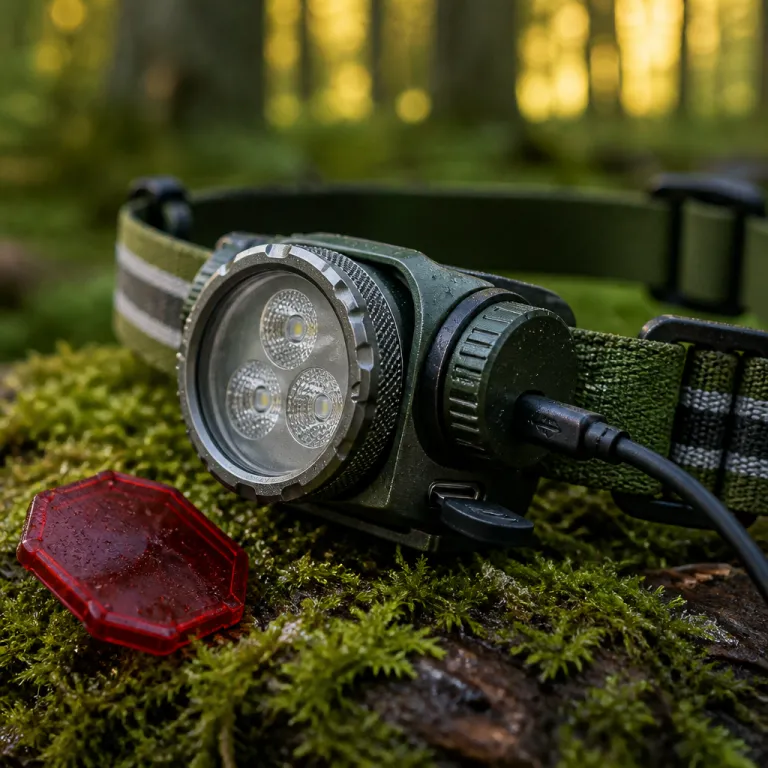
Red mode is not a gimmick; it is a courtesy and a safety tool. A proper red light uses a dedicated LED, not a flimsy filter that wastes power and muddies the beam, so check whether the features red include a separate diode and a low red setting. On a crowded hut platform or tight bivy ledge, that gentle glow keeps everyone’s night vision intact while you sort gear or check a topo map.
Beam shape decides whether your headlamps feel calm or chaotic on trail. A tight spot beam with long claimed distance can punch far down a scree slope, but without a flood halo you lose context around your feet and stumble more during night hiking. The best headlamps for hiking blend spot and flood in one light mode, letting you shift from a wide beam for camp chores to a focused spot for route finding without digging through a confusing menu.
Models like the Black Diamond Spot and the Petzl Actik balance beam width and distance well, while the Petzl Swift RL and the BioLite HeadLamp 425 families push more max lumens for technical terrain. Manufacturer specifications at the time of writing list the Spot around 400 lumens with roughly 100 m beam distance, the Actik near 450 lumens and about 100 m, and the Swift RL close to 900 lumens with a 150 m reach, assuming fresh batteries and standard temperature; always confirm current figures on the brand’s product page or independent lab tests. When you read any review, look for comments about how the beam transitions between modes and whether the spot flickers or shifts color as the battery drains, because those details matter more than a single headline lumen figure.
USB-C charging, batteries, and cold weather burn time
USB-C charging has quietly become one of the best upgrades for modern headlamps. When your headlamp uses a rechargeable battery with USB-C, you can top it up from the same power bank that feeds your phone and GPS, simplifying your kit and reducing spare batteries ounces in your pack. For multi day best backpacking trips, that shared charging ecosystem matters more than chasing the absolute best lumen number.
Hybrid systems like the Petzl Actik Core and the standard Petzl Actik let you swap between a proprietary rechargeable battery and regular AAA batteries, which is a smart hedge for remote routes. Petzl’s published data puts the Actik Core at roughly 2 hours on max power and up to 8 hours on a 100 to 200 lumen setting, while the standard Actik on AAA cells trades some peak brightness for longer low-mode runtime; always treat these runtimes as idealized lab values rather than guaranteed trail performance. The Petzl Swift RL pushes this idea further with a powerful rechargeable headlamp design that still keeps weight reasonable, though you must watch how the automatic light mode adjusts brightness to preserve burn time. In deep cold, lithium batteries hold their battery life better than alkaline batteries, so serious winter night hiking should always pair a USB-C power bank with high quality lithium spares.
Black Diamond’s current Spot headlamp line still leans on AAA batteries but manages impressive burn time at moderate light lumens. Independent lab tests and manufacturer specs often show 200 lumen settings running 6 to 12 hours in mild conditions, with shorter runtimes once temperatures drop below freezing. When you compare price weight across models, remember that carrying a second battery or extra batteries ounces can be lighter than hauling a larger power bank, and that the same careful maintenance you give leather hiking boots or other critical gear should extend to your charging cables, battery packs, and headlamp seals.
Weight, comfort, and how headlamps pair with serious boots
Weight on your head feels different from weight on your feet. A 90 gram headlamp with a rear battery pack can bounce and pinch during fast night hiking, even if the spec sheet makes the price weight ratio look attractive. Ultralight options under 60 grams feel almost invisible, but they often sacrifice max distance and long burn time for that featherweight comfort.
For hikers in stiff leather boots tackling rocky alpine routes, a slightly heavier headlamp with a stable strap and balanced battery placement can be worth the extra batteries ounces. The Black Diamond Spot and similar midweight models sit in this middle ground, offering enough lumens and a solid beam without feeling like a climbing helmet accessory. Petzl’s Bindi and some BioLite Range-style designs go the other way, chasing minimal weight while still offering a usable red mode and a decent light range for camp and easy trail.
Think about how your headlamp interacts with your boot driven pace and your trekking poles. If you move quickly with carbon poles or collapsible poles such as the tested Trek Z collapsible hiking poles, you want a beam that keeps up with your stride without tunnel vision. On slow, technical descents in heavy boots, a lower light mode with a wide beam can reveal micro terrain and loose gravel better than a narrow spot blasting far ahead.
How to choose the best headlamps for hiking boots terrain
Choosing the best headlamps for hiking starts with your terrain, not with a catalog of lumens. For forested trails and hut approaches, a headlamp that offers 50 to 200 light lumens in a smooth flood beam, plus a reliable red light, will cover nearly everything. On glacier approaches or complex alpine ridges, you want a best headlamp that can briefly reach higher max distance without destroying battery life in the first hour.
For mixed rock and snow where you wear rigid boots and crampons, models like the Petzl Swift RL, the Petzl Actik Core, and the Black Diamond Spot stand out in many headlamp reviews. They balance beam range, burn time, and mode simplicity, which matters when you are adjusting crampon straps with gloves in the dark. If you often shift between camp chores and technical moves, prioritize a rechargeable headlamp with a clear light mode sequence, a dedicated red mode, and tactile buttons you can operate without looking.
Budget still matters, but price weight should never be your only filter when you shop for headlamps. A slightly higher price for a robust housing, sealed buttons, and predictable dimming curves can pay off on the tenth wet trip, not the first sunny overnight. In the end, the best headlamps for hiking boots terrain are the ones that match your pace, your routes, and your tolerance for carrying spare batteries instead of chasing the brightest spec sheet.
FAQ
How many lumens do I really need for hiking at night ?
For camp tasks and easy trail walking, 50 to 100 lumens are usually enough. Most hikers feel comfortable on moderate night hiking terrain with 150 to 250 lumens in a balanced flood beam. Higher max settings around 300 to 400 lumens are helpful for brief route finding, but they drain the battery faster and are rarely needed continuously.
Is a rechargeable headlamp better than one with disposable batteries ?
A rechargeable headlamp with USB-C charging is more convenient for most hikers because you can use the same power bank as your phone. It reduces waste from disposable batteries and simplifies resupply on multi day trips. However, a hybrid design that accepts both a rechargeable battery and AAA batteries offers the best backup for remote routes.
Why is red mode important on a hiking headlamp ?
Red mode preserves your night vision so your eyes stay adapted to the dark after you turn the headlamp off. It also reduces glare for partners in camp or in a tent, making shared spaces more comfortable. A true red LED is more efficient and clearer than a white light shining through a red filter.
How much does headlamp weight matter for long hikes ?
Headlamp weight matters because even small masses feel larger when they bounce on your forehead for hours. Ultralight models under about 60 grams are very comfortable but may trade away beam distance or burn time. Heavier headlamps around 90 to 120 grams can offer better stability and battery life, which suits technical terrain and winter use.
Can I use the same headlamp for trail running and backpacking ?
Many modern headlamps work for both trail running and backpacking if they have a stable strap and a beam that reaches far enough for your running speed. Runners often prefer a brighter spot beam and very secure fit, while backpackers prioritize comfort and efficient low modes. If you do both, choose a model with adjustable beam patterns and several brightness levels so you can tune it to each activity.
Headlamp comparison at a glance
The figures below are based on manufacturer specifications and typical lab-test summaries; always check the latest data before you buy, as brands sometimes revise output and runtime between production runs.
| Model | Peak lumens | Usable hiking range (approx.) | Max beam distance | Battery type | Runtime at ~100–200 lm* |
|---|---|---|---|---|---|
| Black Diamond Spot | ≈400 lm | 100–200 lm | ≈100 m | 3 × AAA | 6–12 hours |
| Petzl Actik | ≈450 lm | 100–200 lm | ≈100 m | 3 × AAA | 8–12 hours |
| Petzl Actik Core | ≈600 lm | 100–200 lm | ≈115 m | CORE rechargeable / AAA hybrid | Up to ~8 hours |
| Petzl Swift RL | ≈900 lm | 150–250 lm | ≈150 m | Proprietary rechargeable pack | 4–8 hours |
| BioLite HeadLamp 425 | ≈425 lm | 75–200 lm | ≈85 m | USB-rechargeable Li-ion | 4–10 hours |
*Runtimes are approximate and assume moderate temperatures and medium power modes; cold weather, old batteries, and frequent use of boost settings will shorten these numbers.