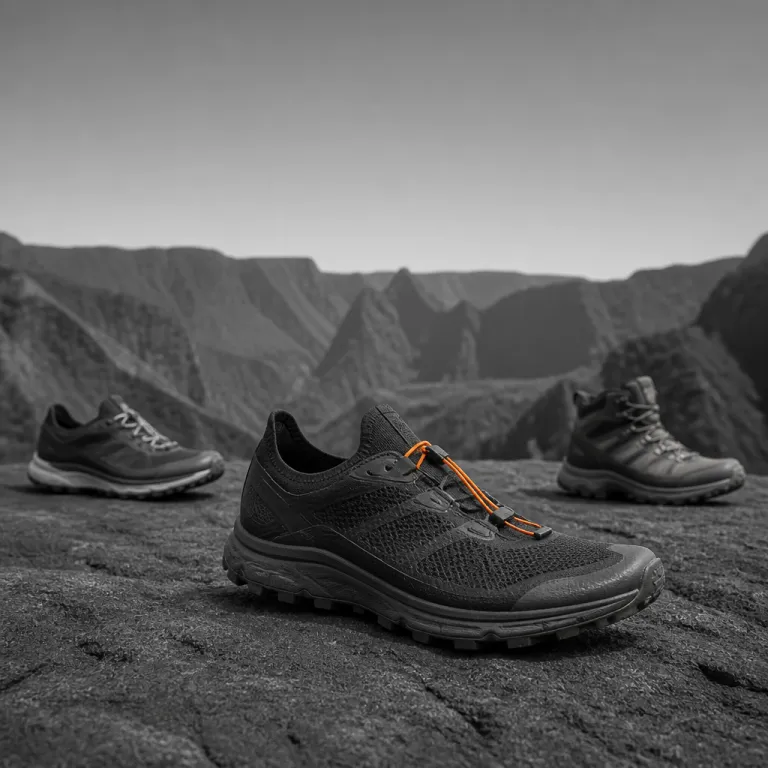
From boot to trail shoe: how we got here
Trail running shoes for hiking did not start as a trend piece. They began as a quiet rebellion on long-distance routes where every gram and every blister mattered more than marketing categories. On the Pacific Crest Trail and Continental Divide Trail, thru-hikers simply chose the running shoe that hurt their feet the least and called it the best hiking shoe for their reality.
Once trail runners proved that a 300-gram running shoe could survive roughly 800 to 1 000 km of mixed terrain, the old logic of a 700-gram leather hiking boot began to crack. The gap between a traditional hiking shoe and a modern trail shoe narrowed with every new foam compound, lighter upper, and smarter heel–toe geometry. Brands saw that the best trail footwear for maintained paths was often a pair of running shoes with enough traction and a forgiving toe box rather than a stiff boot with a punishing drop.
Today, the line between trail running and hiking is thin enough that many hikers simply buy running shoes and never look back. The main SEO keyword trail running shoes for hiking now describes what serious backpackers actually wear on real trails, not a theoretical niche. The question is no longer whether a trail shoe can work for hiking, but which running shoe or hybrid hiking shoe offers the right fit, stack height, and weight for your feet and your terrain.
Why the Mafate Hike, Ultra Raptor 3, and Targhee Apex matter
The Hoka Mafate Hike, La Sportiva Ultra Raptor 3, and KEEN Targhee Apex are not just new hiking shoes; they are signals that the category itself is shifting. The Mafate Hike takes a maximalist trail running platform and stretches it into a higher-cuff hiking shoe with a similar stack height and a familiar rocker, blurring the line between running shoe and boot. La Sportiva quietly moved the Ultra Raptor 3 from its mountain running line into its hiking line, while KEEN stripped the Targhee Apex of leather and gave it a sneaker-like silhouette that feels closer to trail runners than to classic boots.
Each of these shoes borrows heavily from trail running design language, from the precise heel shaping to the tuned toe drop and the emphasis on forefoot comfort. The Mafate Hike feels like a Hoka Speedgoat that grew a collar, with comparable weight and a similarly generous toe box that lets wide feet splay naturally on long trails. The Ultra Raptor 3 keeps the Sportiva mountain-running DNA you see in models like the Prodigio in its traction and midfoot hold, but its running shoe heritage is obvious the moment you feel the heel cushioning and agile response on rocky terrain.
KEEN’s Targhee Apex completes the picture by showing how a legacy hiking shoe franchise can pivot toward a trail shoe identity without losing its core. The Apex version trims weight, reshapes the heel–toe transition, and leans into a more athletic fit that feels closer to modern trail shoes than to the original Targhee hiking boots. Put together, these three models show that the best trail footwear for many hikers now looks like a running shoe with a higher cuff, not a mini mountaineering boot.
| Model | Approx. weight (per shoe, EU 42/US 9) | Heel–toe drop | Stack height (heel) | Outsole compound | Typical hiking lifespan |
|---|---|---|---|---|---|
| Hoka Mafate Hike | 370–400 g* | 4–6 mm* | ~30–33 mm* | Proprietary rubber | 800–1 000 km** |
| La Sportiva Ultra Raptor 3 | 380–410 g* | 9–10 mm* | ~28–30 mm* | Vibram Megagrip | 800–1 000 km** |
| KEEN Targhee Apex | 450–500 g* | 8–10 mm* | ~28–30 mm* | KEEN All-Terrain rubber | 1 000+ km** |
*Manufacturer-listed ranges; always check current specs for your size. **Based on typical thru-hiker reports and brand guidance rather than a hard limit.
Weight, foam, and the end of the heavy boot era
On real trails, weight on your feet is the tax you pay every single step. A traditional leather hiking boot at 700 grams per shoe adds up brutally over a 30 km day, while a 380-gram trail running shoe for hiking feels almost unfairly easy by comparison. When the Hoka Mafate Hike comes in around 370 to 400 grams with a running-inspired midsole, it undercuts many mid boots by nearly half a kilo per pair.
That weight difference is not abstract; it is the difference between finishing a long trail section with tired legs or with enough energy to set camp without fumbling your stove. Modern foams borrowed from running shoes, such as the energetic EVA blends in the Mafate Hike or the responsive compounds in the La Sportiva Prodigio and Prodigio Max lines, give you cushion without the penalty of mass. Stack height has crept up as well, with models like the Altra Lone Peak and the Altra Timp series pushing toward 30 mm while still keeping a manageable toe drop and a stable heel.
La Sportiva’s Ultra Raptor 3 shows how a shoe that began life as a mountain running shoe can become a serious hiking shoe without adding much weight. Its aggressive Vibram Megagrip outsole, tuned for mixed-terrain traction, makes it one of the best trail options for steep, technical paths where a pure running shoe might feel underbuilt. The KEEN Targhee Apex, while not as light as a pure trail runner, still lands closer to trail shoes than to classic boots, and that shift in grams per shoe is exactly what fastpackers and thru-hikers have been asking for.
Drop, stack height, and what your joints actually feel
Drop, the difference in height between heel and toe, used to be a niche spec that only running shoe geeks cared about. Now, as trail running shoes for hiking dominate long-distance routes, heel–toe geometry has become central to how your knees and Achilles feel after 1 000 km. A high heel–toe drop, often around 10 to 12 mm in older hiking shoes, pitches you slightly forward, while a lower toe drop in the 4 to 6 mm range or even zero drop in some Altra Lone Peak models encourages a flatter, more natural stance.
For many hikers, a moderate toe drop around 4 to 6 mm hits the best balance between calf strain and downhill control. The Mafate Hike, like the Hoka Speedgoat trail runners it resembles, uses a mid-range drop paired with a high stack height to deliver plush comfort without feeling like a wobbling platform. La Sportiva’s Ultra Raptor 3 keeps a more traditional running shoe drop, which some hikers with sensitive Achilles tendons prefer over the zero-drop feel of an Altra Lone Peak or other Altra designs.
Stack height is the other half of the equation, and it is where the running shoe takeover is most obvious. When a hiking shoe like the Mafate Hike or a trail shoe such as the Prodigio Max offers a towering stack height with a relatively low weight, you get cushion that used to be impossible in a boot. The trade-off is ground feel; on loose, sharp terrain, some hikers still prefer a lower-stack running shoe or classic hiking shoes that let their feet read the trail more clearly.
Support, ankle protection, and when a real boot still wins
Weight and foam are not the whole story, especially once you leave groomed trails and head into talus, snow, or glacial moraine. A running shoe or light trail shoe with a soft heel and flexible midsole can feel sketchy when you are edging on wet rock with an 18 kg pack. This is where a true mountaineering boot or a stiff hiking boot, such as the Salewa Crow GTX tested in depth in this technical mountaineering boot review, still earns its place.
On steep, broken terrain, the torsional rigidity of a real boot protects your feet and ankles from twisting forces that would fold a running shoe in half. The higher cuff, firmer heel counter, and more substantial toe bumper on a traditional hiking shoe give you a margin of error when a loose rock rolls under your feet. Trail runners and trail shoes excel on continuous trails, but once you are front-pointing on spring snow or side-hilling across unstable scree, the best trail option is often a boot with a defined shank and a predictable flex point.
The key is to match your footwear to your terrain and pack weight, not to a marketing label. For a 10 kg pack on well-maintained trails, trail running shoes for hiking like the Mafate Hike or Ultra Raptor 3 are often the best choice. For a 20 kg pack on off-trail routes, a heavier hiking shoe or light mountaineering boot still justifies every extra gram on your feet.
Fit, comfort, and the reality of 1 000 km in one shoe
Fit is where the running shoe invasion has been an unambiguous win for hikers. Trail running shoes for hiking tend to offer more nuanced lasts, better toe box shapes, and more options for wide feet than legacy hiking boots ever did. When you are living in one shoe for 1 000 km, that difference in comfort is not a luxury; it is survival.
Altra Lone Peak models, and other Altra trail designs, built their reputation on a foot-shaped toe box that lets your toes spread instead of smashing them together. For hikers with wide forefeet or bunions, that generous toe box can be the difference between finishing a thru-hike and bailing at the first resupply. Hoka Speedgoat trail runners, while not as wide as Altra in the forefoot, still offer a forgiving fit true to size for many medium-width feet, and the Mafate Hike inherits much of that DNA in its hiking shoe form.
La Sportiva, long known for precise climbing and mountain running shoes, has gradually relaxed the fit of the Ultra Raptor 3 compared with earlier versions. It still hugs the midfoot and heel like a performance running shoe, but the forefoot is less punishing, making it a viable hiking shoe for more hikers with slightly wide feet. KEEN’s Targhee Apex continues the brand’s tradition of a roomy forefoot, though some hikers find the heel a bit loose, which can be tuned with lacing and sock choices on long trails.
Comfort versus durability: where the foam fails first
Comfort in trail running shoes for hiking comes from soft midsoles, breathable uppers, and flexible platforms that let your feet move naturally. The downside is that these same features can limit durability, especially when you push a running shoe beyond the 800 to 1 000 km range it was designed for. Traditional hiking shoes with firmer foams and heavier rubber often last longer in terms of outsole wear and midsole compression, even if they never feel as cloud-like underfoot.
On the Pacific Crest Trail, annual surveys from the Pacific Crest Trail Association and independent hiker reports have consistently shown that most thru-hikers now rely on trail runners, typically going through three or four pairs of shoes for the full distance. That pattern, with hikers rotating between models like the Altra Lone Peak, Hoka Speedgoat, and other trail shoes with similar stack height and drop, supports the common 800 to 1 000 km lifespan estimate for cushioned trail footwear.
Durability also shows up in the small failure points that only appear after months of use. Heel collars on some running shoes break down faster under the abrasion of dust and grit, while toe bumpers on lighter trail shoes can delaminate when repeatedly jammed into rock. When you read a detailed hiking shoe review, such as this long-term Merrell Moab 3 Mid GTX test, pay close attention to how the midsole and upper age after 500 km, not just how the shoe feels out of the box.
Traction, terrain, and why Vibram Megagrip changed expectations
Traction is where the best trail running shoes for hiking have quietly surpassed many traditional boots. Compounds like Vibram Megagrip, used on countless trail shoes and running shoes, offer wet-rock grip that older hiking shoes simply could not match. When you combine that rubber with thoughtful lug patterns and a stable heel, you get confidence on slick terrain that changes how fast you move.
La Sportiva’s Ultra Raptor 3, with its aggressive outsole and sticky rubber, remains one of the best trail options for steep, technical trails where a slip would have real consequences. The Mafate Hike and Hoka Speedgoat share a similar philosophy, pairing high stack height with serious traction so that the shoe feels planted even when the terrain is loose or muddy. KEEN’s Targhee Apex does not use Vibram Megagrip, but its outsole is tuned for mixed terrain, and many hikers report reliable grip on wet roots and compacted dirt, which covers most hiking trails.
Where trail runners and trail shoes still lag is in edging on very small holds and in front-pointing on firm snow, tasks better suited to a mountaineering boot or a dedicated approach shoe. A running shoe with a soft forefoot and flexible toe will fold where a stiffer hiking shoe or boot would hold an edge. For most hikers on typical trails, though, the traction advantage of modern trail running compounds outweighs the niche benefits of a fully rigid sole.
How to choose: matching shoe to trail, pack, and budget
Choosing between trail running shoes for hiking and traditional boots starts with an honest look at your terrain and pack weight. If most of your days are on established trails with a 10 to 15 kg pack, a running-shoe-derived hiking shoe like the Mafate Hike or Ultra Raptor 3 will likely feel like the best fit. If you routinely carry 20 kg or more over off-trail passes, a stiffer hiking shoe or light boot still earns its place in your gear list.
Think in terms of specific use cases rather than abstract categories. For fastpacking on the John Muir Trail or the GR20, where you are moving quickly over mixed but mostly defined trails, trail runners with good traction and a secure heel are usually the best trail tools. For shoulder-season routes with snow, talus, and long scree traverses, a hybrid approach using a light mountaineering boot for the hardest sections and a trail shoe for the approach can give you both comfort and security.
Budget matters too, especially when you factor in how many pairs you will burn through. A single pair of premium hiking shoes at a higher price might outlast two pairs of lighter running shoes, but the comfort and reduced weight of the latter can still offer better overall value in terms of energy saved and injuries avoided. When you read any review, focus less on star ratings and more on how the shoe behaves after months of use on real trails with real loads.
Fit, width, and the myth of one perfect shoe
No shoe is the best for everyone, because no two pairs of feet are the same. Some hikers with wide forefeet and narrow heels will thrive in Altra Lone Peak or other Altra trail models, while others will find the zero drop and high stack height unstable on rocky terrain. Runners turned hikers might feel instantly at home in a running shoe like the Hoka Speedgoat or a trail shoe with a similar rocker, while boot traditionalists may prefer the locked-in heel and precise midfoot of the Ultra Raptor 3.
Pay attention to how a shoe fits not just in the shop but after 20 km on trail. A shoe that feels snug but acceptable at the price of a little pressure in the toe box will often become unbearable once your feet swell in the afternoon heat. Look for a fit true to your measured size with enough room in the toe box to wiggle your toes on descents, but not so much volume that your feet slide forward and hammer the front of the shoe.
For hikers with very wide feet, brands like KEEN and some Altra Lone Peak variants offer more forgiving widths, while La Sportiva and some Hoka models run narrower and reward a precise fit. If you are between sizes, consider how your socks, insoles, and expected foot swelling will affect the final fit on long trails. The best trail running shoes for hiking are the ones you forget about after the first hour, because they simply let your feet work without demanding constant attention.
Planning your system: footwear, pack, and daily distance
Footwear does not exist in isolation; it is part of a system that includes your pack, your daily distance, and your risk tolerance. A lighter pack allows you to get away with a softer running shoe or trail shoe, while a heavier pack pushes you toward a more supportive hiking shoe or boot. Before you obsess over stack height and toe drop, make sure your pack volume and weight are dialed, using resources such as this guide to day pack volume and load planning.
Once your pack is under control, match your footwear to your realistic daily distance and terrain. If you plan 25 to 30 km days on mostly smooth trails, trail running shoes for hiking with a moderate drop and generous cushioning will likely keep your feet happier than any traditional boot. If your days are shorter but steeper, with frequent off-trail sections, a more protective hiking shoe or hybrid boot like the Targhee Apex may be the better compromise.
In the end, the running shoe takeover of hiking is less about fashion and more about efficiency. Hikers have voted with their feet, choosing comfort, lower weight, and faster break-in over the old promise of indestructible boots. What matters most is not the waterproof rating on the box, but how your chosen shoe feels on the tenth river crossing of a long, wet day.
Key figures on trail running shoes for hiking
- On the Pacific Crest Trail, published PCTA surveys and independent thru-hiker reports over the past decade have consistently shown that a clear majority of hikers now use trail runners or running shoes for most of the route, while a minority rely on traditional hiking boots. These surveys are self-reported but provide one of the best large-sample snapshots available.
- Footwear weight matters because 100 grams removed from each shoe can translate to roughly 600 to 800 kg less cumulative lifting over a 30 km day, based on biomechanical estimates of step counts and energy cost. Laboratory gait studies broadly support the idea that weight on the feet is more metabolically costly than the same weight in a pack.
- Many popular trail running shoes for hiking, such as the Hoka Speedgoat and Altra Lone Peak, typically last around 800 to 1 000 km before midsole compression and outsole wear significantly reduce comfort and traction. That range comes from brand recommendations and aggregated thru-hiker logs rather than a strict laboratory failure point.
- Modern rubber compounds like Vibram Megagrip have been measured in independent lab-style friction tests to provide substantially better wet-rock grip than many older hiking shoe rubbers, which directly affects slip risk on technical terrain. Exact coefficients vary by test protocol, but the relative improvement is consistent across studies.
- Stack height in mainstream trail running shoes has increased by roughly 5 to 8 mm over the past decade, while average shoe weight has stayed the same or decreased, reflecting the impact of lighter, more resilient midsole foams reported in brand tech sheets and trade-show data.
- Retail price for premium trail running shoes for hiking now commonly falls between 150 and 200 dollars, which is comparable to many mid-range hiking boots, shifting the value calculation toward comfort and performance rather than simple durability.