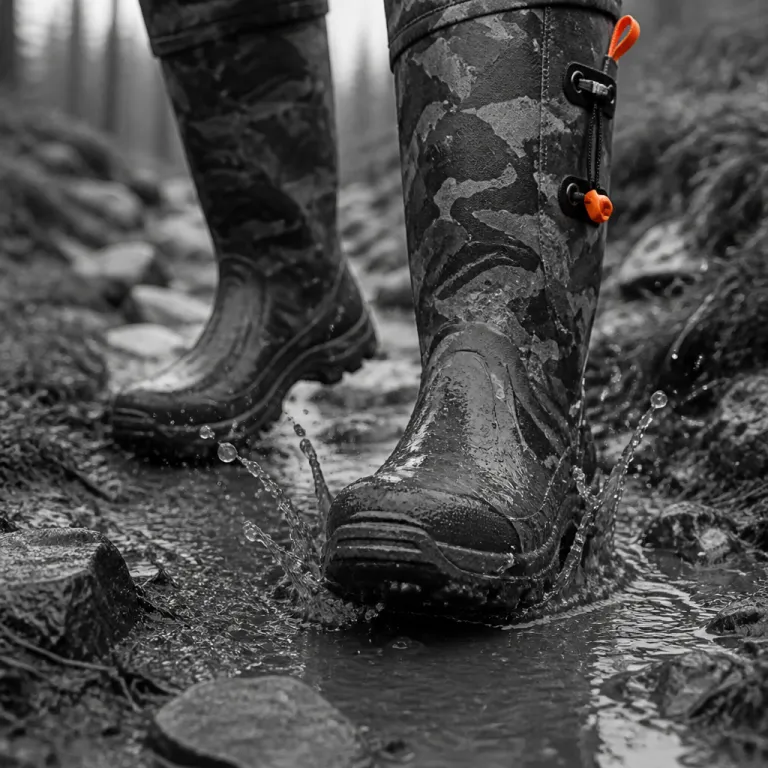

Why camo rain boots matter for serious hikers and mountaineers
Camo rain boots are no longer just farm or hunting gear. For outdoor enthusiasts who push into boggy valleys, alder-choked drainages, or glacier-fed rivers, a technical camo boot can mean the difference between steady footing and a cold-weather evacuation. When you combine a fully waterproof shell, an insulated lining, and a slip-resistant outsole, you create a protective system rather than a simple pair of boots.
Experienced hikers often underestimate how much water a trail can hold after several days of rain. A standard hiking boot with a low mid cut and a soft toe may feel agile, yet it quickly floods when you wade through ankle-deep crossings or stand in saturated moss. Purpose-built rain boots with a higher calf and adjustable calf strap keep water out while still allowing enough flex for steep ascents and sidehilling, especially when the shaft height reaches 14–16 inches.
For mountaineers and backcountry workers who move between job sites, lifestyle casual wear, and technical approaches, camo rain boots offer rare versatility. You can step from a muddy farm track to a rocky moraine without swapping footwear, which saves time and reduces pack weight. When these boots are certified for safety as work boots or rugged hunting footwear, they also protect the toe area against rolling stones, dropped tools, and shifting loads.
The best camo rain boots for serious terrain share several design traits. They use fully waterproof rubber or synthetic compounds, often paired with neoprene or similar foams for insulated comfort in cold weather. They also feature aggressive anti-slip lugs that grip wet rock, slick roots, and steel ladders on alpine access routes, turning each step into a more stable platform. Many premium models now use proprietary high-friction compounds tested on wet tile or metal to meet recognized slip-resistance benchmarks.
Price should be evaluated against performance rather than fashion alone. A higher price often reflects better materials, more durable outsoles, and steel toe or reinforced soft toe protection that meets a recognized standard for impact and compression. For people who rely on their gear in remote valleys, that extra investment quickly pays for itself in safety, comfort, and long-term durability, especially when a single pair can replace separate work, hunting, and fishing boots.
Key performance features that define technical camo rain boots
When you evaluate camo rain boots for hunting, fishing, or alpine approaches, start with waterproof construction. A true pair of boots waterproof enough for river crossings will use a one-piece molded shell or fully sealed seams, not partial overlays that eventually leak. Look for rain boots that extend well above the mid calf, because extra height dramatically increases the margin before water spills over the top.
Insulation is the next critical factor for cold-weather performance. Many modern camo boot designs use 3 mm to 7 mm neoprene or similar foam, creating boots insulated enough for long static glassing sessions or slow belays on icy ledges. Hikers who alternate between active climbing and still hunting should consider insulated slip linings that trap warmth yet allow moisture to escape through a breathable upper panel, often rated for comfort ranges from roughly -20 °F to 40 °F depending on activity level.
Outsole design separates casual products from serious waterproof hunting footwear. A slip-resistant rubber compound with deep, widely spaced lugs sheds mud and grips wet rock, while anti-slip heel brakes help control descents on greasy slopes. For mixed work, hunting, and hiking use, choose soles that are certified for oil resistance so they perform on farm concrete, boat decks, and forest trails, and look for traction patterns that have been lab-tested on wet surfaces rather than purely decorative tread.
Toe protection must match your environment and risk tolerance. Steel toe camo rain boots offer maximum impact resistance for work boots on construction sites or when moving heavy stones around a base camp, though they add weight and can feel colder. A soft toe design suits fast-moving hunters in steep terrain, where every gram saved improves agility and reduces fatigue, while composite toe options can offer a middle ground with safety certification and slightly lower weight.
Fit is often overlooked, yet it determines how safely you can edge on rock or kick steps in spring snow. Always check the size chart for each brand, because a wide last in one line may feel narrow compared with another manufacturer’s standard profile. For those with muscular calves, an adjustable calf gusset prevents pressure points and allows the boot to cinch securely over rain pants or insulated layers, which is especially useful when you also use them as shrimp or fisherman style boots for rugged wet terrain, as discussed in this guide on serious wet terrain footwear. Adding simple fit checks—such as a thumb’s width of space in front of the longest toe and minimal heel lift on inclines—helps confirm that the sizing is appropriate for long days out.
Balancing work, hunting, and fishing needs in one camo boot system
Many outdoor professionals need camo rain boots that transition seamlessly between work and weekend expeditions. A ranger might spend the morning checking fences on a farm, the afternoon guiding hunters in dense forest, and the evening fishing from a slippery riverbank. One well-chosen pair of boots can cover all three roles if you prioritize the right technical features.
For work and land management scenarios, durability and safety standards come first. Boots used around machinery or livestock should be certified to a recognized work boots standard, with either steel toe or reinforced soft toe caps and a puncture-resistant midsole. Slip-resistant and anti-slip outsoles are essential on wet concrete, metal grates, and compacted mud, where a fall can be as dangerous as a rock slide.
Hunting boots with a camo pattern must also support stealth and comfort. A waterproof hunting design with insulation matched to your climate keeps feet warm during long sits in a blind, while an adjustable calf closure prevents fabric flapping that might spook game. Insulated models with mid-height shafts can be ideal for stalking through brush, since they protect the calf without restricting knee flexion, and quieter rubber compounds reduce squeaks and rustling in cold weather.
Fishing demands a slightly different emphasis, especially when you wade shallow banks or stand on slick boulders. Boots waterproof enough for repeated immersion need robust foxing around the lower boot, and a lug pattern that grips algae-covered rock without packing with silt. Many anglers now look at rugged fisherman style boots for mountain performance, as outlined in this analysis of fisherman boots in steep terrain, and the same principles apply to advanced camo rain boots.
Price becomes a strategic decision when one pair must handle such varied tasks. While a budget boot might seem attractive, repeated failures in cold weather or under heavy work loads quickly erase any savings. Investing in higher quality products with proven waterproof construction and certified safety features ensures that your camo rain boots remain reliable companions from the barn to the backcountry, and tracking cost per day of use often reveals that premium models are more economical over several seasons.
Fit, sizing, and comfort for long mountain approaches
Even the best camo rain boots fail if the size and fit are wrong. Long approaches with a heavy pack magnify every pressure point, especially around the toe box, heel, and calf. A boot that feels acceptable during a five-minute try-on can become a blister factory after three hours of sidehilling on wet scree.
Start by measuring both feet at the end of the day when they are slightly swollen. Compare those measurements with each brand’s size chart, remembering that insulated linings and thick socks can reduce internal volume significantly. Hikers with wide forefeet should seek models specifically labeled as wide fit, because stretching a standard last rarely produces stable, long-term comfort.
Calf fit is just as important for stability on uneven ground. An adjustable calf strap or gusset allows you to fine-tune the closure over bare legs in summer or over layered trousers in cold weather, preventing the boot from slopping around and causing fatigue. For mountaineers who often wear crampon-compatible boots, choosing a camo rain boot with a similar shaft height and mid-calf profile helps maintain familiar muscle patterns.
Insole quality often separates lifestyle casual rain boots from serious mountain-ready footwear. Removable, contoured insoles support the arch and cup the heel, reducing strain during long traverses and steep descents. If you use custom orthotics, ensure the boot has enough internal depth to accommodate them without cramping the toe area, and consider swapping stock insoles for aftermarket options with firmer support if you routinely carry heavy loads.
Comfort also depends on how the boot flexes under load. A stiffer midsole offers better edging on rock and protection from sharp stones, which benefits work, hunting, and technical approaches, while a slightly softer flex suits all-day fishing or farm chores. When you test camo rain boots, walk on an incline if possible and pay attention to heel lift, forefoot spread, and how securely the boots slip on and off without fighting the collar, since these small details often predict long-distance comfort.
Safety, traction, and certified protection in extreme wet terrain
Safety in relentless wet conditions starts underfoot. A slip-resistant outsole with a high-friction rubber compound is non-negotiable when you cross mossy logs, wet ladders, or icy boardwalks. Deep, self-cleaning lugs and defined heel edges provide braking power on steep descents, while anti-slip channels shed mud and gravel.
Certified protection becomes vital when your camo rain boots double as work boots. Look for clear markings that indicate compliance with a recognized safety standard, including impact and compression ratings for steel toe or reinforced soft toe designs. People who regularly move heavy loads, operate chainsaws, or work around livestock should treat this certification as essential, not optional.
Waterproof performance must remain reliable over time, not just during the first few outings. Fully molded rubber or high-grade synthetic shells with bonded seams resist cracking and delamination far better than partial overlays, especially when exposed to farm chemicals or trail grit. Boots waterproof enough for repeated submersion should also have reinforced toe and heel caps to prevent abrasion from rocks and debris.
Thermal safety is often overlooked, yet it directly affects decision making and reaction time. In cold weather, boots insulated with neoprene or similar foams help maintain blood flow to the toes, reducing the risk of numbness and frostbite during long static periods. Insulated models with moisture-wicking linings also reduce the chance of trench foot when you spend days in saturated environments, particularly if you rotate socks and allow liners to dry between uses.
For serious hikers who operate in tidal zones, glacial outwash, or constant rain, camo rain boots can complement other specialized footwear. Many of the same design principles that make Extratuff style deck boots valuable for mountaineers, as examined in this article on deck boots for serious hikers, also apply to advanced waterproof hunting models. Prioritizing certified safety, aggressive traction, and durable waterproof construction ensures that your boots remain a reliable platform when every step matters.
Choosing the right camo rain boots for your terrain and budget
Selecting camo rain boots starts with a clear assessment of your primary terrain. Alpine hunters face different challenges than anglers on lowland rivers or workers on a dairy farm. Matching boot design to environment prevents both overspending and underperforming gear.
For steep, rocky mountains with frequent snow patches, prioritize stability and protection. A mid to high calf boot with a supportive midsole, aggressive lugs, and either steel toe or reinforced soft toe caps handles scree, talus, and occasional rockfall. Boots insulated to a moderate level balance warmth during glassing sessions with breathability on long climbs.
Wet forests and marshes demand maximum waterproof coverage. Here, a taller calf height, adjustable calf closure, and fully sealed construction keep water, mud, and debris out during long pushes through bogs and willow thickets. Hunters in these environments often favor lighter, more flexible boots waterproof enough for knee-deep crossings yet quiet while stalking.
For mixed work and lifestyle casual use, versatility and price come into sharper focus. A boot that transitions from work duties to weekend fishing trips should meet safety standards while remaining comfortable for all-day wear around town. Evaluating products based on cost per season rather than initial price alone helps justify investing in higher quality models that last longer.
Finally, consider how your camo rain boots integrate with the rest of your system. Gaiters, sock choice, and pack weight all influence how a given size and fit will feel after several hours of movement. By aligning insulation level, shaft height, and outsole design with your specific activities, you ensure that your boots slip into your kit as a dependable foundation rather than a compromise.
Maintenance, longevity, and responsible use of camo rain boots
Proper care dramatically extends the life of camo rain boots. Mud, manure, and trail grit slowly abrade rubber compounds and stitching, so rinsing boots after each trip prevents premature cracking. Dry them at room temperature away from direct heat, which can damage adhesives and reduce flexibility.
Regular inspections help you catch small issues before they become failures in the field. Check the toe caps, heel counters, and flex points for signs of separation or deep cuts, especially on work boots used around sharp metal or rocky ground. If you notice the outsole lugs wearing flat or the slip-resistant pattern rounding off, retire the boots from technical use and relegate them to lighter farm or lifestyle casual duties.
Conditioning products designed for rubber and synthetic materials can maintain suppleness. Avoid petroleum-based cleaners that degrade compounds and instead use mild soap and water followed by a dedicated conditioner if recommended by the manufacturer. Storing boots upright, with the shafts supported, preserves the calf shape and prevents creasing that might compromise waterproof integrity.
Responsible use also means matching the boot’s certified capabilities to the task. Do not rely on non-safety models for heavy industrial work, even if they feel sturdy, because they lack the tested protection of steel toe or puncture-resistant midsoles. Outdoor professionals who split time between work, hunting, fishing, and mountain travel should maintain at least one pair of fully certified boots for high-risk environments.
When your camo rain boots finally reach the end of their service life, dispose of them thoughtfully. Some manufacturers and retailers offer recycling programs for rubber products, reducing landfill impact and recovering useful materials. Treating your boots as critical safety equipment rather than disposable fashion encourages better maintenance habits and more sustainable purchasing decisions.
Key statistics on wet weather hiking footwear
- Outdoor safety organizations consistently report that many foot and ankle injuries on wet trails involve footwear with inadequate traction or limited water resistance, underscoring the value of purpose-built rain boots in slippery conditions.
- Industry surveys from major outdoor retailers indicate that insulated waterproof boots, including camo rain boots, represent a substantial share of cold-weather hiking footwear sales, reflecting increased demand for versatile, all-season protection.
- Occupational safety agencies regularly highlight slip and fall incidents as a leading cause of workplace injuries in agriculture and construction, which reinforces the value of certified slip-resistant and steel toe work boots for people who split time between farm duties and backcountry travel.
- Consumer feedback collected by large gear retailers shows that hikers who invest in higher quality waterproof hunting and fishing boots often report longer product lifespans, frequently exceeding several seasons of regular use when basic cleaning and storage routines are followed.
FAQ about camo rain boots for serious hikers
Are camo rain boots suitable for multi day mountain hikes
Camo rain boots can work for multi day hikes if they offer adequate support, traction, and fit. Look for models with a structured midsole, aggressive lugs, and a secure heel cup to reduce fatigue under a heavy pack. Many hikers pair them with supportive insoles to improve long-distance comfort.
How warm should insulated camo rain boots be for winter use
The required insulation level depends on your activity and climate. For active hiking in moderate cold weather, light to mid weight insulation is usually sufficient, while static hunting or ice fishing may require heavier linings. Always balance warmth with breathability to avoid excessive sweating and subsequent chilling.
Do steel toe camo rain boots feel too heavy for steep terrain
Steel toe models are heavier than soft toe designs, which some hikers notice on long climbs. They are best suited to environments where impact hazards are significant, such as farm work or forestry near rockfall zones. For purely recreational mountain use, many experienced hikers prefer reinforced soft toe boots to save weight.
How should camo rain boots fit around the calf
A proper calf fit should feel snug but not constricting. Adjustable calf straps or gussets allow you to fine-tune the closure over different clothing layers, preventing the boot from slipping or rubbing. You should be able to slide a couple of fingers between the boot and your leg without discomfort.
Can I use the same camo rain boots for work, hunting, and fishing
Many high quality camo rain boots are designed for versatile use across work, hunting, and fishing. Ensure the pair you choose meets any required safety standards for your job, such as certified toe protection and slip-resistant soles. If those criteria are satisfied, one well-chosen boot can perform effectively in all three environments.