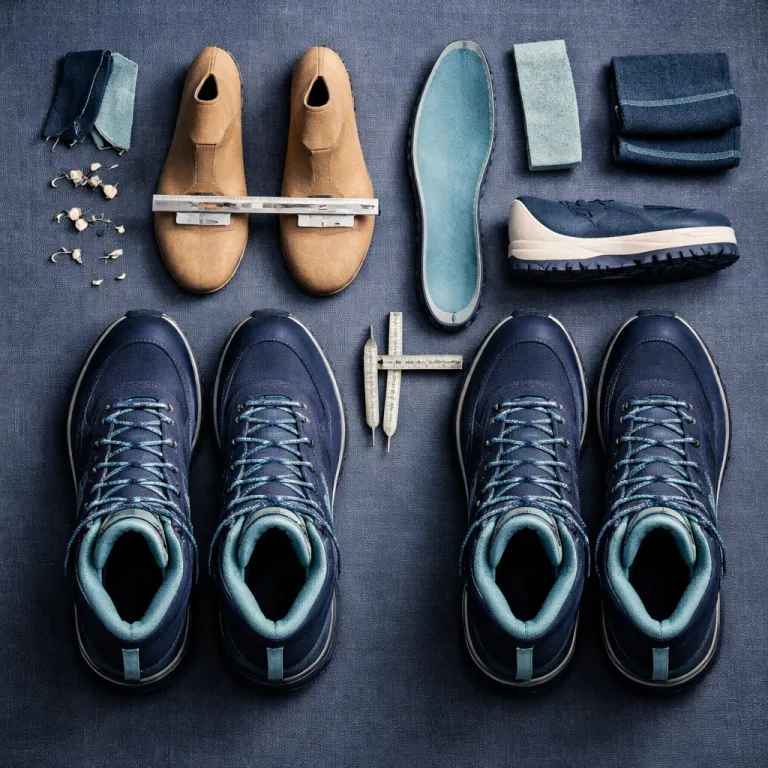

Why women’s hiking boots must start with anatomy, not color
Most women’s hiking boots still begin life as a men’s boot that has been shrunk and painted teal. That lazy approach ignores how women hiking on real mountain terrain bring different biomechanics, and it punishes their feet with blisters, blackened nails, and unstable descents. When hikers push a loaded pack over a rocky trail for several days, those design shortcuts show up as pain rather than performance.
Four anatomical differences matter most when choosing hiking boots for women. First, many women have a narrower heel relative to their forefoot, so a proper women-specific boot uses a sculpted heel cup that locks the rear of the foot without crushing the toe box. Second, the average arch position and height differ, which means the best women’s hiking boots and women’s hiking shoes shift midsole support slightly forward and use denser foam under the medial side.
Third, the forefoot curve and volume change how the upper wraps the front of the foot. A well-designed women’s last gives enough width at the metatarsals while keeping the big toe straight, which is crucial when you kick steps or edge on a narrow trail. Fourth, the Q angle — the angle from hip to knee to ankle — tends to be greater for many women, so the outsole of a women’s hiking boot should subtly flare and support that line instead of forcing the knees inward. Peer-reviewed gait analyses typically report an average Q-angle difference of roughly 3–5 degrees between women and men, which is enough to influence how a loaded hiker tracks on uneven ground (see, for example, clinical gait research summaries published between 2015 and 2022).
When brands ignore these four points, the result is predictable. Women hikers end up buying a men’s boot in a smaller size, then fighting heel lift, numb toes, and a sloppy midfoot fit on steep day hikes. The best hiking designs for women treat the last as the starting point, not an afterthought, and they tune everything from the upper pattern to the lacing tension around that geometry.
Look at models like the Hoka Kaha 3 GTX Women (approx. 1,140 g per pair in EU 38, women’s specific last, compression-molded EVA midsole; manufacturer specification sheets, 2023), the Salomon Quest 4 GTX W (around 1,260 g per pair in EU 38, women-specific ADV-C 4D chassis, dual-density EVA; Salomon technical data, 2023), the Oboz Sawtooth X Mid B-DRY Women (about 980 g per pair in US 7, O Fit insole, women’s standard and wide lasts; Oboz product specs, 2022), and the Lowa Renegade GTX Mid Ws (roughly 1,100 g per pair in EU 38, women’s WXL last, polyurethane Monowrap frame; Lowa catalog, 2023). Each of these women’s hiking boots uses a dedicated women’s last, and you can feel it when you lace them for a long trail with a 12 kilogram pack. The heel stays planted, the midsole tracks straight under load, and the toe box lets your toes spread without feeling like you are swimming in a men’s wide boot.
For hikers who prefer lightweight support, women-specific mid-cut boots bridge the gap between traditional backpacking boots and modern trail runners. A women’s mid boot with a tuned Q angle and a precise heel cup can feel almost like supportive hiking shoes while still protecting the ankles on broken rock. That balance of weight, stability, and anatomical fit is what separates the best women’s models from the generic unisex pairs you see stacked on a crowded product grid.
How to spot real women-specific lasts versus pink tax boots
You can usually spot a pink tax boot in under five minutes on a brand website. Start by opening the men’s and women’s product pages side by side, then compare the listed weight per pair, the outsole drawings, and the stated last names. If the women’s hiking boots share the exact same last designation, outsole pattern, and weight per pair as the men’s version, you are probably looking at a color swap rather than a true women’s hiking design.
Real women-specific boots show different numbers and shapes. The best women’s models often weigh slightly less per boot, use a narrower heel platform, and sometimes list a unique last code that does not appear in the men’s catalog. For example, Lowa’s Renegade GTX Mid Ws uses a WXL women’s last while the men’s version sits on a standard D-width last, and Oboz labels its Sawtooth X Mid B-DRY as WIDE for women when the forefoot volume increases. When you see a women’s hiking boot where the brand quietly notes a different midsole compound or a softer collar foam, that is a sign they have actually tuned the fit for women hikers rather than just changing the upper color.
Pay attention to the size range and width options as well. A serious women’s hiking line offers both standard and wide fits, because many women have a wide forefoot combined with a narrow heel. If a brand sells a women’s boot only in a single width while offering multiple widths in the men’s version, that asymmetry often signals a marketing exercise rather than a performance-focused women’s hiking boots program.
Look closely at the toe box shape in the product photos. A women-specific hiking boot should show a slightly more tapered but still rounded front, with enough vertical volume so the big toe does not press into the upper on descents. When the women’s and men’s photos show an identical toe profile and the same stitched overlays, you can safely assume the internal boot geometry is also shared.
Technical details tell another story. If the men’s boot uses a Gore-Tex membrane and the women’s version quietly drops to a cheaper proprietary waterproofing at the same price, that is a classic pink tax move. When you compare the price–weight ratio between men’s and women’s models, a higher price with identical construction and materials for the women’s boot is another red flag.
For serious backpacking or mountaineering, start your research with brands that publish clear last information and weight data, then cross-check with independent long-term tests such as detailed mountaineering and hiking boot reviews from outlets like Backpacker, Outdoor Gear Lab, or Treeline Review (see their multi-year boot roundups from 2019–2023). A transparent specification sheet that lists weight per pair, midsole density, and outsole compound for each women’s model is worth more than a hundred vague claims about comfort. In the end, the best hiking choice is the boot that matches your anatomy and terrain, not the one that simply matches your jacket color.
Women-specific picks for day hikes, backpacking, and winter miles
Different trips demand different women’s hiking boots, and the wrong match can ruin a carefully planned route. For fast day hikes on mixed trail, a lighter women’s mid boot with a rockered sole and a forgiving upper usually beats a stiff backpacking tank. When you add a multi-day pack, snow, or scree, you need more structure, more underfoot protection, and a more supportive fit around the ankle.
For day hikes and weekend trips, the Oboz Sawtooth X Mid B-DRY for women hits a rare sweet spot. Its mid-cut version feels almost like sturdy hiking shoes underfoot, but the sculpted heel cup and medium-volume toe box keep your feet centered when the trail tilts sideways. The O Fit insole gives real arch support out of the box, which helps many women hikers who find flat insoles in generic boots leave their arches aching after only a few kilometres.
Backpackers carrying 12 to 18 kilograms will appreciate the Salomon Quest 4 GTX W. This women-specific boot uses a stable ADV-C 4D chassis that runs the length of the foot, so the weight of the pack does not twist the midsole on uneven rock. The upper combines a supportive ankle wrap with a relatively generous forefoot, which suits women hiking with slightly wide feet who still need precise control on steep descents.
For winter and shoulder-season slop, the Hoka Kaha 3 GTX Women offers a different approach. Its thick EVA midsole and Vibram Megagrip outsole create a cushioned platform that feels more like a maximalist trail runner than a traditional leather boot. Yet the women-specific last, combined with a Gore-Tex waterproof bootie and a high-cut collar, keeps snow and slush out while protecting the toes from repeated front pointing into crusty drifts.
Hikers who split time between boots and trail runners should pay attention to how their favourite running models influence their expectations. If you love the zero-drop feel and wide toe box of an Altra Lone Peak trail runner, a narrow, high-heeled women’s boot will feel unstable and cramped. In that case, looking at wide-friendly models such as the Oboz Sawtooth X Wide or even hybrid designs that echo the Altra Lone Peak forefoot geometry can make the transition from trail runners to boots less jarring.
When evaluating any women’s hiking boots, focus on the full system rather than a single specification. Check how the weight per pair feels relative to your fitness and pack weight, then examine the lacing, the tongue padding, and the heel counter stiffness. A boot that feels slightly overbuilt in the shop often becomes the best hiking partner once you are ten kilometres into a wet, rocky ascent with cold wind cutting across the ridge.
| Model | Approx. weight (pair) | Last / fit | Waterproofing | Typical use |
|---|---|---|---|---|
| Oboz Sawtooth X Mid B-DRY Women | ~980 g (US 7) | Women’s standard & wide | B-DRY membrane | Day hikes, weekend backpacks |
| Salomon Quest 4 GTX W | ~1,260 g (EU 38) | Women-specific ADV-C 4D | Gore-Tex bootie | Loaded backpacking, rough terrain |
| Hoka Kaha 3 GTX Women | ~1,140 g (EU 38) | Women’s specific last | Gore-Tex bootie | Winter, wet shoulder seasons |
| Lowa Renegade GTX Mid Ws | ~1,100 g (EU 38) | Women’s WXL last | Gore-Tex liner | All-round hiking, light trekking |
The wide foot problem and why toe boxes matter for women
Many women with wide forefeet and narrow heels feel like the footwear industry forgot them. Standard women’s hiking boots often pinch the front of the foot while still allowing the heel to lift, which is the worst of both worlds. After a few hours on trail, that mismatch turns into blisters on the back of the heel and hot spots along the little toe.
Toe box design is the quiet hero here. A well-shaped toe box gives enough width and vertical room for the toes to splay, but it also keeps the big toe aligned so you can edge on rock without rolling inward. When you look at a boot from above, a more anatomical shape that mirrors the natural curve of the toes usually feels better for wide feet than a narrow, pointed silhouette.
Brands like Altra have built their reputation around this idea. The Altra Lone Peak, while technically a trail runner rather than a boot, shows how a foot-shaped toe box can transform comfort for women hiking long distances. Many hikers with wide feet use the Lone Peak for dry-season treks, then seek women’s hiking boots with similar forefoot volume for colder or rougher routes.
For true boots, the Oboz Sawtooth X Wide and several Keen women’s models offer rare relief. Keen often becomes the default choice for wide-foot women because its toe boxes are both broad and tall, which prevents the upper from crushing the toes on steep descents. The trade-off is that some hikers with narrow heels may need to experiment with lacing techniques or aftermarket insoles to lock the rear foot in place.
Merrell’s Moab line, including the Merrell Moab 3 Mid Waterproof for women, sits in the middle of the spectrum. These hiking boots offer a moderately wide forefoot and a forgiving upper, which works for many day hikes and casual backpacking trips. However, women hikers with truly wide feet sometimes still find the Moab boot too snug across the metatarsals, especially when the feet swell in hot weather.
When you evaluate wide options, do not ignore the relationship between weight and support. A very lightweight boot with a soft upper may feel great in the shop, but under a heavy pack it can allow the foot to spread too much, which stresses the plantar fascia. A slightly heavier women’s boot with a firmer midsole and a structured upper often keeps wide feet happier over long distances, even if the initial impression feels less slipper-like.
Waterproofing, weight, and real world durability in women’s hiking boots
Waterproof labels sell boots, but they do not always serve hikers. Many women’s hiking boots use a Gore-Tex or similar membrane that keeps water out during short tests, yet traps sweat during long climbs. When your socks stay damp for hours, the skin on your feet softens and becomes more vulnerable to blisters and pressure points.
Think of waterproofing as a spectrum rather than a binary choice. A full leather women’s boot with a Gore-Tex liner and a high-cut collar offers maximum protection for snow, slush, and shallow river crossings, but it also adds weight and slows drying time. A lightweight synthetic mid boot with a more breathable membrane or even no membrane at all can feel cooler and more forgiving on hot, dry trails where water exposure is limited.
Models like the Salomon Quest 4 GTX W and the Hoka Kaha 3 GTX Women sit toward the protective end of that spectrum. Their GTX liners, combined with robust uppers and aggressive outsoles, make them strong candidates for wet alpine routes and shoulder-season backpacking. On the other hand, women hikers who mostly tackle dry summer day hikes might be better served by non-waterproof hiking shoes or by lighter boots that prioritize ventilation over full submersion resistance.
Weight deserves the same nuanced thinking. A heavier boot with a stable platform and a supportive upper can reduce fatigue in the small stabilizing muscles of the feet and ankles when you carry a heavy pack. Yet for fast-moving hikers on well-maintained trail, shaving a few hundred grams per pair by choosing a lighter women’s boot or even robust trail runners can make the stride feel more natural and less clunky.
Durability depends on how all these elements interact. A boot that combines a dense rubber outsole, a well-bonded midsole, and a reinforced toe cap usually survives more scree and talus than a minimalist design, but it may feel overbuilt for gentle forest paths. Pay attention to how the upper is stitched or welded to the sole, because that junction often fails first after hundreds of kilometres.
Long-term testers often report that women’s hiking boots with full rubber rands and double stitching around the toe box resist delamination better than lighter, glued-only designs. When you read reviews, look for comments about outsole wear patterns, midsole compression, and upper cracking rather than just star ratings. In the mountains, the real value of a boot is not its initial shine but how it behaves after months of mud, rock, and repeated drying cycles by the hut stove.
Fit protocol for women, and options beyond the gender binary
Fit is where theory meets trail, and it is where many women get shortchanged. A proper fitting session for women’s hiking boots takes time, a ramp, and a willingness to walk away from the wrong boot even if the price looks tempting. Relying on your everyday shoe size alone is a fast route to bruised toes and sliding heels.
Start by measuring both feet at the end of the day, when they are slightly swollen. Many women have one foot longer or wider than the other, so always fit the boot to the larger foot and adjust with insoles or lacing for the smaller side. When you try a pair, wear the same weight of hiking socks you plan to use on trail, and bring any orthotics you rely on.
Use a three-step test. First, stand on a flat surface and check that you have a thumb width of space in front of the longest toe, which protects against front impact on descents. Second, walk uphill on a ramp or stairs and confirm that the heel stays locked without rubbing, because persistent heel lift almost always becomes a blister during real hiking.
Third, walk downhill with the boots fully laced and pay attention to the toes. If they hit the front of the toe box, either the size is too small or the boot shape does not match your foot, and no amount of lacing tricks will fix that. A good women-specific boot lets the toes slide slightly forward without impact, even when you deliberately stomp down the ramp.
Trans and nonbinary hikers often find themselves between traditional men’s and women’s lasts. The smartest move is to ignore the gender label and focus on the last shape, width options, and volume, trying both categories until you find the best match. Many people in this group end up in a so-called men’s boot with a narrower last or in a women’s boot with extra volume, and that is perfectly valid as long as the fit supports their biomechanics.
Whatever your identity, remember that the right boot is the one that disappears under you once you are moving. It should let you focus on the weather, the map, and the next river crossing rather than on hot spots or cramped toes. In the end, the most important spec on any product page is not the waterproof rating but how your feet feel after the tenth rocky kilometre.
Key figures on women’s hiking boots and fit
- Market research from several outdoor industry reports, including NPD Group footwear summaries and Outdoor Industry Association participation studies, shows that women’s hiking boots now represent roughly 40–45 percent of total hiking footwear sales, reflecting the growing number of women hiking regularly with technical gear (see OIA participation reports 2019–2022).
- Biomechanics studies cited by Backpacker, Treeline Review, and clinical gait research journals report that the average Q angle for women is roughly 3 to 5 degrees greater than for men, which directly influences how a women-specific boot outsole should be shaped to keep knees tracking safely (for example, peer-reviewed gait analyses published in journals such as Gait & Posture).
- Independent lab tests on Gore-Tex–lined boots, such as moisture-vapour transmission measurements published by WL Gore and third-party test labs, indicate that waterproof membranes can reduce moisture vapour transmission by up to about 30 percent compared with non-waterproof mesh uppers, which explains why many hikers experience sweat buildup during long climbs (see WL Gore technical white papers on MVTR).
- Field data from long-distance trails such as the Pacific Crest Trail and Appalachian Trail suggest that many hikers replace their primary boots or trail runners every 800 to 1,000 kilometres, so durability expectations for women’s hiking boots should be framed around that realistic mileage window (as reported in thru-hiker surveys compiled between 2017 and 2022).
- Consumer surveys from major retailers and fit-focused review sites report that more than half of women hikers who return boots cite poor fit in the heel or toe box as the main reason, underscoring how critical women-specific lasts and multiple width options are for long-term comfort (see aggregated return data summaries from large outdoor retailers).
FAQ about women’s hiking boots
How should women’s hiking boots fit in the heel and toe box?
The heel should feel locked in place with no vertical lift when you walk uphill, while the toe box should allow a thumb width of space in front of the longest toe. You want your toes to wiggle freely without touching the front on descents, because repeated impact there causes bruised nails and numbness. If you feel both heel slip and toe pressure, the last shape is wrong for your feet even if the size seems correct.
Are Gore-Tex women’s hiking boots always better than non-waterproof models?
Gore-Tex women’s hiking boots excel in wet, cold, or snowy conditions where external moisture is the main threat. In hot, dry climates, non-waterproof boots or breathable hiking shoes often keep feet drier overall because sweat can escape more easily. Choose waterproofing based on your typical terrain and weather rather than assuming that a GTX label is automatically the best option.
What is the difference between women’s hiking boots and hiking shoes?
Women’s hiking boots usually have a higher cut that covers the ankle, a stiffer midsole, and more protective uppers, which improves stability under a heavy pack or on rough terrain. Hiking shoes sit lower, flex more easily, and feel lighter, which many hikers prefer for fast day hikes on well-maintained trail. The right choice depends on your pack weight, ankle history, and the technical difficulty of your routes.
Can women with wide feet use men’s boots instead of women’s hiking boots?
Some women with wide feet do find a better match in certain men’s boots, especially when they need extra forefoot volume. However, men’s lasts often have a wider heel as well, which can cause heel slip and blisters for many women. Trying wide-width women’s hiking boots first is usually smarter, because these models combine a roomy toe box with a narrower heel cup designed for women’s biomechanics.
How much break-in time do women’s hiking boots need before a big trip?
Modern synthetic women’s hiking boots often feel trail-ready after 20 to 30 kilometres of mixed walking, while stiffer leather models may need 40 to 60 kilometres to soften and mold to your feet. Spread that distance over several shorter outings with a gradually increasing pack weight, and pay attention to any persistent hot spots. If a boot still causes pain after a careful break-in, it is usually a fit problem rather than a lack of mileage.