
Summary
Editor's rating
Value: cheap upfront, but not great value long term
Design: looks OK, but function is clearly secondary
Comfort: fine out of the box, drops fast with real use
Materials: synthetic everything, and it feels like it
Durability: feels fragile, and reviews back that up
Performance: OK for light use, weak for real hiking
What you actually get for the price
Pros
- Lightweight and generally true-to-size fit
- Cheap entry point if you just need basic outdoor-style shoes
- Decent grip on dry, easy terrain for casual walks
Cons
- Insole compresses quickly, especially under the heel, reducing comfort
- Waterproofing is weak – several reports of wet feet after minimal exposure
- Build quality feels fragile, with risk of lace hardware or seams failing early

Specifications
View full product page →| Brand | VTASQ |
Budget boots that look fine on paper, but real use tells another story
I went into these VTASQ hiking boots with pretty low expectations: unknown brand, made in China, price on the low side, and an Amazon rating hovering around 2.6/5. On paper they tick most of the boxes: waterproof, lightweight, rubber sole, EVA insole, meant for hiking, camping, and general outdoor use. So I treated them as "beater" boots for casual walks, short hikes, and wet days in town rather than serious mountain gear.
From the first try-on, my feeling was basically: "okay, these are cheap boots." They don’t feel terrible, but they don’t feel solid either. The fit is roughly true to size, the weight is reasonable, and they don’t look horrible. If you just put them on in your living room, you might think they’re a decent deal. The problems show up once you actually start walking more than a few minutes.
Over a couple of weeks, I used them for daily dog walks on mixed terrain (pavement, park, a bit of mud), a couple of 5–7 km hikes, and some rainy days in the city. Nothing extreme, no mountains, no heavy backpack. I wanted to see: do they stay comfortable, do they actually keep water out, and do they fall apart quickly like some of the Amazon reviews mention.
Short version of my experience: they’re usable for light, occasional stuff, but I wouldn’t trust them for real hiking or regular outdoor use. The cushioning packs down quickly, the waterproofing is shaky, and the build quality is clearly on the low end. If you just need a cheap pair for short, dry walks, maybe. If you care about comfort and durability, I’d look elsewhere.
Value: cheap upfront, but not great value long term
Price-wise, these sit in the budget zone. That’s their main selling point. If you look only at the initial cost, they might seem like a bargain: waterproof label, hiking style, okay grip, and relatively light. For someone who just wants something that looks like a hiking shoe for rare outings, the low price is tempting. But when you factor in the comfort drop and durability issues, the value is not as good as it seems.
Here’s the problem: if the insole compresses in a couple of months, you either have to buy a better insole (extra cost) or live with a less comfortable shoe. If the lace hardware snaps or the waterproofing fails early, you’re basically done. So you might save money upfront, but you’re more likely to replace them sooner. Compare that to an entry-level pair from a known hiking brand (Quechua, Karrimor, HI-TEC, etc.) that often costs a bit more but lasts longer and actually keeps water out.
If you truly only need a pair of outdoor-style shoes for light, occasional use – say, a handful of easy walks a year or as backup shoes you don’t care about – then the value is "meh but acceptable." They’ll do the job for that level of use. But if you’re even slightly serious about hiking, or you walk a lot in wet conditions, the false economy shows up quickly. You’ll end up buying another pair sooner, and that’s not great value.
So for me, the value is below average. Not a total disaster if you know exactly what you’re getting into, but there are better options in the same general price range, especially if you wait for sales from more established outdoor brands.
Design: looks OK, but function is clearly secondary
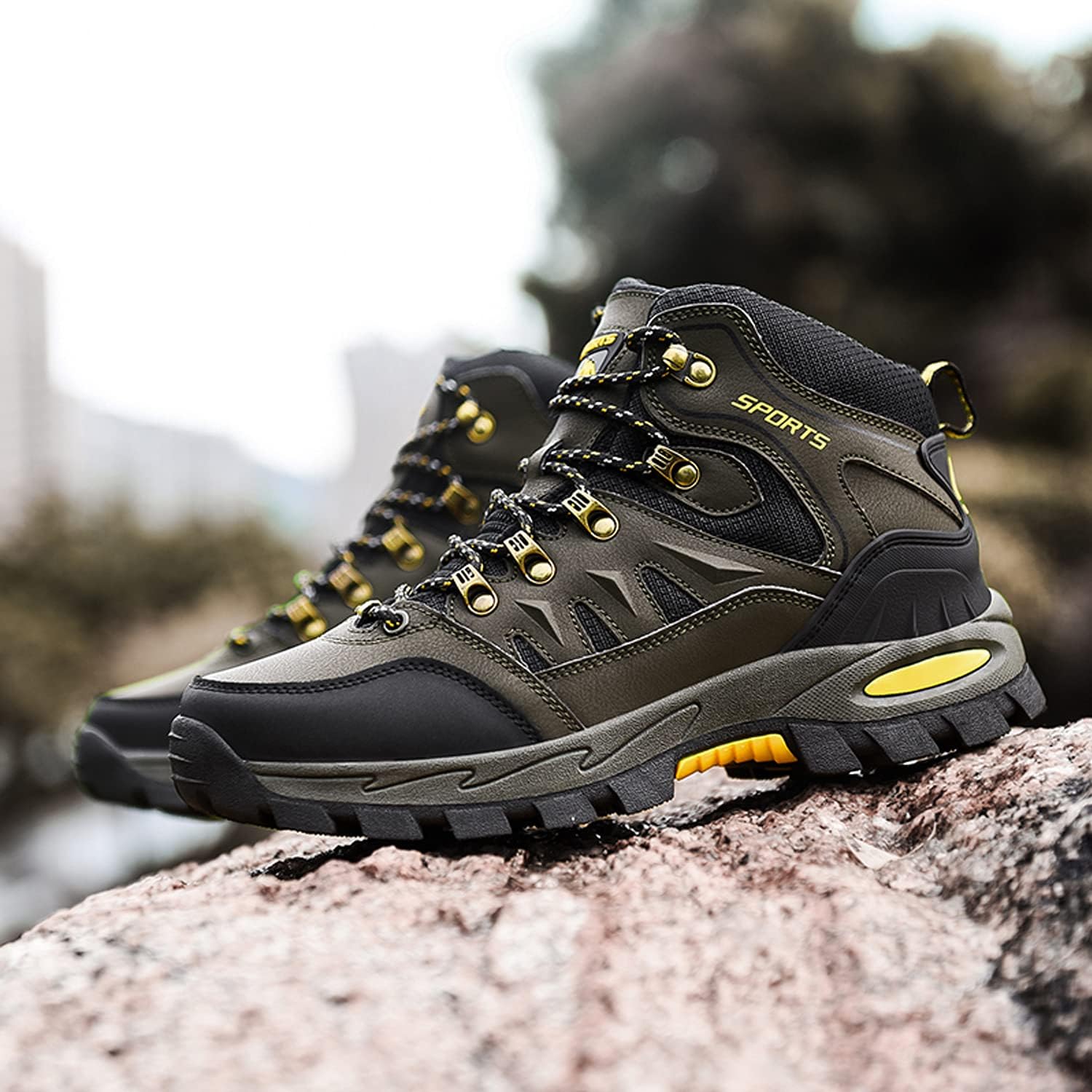
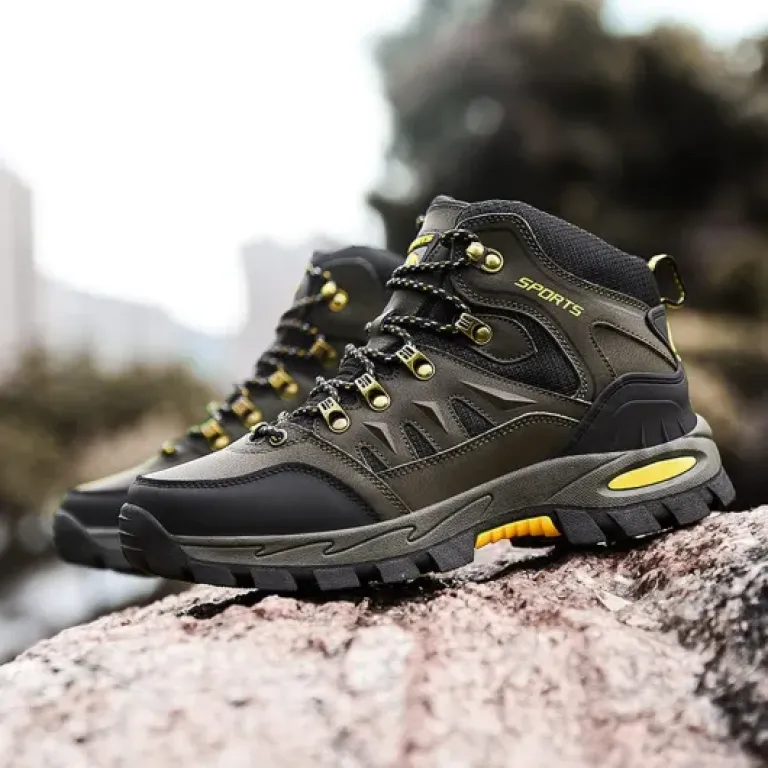
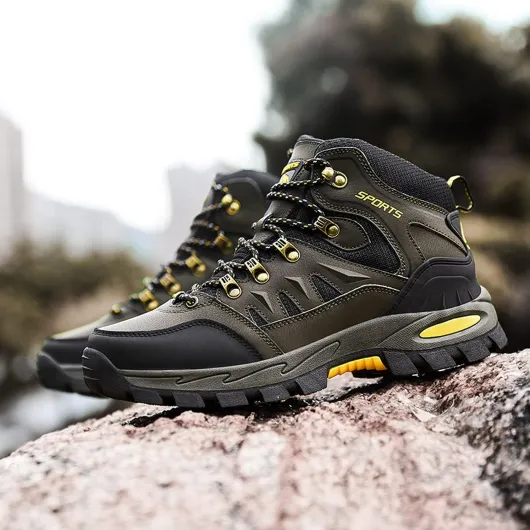
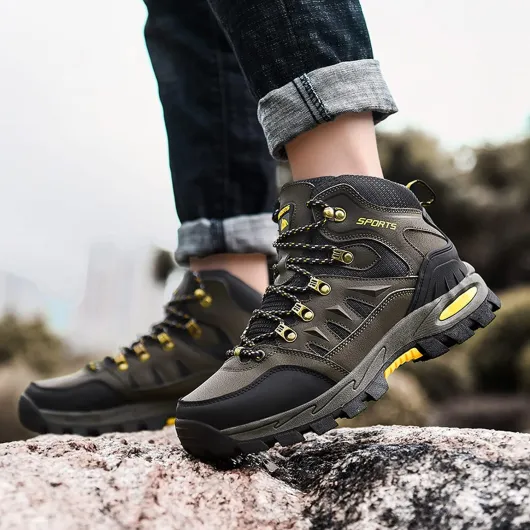
Design-wise, these boots are pretty standard. Green synthetic upper, black rubber sole, lace-up closure, round toe, flat heel. Nothing flashy, nothing ugly, just very generic outdoor-shoe vibes. If you’re not into big brands and just want something that looks like a hiking boot, they tick that box. They blend in fine with jeans, hiking trousers, or joggers. No one is going to compliment them, but no one will laugh either.
The tread pattern on the sole looks decent at first glance: lugs with a bit of depth, enough to grab some dirt and give traction. On dry ground and basic trails, grip is fine. On wet grass or muddy patches, you can feel the limits. They’re far from ice skates, but they don’t give the same secure feeling as more serious hiking brands. The lugs also feel a bit soft, which makes me think they’ll wear down fast if you walk a lot on tarmac.
The lacing system is where the cheapness really shows. The eyelets and links don’t feel sturdy, and that lines up with the Amazon review where someone had a link snap the first time they wore them. On my pair, nothing snapped, but when you pull the laces tight you can feel that "please don’t break" moment. I found myself not tightening them as much as I usually would, just to avoid stressing the hardware.
In terms of ankle support, these are more "chunky trainers" than true hiking boots. The collar is padded but not very stiff, so you get a bit of comfort but not real support. For flat or gently rolling terrain, that’s fine. For rocky, uneven trails, I wouldn’t rely on these to protect your ankles. Overall, the design is visually acceptable but clearly built to a budget, and it shows as soon as you start using them properly.
Comfort: fine out of the box, drops fast with real use
First try-on, comfort felt okay. The collar and tongue are padded enough, there’s no obvious rubbing, and the fit is fairly true to size. If you’re used to stiffer leather boots, these will even feel a bit soft at first. Walking around the house and for short errands, no problem. The trouble starts once you push them a bit: longer walks, uneven ground, and repeated use over several days.
After a few 5–7 km walks, the EVA insole started to feel tired, especially under the heel. That lines up perfectly with the review saying the heel area became too indented after about two months. You can literally feel a dip under your heel forming. When that happens, your foot doesn’t sit level anymore, and you start to feel pressure at the arch and forefoot. For a quick half-hour walk, you can live with it. For a two-hour hike, it gets annoying.
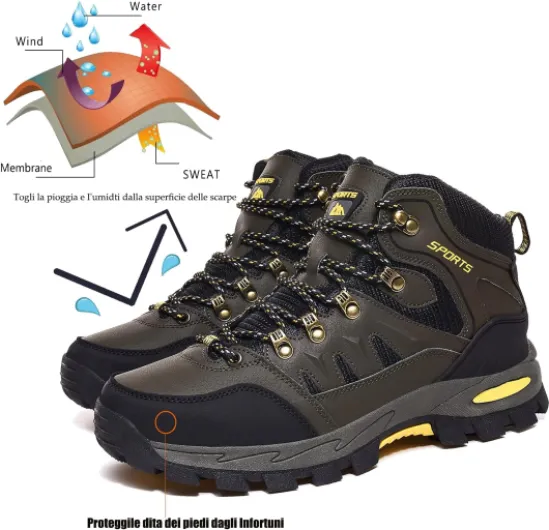
Breathability is also not great. The synthetic upper and lining don’t let your feet breathe much. On a cool day, it’s fine. On a mild or warm day, especially if you’re walking briskly, your socks get damp from sweat. That’s not unique to this boot – a lot of cheap "waterproof" synthetics do this – but it adds to the feeling of fatigue. Slightly sweaty feet, soft insole, and not much structure is not a nice combo after a while.
If you throw in a better aftermarket insole and accept that these are for short, casual use, you can get them to a "decent but nothing more" level of comfort. Out of the box and used as-is for regular hiking, I’d say comfort is mediocre and gets worse fairly quickly. Not unwearable, but far from what I’d want for real outdoor days.
Materials: synthetic everything, and it feels like it
The upper is synthetic (vegan leather, as they call it), the lining is listed as leather but feels more like synthetic faux-leather, the insole is EVA foam, and the sole is rubber. On paper, that’s pretty standard for cheap outdoor shoes. In hand and on foot, you feel the cost-cutting. The synthetic upper is quite stiff at first and doesn’t really mold to your foot the way decent leather or better synthetics do after a few wears.
The EVA insole is basic. When new, it feels okay – moderate cushioning, nothing fancy. But like one of the Amazon reviewers mentioned, the heel area packs down quickly. After a couple of weeks of normal use, I could already feel a clear indentation under the heel, and the comfort dropped. It’s not that the shoe becomes unusable overnight, but you start feeling more of the ground and more pressure points, especially on longer walks.
The rubber sole is probably the best part of the materials. It doesn’t feel super premium, but it’s not rock hard either. Flex is acceptable, and it gives decent grip on dry surfaces. I wouldn’t trust it for serious mountain use, but for casual trails and daily use it’s okay. The issue is more about how the sole is glued/attached to the upper rather than the rubber itself – you can see a few glue lines that don’t inspire long-term confidence.
Overall, the materials are exactly what you expect from a low-priced Amazon hiking boot: mostly synthetic, functional but not built to last. If you’re planning to wear these heavily, you’ll likely end up swapping the insole pretty quickly to get back some comfort, and I wouldn’t be surprised if seams or the glue lines start to give way after a season of regular use.
Durability: feels fragile, and reviews back that up
Durability is where these boots really struggle. Even before reading the reviews, the first impression in hand is that they’re not built for the long haul. The stitching looks thin in some stress areas, the lace links don’t feel very tough, and the insole compresses quickly. That alone made me cautious, and the Amazon feedback confirms the concern: one buyer had a lace link snap on first wear, another said the heel area of the insole was done after about two months.
In my own use over a few weeks, nothing actually broke, but you can see early signs of wear faster than you’d like. The insole packing down at the heel is the first big one. Then you start to notice slight creases and stress marks on the synthetic upper, especially around the flex points near the toes. That’s normal to a degree, but here it looks like it might crack or separate sooner rather than later if you really hammer them.
The sole attachment also doesn’t inspire huge confidence. I didn’t get any separation, but you can clearly see glue lines and small gaps where dirt and water will eventually work their way in. On more expensive boots, this area feels sealed and tight; here it feels like a weak point waiting for time and use to exploit it. If you only wear them occasionally, they might last you a season or two. If you wear them several times a week, I’d be surprised if they hold up well beyond a year.
Given the 2.6/5 rating and the specific complaints, I’d rate durability as below average. They’re not falling apart instantly for everyone, but there’s a clear pattern: components wearing out or breaking faster than they should. For a product sold as hiking footwear, that’s a serious downside.
Performance: OK for light use, weak for real hiking
In light everyday use – walks on pavement, gravel paths, and short park trails – the boots perform "fine." Traction on dry surfaces is acceptable, and the flat heel makes them feel more like sturdy trainers than stiff boots. If that’s all you plan to do, they get the job done. You can walk the dog, go to the shops, or do a short Sunday walk without major issues.
On proper trails, you start to see their limits. On rocky or uneven ground, the lack of real ankle support becomes obvious. The upper flexes a lot and doesn’t hold the foot as securely as a more structured hiking boot. You have to pay more attention to where you step, and I wouldn’t be keen on using these with a heavy backpack or on long descents. They just don’t give that locked-in feeling.
In wet conditions, performance is mixed. Grip on wet tarmac is okay, but on wet grass and mud it’s only average. You don’t instantly slip, but you don’t feel very confident either. Then there’s the waterproofing issue. One of the Amazon reviewers said their feet were soaked after the first puddle, and I’m not surprised. Splashing through shallow puddles and walking on wet ground, I felt moisture creeping in around the forefoot area and through the tongue zone. It’s more like "water-resistant for light drizzle" than truly waterproof.
So performance-wise, I’d say: these are more like outdoor-style sneakers than real hiking boots. They can handle basic walks and maybe the occasional easy trail, but if you’re planning day hikes in variable weather or rough terrain, you’ll quickly hit their limits and probably regret not spending a bit more on a better-known hiking brand.
What you actually get for the price
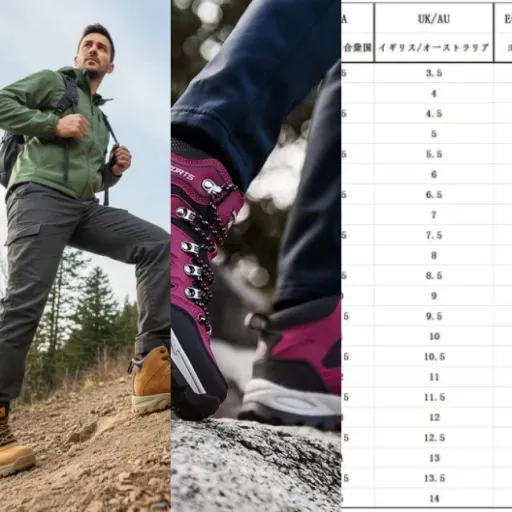
On the spec sheet, VTASQ sells these as unisex hiking shoes with a synthetic upper, rubber sole, EVA foam insole, and waterproof construction. They’re listed for hiking, camping, mountaineering, cycling, fishing, and running – which is already a red flag. One pair of budget boots usually doesn’t cover all those activities well. The size I tried (similar to the 7.5 UK listing) felt reasonably accurate, so at least the "fit to size" claim is mostly true.
The boots are sold as "lightweight" and I’d say that’s fair. They’re not heavy clunkers; you can wear them around town without feeling like you’re in steel-toe work boots. Out of the box, they have that typical synthetic shoe smell, nothing too strong, and the finish is okay from a distance. Up close, you can see a few glue marks and stitching that doesn’t look super precise, but nothing shocking for the price range.
The brand is basically unknown, and that shows in the little details: no real branding effort, basic packaging, and a very generic look. It’s the kind of boot that could be sold under ten different random names on Amazon. That’s not automatically bad, but it usually means the focus is on hitting a price point, not making a shoe that will survive years of use.
If you buy these with the mindset "cheap Amazon hikers I might beat up for a season," the presentation matches that. They don’t pretend to be premium, and they aren’t. They’re just a basic synthetic hiking-style shoe with a rubber sole and a waterproof label that feels more optimistic than reliable.
Pros
- Lightweight and generally true-to-size fit
- Cheap entry point if you just need basic outdoor-style shoes
- Decent grip on dry, easy terrain for casual walks
Cons
- Insole compresses quickly, especially under the heel, reducing comfort
- Waterproofing is weak – several reports of wet feet after minimal exposure
- Build quality feels fragile, with risk of lace hardware or seams failing early
Conclusion
Editor's rating
Overall, these VTASQ hiking boots are exactly what they look like: low-budget outdoor shoes that can get you by for light, casual use, but that’s about it. They’re fairly light, the fit is roughly true to size, and they look like normal hiking shoes from a distance. For short walks, errands in bad weather, or the odd easy trail, they’re usable. But once you push them – longer distances, wetter conditions, or more frequent use – their weaknesses show up fast: the insole packs down, the waterproofing is questionable, and the build quality doesn’t inspire confidence.
If you’re a casual user who just wants something cheap that you won’t cry over if it gets muddy or ruined, and you’re not planning big hikes, they can make sense as a temporary or backup pair. Just go in knowing they’re not real mountain boots and probably won’t last long if you abuse them. On the other hand, if you hike regularly, care about dry feet, or want something that will last more than a season of steady use, I’d skip these and put your money toward an entry-level model from a more established hiking brand.