
Summary
Editor's rating
Value for money: worth it, but not magic
Design focused on heavier guys and work boots
Day-to-day comfort: big improvement over stock insoles
Foam and plastic that feel decent, not premium
How long do they realistically last?
What you actually get out of the box
Do they actually help with pain and fatigue?
Pros
- Noticeably reduces heel impact and general foot fatigue compared to stock insoles
- Moderate arch and heel support that works well for most heavier users
- Easy to trim and install in work boots and everyday shoes without making them feel too tight
Cons
- Foam compresses over time, so they’ll likely need replacing every few months with heavy use
- Arch support may be too mild for serious foot conditions or very high/flat arches

Specifications
View full product page →| Brand | Dr. Scholl's |
Do these cheap insoles actually help if you’re over 200 lbs?
I bought these Dr. Scholl's Heavy Duty Support insoles basically out of frustration. I’m a heavier guy (around 230 lbs), on my feet a lot in work boots and cheap sneakers, and by the end of the day my lower back and heels were just shot. I didn’t feel like dropping $60–$80 on fancy custom-style insoles, so I grabbed these as a "let’s see if this is good enough" option.
I’ve worn them now in two pairs of shoes: a pair of beat-up work boots and some everyday walking shoes. I gave them about three weeks of regular use before making up my mind. I wanted to see if the cushioning packed out, if my back felt better, and if they stayed in place. No special treatment, just normal daily abuse: walking on concrete, standing for long stretches, going up and down stairs.
The short version: they do help, especially with heel impact and general fatigue, but they’re not some miracle fix. If your shoes are total trash or your foot problems are serious, these won’t magically solve everything. But compared to the flat stock insoles that come in most boots and cheap sneakers, these are a clear upgrade. My back and legs definitely felt less cooked at the end of the day.
They’re not perfect though. The arch support is decent but not super aggressive, the foam does start to feel a bit flatter after a while, and if you have very wide feet or very high arches, you may want something more specialized. Still, for the price and how easy they are to use, they’re a pretty solid, realistic option if you’re a heavier guy just trying to get through long days on hard floors.
Value for money: worth it, but not magic
On the value for money side, I’d say these land in a pretty sweet spot for most people. They’re not as cheap as the flimsy gel things you grab at the supermarket checkout, but they’re also nowhere near the price of custom orthotics or high-end specialty insoles. For the amount of relief they provide—especially if you’re over 200 lbs and on your feet for long stretches—they’re a good deal in my book.
Here’s how I look at it: if they last you around 3–6 months of regular use and they make your days noticeably less painful, that’s not a bad trade-off. You’re basically paying a small amount per month to have less heel and back pain. Compared to spending a lot more on new “comfort” shoes every time your feet start hurting, dropping these into the shoes you already own is a cheaper fix. I’ve used more expensive insoles before, and yes, some of them feel better and last longer, but for everyday work boots and office shoes, these hold their own pretty well.
Where the value is slightly less impressive is if you have very specific foot issues. If you need strong arch correction or have serious medical problems, you might end up buying these and then still needing something more advanced later. In that case, the money is kind of half-spent. But if your main problem is just being a heavier guy on hard floors all day, these are a pretty sensible way to upgrade your comfort without overthinking it.
Overall, I’d call the value pretty solid: affordable, easy to install, clear improvement over stock insoles, but with the catch that you’ll probably be replacing them a couple of times a year if you use them hard. If you’re okay with that, they’re worth the spend. If you’re looking for a once-and-done solution, you’ll need to look higher up the price range.
Design focused on heavier guys and work boots
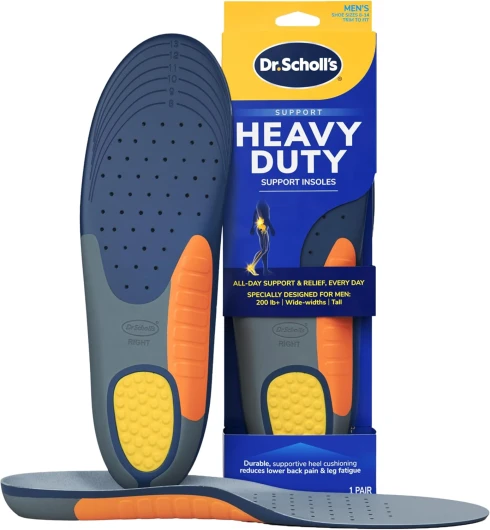
The design is clearly aimed at people who are heavier or tall and spend a lot of time on hard surfaces. The main design feature is the beefed-up heel area. When you look at it from the side, you can see there’s extra thickness and a more rigid cup that wraps around your heel. That’s where most of the support and shock absorption is, and you feel that right away the first time you step in. It takes some of that sharp impact away when your heel hits the ground, especially on concrete.
The arch is moderately raised. If you’ve used very aggressive orthotics before, this will feel mild in comparison. For me, with a normal-to-slightly-high arch, it felt comfortable and not intrusive. It’s enough to stop your foot from collapsing completely inward, but not so high that it digs into your arch. If you have flat feet or very high arches, you might find it either too soft or not high enough, but for the average guy it’s a decent middle ground.
They’re also trim-to-fit, which is both good and slightly annoying. Good because you can fine-tune them to your boots or shoes, annoying because if you rush the trimming, you can easily cut them a bit too short in the toe. I did one pair by following the printed lines only and they ended up slightly short. The next time, I traced my original insole and it fit much better. So the design works, you just have to take two extra minutes to do it right.
One thing I liked is that the overall thickness is reasonable. They add some bulk, but not so much that your shoes suddenly feel a full size smaller. I put them in work boots and everyday sneakers and didn’t feel like my toes were getting crushed. If your shoes are already tight, you might feel it, but in normal or slightly loose shoes, they slide in fine. Overall, the design is practical: more support in the heel, some arch structure, and a shape that fits well in typical men’s shoes and boots without turning them into torture devices.
Day-to-day comfort: big improvement over stock insoles
This is where these insoles actually justify their existence. The comfort difference versus stock insoles in my boots and cheap sneakers was clear from the first day. The main thing I noticed was less heel pain and less of that dull ache in my lower back and calves after standing or walking on concrete for hours. It doesn’t erase all discomfort, but it takes the edge off in a noticeable way, especially if you’re heavier.
In the first week, I wore them for full workdays, around 8–10 hours on and off my feet. At the end of the day, I still felt tired, but my heels weren’t burning like before, and my lower back didn’t feel as tight. I wasn’t limping to the couch as soon as I got home. For me, the heel cushioning and the bit of arch support seem to be doing most of the work. They spread out the pressure more evenly instead of everything slamming into one spot with each step.
The arch support sits in that middle zone: supportive but not aggressive. If you’re coming from flat, dead insoles, you’ll feel the difference right away, but it doesn’t jab into your arch or feel like a hard lump. I didn’t have any break-in pain or hotspots. If anything, the first couple of days just felt oddly “different” underfoot, then my feet adjusted and it felt normal, just less tiring. If you like super-soft, squishy insoles, you might find these a bit firmer than you expect, but that firmness is what keeps your feet from collapsing.
One thing I appreciated is that they don’t slide around. Once I trimmed them properly and dropped them into the boots, they stayed locked in place. No bunching, no curling, no weird wrinkles under my toes. Even pulling my boots off quickly, the insoles stayed put most of the time. Overall comfort score from me: very solid for long days, especially for the price. Not perfect, not luxury, but a noticeable upgrade that makes standing and walking less of a chore.
Foam and plastic that feel decent, not premium
Material-wise, these are basically a mix of foam and a firmer plastic shell. The top layer is a soft-ish foam that your foot sits on. It’s not super plush like memory foam slippers, but it’s comfortable enough and doesn’t feel rough through a sock. After a couple of weeks of use, that top layer does start to show a bit of compression where my heel hits, but nothing dramatic. It’s what I’d expect from something in this price range that’s carrying a 200+ lb person every day.
Underneath that, you’ve got a denser foam and then the more rigid plastic around the heel and arch. That’s the part that actually does the supporting. When you try to bend the insole, you’ll notice the heel and arch resist flexing, while the forefoot bends more easily. In real use, that means your heel feels stable and locked in, but your toes can still move naturally. The materials don’t squeak or make weird noises inside the shoe, which I’ve had with some cheaper inserts before.
One thing to note: these are foam-based, so they will eventually pack down. They’re not like hard medical orthotics that keep their exact shape for years. After about three weeks of daily wear, I could tell the heel foam wasn’t quite as springy as day one, but the plastic structure still felt solid. Based on that, I’d say these are more of a 3–6 month solution depending on how much you weigh and how many hours you’re on your feet, not a “buy once and forget for years” type of product.
In terms of breathability and smell, they’re okay but nothing special. The foam doesn’t trap heat badly, but it’s not ventilated or anything fancy. If your feet sweat a lot, you’ll still need decent socks and maybe a shoe deodorizer. The materials feel safe and non-irritating; I didn’t get any itching or rubbing even on longer days. Overall, the materials match the price: good enough for daily use, but don’t expect them to feel like high-end custom orthotics or last forever.
How long do they realistically last?
Durability is where you have to manage your expectations a bit. These are foam-based insoles, not hard orthotics, so they’re not going to last forever, especially if you’re over 200 lbs. After around three weeks of daily use (8–10 hours a day), I could see light compression marks in the heel and ball-of-foot areas and feel that they’d softened a little compared to day one. They still felt supportive, just not as springy.
From what I’m feeling and from what other users say, these are probably a 3–6 month product for heavy daily use. If you’re 200+ lbs and on concrete all day, I’d expect closer to 3–4 months before you start thinking about a replacement. If you’re lighter or just using them in casual shoes a few times a week, they’ll probably stretch further. The plastic support shell in the heel and arch seems pretty tough; I didn’t feel any cracking or weird bending, even when I tried flexing them by hand.
The top fabric layer holds up decently too. It doesn’t peel off right away or fray at the edges, at least not in the first weeks. It will probably get a bit worn and shiny over time where your heel and toes rub, but nothing dramatic so far. No bad smells either, but that also depends a lot on your socks and how much your feet sweat. I didn’t do anything special to care for them, just let the shoes air out overnight.
So, in practice, they’re durable enough for the price, but this is not a “buy once and forget about it for a year” situation if you’re hard on your shoes. Think of them more as a consumable, like tires on a car. They’ll wear out and you’ll need to replace them a couple of times a year if you want to keep the same level of comfort and support. For what they cost, I’m okay with that, but if you’re looking for something that lasts a full year of heavy daily use, you might want to look at more expensive, stiffer orthotics.

What you actually get out of the box
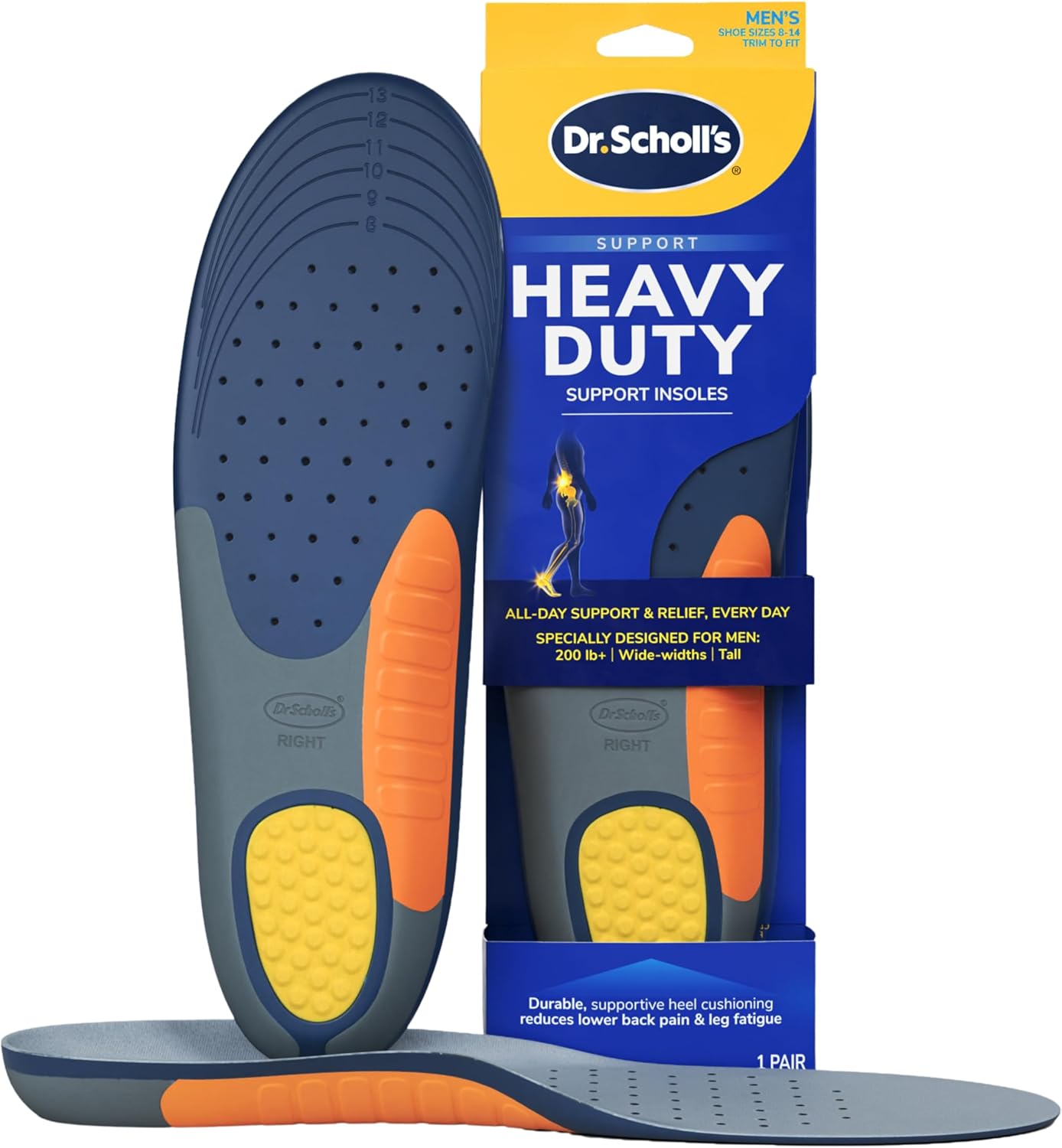
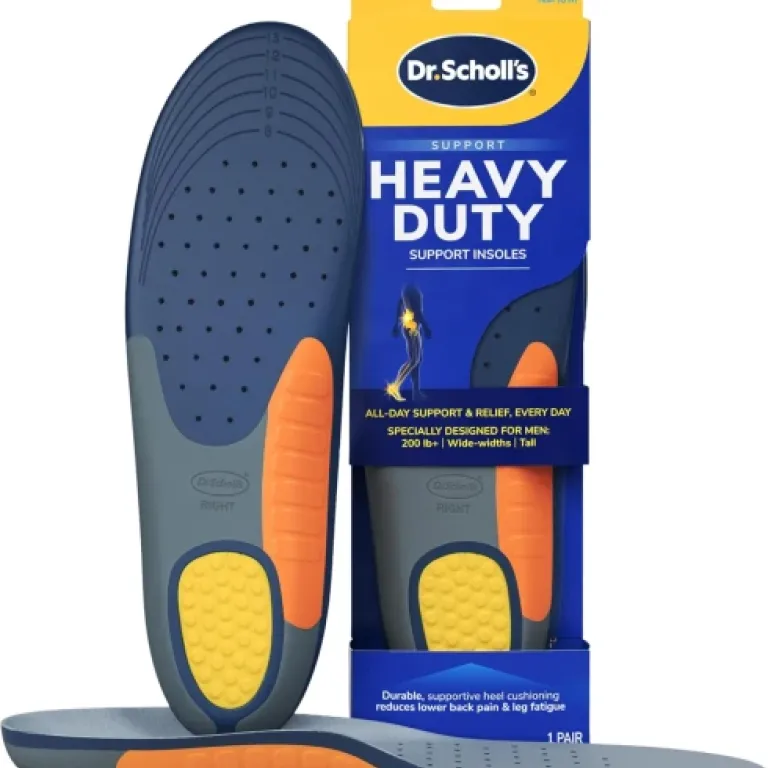
When you open the packaging, you’re not getting anything fancy. It’s one pair of insoles inside a basic plastic/cardboard pack, no storage bag, no extras. Honestly, that’s fine. You get two full-length inserts marked for sizes 8–14, and you’re expected to trim them down to your size. There’s a printed cutting guide on the bottom with sizes, which helps a bit, but I still recommend tracing your old insoles for better accuracy.
The overall look is very "Dr. Scholl’s": grey foam base with blue, orange and yellow accents. It’s not pretty, but it’s inside your shoe, so who cares. What matters is that you can clearly see the different zones: a thicker heel area, a slightly raised arch, and a front section that’s more flexible. You can press on the heel and feel that it’s firmer and more cushioned than the front, which is exactly what you want if you’re heavy and pounding your heels all day.
On the underside, there’s a more rigid plastic-like structure around the heel and arch. This is the part that gives structure so it doesn’t just feel like a flat piece of foam. It’s not as stiff as some medical orthotics, but it’s clearly more supportive than the floppy inserts that come in most shoes. There’s no fancy gel bubbles or gimmicks, just a simple layered design with extra material where you land hardest.
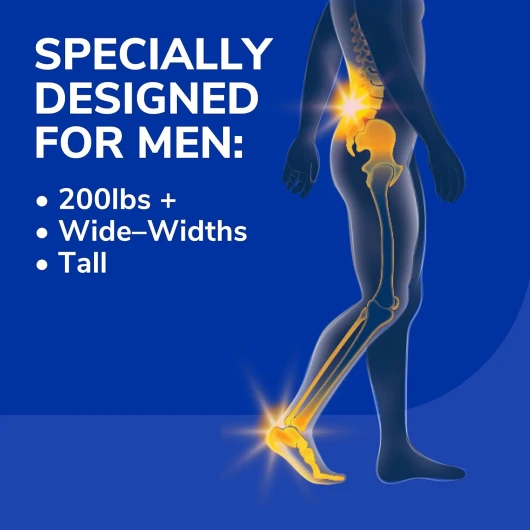
In practice, the presentation matches the price point: functional, not pretty. You don’t get a detailed user manual, just some basic text on the cardboard explaining that it’s meant for guys over 200 lbs or with wide feet, and that it’s good for lower back pain and leg fatigue. It’s all straightforward. You open, you trim, you drop them in, and you’re done. If you’re expecting a premium unboxing, this isn’t it. If you just want something you can shove into your boots in five minutes, it gets the job done.
Do they actually help with pain and fatigue?
In terms of effectiveness for pain and fatigue, I’d say these insoles do what they claim, but within reason. I’ve got a mix of heel soreness and lower back stiffness that usually kicks in after a long day on hard floors. After switching to these, I noticed a clear drop in that sharp heel pain and a moderate improvement in my back by the end of the day. I still feel tired, but it’s more of a normal fatigue instead of that “I need to sit down now” kind of pain.
For example, one day I forgot to move the insoles back into my older boots and ended up walking around with the original flat insoles. By mid-afternoon, I could feel my heels throbbing again and my back tightening up. The next day, same boots but with the Dr. Scholl’s back in, and the difference was obvious. That back-to-back comparison pretty much convinced me they’re doing something useful, especially in the heel area where the extra cushioning is.
However, they’re not a miracle cure. If you’ve got serious plantar fasciitis, major arch issues, or chronic back problems, these might help a bit but they won’t replace a podiatrist or custom orthotics. The arch support here is moderate, not medical-grade. For general “I’m a big guy on concrete all day and my feet and back are tired,” they’re effective. For more severe medical conditions, they’re more of a helper than a full solution.
Also, the effectiveness does slowly drop as the foam compresses over time. After a few weeks, the immediate “wow, that’s much softer” feeling fades slightly, but the structure and support are still there. I’d say they’re most effective in the first couple of months, then gradually become just “okay” until you replace them. So yes, they work, but you have to be realistic: they’re an affordable upgrade, not a permanent fix or a replacement for proper medical care if you really need it.
Pros
- Noticeably reduces heel impact and general foot fatigue compared to stock insoles
- Moderate arch and heel support that works well for most heavier users
- Easy to trim and install in work boots and everyday shoes without making them feel too tight
Cons
- Foam compresses over time, so they’ll likely need replacing every few months with heavy use
- Arch support may be too mild for serious foot conditions or very high/flat arches
Conclusion
Editor's rating
If you’re a bigger guy (around 200 lbs or more), or tall, or just spend a lot of time in work boots on concrete, these Dr. Scholl’s Heavy Duty Support insoles are a practical upgrade over the thin, useless inserts that come in most shoes. They give you better heel cushioning, moderate arch support, and they spread the pressure out so your feet and lower back don’t feel as wrecked at the end of the day. They’re not fancy, but they do make a difference you can actually feel within a day or two.
They’re best suited for people who want something simple: trim, drop into the shoe, and forget about it. If your main issues are general fatigue, sore heels, and mild lower back ache from standing and walking a lot, these insoles will probably help enough to justify the cost. Where they fall short is for more serious or specific foot problems—if you’ve got severe plantar fasciitis, very flat feet, or need medical-level correction, these might not be strong enough and you’ll end up needing something more specialized.
So, who should get them? Heavier guys, warehouse or construction workers, delivery drivers, and anyone walking all day in average-quality shoes who just wants less pain without spending a fortune. Who should skip them? People expecting a miracle cure, or those with complex foot issues who really should see a podiatrist. Overall, they’re a good, realistic option if you treat them as a consumable comfort upgrade, not as a permanent fix.