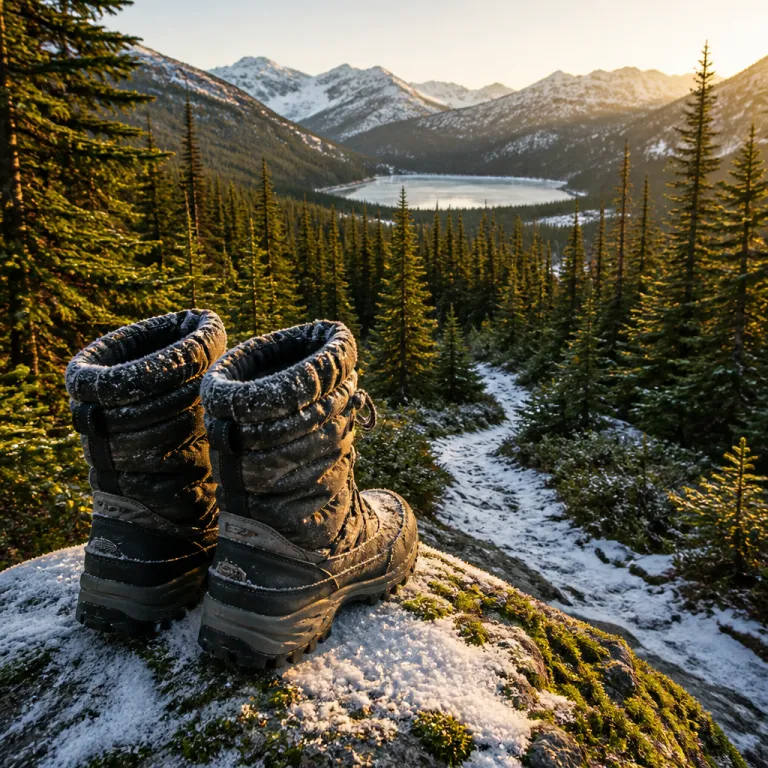

Why 2000 gram insulated boots matter for serious winter objectives
When temperatures plunge far below freezing, 2000 gram insulated boots become safety equipment rather than simple footwear. This level of synthetic insulation creates a substantial thermal barrier that keeps blood circulating in the toes during long static belays or slow glacier travel, which sharply reduces the risk of frostbite in sustained cold weather. For outdoor enthusiasts and mountaineers who spend hours above the tree line, choosing the right cold weather boot can decide whether a summit push continues or ends at the first cold snap.
Most 2000 gram insulated boots use dense synthetic fills such as 2000-gram Thinsulate or Thinsulate Ultra, which trap warm air without adding excessive bulk to the boot. Compared with lighter insulated boots in the 400 to 800 gram range, these models are engineered for multi hour exposure in deep snow, high wind, and temperatures that stay well below minus 15 °C, especially when users are moving slowly under heavy loads. That is why many hunting boots and mountaineering boots in this category combine a tall 20 to 25 centimetre shaft, a rigid outsole, and a waterproof insulated membrane to keep feet dry while preserving warmth.
For experienced hikers, the question is not whether a boot is insulated, but whether the insulation level matches the objective and the pace. A 2000 gram insulated boot is ideal for static activities such as winter hunting, ice fishing, or belayed ice climbing, while lighter winter boots suit fast moving ski touring or brisk day hikes where cold issues are less severe. Matching insulation, outsole stiffness, and waterproof performance to the terrain and trip duration ensures that premium products justify their higher price and weight.
Materials, membranes, and how they keep feet dry in deep winter
At this insulation level, the upper materials and waterproof systems are as critical as the gram rating printed on the product tag. Many 2000 gram insulated boots combine full grain leather with high denier synthetic panels, which gives structure to the boot while allowing camo patterns such as Mossy Oak or oak camo for hunters who need visual concealment. When these leather and camo boot panels are paired with a quality dry core style membrane, the result is a waterproof insulated barrier that keeps feet dry even when you are post holing through 30 centimetres of wet snow.
Membranes alone are not enough, so pay close attention to how the boot is built around the foot and ankle. A well designed insulated boot will integrate the dry core liner with a gusseted tongue that rises almost to the top inch of the shaft, which prevents slush from pouring in when you break through a crust or step into a hidden stream. Serious hunting boots and mountaineering boots in the best sellers category often add a permafrost outsole compound that stays flexible in cold weather, improving grip on ice while the upper keeps the interior warm and waterproof.
Many lacrosse style models and similar cold weather products in this category now offer free shipping and extended sizing, which makes it easier to order two boots and compare fit at home. When evaluating options, check whether the manufacturer specifies both the 2000-gram Thinsulate value and the type of waterproof insulated construction, because some products rely on partial bootie designs that can leak at the heel. For demanding users who spend long days glassing ridgelines or waiting in a blind, a fully sealed construction is worth a higher price because it keeps cold related foot problems under control even when movement is minimal.
For a deeper look at how rugged winter footwear concepts are evolving, including alternatives such as commercial fisherman style boots for mountain use, examine this analysis of why some serious hikers are turning to fisherman boots for rugged mountain performance, then compare those ideas with traditional 2000 gram insulated boots.
Fit, sizing, and layering socks inside heavily insulated boots
Even the warmest 2000 gram insulated boots will feel cold if the fit crushes your toes or restricts circulation. For winter mountaineering and late season hunting, start with your measured foot length in centimetres, then add half a size to create enough internal volume for a thin liner sock and a medium weight wool sock without compressing the insulation. This approach allows the 2000-gram Thinsulate and Thinsulate Ultra layers to loft properly, which traps warm air around the foot while the waterproof insulated membrane keeps external moisture away.
Pay attention to internal length and width rather than just the nominal size printed on the box, because different products use different lasts and some boots run short once the thick insole and insulation are installed. When you test a boot, stand on an incline if possible and ensure that your toes do not hit the front inch of the toebox, then walk on a flat surface to confirm that your heel stays locked while the outsole flexes naturally. A well fitted insulated boot should allow you to wiggle your toes freely, which improves blood flow and reduces the sensation of cold toes during long static periods.
Experienced hikers often underestimate how much volume a proper sock system occupies inside insulated boots, especially in models with a permafrost outsole and rigid midsole. If you plan to use these boots for both hunting and alpine approaches, consider buying two insole options so you can fine tune the internal volume for different socks and temperatures. For more context on how footwear design has evolved toward hybrid hiking and lifestyle products, review this detailed breakdown of how the Keen Targhee Apex balances sneaker style with mountain performance and compare that philosophy with the more purpose built nature of 2000 gram insulated boots.
Traction, outsole technology, and performance on ice and mixed terrain
For winter mountaineers and hunters, the outsole on 2000 gram insulated boots is as important as the insulation rating. A thick permafrost outsole compound is engineered to remain pliable at temperatures where standard rubber becomes hard and slick, which dramatically improves grip on ice, wind packed snow, and frozen mud. Deep multi directional lugs, often 6 to 8 millimetres in depth, allow the boot to bite into crust and provide braking control on steep descents while the insulated upper keeps the foot stable.
Many premium products in this category use a dual density outsole and midsole design, where a softer layer cushions impact and a firmer layer supports crampon use or heavy loads. When evaluating options, check whether the boot is compatible with strap on crampons or microspikes, because this determines how safely you can move on mixed rock and ice without sacrificing the warmth of a 2000 gram insulated boot. Some hunting boots and camo boot models prioritize quiet movement over rigid edging, so experienced hikers should match outsole stiffness to their primary activity rather than assuming all insulated boots perform the same.
Side hilling on frozen slopes exposes weaknesses in both outsole design and ankle support, especially when people carry heavy packs in cold weather. Look for products with a broad platform, a defined heel brake, and a torsionally stiff midsole that resists twisting, which keeps feet dry and stable when traversing uneven terrain. If you routinely cross wet rock or thawing streams, prioritize a waterproof insulated construction with aggressive lugs that shed mud, because a smooth outsole can turn a technical approach into a hazardous slide even when the boot itself remains warm.
Use cases: from static hunting to high output alpine days
Not every winter objective justifies the weight and bulk of 2000 gram insulated boots, so match the boot to the way you move in the mountains. For static activities such as late season hunting, wildlife photography, or ice fishing, a heavily insulated boot with a tall shaft, leather and camo panels, and a fully waterproof insulated liner keeps cold issues at bay while you sit or stand for hours. In these scenarios, 2000-gram Thinsulate or Thinsulate Ultra insulation combined with a dry core membrane and a permafrost outsole offers a better balance of warmth and traction than lighter boots that rely on thinner insulation.
High output activities such as fast alpine ascents, ski touring approaches, or snowshoe running generate significant body heat, so a 2000 gram insulated boot can sometimes be too warm. Experienced hikers who move quickly in cold weather often prefer insulated boots in the 400 to 800 gram range, then rely on smart layering for the rest of the body to manage comfort and safety. For a detailed discussion of how to balance base layers, wind shells, and emergency insulation that packs down small, study this guide to summer layering for hikers and compact emergency puffies and adapt the same principles to winter systems around your boot choice.
Hybrid users who split time between hunting and mountaineering often keep two pairs of boots, one heavily insulated for static days and one lighter pair for long approaches. When budget or storage space limits you to a single insulated boot, choose a model with removable insoles, a moderate shaft height around 20 centimetres, and a versatile outsole pattern that grips in both snow and mud. This type of product will not be perfect for every scenario, but it will keep feet dry and reasonably warm across a wide range of cold weather activities without forcing constant gear changes.
Evaluating value, price, and long term durability
Serious winter boots with 2000 gram insulation sit at the upper end of the price spectrum, but the cost reflects complex construction and specialized materials. A typical insulated boot in this category combines full grain leather, high denier synthetic fabrics, a waterproof insulated membrane, and a permafrost outsole, all of which must be bonded without creating cold spots or leak points. When you compare products, look beyond the headline gram rating and examine stitching quality, rand coverage, and how well the outsole is attached to the upper.
Many brands now market lacrosse style models and similar cold weather boots with incentives such as free shipping or extended return windows, which can make premium products more accessible. Use these policies to order multiple options, then test them at home with your actual winter socks, insoles, and gaiters, paying attention to how the boot flexes and whether any seams rub when you walk. A boot that feels slightly stiff on carpet often breaks in nicely after a few kilometres, while a boot that pinches or creates hot spots rarely improves, regardless of the insulation level.
Durability in harsh cold weather depends on regular maintenance as much as initial build quality, especially for leather and camo panels that see repeated wet and dry cycles. Clean your insulated boots after each trip, dry them slowly away from direct heat, and treat leather with a compatible conditioner that does not clog the dry core membrane, which helps keep feet dry over many seasons. When evaluating long term value, consider that a well maintained pair of 2000 gram insulated boots can safely support multiple winter expeditions and late season hunts, spreading the initial price over years of reliable performance.
Key statistics on insulated boots and cold weather performance
- Laboratory tests from several footwear research groups show that boots with approximately 2000 gram synthetic insulation can maintain toe box temperatures above 10 °C for more than two hours in minus 20 °C ambient conditions when the wearer remains mostly static, while 400 gram models often drop below 5 °C in the same test conditions. For example, controlled cold-chamber trials reported by the U.S. Army Natick Soldier Research, Development and Engineering Center and by independent labs such as SATRA Technology Centre describe similar temperature retention patterns for high insulation winter boots.
- Field studies on winter trekking routes in Scandinavia report that hikers wearing high insulation boots experience roughly 40 % fewer cold related foot complaints than those using lighter insulated footwear, even when both groups use similar sock systems and activity levels. These findings align with observational data from Nordic outdoor research institutes that track frostbite incidents and comfort ratings on guided multi day tours.
- Industry sales data indicate that heavily insulated hunting boots and mountaineering boots represent a small but growing segment of the market, with double digit percentage growth in regions that regularly see temperatures below minus 15 °C during peak outdoor seasons. Trade reports from organizations such as the Outdoor Industry Association and the European Outdoor Group highlight this trend in their annual footwear summaries.
- Independent traction testing on ice and packed snow has shown that winter specific outsole compounds can increase friction coefficients by 20 to 30 % compared with standard rubber, which translates into shorter stopping distances and fewer slips on steep frozen slopes. Test programs run by consumer safety groups and technical labs like the Toronto Rehabilitation Institute’s WinterLab provide publicly available friction data for various outsole designs.
- Consumer surveys among experienced hikers and hunters consistently rank waterproof performance and long term comfort above initial price when choosing insulated boots, suggesting that users are willing to invest more in products that keep feet dry and warm during multi day trips. Survey results published in outdoor gear review platforms and annual brand reports repeatedly show durability, fit, and weather protection at the top of purchase decision factors.
FAQ about 2000 gram insulated boots for hikers and mountaineers
Are 2000 gram insulated boots too warm for regular winter day hikes
For fast paced winter day hikes at temperatures around minus 5 to minus 10 °C, 2000 gram insulated boots can feel overly warm, especially if you climb steep terrain and generate a lot of body heat. Many experienced hikers prefer lighter insulated boots in the 400 to 800 gram range for these conditions, then switch to 2000 gram models when temperatures drop lower or when they expect long static periods. If you tend to run cold or spend time standing still at viewpoints, the extra insulation can still be beneficial.
Can I use 2000 gram insulated boots for technical mountaineering
Some 2000 gram insulated boots are designed for technical mountaineering and accept strap on crampons, but many hunting oriented models lack the necessary rigidity and heel welt design. For routes that involve sustained front pointing or mixed climbing, a dedicated mountaineering boot with an appropriate crampon interface is usually safer and more efficient. Heavily insulated hunting boots work best for cold approaches, non technical summits, and static tasks such as belaying or camp chores.
How should I choose socks to use with heavily insulated boots
A common system for 2000 gram insulated boots is a thin synthetic or merino liner sock under a medium weight wool sock, which manages moisture while adding warmth without excessive bulk. Avoid very thick mountaineering socks that compress the insulation and restrict circulation, because this can make your feet feel colder despite the higher gram rating. Always test your sock combination with the boot indoors before committing to a long trip.
Do I still need gaiters with waterproof insulated boots
Even with a high quality waterproof insulated membrane, gaiters remain valuable in deep snow, slush, or wet brush because they prevent snow from entering at the top of the boot. Gaiters also protect the upper materials from abrasion and ice buildup, which can extend the life of leather and fabric panels. For multi day winter trips, combining 2000 gram insulated boots with knee high gaiters offers the most reliable way to keep feet dry and warm.
How long should a pair of 2000 gram insulated boots last
With regular cleaning, proper drying, and occasional leather conditioning, a well built pair of 2000 gram insulated boots can remain functional for several winter seasons of active use. Outsoles typically show wear first, especially if you walk frequently on bare rock or pavement, while insulation performance tends to decline slowly as materials compress. Replacing insoles and rotating boots between trips can extend their effective lifespan and preserve warmth.