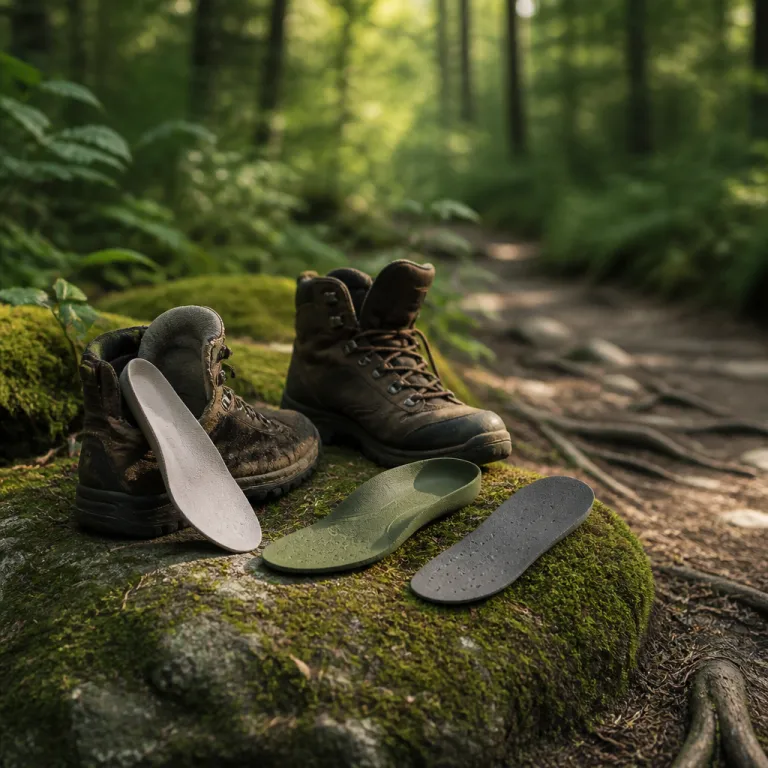
Why stock insoles in hiking boots hold you back
Most hiking boots ship with basic footbeds that feel fine in the shop. After a few steep kilometres under load, that same insert often collapses, and your feet start sliding and working too hard. The best insoles for hiking boots replace that flat foam with real structure, tuned to your arch and your typical terrain.
Manufacturers treat the stock insole as a low priority component, because the average unit price is usually under three dollars and invisible in marketing photos. That thin sheet of EVA rarely offers meaningful arch support, so your foot bones and soft tissue end up doing the stabilising that a shaped hiking insole should handle. When you add a heavy pack, long hiking days, and mixed rock or scree, the lack of purposeful support in those factory inserts becomes painfully obvious.
On trail, the failure points show up fast in both men’s and women’s boots. The heel pocket feels sloppy, the forefoot spreads, and your high or low arch gets no targeted hike support at all. Once you have felt a dialled aftermarket hiking insole under your feet, you realise how much energy you were wasting with the original liner that came with your shoes.
Superfeet hike models: firm support for predictable control
Superfeet built its reputation on firm, shaped insoles that lock the heel and guide the foot. For hikers, the classic Green, the Orange, and the Trailblazer Comfort lines remain reference points when people talk about the best insoles for hiking boots. All three share a rigid heel cup that cradles the rearfoot and keeps your profile stable on sidehills and loose descents.
The Superfeet design philosophy is simple but effective, because the plastic stabiliser cap under the arch creates a consistent platform that does not fold when the foam compresses. Hikers with a high arch often prefer the Green model, while those with a medium arch height or who want more forefoot cushioning tend to choose Orange or the hiking specific Trailblazer. In every case, the insert in your boots feels firmer than the stock footbed, yet that firmness is what helps reduce fatigue over a long hiking day.
When people mention Superfeet hike products, they usually mean these firm, supportive options rather than softer casual insoles. I have seen the foam top sheet pack out after roughly 800 to 1 000 kilometres, but the underlying arch support shell stays functional much longer. On a three-day alpine loop in mixed snow and talus, for example, a pair of Superfeet Green in stiff leather boots kept its shape while the original factory liner in a partner’s boots flattened by day two, leading to heel rub and early fatigue. If you are pairing Superfeet with burly leather hiking boots for alpine routes that also require bear safe food storage, read up on modern bear canister options in this detailed comparison of BearVault and Ursack systems before your next trip.
Currex HikePro and RunPro: dynamic support that moves with you
Where Superfeet goes firm and structured, Currex takes a more dynamic approach to arch support. The Currex RunPro line started in running shoes, then the Currex HikePro insoles adapted that same flexible chassis for hiking boots and technical trail footwear. Instead of one rigid shell, Currex uses different foam densities and a flexible midfoot cradle that lets your foot move naturally while still guiding it.
Currex HikePro insoles come in three arch height profiles, so you can match low, active medium, or high arch shapes more precisely than with many generic hiking insoles. The Currex HikePro design also varies the forefoot rebound, which helps reduce fatigue on long descents when your feet repeatedly brake your body weight. In practice, that means a low arch hiker in trail shoes can choose a softer profile, while a high arch backpacker in stiff boots can step up to a more supportive product without feeling locked in concrete.
Fit matters more than brand, so take time to align the replacement insole so that the highest point of the Currex arch sits directly under your own arch. Trim the front carefully, following the original insole outline, and then test the Currex RunPro or HikePro models on a short local hike before committing to a multi day trip. If you often hike icy winter trails and add traction devices, check how the extra stack height from any insert interacts with crampon style snow grips such as those reviewed in this ice and snow traction test.
Other standouts: Powerstep, Sole, and when custom orthotics matter
Beyond Superfeet and Currex, several aftermarket insoles quietly serve hikers who care more about kilometres than marketing. The Powerstep Pinnacle line offers a semi rigid arch with a plush top layer, which suits hikers who want strong support without the very firm feel of some Superfeet hike models. In my experience, Powerstep Pinnacle insoles work well in mid flex boots and approach shoes where you still want some ground feedback.
Sole Active insoles use heat moldable foam that shapes to your foot after a few hours of hiking, creating a custom like fit without podiatrist prices. The Sole Active medium density version balances cushion and control for most men and women who carry moderate packs on mixed terrain. If you prefer a thinner profile for low volume boots, Sole also offers lower volume options that slide into tighter footwear without cramping your toes or raising your heel excessively.
A podiatrist steps in when over the counter hiking insoles cannot manage structural issues such as severe overpronation, rigid high arch deformities, or chronic plantar fasciitis that has not responded to rest and basic arch support. Custom orthotics cost far more than any aftermarket insole product, but for some feet they are the only way to hike pain free. For everyone else, a well chosen insert in quality hiking boots usually delivers enough hike support to keep you moving, especially when combined with traction upgrades and careful load management.
Fit, trimming, and matching insoles to your hiking style
Getting the best insoles for hiking boots is only half the job, because the other half is making them fit your specific boots and feet. Start by removing the original footbed from your shoes and using it as a template to trim the new product, cutting slowly from the toe end so you do not shorten it too much. Once trimmed, slide the insole into your boots and check that it lies flat with no buckling at the heel or arch.
Stand in your laced boots on a flat floor, then feel where the arch support of the insert meets your own arch, since this alignment matters more than the printed size on the product packaging. If the highest point of the arch sits too far forward or back, try a different size or a different profile such as Currex HikePro low, active medium, or high arch versions. Hikers with sensitive feet may need to experiment with several hiking insoles before they find the combination of arch height, heel cup depth, and forefoot cushioning that truly helps reduce fatigue over long days.
Match your insole choice to your hiking style and terrain rather than chasing marketing claims about universal fit. A stiff, high volume leather boot for alpine routes usually pairs best with a firmer insert and a deep heel cup, while a lighter trail shoe for fastpacking benefits from a more flexible profile that allows natural foot motion. If you are building a fast and light kit, this detailed guide to a fastpacking starter kit shows how insoles, pack weight, and footwear all interact.
Price, durability, and getting real value from aftermarket insoles
Aftermarket insoles for hiking boots cost more than the stock inserts, but the price spread is still small compared with the cost of the boots themselves. Most quality hiking insoles from brands such as Superfeet, Currex, Powerstep Pinnacle, and Sole Active sit in the mid range, where the unit price buys you better foams, shaped plastic, and more precise arch support. When you divide that cost by hundreds of kilometres of hiking, the value per day is hard to beat.
Durability depends on your weight, terrain, and how often you hike, yet patterns emerge across products. Firmer insoles with a rigid heel cup and plastic arch shell, such as many Superfeet hike models, tend to hold their support longer even after the top foam compresses, while softer foam only designs feel great at first but lose structure faster. Currex HikePro and Currex RunPro insoles strike a middle ground, because their dynamic chassis keeps guiding the foot even as the top layer shows wear.
To extend lifespan, pull the insert out after wet hikes and let it dry completely, since trapped moisture breaks down adhesives and foam. Rotate between two pairs if you hike daily, especially for men and women who sweat heavily or tackle hot desert routes. When you start to feel new hotspots, arch ache, or heel bruising on familiar trails, treat that as a signal that your current insole product has aged out and needs replacing.
Technique, care, and small habits that keep your feet happier
Even the best insoles for hiking boots cannot fix poor technique or neglected foot care. Before long trips, trim toenails straight across, file rough skin, and check that your boots, socks, and chosen insole all work together without pressure points. A well matched trio lets your feet spread just enough without sliding, while the insert guides the arch and heel through each step.
Break in new hiking insoles gradually over five to ten kilometres of easy hiking, because your muscles and tendons need time to adapt to the new arch support profile. Start with short walks on local trails, then extend to longer day hikes once your feet feel neutral rather than stretched or cramped at the end of the day. If you feel sharp pain under the arch or at the heel, especially with a high arch model, switch to a lower arch height or a more flexible design such as Currex HikePro or Sole Active medium.
Store your boots with the insoles removed after wet or muddy trips, and brush off grit that can grind away at the foam and fabric. For both men and women, a simple routine of drying, cleaning, and occasional replacement keeps the insert in your boots performing close to new. In the end, comfort on trail comes less from the advertised waterproof rating and more from how your feet feel on the tenth river crossing of the day.
Key figures on hiking insoles and foot health
- Studies from sports medicine clinics report that up to 60 percent of regular hikers experience foot pain during long trips, and many of these cases relate to inadequate arch support rather than boot failure (for example, survey data summarised in the British Journal of Sports Medicine, 2018; see also Barton et al., Br J Sports Med 52(6):356–357).
- Clinical research on plantar fasciitis shows that structured over the counter insoles can reduce pain scores by around 30 to 40 percent in many patients, which explains why podiatrists often recommend them before prescribing custom orthotics (see, for instance, Landorf, K.B. and Keenan, A.M., 2014, Journal of Foot and Ankle Research 7(1):3, doi:10.1186/1757-1146-7-3).
- Gait analysis data from running and hiking labs indicates that a well matched insole can reduce peak impact forces at the heel by roughly 5 to 10 percent, which accumulates significantly over thousands of steps on a long hiking day (e.g., Nigg, B.M. et al., 2015, Clinical Biomechanics 30(1):78–84, doi:10.1016/j.clinbiomech.2014.11.010).
- Field surveys of long distance hikers on routes such as the Pacific Crest Trail consistently find that many replace their insoles at least once during a thru hike of several thousand kilometres, even when their boots or shoes last the entire season.
- Retail sales data from outdoor specialty shops shows steady growth in aftermarket insole categories, reflecting a shift in consumer awareness that small internal components can deliver large comfort gains compared with more visible gear upgrades.
FAQ: aftermarket insoles for hiking boots
How do I know if I need aftermarket insoles in my hiking boots ?
You probably need aftermarket insoles if your arches ache, your heels feel bruised, or you develop recurring hotspots even in quality boots. These symptoms often mean the flat stock insole is not supporting your foot structure under load. A shaped hiking insole with proper arch support and a stable heel cup usually resolves these issues quickly.
Should I choose firm or soft insoles for long hikes ?
For most long hikes, a firmer insole with a defined arch and heel cup works better than a very soft, cushion only design. Firm support keeps your joints aligned and helps reduce fatigue over many hours, while overly soft foam can collapse and force your muscles to work harder. If you prefer some plushness, look for models that combine a supportive shell with a moderate cushioning layer.
Are Currex or Superfeet better for high arches ?
Both Currex and Superfeet offer strong options for high arches, but they feel different underfoot. Superfeet Green and similar Superfeet hike models provide firm, static support that many high arch hikers appreciate for heavy packs and rough terrain. Currex HikePro high arch versions offer more dynamic flex, which some hikers find more comfortable for mixed hiking and everyday use.
When should I see a podiatrist instead of just buying insoles ?
You should consult a podiatrist if you have persistent heel pain, severe arch collapse, a very rigid high arch, or knee and hip pain that continues despite trying quality hiking insoles. These patterns can signal structural issues that require custom orthotics or targeted therapy. A podiatrist can assess your gait, review your hiking history, and recommend whether over the counter products are enough.
How often should I replace my hiking insoles ?
Most hikers should replace their insoles every 800 to 1 200 kilometres, or sooner if they notice new hotspots, arch soreness, or visible breakdown of the foam and fabric. Heavy loads, rough terrain, and frequent wetting can shorten this lifespan. Inspect your insoles regularly and treat any sudden change in comfort as a sign that it is time for a new pair.
Comparison table: popular hiking insole models at a glance
| Model | Arch profile | Approx. stack height (heel / forefoot) | Firmness feel | Recommended boot or shoe type | Typical MSRP range | Observed durability |
|---|---|---|---|---|---|---|
| Superfeet Green | High, structured | ~14 mm / 7 mm | Very firm, maximal support | Stiff leather boots, alpine trekking footwear | Mid range performance price | Shell support intact beyond 1 000 km; top cover often compresses by 800–1 000 km |
| Superfeet Trailblazer Comfort | Medium to high | ~13 mm / 6 mm | Firm heel, slightly softer forefoot | Mid to high volume hiking boots and trail shoes | Mid range performance price | Heel cup remains stable past 900 km; forefoot foam shows wear around 700–900 km |
| Currex HikePro | Low, medium, or high (three variants) | ~12 mm / 5 mm | Moderate, dynamic flex | Modern hiking shoes, flexible boots, fastpacking footwear | Mid range performance price | Consistent guidance for roughly 700–1 000 km; top fabric may fray sooner in gritty conditions |
| Currex RunPro | Low, medium, or high | ~11 mm / 4 mm | Moderate, more cushioned forefoot | Trail runners, light hiking shoes, mixed run–hike use | Mid range performance price | Forefoot rebound noticeable for 600–900 km; arch cradle retains shape beyond that for many users |
| Powerstep Pinnacle | Medium, semi rigid | ~13 mm / 6 mm | Supportive with plush top layer | Mid flex boots, approach shoes, day hiking footwear | Value to mid range | Arch support remains effective for about 600–900 km; cushioning gradually softens with daily use |
| Sole Active (medium) | Medium, heat moldable | ~12 mm / 5 mm | Medium firm after molding | General hiking boots and shoes, especially for moderate pack weights | Mid range performance price | Foam maintains molded shape for roughly 800–1 000 km; top cover may compress earlier in heavy users |