
Summary
Editor's rating
Value: strong comfort-to-price ratio, with a trade-off on lifespan
Design: more casual hiker than hardcore mountain boot
Comfort: the main reason to buy these
Materials: suede, mesh and a waterproof membrane that actually works
Durability: uppers hold up well, soles are the weak point
Performance: good for daily walks, not a hardcore alpine boot
What you actually get with the Relment Pelmo
Pros
- Very comfortable out of the box thanks to Relaxed Fit and memory foam insole
- Genuinely waterproof for everyday wet conditions when maintained
- Roomy toe box and wide fit options suit broader feet and thicker socks
Cons
- Soles wear faster under heavy daily use, especially heels and main tread
- Less support and rigidity than more technical hiking boots, not ideal for serious mountain terrain

Specifications
View full product page →| Brand | Skechers |
Waterproof boots that feel like slippers? Almost.
I’ve been using the Skechers Herren Relment Pelmo (model 64869, khaki, size 9 UK) as my main walking and dog-walking boots for a while now. I wanted something waterproof, not too heavy, and wide enough for my slightly chunky feet. I’m not climbing Everest, but I do a mix of city pavements, muddy fields, and a bit of low-level hiking on weekends. So I’m basically the typical “walks a lot but isn’t a hardcore mountaineer” user.
Out of the box, my first reaction was: these look more like chunky trainers than classic hiking boots. They don’t have that stiff, mountaineering vibe. The Relaxed Fit and the Air-Cooled Memory Foam are exactly what they sound like: roomy and squishy. If you’re used to rigid leather boots, these feel almost too soft at first. But after a couple of long walks, that softness becomes the main reason you keep reaching for them.
In daily use, the main thing that stood out for me is that they are genuinely comfortable for long walks. Several days in a row at 5–7 miles and I didn’t get hotspots or sore heels, which I usually get with stiffer boots. The grip is decent on wet pavements, forest paths, and muddy tracks. On proper ice, like most rubber soles, they’re not miracles; you’ll still slide if you’re not careful.
They’re not perfect. The sole isn’t the hardest wearing I’ve seen, and if you hammer them daily on rough ground, you’ll probably chew through the tread faster than with a full-on hiking brand like Lowa or Meindl. But for the price bracket and how comfortable they are straight away, they’re pretty solid value if you mainly do dog walks, weekend hikes, and day-to-day winter use.
Value: strong comfort-to-price ratio, with a trade-off on lifespan
On value, I’d say these boots are good bang for the buck if you care more about comfort than long-term indestructibility. Prices move around, but they often sit in a mid-range bracket where you’re not paying premium hiking boot money. For that, you get genuine waterproofing, a comfy memory foam insole, and a roomy fit that’s rare in many hiking boots. For people with wider feet or who just hate tight boots, that alone is worth quite a bit.
Where the value becomes a question is the sole wear. If you’re only using them occasionally – weekend walks, some winter wear, light hikes – they’ll probably last you quite a while and feel like a solid deal. If you’re like the reviewers doing 5–6 miles every single day with dogs on mixed terrain, you have to accept they’re going to be more of a consumable item. You might find yourself replacing them every 18–24 months, maybe sooner if you’re rough on footwear.
Compared to more technical brands, you’re trading off some durability and mountain performance for instant comfort and lower cost. A pair of high-end boots might last longer and handle tougher terrain, but they cost more upfront and often need more break-in. With these, you pretty much put them on and go. For a lot of people, that’s worth more than squeezing out an extra year of life.
So, in simple terms: if you want super rugged, long-term expedition boots, your money is better spent elsewhere. If you want comfortable, waterproof boots for daily walking and light hiking that don’t destroy your feet or your wallet, these make sense. Just be honest with yourself about how hard you’ll use them and how often you’re okay replacing them.
Design: more casual hiker than hardcore mountain boot
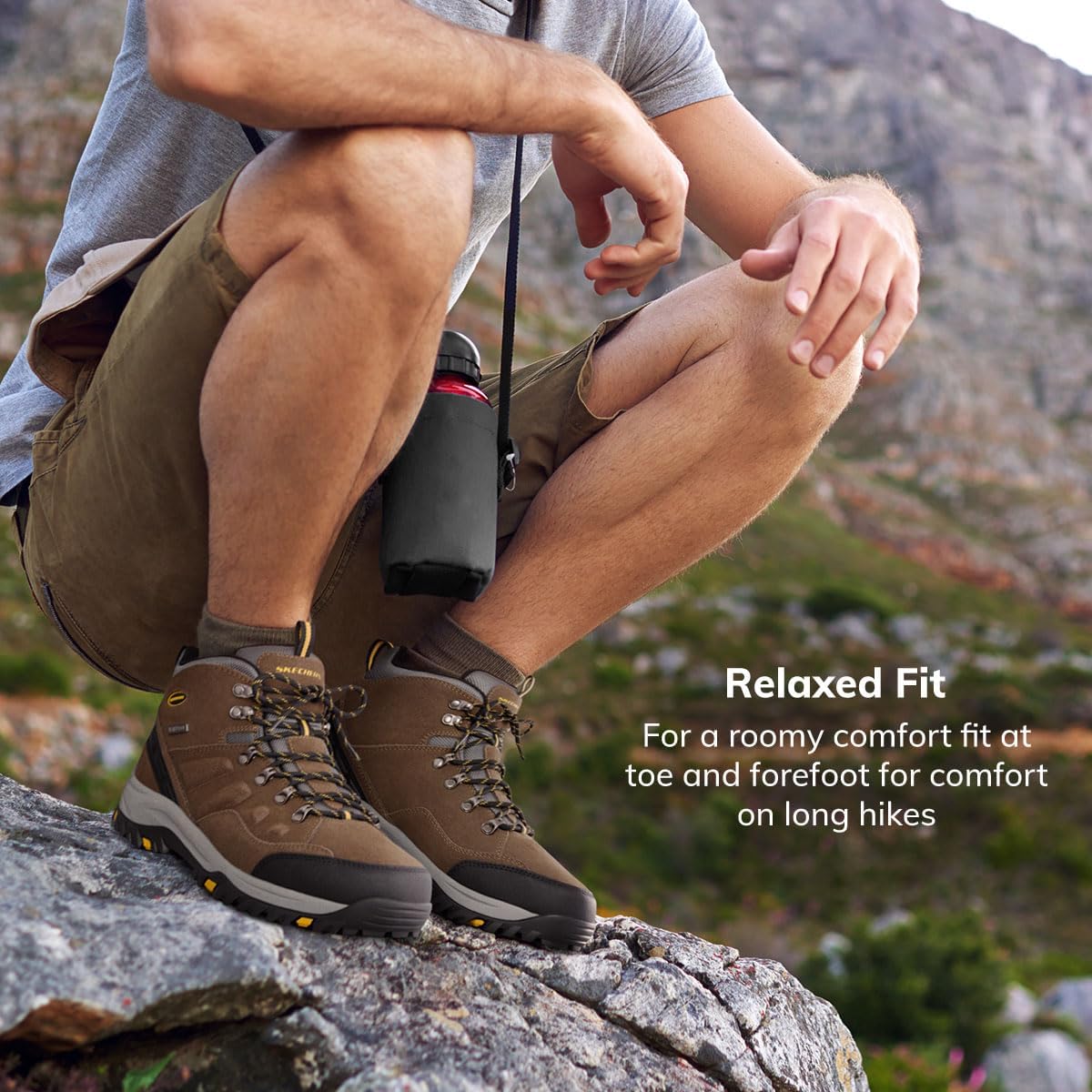
Design-wise, the Relment Pelmo leans towards a casual hiking look. The khaki suede with synthetic overlays looks pretty neutral. You can wear them with jeans without looking like you’re about to cross the Alps. The branding is visible but not screaming in your face, just typical Skechers logos on the side and tongue. The boot shape is round and quite chunky around the toe, which matches the Relaxed Fit idea – it doesn’t taper aggressively like some narrow hiking boots.
The lacing system is simple: standard eyelets plus a couple of hooks at the top. That’s good because you can tighten the ankle separately from the mid-foot. I had no issues getting a secure hold, and the laces stayed tied; I didn’t have to constantly re-tie them mid-walk. The tongue is padded and gusseted, which helps keep water and dirt out. Combined with the waterproof membrane, it actually does a decent job in puddles and wet grass up to just below the laces.
From a practical design point of view, the ankle height is a bit of a compromise. It’s high enough to stop most splashes and give some support, but it’s not tall enough if you’re going through deep snow or really boggy areas. For normal dog walks, rainy commutes, and light hikes, it’s fine. If you spend your weekends in knee-deep bogs, you’ll probably want something taller. The toe bumper is present but not super beefy; it will protect you from small knocks and roots, but I wouldn’t kick rocks all day.
Style-wise, I’d call it “basic but practical”. Nothing flashy, nothing that screams high fashion. That’s fine by me: I want boots I don’t mind getting filthy. If you want something more sleek or sharp-looking, these might feel a bit blocky. But if you’re okay with a straightforward outdoor look that blends into everyday wear, the design does the job without trying too hard.
Comfort: the main reason to buy these
Comfort is where these boots actually shine. The Relaxed Fit and Air-Cooled Memory Foam combo makes them feel more like a chunky trainer than a traditional hiking boot. First walk out of the box, I did about 6 km on mixed pavement and park paths. No rubbing on the heel, no pressure on the toes, and no need for a break-in period. That’s rare for boots, at least for my feet. I usually expect at least one hotspot on the first long walk.
The toe box is noticeably wider than many other hiking boots I’ve tried. If you have wide feet or just hate feeling your toes squashed together, this is a big plus. One of the Amazon reviewers mentioned walking 5 miles daily with dog walks, and I’m not surprised – the shape is forgiving. I can wear thicker hiking socks in winter without feeling cramped. Sizing felt true for me: my usual size worked fine with normal socks. If you plan to wear very thick thermal socks, maybe consider half a size up, but I was fine sticking to my usual.
The memory foam underfoot gives that soft, cushioned feel. After a couple of hours on hard pavement, my feet felt less battered than in stiffer boots. The flip side is that support is more “soft comfort” than “firm, technical support”. If you have very fussy arches or need serious orthotics, you might want to replace the insole or look at more structured boots. For general walking and day hikes, though, I found the balance pretty good: enough cushioning without feeling like a marshmallow.
In terms of warmth, they’re warm enough for autumn and winter with decent socks. My feet stayed comfortable in cold, damp weather. In summer, especially on hotter days, they can feel a bit warm – they’re not as breathable as a mesh hiking shoe. So I’d call them a three-season boot leaning towards cooler weather. Overall, if comfort is your top priority and you’re not doing technical mountain routes, these are hard to beat in this price range.
Materials: suede, mesh and a waterproof membrane that actually works
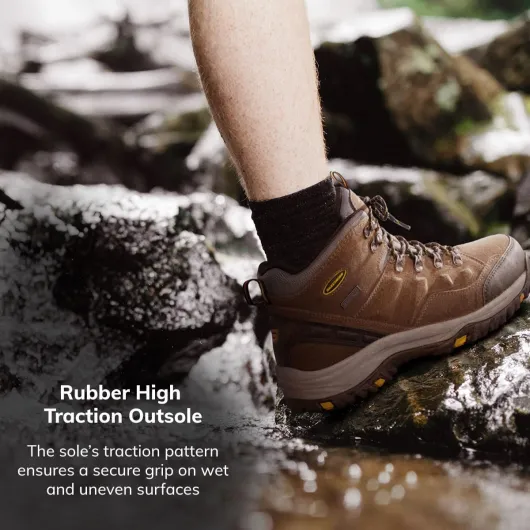
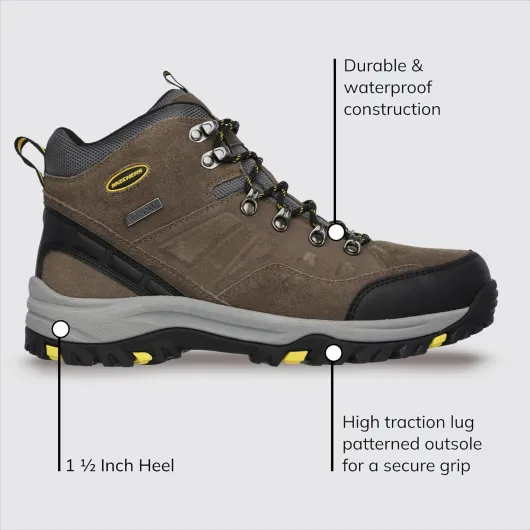
The upper is mostly suede leather with synthetic panels, backed by a waterproof membrane. Inside, you’ve got a mesh lining and the famous Air-Cooled Memory Foam insole. The sole is rubber, with a fairly deep tread pattern. On the foot, it feels like a mix of soft and sturdy: the suede gives a bit of structure, but the boot can still flex quite easily, especially in the forefoot. If you’re coming from very stiff full-grain leather boots, this will feel noticeably softer and more forgiving.
In wet conditions, the materials do what they’re supposed to. I’ve walked through wet grass, shallow puddles, and steady rain, and my feet stayed dry. That matches what a lot of Amazon reviewers say: waterproofing is good as long as you look after the suede. I’ve been giving them a spray with waterproofing product every few weeks, and that definitely helps. If you never maintain them and just trash them daily, don’t be surprised if the leather starts to soak up water over time, even if the membrane technically still works.
The memory foam insole is a double-edged sword. On the plus side, it’s very comfortable, especially if you’re on your feet a lot. It molds around the foot and takes the pressure off the heel. On the downside, like most memory foam, it can compress over months of daily use. After a while, you might feel it flatten out a bit and lose some of that initial plush feeling. If you’re picky about support, you might eventually swap it for a firmer aftermarket insole.
Overall, the materials are decent for the price. You’re not getting ultra-premium leather or Vibram soles, but you’re also not paying high-end hiking boot prices. The suede can scuff and mark, but that’s cosmetic more than anything. If you give them a quick brush and waterproof spray occasionally, they hold up visually and functionally pretty well for everyday and light hiking use.
Durability: uppers hold up well, soles are the weak point
Durability is where you need to manage expectations a bit. Based on my use and what a lot of Amazon reviewers say, the uppers and waterproofing age better than the soles. The suede and stitching on mine have held up fine with regular dog walks and weekend hikes. A bit of scuffing and dirt, sure, but nothing that affects function. A quick brush and waterproof spray every now and then keeps them looking decent and keeps water beading off.
The soles, though, are more of a consumable. One reviewer mentioned the sole wearing out after about six months of very heavy use (5–6 miles a day on varied terrain). Another talked about getting roughly 18–24 months and around 1500 miles before the heels started to go and one boot began to leak. That actually sounds about right for this type of boot and price point. If you’re walking dogs daily on rough paths, you’re basically grinding down rubber every single day.
In my case, after consistent use, the tread did start to round off in the heel and forefoot, especially where I strike hardest. They don’t fall apart suddenly; it’s more that grip gradually gets worse and cushioning feels a bit more tired. The waterproofing has stayed decent, but I’ve been pretty good with reproofing spray and not letting mud dry on them for days.
If you expect them to last forever under heavy daily use, you’ll be disappointed. But if you go in thinking “these will probably give me 1–2 solid years of regular walking”, that’s realistic. Compared to more expensive hiking brands, they might not last as long, but they also cost less, so it kind of balances out. They’re more like a very comfortable workhorse you replace every couple of years rather than a lifetime boot you resole endlessly.
Performance: good for daily walks, not a hardcore alpine boot
In day-to-day use, performance is solid for casual hiking and dog walks. Grip on wet pavements, forest tracks, and muddy fields is decent. The rubber sole pattern bites into soft ground reasonably well, and I didn’t feel like I was constantly on the edge of slipping. On steeper, loose gravel or very muddy inclines, they cope, but you can tell they’re not super aggressive mountain soles. On ice, they’re like most non-spiked boots: okay if you’re careful, but you’ll still slide if you hit a proper sheet of ice.
Support-wise, the ankle gives enough stability for uneven paths and light hills. I’ve used them on some rocky, undulating trails and didn’t feel my ankles were at risk, but they don’t lock you in like a stiff mountaineering boot. They flex when you walk, which is comfortable for long flat distances but means they’re not ideal for very technical terrain where you want a lot of rigidity. Think low to mid-level hiking, not scrambling up rocky ridges.
Waterproofing has been reliable in real use. Wet grass, normal puddles, and light to moderate rain have never soaked through for me, as long as the water level stayed below the laces. A lot of Amazon reviewers report the same: they stay waterproof for a long time if you look after them. One reviewer mentioned over 1500 miles of dog walking with good waterproof performance until the very end, which matches the idea that the membrane itself is fine but the outer materials and seams eventually wear.
So, performance summary: great for daily mileage and general outdoor use, less suited to hardcore mountain routes or very long multi-day treks with heavy loads. If your typical day is 5–10 km with the dog, some weekend hikes, and general winter wear, they get the job done comfortably. If you’re planning a serious multi-day mountain trip, I’d look at something more technical and supportive.
What you actually get with the Relment Pelmo
The Relment Pelmo is a lace-up, ankle-high, waterproof hiking boot. It’s part of Skechers’ Relaxed Fit line, which basically means a wider toe box and more room overall. The model I had is the khaki colour, which is more of a muted brown/olive tone than a bright green. It’s the kind of colour that hides dirt reasonably well, which is handy if you’re constantly in mud like me. Officially it’s suede and synthetic on the outside, with a mesh lining and rubber sole.
On paper, the key selling points are simple: waterproof, memory foam insole, and roomy fit. The pair weighs around 900 g according to the spec, and in hand they feel solid but not like heavy-duty mountain boots. You can walk 5–10 km without feeling like you’re dragging bricks. The boot height is ankle-high, so you get some support but not the locked-in, rigid feel you get from taller or more technical boots.
In practice, these sit halfway between a walking trainer and a classic leather hiking boot. They’re softer and more forgiving than something like a traditional leather Scarpa, but sturdier and more supportive than normal trainers. That middle-ground feel is exactly what I noticed: they are easy to live with, even if you’re just going to the shops in winter, yet they can still handle wet trails and a decent hike.
Overall, the presentation is straightforward: no fancy gimmicks, no weird lacing systems, just a standard lace-up waterproof boot with a comfort focus. If you’re expecting tons of tech features and ultra-aggressive soles, you’ll probably find them a bit basic. If you just want something you can put on and walk in for hours without breaking them in, the concept makes sense.
Pros
- Very comfortable out of the box thanks to Relaxed Fit and memory foam insole
- Genuinely waterproof for everyday wet conditions when maintained
- Roomy toe box and wide fit options suit broader feet and thicker socks
Cons
- Soles wear faster under heavy daily use, especially heels and main tread
- Less support and rigidity than more technical hiking boots, not ideal for serious mountain terrain
Conclusion
Editor's rating
The Skechers Relment Pelmo is basically a comfort-first waterproof walking boot. It feels like a wide, cushioned trainer with a hiking boot upper. The Relaxed Fit and memory foam insole make it easy to wear for long walks right out of the box – no painful break-in, no cramped toes. Waterproofing is genuinely decent for rain, wet grass, and normal puddles, especially if you take five minutes every now and then to reproof the suede.
Where it falls short is mainly long-term sole durability and hardcore performance. If you hammer them every day on rough terrain, expect the tread to wear down in under two years, maybe closer to a year if you’re doing serious daily mileage. They’re not built for technical mountain routes or heavy multi-day backpacking with a big load. They’re more for dog walks, weekend hikes, and general winter wear than for alpine adventures.
So, who should buy these? They’re ideal if you want a comfortable, roomy, waterproof boot for everyday walking, have slightly wider feet, and don’t want to mess around with stiff leather boots. Who should skip them? People who need maximum durability, very firm support, or plan to do serious mountain trekking. For the average person who just wants dry, comfy feet on daily walks, they’re a pretty solid choice at the price.