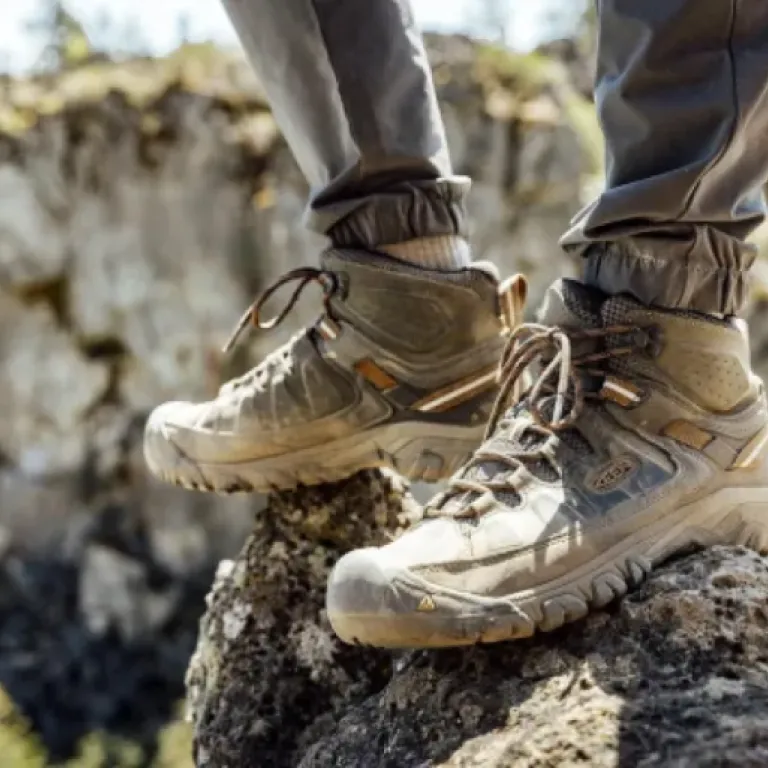

Summary
Editor's rating
Value: worth it if you need the wide fit, less so if you don’t
Design: wide toe, mid cut, a bit chunky but practical
Comfort: where these boots really shine
Materials: decent leather and rubber, but the rand is the weak spot
Durability: fine for regular use, but not built like a tank
Performance: good grip and waterproofing at first, but watch the lifespan
What you actually get with the Targhee III Mid
Pros
- Genuinely wide fit with a roomy toe box – great for wide or flat feet
- Very comfortable straight out of the box, little to no break-in needed
- Good grip and waterproofing for everyday trails and wet conditions
Cons
- Mixed durability – rand and sole/upper join can crack or separate over time
- Waterproofing may fade after a year or so of heavy use
- Not ideal for very technical terrain or heavy backpacking loads

Specifications
View full product page →| Brand | KEEN |
Wide boots that actually fit – but not perfect
I’ve been wearing the KEEN Targhee III Mid Waterproof (men’s, 10.5 UK wide, Black Olive / Golden Brown) as my main boot for dog walks, weekend hikes and general bad-weather days. I bought them mainly because I’ve got wide, slightly flat feet and most brands like Salomon or Scarpa feel tight in the toe box for me. These Keens are one of the rare models that don’t crush my forefoot straight away.
Right out of the box, they felt more like trainers than stiff hiking boots. No real break-in, no hot spots on the first few 8–10 km walks. I swapped the insoles for my own orthotics, and there was enough volume in the boot to handle that without feeling cramped. If you’ve ever tried to shove orthotics into a narrow boot, you know how annoying that can be.
Over a few months, I’ve used them on muddy fields, wet grass, forest tracks and some rocky holiday paths. So I’ve seen a bit of everything: proper rain, wet grass in the morning, and dry, dusty trails. They’re not just “kept in the cupboard for one weekend in the Lakes” boots. I walk around 4–6 miles a day when I’m consistent, so I do put miles on them.
Overall, I’d say they’re very comfortable and genuinely wide, with decent grip and good waterproofing at the start. The flip side: I’m not fully convinced by the long-term durability of the rand and the uppers, especially after reading other reviews and seeing early signs of wear on mine. So, good boots if comfort and width are your priority, but not the toughest option on the planet.
Value: worth it if you need the wide fit, less so if you don’t
Price-wise, the Targhee III Mid sits in the mid-range hiking boot category. Not bargain-bin cheap, not top-end mountaineering money. I’ve seen them around full price and also much cheaper in warehouse / outlet deals. In my case, paying a bit less made the whole package feel more reasonable. If you catch them for around the £60–£80 mark, the value is pretty good. At full RRP, I’d think a bit harder, mainly because of the durability question marks.
The big thing with value here is the wide, comfortable fit. If you’ve got wide or flat feet and struggle with brands like Salomon or some Scarpas, these boots suddenly make more sense. Being able to walk 10+ km from day one without pain is worth a lot if you usually suffer in narrower boots. In that case, even if you only get 1–2 heavy-use seasons out of them, they still feel like a reasonable buy.
If your feet are normal or narrow, though, the value proposition is weaker. You’ve got plenty of alternatives (Merrell Moab, Scarpa, etc.) that might last as long or longer, with similar or better grip, and you’re not forced into KEEN’s wide shape. Also, the overall Amazon rating of 3.5/5 tells you the experience is mixed – some people are very happy, others are annoyed with early failures.
So in short: good value if you specifically need a wide, comfy, mid-weight boot and can find them on discount. If you’re just after any decent hiking boot and don’t need the extra width, there’s more competition, and you might find something that feels more solid for the same money.
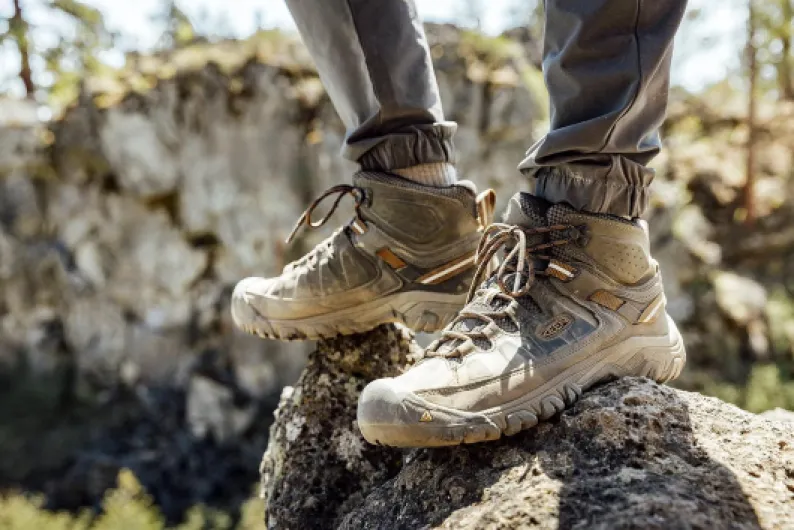
Design: wide toe, mid cut, a bit chunky but practical
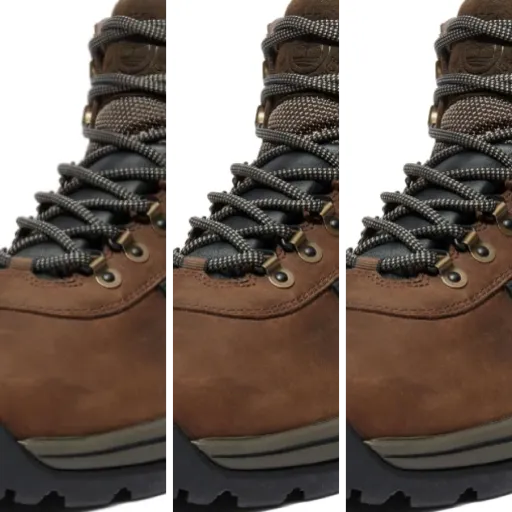
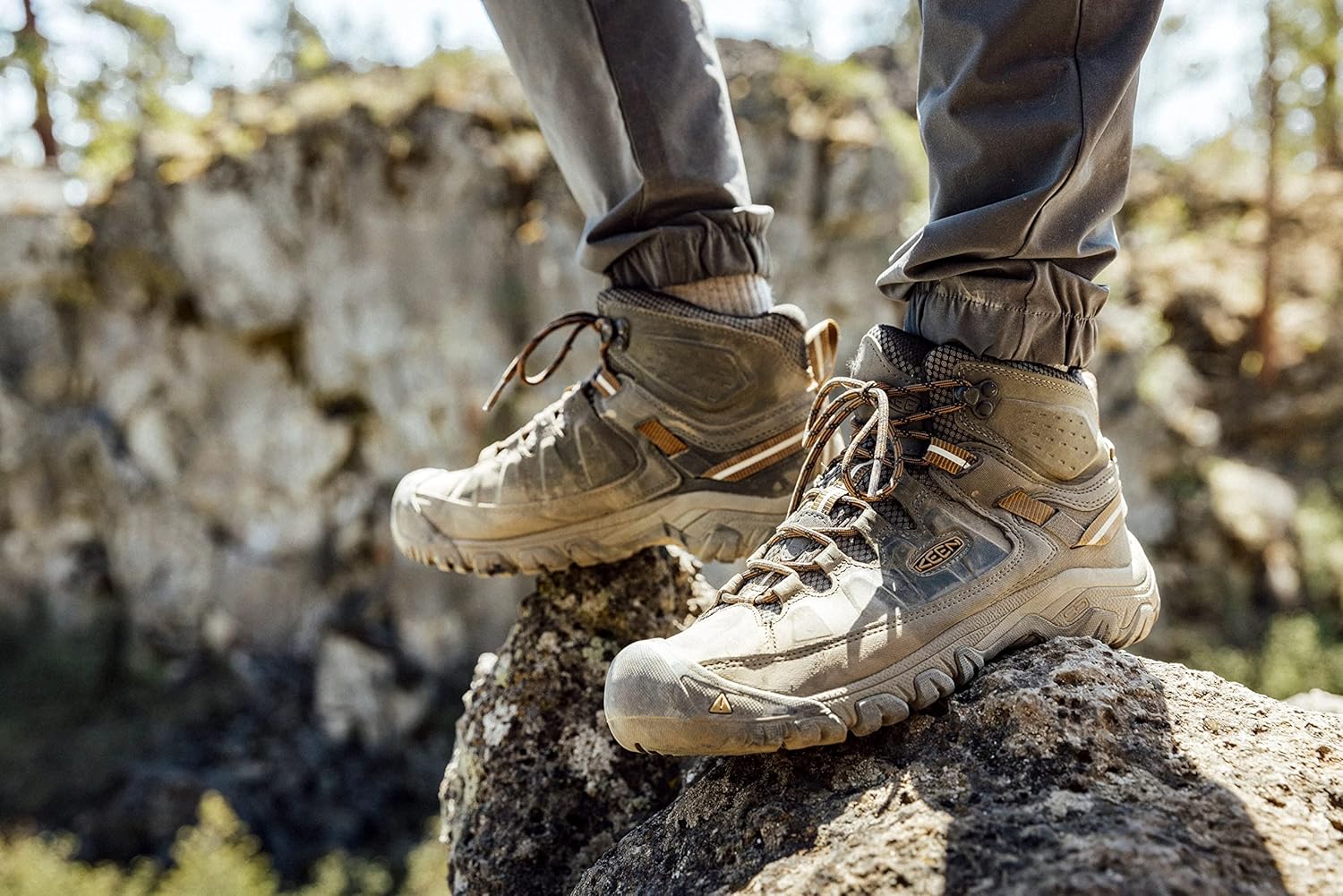
Design-wise, the Targhee III Mid is pretty straightforward: mid-height ankle support, wide forefoot, and a chunky protective toe. Nothing fancy, and honestly that’s fine. The bump toe is the first thing you notice – it looks a bit bulbous, but that’s what gives you space. If you’re used to narrow boots, the look might feel odd at first, but your toes will thank you after a few hours on the trail.
The ankle height is truly mid – it covers the ankle bone and gives a bit of support without locking your foot like a rigid mountaineering boot. I can drive in them without feeling like I have ski boots on, which is handy when you go from trail to car to supermarket. The lacing goes far enough down towards the toe to let you adjust the fit. I tend to pull them snug over the midfoot and leave them slightly looser over the toes, and the boot shape works well with that.
Visually, the Black Olive / Golden Brown version is low key. The darker olive hides dirt well; the lighter brown details make it look like a proper hiking boot, but not too loud. I’ve worn them with jeans in town and they don’t stand out too much, just look like casual outdoors boots. If you care about looking sleek and “urban”, these are a bit on the chunky side, but for actual walking they’re fine.
Functionally, the design has some pros and cons. On the plus side:
- Toe protection is solid thanks to the bump toe and rand.
- Ankle support is enough for light loads and uneven ground.
- Lacing system holds tension and doesn’t slip easily.
Comfort: where these boots really shine
This is the main reason to buy the Targhee III Mid: comfort, especially if you have wide or flat feet. Out of the box, I had zero break-in issues. No heel blisters, no rubbing on the ankle, and no crushed toes. I’ve done back-to-back 10 km walks in them from day one, and my feet felt tired from the distance, not from the boots themselves. That’s not always the case with new leather boots.
The wide fit and generous toe box make a huge difference. Compared to Salomon, which I find too narrow in the front, these feel like I can actually spread my toes slightly instead of them being pinched. If you’ve got bunions or just hate narrow shoes, this is a big plus. The midsole cushioning is on the softer side for a hiking boot. It feels more like a sturdy trainer than a stiff mountain boot. For long days on mixed terrain, that’s pretty nice. You don’t get that “brick under your foot” sensation.
Ventilation is decent but not perfect. On warm days, my feet do get a bit sweaty, which is normal for a waterproof boot, but it’s not unbearable. I’ve worn them in summer for dog walks and they were warm, but manageable. In colder, wet weather, they’re great – feet stay dry and reasonably warm with normal hiking socks. The padding around the ankle is comfortable and doesn’t dig in, even when fully laced.
If you’re looking for a super precise, locked-in boot for scrambling or technical stuff, these might feel a bit too relaxed and roomy. But for daily walks, light hikes, and all-day wear, they’re very easy to live with. I can wear them from morning to evening without feeling desperate to take them off when I get home, which for me is the real test of comfort.
Materials: decent leather and rubber, but the rand is the weak spot
The upper is mainly leather with some synthetic panels, plus a fabric lining. The leather itself feels decent – not super thick like old-school mountain boots, but not flimsy either. It’s enough to give structure while keeping the weight reasonable. The lining is soft and hasn’t rubbed anywhere on my foot, even when wearing thinner hiking socks in milder weather.
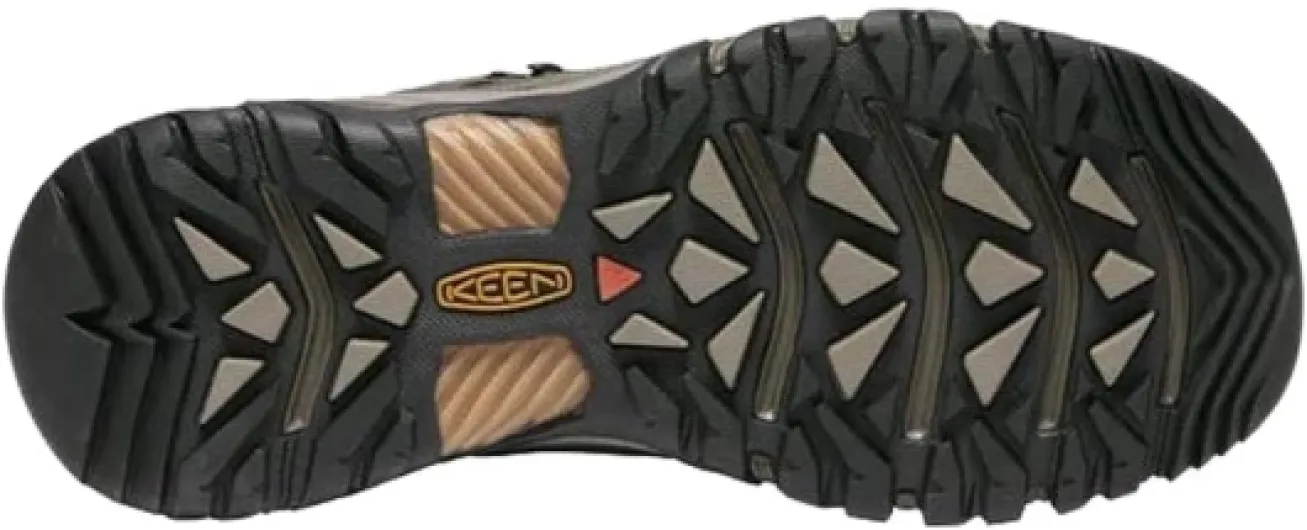
The outsole is rubber with multi-directional lugs. It’s not Vibram-branded on this specific model (despite one reviewer mentioning Vibram on another Keen boot), but the grip has been fine for what I do. On wet grass and mud, it’s okay – not as aggressive as some deep-lug boots, but I haven’t felt unsafe. On rocky paths and stony tracks, it feels better; you get enough bite without feeling every little stone through the sole. There’s an EVA insole, which I swapped out quickly for my orthotics, but the stock one is decent if you don’t need special support.
The rand and glue area between upper and sole is where I’m more cautious. A few Amazon reviews mention the rand cracking and the sole starting to come away after a year or so, especially when the boots aren’t even used as the main pair. On my pair, after a few hundred kilometres, I can already see small creases forming in that area. Nothing catastrophic yet, but I can see how, in another year of heavy use, that might turn into a split if you’re unlucky or hard on your gear.
Overall, the materials feel like a compromise: comfortable and light enough for daily use, but not built like a tank. If you walk 1000+ km a year in them, you should expect the usual: worn lugs, creasing in the leather, and probably some wear at the rand. For the price I paid (around mid-range, not premium), I’d say the materials are okay, but not bulletproof.
Durability: fine for regular use, but not built like a tank
This is the area where I’m a bit split. On one hand, my own pair has held up reasonably well so far with regular use. The soles show normal wear, the leather has creases but no major damage, and they’re still waterproof. On the other hand, the Amazon reviews are clearly mixed. You’ve got people saying they get 1000–1500 km per pair and keep buying them, and others saying the rand cracked and the sole started to separate after just over a year with lighter use.
From what I’ve seen and read, the main weak points are:
- The rand (rubber wrap around the lower boot) – can crack over time, especially where it flexes.
- The join between sole and upper – some users report the sole starting to peel away.
- Waterproofing over time – once the rand or seams go, the waterproofing goes with it.
In terms of lifespan, I’d personally treat these as boots that will last 1–2 hard-use seasons, not a 5-year investment. If you walk every day, 1000 km+ per year, you’ll probably wear through the soles and stress the uppers in that timeframe anyway. If you’re more of a weekend hiker, you might get several years out of them, but I wouldn’t expect them to stay fully waterproof forever.
So, durability is basically: good enough if you accept they’re a consumable item, not a forever boot. If you want something that will survive serious abuse, there are tougher (and usually heavier and more expensive) options out there. For the price range and comfort level, the durability is acceptable but not impressive.
Performance: good grip and waterproofing at first, but watch the lifespan
On the trail, the Targhee III Mid performs pretty solidly for what it is: a light to mid-weight hiking boot. Grip on mixed terrain has been good. On wet grass and mud, it’s okay – I’ve had a couple of mild slips on very slick, muddy slopes, but nothing dramatic. On rocky paths, gravel tracks, and forest trails, they feel stable and confident. The sole flex is moderate: enough stiffness to protect your foot from sharp stones, but still flexible enough to walk naturally.
Waterproofing at the beginning has been reliable. I’ve walked through wet grass, shallow puddles, and steady rain, and my feet stayed dry. That lines up with some of the positive reviews where people mention staying dry for over 1000 km. On the other hand, there are also reviews saying the boots lost waterproofing after about a year, often when the rand started to crack or split. So performance seems quite dependent on how hard you use them and maybe on batch quality.
For daily use – like dog walks of 4–6 miles, plus weekend hikes – they hold up well for a while. One reviewer mentioned replacing them roughly every 9 months at around 1100 miles of use, which sounds about right for a softer, more comfort-focused boot. Another user has pushed multiple pairs past the 1200–1500 km mark and was still happy with grip and waterproofing, so it’s clearly possible to get good mileage out of them if you’re lucky and take care of them.
Where they’re less strong is in more demanding mountain terrain or if you carry heavy loads. The support is fine for day hikes and light packs, but it’s not a super stiff, technical boot. I’d rate the overall performance as good for everyday hiking and trails, with some doubts about long-term waterproofness and the rand if you’re looking at multi-year, heavy-duty use.
What you actually get with the Targhee III Mid
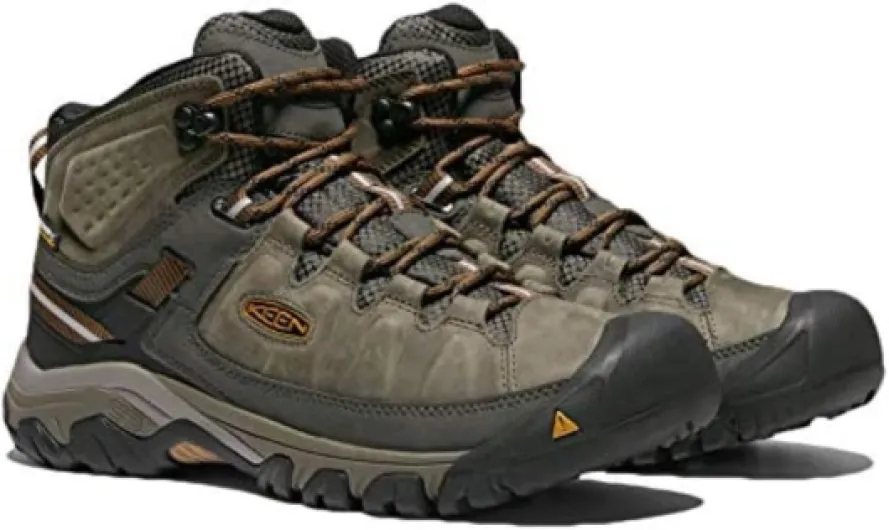
On paper, the KEEN Targhee III Mid Waterproof is a mid-height hiking boot with a wide fit, leather upper, rubber sole and ankle-high shaft. Mine are the Black Olive / Golden Brown colour, which basically looks like dark olive with some brown accents. Nothing flashy, just standard outdoorsy colours that hide mud pretty well. They weigh about 500 g per shoe, which puts them in the lighter side for a leather hiking boot – definitely lighter than full-on backpacking boots, heavier than trail runners.
The boot uses KEEN’s usual bump toe design – the toe area sticks out a bit and gives you more room in the front. For me, that’s the big selling point: the toe box is properly generous. The lacing system has two speed hooks at the top, and once you’ve dialled in the tension, they hold well. I haven’t had issues with laces constantly coming undone, which is nice when you’re stopping every five minutes for the dog already.
They’re marketed as waterproof, with a leather upper and a fabric lining, plus KEEN’s Eco Anti-Odour tech. In practice, that just means they don’t stink instantly if you sweat in them, which I’d say is partly true – mine smell like used boots, but not like a dead animal. The sole is rubber with multi-directional lugs. It’s not super aggressive like some mountain boots, but it’s good enough for mixed UK trails, forest paths, and wet grass.
If you’re expecting a super technical boot for alpine stuff, this isn’t it. It’s more of a day-hike / dog-walk / light trekking boot that you can also wear to the pub without looking like you’re about to climb Everest. The main thing to understand: these boots are built around comfort and width, not extreme ruggedness. That’s clear from the first time you pick them up and walk a bit in them.
Pros
- Genuinely wide fit with a roomy toe box – great for wide or flat feet
- Very comfortable straight out of the box, little to no break-in needed
- Good grip and waterproofing for everyday trails and wet conditions
Cons
- Mixed durability – rand and sole/upper join can crack or separate over time
- Waterproofing may fade after a year or so of heavy use
- Not ideal for very technical terrain or heavy backpacking loads
Conclusion
Editor's rating
For me, the KEEN Targhee III Mid Waterproof is basically this: very comfortable, properly wide, good for everyday hiking – but not the toughest boot around. If you’ve got wide or flat feet, the roomy toe box and easy out-of-the-box comfort are hard to beat. I can walk decent distances, drive, and wear them all day without feeling wrecked, and that’s a big plus. Grip and waterproofing have been solid so far for normal UK-style trails: wet grass, mud, forest tracks and rocky paths.
The downside is durability. Between my own early wear signs and the mixed Amazon reviews, I’d say don’t expect them to be your one boot for the next five years. The rand and the sole/upper join seem to be the weak links, and waterproofing can fade once those start to go. If you walk a lot, you’re realistically looking at replacing them after roughly a year or so of heavy use, maybe longer if you’re lighter on your gear.
Who are they for? People with wide feet who want a comfortable, mid-weight boot for dog walks, day hikes, and general bad-weather use. Who should skip them? Folks who want a super durable, long-term mountain boot, or people with narrow feet who don’t need the extra width. In that case, other brands might give you better long-term value. But if you’re tired of cramped toes and sore feet, these are a pretty solid, practical option – just go in knowing they’re more about comfort than longevity.