
Summary
Editor's rating
Good value if you need a wide, comfy hiker – less so if you want long-term tanks
Chunky, practical design with a few small annoyances
Very comfortable for wide feet, a bit heavy if you’re used to light shoes
Leather, mesh and solid rubber – decent quality, not bombproof
Built fairly tough, but the sole glue is the weak point
Trail performance, grip and waterproofing in real use
What you actually get with the Targhee III WP
Pros
- Very comfortable out of the box, especially for wide feet thanks to the generous toe box
- Good grip and stable support on gravel, dirt and mixed trails with a firm, protective sole
- Waterproofing handles rain, puddles and normal wet grass well, with breathable lining
Cons
- Heavier and bulkier than many modern lightweight hiking shoes
- Reports of sole glue starting to fail after around a year of medium to heavy use
- Top webbing eyelet feels less durable than a metal hook and doesn’t inspire full confidence

Specifications
View full product page →| Brand | KEEN |
A chunky hiking shoe that actually suits wide feet
I’ve been wearing the KEEN Targhee III WP (size 11 UK, Black Olive / Golden Brown) for a mix of dog walks, muddy weekend hikes and some wet city errands. I bought them mainly because I have fairly wide feet and I’m tired of squeezing into narrow hiking shoes that feel great in the shop and wreck my toes after 10 km. KEEN keeps talking about their “original fit” and wide toe box, so I wanted to see if that’s just marketing or if it actually changes anything in real use.
Over roughly a month, I’ve put maybe 80–100 km on them: a couple of 15–20 km days on gravel and forest tracks, quite a bit of wet grass, and some short walks on rocky paths. Nothing extreme like alpine stuff, but enough to see where they shine and where they get on my nerves. I also wore them all day a few times, from morning commute to evening walk, to check if hot spots or pressure points show up later.
Overall, my first takeaway: they’re built for comfort and stability, not for people who want a super light, nimble shoe. If you’re used to something like Salomon X Ultra or trail runners, these will feel a bit brick-like at first. On the other hand, if you usually get sore feet from feeling every stone under you, the firmer, more supportive sole here will probably feel like a relief. That matches what a few Amazon reviewers said about the sole being stiffer than Merrell or Salomon.
They’re not perfect. There are some build-quality question marks around the sole glue if you look at longer-term reviews, and the waterproofing is good but not miracle-level. But if you have wide feet, want decent ankle support in a low/mid cut, and mostly walk on gravel, forest paths, and wet grass, they’re pretty solid. The rest of this review goes through the design, materials, comfort, performance, durability and value, with the good and the bad laid out clearly.
Good value if you need a wide, comfy hiker – less so if you want long-term tanks
On value, I’d say the KEEN Targhee III WP sits in the “pretty solid for what it is” category. You’re paying for a comfortable, wide-fit, waterproof hiking shoe with decent materials and good all-round performance, not for a lifetime boot. The Amazon rating around 4.3/5 with thousands of reviews matches my experience: most people are happy, a minority run into durability issues or expect more for the money.
Compared to cheaper hiking shoes, you definitely feel the difference in support and comfort. The wider toe box, the bruise plate, the shank, and the more serious outsole all add up. If you walk a lot on gravel and mixed trails, that extra support is worth some extra cash. Also, finding wide hiking shoes that don’t crush your toes is surprisingly hard, so if you’re in that boat, the value goes up because your options are limited. Several users mentioned ditching other brands after trying these because of the fit alone.
On the flip side, if you compare them to higher-end boots like Meindl, Lowa, etc., you can see where KEEN cut corners: glued soles that may separate earlier, more mesh, less leather, and overall construction that feels mid-range rather than premium. For occasional hikers, that’s probably fine. For heavy users who want shoes that last many years of abuse, you might end up replacing these sooner and spending more in the long run. That’s basically what one reviewer said when they moved from these to Meindl Burma for winter and tougher use.
So, in plain terms: if you hike regularly but not obsessively, and you really value comfort and width, the Targhee III WP is good value for money. If you’re on a tight budget and only walk occasionally, you could go cheaper. If you want a long-term, rebuildable boot, you should save up and step up a level. For the middle group – weekend hikers, dog walkers, people who want one do-it-all outdoor shoe – these hit a decent balance between price, comfort and performance.
Chunky, practical design with a few small annoyances
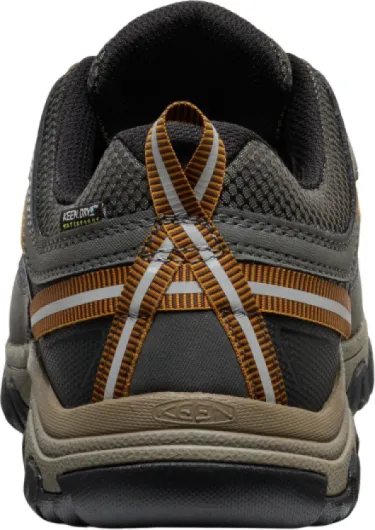
Design-wise, the Targhee III WP is very obviously a KEEN shoe: wide forefoot, big rubber toe bumper, and a fairly aggressive outsole. The toe box is noticeably wider than most hiking shoes I’ve tried, including Merrell Moab and Salomon X Ultra. If you hate having your toes squeezed together, this is a big plus. It does make the shoe look a bit boat-like on the foot, so if you’re self-conscious about big-looking shoes, keep that in mind. Personally, I’d rather have happy toes than a slim silhouette.
The upper is a mix of leather and mesh. The leather panels give structure and some protection, while the mesh areas help with breathability. The colour blocking is pretty standard outdoor gear style: muted earthy tones, nothing flashy. After a few muddy walks and a quick brush down, they don’t look trashed, which I appreciate. The high rubber toe guard is one of my favourite parts of the design. I’ve kicked more rocks and roots than I’ll admit, and my toes have been fine, and the material shows almost no damage so far. For things like disc golf or any sport where you drag the toe, that extra rubber is genuinely useful.
The lacing setup is mostly good but not perfect. The lower eyelets are metal and feel secure. The top “eyelet” is just a loop of webbing instead of a proper metal hook. Functionally, it holds the lace, but it doesn’t slide as smoothly and it’s the one part I can see wearing out faster if you are rough with your shoes. One Amazon reviewer flagged this exact thing, and I agree: I’d prefer a metal hook there for long-term peace of mind. The tongue is padded enough to stop lace pressure, and the gusseting helps keep out debris and water splashes.
Underfoot, the outsole has 4 mm multi-directional lugs. On the ground, that translates to good grip on gravel, forest soil, and wet grass, and acceptable grip on rock. On ice, nothing short of spikes is truly good, but these are less slippery than many “casual outdoor” shoes I’ve worn. The heel has a defined edge that helps on downhills. Overall the design is very function-first: comfort, protection, traction. It’s not ugly, but it’s clearly built for trails, not for style points in town.
Very comfortable for wide feet, a bit heavy if you’re used to light shoes
Comfort is where these shoes make the most sense. I have wide forefeet and normal arches, and the KEEN “original fit” with the generous toe box actually does what it says. Out of the box, I did a 12 km mixed walk (pavement, gravel, some mud) with no blisters, no hot spots, and no crushed toes. That’s rare for me with new hiking shoes. Usually I need at least a couple of short break-in walks before going that far. The midfoot and heel feel secure, while the front lets your toes spread out instead of mashing them together.
The cushioning is moderate but effective. You’ve got an EVA + PU insole and a reasonably thick midsole that doesn’t feel like it collapses after a few hours. After a 20+ km day, my feet felt tired, but more in a “I walked a long way” sense, not in a “every rock stabbed through my sole” way. Compared to my lighter Salomon shoes, these feel firmer and more protective underfoot, which I actually prefer on long gravel or stone tracks. If you like soft, bouncy cushioning, you might find them a bit too firm, though.
One thing to note: they’re not light. Around 500 g per shoe is noticeable if you’re used to trail runners. After a few outings, I got used to the weight, but they’re not the kind of shoe that vanishes on your feet. That said, the ankle support is better than a typical low-cut shoe thanks to the slightly higher collar and external shank. On uneven ground, I felt more stable than in my lighter shoes. For people with dodgy ankles, that’s a real plus. Also, the heel cradle does a good job of holding the heel in place; I had zero heel lift, even on steep uphills.
Breathability is decent for a waterproof shoe. My feet didn’t overheat on a warm summer walk, and in cool, wet conditions they stayed comfortable. You’re not getting the airy feel of non-waterproof mesh shoes, but for something with a membrane, it’s okay. Overall, if you prioritise comfort, room for your toes, and stable support over lightness and a sleek look, these are very good. If you have narrow feet or you want a very agile, low-profile shoe, they’ll probably feel a bit clunky.
Leather, mesh and solid rubber – decent quality, not bombproof
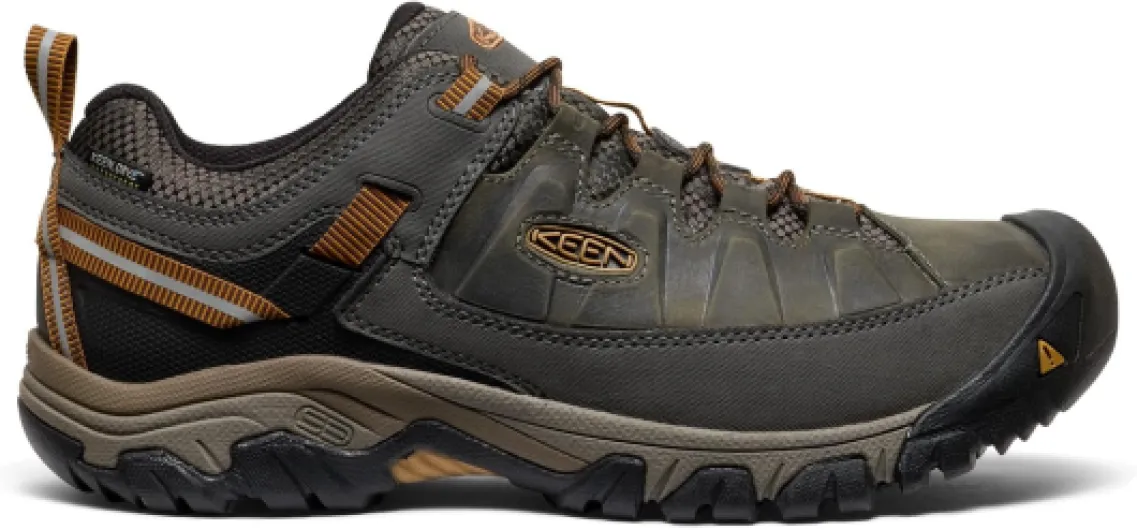
The upper is made from premium leather combined with breathable performance mesh, according to KEEN. In practice, the leather feels decent: not super stiff, not super soft. After a couple of longer walks, it started to flex naturally without creating pressure points. I gave the leather a light brush and a bit of wax after the first muddy hike, and it cleaned up easily. That’s one thing I like about leather vs full synthetic: it’s easier to make it look okay again with a quick wipe and a bit of care.
The mesh parts do help with breathability. This isn’t a shoe that feels like a sauna after an hour. On cool spring days and a warm-ish summer day, my feet felt normal: not icy, not overly sweaty. The lining is “cold lined” and quick-dry, which matches my experience: after getting them damp from wet grass and then taking the insoles out at home, they dried overnight without any weird smell. The insole itself is textile on top with EVA and PU cushioning. It’s removable, so if you use custom insoles or orthotics, you can swap it out easily.
The sole is full rubber with KEEN’s “All-Terrain” compound. It feels firm, not gummy, which is good for durability on gravel and tarmac but means it doesn’t have that super sticky feel on smooth wet rock. The cushioning is on the moderate side: there’s some give, but it’s not marshmallow soft. I like this for longer hikes because it doesn’t pack down quickly and you don’t feel your feet sinking in weird ways after a few hours. There’s also an external support shank and a bruise plate, which basically means there’s a stiff layer protecting you from sharp stones and adding some torsional stability.
On the eco side, KEEN mentions Leather Working Group-certified tanneries and an environmentally friendlier DWR on the leather. I can’t verify the supply chain obviously, but it’s at least better than nothing. Overall, the materials feel solid and well chosen for mid-range hiking use, but not on the same level as high-end full-leather boots like Meindl Burma. You can tell these are built to hit a price point where you get decent quality without going into the premium, last-forever category.
Built fairly tough, but the sole glue is the weak point
Durability is where things get a bit mixed, and you really have to look at both short-term and long-term reports. In my few months of use, the shoes still look in good shape: the leather has a few creases but nothing worrying, the mesh isn’t fraying, and the rubber toe bumper looks almost new despite a few hard kicks into rocks and roots. The outsole has very little visible wear, even after quite a bit of walking on tarmac and gravel. So in the short run, they feel solid and confidence-inspiring.
However, if you dig into the longer Amazon reviews, a pattern shows up: some people start seeing the sole separating from the upper after about a year of medium-intensity use. One reviewer who used them heavily for disc golf mentioned the glue giving up after around 100+ rounds, with the sole peeling away and needing repair with shoe glue. They still liked the comfort and the toe protection, but clearly weren’t impressed by how early the glue failed. That lines up with what I’ve seen on other KEEN models too: good comfort and design, but the cemented sole construction is the weak link over time.
The webbing top eyelet is another potential weak spot. It hasn’t failed on me, but I can see it being more vulnerable than a metal hook if you pull hard on the laces every time. If you’re gentle and don’t wrench on it like crazy, it’ll probably be fine. The rest of the stitching and overlays look neat and consistent on my pair – no loose threads, no obvious glue blobs or gaps when new.
So, in practice: if you’re using these a few times a week for regular walks and hikes, you’ll likely get a couple of good seasons out of them before anything serious happens. If you hammer them daily in rough conditions, don’t expect them to last 10+ years like a premium full-leather boot. They sit clearly in that mid-range category: tough enough for most hobby users, but not in the same league as high-end boots like Meindl Burma that some reviewers compare them to. For the price, that’s acceptable, but if longevity is your top priority, you might want to spend more on something built to be re-soled or stitched rather than mostly glued.
Trail performance, grip and waterproofing in real use
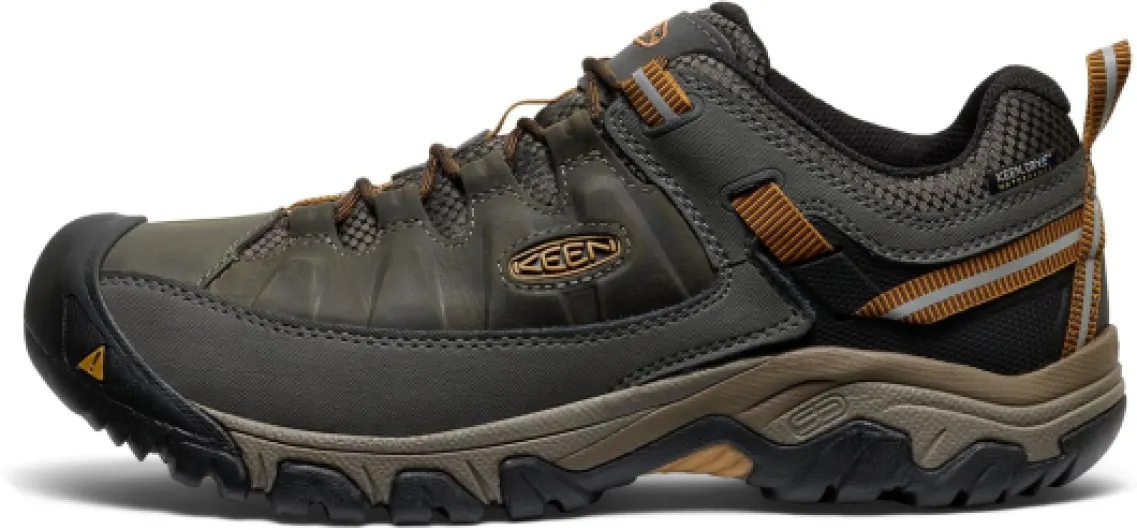
On the trail, the Targhee III WP does pretty much what it promises, with a few caveats. The grip from the KEEN All-Terrain rubber and 4 mm lugs is solid on most surfaces I tested: gravel, dirt, forest paths, wet grass, and wet pavement. On gravel and stone, the firmer sole really helps – you don’t feel every sharp edge, and your feet stay fresher. On mud, the lugs bite reasonably well, and they clear out okay as you walk, so you don’t end up with a solid cake of mud under your foot after 10 minutes.
On wet rock, they’re acceptable but not magic. I’ve had shoes with slightly stickier rubber that inspire a bit more confidence on smooth, damp rock slabs. With these, I just needed to be a bit more careful, which is pretty standard for this type of hiking shoe. On icy patches, they’re better than some casual trainers I own but still slippery – which is normal. If you walk a lot on ice, you need spikes or a winter-specific sole anyway.
Waterproofing is generally good, but don’t expect miracles. In normal rain, puddles, and short walks through wet grass, my feet stayed dry. The KEEN.DRY membrane seems to do its job, and the leather plus DWR coating helps water bead off. However, like a few reviewers mentioned, extended time in very wet grass will eventually push water in, especially from the tongue and lace area. This is pretty standard for most waterproof hiking shoes that aren’t full high-cut boots. If you treat the leather occasionally and avoid standing in ankle-deep water, you’ll be fine. Just don’t confuse “waterproof” with “wading boot”.
Stability is one of the strong points. The external shank and bruise plate mean the shoe doesn’t twist too much under your foot, which is reassuring on uneven surfaces. The heel feels planted, and the mid-cut height gives a bit of extra confidence on side slopes. At the same time, they’re flexible enough at the forefoot to walk naturally on flat ground or pavement. Overall, for day hikes, dog walks, disc golf, and general outdoor use in mixed weather, the performance is pretty solid. If you want something for fast hiking or light trail running, they’re overkill and too heavy. If you want reliable, steady support and you’re not racing, they’re in their element.
What you actually get with the Targhee III WP
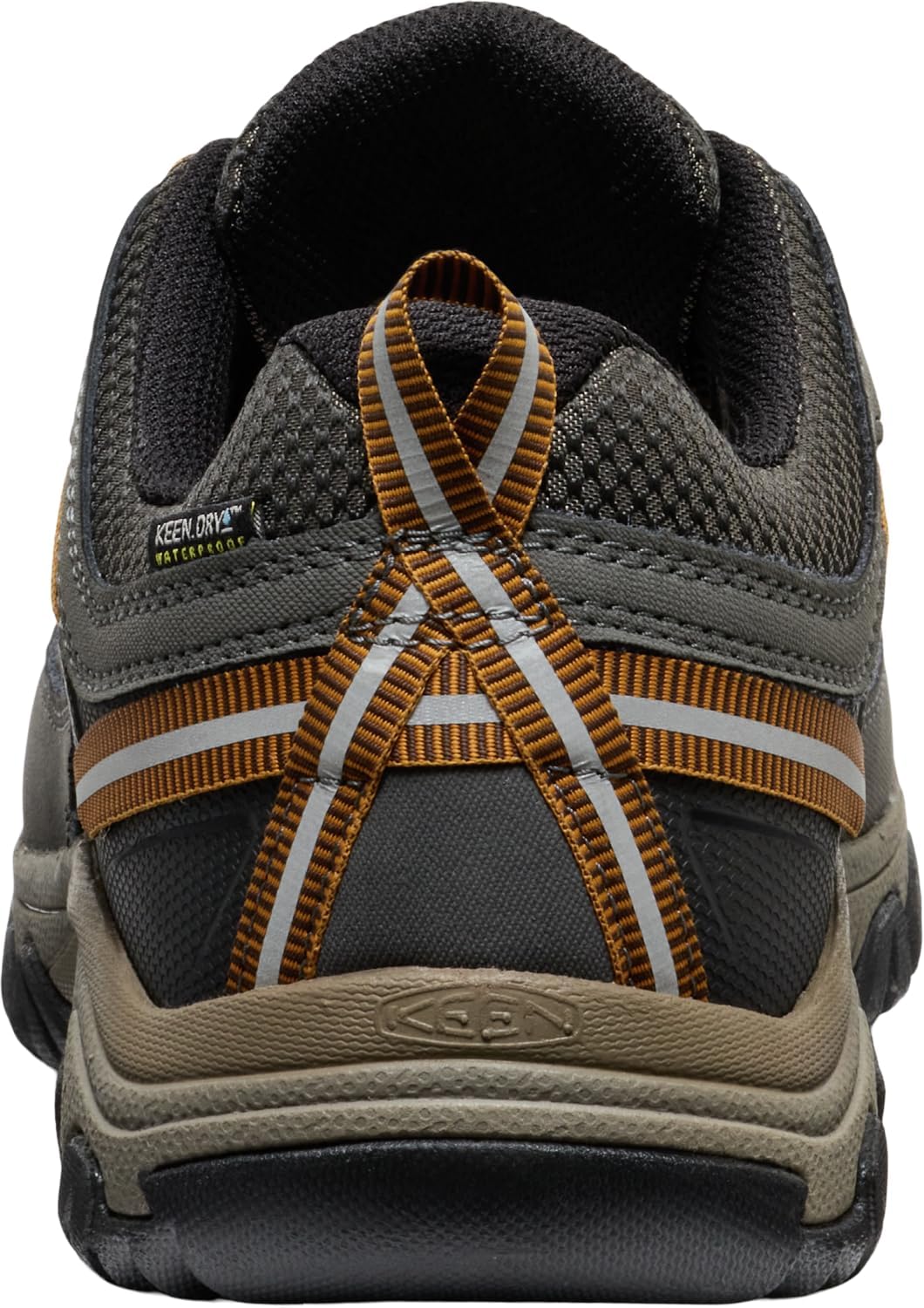
On paper, the KEEN Targhee III WP is a men’s waterproof hiking shoe with leather upper, rubber sole, and a medium arch, aimed at people doing day hikes and general outdoor stuff. It’s officially a “low top” but it sits a bit higher than a typical sneaker, so I’d call it a low-to-mid hiking shoe. Each shoe is around 500 g, so not ultra light, but not a full heavy boot either. It’s clearly designed more for stability and protection than for shaving grams.
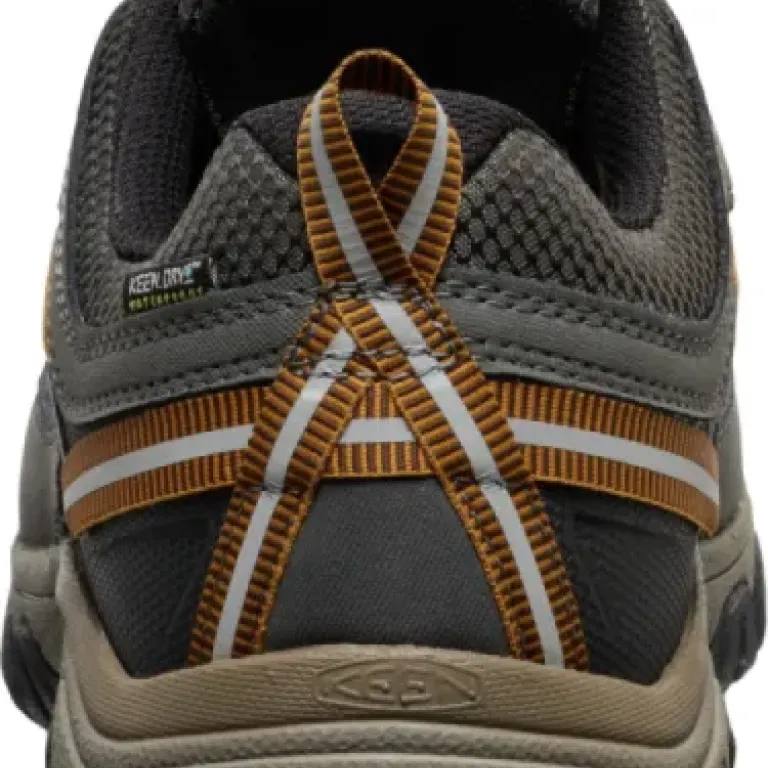
The pair I have is the Black Olive / Golden Brown colour. In reality, that means dark brownish-olive leather with lighter brown accents and a black-ish sole. It’s very obviously a hiking shoe, not something you’d wear with jeans to the office unless your office is very casual. If you care about style, it’s fine but nothing special: purely functional, a bit chunky, and clearly built to be used and abused rather than admired.
Out of the box, there’s nothing fancy in the packaging: just the shoes, some basic tags, and tissue paper. No spare laces, no extra insoles, nothing. That’s not a big deal, but at this price point I wouldn’t have minded a second pair of laces. The lacing system uses standard eyelets and that top webbing loop instead of a metal hook, which a few reviewers mentioned. It works, but it doesn’t inspire as much confidence as a proper metal hook, especially if you tend to really crank down the laces.
The overall first impression is: solid, slightly heavy, wide-fitting hiking shoes with a serious tread pattern and a big rubber toe bumper. If you’re coming from running shoes or lighter approach shoes, they’ll feel chunky. If you’re used to traditional leather boots, they’ll feel quite manageable and more flexible. The question is whether that middle ground works for what you need, and that depends a lot on your foot shape and the type of terrain you usually walk on.
Pros
- Very comfortable out of the box, especially for wide feet thanks to the generous toe box
- Good grip and stable support on gravel, dirt and mixed trails with a firm, protective sole
- Waterproofing handles rain, puddles and normal wet grass well, with breathable lining
Cons
- Heavier and bulkier than many modern lightweight hiking shoes
- Reports of sole glue starting to fail after around a year of medium to heavy use
- Top webbing eyelet feels less durable than a metal hook and doesn’t inspire full confidence
Conclusion
Editor's rating
After living with the KEEN Targhee III WP for a while, my overall view is pretty straightforward: they’re very comfortable, especially for wide feet, and they handle everyday hiking and wet weather well, but they’re not built like tanks. If you want a stable, supportive hiking shoe with a roomy toe box, good grip on typical trails, and decent waterproofing, they do the job without fuss. I can throw them on for a 15–20 km walk without worrying about blisters or sore arches, and that alone is worth a lot to me.
Where they fall short is mostly around long-term durability and weight. The glued sole construction means there’s a real chance the sole may start to peel after a year or two of heavy use, judging by other users’ experiences. They’re also on the heavier side compared to modern lightweight hikers, so if you like fast, nimble shoes, these will feel a bit clunky. They’re more of a reliable workhorse than a sporty trail shoe.
I’d recommend them to people who: have wide feet, do regular day hikes or long walks on mixed terrain, want waterproof shoes that aren’t sauna-hot, and don’t mind a slightly chunky look. I’d say skip them if: you want ultra-light footwear, you hike in very hot climates most of the time, or you’re after a boot that will last for many years of daily abuse. Overall, they’re good, practical hiking shoes with strong comfort and fit, held back a bit by average long-term durability.