
Summary
Editor's rating
Value: good deal if you treat them as semi-disposable
Design: practical, a bit hard-soled, and clearly built to a cost
Comfort: the main reason to buy them
Materials: budget leather, decent midsole, and a membrane that needs help
Durability: where the compromise really shows
Performance: good for light hiking, less good on wet pavements
What you actually get for the price
Pros
- Very comfortable straight out of the box, with a slightly wider fit and good cushioning
- Genuinely good value for money for daily walking and light hiking if you accept limited lifespan
- Decent waterproofing when new, especially if maintained with Nikwax or similar products
Cons
- Durability is average at best, with common reports of sole delamination and toe bumper wear
- Outsole can feel hard and slippery on wet pavements and ice
- Not ideal for serious mountain use or very heavy, long-term abuse

Specifications
View full product page →| Brand | HI-TEC |
Cheap waterproof boots I actually wore every day
I’ve been using the HI-TEC Tec Storm Waterproof Walking Boots as my main everyday boots, not just for the odd Sunday hike. Think dog walks twice a day, supermarket runs, wet pavements, muddy paths, and the occasional proper trail. So this isn’t a “tried them on in the living room and wrote a review” situation. They’ve had real, boring, daily abuse, which is probably how most people will use them anyway.
What pushed me to try them was the price. For under £50 (and often closer to £40 on offer), waterproof boots from a known brand are tempting, especially if you don’t want to spend £150+ on premium leather models. I went in with realistic expectations: I wasn’t expecting them to last a decade, but I did want something comfortable, properly waterproof at least for a while, and not falling apart in a couple of months.
After a decent amount of use, my take is pretty simple: they are very comfortable, reasonably supportive, and good value if you accept they’re semi-disposable. If you hammer them every day, you’re not getting years and years out of them. If you use them mainly for walks and occasional hikes, you’ll probably be quite happy, as long as you keep an eye on the soles and reproof them from time to time.
So this review is from the angle of: are these a good cheap boot for daily wear and regular walking, knowing there are durability complaints? Short answer: yes, for some people. But if you want bombproof boots for serious mountain stuff, or you hate the idea of the sole starting to peel after heavy mileage, look higher up the range. I’ll break down why.
Value: good deal if you treat them as semi-disposable
In terms of value, the Tec Storm sit in a sweet spot for a certain type of user. For around £40–£50, you get boots that are comfortable, reasonably waterproof when looked after, and suitable for daily walking and light hiking. That’s hard to argue with, especially when premium leather boots easily start at £150 and go up from there. If you’re not ready to invest that kind of money, these are a sensible compromise.
Where the value calculation changes is how you plan to use them. If you’re a heavy walker doing 800–900 km in five months, like one of the reviewers, or you’re regularly in harsh, wet terrain, these are more like a consumable item – they’ll do the job, but you might be replacing them every year or so. In that case, you have to decide if you’d rather keep buying cheaper boots regularly or pay once for something tougher like the Hi-Tec Ravine or similar full-leather models.
Compared to other budget hiking boots from supermarket brands or no-name Amazon specials, I’d say these sit on the better side of the cheap spectrum. You at least get a known brand, a proper waterproof membrane, and a design that’s been around for years with iterative tweaks. The 4.1/5 rating from thousands of reviews reflects that: most people are happy enough, a minority get unlucky with early failures.
So in plain terms: if you want comfortable, affordable boots for dog walks, casual hikes, and daily wear, and you accept that they probably won’t last forever, the value is solid. If you want something you can abuse for years without thinking about it, these are not the right place to save money – look at higher-end models and think of them as a long-term investment instead.
Design: practical, a bit hard-soled, and clearly built to a cost
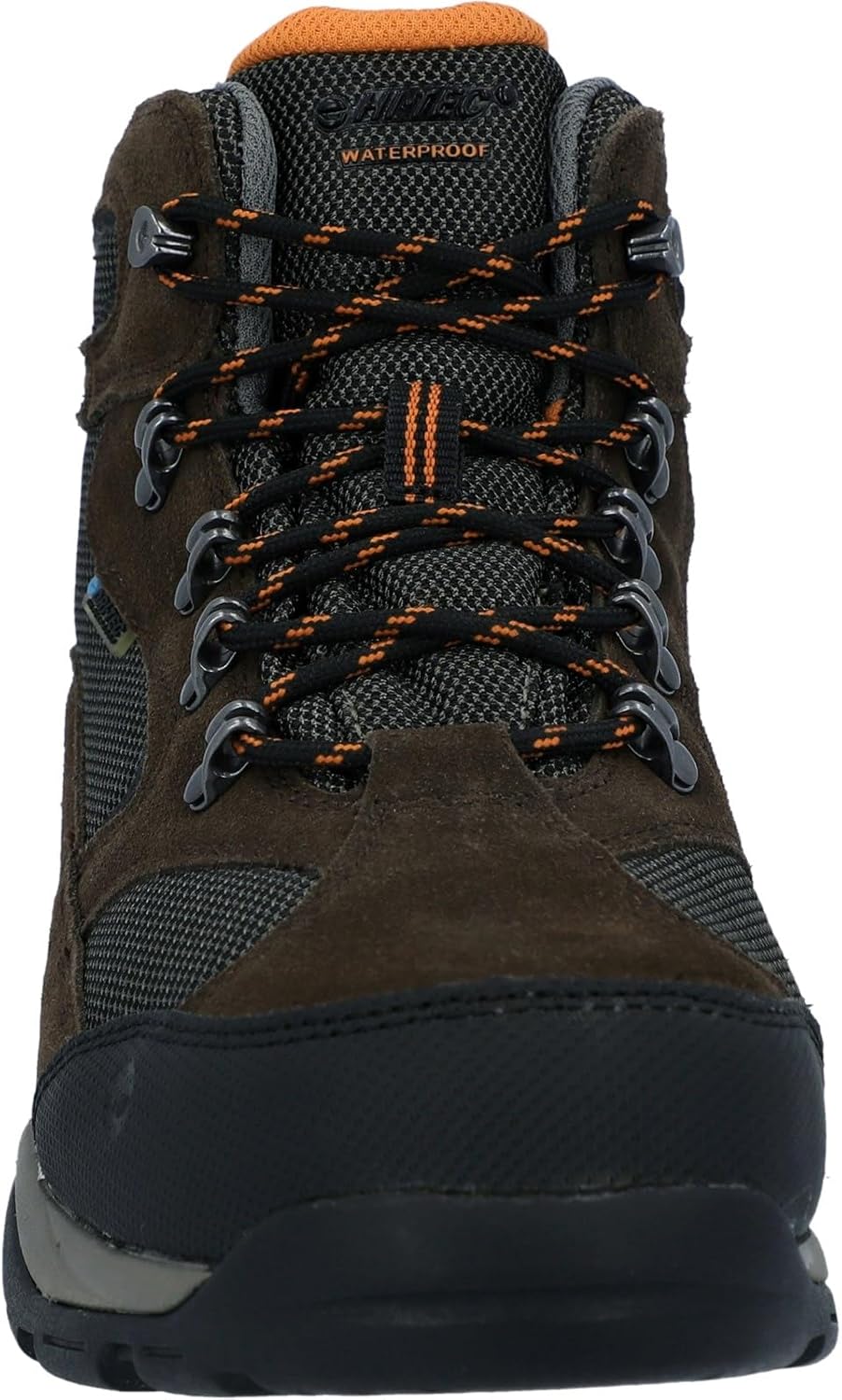
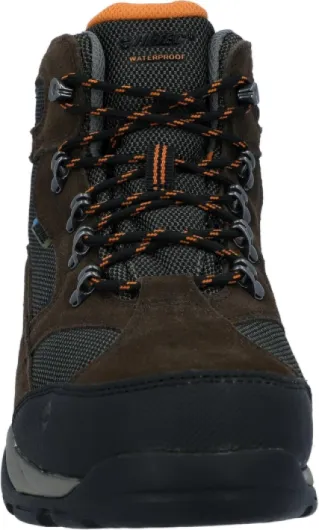
Design-wise, HI-TEC kept things simple. The colour scheme (dark chocolate / taupe / burnt orange) is low-key enough to wear into work or around town without looking like you’ve just come off a mountain, but still obviously a hiking-style boot. No glossy nonsense, mostly matte leather and synthetic overlays. The toe bumper is where you can really see the cost-cutting: it’s a thin rubbery layer glued over suede rather than a thick, moulded rubber cap. It looks fine when new, but this is exactly the area that some users report wearing through early.
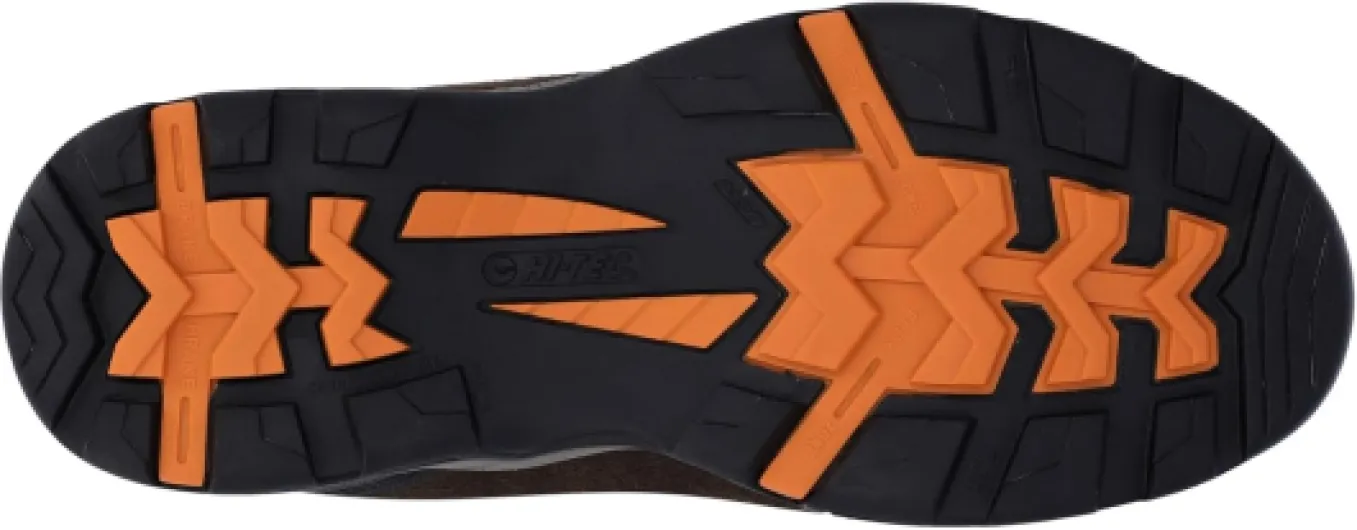
The tread pattern is aggressive enough for muddy paths and wet fields. The lugs are fairly deep and spread out, so they clear mud reasonably well. On proper trails and grass they grip well. On wet smooth pavements or ice, they’re not great – the sole compound feels a bit hard and plasticky, which is fine for durability but not ideal for slick surfaces. So if most of your walking is in the city in winter, you’ll want to be careful, especially on wet tiles or compacted snow.
Fit-wise, they lean slightly towards the wider side, which is a plus if you have broad feet or use thicker hiking socks. I didn’t feel squeezed in the toe box, and there’s enough volume to avoid black toenails on descents, as long as you lace properly. The ankle cut gives moderate support: enough for dog walks, light hikes, and uneven paths, but they’re not rigid mountaineering boots. Think “casual hiker” rather than “alpine boot”.
From a pure design perspective, they do the job without trying to be fancy. You get sensible lacing, reasonable ankle support, and functional tread. The compromises are obvious if you look closely – especially at the toe bumper and where the sole meets the upper – but for the price bracket, nothing shocking. Just don’t expect design touches you’d find on boots three times the price, and you’ll be fine.
Comfort: the main reason to buy them
If there’s one area where these boots actually stand out for the price, it’s comfort straight out of the box. I didn’t have to break them in much. First day, I did a couple of medium walks (around 6–7 km total) and had no hotspots, no rubbing on the heel, and no crushed toes. For a sub-£50 boot, that’s pretty good. The shape under the arch feels natural, not too flat, and the padding around the ankle is thick enough without being bulky.
The fit is on the slightly wider side, which is ideal if you have broad feet or just don’t like narrow hiking boots. I used them with regular hiking socks and occasionally thicker winter socks, and the volume was fine both ways. The toe box has decent room – my toes could move without sliding forward on descents. The ankle support is moderate: enough for dog walks, fields, and light trails, but if you have weak ankles and go over very rocky terrain, you might want something more rigid.
Underfoot, the EVA midsole and insole do a solid job of cushioning. You feel a bit of the ground on rocky paths, but it’s not brutal. On tarmac, the sole feels a bit hard and clacky, which is where you’re reminded these are budget boots. That said, I could easily do 8–10 km walks without feeling battered. A few Amazon reviewers mention wearing them literally every day for years for commuting and dog walking, and I can believe that from a comfort standpoint.
One nice side-effect: they don’t seem to hold odour as badly as some cheap boots. The insole wicks moisture reasonably well, and because they’re not lined with thick, sweaty fabric, they dry out overnight if you remove the insole. For someone using them daily, that matters. Overall, comfort is the strongest point of these boots. If you value that over long-term durability, these make sense. If you want something you can abuse in the mountains for years, you’ll hit the limits of this construction sooner or later.
Materials: budget leather, decent midsole, and a membrane that needs help
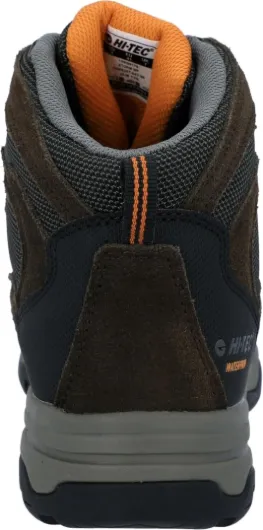
The upper is officially “leather” with some synthetic elements, and that’s exactly how it feels: mixed materials, not full-grain tank leather. The leather panels themselves are okay – not cardboard-stiff, but not luxury either. They soften up quickly, which helps with comfort, but they don’t feel like they’ll survive years of serious abuse. The lining is basically unlined with the Dri-Tec membrane acting as the waterproof barrier, so you don’t get that plush, padded interior you find in more expensive boots.
The midsole and insole are both compression-moulded EVA. In simple terms: light, cushioned, and shock-absorbing, but not the longest-lasting if you’re heavy or walk a lot on hard surfaces. For daily city and trail walking, they hold up alright. After a while you can feel the insole flattening a bit, but that’s normal at this price. The good point is that the insole is removable, so if you want more support (or if you wear orthotics), you can swap it out easily.
The outsole is synthetic rubber with their MDT pattern. It feels fairly hard to the touch. That usually means better wear resistance but less grip on smooth, wet stuff. That’s exactly what I noticed: nice on dirt and grass, a bit sketchy on wet city pavements and ice. If you mostly walk trails, you’ll be fine. If you’re on tarmac half the time, you’ll notice the stiffness and the slightly plastic feeling underfoot.
The Dri-Tec waterproof membrane is the interesting bit. When new, it does a decent job. Walking through wet grass, shallow puddles, and light rain, my feet stayed dry. But like many budget membranes, performance depends a lot on how well you look after the outer material. Once the leather and fabric start to wet out (soak up water), the membrane has a harder time keeping water out over long periods. Using a spray like Nikwax Fabric & Leather on damp boots, as some users did, really helps. Without that kind of care, you’re more likely to end up with “water-resistant” rather than truly waterproof after a few months.
Durability: where the compromise really shows
This is the section that matters most with these boots. Comfort is good, performance is decent, but durability is clearly where HI-TEC have saved money. My own pair held up reasonably well for the first year with regular use, but by the time I’d clocked a lot of kilometres, I started seeing exactly what other reviewers talk about: small signs of the sole beginning to separate at the front outer edge, and the toe bumper scuffing through faster than I’d like.
The pattern in the user reviews is pretty clear. Some people get 2+ years of daily use (dog walkers, commuters) before the sole starts to delaminate, which for a £40–£50 boot is honestly not bad. Others, especially heavier users or those doing a lot of wet walking, report the sole peeling and waterproofing failing after just a few months. The weak points are always the same: the glued joint between sole and upper at the front and the thin toe bumper layer. It’s not a structural rubber toe cap like on more expensive boots; it’s basically cosmetic protection that doesn’t take much abuse.
From what I’ve seen, if you:
- Use them daily but mostly on mixed pavements/paths
- Let them dry properly and don’t cook them on radiators
- Reproof the leather/fabric occasionally
you can get a solid 1.5–2.5 years before they’re in bits. If you hammer them in rough, rocky terrain or constantly soak them and don’t maintain them, expect issues earlier. Once that sole starts to peel, you can try glue as a temporary fix, but it’s not a long-term solution.
So durability is acceptable relative to the low price, but clearly not a strong point. If you’re coming from premium boots like Hi-Tec Ravine, Merrell, Salomon, etc., you’ll notice the difference in how quickly these look tired and start to fail at the glue lines. They’re more like long-lasting trainers than lifetime boots. If you go in expecting that, you won’t be as disappointed.
Performance: good for light hiking, less good on wet pavements
In actual use, the Tec Storms handle light to moderate hiking and daily walking pretty well. On dirt tracks, forest paths, and wet grass, they feel stable, cushioned enough, and the grip is decent. The MDT outsole pattern has enough bite that you don’t feel like you’re skating around in mud. For dog walks of 6–8 km and weekend rambles, they’re more than capable. You get enough ankle support to avoid rolling your ankle on small ruts or stones, but they’re not stiff boots, so you still have some flexibility.
Where they’re less convincing is on wet, smooth city surfaces. Pavements, tiles, metal drain covers – if it’s wet, the harder rubber compound can feel a bit slippery. Not unusable, but you do have to pay attention, especially if you’re used to softer, grippier rubber from higher-end brands. On ice, they’re basically like most non-winter boots: not great. So if your main use is urban winter walking, you might be better with something designed more for that environment.
Waterproofing, when the boots are reasonably new and treated, is fine for normal use. Walking through wet grass for 20–30 minutes, shallow puddles, or steady rain – my feet stayed dry. But based on both my experience and other reviews, you shouldn’t treat these as hardcore, all-day-in-the-bog boots. Over time, especially if the outer isn’t reproofed, water can creep in. Also, once the sole starts to separate even slightly from the upper, that’s an obvious leak point.
For the price, I’d say performance is good enough for casual hiking and heavy dog-walking, as long as you understand the limits. They’re not built for long, technical mountain days in harsh conditions. But if your realistic use is 5–10 km a day on mixed paths, some mud, some tarmac, and regular rain, they get the job done without drama – just keep expectations grounded.
What you actually get for the price
Out of the box, the HI-TEC Tec Storm look like fairly standard mid-cut hiking boots. Nothing flashy, no weird design tricks, just brown leather with some darker panels and a bit of burnt orange detailing. They’re clearly built to hit a budget: leather upper, synthetic sole, EVA midsole and insole, and a Dri-Tec waterproof membrane. On paper, it’s the usual recipe for entry-level hiking footwear.
The boot is ankle-high, with a flat heel and a round toe. The sole is listed as synthetic with an MDT (Multi-Directional Traction) pattern. In practice, that means decent lugs and a fairly stiff feel underfoot. They’re a bit on the hard side on tarmac and pavements, but on trails and grass they feel more natural. They’re not heavy bricks either – about 1 kg for the pair – so you don’t feel like you’re dragging your feet after an hour.
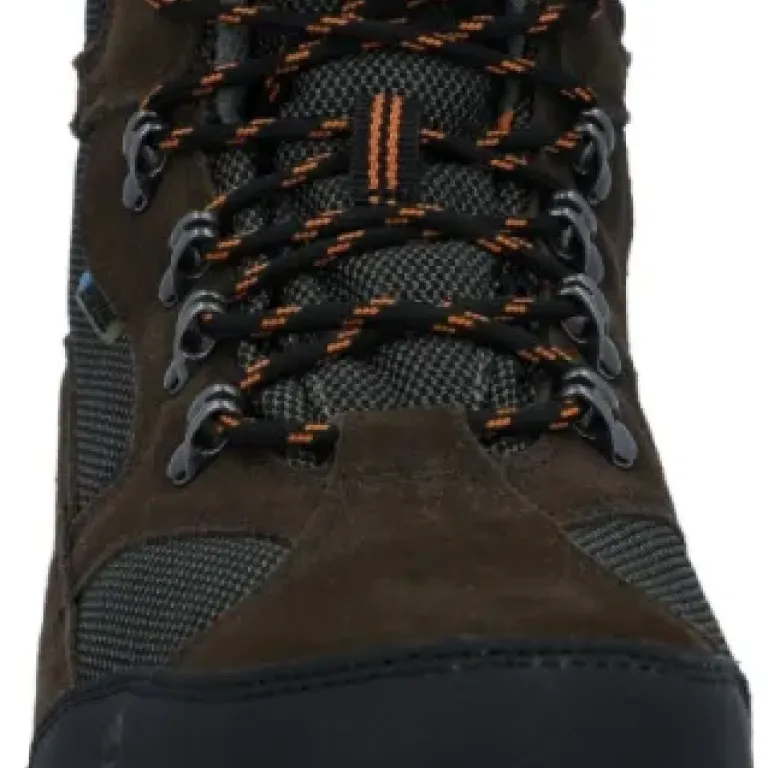
The lacing system is classic: eyelets lower down and hooks near the top. No fancy locking eyelets, but it’s easy enough to get a snug fit around the ankle. Inside, there’s a removable compression-moulded EVA insole, which is actually better than I expected for this price point. It’s cushioned, a bit spongy, and wicks moisture reasonably well. If you’re picky about insoles, you can swap them for your own, but for most people they’ll be fine.
Overall, first impression is: budget hiking boot that looks the part and doesn’t feel cheap on the foot, even if you can tell it’s not a premium leather tank. It’s the kind of boot you’re not scared to trash in mud or rain because you didn’t drop a fortune on it. The question is less about how it looks and more about how long it holds together, which I’ll get to later.
Pros
- Very comfortable straight out of the box, with a slightly wider fit and good cushioning
- Genuinely good value for money for daily walking and light hiking if you accept limited lifespan
- Decent waterproofing when new, especially if maintained with Nikwax or similar products
Cons
- Durability is average at best, with common reports of sole delamination and toe bumper wear
- Outsole can feel hard and slippery on wet pavements and ice
- Not ideal for serious mountain use or very heavy, long-term abuse
Conclusion
Editor's rating
The HI-TEC Tec Storm Waterproof Walking Boots are comfortable, budget-friendly workhorses that do a decent job for everyday walking and light hiking, as long as you’re realistic about how long they’ll last. They fit well straight out of the box, especially if you have slightly wider feet, and the cushioning and ankle support are perfectly fine for 5–10 km walks, dog duty, and weekend trails. Waterproofing is good when new and stays acceptable if you look after them with a spray or wax, but they’re not built for constant, heavy, wet mountain use.
The main drawback is durability. The toe bumper and the glue line between sole and upper are the weak points, and if you’re clocking serious mileage or constantly soaking them, you’ll likely see peeling and wear within a year or so. For the price, that’s not shocking, but if you’re expecting multi-year, hard-use boots, you’ll be disappointed. Think of them more like sturdy, waterproof trainers in boot form rather than lifetime hiking gear.
I’d recommend these to: dog walkers, casual hikers, people who want a cheap, comfy waterproof boot for autumn/winter, and anyone who doesn’t want to spend big money but still wants something that gets the job done. I’d skip them if you’re planning long, technical hikes, carrying heavy loads, or you hate the idea of the sole ever starting to separate. In that case, spend more once on a tougher leather boot and save yourself the annoyance.