
Summary
Editor's rating
Value: strong for casual users, less so for heavy hikers
Design focused on support and grip, with a budget finish
Comfort: good once broken in, but not cloud-like
Synthetic build: practical but a bit plasticky
Durability: feels okay now, but long-term is a question mark
Real-world performance: grip and waterproofing are the strong points
What you actually get out of the box
Pros
- Genuinely waterproof so far in heavy rain, wet grass and mud
- Aggressive outsole with good grip on soft and mixed terrain
- Decent ankle support and reasonable comfort after break-in at a low price
Cons
- Synthetic materials feel plasticky and less premium
- Durability over many months of heavy use is questionable, with some reports of splitting
- Slightly stiff out of the box and needs a short break-in period

Specifications
View full product page →| Brand | XPETI |
Cheap boots that can actually handle real mud?
I’ve been using the XPETI Men’s Waterproof Hiking Boots (size 7.5 UK, Black H) for a few weeks now on dog walks, muddy park trails, and a couple of longer weekend hikes. I didn’t expect much at this price, to be honest. I usually go for bigger brands like Salomon or Merrell, but I wanted something cheaper to trash through winter without worrying too much. So I went in with low expectations and treated these as beater boots.
In practice, they’re better than I thought in a few areas and clearly budget in others. They’re genuinely waterproof so far, the grip is decent, and they’re lighter than they look. But the materials and finish feel a bit plasticky, and I wouldn’t bet on them lasting for years if you hike every weekend. This feels like a boot for regular dog walkers and casual hikers, not for serious mountain stuff.
I’ve worn them in steady rain, through wet grass up to the ankle, and on sloppy, churned-up paths. I also wore them all day in town once, just to see how my feet felt after 8–9 hours. That gave me a decent idea of comfort, breathability, and how the support holds up over time. I haven’t had them long enough to talk about multi-year durability, but I’ve seen some early signs and I’ve read through a bunch of other user reviews to compare.
Overall, they’re pretty solid for the price, but definitely not perfect. If you expect them to behave like £150 boots, you’ll be disappointed. If you just want something to keep your feet dry and supported on normal walks and moderate hikes, they get the job done. I’ll break down what worked for me and what felt a bit cheap or worrying in the long run.
Value: strong for casual users, less so for heavy hikers
On value, I think these XPETI boots sit in a sweet spot for casual users. You get real waterproofing (at least in the short to medium term), decent grip, and good ankle support at a price that’s clearly below most big hiking brands. If you compare them to something like entry-level Merrell or Columbia boots, you’re saving money and still getting a boot that can handle rain, mud, and light hikes without falling apart immediately.
Where the value is a bit more mixed is for people who hike a lot. If you’re doing long distances every weekend, or if you work outdoors and need boots every day, I’d be less confident recommending these as your main pair. The materials and finish just don’t scream long-term workhorse. In that case, paying more upfront for a sturdier boot might be cheaper in the long run, because replacing these every year or so will add up.
For dog walkers, casual hikers, and people who just want a solid, waterproof boot for autumn–winter, they make sense. You get enough comfort, proper traction, and good weather protection without spending a fortune. If they last you a couple of seasons of regular use, the cost per year is perfectly reasonable. Just don’t expect premium-feeling materials or perfect finishing – you’re paying mainly for function here, not polish.
So in terms of value for money, I’d call them good but with clear trade-offs. They’re ideal as a second pair of boots you don’t mind trashing in bad weather, or as an affordable starter option if you’re getting into hiking and don’t want to drop a lot of cash right away. If you know you’re going to be tough on your gear, though, it might be worth stepping up a level.
Design focused on support and grip, with a budget finish
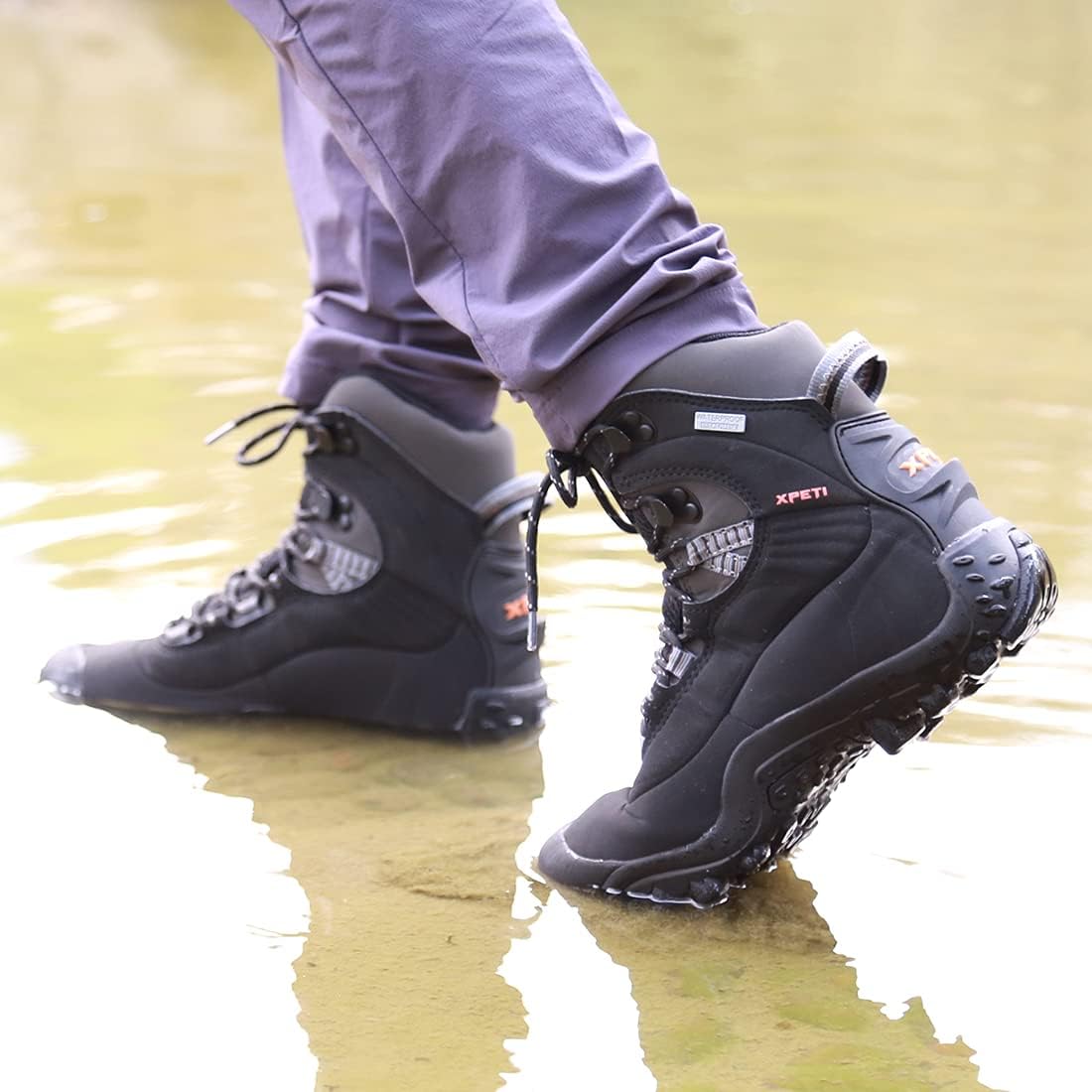
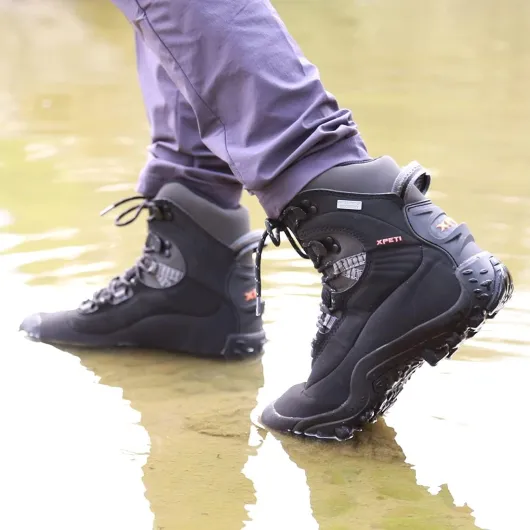
The design is pretty straightforward: ankle-high boot, aggressive outsole, chunky midsole, and a lot of synthetic panels stitched together. The most noticeable design feature is the molded TPU ankle support. You can actually feel that extra stiffness around the ankle, especially if you’re used to softer trainers or low-cut shoes. For side-to-side stability on uneven ground, it does help. On my first couple of walks, I felt the boot forcing my ankle to stay in line more than I’m used to, which is good for support but takes a bit of getting used to.
The outsole has 7 mm multi-directional lugs, and you can tell they’re not messing around there. The pattern is quite aggressive, with deep channels that help shed mud. On wet grass and sloppy mud, I didn’t feel like I was skating around, which is more than I can say for some cheaper walking shoes. On hard surfaces like tarmac or wet pavement, they grip okay, but you can feel the lugs underfoot. They’re clearly tuned for off-road more than city walking.
Design details: you get a rubber toe cap for protection, which I banged into a few rocks and roots without feeling anything on my toes. The lace-up system is basic but fine – standard eyelets with a couple of hooks at the top. I didn’t have issues with laces loosening once I tied them properly. The tongue is gusseted, so water and mud don’t sneak in easily from the sides, at least up to a certain depth. I went through puddles just below the top of the boot and stayed dry.
Where the design shows its price is in the overall shape and bulk. They’re not sleek; they’re a bit blocky and chunky, and the synthetic upper creases in a slightly stiff way when you walk. It doesn’t hurt, but you can tell it’s not premium material. Still, from a practical point of view, the design choices – solid ankle support, aggressive sole, toe protection – make sense for someone who actually walks in bad conditions, not just around town.
Comfort: good once broken in, but not cloud-like
Comfort-wise, I’d say these boots are good, but not instantly perfect. Out of the box, they felt a bit stiff around the ankle and across the top of the foot. That’s partly because of the molded TPU ankle support and the synthetic upper. On the first two walks (around 45–60 minutes each on mixed terrain), I noticed some pressure on the sides of my ankles and a slight rubbing at the back of the heel. Not enough to give me blisters, but enough that I was glad to take them off when I got home.
After about 4–5 outings, they started to soften up. The ankle area, which felt almost over-supportive at first, became more comfortable once the padding compressed a bit. I could then do a 2–3 hour hike without thinking about my feet too much, which is usually a good sign. The EVA midsole gives a reasonable amount of cushioning. You don’t feel every small stone, but you also don’t get that bouncy, running-shoe feel. It’s somewhere in the middle – firm enough for stability, soft enough that your feet don’t feel beaten up afterwards.
One important point: sizing. I normally wear a 7 UK in most shoes, and with these I agree with the Amazon review that says to go half a size up. In 7.5 UK, I had enough room for thicker hiking socks and a bit of toe wiggle space for downhill sections. If I’d gone true to size, I think my toes would have been too close to the front. So if you’re between sizes, I’d lean towards the larger one, especially for winter use with warm socks.
Breathability is okay but not great. That’s the usual trade-off with waterproof boots. On cold, wet days, they felt warm and comfortable. On a slightly milder day, my feet got a bit sweaty on a long walk, but nothing dramatic. If you mostly walk in cool or cold weather, you’ll probably be happy. For hot summer hikes, I’d look for something lighter and more breathable. Overall, comfort is perfectly acceptable once broken in, but if you’re sensitive or used to very soft shoes, expect a short adjustment period.
Synthetic build: practical but a bit plasticky
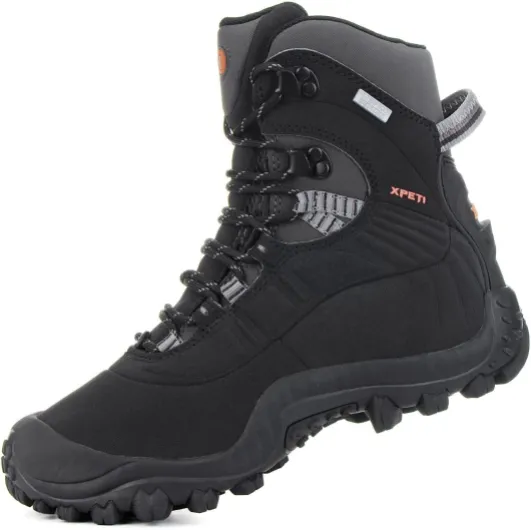
The XPETI boots are mostly synthetic: synthetic outer material, rubber sole, mesh lining, and an EVA-based insole/midsole. There’s no real leather here, which you feel right away. The upside is that the upper doesn’t absorb much water and dries fairly quickly. After a very wet walk, I wiped them down and they weren’t heavy or soaked. The downside is the plasticky feel and the way the material creases – it’s a bit stiff and doesn’t mold to the foot like leather does over time.
The rubber sole feels decent. It’s not super soft, so it should resist wear a bit better on rocky paths, but it’s also not as grippy and flexible as high-end compounds. For the price bracket, I’d say the sole rubber is pretty solid. I walked on wet rocks, muddy slopes, and compact dirt, and I didn’t get any scary slips. The tread blocks haven’t rounded off after a few weeks, which is a good sign, but of course that’s still early days.
Inside, the mesh lining is okay – nothing fancy. It’s there to help with moisture-wicking, but don’t expect miracles. After longer walks, my socks were a bit damp from sweat, which is normal for waterproof boots. The insole is EVA-type foam. It gives a bit of cushioning, but it’s not super premium. If you’re picky about support or have foot issues, you might want to throw in your own insoles. I did one walk with the stock insoles and one with my usual orthotic-style insoles, and the comfort difference was noticeable.
Overall, the materials are functional and match the price. They’re clearly aimed at durability and waterproofing more than fancy feel. If you’re used to full-grain leather boots, these will feel cheaper in hand. If you’re used to basic synthetic hiking shoes, these will feel familiar: light, a bit stiff, but easy to maintain. You just need to accept that the trade-off for the lower cost is a more plastic, less premium feel.
Durability: feels okay now, but long-term is a question mark
Durability is the one area where I’m a bit cautious. In my few weeks of use, the boots are holding up fine: no stitching coming loose, no sole separation, no obvious cracks. The outsole lugs still look sharp, and the upper hasn’t scuffed badly despite some abuse in mud and on rough paths. I’ve hosed them down a couple of times after really dirty walks, and the materials handled that without any drama.
That said, you can feel that this is a budget boot when you look closely. There are quite a few stitched panels, and every seam is a potential weak point over time. One Amazon reviewer even mentioned their pair split after about 4 months, which doesn’t surprise me. The synthetic upper doesn’t flex as nicely as leather, so if you have a particular way of walking or you bend the boot a lot, I can see creases turning into cracks eventually. I haven’t hit that stage yet, but I’m aware it might happen sooner than with a more premium boot.
The midsole feels firm and should keep its shape for a while, but the insole will probably pack down faster. If you plan to wear these daily for work or heavy walking, I’d honestly expect them to be 1–2 season boots rather than something that lasts you five years. For occasional weekend hikes and daily dog walks, they’re probably fine – you just need to manage your expectations for the price point.
So from what I’ve seen and read, durability is acceptable but not outstanding. If you want something bombproof for constant use in rough terrain, you should spend more and go for a leather boot from a known hiking brand. If you just need a solid pair to get you through wet autumn–winter walks and you’re okay with possibly replacing them after a couple of seasons, these are a reasonable bet.
Real-world performance: grip and waterproofing are the strong points
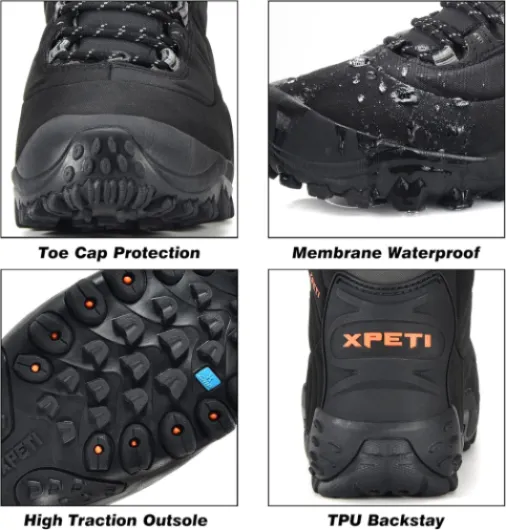
In actual use, the two big positives for me are waterproofing and grip. I’ve taken these through wet grass, ankle-deep mud, and a couple of puddles that came close to the top of the boot. So far, no leaks. My socks came out dry every time, even after walking for an hour and a half in steady rain. The waterproof membrane and mesh upper combo seems to do its job, at least in the short term. Obviously, long-term waterproofing is always the question, but out of the box and after a few weeks, they pass the test.
The outsole with those 7 mm lugs bites pretty well into soft ground. In a conservation area with muddy tracks, I felt confident going up and down small slopes without sliding around. On wet leaves and packed dirt, they felt secure. On wet rock, they’re okay – not magic, but no sudden slips either. On tarmac or pavements, you can feel the lugs, and they’re a bit noisy, but that’s normal for a boot tuned for off-road traction. If you mainly walk in parks, fields, and forest paths, the grip is more than enough.
Stability is also decent thanks to the ankle support. I twisted my foot on a root once, and the boot stopped my ankle from rolling too far. That’s exactly what you want from this type of boot. The midsole feels sturdy enough even when carrying a small backpack with a bit of weight. I wouldn’t use these for serious mountaineering or multi-day treks in rough alpine terrain, but for Sunday hikes, dog walking, and light to moderate trails, they handle it fine.
The weak point in performance is more on the long-distance comfort and potential durability. After about 4 hours of mixed walking in a day, I could feel some hot spots starting under the balls of my feet. Not full-on pain, but a reminder that the cushioning isn’t at the level of more expensive boots. Also, based on some other user reviews mentioning splitting after a few months, I’m not entirely convinced these will survive very heavy, daily use for years. As a solid performer for casual to moderate use, though, they do what they’re supposed to do.
What you actually get out of the box
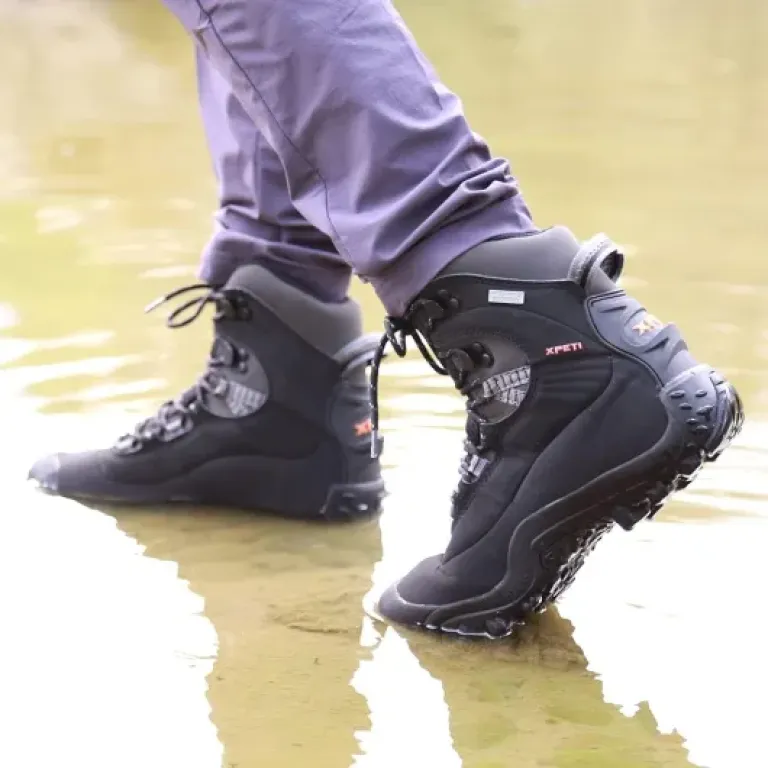
Out of the box, the XPETI boots look like your typical mid/high hiking boot: chunky sole, ankle-high, lots of synthetic panels and stitching. They’re not flashy, but they look like they mean business. The pair I have is the Black H colour, which is basically black with some subtle accents. Nothing fancy, but easy to match with any hiking trousers or jeans. If you like discreet gear, you’ll be fine with these.
The first thing I noticed is that they’re lighter than they look, especially compared to some old leather boots I have. You can feel that the upper is synthetic and not leather – it has that slightly plasticky feel, but on the flip side, it doesn’t soak up water like a sponge. The rubber toe cap and the thick sole give a bit of confidence that you can kick through rocks and roots without worrying about your toes. The ankle area looks quite padded, and you can see the molded TPU ankle support from the outside.
In terms of build, they look decently put together, but if you look closely you can spot that this is a budget boot: some stitching isn’t perfectly straight, and the finishing around some panels is a bit rough. Nothing fell apart on me, but it’s not the clean, polished finish you see on more expensive brands. I also weighed them roughly on a kitchen scale: around 800 g for the pair in this size, which is reasonable for an ankle-high waterproof hiking boot.
So presentation-wise: they look like proper hiking boots, they don’t scream “cheap” from far away, but in your hands you can tell where they saved money. For the price, that’s fair. If you’re buying them as a functional tool and not as a fashion item, you’ll probably be happy enough with how they look and feel when new.
Pros
- Genuinely waterproof so far in heavy rain, wet grass and mud
- Aggressive outsole with good grip on soft and mixed terrain
- Decent ankle support and reasonable comfort after break-in at a low price
Cons
- Synthetic materials feel plasticky and less premium
- Durability over many months of heavy use is questionable, with some reports of splitting
- Slightly stiff out of the box and needs a short break-in period
Conclusion
Editor's rating
Overall, the XPETI Men’s Waterproof Hiking Boots are pretty solid budget boots that actually do the basics right: they keep your feet dry, they grip well in mud, and they give you decent ankle support. Comfort is good once you’ve broken them in, even if they feel a bit stiff at first. The materials are clearly synthetic and a bit plasticky, but they’re practical – they don’t soak up water, and they’re easy to clean after a filthy walk.
They’re best suited for people who walk a lot in parks, fields, and light trails, especially in wet and cold seasons: dog owners, casual hikers, or anyone who just needs a reliable boot for autumn–winter. If you’re expecting top-tier comfort and multi-year durability under heavy use, these aren’t it. There are reports of pairs splitting after a few months of hard use, and you can see from the finish that they’re built to a budget. But for the price, they offer good value as a functional, no-nonsense boot.
If you want a cheap, waterproof boot that you can happily drag through mud and rain without worrying too much, these are worth a look. If you’re a serious hiker doing long distances every week, or you want something that will last you many seasons of hard use, I’d say save up and go for a higher-end leather or premium brand instead.