
Summary
Editor's rating
Value for money: not cheap, but fair if you use them properly
Design: more fast hiker than traditional boot
Comfort and fit: great feel, slightly tricky sizing
Materials: light but tougher than they look
Durability: promising so far, but not a tank
Performance on the trail: grip and waterproofing are the main strengths
What these boots are actually built for
Pros
- Very comfortable out of the box with good cushioning and a wide toe box
- Excellent grip on wet rock and mixed terrain thanks to graphene-enhanced outsole
- Lightweight for a mid-cut waterproof hiking boot, reducing fatigue on long walks
Cons
- Fit runs small, often requiring at least half a size up, especially with thick socks
- Less ankle support and overall stiffness than traditional heavy leather hiking boots

Specifications
View full product page →| Brand | INOV8 |
Light boots for people who actually walk, not just pose
I’ve been using the INOV8 ROCLITE PRO MID GTX as my main hiking boots for a few weeks now, mostly on wet UK trails, forest tracks and some rocky coastal paths. I bought them because I was tired of heavy leather boots that feel like bricks after 10km. On paper these ticked a lot of boxes: light, waterproof, good grip, and a bit more ankle support than a trail running shoe.
First impression out of the box: they feel more like a beefed-up trail runner than a classic hiking boot. If you’re used to big clunky leather boots, these will feel almost too light at first. The upper is quite flexible, the sole has a decent bend to it, and the whole boot feels built for moving fast rather than plodding along with a mountain on your back. That can be a good or bad thing depending on what you want.
I’ve used them on 10–15 km hikes with a daypack, a couple of very wet dog walks, and some muddy woodland where I was mostly sliding around in old boots before. I also wore them around town for a full day just to see if any hotspots or rubbing showed up. No break-in blisters, which is already better than half the boots I’ve owned. They really were comfortable right out of the box, like some of the Amazon reviews say.
Overall, my early take is this: they’re light, grippy and comfortable, but they’re not magic. There are some trade-offs in support and sizing you need to know before buying, especially if you’re carrying a heavy backpack or you have wide feet. If you’re coming from trail runners, you’ll probably like them. If you’re coming from stiff leather boots for big alpine stuff, you might find them a bit too soft and sneaker-like.
Value for money: not cheap, but fair if you use them properly
Price-wise, the ROCLITE PRO MID GTX sits in that mid-to-upper range for hiking boots, especially considering they’re synthetic and quite light. You’re paying for the GORE-TEX membrane, the graphene outsole, and INOV8’s running-shoe-style comfort. If you only hike twice a year, it might feel like overkill. But if you’re out most weekends or you walk a lot in wet conditions, the cost starts to make more sense.
Compared to other brands I’ve used, they feel more comfortable out of the box than many similarly priced leather boots, and lighter than most of them too. You’re not getting the same “last forever” vibe as a tank-like leather boot, but you’re getting less fatigue, better grip on wet rock, and no painful break-in period. For me, that trade-off is worth paying for, as I value comfort and grip more than having boots that last 10 years but hurt for the first six months.
Where the value could be better is in the sizing. Because they run small, there’s a bit of trial and error involved, and that can mean returns or exchanges, which is annoying. Also, if you’re someone who destroys synthetic boots in a year no matter what, you might feel the price a bit. But if you keep them for what they’re meant for – hiking, walking, wet weather – and don’t use them as work boots or daily shoes on concrete, they should justify their cost.
Overall, I’d say the value is pretty solid if you want a lightweight, waterproof, grippy boot and you actually use those features regularly. If you mainly walk on dry, easy paths or you don’t care about shaving weight and having a running-shoe feel, you can probably get away with cheaper, heavier options. But for someone who hikes often in mixed, wet conditions and likes a more agile boot, the price feels reasonable for what you get.
Design: more fast hiker than traditional boot
Design-wise, the ROCLITE PRO MID GTX is pretty straightforward. The pair I tried is the Slate Black colour, which is basically dark grey/black with a few subtle branding elements. Nothing flashy, nothing that screams “look at my boots”. For me, that’s a plus. You can wear them into town without looking like you’re about to climb Everest, but they still look like proper outdoor footwear, not fashion trainers.
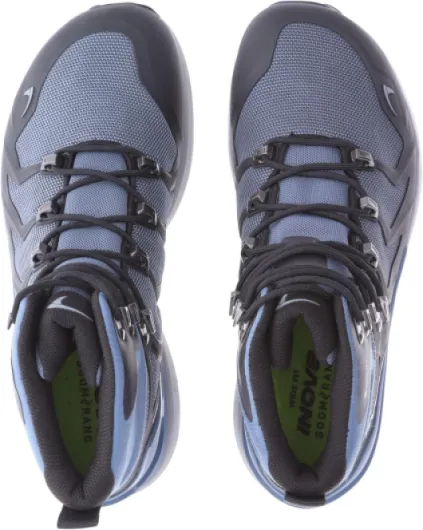
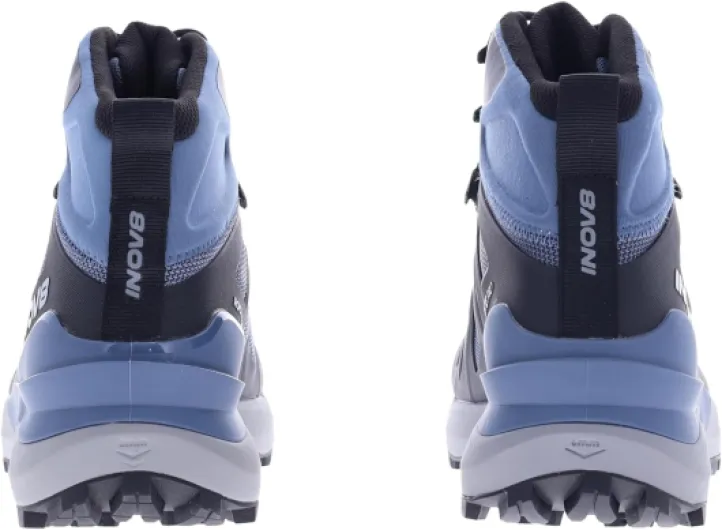
The overall shape is interesting. The heel is quite locked in and snug, while the front has a wider toe box. I noticed this straight away when lacing them up. My toes had room to move and splay, which is good for longer walks and also nice if you have issues like Morton's neuroma, as one of the Amazon reviewers mentioned. The mid-cut around the ankle is not super high, so you get some support but you can still move your ankle freely. If you’re used to very supportive boots, this will feel a bit light. If you hate feeling restricted, you’ll probably like it.
The lacing system is basic but functional: standard eyelets with a couple of fabric loops. No fancy locking hooks, but I didn’t have any trouble getting a secure fit. The tongue is gusseted enough to keep water and debris out. The toe bumper is decent – not massive, but it does take the edge off when you kick rocks or roots. Visually, the boot looks like a slightly more aggressive trail shoe stretched into a mid height, which is basically what it is.
My only small gripe with the design is that the mid-cut and thin upper don’t give that psychological feeling of “armor” you get from thick leather boots. On rocky terrain, I always felt protected underfoot, but not massively protected around the ankle from sharp rocks. Nothing dramatic, but if you’re clumsy like me and often bash your ankles on stuff, you’ll notice the difference compared to a bulkier boot. Still, overall the design is practical, low-key, and clearly focused on function over looks.
Comfort and fit: great feel, slightly tricky sizing
Comfort is where these boots stand out for me. Out of the box, I had zero hotspots or blisters, even on a first 10km walk. That’s rare for me. The combination of the cushioned POWERFLOW MAX midsole and the BOOMERANG insole makes them feel more like a trail running shoe than a classic hiking boot. On hard-packed paths and tarmac, they soak up impact nicely without feeling sloppy.
The fit is where you need to pay attention. The general feedback (and my experience) is that they run a bit small. I usually wear a UK 9 in trainers, and I went up half a size. That gave me about a thumb’s width in front of my big toe, which is what I want for downhill walking. One Amazon review said they normally take a size 6 and had to go up a full size to 7, and still didn’t have much room for thick socks. I’d agree: if you plan to wear thick winter socks or you like extra space, consider going up at least half a size, maybe a full size.
The toe box is one of the strong points. It’s wide enough that my toes weren’t squashed on descents, and my forefoot could spread naturally. This is a big deal if you get numb toes or issues like Morton's neuroma. One reviewer specifically mentioned these worked well for that condition, and I can see why. The heel, on the other hand, is nicely locked in. I didn’t get heel lift, which usually gives me blisters in other boots. The mid-cut around the ankle is padded but not bulky, and I never felt pressure points from the collar.
Overall, comfort is very solid once you get the sizing right. They’re light, flexible, and easy to wear all day. Just be honest with yourself about your foot length and width, and don’t be afraid to size up. If you want a super snug, technical, crampon-style boot, this isn’t it. If you want something that feels like a supportive trail shoe you can walk all day in, they do the job well.
Materials: light but tougher than they look
The upper is made of ballistic nylon with TPU overlays, plus a GORE-TEX membrane inside. On paper that sounds like marketing, but on the trail it actually feels pretty solid. The nylon is thin and flexible, but after scraping through brambles, wet grass and a few rocky sections, I didn’t see any obvious damage or fraying. It’s not going to feel like full-grain leather, but for a synthetic boot the toughness is pretty decent.
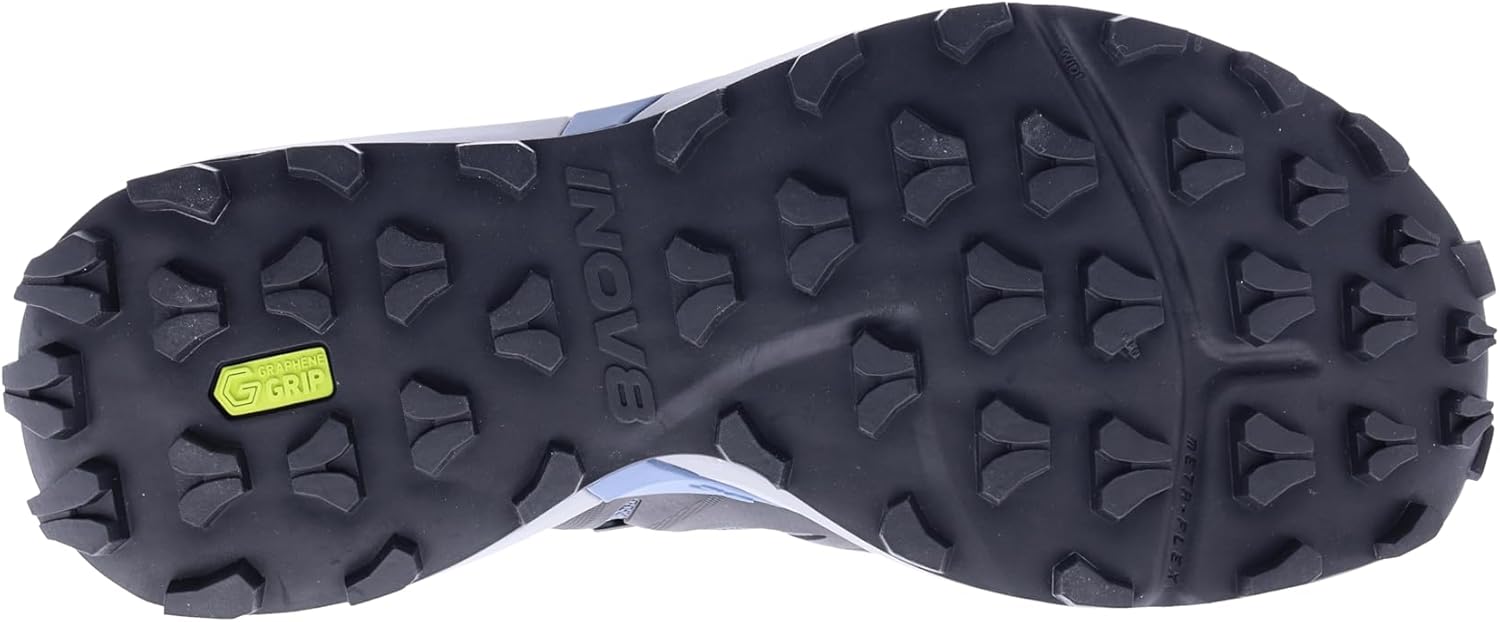
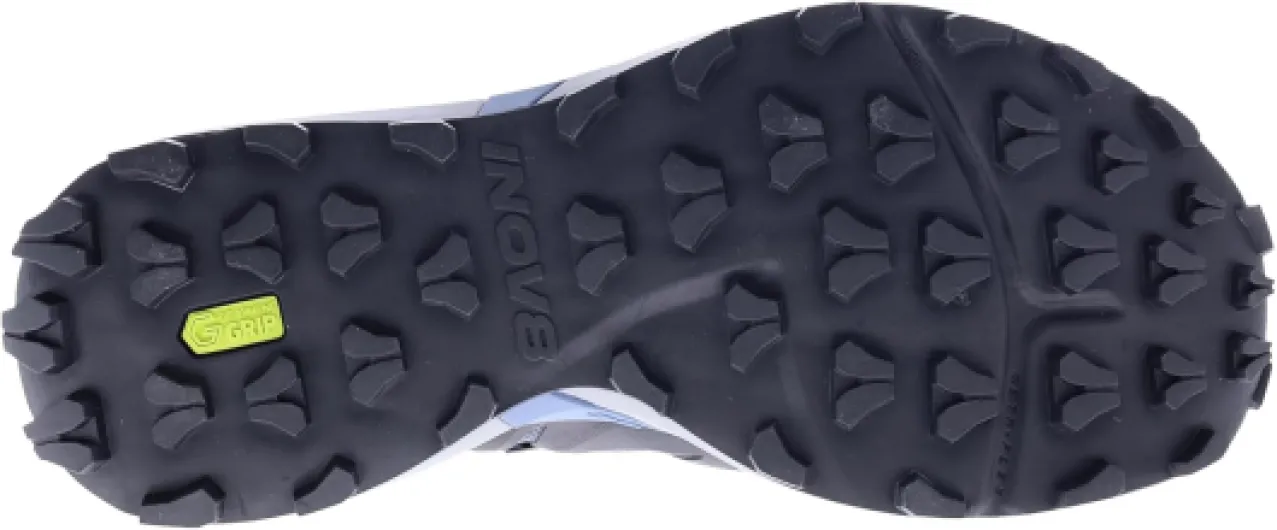
The sole is graphene-enhanced rubber, which is INOV8’s big selling point. I can’t measure the graphene, obviously, but what I can say is that the rubber feels slightly softer and stickier than the soles on some of my older boots. When I pressed a fingernail into it, it gave a bit but not in a cheap, mushy way. Under the insole you’ve got the META-PLATE for rock protection. I could feel sharp stones less than I expected from something this flexible, which tells me that plate is actually doing something, not just a buzzword on the box.
Inside, the BOOMERANG footbed is made of loads of little foam beads. When you press on it with your fingers, it feels bouncy, almost like those bead pillows. On the foot, it gives a bit more spring than a standard flat EVA insole. I wouldn’t say it’s a miracle, but after a 15km walk my feet felt less beat up than in some cheaper boots with hard insoles. The lining is synthetic and feels fine against hiking socks – no rough seams that I noticed, and no rubbing at the heel.
Overall, the materials feel light but not flimsy. If you’re the kind of person who drags boots through years of abuse, leather might still last longer, but you pay the price in weight and break-in time. For regular hiking, wet weather dog walks, and weekend trips, these materials hit a good balance between durability and comfort. I’d still avoid using them as work boots on building sites or for scrambling on sharp volcanic rock all day, but for normal outdoor use they seem well chosen.
Durability: promising so far, but not a tank
Durability is always tricky to judge early on, but after a few weeks of use I can at least comment on the signs. The ballistic nylon upper still looks in good shape: no tearing, no pulled threads, and only minor scuff marks where I’ve scraped rocks and branches. The TPU overlays seem to be doing their job of reinforcing high-wear areas like the toe and sides. They don’t feel like they’ll fall apart in one season, which is a common worry with lighter boots.
The outsole is holding up well. After several walks on mixed terrain (tarmac, gravel, rocky paths), the lugs show some very light wear but nothing alarming. The rubber still feels grippy, not polished or hard. If the graphene marketing is real, the idea is better durability without losing grip. I obviously can’t confirm long-term, but early signs are that they’ll outlast cheaper soft-rubber soles that chew up quickly on rock and roads.
Inside, the BOOMERANG insole has kept its bounce so far. Some cushioned insoles pack out fast and end up feeling flat; these still feel springy under the heel and forefoot. The stitching around the tongue and ankle area is intact, and I haven’t had any delamination of the sole or peeling of the overlays. The GORE-TEX membrane is still waterproof, but that’s something that only really shows its true colours after a year or two of abuse and repeated wet/dry cycles.
To be clear: if you’re expecting the same multi-year, beat-them-to-death lifespan as a heavy leather boot you resole every decade, that’s not what these are. They’re lightweight synthetic boots built for comfort and performance, not indestructible workhorses. For regular hikers who go out most weekends and maybe a couple of trips a year, I’d expect at least a solid couple of seasons out of them, possibly more if you rotate footwear and don’t trash them on very rough terrain daily. So far, they feel reassuringly solid for their weight, but I wouldn’t treat them like industrial safety boots.
Performance on the trail: grip and waterproofing are the main strengths
On the trail, the two big things that stood out for me were grip and waterproofing. The graphene-enhanced outsole is not just a gimmick. On wet rock, it felt more secure than my older boots from other brands. I tried them on some slimy, mossy stones by a stream and on wet wooden bridges, and while nothing is 100% slip-proof, I definitely felt more confident planting my foot and pushing off. In mud, the lugs bite fairly well and don’t clog up too badly, though they’re not as aggressive as a deep winter mud boot.
Waterproofing with the GORE-TEX membrane has been solid so far. I walked through wet grass that would normally soak my socks in minutes, plus several shallow streams and plenty of puddles. My feet stayed dry, and I didn’t feel any dampness creeping in at the flex points, which is where cheaper membranes often fail. As usual with Gore-Tex, breathability is good but not magic. On a warm, humid day my socks were a bit damp from sweat, but nothing crazy, and certainly better than non-breathable boots.
In terms of stability and support, they’re good for a light-to-moderate pack. The POWERFLOW MAX midsole feels stable underfoot, and the META-PLATE does a decent job of blocking sharp rocks. I didn’t feel stones stabbing through the sole, even on rougher paths. That said, the sole has more flex than a traditional heavy boot, so on very rocky ground with a heavy rucksack you might wish for a bit more stiffness. For normal day hikes and fast hikes, the trade-off in flexibility actually makes them more comfortable and less tiring.
Overall performance is pretty strong for what they’re built for: mixed terrain, variable weather, and people who like moving at a decent pace. If your hikes are mostly muddy trails, wet roots, and the occasional rocky section, they’re more than capable. If you’re planning winter mountaineering or hauling 20+ kg over scree all day, I’d look at something beefier. But for typical weekend and holiday hiking, they get the job done without weighing you down.
What these boots are actually built for
The ROCLITE PRO MID GTX sit in that middle ground between trail running shoes and traditional hiking boots. They’re mid-cut, so they cover your ankle, but the whole boot feels more like a reinforced running shoe than a rigid mountain boot. INOV8 clearly designed them for people who move fast on mixed terrain rather than for winter mountaineering or multi-day heavy pack expeditions.
On the spec sheet, you get a POWERFLOW MAX midsole, graphene-enhanced rubber outsole, a GORE-TEX membrane, and their BOOMERANG footbed with those foam beads that bounce back. In real life, that translates to a boot that’s light (you really feel the 10.5 oz / ~300g-ish per boot weight), cushions well on hard ground, and grips surprisingly well on wet rock and mud. They’re also clearly built with all-weather UK-style walking in mind: rain, puddles, mud, and lots of slippery roots.
From using them, I’d say they’re best suited for:
- Day hikes and weekend walks on mixed terrain (mud, rock, forest tracks)
- People who like trail runners but want a bit more ankle protection and waterproofing
- Light to moderate backpack weight (daypack or light overnight, not full expedition loads)
Where they’re less ideal, in my opinion, is for people who want a stiff, supportive boot for heavy loads, scree, or serious winter conditions. The sole has some flex, and while there is a rock plate (META-PLATE) for underfoot protection, it still feels more flexible than classic leather boots. If you mostly walk on well-maintained paths or you move quickly and don’t want to feel like you’re wearing ski boots, they make sense. Just don’t expect them to replace a full-on mountaineering boot.
Pros
- Very comfortable out of the box with good cushioning and a wide toe box
- Excellent grip on wet rock and mixed terrain thanks to graphene-enhanced outsole
- Lightweight for a mid-cut waterproof hiking boot, reducing fatigue on long walks
Cons
- Fit runs small, often requiring at least half a size up, especially with thick socks
- Less ankle support and overall stiffness than traditional heavy leather hiking boots
Conclusion
Editor's rating
After using the INOV8 ROCLITE PRO MID GTX on several wet and mixed-terrain hikes, my conclusion is pretty straightforward: they’re light, comfortable, and grip very well, but they’re not the right boot for absolutely everyone. If you like the feel of trail running shoes but want a bit more ankle coverage and waterproofing, these hit that sweet spot. The POWERFLOW MAX midsole and BOOMERANG insole keep your feet feeling fresh over longer distances, and the graphene outsole inspires confidence on wet rock and muddy paths.
On the flip side, they run small, so you almost certainly want to size up by at least half a size, maybe a full size if you use thick socks. They also don’t offer the same rigid support or bombproof feel as a heavy leather boot, so if you’re carrying big loads or doing more technical mountain stuff, you might want something stiffer and more protective. Durability so far looks good for a lightweight synthetic boot, but I wouldn’t treat them like indestructible work boots.
In short: they’re a very solid option for regular hikers and walkers who value low weight, grip and comfort, especially in wet climates. If your hikes are mostly UK-style trails, forest tracks, and moderate hills, they make a lot of sense. If you’re old-school and love stiff leather boots for everything, or you want a budget pair just for occasional strolls, these might feel over-priced for what you need.