
Summary
Editor's rating
Value: strong performance, but the price stings a bit
Design: modern, technical look without being too flashy
Comfort: good out of the box, with one annoying lace issue
Materials: synthetic-heavy but tough and easy to live with
Durability: feels tough, but long-term will depend on your use
Performance: stable, grippy, and light enough for long days
What you actually get out of the box
Pros
- Lightweight for a mid-cut hiking boot with good ankle support and stability
- Gore-Tex membrane keeps feet dry in wet grass, puddles, and rain while staying reasonably breathable
- Comfortable fit out of the box with good heel lock and no major break-in needed
Cons
- Laces are quite short and stiff, making double-knotting annoying and likely needing replacement
- Price is on the high side at full RRP, and there are cheaper options for occasional hikers

Specifications
View full product page →| Brand | Salomon |
Mid-cut boots that feel more like sturdy trail shoes
I’ve been using the Salomon Quest Echo Gore-Tex as my main hiking boots for a few weeks now, mostly on muddy forest tracks, a couple of rocky paths, and a few very wet dog walks. I usually hike in Meindl and Lowa, so I had a pretty clear idea of what I was comparing them to. I went for my usual size (UK 6.5) and they fit as expected, so at least there were no surprises there.
The first thing that struck me when I put them on was how light they feel for a mid-cut hiking boot. They don’t give that “block of concrete on the foot” feeling some heavier leather boots do. At the same time, the ankle support is clearly there. Walking on uneven cobblestones and roots, I never felt like my ankle was wobbling around, which is honestly the main thing I look for in a hiking boot at my age.
Water-wise, I’ve had them in wet grass, shallow puddles, and general rainy-day mud. The Gore-Tex does its job: my socks stayed dry, and I didn’t feel that cold soggy sensation creeping in. Breathability is decent too. I wouldn’t call them super airy, but after a 3-hour walk my feet weren’t swimming in sweat, which is enough for me for a waterproof boot.
They’re not perfect though. The laces are on the short side and not very pleasant to tie, and for the price (around 200 € at launch), that kind of detail is a bit annoying. Still, overall, my first impression is that these are solid, comfortable mid-cut hikers that give good support without feeling bulky, with a couple of small design choices that could be better thought out.
Value: strong performance, but the price stings a bit
Let’s talk money. At around 200 € list price, these sit in the same bracket as higher-end Meindl and Lowa boots and some other premium brands. For that kind of cash, expectations are high. In terms of comfort, support, and waterproof performance, they do justify a big chunk of that price. You’re getting a light but stable boot with Gore-Tex, decent materials, and a well-thought-out shape that works for long days. If you actually use them a lot—multi-day hikes, regular weekend trips, daily dog walks in bad weather—the cost per year starts to make sense.
On the other hand, there are a couple of details that feel a bit cheap at this price point. The short, stiff laces are the main one. It’s not a deal-breaker, but it’s the kind of thing I’d expect sorted in a premium boot. Also, you’re not getting extras like spare laces or fancy packaging, which doesn’t matter for performance but does affect the feeling of value a bit. Compared to similar boots from Meindl or Lowa, I’d say the Salomon feel lighter and more agile, but maybe slightly less “bombproof” in the long term. So it’s a trade-off: agility and comfort versus that tank-like leather durability.
If you can catch them on discount—like that review mentioning a drop from 200 € to 160 € the next day—then the value improves a lot. Around 150–170 €, I’d call them pretty solid value for money for anyone who hikes regularly and wants a light but supportive boot. At full 200 €, they’re still good, but you’re paying a premium and you need to actually use them to justify it. If you only do one easy hike per year, they’re overkill. If you’re out several times a month in mixed conditions, they start to make sense.
Bottom line: good value if you hike often and make use of the tech, a bit pricey if you’re more of an occasional walker. There are cheaper boots that will do the job for casual use, but they won’t feel as secure or as comfortable on longer, rougher days out.
Design: modern, technical look without being too flashy
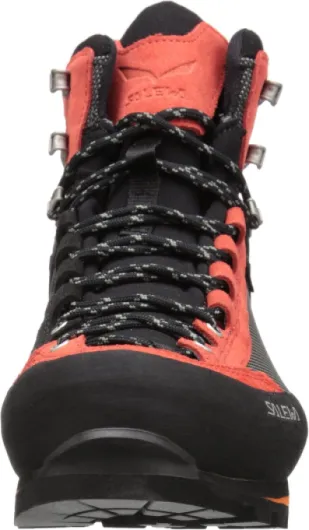
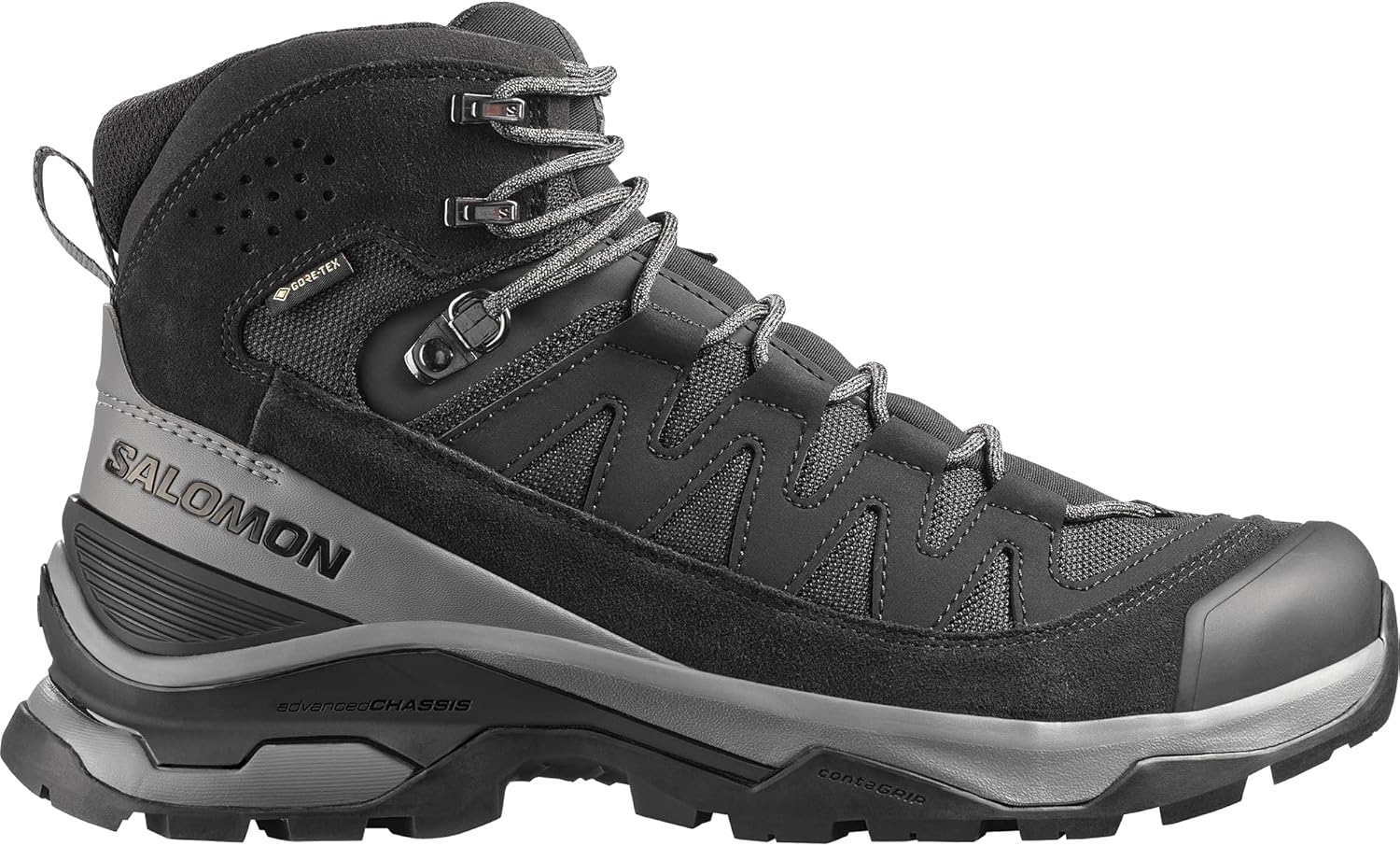
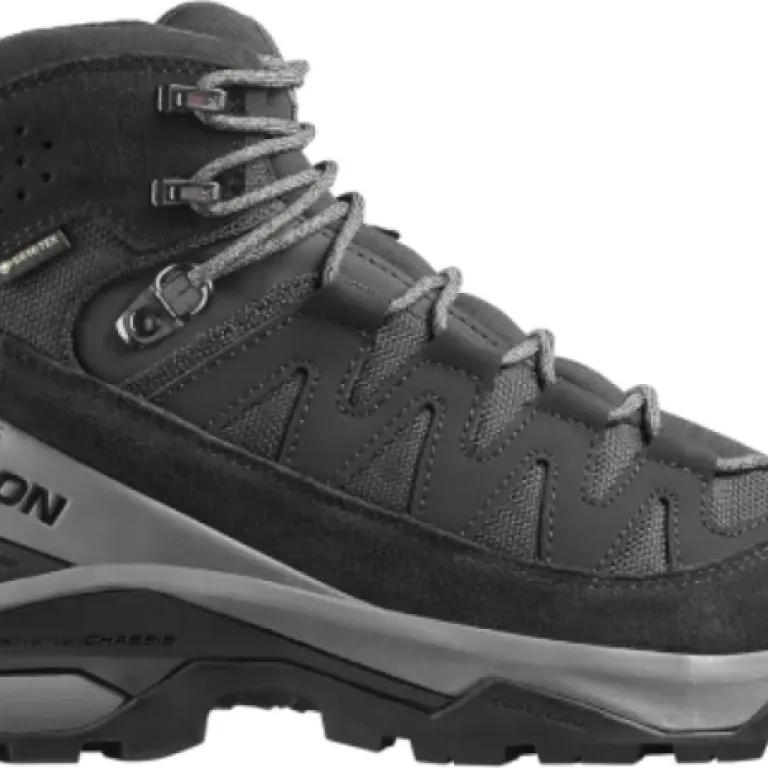
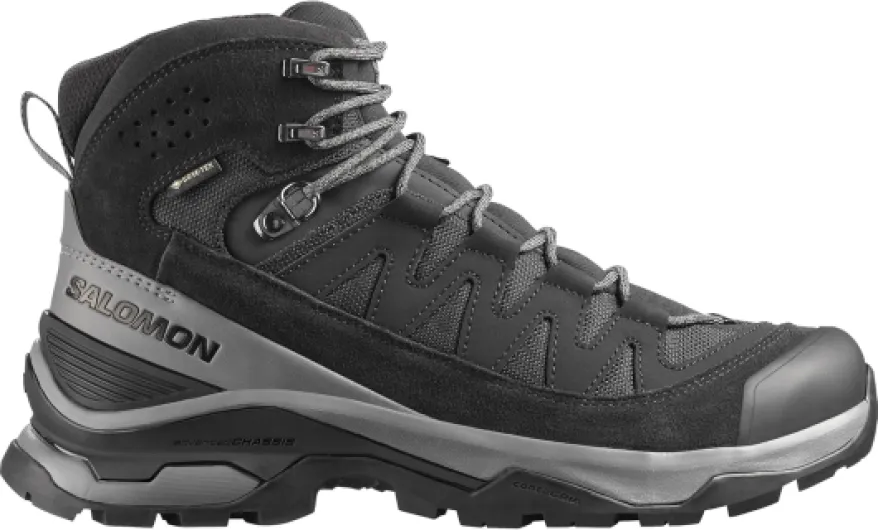
Design-wise, the Quest Echo Gore-Tex sit somewhere between a trail running shoe and a classic hiking boot. The Black / Castlerock Black colorway is pretty discreet: mostly black with some dark grey accents. It hides dirt well, which is a plus if you’re stomping through mud regularly. After several muddy hikes and a quick rinse, they still look decent. No bright neon bits that scream “look at my new boots”, which I appreciate.
The shape is slightly streamlined, not boxy. The mid-cut around the ankle is well thought out: it rises high enough to hold the ankle but doesn’t cut into the front of the ankle when you flex forward on steep climbs. The tongue is padded with a soft, almost terry-like material that feels nice against the top of the foot and helps with comfort when you cinch the laces tight. One thing I liked is the way the heel cup is shaped: it locks the heel down without rubbing. I had zero heel blisters, even on the first two long walks, which is not always the case with new boots.
On the outside, there are a few protective elements: toe cap at the front to protect from rocks and roots, and some side overlays that give structure. They don’t have a massive rubber rand all around like some heavy-duty mountaineering boots, but for forest trails, day hikes, and light alpine use, the level of protection feels enough. The sole profile is clearly hiking-focused, with a decent lug pattern that grips well on dirt and wet grass. On wet smooth stones they are okay, not magic, but definitely not slippery like cheap fashion boots.
If I had to nitpick, I’d say the lace hooks and eyelets are very functional but a bit basic looking, and the laces themselves feel like the weak point of the design: too short and a bit stiff. Visually, they do the job and match the boot, but in terms of practicality they’re not great (more on that in the comfort/performance section). Overall, the design is practical and modern, with a focus on function over style, but still clean enough to wear off the trail without feeling like you’re in full mountain gear.
Comfort: good out of the box, with one annoying lace issue
Comfort was actually a pleasant surprise. I was expecting at least a short break-in period, but the Quest Echo felt pretty good on the first long walk. The padding around the ankle and heel is generous without being mushy. The tongue, with its soft terry-like fabric, makes it easy to crank the laces down for support without creating pressure points on the top of the foot. On a 12 km mixed trail (forest, gravel, some rocky bits), I didn’t get any blisters, which for new boots is already a win.
The overall fit is on the snug side in a good way: the heel is locked in, the midfoot is held, and the ankle is well supported. I really noticed this on uneven ground and when stepping off curbs or rocks at odd angles. Compared to my Meindl boots, these feel a bit more agile and less bulky, closer to a sturdy trail shoe with extra ankle support. If you’ve ever rolled your ankle in city shoes on bad pavement, you’ll appreciate how these hold you in place above the ankle. Walking downhill, my toes didn’t slam into the front, which usually means the heel hold and lacing are doing their job.
Now the downside: the laces. The material is a bit stiff and, more importantly, they’re quite short. If you like doing a double knot (which I always do on hiking boots), you end up fighting for those last centimeters of lace. It’s doable, but annoying, and I can easily imagine older or less flexible users struggling to get a solid double bow. For a boot in this price range, this feels like an unnecessary compromise. Swapping to slightly longer, more pliable laces would solve this instantly, but it’s something you shouldn’t have to think about on a 200 € boot.
Breathability and temperature comfort are decent. I used them in mild weather and a bit of cold, and my feet stayed warm and dry without getting sweaty. I wouldn’t pick them for a scorching summer hike in direct sun, but for spring, autumn, and cooler summer days, they’re perfectly fine. Overall, comfort is a strong point, slightly held back by the silly lace decision, which is annoying but fixable.
Materials: synthetic-heavy but tough and easy to live with
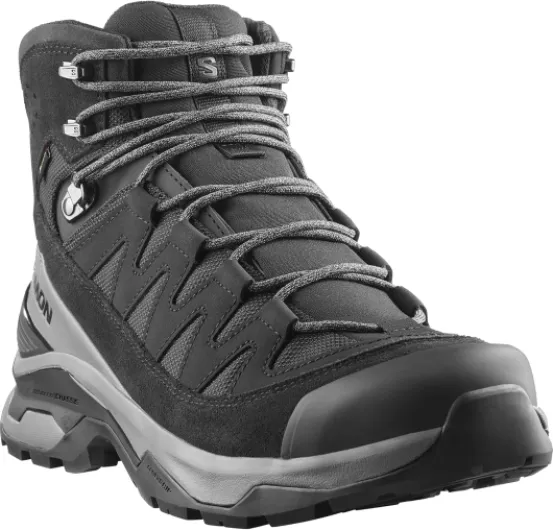
The upper is a mix of synthetic materials with some leather and a Gore-Tex membrane. If you’re used to full leather boots, this will feel quite different. The big upside of this synthetic mix is weight and drying time. After getting them properly muddy and rinsing them with a hose, they dried overnight near a radiator without deforming or going stiff. Full leather boots usually take much longer to dry and need more care. Here, you can pretty much brush off the dirt or rinse them and you’re good.
The inner lining feels like a combination of synthetic fabric and some softer zones around the ankle and tongue. It’s comfortable against the skin with normal hiking socks. I didn’t feel any rough seams or hot spots inside, which is often what ruins boots for me more than anything else. The insole is synthetic and has moderate cushioning. It’s fine for most people, but if you have sensitive feet or do very long days (20+ km), you might want to swap it for a more cushioned or supportive aftermarket insole. The boot’s structure is solid enough to handle that.
The sole is rubber, with a clearly defined tread pattern. The rubber compound feels reasonably firm, which usually means better durability but slightly less instant grip on wet rock. After a few weeks, there’s no visible wear on the lugs, even after quite a bit of road and hard path walking. That’s a good sign. The midsole has enough stiffness to protect your feet on rocky ground, but it’s not a rigid plank either. You can still feel the ground a bit, which I personally like for balance.
In terms of water resistance, the Gore-Tex membrane does what it should. I’ve stood in wet grass and shallow puddles long enough to soak non-GTX shoes, and my socks stayed dry. At the same time, my feet didn’t feel like they were in a sauna. Of course, no waterproof boot is perfect in hot summer conditions, but for a Gore-Tex boot, the balance between waterproofing and breathability is decent. Overall, the materials feel built to last several seasons of regular use, as long as you don’t expect them to be indestructible mountaineering boots.
Durability: feels tough, but long-term will depend on your use
Durability is always hard to judge early, but there are a few signs I look for. After several weeks of fairly rough use (mud, gravel, some rocky paths, and plenty of bending at the forefoot), there’s no visible delamination, no stitching coming loose, and no strange creases that suggest early failure. The toe cap has taken a few knocks against stones and roots and only shows minor scuffing, nothing worrying. The synthetic upper seems to handle abrasion better than I expected, especially given the lighter weight.
The rubber sole shows almost no wear yet, which is good considering I did a fair amount of road and pavement walking in them too. Cheaper boots often start to round off the lugs at the heel quite quickly with that kind of use; here, the edges still look sharp. That said, these are clearly built as backpacking / hiking boots, not as work boots for daily construction site abuse. If you hammer them every day on rough concrete or use them as your only shoe, you’ll probably wear them faster than someone who mainly hikes on trails.
Inside, the lining and padding are holding their shape. Some boots quickly pack down around the heel and ankle, leading to play and blisters. So far, the padding still feels supportive. The insole is basic but hasn’t flattened in any obvious way yet. The Gore-Tex membrane is obviously still intact, given the waterproofing performance, but that’s something that can only really be judged after a year or two. Based on previous Salomon models I’ve had, I’d expect a few good seasons out of them if you look after them reasonably.
One potential long-term concern is the laces and maybe the eyelets if you constantly fight with tight knots. The laces feel like they will fray or go shiny over time, simply because they’re stiff and under more tension due to being short. Honestly, I’d just replace them early with better, slightly longer laces and remove that weak link. Overall, the boot construction itself feels solid and built to last several years of regular hiking, but like any synthetic/Gore-Tex boot, they’re not immortal. If you hike a lot, expect to eventually replace them after a few seasons of hard use.
Performance: stable, grippy, and light enough for long days
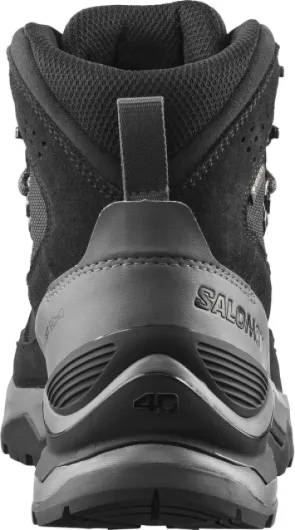
On the trail, the Quest Echo Gore-Tex perform like a lightweight multi-day boot rather than a simple day-hike shoe. The Advanced Chassis 4D tech is marketing speak, but in practice it translates to good torsional stability: the boot doesn’t twist easily, which means your foot stays better aligned when you step on roots or rocks. On rougher terrain, I always felt like my foot placement was secure, and I didn’t get that wobbly feeling you sometimes get with softer, running-style shoes.
The grip is solid on dirt, mud, and wet grass. I used them on a very muddy dog walk where cheaper shoes usually slide around, and these held well. On wet rocks and smooth concrete, they are okay, not magic, but I didn’t have any scary slips. The lug depth and pattern seem well tuned for mixed hiking: enough bite without feeling like you’re walking on big studs when you hit tarmac. For long city-to-trail days, they’re much more pleasant than heavy mountaineering boots.
In terms of fatigue, the relatively low weight (for a boot with this much support) makes a difference. After a 15+ km day, my legs felt more tired than my feet, which is how it should be. Compared to my heavier leather boots, I definitely noticed less leg fatigue, especially on flattish sections where you just plod along. The moderate cushioning is enough to keep sharp stones from poking through, but if you like a very soft, running-shoe-like feel, you might want a thicker insole.
Waterproofing performance is solid. I’ve had them in heavy wet grass and shallow streams, and the inside stayed dry. Combined with the ankle height, they’re well suited for sloppy winter paths and wet shoulder-season hikes. I haven’t used them in snow yet, but based on the grip and support, they should cope fine as long as it’s not deep, alpine stuff. Overall, they do the job very well for hiking, dog walking, and general outdoor use, with enough stability for rough ground and enough comfort for long days.
What you actually get out of the box
Out of the box, the Salomon Quest Echo Gore-Tex look like exactly what they are: modern synthetic hiking boots with a mid-cut shaft. No fancy extras, no bag, no spare laces, just the pair of boots and some basic tags. For a boot in the 200 € range, I wouldn’t have minded a second set of laces or at least something a bit more complete in the packaging, but it’s very standard. The weight is about 0.59 kg for the pair, which matches how they feel in hand: fairly light for a boot with this level of structure.
On foot, the fit is what I’d call true to size with a regular width. My feet are slightly on the wider side and I didn’t feel squeezed, but if you have very wide feet you might want to try them on first. There’s enough room in the toe box for downhill walking without smashing your toes against the front, as long as you lace them properly. The mid height gives enough coverage over the ankle without going too high up the leg, so they still feel moveable and easy to live with for everyday use.
In terms of branding and style, it’s classic Salomon: logo on the side, small branding on the tongue, and a modern outdoor look. They’re clearly not lifestyle sneakers, but I’ve worn them into town with jeans and they don’t look out of place. If you like the more technical, trail-runner-inspired hiking shoe look, this fits that category. If you prefer traditional full-grain leather boots, these will probably feel a bit too synthetic and sporty.
Overall, the presentation is straightforward: you get a functional pair of mid-cut, waterproof hiking boots, nothing more, nothing less. For the price, all the value is clearly in the build and the tech (Gore-Tex, chassis, rubber sole), not in fancy packaging or accessories. Personally, I’m fine with that, but it’s something to know if you expect extras at this price point.
Pros
- Lightweight for a mid-cut hiking boot with good ankle support and stability
- Gore-Tex membrane keeps feet dry in wet grass, puddles, and rain while staying reasonably breathable
- Comfortable fit out of the box with good heel lock and no major break-in needed
Cons
- Laces are quite short and stiff, making double-knotting annoying and likely needing replacement
- Price is on the high side at full RRP, and there are cheaper options for occasional hikers
Conclusion
Editor's rating
The Salomon Quest Echo Gore-Tex are solid mid-cut hiking boots for people who actually spend time on trails and in bad weather. They’re light for the amount of support they give, the ankle hold is reassuring on uneven ground, and the Gore-Tex membrane keeps your feet dry in rain, mud, and wet grass. Comfort out of the box is good, with no painful break-in period in my case, and the grip and stability are clearly above what you get from casual outdoor shoes or cheap boots.
They’re not flawless. The laces are too short and too stiff, which is a silly annoyance on a boot that costs around 200 €. Also, while the materials feel tough, this is still a mostly synthetic, Gore-Tex boot, so if you want something that will last a decade of heavy abuse, a heavier full-leather boot might suit you better. But for most hikers—especially those who like a lighter, more agile feel than traditional tanks—these hit a good balance between comfort, protection, and weight.
I’d recommend them to regular hikers, dog owners walking in all weather, and anyone who wants secure ankle support without feeling like they’re wearing ski boots. If you only go on easy, dry paths a few times a year, you can save money with a simpler shoe. If you hike often, do mixed terrain, and want one boot that handles wet conditions well, the Quest Echo Gore-Tex are a strong option, as long as you’re ready to maybe spend a few extra euros on better laces.