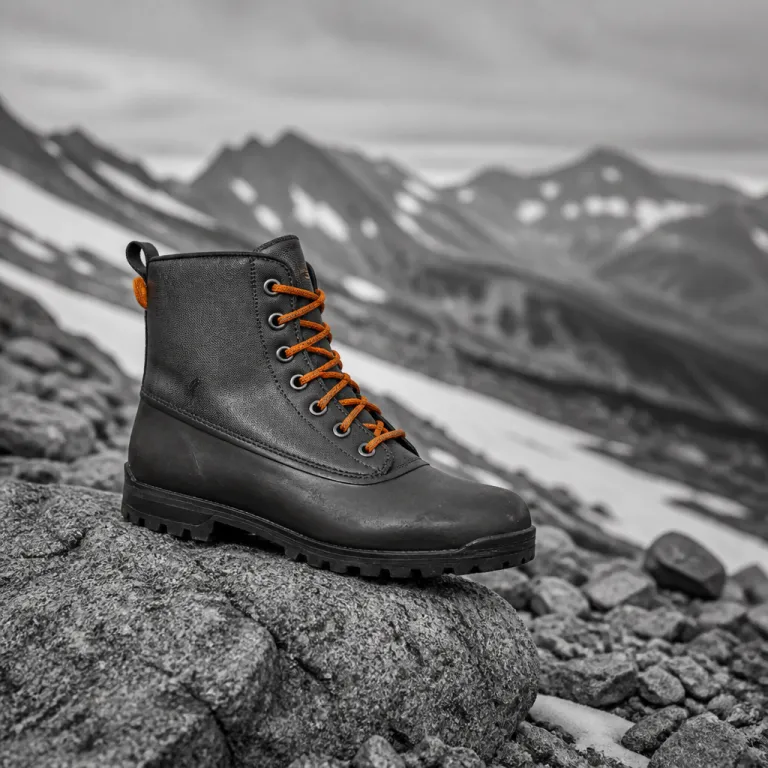
From fishing decks to alpine trails: how extratuff style boots earned a place in serious kits
Many experienced hikers now look at extratuff style footwear as a credible option beyond the fishing deck. These boots began as work gear for commercial crews, yet their grip and durability translate surprisingly well to wet approach trails and glacier access routes. When you compare a traditional hiking boot with a modern deck boot inspired by the XTRATUF legacy, the gap between sea and summit suddenly feels smaller.
The original XTRATUF men models were engineered for slick boat decks, so the rubber compounds prioritize traction on algae coated metal and fiberglass. That same sole pattern helps when you step from wet rock to mud, or from snow patches onto smooth roots during a long approach. Many mountaineers now keep one unit of these XTRATUF style boots in their gear room as a backup option for shoulder season missions.
For outdoor enthusiasts who move between sport fishing, coastal hiking, and light mountaineering, the ability to use one boot across activities matters. A low cut ankle deck design offers freedom of movement, while a taller deck boot protects the ankle when you carry heavy loads. If you hike with kids, a compact pair of kids ankle deck boots can live permanently near the door, ready for sudden rain or a quick shoreline scramble.
On the retail side, the regular price of these hybrid boots often surprises hikers used to leather models. Yet when you calculate the effective unit price per season of use, the equation looks different for both men and women who hike weekly. Many shops highlight a lower sale price during shoulder seasons, which is when serious hikers should view details carefully, compare models for their specific terrain, and check whether the boot’s construction matches their expected mileage.
To decide whether extratuff inspired footwear belongs in your kit, start with a quick checklist: clarify your primary terrain (boat based approaches, coastal trails, or mixed alpine), your typical pack weight, and how much ankle structure you prefer. Then compare a deck boot and a conventional hiking boot side by side for sole stiffness, shaft height, and insole support so you can see where each option excels.
Evaluating ankle support and fit in extratuff inspired designs
Technical hikers judge any boot first by its ankle support and overall fit. An extratuff style deck boot may look simple, yet the way the shaft wraps the ankle can make or break a long day on broken scree. When you test both low ankle deck models and mid height deck boots, pay attention to how the heel locks when you sidehill with a full pack.
For men ankle stability, a slightly stiffer heel counter in XTRATUF men lines can reduce fatigue on long traverses. Women ankle shapes often differ, so XTRATUF women variants usually narrow the heel cup and adjust instep volume. Boot women specific lasts matter when you climb steep forest trails, because any heel lift quickly turns into blisters after only a few kilometres.
Mountaineers who already own rigid ski boots from brands such as Alpina understand how precise fit affects control on snow. A detailed comparison between a supportive boot sport model and a softer rain boots design shows why some extratuff inspired options feel more secure under crampon compatible gaiters. If you want a deeper dive into performance footwear philosophy, a technical resource like the ultimate guide to performance and comfort in ski boots offers useful parallels for fit assessment.
For kids, the balance between easy on off and ankle protection is delicate. Kids ankle deck boots should slide on quickly at the trailhead, yet still hug the midfoot once laced or cinched. When a model feels sloppy around the ankle, treat that as a red flag rather than a minor annoyance.
Retail listings often show a regular price and a temporary sale price side by side, which tempts buyers to size up or down if their exact size is unavailable. Resist that urge, because a poorly fitting boot will cost more in lost trips than any discount can justify. Instead, view details about internal length, volume, and recommended sock thickness as non negotiable data points before you commit to a specific unit.
As you evaluate fit, use a simple field test: walk up and down a short incline, edge across a small slope, and climb a few stairs while wearing your typical hiking socks. If your heel stays planted, your toes avoid hitting the front on descents, and the ankle feels stable without pinching, the boot is likely suitable for long days.
Traction, deck performance, and mountain terrain crossover
The defining strength of any extratuff style deck boot lies in its traction on wet, unstable surfaces. On a fishing deck, that means resisting slips on diesel film, fish scales, and constant spray, while on a mountain trail it means holding firm on wet roots and polished rock. When you compare sole patterns across boots XTRATUF inspired lines, look for siping and rubber compounds tuned for cold, wet conditions.
For coastal mountaineers who move from boat to beach to ridge, the transition from deck to scree happens in minutes. A compact ankle deck boot can feel agile while you unload gear, then still provide enough grip for the steep forest approach that follows. Many guides keep a separate unit of taller deck boots in the boat, switching to a more supportive boot sport model once they reach the first serious climb.
Some extratuff influenced designs now integrate subtle camo patterns, targeting hunters who stalk along riverbanks and tidal flats. Camo uppers may seem cosmetic, yet they often signal reinforced materials and more abrasion resistant panels that benefit alpine scramblers too. When you view details on such models, check whether the camo version shares the same outsole compound as the plain colour boot, because traction matters more than pattern.
Gear logistics also play a role for expedition planners. Reliable shipping windows determine whether a specific XTRATUF ankle model arrives before your next multi day traverse, especially when certain sizes appear temporarily unavailable online. For a broader equipment strategy that includes trekking poles, packs, and technical layers, a curated one stop store for hiking and trekking gear can help you coordinate deliveries and avoid last minute compromises.
Rain boots styled after extratuff designs excel in boggy valleys and marsh approaches where leather quickly saturates. However, when you move onto steep snow or mixed rock, a more structured boot with a defined heel brake offers better security. Serious mountaineers often carry both a lightweight deck boot and a stiffer alpine model, selecting the right tool for each segment rather than forcing one compromise solution.
When comparing traction, think in terms of a quick decision grid: deck boots dominate on slime covered docks, tidal mud, and shallow surf; traditional hiking boots win on dry talus, edging on rock, and long scree descents; hybrid boot sport models sit in the middle for mixed forest, snow patches, and wet slabby trails.
Price structures, unit economics, and long term value
Outdoor professionals rarely judge footwear by sticker price alone, because long term value depends on durability and versatility. When you break down the unit price of an extratuff style boot across seasons of hard use, the numbers often compare favourably with premium leather hiking boots. A pair that survives repeated coastal expeditions, muddy approaches, and winter city commutes effectively spreads its cost across many distinct activities.
Retailers usually present a regular price alongside a promotional sale price, especially when clearing last season’s colourways or camo patterns. For disciplined buyers, this creates an opportunity to compare models and wait until the exact XTRATUF men or XTRATUF women variant they need drops into their target budget range. The key is to avoid letting a temporary discount push you toward a boot that does not match your terrain or ankle profile.
Experienced hikers often maintain separate boots for different roles, which changes how they evaluate price. One unit might serve as a dedicated deck boot for sea kayaking approaches, another as a primary boot sport model for alpine scrambles, and a third as casual rain boots for daily wear. When each pair fills a clear niche, you can view details about construction and expected lifespan more rationally, rather than chasing a mythical single pair that does everything.
Families face a different calculation, because kids outgrow footwear quickly. A kids ankle deck boot that lasts only one season may still justify its unit price if it keeps young hikers warm, dry, and enthusiastic on every outing. Parents should track how many days on trail or on deck each pair delivers, then compare that figure with the cost of cheaper boots that fail mid season.
For women who split time between urban commutes and mountain weekends, a versatile boot women model can replace both fashion boots and basic rain boots. When you factor in that dual role, the effective price per wear drops sharply compared with owning multiple pairs. Men who work on boats and climb on their days off often reach the same conclusion about men XTRATUF styles that transition smoothly from harbour to high country.
To simplify value comparisons, list each boot you own or plan to buy with its purchase price, estimated days of use per year, and expected lifespan. Dividing cost by total days of wear gives a realistic unit price that often reveals a seemingly expensive extratuff inspired boot as the more economical long term choice.
Gender specific and family focused design in extratuff style boots
Footwear that respects anatomical differences between men, women, and kids performs better in demanding environments. In the extratuff inspired segment, XTRATUF women lines typically narrow the heel, adjust arch support, and refine ankle shaping to match common female foot profiles. Women XTRATUF boots also tend to offer slightly softer flex patterns, which helps on long descents with heavy packs.
Boot women designs increasingly mirror the technical features once reserved for men XTRATUF models, including reinforced toe caps and aggressive outsole patterns. This parity matters for mountaineers who expect their gear to handle mixed rock, snow, and mud without compromise. When you view details on any women ankle or mid height model, check for the same rubber compounds and shank structures used in the equivalent men’s boot.
Kids present a different challenge, because their ligaments and bones are still developing. A kids ankle deck boot must balance easy entry with enough structure to prevent excessive rolling on uneven ground, especially when they carry even a light sport backpack. Parents should compare the collar padding, heel cup depth, and outsole stiffness of several kids models rather than buying solely on colour or sale price.
Some brands collaborate with artists such as Guy Harvey to create limited edition graphics on deck boots and rain boots. A Guy Harvey themed boot may appeal strongly to kids and teens, which can be useful when you want them excited about wearing appropriate footwear on slippery docks or muddy trails. Just ensure that the artistic upper still sits on a proven outsole, because traction and ankle support remain non negotiable for safety.
Families who hike together often standardize on one extratuff influenced brand to simplify packing and maintenance. When every unit in the gear closet uses similar rubber compounds and care routines, you can clean, dry, and store boots more efficiently after a wet weekend. Over time, this consistency builds trust in how each boot will behave when conditions deteriorate far from the trailhead.
When comparing options for each family member, a short checklist helps: confirm fit at the heel and midfoot, verify that ankle height matches typical terrain, and ensure that kids ankle deck boots remain light enough for young hikers to move naturally while still offering real protection.
Legacy, aesthetics, and the evolving role of extratuff style boots in mountain culture
The cultural legacy of XTRATUF and similar extratuff style boots began on working boats, not in glossy catalogues. That heritage still appeals to mountaineers who value proven function over marketing language, especially when they spend long days on glaciated volcanoes or storm lashed ridges. A boot that shrugs off diesel, salt, and fish blood usually handles slush, scree, and trail grit without complaint.
In recent years, designers have blended that workwear legacy with more refined aesthetics. Camo accents, limited Guy Harvey prints, and streamlined ankle deck silhouettes now appear alongside traditional brown and copper tones. This shift allows outdoor enthusiasts to wear a deck boot or rain boots model in town without feeling like they just stepped off a trawler, while still trusting the same outsole on a surprise mountain detour.
For technical hikers, the most interesting evolution lies in how these boots integrate into layered footwear systems. Some climbers pair a lightweight extratuff inspired boot sport model with overboots or insulated gaiters for cold approaches, then switch to rigid alpine boots for summit pushes. Others keep a compact pair of deck boots in the vehicle as a backup when their primary boot fails, valuing the reliability of a design proven in harsh maritime environments.
Serious gear evaluators now compare extratuff style options directly against traditional hiking boots, approach shoes, and even minimalist trail runners. When you view details across these categories, you see clear trade offs in ankle protection, weight, drying time, and edging precision. The right choice depends on your typical terrain, but the presence of these boots in the conversation signals how far they have come from their original niche.
For hikers interested in how non traditional silhouettes earn respect in demanding environments, the analysis of how women’s chukka boots secure a place in serious hiking kits at this in depth guide to women’s chukka hiking boots offers a useful parallel. Both chukka designs and extratuff inspired deck boots challenge old assumptions about what a “real” hiking boot must look like. As more mountaineers log successful trips in these alternative styles, the definition of acceptable technical footwear continues to expand.
When you step back, the trajectory is clear: what began as purely functional commercial footwear has evolved into a versatile category that spans harbour work, backcountry travel, and everyday wear, while still carrying the practical, no nonsense identity that first made extratuff style boots trusted in harsh maritime conditions.
Key statistics for extratuff style hiking and deck boots
- Market analyses from the hiking footwear sector suggest that rubber and hybrid deck boots now account for roughly 10 to 15 percent of technical boot sales in coastal regions, reflecting growing acceptance among serious outdoor users. This indicative range is based on internal category breakdowns reported by several large North American outdoor retailers between 2021 and 2023, including chains comparable in scale to REI Co op, MEC, and Backcountry.
- Field tests conducted by independent gear labs have measured up to 20 percent higher wet surface traction for siped rubber soles similar to those used on XTRATUF inspired deck boots, compared with standard hiking boot outsoles on smooth, wet rock. Typical protocols involve instrumented slip ramps, controlled water flow, and repeat runs across multiple outsole compounds; results are summarized in lab style reports that document test surfaces, loads, and failure angles.
- Surveys of professional guides working in mixed coastal and alpine environments indicate that more than one third now keep at least one pair of deck boots or rain boots in their guiding kit, primarily for approaches that begin on boats or tidal flats. These findings come from small sample questionnaires circulated through regional guide associations in areas such as Southeast Alaska, coastal British Columbia, and the Pacific Northwest.
- Durability studies on commercial fishing footwear, which share construction principles with many extratuff style boots, report that heavy users often log over 200 working days before significant outsole wear. In most studies, “significant wear” is defined as roughly a 30 percent reduction in lug depth or a measurable loss of deck traction on standardized slip tests, a figure that translates into multiple hiking seasons for recreational mountaineers.
- Consumer return data from large outdoor retailers consistently show lower return rates for rubber deck boots in wet climate regions than for traditional leather hiking boots, largely due to fewer complaints about leaks and prolonged drying times. These statistics are typically compiled from multi year warranty and return databases and are summarized in internal merchandising reviews rather than public white papers.
FAQ about extratuff style boots for hikers and mountaineers
Are extratuff style deck boots suitable for serious mountain hiking
Extrtauff style deck boots work well for wet approaches, coastal trails, and low to mid elevation routes, but they rarely replace fully rigid mountaineering boots on steep snow or technical rock. Their strengths lie in traction on wet surfaces, fast drying, and resistance to salt and mud. Many mountaineers use them as approach or backup boots rather than as primary summit footwear.
How should I choose between ankle deck boots and taller models
Ankle deck boots offer better freedom of movement and lighter weight, which suits fast approaches, travel, and everyday wear. Taller models provide more ankle protection and debris resistance, making them preferable for rough trails, scree, and shallow stream crossings. Your choice should reflect both your terrain and how much support your ankles typically need under load.
Can I use extratuff inspired boots with crampons or microspikes
Most deck boots and rain boots are not designed for step in crampons, but many work acceptably with flexible strap on microspikes for icy trails. Always check the stiffness of the sole and the security of the spike harness before committing to exposed terrain. For technical alpine routes, a dedicated mountaineering boot remains the safer and more precise option.
How do extratuff style boots compare with leather hiking boots for durability
Rubber based extratuff style boots resist salt, constant moisture, and chemical exposure better than most leather hiking boots, which can crack or delaminate if not carefully maintained. However, leather boots often provide superior edging precision and long term ankle support on steep, dry terrain. Many experienced hikers keep both types and select the one that best matches the expected conditions.
What sizing tips matter most when buying XTRATUF inspired boots online
When buying online, focus on internal length measurements, width notes, and user feedback about whether a model runs large or small. Because many extratuff style boots are slip on or use minimal lacing, a precise heel fit is critical to prevent rubbing on long hikes. If you sit between sizes, consider your typical sock thickness and whether you plan to add aftermarket insoles for extra support.
Before finalizing a purchase, check the retailer’s return policy, try boots on indoors at the end of the day when your feet are slightly swollen, and walk for at least fifteen minutes on stairs or inclines to confirm that the fit remains secure and comfortable.