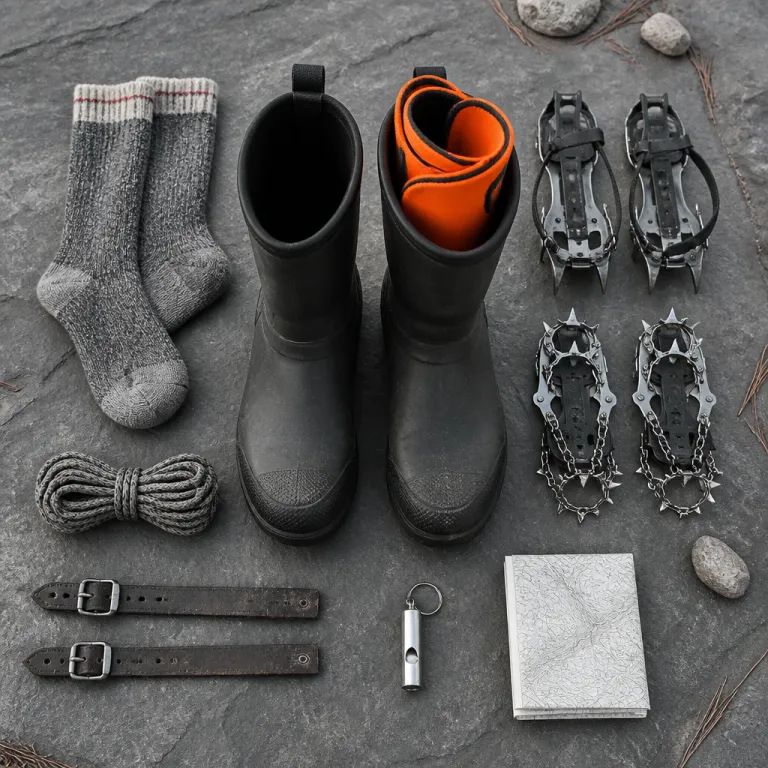
From trawler to trail: why fisherman boots matter in the mountains
Fisherman boots were built for brutal North Atlantic decks, not manicured paths. Their heritage as a working boot for commercial fishing gives them a unique legacy of grip, warmth, and protection that transfers surprisingly well to exposed alpine routes. Many experienced hikers now view this work-boot lineage as a serious alternative to traditional leather hiking boots on wet, cold, and mixed terrain.
On a storm-swept deck, a deck boot must keep a worker upright on slime, ice, and rolling steel surfaces, which is not so different from edging across wet granite slabs or muddy scree. That is why modern fisherman boots for men and women often use aggressive rubber compounds and slip-resistant tread patterns that rival technical approach shoes. When you evaluate any such product for mountain use, focus on the outsole rubber compound, the height around the ankle and calf, and the overall boot stiffness under load.
For outdoor enthusiasts who split time between coastal fishing and high mountain traverses, a single pair of fisherman boots can bridge both activities. A mid-height ankle boot with a flexible wide-calf design works well for scrambling up to around 3 000 m while still fitting under rain pants on a small boat. Popular models in this niche usually combine rubber–neoprene uppers, a reinforced toe box, and a deck-inspired lug pattern that sheds mud as efficiently as it sheds fish scales.
Foot protection: steel toe, rubber shells, and long days under load
Mountain environments punish feet with rockfall, crampon bails, and sharp scree, so the protective DNA of fisherman boots is highly relevant. Many commercial fishing models use a steel toe cap and a thick rubber shell to shield against dropped gear, and that same steel-toe structure can prevent broken toes when a boulder shifts under a heavy pack. For men’s steel-toe designs and women’s deck styles, the key is balancing that protection with enough flex for steep ascents and long traverses.
When you compare a traditional hiking boot with a steel toe fisherman boot, you will notice the latter often has a more generous toe box and a slightly wider platform, which improves stability on loose talus. Hikers with a wide forefoot or a wide calf frequently report that wide-calf fisherman boots feel less constrictive than narrow mountaineering boots, especially on multi-day trips. If you have a history of bunions or neuromas, pairing a wide-size deck boot with an orthopedic insole from a specialist brand can dramatically reduce nerve irritation.
Not every hiker needs a full steel toe, and some prefer composite or reinforced rubber toes that save weight while still guarding against impacts. Men’s ankle-height fisherman boots with a partial rubber bumper around the toe strike a good compromise for mixed scrambling and glacier approaches. Women’s deck boots with a softer toe can still offer enough protection for trekking poles, crampon straps, and occasional rock contact while remaining comfortable for regular daily wear in camp.
Fit, size, and wide calf comfort for serious elevation gain
Fit is the single most important factor when adapting fisherman boots to hiking, because poor sizing will ruin even the best product. Commercial fishing brands often cut their rubber boots generously, so a men’s heritage model in your usual size may feel looser than a technical alpine boot from a mountaineering brand. Before committing to a long expedition, you should test the exact size with your thickest hiking socks and any custom insole you plan to use.
Many fisherman boots are designed for a wide calf and a roomy ankle, which helps circulation during long hours of standing on a deck but can cause heel lift on steep climbs if not managed correctly. To counter this, look for an ankle boot or ankle deck design with an adjustable gusset or lacing over the instep, because that allows you to lock the heel while still enjoying the comfort of a wide-calf opening. When in doubt, consult a detailed sizing chart such as those explained in guides on how to read a boot sizing chart and then add half a size if you expect multi-day foot swelling.
Hikers with narrow ankles but muscular calves often find that a men’s ankle deck boot or women’s deck boot with a neoprene shaft hugs the leg without cutting circulation. Rubber–neoprene shafts stretch enough to accommodate a wide calf while still sealing out debris and snow on high passes. For those who alternate between fishing and hiking, owning both a regular-size pair and a slightly larger regular-width pair for winter socks can be a practical solution.
Traction, slip resistance, and deck technology on alpine rock
Grip is where fisherman boots earn their reputation, because they are engineered to keep workers upright on slime-covered decks and metal ladders. The same slip-resistant rubber compounds that help prevent falls on a rolling deck can provide exceptional traction on wet roots, river crossings, and polished limestone. When you compare outsole patterns, prioritize deep siping, multi-directional lugs, and a heel brake that bites on steep descents.
Deck boots originally used flat soles to avoid snagging nets, but modern deck boot designs for outdoor use now feature hybrid patterns that work both on a boat and on a trail. A men’s heritage deck boot might use a fine-siped forefoot for wet rock, while a women’s deck model adds chunkier lugs under the heel for braking on scree. For technical scrambling, some hikers prefer ankle deck boots with a slightly stiffer midsole, because that structure edges better on narrow rock holds without feeling like a rigid alpine double boot.
Rubber boots made with rubber–neoprene blends remain flexible in cold temperatures, which preserves traction when standard rubber compounds harden and lose grip. If you often hike in icy shoulder seasons, consider a deck-boss-style fisherman boot with a softer winter rubber and a pronounced toe spring that rolls smoothly from heel to toe. For summer missions where you carry a tiny wind shell and emergency puffy as described in guides on summer layering for hikers, a lighter ankle boot with a siped deck sole can keep your pack weight low while still gripping wet slabs.
Price, value, and how to read fishing boot sales like a gear analyst
Serious hikers often obsess over grams and materials but neglect the economics of their footwear, even though price and durability strongly influence long-term performance. Fisherman boots sit at an interesting intersection where a work-grade product built for commercial fishing can undercut premium mountaineering boots on regular price while outlasting them in abrasive conditions. When you evaluate any deal price or sale price, calculate cost per 100 km of use rather than focusing only on the sticker.
Many brands list a regular price for their flagship men’s and women’s deck lines, then rotate seasonal promotions that temporarily lower the sale price for specific colors or sizes. A best seller deck boot in a common size might rarely go on sale, while less popular colors or wide-calf variants can offer exceptional value during clearance events. If a seller advertises free shipping, factor that into your total cost, because a slightly higher regular price with free shipping can still beat a lower advertised price once delivery fees are added.
Work-grade rubber boots and rubber–neoprene fisherman boots often require less maintenance than full-grain leather hiking boots, which reduces long-term costs for waxes, conditioners, and repairs. Men’s steel toe models with replaceable insoles and robust outsoles can survive years of mixed fishing and hiking, turning a seemingly high initial price into a smart investment. For budget-conscious mountaineers, tracking boot sales across multiple retailers and comparing the effective deal price per season of use is as important as comparing grams per meter of elevation gain.
Choosing the right fisherman boot for your terrain and style
Not every fisherman boot suits every mountain, so your selection should start with terrain, climate, and personal biomechanics. On wet coastal ranges where fishing and hiking blend into the same weekend, a mid-height ankle deck boot with a slip-resistant sole and a flexible wide-calf shaft offers the most versatility. In contrast, high alpine routes with rockfall exposure may justify a heavier men’s steel toe or women’s deck-boss model that prioritizes protection over speed.
For fast-and-light missions, look for a men’s ankle fisherman boot or women’s deck boot that keeps weight low while still offering a supportive midsole and a grippy deck outsole. Hikers who carry heavy packs on multi-day traverses often prefer a stiffer deck-boss-style boot with a pronounced heel brake, because that structure reduces quad fatigue on long descents. If you regularly transition from a fishing deck to steep forest trails, owning both a lighter ankle boot and a more protective steel toe pair lets you match your footwear to the day’s risk profile.
When assessing any product page, read beyond the marketing copy and study the technical specifications such as rubber compound, shaft height, and stated use for fishing or work environments. Pay attention to user photos that show how the boot flexes at the toe and around the ankle, because that real-world view often reveals more than studio images. Over time, the legacy of fisherman boots in harsh maritime conditions has proven that a well-chosen pair can serve as a reliable partner from sea-level decks to glaciated passes above roughly 3 000 m.
Key figures on fisherman boots and hiking performance
- Occupational safety summaries from the United States Bureau of Labor Statistics (for example, the BLS “Nonfatal Occupational Injuries and Illnesses Requiring Days Away From Work” tables for fishing, hunting, and trapping) consistently show that slips, trips, and falls make up a substantial share of nonfatal workplace injuries in fishing and related industries, which explains why modern fisherman boots invest heavily in slip-resistant outsole technology.
- Independent lab testing reported by footwear research groups such as SATRA Technology and university footwear biomechanics labs indicates that specialized deck rubber compounds can deliver measurably higher wet-surface traction than generic rubber soles, a margin that translates directly into fewer slips on wet rock and roots for hikers.
- Market analyses from outdoor industry reports, including NPD Group and European Outdoor Group summaries on hybrid work–outdoor footwear, suggest that hybrid work–outdoor boots, including fisherman-style models, now represent a noticeable share of the broader hiking and work boot segment, reflecting rising interest among hikers in durable, multi-use footwear.
- Field studies on foot health among workers who stand all day on hard surfaces, such as research published in journals like Applied Ergonomics and the Journal of Occupational Rehabilitation, report that using supportive insoles and correctly sized boots can significantly reduce reported foot pain, which supports the case for careful sizing and insole selection when adapting fisherman boots to mountain use.
FAQ about fisherman boots for hiking and mountaineering
Are fisherman boots suitable for long distance mountain hikes
Fisherman boots can work for long-distance hikes if the fit, weight, and midsole support match your biomechanics and pack weight. Models with cushioned insoles, moderate stiffness, and a secure ankle fit perform best on multi-day routes. Very heavy steel toe work boots may be overkill for ultralight trips but excel on rugged, rocky terrain.
How should I choose the right size in fisherman boots for hiking
Start with your usual hiking boot size, then check the brand’s specific sizing chart because many rubber fisherman boots run slightly large. Try them on with your thickest hiking socks and any orthotic insoles you use, ensuring a thumb width of space in front of the toes. Walk on an incline to confirm your heel does not lift and your toes do not hit the front on descents.
Do steel toe fisherman boots cause fatigue on steep ascents
Steel toe caps add weight at the front of the boot, which can increase fatigue on very steep or long ascents, especially for lighter hikers. However, the added protection is valuable on loose scree, rocky gullies, and work environments where impacts are common. If you prioritize speed, consider composite toe or reinforced rubber toe models instead.
Can rubber fisherman boots handle winter mountaineering conditions
Rubber and rubber–neoprene fisherman boots insulate well and stay flexible in cold temperatures, making them suitable for wet snow and slushy approaches. For technical winter mountaineering that requires crampons and precise edging on ice, specialized mountaineering boots remain superior. Many hikers use fisherman boots for approaches and lower-angle winter hikes, then switch to technical boots for steeper objectives.
How do fisherman boots compare to traditional leather hiking boots in durability
Work-grade fisherman boots are designed to withstand constant exposure to saltwater, chemicals, and abrasion, so their rubber shells often outlast leather uppers in very wet or muddy environments. Leather hiking boots, however, can be resoled and conditioned, which extends their lifespan when properly maintained. The better choice depends on whether you face more water and mud or more dry, rocky terrain in your typical routes.