
Summary
Editor's rating
Value for money: solid if you accept the lifespan
Design: more warehouse sneaker than construction boot
Comfort: good for long shifts, with a few small caveats
Materials: synthetic all the way, with pros and cons
Durability: good for a year or so, then things start to go
Performance on the job: ESD, grip, and safety
What you actually get when you buy these
Pros
- Very comfortable for long shifts on concrete thanks to Anti-Fatigue cushioning
- Legit ESD performance that passes workplace static tests without extra straps
- Lighter and more sneaker-like than traditional steel-toe leather boots
Cons
- Durability is limited to roughly 12–18 months of regular use
- Stock insole is only average and often needs upgrading for better support

Specifications
View full product page →| Brand | Timberland PRO |
Work boots that feel like sneakers… sort of
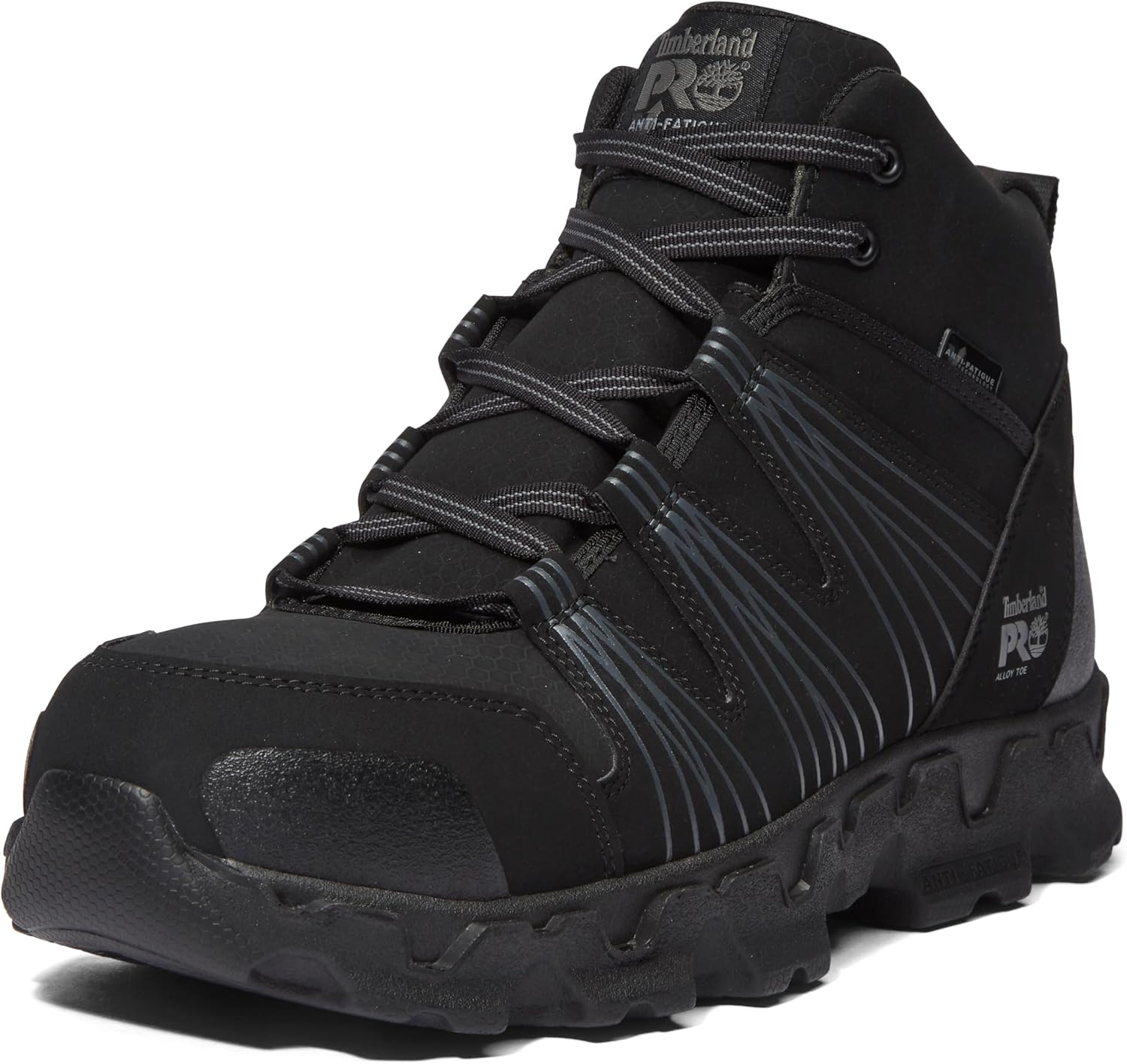
I’ve been wearing these Timberland PRO Powertrain Mid Alloy Toe boots (black, 2024 version, 10 wide) for a bit at work in an electronics/warehouse environment. My usual rotation is a pair of clunky steel-toe boots and some cheaper safety sneakers from Skechers, so I’ve got something to compare them to. I picked these mainly for the ESD rating and the lighter alloy toe, because I’m on concrete floors all day and I deal with electronics that don’t like static.
First impression: they feel more like a chunky athletic shoe than a classic work boot. If you’re used to heavy leather boots with steel toes, these will feel noticeably lighter out of the box. Not featherweight, but lighter enough that you notice it after a full shift. They don’t need much break-in either; after the first day, I wasn’t thinking about hot spots or blisters, which is already a win compared to some boots I’ve had to suffer through for a week.
In terms of protection, they tick all the usual boxes: alloy safety toe, ESD compliance, slip and oil resistance. That’s the theory. In practice, I walked on dusty concrete, a bit of oil near machinery, and some wet spots near the loading dock. Grip has been solid so far, no weird sliding moments. The ESD part actually matters for my job, and the shoes pass the daily static tests on our floor tester without me needing extra straps on my ankles like with my old pair.
They’re not perfect though. Build quality feels decent, but based on other Timberland PROs I’ve owned and what I’m already seeing on the outsole edges and upper stitching, I’d say you’re realistically looking at about a year of regular use before things start to peel or split if you’re wearing them hard, maybe a bit more if you rotate with another pair. For the price, I’d call them pretty solid, but not some indestructible tank. If you want something that lasts several years of heavy abuse, these probably aren’t it.
Value for money: solid if you accept the lifespan
In terms of value, I’d put these in the “pretty solid if you know what you’re buying” category. You’re paying for a mix of comfort, safety features (especially ESD and alloy toe), and a lighter, sneaker-like feel. You’re not paying for tank-level durability or premium leather. If you accept that you’ll probably replace them every 12–18 months with regular use, the price becomes easier to swallow, especially if your feet and knees feel better during that time.
Compared to cheaper safety sneakers I’ve tried, the Timberland PRO Powertrain feels better built and more supportive. The Anti-Fatigue cushioning is noticeably nicer over a long shift, and the ESD compliance actually checks out on workplace testers, which is not always the case with budget brands that just slap a label on. Also, the fit out of the box is better than a lot of low-cost options; you don’t spend a week breaking them in or taping up hot spots. So, if your alternative is buying a cheaper pair that hurts your feet and fails ESD tests, these are worth the extra money.
On the other hand, if your workplace doesn’t care about ESD and you mostly need a basic steel-toe for occasional use, you could probably get away with a cheaper boot that might even last longer if it’s full leather. That’s why I wouldn’t call these a universal great deal. They’re a good deal for a specific type of user: someone working indoors, on hard floors, who needs ESD and wears safety footwear every single day. For that profile, the comfort and lighter weight pay off.
Overall, I’d rate the value as good but not mind-blowing. You get a comfortable, safe, and fairly light work boot that does its job well for about a year or so. If you see work shoes as a consumable you replace regularly, these make sense. If you’re hunting for a long-term investment boot to last several years of rough use, this isn’t the best match for your money.
Design: more warehouse sneaker than construction boot
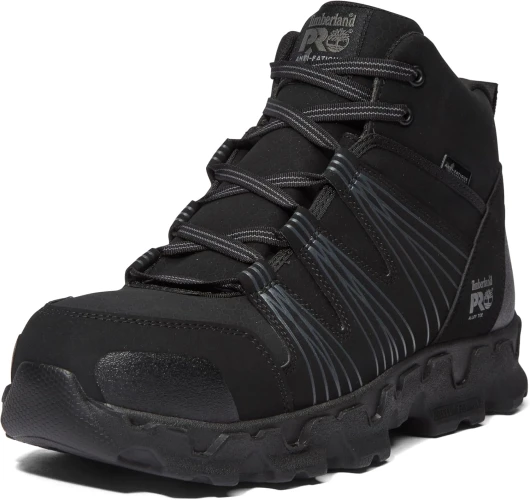
Design-wise, these sit somewhere between a high-top sneaker and a light-duty work boot. The mid-height collar gives you a bit of ankle coverage without feeling like a big leather work boot wrapping your leg. The overall shape is a bit bulky in the toe area because of the alloy cap, but it’s not as blocky as many steel-toe boots. If you’ve worn safety sneakers from brands like Skechers Work or Reebok Work, this feels similar in bulk, just slightly more rugged.
The black synthetic upper has a clean, simple look. No fake leather shine, no weird color accents that scream “safety shoe”. The Timberland PRO logos are there but not huge. In a warehouse or lab environment, they look perfectly normal. You could walk into a grocery store after work and not feel like you’re wearing full PPE on your feet. I like that they don’t try too hard to look stylish; they’re just neutral and practical.
One design detail I appreciate is the lacing system. The eyelets are straightforward and the laces slide easily, so you can tighten the midfoot and leave the top a bit looser if you want more ankle flex. There’s no fancy speed hooks, but honestly that’s fine; fewer metal bits to catch on stuff. The tongue is padded enough to keep the laces from digging in, and it stays in place once you’ve laced up. The collar padding is decent too, no rubbing on the ankle bone after a full day.
If I have a complaint on design, it’s that the toe box looks a bit big and bulbous, especially in the wide size. Functionally, it’s comfortable and gives the toes room to move, but visually it’s a little clunky. Also, because the upper is synthetic and not thick leather, it doesn’t hold a “polished” look; after a few days of use, you start to see creases and scuffs more clearly. For a work shoe, that doesn’t bother me, but if you’re picky about keeping them looking fresh, you’ll notice it. Overall, the design is practical, low-key, and geared more toward comfort and safety than style.
Comfort: good for long shifts, with a few small caveats
Comfort is where these shoes do pretty well. Out of the box, there was basically no break-in period for me. First day, I wore them for a full shift on concrete floors, walking and standing most of the time, and I didn’t end up with blisters or hot spots. Compared to a standard steel-toe leather boot, that’s a big difference. You put these on and they feel closer to a running shoe with a stiff toe cap than a boot that needs days of breaking in.
The Anti-Fatigue Technology is not marketing fluff; you can feel the cushioning under your heel and forefoot. After 8–10 hours, my legs feel less beat up than with my older steel-toe boots. It’s not like walking on clouds, but it does take the edge off standing on hard floors all day. One Amazon review mentioned wearing them on cement with no pain or discomfort, and I’d agree with that. If your main issue at work is sore feet and knees from standing, this type of cushioning helps.
The wide fit is also a comfort plus. My toes have room to spread out, and there’s no squeezing around the forefoot. The trade-off is that the toe box feels a bit roomy; if you like a snug, locked-in fit at the front, you might find them slightly loose. With thicker work socks, it’s fine. The collar and tongue padding are enough to keep the ankle area comfortable, and I haven’t had any rubbing or pressure points there. The boot also helps me stand a bit straighter, similar to what one reviewer with flat feet mentioned, probably thanks to the overall shape and midsole support.
On the downside, the stock insole is only “good enough.” If you have flat feet, plantar fasciitis, or just prefer more arch support, you’ll likely want to drop in a better insole after a few months. Also, while the boots are lighter than steel-toe leather ones, they’re still a bit heavier than pure athletic safety sneakers. One review called them “a bit heavy but worth it,” and that’s fair: they’re not ultralight, but the weight is reasonable for the protection you get. Overall, for all-day indoor work on hard surfaces, I’d rate the comfort as one of the main reasons to pick these up.
Materials: synthetic all the way, with pros and cons
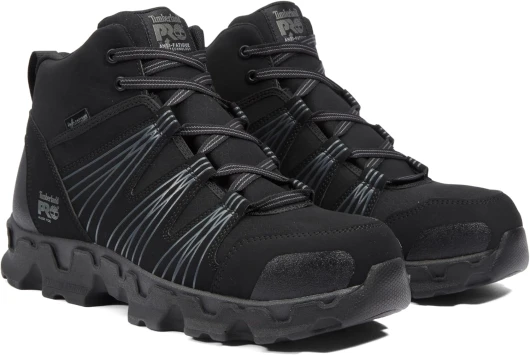
The upper is made from synthetic microfiber (Timberland calls it Raptek), not leather. In practice, that means the boot is lighter and handles moisture differently. It doesn’t soak up water like leather, and it dries faster if you get caught in wet conditions or if your feet sweat a lot. On the flip side, it doesn’t have that tough, thick feel you get from full-grain leather boots. You can tell right away it’s more of an athletic-work hybrid than a traditional boot.
The lining is that same Raptek microfiber, and it does a decent job of wicking sweat. After a long shift on a warm day, my socks were damp but not soaked, and the inside of the boot didn’t feel swampy. The lining feels smooth against the foot, no scratchy seams. Timberland says it dries fast and cracks less than leather, and based on other synthetic-lined boots I’ve used, that’s probably accurate. It also seems to handle daily on/off cycles without peeling yet, though that’s something you really judge after 6–12 months.
The outsole is polyurethane (PU), which is pretty standard for lighter work shoes. It’s non-marking and rated for heat, oil, slip, and abrasion resistance. On the floor, it feels grippy without being sticky. The tread pattern doesn’t trap a ton of debris either, which matches what one Amazon review said about the soles not collecting stuff. That’s actually nice if you move between indoor and outdoor areas and don’t want to drag half the parking lot back into the building. The midsole and insole combo is where the Anti-Fatigue tech sits – basically a cushioned, geometrical pattern that’s meant to absorb shock and give some energy return.
Inside, the stock insole is okay but not amazing. It’s better than the cardboard-flat insoles you get in cheap boots, but if you have flat feet or need more arch support, you’ll probably end up swapping it out after a few months. One reviewer mentioned adding insoles at around six months to stretch the life and comfort, and that lines up with what I usually do with work shoes in this category. Overall, the materials are clearly chosen for lightness and comfort rather than maximum toughness. If you want thick leather and a heavy rubber sole, this isn’t it. If you want something that feels more like a sneaker but still meets safety standards, the material choice makes sense.
Durability: good for a year or so, then things start to go
Durability is where these boots are fine but not impressive. They’re not trash, but they’re also not the kind of boot you buy once and keep for three years of daily abuse. The synthetic upper and PU sole combo is clearly built more for comfort and lightness than for being bulletproof. After some weeks of use, I can already see the usual early signs: slight creasing on the upper, a bit of wear on the outsole edges, and some light fraying around a couple of stitching points. Nothing failing yet, but you can tell where they’ll likely go first.
The Amazon reviews line up with this. One person said they’re “very good for about a year” with light indoor use, and started coming apart at around sixteen months. Another review mentioned having the shoes for a little over a year and then they just came apart, and they weren’t happy with the warranty or seller support. That sounds about right for this type of shoe. If you wear them five days a week on concrete, you’re realistically in the 12–18 month window before you see real structural issues: sole separation, peeling around the toe, or the upper cracking at flex points.
On the positive side, because the upper is synthetic, it doesn’t soak up water or salt the way leather does, so you don’t get that same cracking from drying out. The Raptek lining also seems to be holding up fine so far, with no peeling or tearing. The outsole still has plenty of tread left after normal use, and the slip resistance hasn’t noticeably dropped. But you can’t expect the same lifespan you’d get from a heavy, stitched leather work boot that costs more and weighs more. These are more like high-end safety sneakers: comfortable and practical, but with a limited lifespan.
Would I say the durability matches the price? I’d call it acceptable but not impressive. If you budget for a new pair every year or so, they’re fine. If you want a boot that lasts multiple years of daily heavy use, you’ll probably be disappointed and should look at more rugged, leather-based models. Also, don’t count too much on warranty saving you if they fail just after a year; at least one reviewer had no luck with the seller backing the product after that point.
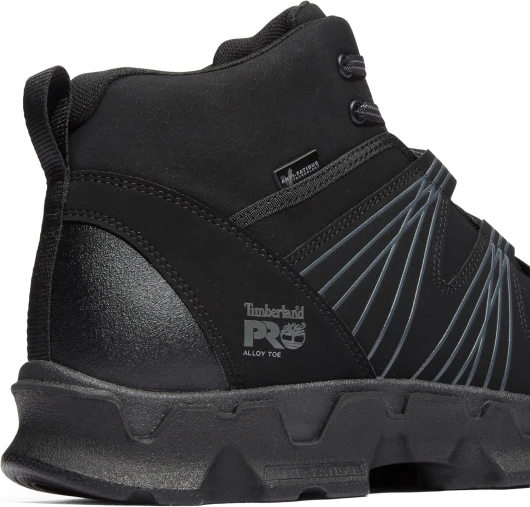
Performance on the job: ESD, grip, and safety
In actual work use, the ESD performance is the big selling point for me. I work around electronics and we have a floor tester at the entrance of the lab. My previous pair of safety shoes constantly failed, and I had to wear those annoying ankle straps to stay within spec. With these Timberland PRO Powertrain boots, I step on the tester and they pass every time so far. That lines up with the Amazon review where someone’s son used them for electronics work and passed the static test with no extra straps. If your job checks this daily, that reliability matters a lot.
The alloy safety toe does its job without making the shoe feel like a brick. I’ve knocked my toes into pallet corners and metal carts a few times; no pain, just that dull impact feeling you always get with safety toes. Alloy is lighter than steel, and you can feel that difference over a long shift. You still know there’s a cap there, but your feet don’t feel as dragged down as with full steel-toe boots. The toe cap shape is asymmetrical, so the big toe has a bit more room, which helps with comfort too.
Grip has been pretty solid. I’ve walked over dusty concrete, slightly oily spots near machines, and some wet patches near the loading dock. No major slips so far. Obviously, if you step in a big oil spill and try to sprint, nothing will save you, but for normal warehouse and shop-floor conditions, the PU outsole holds up well. It’s also non-marking, so you’re not leaving black streaks behind. The tread doesn’t cake up with mud or pellets either, which is something one reviewer pointed out about debris not sticking to the sole. For me, that means less cleaning and less tracking dirt around.
As for overall day-to-day performance, they feel stable and supportive enough for walking, lifting, and going up and down stairs all day. The mid-cut design gives a little ankle support without feeling restrictive. They’re not hiking boots, so I wouldn’t pick them for rough outdoor terrain or heavy construction sites, but for indoor industrial, warehouse, or electronics work, they handle the job well. The only real performance limit I see is durability over the long term; after about a year, based on reviews and my past experience with similar Timberland PRO models, you can expect some splitting or separation if you’re wearing them hard every day.
What you actually get when you buy these
Out of the box, you get exactly what the listing says: a mid-cut, athletic-style work boot with an alloy toe and ESD rating. No fancy extras, no spare laces, just the boots and the usual Timberland PRO tags about Anti-Fatigue Technology and safety standards (ASTM F2412, F2413, etc.). The model I have is black, 10 wide, and it matches the product photos pretty closely. No surprise glossy finish or weird color differences; it’s a standard black work boot with a sporty vibe.
The boot is clearly aimed at people who work indoors around electronics or on hard floors: warehouse, production lines, electronics labs, that kind of thing. The Electro Static Dissipative (ESD) mention isn’t just decoration. The paperwork and tags show the relevant standards, and in my case, our company floor tester confirms they’re within the acceptable range. If your job literally checks your shoes every day for static, this matters. Compared to my older, cheaper safety shoes that constantly failed the test and forced me to wear ankle straps, this is already a big plus.
The wide size is a true wide in my experience. My feet are on the wider side, and a lot of so-called “wide” safety shoes still squeeze the forefoot. These don’t. There’s a bit of extra toe room, similar to what one Amazon review mentioned. If you’re between sizes and like a snug fit, you might consider going half a size down. For me, with thicker work socks, the 10 wide works fine. No pinching, and my toes aren’t slammed into the front when going down stairs.
Overall presentation is straightforward: they feel like a tool, not a fashion item. The branding is there but not loud, and they don’t scream “work boot” from across the room, which I like. If you want a shoe that you can wear from the shop floor to a quick store run without looking like you’re in full construction gear, this fits that use. Just don’t expect any fancy unboxing experience or extras. It’s pretty plain, which is fine by me.
Pros
- Very comfortable for long shifts on concrete thanks to Anti-Fatigue cushioning
- Legit ESD performance that passes workplace static tests without extra straps
- Lighter and more sneaker-like than traditional steel-toe leather boots
Cons
- Durability is limited to roughly 12–18 months of regular use
- Stock insole is only average and often needs upgrading for better support
Conclusion
Editor's rating
After using the Timberland PRO Powertrain Mid Alloy Safety Toe boots in a real work setting, I’d sum them up like this: comfortable, safe, and practical, with average durability. They feel more like sturdy sneakers than classic work boots, which is nice if you’re on concrete floors all day. The ESD performance is legit – they pass workplace static tests without extra straps, which is a big plus for anyone in electronics or similar environments. The alloy toe gives you proper protection without the dead weight of steel, and the Anti-Fatigue cushioning actually helps keep your feet and legs from feeling wrecked at the end of a shift.
The trade-offs are clear though. The synthetic upper and PU sole won’t last forever. Based on my experience and the Amazon reviews, you’re looking at roughly a year to a year and a half of regular use before things start to separate or wear out. For some people, that’s fine; work shoes are just part of the yearly budget. For others who expect multi-year durability, that will feel disappointing. Also, the stock insole is only okay, and many people will end up adding a better one after a few months.
I’d recommend these to: people working indoors on hard floors, especially around electronics or in warehouses, who want lighter boots with ESD compliance and decent comfort out of the box. I’d say skip them if you work in heavy construction, outdoors in rough conditions, or if you want a boot that lasts several years of abuse. In that case, you’re better off with a heavier leather boot. For the right job and expectations, though, these Timberland PRO Powertrain boots get the job done and make long shifts easier on your feet.