
Summary
Editor's rating
Value for money: decent if you know the limits
Design: practical, a bit bulky, nothing stylish
Comfort: decent once broken in, but not for very long days
Materials: suede, fabric and a rubber sole that feels okay for the price
Durability after a couple of weeks: acceptable but with some warning signs
Performance on the trail: solid grip, limited waterproofing
What you actually get in the box
Pros
- Decent grip on dirt and muddy trails thanks to the deep rubber lugs
- Reasonably comfortable after a short break-in, especially with better insoles
- Low price compared to big-brand hiking boots, good as a backup or occasional-use pair
Cons
- Waterproofing is limited; more water-resistant than truly waterproof
- Build quality and stitching feel average, with some loose threads after short use
- Comfort and support not ideal for long hikes or frequent heavy use

Specifications
View full product page →| Brand | AZHKJKZH |
Cheap hiking boots I grabbed out of curiosity
I bought these "Hiking Gear Breathable Lightweight Outdoor Men's Shoes" in size 44 EU mainly because I needed a backup pair of boots for short weekend hikes and dog walks in the woods. The brand name (AZHKJKZH) didn’t tell me anything, and the listing looked like the usual generic outdoor gear you see everywhere. That actually made me curious: could a no-name pair at this price be usable, or would it fall apart after two walks?
I used them for about two weeks on mixed terrain: forest paths, a couple of rocky trails, and some boring city walking to and from work. I’m used to mid-range brands like Quechua and Columbia, so that’s my reference point. I wasn’t expecting miracles, just something that doesn’t wreck my feet or disintegrate at the first puddle.
Right out of the box, they felt a bit bulky for something advertised as "lightweight", but not like heavy mountaineering boots either. I’d say they sit in the middle. I wore them almost every day, between 30 minutes and 4 hours of walking, with both thin sports socks and thicker hiking socks, to see how they handled different conditions.
Overall, I’d say they’re usable but clearly budget gear. They get some things right, like grip and basic comfort, and miss on others, like real waterproofing and finish quality. If you expect premium hiking shoes, you’ll be disappointed. If you just need something cheap for occasional outdoor use and you’re not too picky, they might be worth considering, with a few caveats I’ll explain.
Value for money: decent if you know the limits
Since this is a generic brand with a simple design, the main selling point is clearly the price. Compared to entry-level models from well-known brands, these usually cost less, especially if you catch them on promotion. For that lower price, you get a functional pair of hiking boots with decent grip, reasonable comfort after a short break-in, and a design that works for lots of casual outdoor activities: hiking, walking the dog, easy camping trips, and even some light work outside.
Where the value becomes more questionable is if you need reliability and real waterproofing. If you hike often, in rough terrain, or in wet conditions, a more expensive pair with a proven waterproof membrane and better materials will pay off in the long run. You’ll get fewer issues with seams, less risk of fabric tearing, and better comfort over long distances. In that context, saving money upfront here might not be worth it.
For occasional users, though, I think the value is acceptable. You’re not paying for branding, marketing, or fancy tech. You’re getting a boot that does the basic job: protect your feet better than sneakers, give more grip on trails, and handle mixed outdoor use. If you treat them as a budget, secondary pair and not as your main serious hiking boots, the trade-offs make sense. Just don’t expect miracles in terms of finish, durability, or weather protection.
In short, if your budget is tight and your hikes are short and not too extreme, the price-to-performance ratio is pretty solid. If you can stretch your budget a bit and you hike regularly, I’d personally look at known brands, because the extra cost usually brings better comfort and longer life.

Design: practical, a bit bulky, nothing stylish
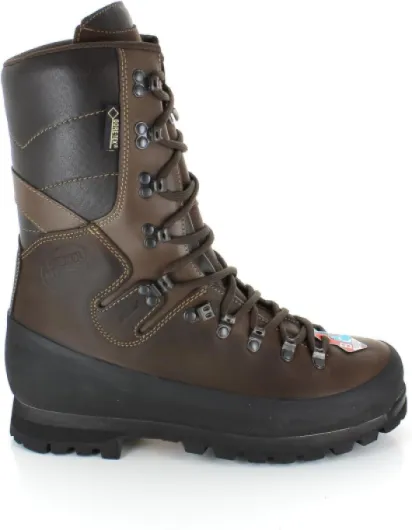
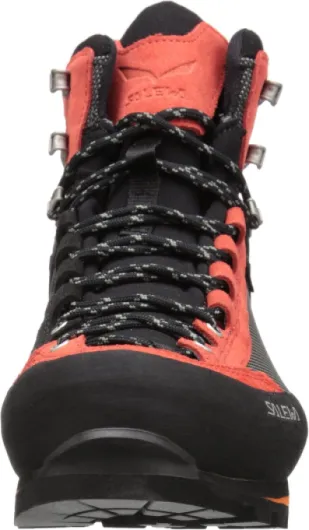
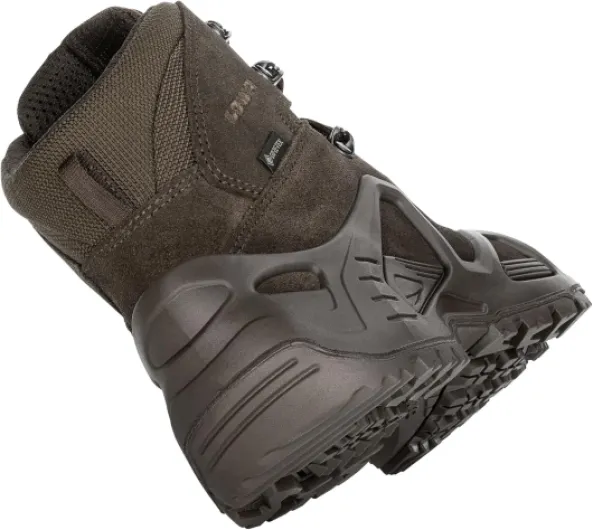
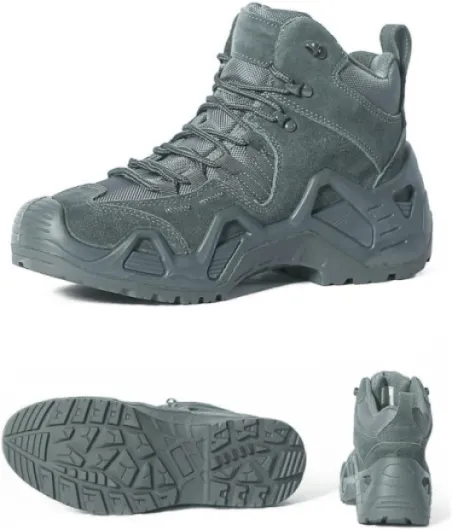
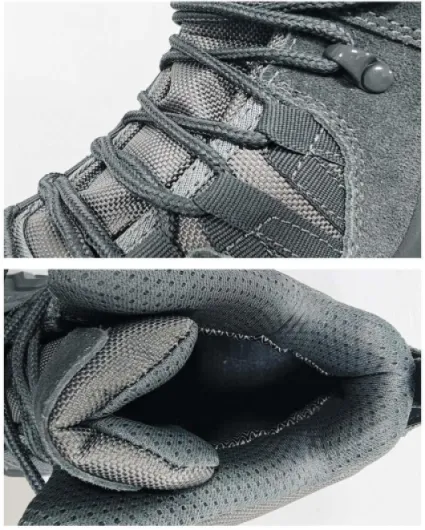
Design-wise, these shoes are pretty straightforward: mid-cut hiking boots in grey, with suede and fabric panels and a black rubber outsole. The shape is slightly wide at the front, which I actually liked because my feet aren’t super narrow. There’s enough room for toes to move without feeling squeezed, even with thicker socks. The heel area is more snug, which helps with stability on descents. So from a pure shape point of view, it’s not bad.
The lacing system is basic but functional. You’ve got standard fabric eyelets and a couple of metal hooks at the top for tightening the ankle. The laces themselves feel a bit cheap and slightly slippery; I had to double-knot them on longer walks because they tended to loosen after an hour or so. No fancy quick-lace system, just classic laces that get the job done but could be better.
On the outside, there are some stitched overlays that are supposed to give structure and maybe a bit of protection. The stitching isn’t the cleanest I’ve seen. On my pair, one of the seams on the side had a loose thread after the second hike. It didn’t break or open, but it doesn’t inspire huge confidence for long-term use. The toe cap has a rubber reinforcement, which is useful: I kicked stones a few times and didn’t feel it much, so that part is functional.
Overall, the design is practical but basic. It looks like a generic hiking boot, it works for most casual outdoor situations, but there’s nothing clever or particularly well-thought-out in the details. If you want a stylish boot you can wear in the city as a fashion piece, this isn’t it. If you just need something neutral and functional that you don’t mind getting dirty, it’s fine.
Comfort: decent once broken in, but not for very long days
On first wear, I found them a bit stiff around the ankle and the top of the foot. The padding in the collar is there, but the suede and synthetic overlays don’t flex that much initially. After two or three shorter walks (30–45 minutes each), they started to loosen up and feel more natural. So there is a small break-in period, but nothing terrible. I didn’t get blisters, just some slight pressure on the top of my right foot the first day.
The insole is removable and very basic. It has a tiny bit of arch support, but not much. If you have flat feet or need real support, I’d strongly suggest swapping it for a better insole. I did that after the first weekend, and it made a big difference on longer walks. With the stock insole, after about two hours on rocky terrain, I started to feel some fatigue in the arch and heel. With my usual aftermarket insoles, I could push closer to four hours without major discomfort.
Ventilation is okay. My feet didn’t overheat too much on mild spring days (around 15–18°C), even on climbs. The mesh panels help, but remember, it’s still a mid-cut boot, not a trail running shoe. After a long uphill section, my socks were warm but not soaked in sweat. For summer hikes in hot weather, I think they’d be a bit too warm, but for spring, autumn, and mild winter days, they’re fine.
In summary, comfort is decent but clearly not top-level. If you stick to 1–3 hour walks and you add better insoles, they’re okay. For all-day hikes with a heavy backpack, I’d personally choose something more supportive and better cushioned. For casual use and weekend hikes, they get the job done, with the caveat that you might want to tweak the insoles and take a couple of days to break them in.
Materials: suede, fabric and a rubber sole that feels okay for the price
The upper is a mix of suede and fabric. The suede parts feel a bit stiff out of the box, not super soft, but that’s normal at this price. After three or four outings, they loosened up a bit and started to follow the shape of my foot more. The fabric panels are there mainly for breathability, and they do let air through better than a full leather boot, but they also feel cheaper and less durable. If you snag them on a sharp rock or a branch, I wouldn’t be surprised if they tear.
Inside, the lining is mesh with what they call a "waterproof sock". I’ll be honest: if there is a waterproof membrane, it’s not very convincing. I walked in wet grass and shallow puddles. Light moisture is fine, but after about 20–30 minutes in very wet ground, I started to feel dampness at the toes. Not completely soaked, but clearly not a true waterproof boot like Gore-Tex. So I’d call it water-resistant at best, not fully waterproof.
The outsole is rubber with deep lugs. The rubber doesn’t feel super soft, so it should last a bit, but it also means less grip on smooth wet rock. On dirt, gravel, and mud, it did pretty well, and I never felt like I was about to slip. On wet stone or wet metal (like a bridge), I felt less secure and had to watch my step more than with my usual boots. The midsole cushioning is basic EVA-type foam; enough to filter small impacts, but you still feel bigger rocks underfoot.
Overall, the materials are in line with the low price: functional but clearly budget. If you use them occasionally on moderate trails, they’re probably fine. For heavy-duty, multi-day hikes or very rough terrain, I’d be worried about how long the fabric and stitching would hold up.
Durability after a couple of weeks: acceptable but with some warning signs
Two weeks isn’t enough to judge long-term durability, but you can still spot potential weak points. After roughly 50–60 km of mixed walking, the outsole lugs show very light wear on the heel, nothing alarming. The rubber seems hard enough to last a while if you mainly use them on trails and not on asphalt every day. On city pavement, I can see the lugs wearing down faster, but that’s the case for most hiking shoes.
The upper is where I have more doubts. The suede is holding up fine so far; it just shows the usual dust and a couple of scuff marks that you can brush off. The fabric panels, however, feel like the first thing that might fail. On my pair, one small area near the flex point (where your foot bends) already shows slight creasing and a bit of fuzziness in the fabric. It’s not torn, but you can tell that’s a stress zone. If you’re rough with your gear, I wouldn’t expect these to last for years of heavy use.
The stitching is another concern. I noticed two loose threads: one on the side panel and one near the tongue. They haven’t opened up into full seam failures yet, but I trimmed them and will keep an eye on them. This kind of thing is typical on cheaper shoes. It doesn’t mean they’ll fall apart tomorrow, but I wouldn’t trust them for a week-long trek far from civilization.
Overall, I’d rate durability as average for a budget product. For occasional weekend hikes, dog walks in the forest, and some light travel use, they should last a reasonable amount of time. If you’re planning to use them several times a week on tough trails, I’d honestly invest in a better-known brand with stronger build quality, even if it costs more upfront.
Performance on the trail: solid grip, limited waterproofing
I tested these on three types of terrain: packed dirt and forest paths, rocky trails with loose stones, and muddy sections after rain. On dirt and forest ground, they did well. The tread pattern bites into the soil, and the frame of the shoe keeps the ankle reasonably stable. I never twisted my ankle, even when walking a bit fast downhill. So for basic hiking paths and light trekking, they’re perfectly usable.
On rocky ground, the story is a bit more mixed. The lugs grip loose stones fairly well, and the rubber is hard enough that you don’t feel like you’re standing on marbles. But when you hit smoother rocks, especially if they’re slightly wet, the grip drops. I had a couple of small slips on wet stones crossing a stream, nothing dramatic, but enough to make me slow down and place my feet more carefully. If you often hike on alpine-style rocky terrain, there are better soles out there.
Water-wise, I’d rate them as splash-proof, not true waterproof. I walked in wet grass for about 40 minutes; the outside was soaked, but my feet stayed mostly dry. When I stepped into shallow puddles where water reached just below the laces, they held up for a bit, then I started to feel dampness creeping in around the toe area. Not a total flood, but enough to be uncomfortable if you’re out for several hours. So for light rain and damp paths, they’re okay; for serious rain or repeated water crossings, no.
Traction in mud is decent thanks to the deep lugs. I went through a muddy forest trail, and while they did cake up with mud, I didn’t feel like I was skating. The downside is cleaning: the outsole holds onto dirt and small stones, so you need a brush or a good rinse to get them clean again. Overall, performance is pretty solid for casual hiking, but clearly not oriented toward demanding mountain use or very wet environments.
What you actually get in the box
The "unboxing" here is pretty basic. The shoes came in a plain cardboard box, no branding worth mentioning, no fancy graphics, just a sticker with the model number AZHKJKZH and the size. Inside, each shoe was wrapped in thin plastic. No spare laces, no care instructions, no info about the waterproof sock they mention in the description. It feels very generic, like something straight out of a factory with minimal effort on presentation.
The first impression when you pick them up: they’re not super heavy, but for something advertised as "lightweight" at 1.5 kg for the pair including packaging, you do feel some weight in your hand. On the feet, they feel closer to mid-range hiking boots than to light trail runners. So if you’re coming from running shoes, you’ll find them a bit clunky; if you’re used to stiff leather boots, these will feel lighter and more flexible.
The style is pretty standard: grey upper with some fabric panels, a chunky rubber outsole with visible lugs, and some synthetic overlays. No big logo, no strong design identity. If you don’t care about looks and just want something neutral that doesn’t scream "brand", that might actually be a plus. They blend in fine with jeans or hiking pants, nothing flashy.
In practice, the presentation tells you exactly what this is: budget hiking shoes with minimal extras. You’re paying for the functional bits (sole, upper) and not for the brand experience or fancy packaging. I don’t mind that personally, but if you like products that feel premium from the first moment you open the box, this one feels a bit cheap and no-frills.
Pros
- Decent grip on dirt and muddy trails thanks to the deep rubber lugs
- Reasonably comfortable after a short break-in, especially with better insoles
- Low price compared to big-brand hiking boots, good as a backup or occasional-use pair
Cons
- Waterproofing is limited; more water-resistant than truly waterproof
- Build quality and stitching feel average, with some loose threads after short use
- Comfort and support not ideal for long hikes or frequent heavy use
Conclusion
Editor's rating
After using these Hiking Gear / AZHKJKZH boots for a couple of weeks, my conclusion is simple: they’re okay budget hiking shoes for casual use, but nothing more. They do a few important things right: the grip is decent on dirt and mud, the fit is reasonably comfortable after a short break-in, and the mid-cut design gives enough ankle support for easy to moderate trails. For weekend walks, forest paths, and light camping, they’re usable and don’t feel like total junk.
On the downside, you clearly feel the low-cost side in the materials and finish. The so-called waterproof sock is more like basic water resistance, and I wouldn’t trust these in heavy rain or on multi-day hikes. The fabric panels and stitching show early signs that they won’t hold up to years of hard use. Comfort is fine for a few hours, especially if you swap the insole, but for long days with a backpack, there are better options.
I’d recommend these to people who: hike occasionally, mostly on easy trails; need a cheap pair for irregular outdoor use; or want a secondary pair to keep in the car or at a cabin. People who should skip them: regular hikers, folks planning long treks, or anyone who needs solid waterproofing and long-term durability. In that case, it’s worth spending more on a recognized hiking brand.