
Summary
Editor's rating
Value: strong bang for your buck if you keep your expectations realistic
Design: practical more than pretty, but that’s fine
Comfort: the main reason to buy these
Materials: budget choices, but used smartly
Durability: decent so far, but not built like a tank
Performance on trails: solid for casual use, not for hardcore mountains
What you actually get for the money
Pros
- Very comfortable out of the box with a roomy fit, especially in the wide version
- Lightweight and cushioned feel makes longer walks less tiring
- Waterproof enough for rain, wet grass, and shallow puddles in everyday use
Cons
- Materials and insole feel budget and may not last as long as premium hiking boots
- Sizing runs small, so you need to size up to avoid cramped toes

Specifications
View full product page →| Brand | NORTIV 8 |
Cheap hiking boots that actually feel decent on the feet
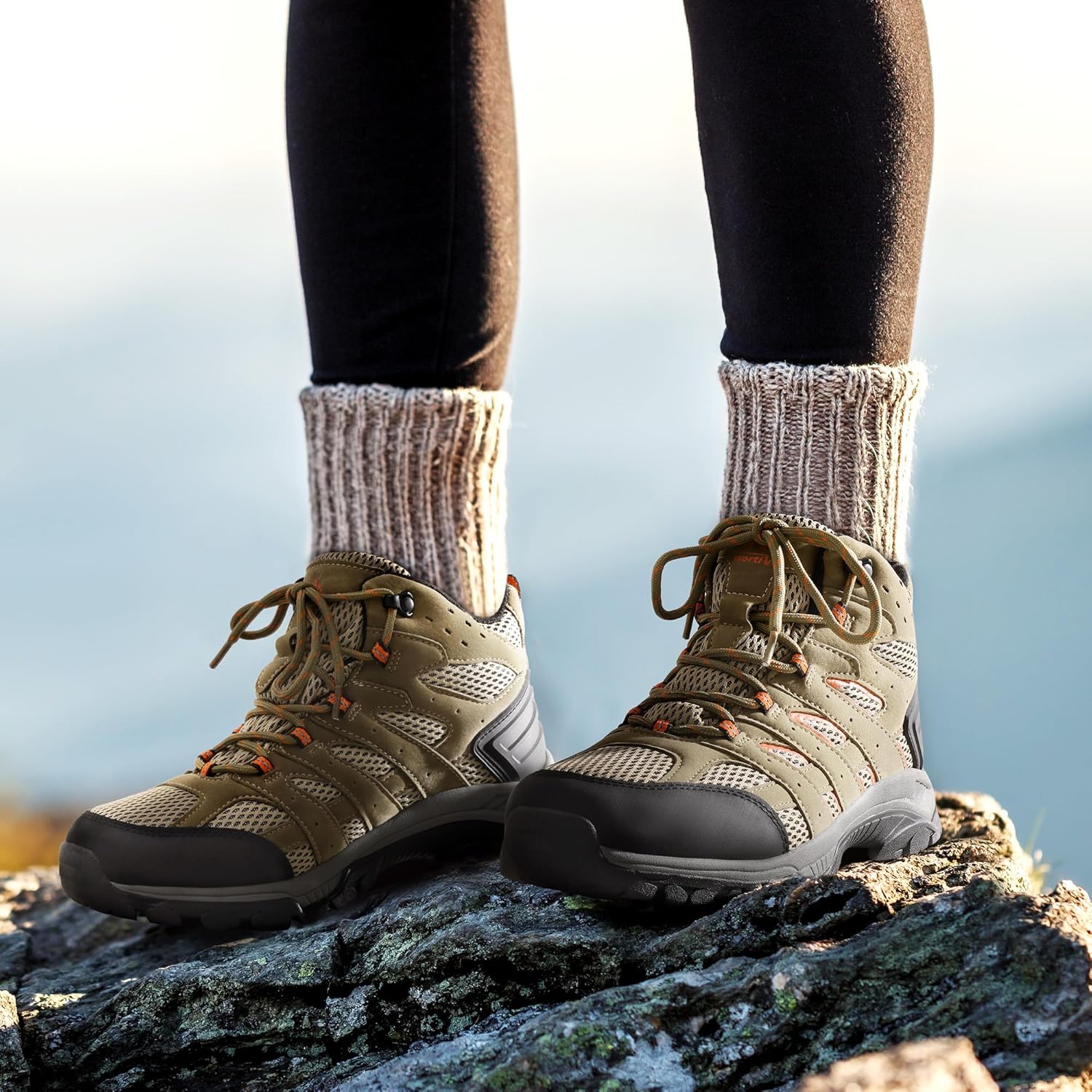
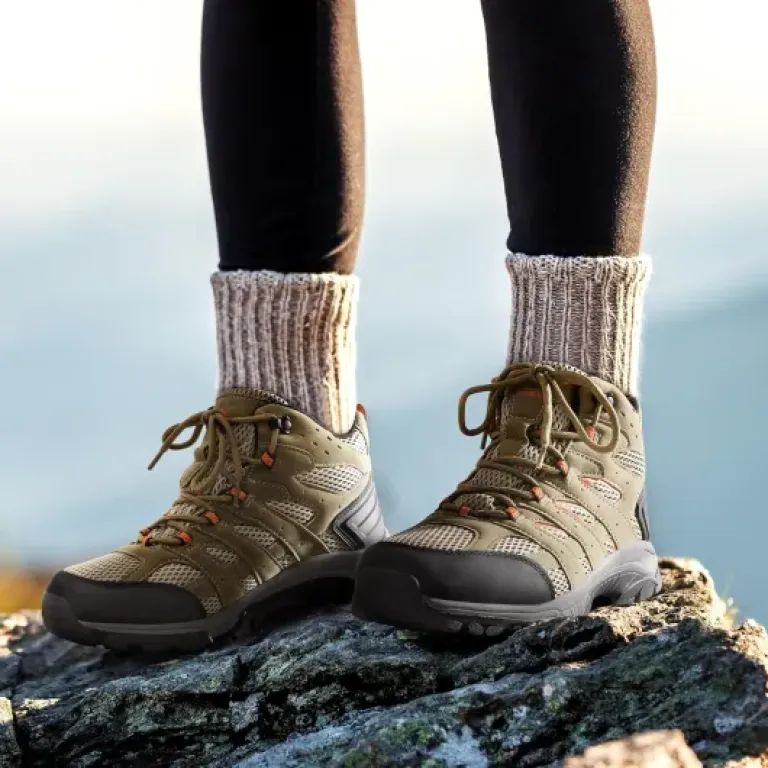
I’ve been using these NORTIV 8 women’s waterproof hiking boots (brown/orange, UK 6 wide) for light hikes and wet dog walks, and I’ll be straight: they’re budget boots that feel better than I expected, but they’re not perfect. I didn’t baby them – mud, wet grass, gravel paths, a couple of rocky trails – the usual mix if you’re out most weekends rather than doing full-on mountaineering.
The first thing that stood out was the comfort out of the box. I usually dread the first couple of walks because of rubbing or blisters, but with these I did a 6–7 km walk on day one and my feet were fine. No hot spots on the heel, no crushed toes. They do run a bit small though, and I’m glad I went half a size up from my usual. If you’re between sizes, go bigger, especially if you like thicker hiking socks.
Waterproofing is decent for the price. I’ve stomped through wet grass and shallow puddles and my socks stayed dry. I wouldn’t trust them for standing in a stream for ages, but for rainy UK-style walks, they get the job done. Grip is also pretty solid on muddy paths and damp rocks – not as locked in as high-end brands, but I never felt like I was about to go flying.
Overall, they feel like good value boots for casual hikers or dog walkers who want something comfortable and light, not a heavy-duty mountain boot. If you’re planning multi-day backpacking in harsh conditions, I’d look higher up the range. But for weekend trails and everyday outdoor use, they’re honestly better than a lot of cheap no-name boots I’ve tried before.
Value: strong bang for your buck if you keep your expectations realistic
For me, the value for money on these NORTIV 8 boots is the main reason to consider them. You’re getting a waterproof, reasonably grippy, comfortable pair of hiking boots for what is basically entry-level pricing. If you only hike occasionally or you’re just getting into walking more seriously, it’s hard to justify dropping big money on top brands, and that’s where these make sense.
Where they earn their keep is the combo of comfort + waterproofing + light weight. You can wear them straight away without a painful break-in period, your feet stay dry in normal wet conditions, and you don’t feel like you’re lugging bricks on your feet. For everyday walks, dog walks, and weekend trails, that’s honestly all many people need. Compared to some other cheap boots I’ve tried (random Amazon brands, supermarket specials), these feel better built and more comfortable from day one.
Of course, there are compromises. Materials aren’t premium, the insole is basic, and I wouldn’t rely on them as my only pair for serious backpacking trips. If you plan big hikes regularly, spending more on a known hiking brand with better long-term durability and a more advanced waterproof membrane is worth it. But if you’re on a budget or just want a spare pair for bad weather or for less frequent hikes, these are pretty solid.
So in terms of value, I’d say: good buy for casual and intermediate users, less convincing if you’re an experienced hiker who pushes gear hard. The Amazon rating around 4.6/5 lines up with that – lots of happy everyday users, with the limitations showing mainly if you expect premium performance for a budget price.
Design: practical more than pretty, but that’s fine
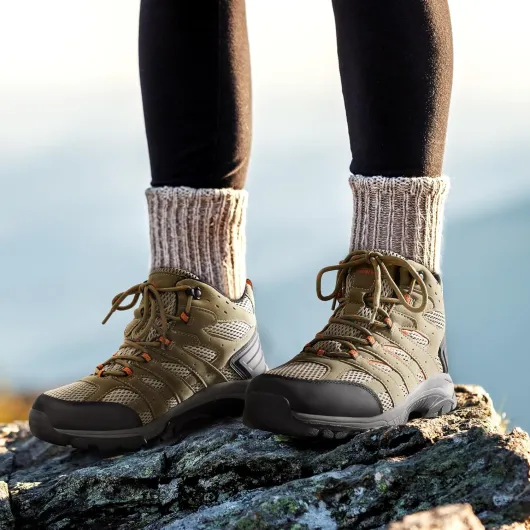
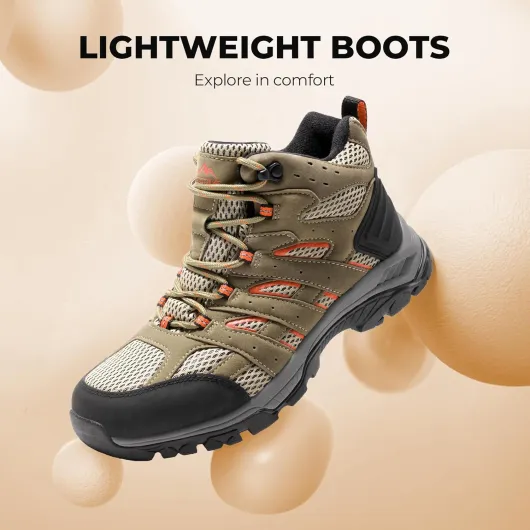
Design-wise, these boots are functional first, looks second, and I’m okay with that. The brown/orange combo is fairly neutral with a bit of colour so they don’t look totally dull. If you’re expecting sleek, city-style boots, this isn’t it. They look like proper walking boots – padded ankle, rugged sole, lace hooks at the top. On the foot, they’re not bulky, which I appreciated because some budget boots make your feet look like cartoon blocks.
The lacing system is simple: standard eyelets down the front and hooks at the top so you can tighten around the ankle properly. The hooks grip the laces well; they don’t slip out when you’re tying them, which some cheap boots do. I can get a snug fit around the ankle while leaving the forefoot a bit looser, which helps on longer walks. The tongue is gusseted high enough to keep out splashes and small stones, though if you step into water above the tongue line, obviously it’ll leak.
The ankle height is in the sweet spot for me – enough support to feel stable on uneven ground, but not so high that it digs into your calf or feels restrictive. The padding around the collar is thick without being spongey. After a couple of walks, it softened up a bit more and felt broken in. No weird pressure points at the front of the ankle, which I sometimes get with stiffer boots.
Visually, you can see they’re not premium – the faux leather panels and mesh mix look a bit generic. But in practice, the design choices are sensible: breathable areas where you need them, tougher material around the toe and heel, and a rubber toe bumper that actually protects against stubbing your toes on rocks. Overall, the design is no-nonsense and practical. Not something you’d wear as a fashion statement, but perfectly fine for trails, campsites, and rainy walks.
Comfort: the main reason to buy these
Comfort is honestly the strongest point of these NORTIV 8 boots. I wore them straight out of the box for a few hours of walking and didn’t get any blisters, which is rare for me. The fit in the UK 6 wide is genuinely wide – my forefoot had room to spread, and my toes weren’t crushed on descents. If you have narrow feet, you might find them a bit roomy, but for normal-to-wide feet, they’re pretty forgiving.
The EVA midsole and insole combo gives a cushioned feel, more like a trainer than a traditional stiff hiking boot. If you’re used to heavy, rigid boots, these will feel almost too soft at first. For day walks and dog walks, I actually prefer this. After 10–12 km on mixed terrain, my feet felt tired in a normal way but not beaten up. No burning under the ball of the foot, which I sometimes get with harder soles. The arch support is moderate – enough that my feet didn’t collapse inwards, but not so aggressive that it felt weird.
Around the ankle, the padding is generous, and I never had rubbing on the Achilles or the sides. Even when I cinched the laces tighter for a steeper, rocky section, the boot held my heel well without digging in. The tongue is padded enough to stop lace pressure, and it stayed in place while walking, which sounds minor but is annoying when it doesn’t. Breathability is decent – my socks were warm but not sweaty-damp at the end of a longer walk, which is fine by me for a waterproof boot.
If I’m being picky, the only comfort downside is that the insole feels a bit cheap. It does the job, but after a few outings I can feel it compressing. I’ll probably swap it for a better aftermarket insole if I keep using these regularly. But out of the box, for the price, comfort is genuinely solid, especially if you follow the common advice and size up half a size or a full size depending on your socks.
Materials: budget choices, but used smartly
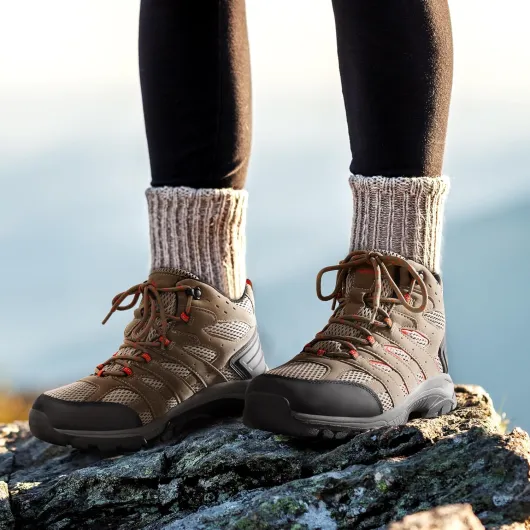
On the materials side, these boots are a mix of faux leather and mesh textile on the outside, with a breathable fabric lining inside and an EVA/rubber sole unit. So you’re not getting full-grain leather or fancy membranes here, but that’s normal at this price. The brand also mentions suede leather in some descriptions, but on this specific pair it feels more like synthetic suede and PU panels rather than thick, natural leather.
The upper is mostly synthetic with mesh inserts. The mesh helps with breathability; I didn’t feel like my feet were cooking, even on a longer walk on a warmer day. The trade-off is that you’re relying on an internal waterproof layer and coatings rather than thick leather to keep water out. For daily use and wet grass, it’s fine. Long-term, synthetic materials can crack earlier than proper leather, but they’re lighter and dry faster if they get soaked.
The sole is EVA midsole + rubber outsole. EVA is there for cushioning and to keep the boot light. You can actually feel the difference if you’re used to older, all-rubber soles – these feel softer underfoot. The rubber outsole has a decent lug pattern with multi-directional traction. It’s not Vibram-level, but the rubber compound grips okay on damp rocks and muddy paths. I didn’t feel it was too hard or too soft; just middle of the road, which is fine for casual use.
Inside, the textile lining is smooth and didn’t rub my skin when I tested them briefly without socks at home. With socks, there’s no friction or rough seams in bad places. The removable insole is basic EVA and textile, but at least it’s removable, so if you want more arch support or a softer feel, you can swap it out. Overall, the materials clearly scream "budget" if you’re used to high-end brands, but they’re chosen in a way that keeps the boots light, reasonably durable for weekend use, and comfortable enough right away.
Durability: decent so far, but not built like a tank
Durability is always the question with budget boots. I haven’t had these for years obviously, but after a chunk of use – mud, rocks, bending, drying by the door – they’re holding up better than I expected. No seams have popped, no obvious separation between the sole and the upper, and the lugs haven’t noticeably worn down yet. For casual weekend use, I can see them lasting a fair while if you look after them a bit.
The weak point long-term will probably be the synthetic upper. Faux leather and mesh just don’t age as well as proper leather. If you constantly scrape them on rocks or let mud dry and crack on them, they’ll eventually look tired and might split earlier than a premium boot. But that’s the trade-off: they’re lighter and cheaper. If you’re mainly on paths and fields rather than sharp scree, you’ll likely be fine. I’d give them a quick wipe and let them dry naturally after really wet or muddy walks to extend their life.
The sole unit feels solidly bonded. I checked around the edges after some wet, muddy hikes and couldn’t see any gaps or lifting. The EVA midsole will compress gradually over time, which means they’ll feel less cushioned after heavy use, but that’s standard. The insole is definitely the most "budget" part – it compresses fast, but that’s easily replaced for a few quid.
Overall, I’d rate durability as good for the price range. Don’t expect them to survive five years of weekly mountain trips, but if you’re more of a casual or moderate user, they should comfortably cover a couple of seasons of regular use without falling apart, as long as you don’t abuse them and you let them dry properly between outings.
Performance on trails: solid for casual use, not for hardcore mountains
On actual trails, these boots perform better than cheap supermarket hikers, but you can feel they’re not built for serious alpine stuff. I took them through wet woodland paths, muddy fields, gravel tracks, and a rocky hill path. Grip from the multi-directional rubber outsole is pretty reliable. On mud, the lugs bite in enough to stop you sliding all over the place, and on damp rocks I only had a couple of small slips where I’d expect most mid-range boots to slip too. They shed mud reasonably well; they don’t instantly clog up.
Waterproofing is good enough for UK-style bad weather: wet grass, puddles, drizzle, slightly deeper water if you’re quick. I walked through ankle-deep puddles where the water didn’t go over the top of the boot and my socks stayed dry. The weak point, like with most boots, is the top – if water gets in from above, that’s it. I wouldn’t trust them for hours in heavy rain on very boggy ground, but for normal hikes and walks, they’re fine. After a few wet uses, I’d still re-spray them with a waterproofing spray to help the outer material bead water.
Stability-wise, the ankle support is moderate. There’s enough structure that you don’t feel like you’re in a floppy trainer, but the boot flexes easily at the forefoot. That’s comfortable for long walks but not ideal if you like a very stiff boot for scrambling or carrying a heavy backpack. For me, on day hikes with a small daypack, it felt stable enough. I didn’t roll my ankle or feel any wobble on side slopes.
Overall performance is perfectly adequate for light to medium hiking, dog walking, and general outdoor use. If your idea of hiking is a few hours on trails every weekend and the odd longer day out, these will do the job. If you’re planning multi-day treks with a heavy load on rough, rocky terrain, I’d spend more on something stiffer, with a more advanced waterproof membrane and tougher materials.
What you actually get for the money
On paper, these NORTIV 8 boots tick a lot of boxes: waterproof, ankle-high, EVA midsole, rubber outsole with traction pattern, and a mix of faux leather and mesh on the upper. They’re sold as lightweight trekking and hiking boots, and that description is mostly accurate. They feel more like hybrid trail/walking boots than proper stiff mountaineering boots, which for most people is probably a good thing.
The pair I used is the brown/orange UK 6 wide. Out of the box, they look like standard mid-cut hikers, nothing flashy. The orange accents are visible but not loud. You can tell they’re not a premium brand when you look closely at the stitching and finishing – it’s good enough, but not super neat like you’d see on boots that cost double. That said, there were no loose threads, no glue marks, and no weird smell, which is a win at this price level.
They come with a removable insole, which is handy if you like your own orthotics. The insole itself has a bit of arch support, nothing crazy, but better than the flat cardboard-style ones that some cheap boots come with. The EVA midsole is there mainly for cushioning and to keep the weight down. On the scale, they feel light in hand and on foot, which is nice if you’re used to clunky leather boots that feel like bricks after an hour.
In terms of positioning, I’d say these are entry-level to lower mid-range hiking boots. They compete more with Decathlon/Quechua or budget Hi-Tec style boots than with something like Salomon or Scarpa. The Amazon rating around 4.6/5 doesn’t shock me – they’re not perfect, but for the money they do the basics right: comfort, reasonable waterproofing, and grip that’s good enough for most people’s use.
Pros
- Very comfortable out of the box with a roomy fit, especially in the wide version
- Lightweight and cushioned feel makes longer walks less tiring
- Waterproof enough for rain, wet grass, and shallow puddles in everyday use
Cons
- Materials and insole feel budget and may not last as long as premium hiking boots
- Sizing runs small, so you need to size up to avoid cramped toes
Conclusion
Editor's rating
Overall, the NORTIV 8 women’s waterproof hiking boots are solid budget boots that do the basics right: they’re comfortable straight away, light on the feet, reasonably waterproof, and have enough grip for normal trails and wet country walks. They feel more like cushioned walking trainers with ankle support than stiff, technical mountain boots, which for most casual users is a good thing. The fit in the wide version is genuinely roomy, and the advice to size up is spot on – going half or a full size bigger, especially if you wear thick socks, makes them much more comfortable.
They’re not perfect. The materials are obviously budget-level, the insole is average, and long-term durability won’t match higher-end brands. I’d also avoid using them as your only pair for heavy backpacking or very rocky terrain. But if your use is mostly dog walks, weekend hikes, camping trips, and general bad-weather wear, they offer good value for money and are nicer to wear than a lot of cheap no-name boots. In short: great for casual and beginner hikers who want comfort and dryness without spending a fortune; more serious hikers who live in the mountains should probably look higher up the price range.