
Summary
Editor's rating
Value: good deal if you know their limits
Design: classic work-boot look with a wide fit twist
Comfort: surprisingly okay for wide feet, but not an all-day mountain boot
Materials: faux leather and EVA – you feel the budget, but it’s not all bad
Durability: fine as a beater boot, but don’t expect it to last forever
Performance: good for casual hiking and work, limited for serious trails
What you actually get out of the box
Pros
- Genuinely wide toe box that’s comfortable for broader feet and thicker socks
- Lightweight and reasonably comfortable for casual walks and daily use
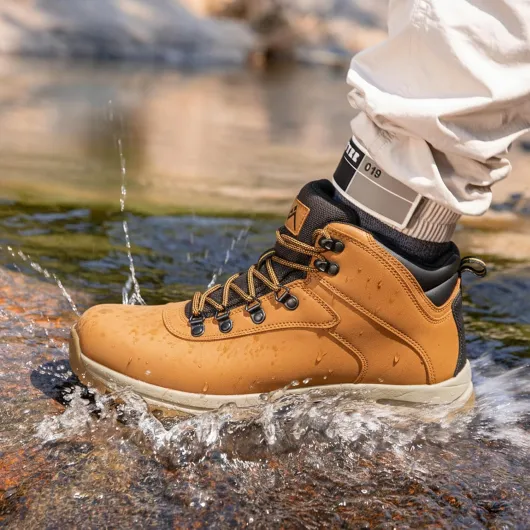
- Decent waterproofing and grip for rain, wet grass, and easy trails at a low price
Cons
- Faux leather and EVA sole limit long-term durability, especially with hard use
- Support and traction are not ideal for steep or technical hiking terrain
- Insole and arch support are basic; some users may need aftermarket insoles

Specifications
View full product page →| Brand | CC-Los |
Cheap boots I actually didn’t mind beating up
I grabbed the CC-Los Men's Waterproof Walking Boots in yellow (size 7, wide) as a cheap pair I wouldn’t feel bad trashing on muddy walks and light hikes. I wasn’t expecting much, mainly because of the low price and the fact they’re faux leather with an EVA sole. My main goal was simple: something I could wear in the rain, throw in the car, and not care if they got wrecked.
Over about three weeks, I used them for daily dog walks on wet grass, a couple of easy woodland trails, and some basic garden/DIY work. Nothing extreme like mountain hikes or long backpacking trips, but enough to see if they’re more than just “fashion” boots. I also have slightly wide feet, so the wide width part was important for me.
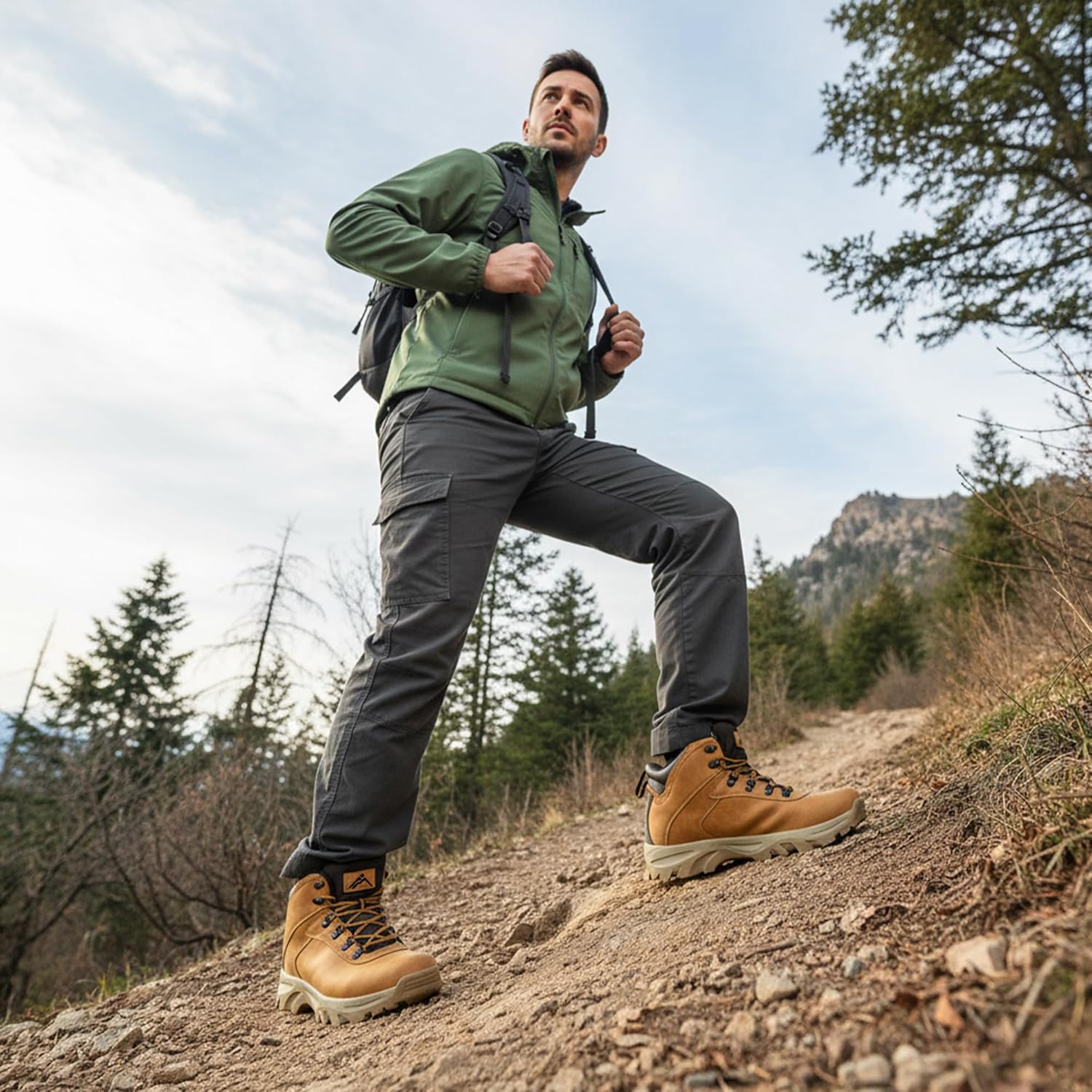
Right away, they felt more comfortable than I expected. Not hiking-boot-level support like you get from big brands, but for the price, I was honestly fine with them. The yellow/wheat colour is basically the standard work-boot look, so if you’re into that Timberland-style vibe, these scratch that itch without costing much.
They’re not perfect, and there are clear compromises: materials feel cheaper, long-term durability is a question mark, and they’re not for steep technical terrain. But if you just want a basic waterproof-ish boot for casual outdoor use and you’re on a tight budget, they’re actually pretty solid. That’s the angle I’ll stick to in this review: not hyping them up, just explaining what they actually do well and where they fall short.
Value: good deal if you know their limits
For what they cost, these CC-Los boots offer pretty solid value, as long as you keep your expectations realistic. You’re getting a waterproof-ish, wide-fit, lightweight boot that works for casual hiking, outdoor chores, and everyday wear. You’re not paying for premium materials, brand name, or long-term durability. You’re paying for something you can wear hard without stressing about ruining an expensive pair.
Compared to bigger-name hiking brands, you’re clearly giving up on things like high-end leather, advanced support, and bombproof soles. But you’re also paying a lot less. If your use case is mostly short to medium walks, park trails, and work around the house, these boots do the job without complaint. If you only go hiking a few times a year and don’t want to invest in pricey boots, they make a lot of sense.
Where they shine is for people with wide feet on a budget. Wide options in big brands often cost more and are harder to find. Here you get that extra toe room without spending a fortune. Just understand that after a year or so of regular use, you might be back on Amazon for another pair. Given the price, that trade-off is fair in my opinion.
So in terms of value, I’d call them good but not mind-blowing. They’re not the best boots you’ll ever own, but they’re definitely better than a lot of random cheap boots that hurt your feet or fall apart quickly. If you want a “beater” pair or a first hiking boot without breaking the bank, they’re worth a look. If you’re serious about long-distance hiking or daily heavy work, you should probably invest in something higher-end.
Design: classic work-boot look with a wide fit twist
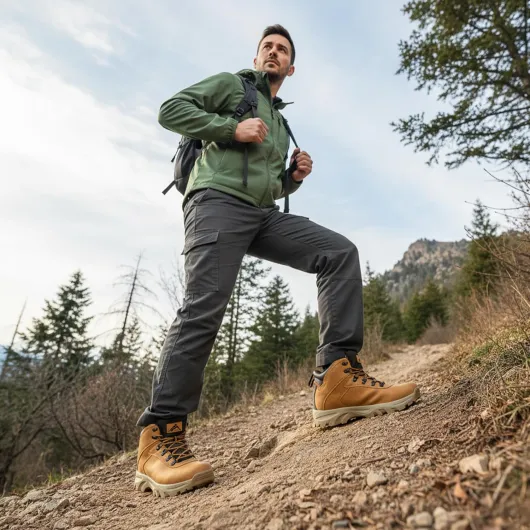
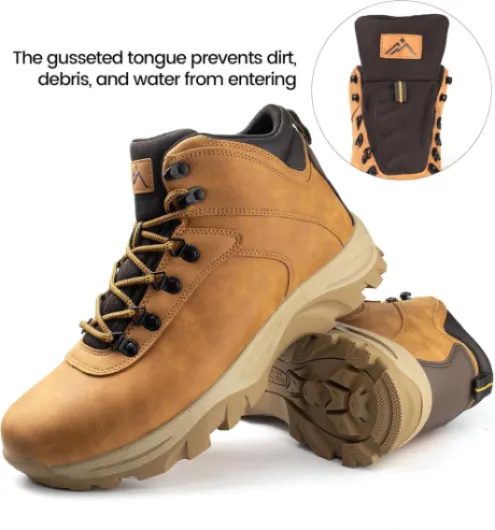
The design is pretty straightforward: round toe, block heel, ankle-high shaft, and a wheat/yellow faux leather upper. It’s basically that standard work-boot style you see everywhere. No big logos screaming at you, no weird patterns, just a solid-colour boot that you can wear with jeans, work trousers, or hiking pants without looking odd. If you like simple and practical, this checks that box. If you want something technical-looking with fancy overlays and bright colours, this isn’t it.
I appreciated the ankle support design. The collar is padded and comes up just above the ankle bone, so you get some stability without feeling locked in like a stiff mountaineering boot. On uneven paths and muddy fields, it felt stable enough. I wouldn’t trust this level of support for steep rocky trails or long mountain days, but for casual hiking and everyday wear, it’s fine. The gusseted tongue helps keep water and debris out, and during wet grass walks, I didn’t end up with bits of dirt inside.
The outsole has a multi-directional lug pattern. The lugs are not super deep like aggressive trail boots, but they’re enough for park trails, gravel, and wet pavement. The tread pattern is more like a hybrid between a work boot and a light hiking shoe. Grip on wet pavement and damp soil was decent; on very muddy slopes, you still need to watch your step, which is normal for this type of sole. The look of the sole is a bit chunky, but that actually helps with confidence on slippery ground.
Visually, the boots sit in that sweet spot where you can wear them to work, around town, and on light hikes without changing shoes. That’s probably their best design feature: versatility. They’re not going to impress gear nerds, but if you just want one pair that covers “work + dog walks + occasional hike,” the design makes sense. Just keep in mind they look like budget work boots up close; stitching and finishing are okay, not premium.
Comfort: surprisingly okay for wide feet, but not an all-day mountain boot
Comfort-wise, these were better than I expected for the price, especially for wide feet. The wide toe box is real, not just marketing. I have slightly wide forefeet, and with these in size 7, I had room for my toes to spread without that annoying pinch on the sides. Even with medium-thick hiking socks, there was no painful pressure on my little toes or the ball of my foot, which is usually my main issue with standard-width boots.
The memory foam-style insole gives a soft first impression when you step in. For short to medium walks (30–90 minutes), that cushioning feels nice. Your heel and forefoot don’t feel beaten up, and the EVA sole adds some shock absorption. The trade-off is support: after about two hours of walking on mixed terrain, I started to feel that the arch support wasn’t great. Not terrible, but you can tell it’s a budget insole. If you have flat feet or need serious support, I’d plan to drop in your own insoles.
The padded ankle collar and tongue do a decent job of avoiding hot spots. I didn’t get any blisters, even wearing them straight out of the box for a long dog walk. There was a tiny bit of rubbing on my right heel the first day, but nothing that turned into a blister, and it disappeared after the second outing. The break-in period is short, mainly because the boot isn’t super stiff to begin with.
As for breathability, they’re okay. The mesh lining helps, but they’re still boots, not sneakers. On a mild spring day (around 15–18°C), my feet stayed comfortable. On a warmer day, they got a bit warm but not unbearable. For winter or cooler weather, they’d be fine with thicker socks. Overall, I’d say comfort is solid for casual use, but if you plan to do long hikes regularly, especially on steep or rocky ground, there are more supportive options out there. For everyday use, dog walks, light hikes, and work around the house, they get the job done.
Materials: faux leather and EVA – you feel the budget, but it’s not all bad
The upper is faux leather, and you can tell as soon as you touch it. It doesn’t have that natural grain or flexibility of real leather. It’s a bit stiffer out of the box, and the texture feels more plasticky. That said, for a budget boot, I wasn’t shocked. After a few days of wear, the upper softened up enough and creased where it needed to without cracking. If you’re used to premium leather boots, this will definitely feel cheaper, but if you’re used to typical Amazon budget boots, it’s pretty standard.
The sole is EVA (Ethylene Vinyl Acetate), which is the same kind of foam you get in a lot of running shoes. The upside is that it keeps the boot light and gives a bit of cushioning underfoot. The downside is that it won’t be as long-lasting as proper rubber soles if you’re doing a lot of rough terrain or heavy work on concrete all day. For me, on mixed surfaces (pavement, grass, dirt paths), it held up fine during the test period. I didn’t see any weird early wear, but I also wasn’t doing 20 km days in them.
Inside, there’s a mesh lining and an EVA/memory-foam-style insole. The mesh helps with breathability; I didn’t feel that swampy foot sensation even after a couple of hours in mild spring weather. The insole has a bit of squish to it, which is comfortable at first. Over longer walks, you can feel that it’s not as supportive as a more structured hiking insole, especially if you have higher arches. You can swap it for a better insole if you’re picky about support.
Where they’ve tried to be a bit more responsible is the mention of 50%+ recycled materials. Hard to verify exactly what part is recycled, but if that matters to you, it’s a small plus. Overall, the materials scream “budget but functional”: light, reasonably comfy, and good enough for casual use. Just don’t expect them to age like leather or outlast heavy-duty work boots with Vibram soles.
Durability: fine as a beater boot, but don’t expect it to last forever
Durability is where you really feel that this is a budget boot. During my few weeks of use, nothing failed: no sole separation, no busted eyelets, no major scuffs that went through the faux leather. The stitching looks decent, and the upper handled mud, wet grass, and a couple of hose-down cleanings without falling apart. For light use and casual wear, I don’t see them dying quickly.
However, you can tell this is not built like a tank. The faux leather doesn’t have the same long-term toughness as real leather. It will probably crease and maybe crack sooner if you keep soaking and drying them aggressively or flex them a lot. The EVA sole is comfortable and light, but it’s not as abrasion-resistant as a thick rubber sole. If you’re walking a lot on rough concrete or rocky ground, I’d expect the tread to wear down faster than on a more expensive hiking boot.
The Amazon review where the guy said he’s been soaking them every few days for a few months and still expects about a year out of them sounds about right to me. These feel like 1–2 year boots with regular casual use, or roughly a year if you’re pretty hard on them. They’re ideal if you want something you don’t mind beating up, not a heritage boot you plan to resole and keep for a decade.
So, durability verdict: acceptable for the price. They’re not fragile, but they’re not lifetime boots either. If you go in thinking, “I’ll use these hard and replace them when they die,” you’ll be satisfied. If you expect them to compete with high-end brands in terms of lifespan, you’re going to be disappointed. Treat them as a solid backup/secondary pair or a budget daily beater, and they make more sense.
Performance: good for casual hiking and work, limited for serious trails
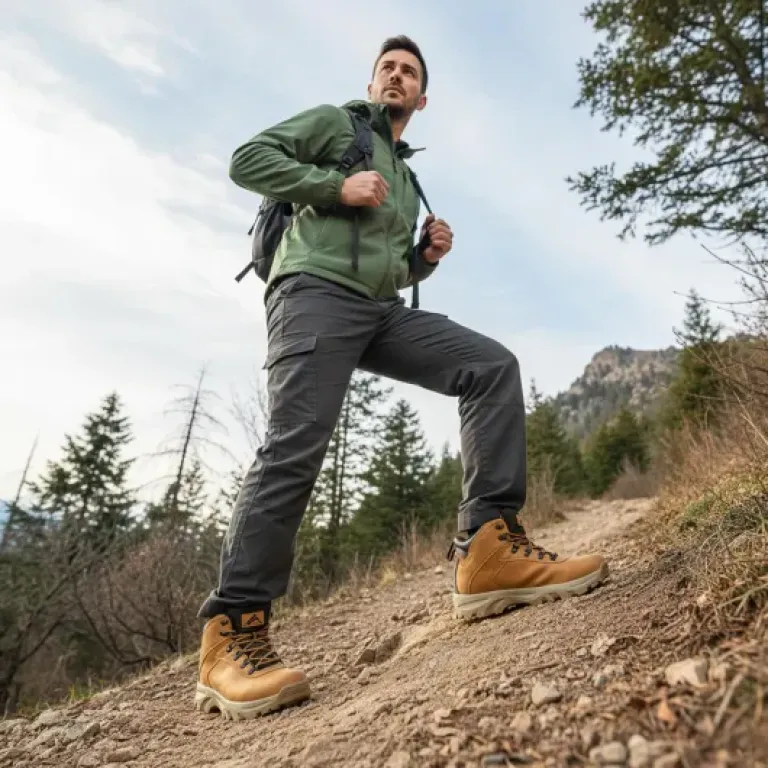
On actual ground, these boots do pretty well for casual use. I wore them on wet grass, muddy park paths, compact dirt trails, and regular pavement. The multi-directional rubber lugs gave decent grip in all those conditions. On wet pavement and damp wooden bridges, I never felt like I was sliding around. In thicker mud, they will clog a bit and traction drops, but that’s normal for this type of boot and lug depth. They’re not aggressive trail runners, but they hold their own for everyday outdoor stuff.
In terms of stability, the ankle support is enough for light hiking and uneven ground. I didn’t roll my ankles or feel wobbly on small roots and rocks. That said, when I tried them on steeper, loose gravel, I definitely felt the limits. The sole flexes more than a serious hiking boot, and you don’t get that locked-in feeling you’d want for technical hikes or long descents. I’d keep these for easy to moderate terrain and leave the more demanding stuff to better boots.
One user review mentioned using them as a “backup boot to trash” and expecting about a year of abuse with lots of soaking and drying. That lines up with my impression: they’re solid as a second pair you don’t baby. I also like that they’re lightweight, so your legs don’t feel as tired after a long walk compared to heavier leather boots. If you do a lot of stop-start work (construction, gardening, DIY), that lighter feel is a plus.
Overall, performance is good enough for the price bracket: solid grip on normal surfaces, reasonable stability, and comfortable for everyday distances. Just be honest about what you’re going to do with them. If your plan is occasional hikes, dog walks, and outdoor chores, you’ll be fine. If you’re planning multi-day treks in the mountains, this is not the boot to rely on.
What you actually get out of the box
Out of the box, the CC-Los boots look like classic wheat work/hiking boots. The colour is a typical yellow/wheat tone, not super bright, more like standard construction boots you see everywhere. They’re ankle-high with a padded collar and tongue, and the overall shape is a bit bulkier than a street sneaker but slimmer than heavy-duty mountaineering boots. If you’ve worn budget work boots before, the style will feel very familiar.
The first thing I noticed when I picked them up was the weight. At around 900 g for the pair, they’re lighter than they look. The EVA sole keeps things from feeling like bricks on your feet. That’s nice if you’re walking around town or doing moderate walks, because you don’t feel like you’re dragging your feet after an hour. The laces are standard round ones, nothing fancy, but they hold a knot and didn’t loosen on me during walks.
Fit-wise, the wide width is real. I usually hover between regular and wide in many brands, and with these I had enough space in the toe box, even with slightly thicker hiking socks. People with genuinely wide feet or higher volume feet will probably appreciate that. If you have narrow feet, you might find them a bit roomy and need to crank down the laces more than usual.
Overall presentation is basic but fine: no luxury feel, no premium packaging, just a simple box and boots that look like they’re made to be used and beaten up. If you expect high-end finishes or fancy branding, you’ll be disappointed. If you just want something that looks like a normal outdoor/work boot, they’re exactly that. Nothing more, nothing less.
Pros
- Genuinely wide toe box that’s comfortable for broader feet and thicker socks
- Lightweight and reasonably comfortable for casual walks and daily use
- Decent waterproofing and grip for rain, wet grass, and easy trails at a low price
Cons
- Faux leather and EVA sole limit long-term durability, especially with hard use
- Support and traction are not ideal for steep or technical hiking terrain
- Insole and arch support are basic; some users may need aftermarket insoles
Conclusion
Editor's rating
Overall, the CC-Los Men's Waterproof Walking Boots are decent budget boots that make sense if you know what you’re buying them for. They’re light, fairly comfortable out of the box, and the wide fit actually works for broader feet. For dog walks, casual hikes, wet-weather errands, and general outdoor chores, they hold up well and keep your feet reasonably dry and supported. They’re also simple enough in style to wear as everyday work boots without looking odd.
The flipside is that you’re clearly in budget territory: faux leather, EVA sole, and average long-term durability. They’re not built for steep, rocky trails or heavy-duty construction work, and they’re not going to last like premium leather boots. Think of them as a backup or beater pair that you don’t mind soaking, muddying, and drying by the fire, not your one and only serious hiking boot.
I’d recommend these to anyone who has wide feet, needs a cheap waterproof-ish boot for light outdoor use, and doesn’t want to spend big money. If you’re planning multi-day hikes, carrying heavy loads, or working all day on rough surfaces, I’d skip these and invest in something more robust. As long as you keep them in their lane, they’re good value and get the job done without fuss.