
Summary
Editor's rating
Value for money: okay if cheap, not worth it if close to big brands
Design: more sporty trainer than real hiking boot
Comfort: okay for short walks, not great for long hikes
Materials: synthetic, vegan leather, and you can feel the budget
Durability: probably okay for casual use, questionable for heavy hiking
Performance and “waterproof”: where the marketing and reality don’t match
What you actually get when you open the box
Pros
- Reasonably comfortable out of the box for short walks and casual use
- Light to moderate weight with a sporty design that works for everyday wear
- Rubber sole offers acceptable grip on dry paths, gravel, and pavements
Cons
- Waterproof claim is overstated – feet can get damp fairly quickly in wet conditions
- Materials and build feel budget, with questionable long-term durability for serious hiking
- Limited breathability and basic insole support, not ideal for long hikes or warm weather

Specifications
View full product page →| Brand | VTASQ |
Cheap waterproof boots that… aren’t really waterproof
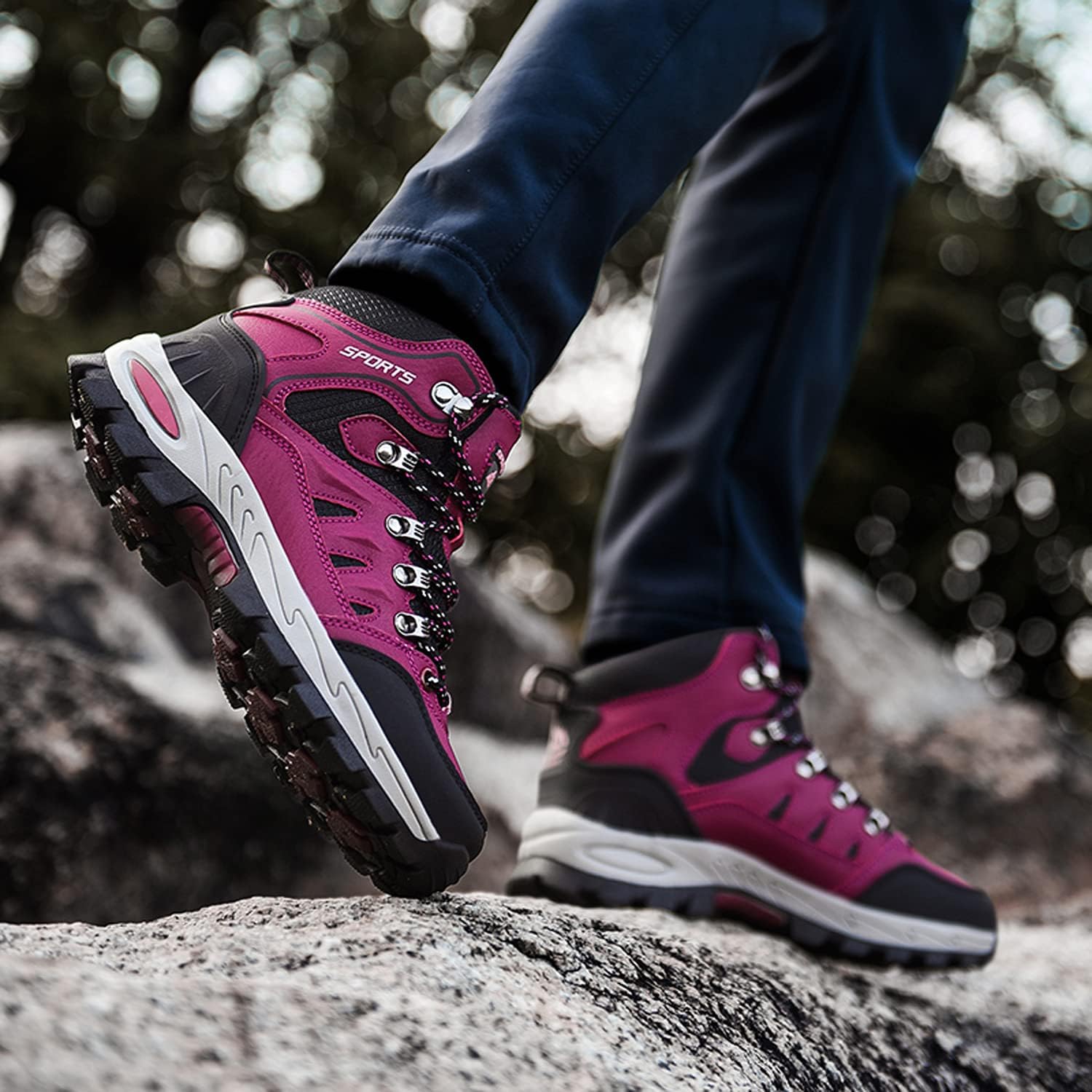
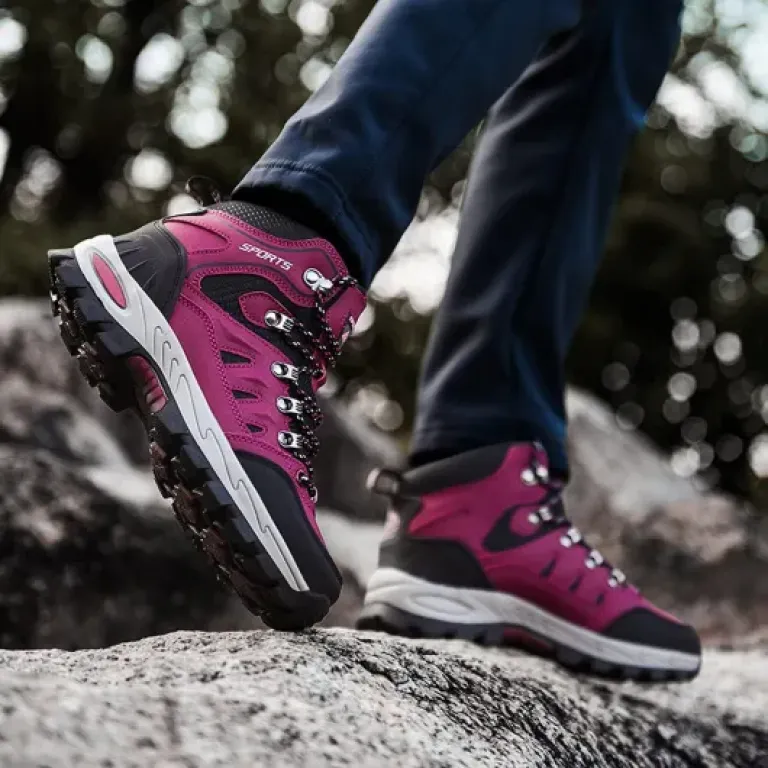
I’ve been trying out these VTASQ rose red hiking boots in size 4.5UK for a couple of weeks on everyday walks and a few wet trails. On paper, they tick a lot of boxes: waterproof, lightweight, all-terrain grip, vegan leather, hiking-focused. In reality, they feel like a pair of budget trainers trying to pass as serious hiking boots. They’re not total trash, but they’re clearly built to a price and it shows once you actually use them outside of dry pavements.
The first thing I noticed is they look more like sporty trainers than classic hiking boots. That’s fine if you want something casual for dog walks or city parks. But if you’re thinking about long hikes, wet grass, or muddy paths, you quickly hit the limits. One Amazon review already mentioned they’re “not waterproof”, and I can back that up: after one wet outing, my socks weren’t drenched, but they were definitely damp in the toe area and along the sides.
I mainly used them for 30–60 minute walks, a couple of light hikes on forest paths, and some rainy-day errands. No heavy backpacking, no mountain scrambling. Even with that fairly easy use, you can feel they’re more lifestyle shoes than proper trekking boots. The grip is okay, the comfort is okay, but nothing really stands out as impressive. They get the job done if you don’t ask too much from them.
So overall, my first impression is: they’re fine for casual outdoor use in cool, mostly dry weather, especially if you like the bright rose red colour. If you’re expecting serious waterproof hiking boots, you’ll probably be disappointed. Think of them as budget outdoor trainers with a boot look, not as real mountain-ready footwear.
Value for money: okay if cheap, not worth it if close to big brands
Value really depends on the price you find these at. Since they’re from a lesser-known brand and sit low in the best-seller rankings, they often pop up discounted. At a low price point, they make sense as a casual beater pair: something you don’t mind getting dirty, for dog walks, light hikes, or occasional rainy days. In that scenario, they’re "good enough" and you won’t be too annoyed if they start failing after a season.
But you have to put them in context. For not much more money, you can often find entry-level models from established brands like Quechua (Decathlon), Karrimor, or even some discounted Merrell or Columbia shoes. Those usually beat these VTASQ boots on waterproofing, comfort, and long-term durability. So if the VTASQ price is too close to those, I’d skip them and go straight to a known brand. The main real argument for these is when you catch them much cheaper than the competition.
Also, the "waterproof" claim is misleading. When you pay for waterproof boots and they end up just "water resistant at best", you feel a bit cheated. If they were sold as water-resistant outdoor trainers, I’d judge them more kindly. But since they’re positioned as waterproof hiking boots, the performance doesn’t fully match the promise, and that hurts the sense of value, especially if you specifically bought them for wet-weather hiking.
So in terms of value, I’d say: they’re decent if you find them at a bargain price and you only need light-duty outdoor shoes. If you plan real hikes in wet conditions or want something that will last, it’s worth paying more for a better brand. These are fine as backup or occasional boots, not as your main hiking gear.
Design: more sporty trainer than real hiking boot
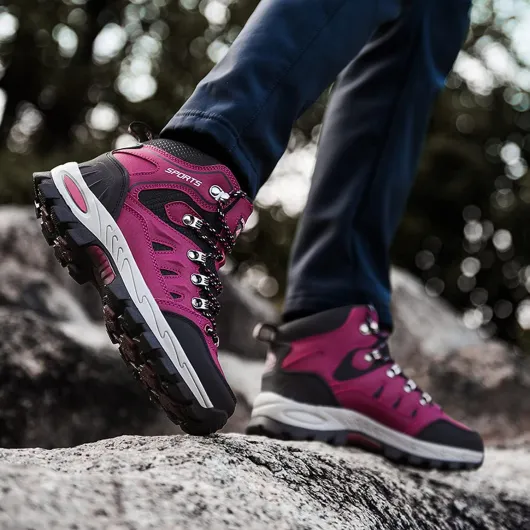
Design-wise, these VTASQ boots sit somewhere between a trail trainer and a light hiking boot. They’re mid-cut, so they come up slightly over the ankle, but they’re not very stiff. If you’re used to classic trekking boots with proper ankle support, these will feel soft and somewhat flimsy. For casual walks that’s actually comfortable, but for tricky terrain it’s not very reassuring. The shape is fairly standard: round toe, flat heel, and a fairly wide front, which should suit most feet.
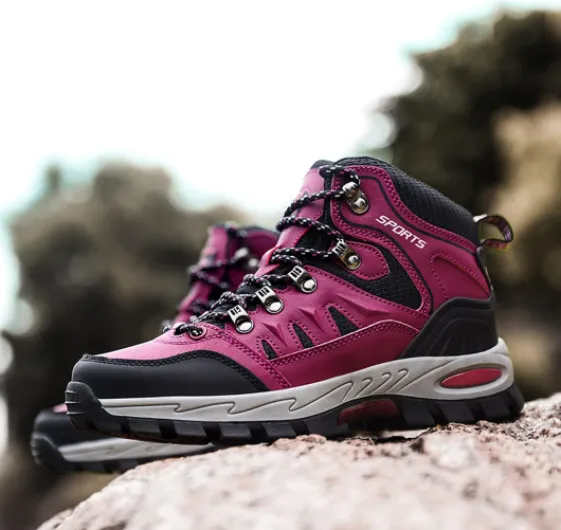
The rose red colour is the main thing that stands out visually. There’s no fancy detailing, just a few panels of synthetic material, some stitching, and a basic sole pattern. It looks okay, but you can tell immediately this is not a premium brand. Up close, the finish is a bit rough: some loose threads, a bit of glue visible where the sole meets the upper, and seams that don’t look super precise. Nothing that stops you from using them, but it screams "budget" when you inspect them closely.
On the practical side, the lacing system is simple: regular eyelets all the way up, no hooks at the top like on more technical boots. That means it’s easy to lace and unlace, but you don’t get that tight, locked-in feel above the ankle. The tongue is padded and stitched up fairly high, which is supposed to help with water resistance, but since the material itself doesn’t breathe or seal that well, it doesn’t fully solve the problem once you step in wet grass or shallow puddles.
In daily use, the design works if you treat them as casual outdoor trainers. They don’t look ridiculous with jeans or jogging bottoms, and the mid-cut gives you a bit more security than low trainers. But if your main priority is technical hiking design – stable ankle, well-shaped toe box for descents, rock protection – this model is clearly basic. It gets the job done for light use, but it’s not something I’d pick for long days in the mountains.
Comfort: okay for short walks, not great for long hikes
On the comfort side, these VTASQ boots are "fine" but that’s about it. Out of the box, they didn’t give me any major blisters, which is already a win for cheap boots. The padding around the ankle and tongue is decent, so there’s no sharp edge rubbing your skin. The foam insole is soft enough for everyday use, and the fit feels true to size for me – not too tight, not too loose. If you’re between sizes or like thick hiking socks, I’d go half a size up though, because the toe box isn’t massively generous.
Where you feel the budget side is after 45–60 minutes of walking. The cushioning is moderate, as advertised, but there’s not much structure underneath. On tarmac or hard-packed paths, you start to feel the impact a bit more than with more advanced hiking shoes. The arch support is minimal, so if you have flat feet or need support, you’ll feel it. I swapped in my own insoles on the second week and that improved things quite a bit, which tells me the shoe itself isn’t doing a lot of the work.
Breathability is another weak point. Because of the synthetic "vegan leather" upper and the way the shoe is built to try to be "waterproof", your feet heat up pretty quickly. On a cool spring day it’s okay, but on a mild day with some effort (small uphill walks, faster pace), I ended up with warm, slightly sweaty feet. Not horrible, but clearly less breathable than mesh-based trail shoes. I wouldn’t wear these in summer unless it’s a very short walk.
In short, comfort is acceptable for casual use: dog walks, quick errands, short hikes under 5 km. For longer outings or daily use on hard surfaces, you’ll probably start to notice pressure points and fatigue in the foot. If you buy them, I’d seriously consider investing in better insoles and keeping them for light, occasional use rather than full-day hikes.
Materials: synthetic, vegan leather, and you can feel the budget
The brand highlights "vegan leather" and synthetic materials, and that’s exactly how they feel: plastic-like, fairly stiff at first, and not very breathable. The outer material is synthetic faux leather, which has the advantage of being easy to wipe clean, but it doesn’t feel very premium in hand. It creases quickly where your foot bends, and after a few walks you can already see small folds forming across the toe area.
The inner lining is listed as leather, but honestly it feels more like synthetic or a very thin coated material. It’s smooth and not scratchy, so it’s fine against socks, but don’t expect the nice feel of real leather from higher-end boots. The insole is foam, removable but very basic. It provides moderate cushioning, but nothing special in terms of support. If you have sensitive feet or need arch support, you’ll probably want to swap it out for a better insole.
The sole is rubber with a lug pattern that’s decent for light hiking. The rubber itself feels a bit on the hard side. That’s good for durability on tarmac and gravel, but it doesn’t grip as well as softer compounds on wet rock or smooth surfaces. The lugs aren’t very deep either, so in mud they clog pretty quickly. For dry dirt paths and city use, it’s okay. For slippery slopes, I wouldn’t fully trust it.
Overall, the materials match the low price point: synthetic everywhere, foam insole, basic rubber sole. They’re fine if you just want something you don’t mind getting dirty or scuffed. But don’t expect high breathability, premium feel, or top-level waterproofing from this combo. In my use, I could feel my feet heat up faster than in my usual branded hiking shoes, and once they got wet, they took a while to dry because the materials don’t breathe that well.
Durability: probably okay for casual use, questionable for heavy hiking
Durability is always hard to judge long-term, but after a couple of weeks of regular use (roughly 10–12 outings, mixed pavements and trails), I can already see where these VTASQ boots might age quickly. The synthetic upper shows creases across the toe bend, and while that’s normal, here the folds look a bit deeper than on my usual hiking shoes. It doesn’t mean they’ll fall apart tomorrow, but it suggests the material might crack or peel faster over time, especially if you flex them a lot.
The stitching so far is holding up, but in a few spots the threads look a bit loose or uneven, especially around the heel and tongue. Nothing has come undone yet, but I wouldn’t be shocked if seams start to fray with heavier use. The sole is firmly glued for now, with no visible separation, but the glue line is visible in some areas, which usually isn’t a great sign for long-term bonding when exposed to water and mud.
On the positive side, the rubber sole itself seems quite hard-wearing on tarmac and gravel. After my tests, the lugs don’t show much wear. That’s typical of harder rubber: decent lifespan, slightly worse grip. The foam insole is still okay too, but I expect it to flatten out pretty quickly if you wear these daily for months. These are the kind of shoes where you might get a season or two of light use, but I wouldn’t rely on them as your main hiking footwear for years.
If you’re planning to use them occasionally – weekend walks, light hikes, short winter outings – they’ll probably last long enough for the price. If you want boots you can abuse regularly in rain, mud, and rocks, I’d look higher up the range. They simply don’t give off the "built to last" feeling you get from more established hiking brands. They’re more in the "good enough until they break, then replace" category.
Performance and “waterproof”: where the marketing and reality don’t match
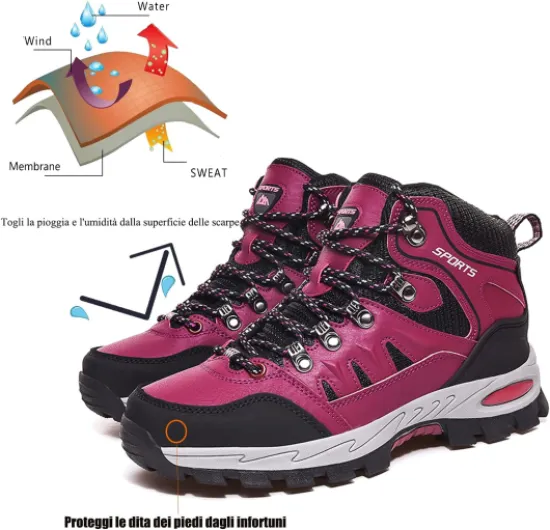
Let’s talk about the big claim: waterproof. The product page pushes that quite hard, but in practice, the protection is limited. I tested them on wet grass, shallow puddles, and light rain. After around 20–30 minutes walking through wet grass, I could feel moisture creeping in at the front and sides. Not like stepping in a river, but my socks were clearly damp afterwards. This lines up with the Amazon review saying "worn once and my feet were soaked" – I didn’t get fully soaked, but definitely not the dry feet you expect from real waterproof boots.
For grip, the "all-terrain traction" is okay for easy terrain. On dry dirt paths, gravel, and pavements, they behave like standard outdoor trainers. On slightly muddy forest paths, they manage, but you can feel the lugs filling up fast. On wet rocks or smooth, wet surfaces (like wet tiles or wooden bridges), I had to be careful; the rubber doesn’t bite that well. So yes, they can handle some variety, but I wouldn’t trust them on technical or very slippery ground.
Stability is average. The mid-cut gives a bit of ankle coverage, but the upper is quite soft and the sole isn’t very wide or structured. On flat ground it’s fine, but on side slopes or uneven rocky sections you can feel your foot rolling a bit more than in proper trekking boots. If you have weak ankles or carry a heavy backpack, that’s not ideal. For light day hikes with a small bag, it’s acceptable.
For the type of use I put them through – short hikes, dog walks, rainy commutes – they perform "just enough". They protect you better than regular sneakers from mud and small puddles, but they’re far from full waterproof mountain boots. If you’re expecting serious outdoor performance, you’ll probably be disappointed. If you just want something cheap to beat up in autumn and winter around town, they get the job done, as long as you accept the limits with water and grip.
What you actually get when you open the box
Out of the box, these VTASQ hiking boots look like a basic pair of budget outdoor shoes. The packaging is nothing fancy: a simple cardboard box, some paper stuffed inside the shoes, and that’s about it. No spare laces, no extra insole, no little care leaflet with tips. It feels very "straight from the factory". Not a big deal, but it sets the tone: they’ve clearly cut corners on anything that’s not essential.
The colour is properly "rose red" – bright, more on the sporty side than feminine or stylish. If you like colourful shoes, you’ll probably enjoy it. If you’re more into neutral tones like black, grey, or brown, this might feel a bit loud. The style is labeled as "boots" but in hand they’re more like mid-height trainers: not super high on the ankle, not as rigid as real hiking boots, and lighter than classic leather boots.
When I first picked them up, the weight felt reasonable. Not ultra-light like trail runners, but lighter than traditional hiking boots with thick leather. The synthetic outer and foam insole make them feel more like athletic shoes. There’s a decent amount of padding around the ankle and tongue, so you don’t get that stiff, brick-like feeling you get with some cheap boots. The laces are standard, nothing special – they work, but they’re not particularly thick or grippy.
Overall, the presentation is functional: you get a pair of budget hiking-style shoes that look sporty and colourful, with no extras. If you’re used to big brands like Salomon or Merrell, this will feel a bit barebones and cheap. But for the price range, it’s pretty much what I expected: basic box, basic presentation, shoes ready to wear straight away.
Pros
- Reasonably comfortable out of the box for short walks and casual use
- Light to moderate weight with a sporty design that works for everyday wear
- Rubber sole offers acceptable grip on dry paths, gravel, and pavements
Cons
- Waterproof claim is overstated – feet can get damp fairly quickly in wet conditions
- Materials and build feel budget, with questionable long-term durability for serious hiking
- Limited breathability and basic insole support, not ideal for long hikes or warm weather
Conclusion
Editor's rating
After using these VTASQ rose red hiking boots for a couple of weeks, my conclusion is pretty straightforward: they’re budget outdoor trainers disguised as waterproof hiking boots. For casual walks, light hikes in mostly dry conditions, and everyday use in autumn or winter, they’re serviceable. They’re reasonably comfortable out of the box, the grip is acceptable on easy terrain, and the bright colour might appeal if you like something that stands out a bit. For the right price, they can be a decent backup or occasional pair.
But if you’re expecting real waterproof performance and solid hiking support, they fall short. Water resistance is limited – your feet can end up damp after a single wet outing – and the overall build and materials feel entry-level. The mid-cut gives only modest ankle support, the insole is basic, and the synthetic upper doesn’t breathe well. Compared to entry-level models from more established outdoor brands, these boots struggle to compete on comfort, waterproofing, and long-term confidence.
I’d recommend these mainly for people who want cheap, mid-height outdoor shoes for short walks, dog outings, and occasional light trails, and who don’t care too much if they’re not fully waterproof. If you’re planning regular hikes, carrying a backpack, or walking in proper rain and mud, I’d skip these and invest in something more robust. In short: okay as a low-cost, casual option, not a serious hiking boot you can rely on in rough or very wet conditions.