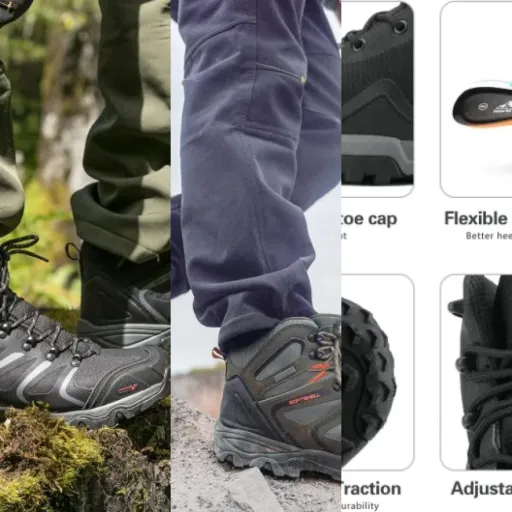

Summary
Editor's rating
Value: where these boots actually make sense
Design: functional more than pretty
Comfort: great out of the box, watch the really long days
Materials: synthetic but tougher than expected
Durability: miles per pound is the real story
Real-world performance: daily miles vs serious trekking
What you actually get out of the box
Waterproofing and grip: good at first, with clear limits
Pros
- Comfortable straight out of the box with no real break-in
- Very good value for money given the mileage they can handle
- Solid grip and stability on mud, wet grass and mixed terrain
Cons
- Waterproofing tends to fade after months of heavy use
- Basic cushioning can feel tiring on very long hikes unless you add better insoles

Specifications
View full product page →| Brand | NORTIV 8 |
Cheap boots I’m not afraid to trash
I’ve been using these NORTIV 8 Men’s Ankle High Waterproof Boots (Armadillo, Olive/Black/Orange, size 10 UK) mainly for dog walks, weekend hikes and general bad-weather errands. I’m not a gear nerd, I just need boots that keep my feet dry, don’t fall apart after a few months, and don’t cost as much as a weekend away. That’s the mindset I had when trying these.
Before these, I’d been through a couple of mid-range brands around the £100 mark that either split at the flex point or lost waterproofing after a winter. So I went into this pair with fairly low expectations because of the price. The Amazon reviews mentioning people doing 1,000+ miles on them made me curious though, especially one guy who basically uses them every day.
I’ve had them for a good few months now, using them several times a week in typical British weather: wet grass, muddy trails, light rain, a bit of shallow standing water. Nothing extreme like alpine stuff, but more than just walking from the car to the office. I’d say I average 20–30 miles a week in them when I’m consistent.
Overall, they feel like workhorse boots: not pretty, not perfect, but I don’t baby them and I’m not scared to wreck them. They have some clear strengths for the price, but also a couple of things you should know, especially around the whole “waterproof” claim and long-term comfort on really long hikes.
Value: where these boots actually make sense
This is where the NORTIV 8 Armadillo boots really earn their place. For the price (usually under £50 on Amazon), you’re getting a comfortable, genuinely usable hiking boot that doesn’t feel like a toy. They’re not competing with premium brands on tech or materials, but they don’t need to. They’re competing on the simple question: how many miles can I get before I need a new pair, and will my feet hate me in the meantime?
If you’re the sort of person who walks a lot – daily dog walks, regular 5–10 mile hikes, general muddy-weather use – these are good value for money. You could burn through one or two pairs of these before reaching the price of a single high-end boot. As one reviewer said, for the cost of a fancy £250 pair plus a resole, he could have bought several of these and still had spares. I think that’s a fair way to look at it if you’re not chasing brand names.
On the flip side, if you hike only a few times a year but want something that looks premium and stays waterproof for many seasons, you might be better off saving up for a more expensive leather or Gore-Tex boot. These NORTIV 8s are more about practical, everyday use than long-term prestige. They’re also not ideal if you have very specific foot issues and need highly tuned support – you’ll want to budget for better insoles at least.
Overall, I’d say the value is strong as long as you know what you’re buying: a budget-friendly, no-frills boot that can take a beating, keep you reasonably dry for a good chunk of its life, and not make you cry when you drag it through mud and brambles. For that role, the price is hard to argue with.
Design: functional more than pretty
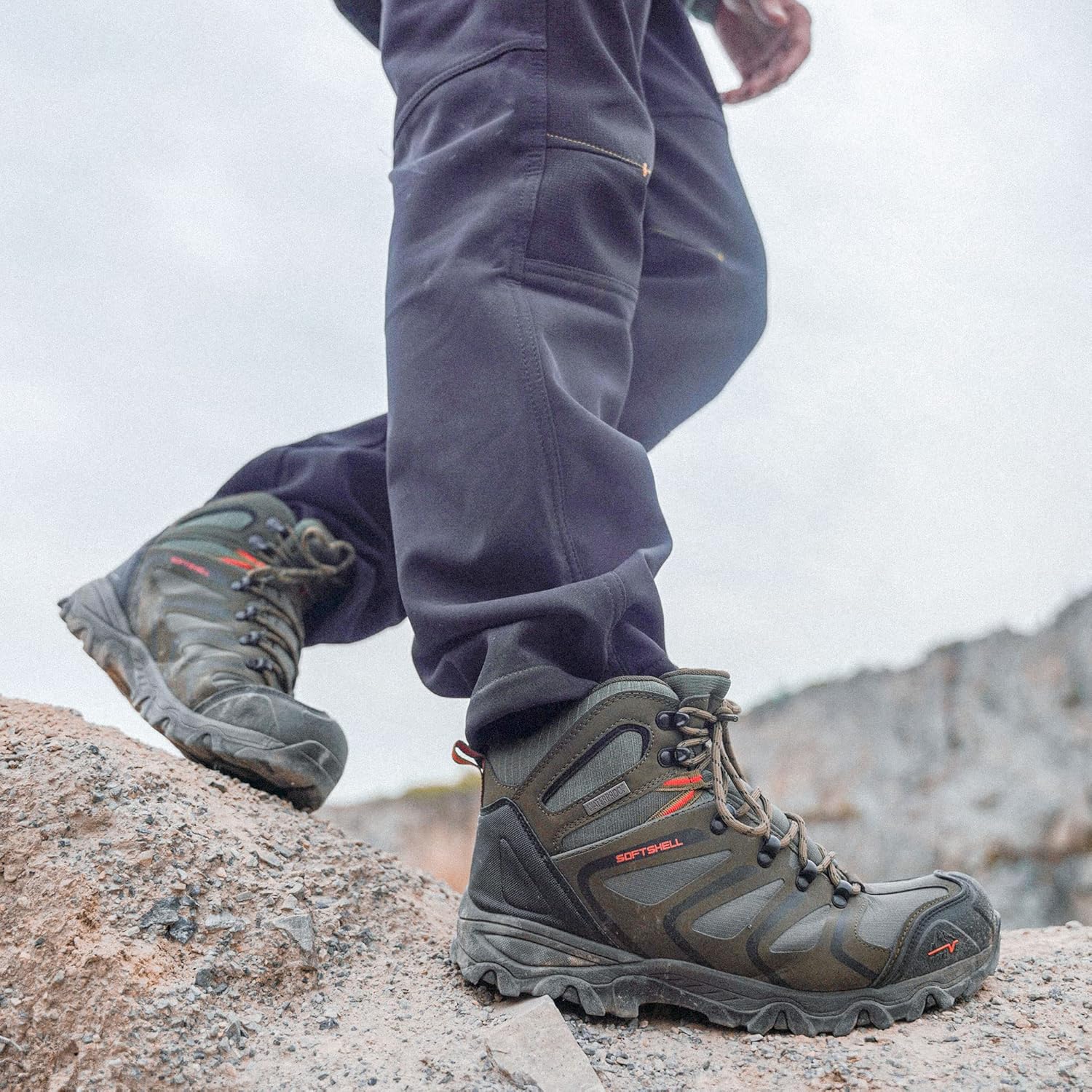
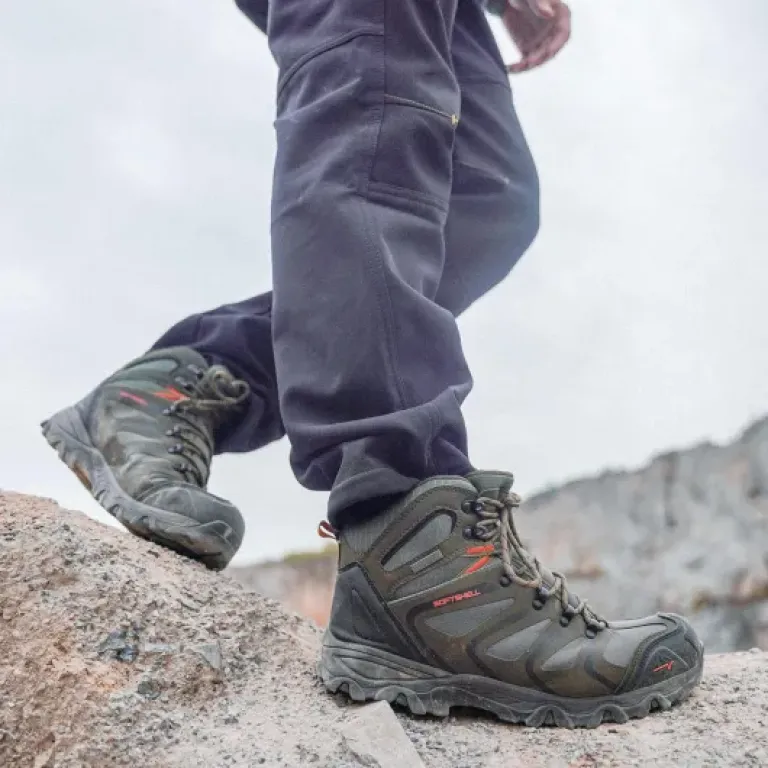
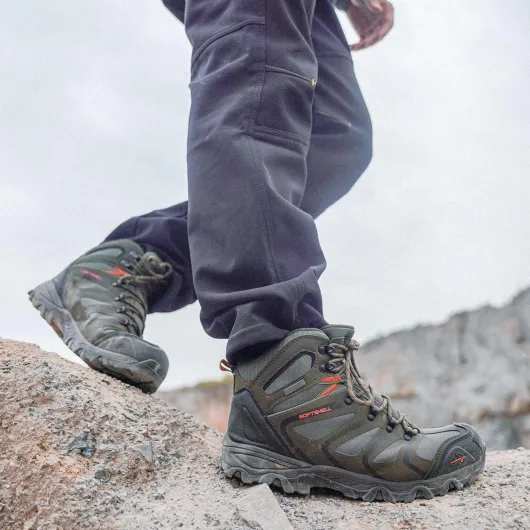
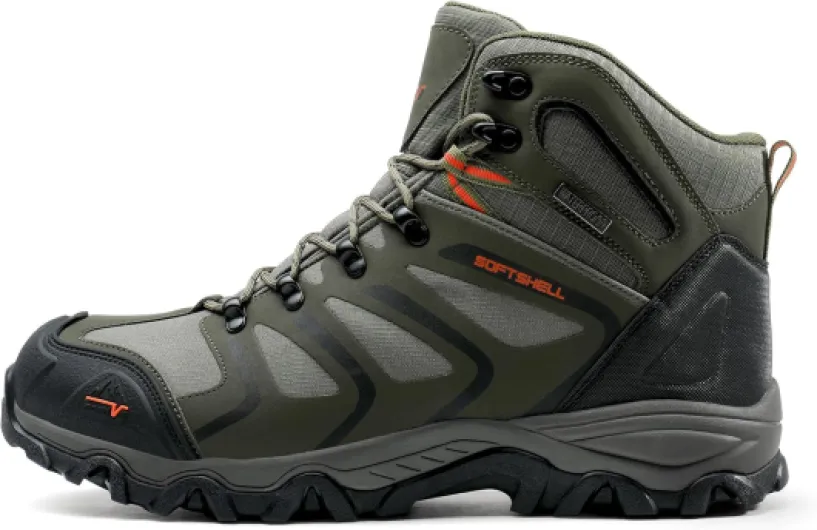
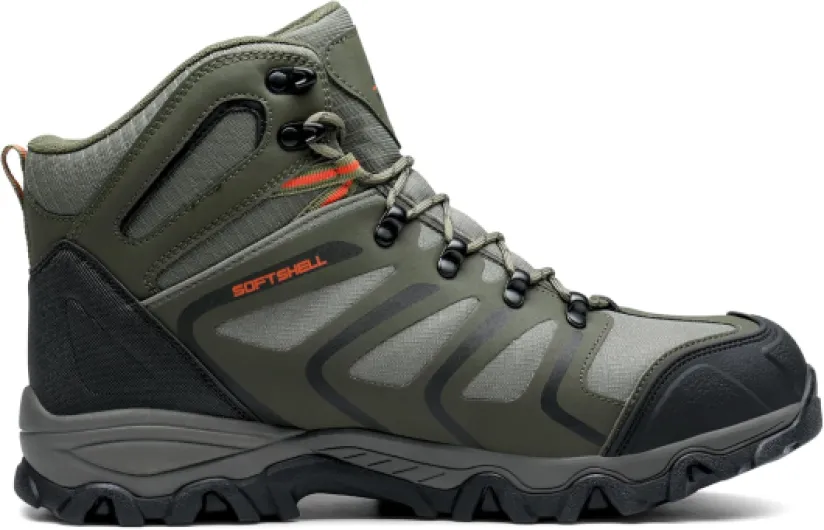
Design-wise, these are classic ankle-high hiking boots. They sit just above the ankle bone, so you get a bit of support without that heavy, stiff feeling you get from full high-cut boots. The colourway I have is Olive/Black/Orange. The olive and black are quite muted, and the orange bits are mostly on the logo and a few trim areas. It’s not loud, but you’ll notice the colour if you’re used to plain brown or black leather boots.
The lacing system is straightforward: normal eyelets lower down and hooks at the top, so you can adjust tightness around the ankle easily. The tongue is gusseted up to a decent height, which helps with keeping water and debris out. I’ve walked through wet grass and shallow puddles, and water hasn’t come in from the tongue area as long as I didn’t go over the top of the boot. The heel has a pull tab which makes it easier to get them on, especially if you keep the laces a bit tighter.
The sole has a fairly aggressive tread pattern with deep grooves. It’s clearly designed for mud and loose ground rather than just pavements. On trails and wet fields, the traction is solid. On smooth indoor floors, you definitely feel the lugs, but I haven’t had any sliding issues. They do track some mud into the house though, so you’ll be knocking them off outside if you care about your floors.
From a style point of view, they’re not going to win any fashion contests, but that’s not the point. They look like what they are: budget hiking boots built to be used, not shown off. If you like clean, all-black leather, these might look a bit busy with the mixed materials and colours. If you just want something that looks outdoorsy and practical, they’re fine. Function over style is basically the design brief here, and it shows in a good way for actual use.
Comfort: great out of the box, watch the really long days
Comfort was one of the pleasant surprises here. Out of the box, they were wearable straight away. No real break-in period. I did a 5-mile dog walk on the first day, mostly mixed terrain (pavement, gravel paths, some muddy sections), and I didn’t get any blisters or hot spots. The ankle padding is decent, and the collar doesn’t dig in, even when laced snugly. For a cheap boot, that’s already a win.
The fit for me is true to size in length. Width is slightly on the regular-to-roomy side, not super narrow. I don’t have wide feet, and I still had enough space for thicker hiking socks without feeling squeezed. If you have really wide feet, I’d consider the wide fit option that some reviewers mention, but for average feet, the standard version should be fine. Toe box has enough room to wiggle toes, which helps on longer walks and in colder weather.
The EVA midsole and insole give decent cushioning for day-to-day use. Walking 6–8 miles on Sundays, like one of the reviewers, feels realistic. Up to around 10 miles in a day, I was comfortable. Beyond that, especially on hard surfaces, I started to notice more impact on my heels and knees compared to more expensive boots with better midsoles. It’s not painful, but you feel that these are budget boots. If you plan to regularly do 15–20 mile hikes, I’d seriously recommend adding a higher-quality insole.
Breathability is okay, but not great. They’re waterproof boots with synthetic materials, so feet will get warm if you’re pushing hard. On cooler and wet days, they feel fine. On warmer days, I did notice my socks getting sweaty, although not to the point of soaking. In short, comfort is pretty solid for everyday and moderate hiking. For the price, they hold up well, but they don’t magically turn into premium trekking boots when you push them to big-mile days.
Materials: synthetic but tougher than expected
These boots use a mix of nylon and faux leather on the outside, with a textile lining and EVA insole. So no real leather here. If you’re used to full-grain leather boots, you’ll notice the difference straight away. The upside is that they’re lighter and don’t need breaking in like stiff leather. The downside is they don’t have that long-term mould-to-your-foot feel you get with good leather, and you can’t really polish or nourish them the same way.
The upper feels reasonably tough for synthetic. I’ve kicked a few rocks, scraped them against branches and fences, and so far there’s just cosmetic scuffing, nothing tearing or peeling. The toe area has a bit of reinforcement, which helps when you stub your foot on roots or stones. The fake leather panels take the brunt of the scrapes, and they seem to handle it okay. For under-£50 boots, I’m not seeing the usual cracking you sometimes get early on with cheap synthetics.
Inside, the textile lining is basic but comfortable. It doesn’t feel luxurious, but it’s not scratchy. With normal hiking socks, there’s no rubbing for me. The insole is EVA with some cushioning. It’s removable, which is important if you like to swap in your own orthotics or thicker insoles. I did a few longer walks with the stock insoles and they were fine, but after around 10–12 miles in a day, I started to feel a bit of fatigue in the heel and ball of the foot. Swapping to a better aftermarket insole helped a lot.
The sole is rubber, and it feels solid rather than spongy. Flex is moderate: not super rigid like a mountaineering boot, but not floppy like trainers. That’s a good middle ground for mixed use: pavements, trails, fields. Overall, the materials are clearly budget but not trash. They’re chosen to keep the cost down while still handling regular outdoor use. If you’re happy with synthetics and want easy maintenance (basically just rinse and spray with waterproofing now and then), these make sense.
Durability: miles per pound is the real story
Durability is where these boots quietly make sense. They’re not built like tanks, but for the price vs mileage, they’re hard to ignore. Personally, after several months of regular use, the main signs of wear are cosmetic: scuffs on the faux leather, a bit of creasing where the boot flexes, and some dirt stains on the nylon. The sole is holding up well; the lugs are still sharp enough to bite into mud, and I don’t see any chunks missing or peeling.
The Amazon review from the guy doing 8–9 miles a day is a good reference point. He talked about getting 1,900+ miles before they stopped being waterproof, which is genuinely solid for a boot under £50. I’m not at that mileage yet, but based on my wear so far, I can believe they’ll last a good while structurally, even if the waterproofing slowly fades. The stitching around the toe cap and sides still looks tight, and there’s no separation between upper and sole on my pair.
Obviously, they’re not indestructible. If you constantly drag your toes on rocks, wade through streams, or kneel on rough ground, the synthetic upper will eventually show more serious wear than high-end leather. Also, if you never clean them and just let mud dry and crack on the materials, they’ll age faster. But for normal maintenance – rinse off mud, let them dry naturally, maybe spray with waterproofing occasionally – they seem to handle abuse pretty well.
From a value-per-mile perspective, they beat a lot of pricier boots I’ve owned. I’ve had £150+ boots where the sole wore out or the lining failed in less mileage than what some people report with these. So if you think of them as semi-disposable workhorses that you replace every year or so after heavy use, the durability is more than acceptable.
Real-world performance: daily miles vs serious trekking
Performance depends a lot on how hard you push them. For daily use and moderate hiking, they hold up pretty well. I’ve done multiple weeks of 20–30 miles each, plus a few longer single days, and they’ve stayed structurally sound. No sole separation, no stitching blowing out, no eyelets ripping. The sole still has plenty of tread left, and the upper is only cosmetically scuffed. For a cheap boot, that’s decent.
Where they shine is as a “don’t worry about them” pair of boots. I use them for dog walks in the rain, muddy park paths, quick trips to the shop in bad weather, and casual hikes up to 10–12 miles. In all those scenarios, they’re perfectly fine. They’re light enough that my legs don’t feel weighed down, and the ankle support is enough to stop me rolling my ankle in ruts or ditches. One Amazon reviewer mentioned stepping in a ditch and barely feeling it – I’ve had similar moments where the sole and ankle support prevented any twist.
For more serious backpacking or multi-day trekking, I’d be more cautious. Could they do it? Yes, especially if you’re on a budget. But you’ll probably want better insoles, and you need to be realistic about the waterproofing over multiple very wet days. Compared to a £200+ boot, you trade long-term comfort and weather resistance for a much lower price. That might be a good trade if you’re not out every single weekend doing 20+ mile days with a heavy pack.
In practice, I see these as high-mileage, budget work boots for your feet. If they last you 6–12 months of heavy use and then start to lose waterproofing, you’re still spending less than one pair of premium boots that might also need resoling. For people who walk a lot but don’t want to baby their gear, that’s a fair performance profile.
What you actually get out of the box
The boots arrive in a basic NORTIV 8 box, nothing fancy, just cardboard with the logo. Inside you get the pair of boots, each stuffed with paper, and in my case there was a spare pair of laces, which I honestly didn’t expect at this price. No carry bag, no extra insoles, just the essentials. The packaging is simple but it does the job, and everything arrived in good shape, no weird factory smell or glue stink.
First impression when I pulled them out: they look like standard hiking boots with a bit of colour from the orange accents. They don’t scream “high-end brand”, but they also don’t look cheap and plasticky. The olive and black combo is pretty neutral, and the orange details give them a slightly sporty vibe. If you want boots that pass as casual shoes in the city, these are a bit too “hiking boot” for that, but for walks, camping and general outdoor stuff, they fit in fine.
The label clearly shows US sizing, which matches what the listing says. So if you’re used to UK sizing, you really do need to check the size chart. I went with my usual UK size and it lined up correctly with the US size on the tag. No surprise there, but it’s worth double-checking because returns are annoying. Out of the box, there were no visible glue blobs, no loose threads, and the sole felt properly attached all around.
In short, presentation is basic but honest. You’re not paying for fancy unboxing or branded tissue paper here. You’re paying for something you’ll drag through mud. For that use, I actually prefer not having a ton of wasteful packaging. Just be aware: this looks and feels like a budget boot, but not “toy” quality. It gives a decent first impression considering the price bracket.
Waterproofing and grip: good at first, with clear limits
Let’s talk about the “waterproof” part, because that’s where opinions are mixed. In my use, for the first few months, they handled wet grass, light rain and shallow puddles without any issue. I’ve walked through fields soaked with morning dew and my feet stayed dry, as long as water didn’t go above the ankle. For typical dog walking and weekend hikes in British drizzle, they did the job fine early on.
However, after a while, the waterproofing started to feel less reliable. Not a total failure, but after around 5–6 months of regular use, I noticed that in prolonged wet conditions (like 2+ hours of walking through very wet grass) my socks were slightly damp by the end. Not squelching, but definitely not bone dry. This matches some reviews saying that these boots eventually lose full waterproof performance, especially with heavy mileage. They’re not leaky from day one, but they don’t stay fully sealed forever.
On the grip side, I’m much more positive. The rubber sole with deep lugs has been solid on mud, wet leaves, and loose gravel. I’ve gone down some fairly steep, muddy slopes and felt secure. On wet pavements, they’re also fine; not skates, not magic, just decent traction. Where they obviously aren’t perfect is on smooth, polished indoor floors when wet – but that’s true of most outdoor boots. No unexpected slips so far, and the tread hasn’t worn down quickly.
So in terms of effectiveness: for general outdoor use, they’re reliable enough, especially when new. If you expect long-term, hardcore waterproofing like high-end Gore-Tex boots, you’ll be disappointed. If your use is more like daily walks, weekend hikes and occasional bad-weather days, they perform well for the price, as long as you accept that you may need to refresh the waterproofing spray and eventually replace them after heavy use.
Pros
- Comfortable straight out of the box with no real break-in
- Very good value for money given the mileage they can handle
- Solid grip and stability on mud, wet grass and mixed terrain
Cons
- Waterproofing tends to fade after months of heavy use
- Basic cushioning can feel tiring on very long hikes unless you add better insoles
Conclusion
Editor's rating
These NORTIV 8 Men’s Ankle High Waterproof Hiking Boots are basically budget workhorses. They’re not perfect, and they don’t pretend to be premium, but they handle regular outdoor use surprisingly well for the price. Comfort out of the box is good, the grip on muddy and wet ground is solid, and they feel stable enough for everyday walks and moderate hikes. The synthetic materials keep them light and easy to maintain, even if they don’t have that classic leather feel.
The big trade-off is long-term waterproofing and top-end comfort. When new, they keep your feet dry in typical rain, wet grass and shallow puddles. Over time, especially with heavy mileage, the waterproofing fades, and on very long days (15+ miles) you’ll probably notice the limits of the basic cushioning unless you upgrade the insoles. For the price though, the miles-per-pound ratio is hard to beat, and if they wear out, replacing them doesn’t hurt your wallet as much as premium boots.
I’d recommend these to people who walk a lot in everyday conditions: dog owners, casual hikers, delivery folks, anyone who needs cheap boots they’re not afraid to trash. If you’re planning serious multi-day treks in harsh conditions and want rock-solid waterproofing for years, or you care a lot about premium materials and brand image, you should probably look higher up the range. For most practical, real-world use, these are good value, no-nonsense boots that get the job done without drama.