
Summary
Editor's rating
Value: solid build, but only worth it for certain hikers
Design: narrow, technical, and not for every foot
Comfort: tough break‑in and not exactly slipper‑like
Materials: solid leather and Gore‑Tex, but with trade‑offs
Durability: built to last, at least on first inspection
Performance on the trail: strong support, mixed breathability
What you actually get out of the box
Pros
- Very supportive and stable with heavy backpacks on rocky terrain
- Durable Perwanger leather upper and firm Vibram sole that should last
- Waterproofing is solid thanks to Gore‑Tex and oiled leather
Cons
- Stiff and narrow fit with a tough break‑in, not comfortable for everyone
- Runs warm and can feel sweaty in mild to hot weather
- Price is high for what you get if you mostly do easy, casual hikes

Specifications
View full product page →| Brand | SCARPA |
Serious boot, slightly messy overall experience
I’ve been using the SCARPA Men’s Zodiac Trk GTX for a few weeks now on mixed terrain: muddy forest tracks, rocky paths, and a couple of wet, long days with a loaded pack (around 15–18 kg). I picked them up because I wanted something more supportive than trail runners, but not a full alpine boot. On paper, these sit right in that gap: leather upper, Gore‑Tex, Vibram sole, and a fairly low weight for what they are.
In practice, the story is a bit more mixed. The boots feel serious and quite stiff out of the box, much more like a mountain boot than a casual hiking shoe. The first impression when you lace them up is: solid ankle hold, narrow-ish fit, and that classic SCARPA feeling where you know you’ll need a break‑in period. If you’re coming from soft, running‑style hiking shoes, these will feel pretty brutal on day one.
I saw the Amazon rating sitting at 1/5 and was honestly curious if they were really that bad. They’re not terrible, but they’re definitely not for everyone. A lot depends on your foot shape and what you expect from a trekking boot. If you like stiff, structured boots and don’t mind working them in, you might actually appreciate them. If you want comfort straight away, you’ll probably hate them after the first long day.
So this review is from the perspective of an everyday hiker who does weekend trips, some multi‑day treks, and doesn’t baby his gear. I’m not sponsored, I paid for them myself, and I’ll walk through what actually works, what annoyed me, and who should probably look elsewhere before dropping this kind of money on a pair of boots.
Value: solid build, but only worth it for certain hikers
When it comes to value, you have to look at what you’re actually getting versus what you need. The Zodiac Trk GTX sits in the higher price range for hiking boots, especially from a known brand like SCARPA. For that money, you get quality leather, a branded Gore‑Tex membrane, a Vibram sole, and a boot that feels like it will last. On paper, that sounds fair. But the real question is: does the boot fit your use and your feet well enough to justify the cost?
If you mainly do weekend hikes on moderate trails, honestly, this is probably overkill. You could get something lighter, more comfortable, and cheaper that will still last long enough for that kind of use. The stiffness and technical fit of the Zodiac Trk GTX just won’t bring you many benefits on easy ground. You’ll be paying for features you don’t really need, and you may end up annoyed by the break‑in and the warm feel.
On the other hand, if you regularly carry a heavy pack, do multi‑day treks, and spend a lot of time on rocky, uneven terrain, the value starts to look better. In that context, the support, durability, and grip actually matter, and you’re likely to keep the boots for several seasons, which spreads the cost over time. But you still need to have a foot that matches SCARPA’s relatively narrow last, or you’ll just have an expensive pair of boots that hurt.
So in my view, the value is average to good, but very conditional. It’s not a clear bargain, and the Amazon 1/5 note probably comes from people who expected comfort and got a stiff technical boot instead. If you know what you’re buying and you specifically want a supportive, leather Gore‑Tex trekking boot, it can make sense. If you’re unsure or new to hiking boots, I’d either try them in person or look at more forgiving, slightly cheaper options first.
Design: narrow, technical, and not for every foot
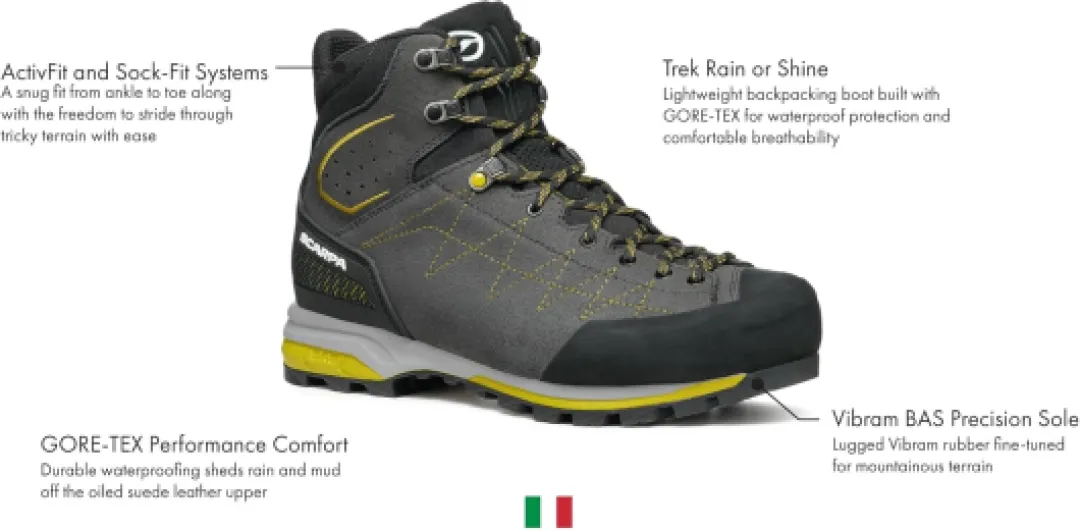
The overall design is clearly aimed at people who like a more technical, mountain‑style boot. The last (they call it BZH) is on the narrow side, especially in the midfoot. The toe box isn’t crazy tight, but this is not a wide‑fit boot. If you have wide feet or a big forefoot, I’d be careful. After a few hours of hiking, I could feel a bit of squeeze on the outside of my forefoot, which eased up slightly after some break‑in, but never fully disappeared.
The ActivFit and Sock‑Fit systems basically mean the boot wraps your foot closely from ankle to toe. When it works, it gives you very precise control on rocky ground. You can place your feet on small edges and feel stable, similar to a low‑cut approach shoe but with ankle support. On steep, uneven trails, that part is genuinely nice. You don’t feel like your foot is swimming inside the boot, and there’s very little heel lift if you get the lacing right.
On the downside, that same snug design can easily become uncomfortable. On one 20 km hike with a lot of descent, I had to stop twice to readjust laces because the top of my foot was getting numb from pressure. The tongue and the upper don’t have a ton of padding, so if you crank the laces for more support, you pay for it in comfort. People with bony or high insteps will notice this quickly. I also found that the collar at the back of the ankle rubbed a bit the first couple of outings until the material softened.
Visually, the design is fine: dark body, contrasting yellow bits, nothing too weird. But from a practical point of view, this is a boot that clearly prioritises precision and support over relaxed comfort. If you’re used to SCARPA or similar brands like La Sportiva, you’ll probably understand the fit style. If you’re switching from something like Merrell Moab or Salomon X Ultra, this will feel much more cramped and demanding. That’s not automatically bad, but it’s something to be aware of before buying blind online.
Comfort: tough break‑in and not exactly slipper‑like
Comfort is where I understand why someone left a 1/5 review. If you expect to put these on and go straight into a 20 km hike without issues, you’re in for a rough time. Out of the box, the Zodiac Trk GTX is stiff and quite unforgiving. My first outing was around 8 km on mixed trail, and by the end, I had a hot spot on my heel and some pressure across the top of my foot. Not full blisters, but enough to know these weren’t broken in yet.
After three or four hikes, things improved. The heel pocket shaped better to my foot, and the leather loosened a bit. The boot started to flex slightly more at the forefoot, and the rubbing around the ankle collar calmed down. But even after that, this is not what I’d call a “comfortable all‑day” boot for everyone. It’s supportive, yes, but you always feel the structure and the firmness underfoot. On long days over 15 km with a pack, my feet felt more beaten up compared to softer boots I own, especially on hard, compact tracks or tarmac sections.
One thing I did like is the stability. The snug fit and stiff midsole mean your foot doesn’t move much inside the boot, which is good for avoiding toe bang on descents. On steep downhill sections with loose rocks, I never felt like my foot was sliding forward. That’s a big plus if you’re doing a lot of alpine or rough terrain. But again, the price for that is a tighter, less forgiving fit. If you have sensitive feet or past foot injuries, this boot might be too harsh.
If I had to sum it up: comfort is decent once broken in, but only if your foot shape matches the last and you’re okay with a stiff ride. It’s not a disaster, but it’s also not the kind of boot I’d recommend to casual hikers doing occasional easy trails. You need to be willing to put in some time to shape them, and ideally, you should try them on in a shop first rather than trusting the size chart blindly.
Materials: solid leather and Gore‑Tex, but with trade‑offs
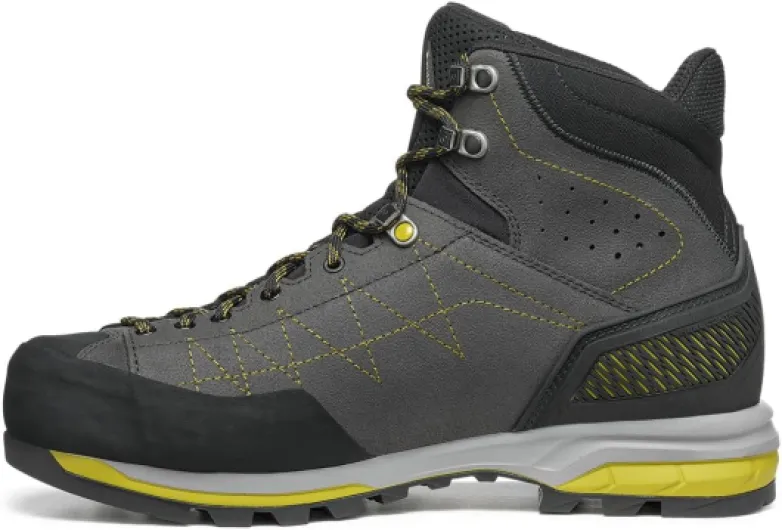
On the materials side, SCARPA didn’t cheap out. The upper is 1.8 mm oiled Perwanger suede leather, which is a well‑known, tough leather used in a lot of mountain boots. It feels thick and robust in hand. After a few muddy hikes and some scrapes against rocks, I didn’t see any serious damage, just normal superficial marks that wipe off or fade. This is the kind of leather that should last years if you clean and reproof it once in a while.
Inside, you get a Gore‑Tex Performance Comfort membrane. That’s the standard option for hiking boots: waterproof and somewhat breathable, but don’t expect miracles. In cool to mild temperatures, my feet stayed dry from outside water, and sweat didn’t become a big issue. In warmer weather, like 18–20°C with a loaded pack, my feet definitely got hot and a bit swampy. That’s not unique to this boot; it’s just the reality of leather + Gore‑Tex. If you run hot or mostly hike in warm climates, you might find it too much.
The sole unit is a mix of a 2D PU midsole and a Vibram BAS Precision outsole. The midsole is quite firm. There’s very little flex under the arch and midfoot, and only a bit of give at the forefoot. This is great for support with a heavy backpack, because your feet don’t fold over every rock, but it’s less pleasant for casual, short walks. Out of the box, it feels almost like a light mountaineering boot rather than a soft hiking boot. The insole is basic “Pro” branded foam, nothing special. I swapped it for my usual aftermarket insoles after the second hike, which helped a lot with comfort and arch support.
Overall, the materials are pretty solid, but they bring weight, warmth, and stiffness. If your priority is durability and support, you’ll like what SCARPA used here. If you value light weight and ventilation more than toughness, this combo will feel overbuilt and a bit old‑school. Given the price point, I would have liked a slightly better stock insole and maybe a bit more padding around the tongue, but structurally, the materials are not the weak point of this boot.
Durability: built to last, at least on first inspection
Durability is probably the strongest point of this boot, even if I can’t claim years of testing yet. The Perwanger leather is thick and feels tough. After several outings in mud, wet grass, and rocky paths, there’s no real damage, just cosmetic marks. The stitching all around the boot looks clean and tight, with no loose threads or glue gaps on my pair. The toe rand has already taken a few hits from rocks without peeling or tearing.
The sole unit also feels like it will handle a lot of abuse. The Vibram rubber is on the firmer side, which usually means it will wear slower than very soft, sticky compounds. After my test hikes, the lugs still look almost new, with only light smoothing on the high‑contact areas. Obviously, long‑term wear will depend on how much road or hard surface you walk on, but this isn’t the kind of sole that will be gone in one season. It’s more of a long‑term, resolable style of boot, not a disposable fashion hiker.
The Gore‑Tex lining is harder to judge in the short term, but there were no early signs of failure: no wet patches, no odd folds inside, no weird squeaking noises. The hooks and eyelets for lacing are metal and feel solid. I didn’t see any bending or paint flaking off. The only area I’d keep an eye on over time is the junction between the upper and the sole, especially around the flex point at the forefoot, where many boots eventually crack or separate. So far, that area still looks fine.
Overall, if you’re rough on your gear, this boot seems ready for it. It’s not a lightweight fabric shoe that will shred in a season. The downside is that you pay for this durability with weight and stiffness, as mentioned earlier. But if you want a boot you can realistically keep for several years of regular hiking and backpacking, the Zodiac Trk GTX gives a good impression on that front.
Performance on the trail: strong support, mixed breathability
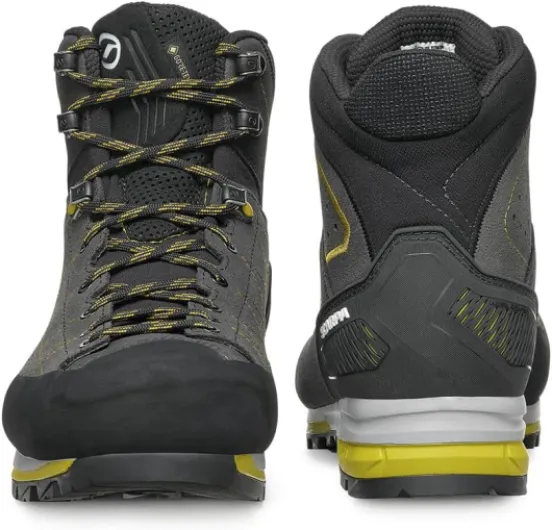
On actual hikes, the Zodiac Trk GTX behaves like a mini mountaineering boot. On rocky, uneven terrain, it’s very reassuring. The Vibram BAS Precision sole grips well on dry rock and does a decent job in wet mud and wet rock, though like most rubber, it can still slip on smooth, greasy stone. The lugs are fairly deep and spaced enough that mud doesn’t pack instantly. After walking through thick mud, a few steps on drier ground cleared most of it off. Traction-wise, I have no real complaints.
The support with a heavy backpack is where this boot makes more sense. With around 15–18 kg on my back, my ankles felt well held, and the stiff midsole stopped my feet from folding over sharp rocks and roots. On long climbs, I could feel the boot doing some of the work instead of my foot muscles getting destroyed. If you often carry big loads or do multi‑day treks with rough ground, this structure is very useful. It’s clearly designed for that kind of use.
Waterproofing was solid. I walked for around 30–40 minutes in wet grass and shallow puddles, and my feet stayed dry. The leather beaded water nicely, and the Gore‑Tex lining didn’t show any leaks. The downside, as usual, is breathability. On cooler days, it’s fine, but as soon as the temperature climbs and you start pushing hard, your feet heat up. By the end of a warm‑day hike, my socks were damp from sweat, not from leaks. If you mostly hike in hot climates, I’d look for a lighter, more ventilated shoe instead.
In short, performance is strong for backpacking and rough terrain, but it’s overkill for easy, flat paths. If your idea of hiking is mostly forest tracks and gentle hills, you won’t really benefit from the stiffness and support, and you’ll just feel like you’re wearing too much boot. But if you’re regularly on rocky, technical routes with a pack, this is where the Zodiac Trk GTX starts to make sense and justify its bulk and rigidity.
What you actually get out of the box
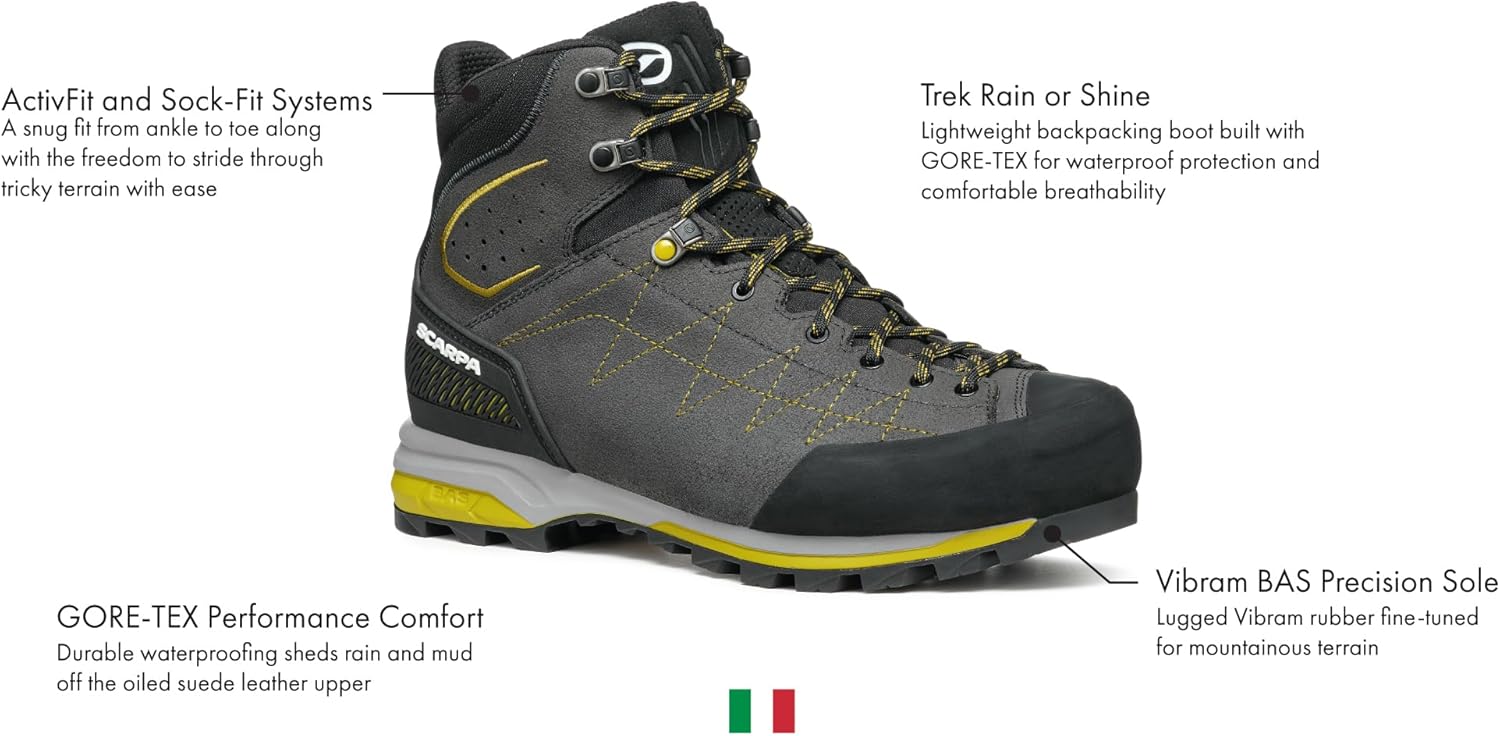
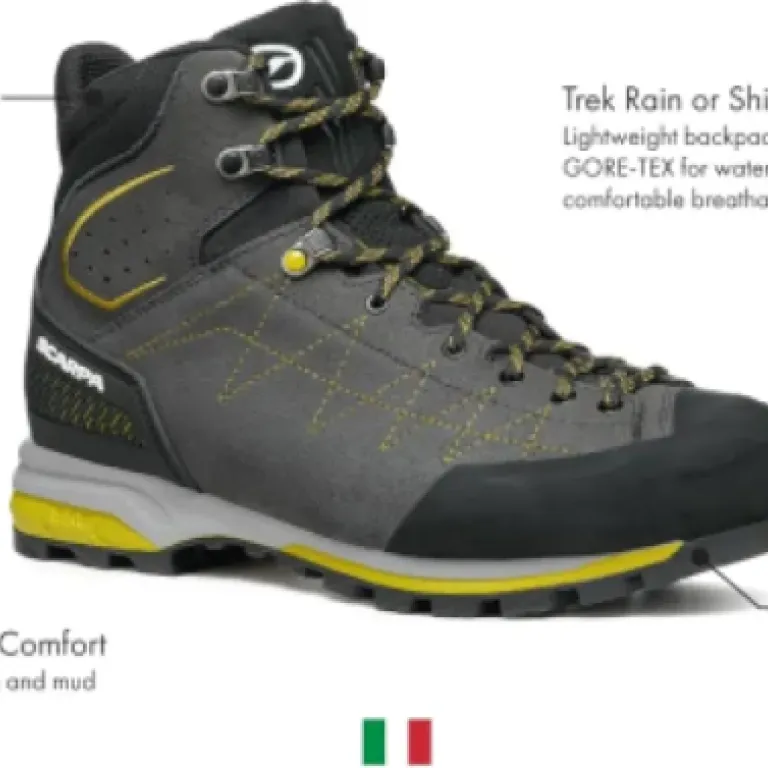
Out of the box, the SCARPA Zodiac Trk GTX looks and feels like a serious bit of kit. You get an ankle‑high leather boot with a fairly aggressive Vibram outsole, a rubber rand around the toe area, and a mix of fabric and leather around the ankle. The colour I had, Anthracite Sulphur, is basically dark grey with bright yellow accents. It’s not flashy like a running shoe, but it’s definitely not low‑key either. If you want something that looks more classic or neutral, the yellow might annoy you.
The first thing I did was weigh them, because the listed weight is 1 lb 7.1 oz per half pair (around 660 g per boot for size 42). My pair in 42.5 came in slightly heavier, which is normal, but they still sit in the “light-ish trekking boot” category. They’re not featherweight, but for a leather boot with a solid sole and Gore‑Tex, they’re reasonable. You can feel them on your feet, but they don’t feel like concrete blocks either.
The lacing system is pretty standard: normal eyelets down low, then metal hooks up top. Nothing fancy, nothing weird. The tongue is gusseted and links into the Sock-Fit style wrapping around the ankle. It’s meant to hug the foot and avoid folds and hot spots. On the table, it looks smart. On the foot, it will depend a lot on the shape of your instep. I had to play with lace tension quite a bit to avoid pressure points on the top of my foot.
Overall, the presentation is serious and functional: no useless decorations, no fake features. It looks like a boot built for rocky trails and rough weather. But there’s nothing here that justifies hype. It’s a leather Gore‑Tex trekking boot with a Vibram sole, like many others. The important part is how all those familiar ingredients actually work together on the trail, and that’s where some cracks start to show.
Pros
- Very supportive and stable with heavy backpacks on rocky terrain
- Durable Perwanger leather upper and firm Vibram sole that should last
- Waterproofing is solid thanks to Gore‑Tex and oiled leather
Cons
- Stiff and narrow fit with a tough break‑in, not comfortable for everyone
- Runs warm and can feel sweaty in mild to hot weather
- Price is high for what you get if you mostly do easy, casual hikes
Conclusion
Editor's rating
The SCARPA Zodiac Trk GTX is a tough, supportive leather trekking boot that does its job well in the right context, but it’s not a universal crowd‑pleaser. It’s stiff, fairly narrow, and needs a proper break‑in. Once it loosens up a bit, you get strong ankle support, good grip from the Vibram sole, and reliable waterproofing from the Gore‑Tex lining. For rocky terrain and heavy backpacks, it feels stable and secure, and the materials suggest it will last several seasons if you look after the leather.
Where it falls short is comfort and versatility. For casual day hikes or mostly easy trails, the boot feels overbuilt and a bit punishing. The snug design can cause pressure points, especially if you have wide feet or a high instep, and the warmth from the leather + Gore‑Tex combo is noticeable in milder to warm weather. Considering the price, you really need to be sure this type of boot matches your hiking style and foot shape. If you’re an experienced hiker or trekker who likes structured, technical boots and carries real weight, it’s worth a look. If you’re new to hiking, prefer instant comfort, or mostly walk gentle paths, I’d skip this and go for something lighter and more forgiving.