
Summary
Editor's rating
Value: good price for technical use, overkill for casual hiking
Design: technical look, bright accents, very functional lacing
Comfort: blister-free for me, but hard and tiring underfoot
Materials: tough upper, proven Gore-Tex, stiff sole
Durability: built to last, but you feel that in every step
Performance: secure on rough ground, flawless waterproofing, heavy for long days
What these boots are really made for
Pros
- Very secure heel and ankle hold with effective 3F lacing system
- Gore-Tex lining and construction deliver reliable waterproofing in streams, snow and heavy rain
- Stiff, durable sole and full rubber rand handle rocky, technical terrain and crampons well
Cons
- Hard and tiring underfoot on long days; limited cushioning
- Relatively heavy and stiff for casual hiking or beginners
- Fit runs a bit small and narrow; many people will need to size up and/or add better insoles

Specifications
View full product page →| Brand | Salewa |
Serious boots for serious terrain… and tired feet
I’ve been using the Salewa Crow Gore-Tex men’s boots (size 9.5 UK, Wallnut Fluo Orange) as my main mountain boots for the last couple of months. I’ve taken them on mixed terrain in the Alps, some wet and rocky days in the Lake District, and a few long training hikes on rough trails. So this isn’t a “tried them on in the living room” review – they’ve actually seen snow, mud, rocks and a few stream crossings.
The short version: these are proper mountaineering boots, not comfy hiking trainers. They’re stiff, fairly heavy, and clearly built to work with crampons and carry you over rough ground. If you’re looking for something soft and cushioned for Sunday walks in the park, this is not it. But if you want a boot that holds your ankle like a vice and laughs at wet conditions, they do the job.
What struck me first was how secure my foot felt. The 3F system and the lacing really clamp the heel in place. On steep traverses and loose scree, I barely had any heel lift, which is usually where I get hot spots. I did some long days (8–9 hours on my feet) and still didn’t get blisters, which lines up with a lot of the Amazon reviews. That part is pretty solid.
On the downside, underfoot comfort is not their strength. By the end of a long day, the soles of my feet felt tired and a bit beaten up, especially on hard-packed trails and forest tracks. If you mainly do long-distance trekking on paths, you’ll probably find them too hard and overbuilt. So, good mountain tool, not an all-rounder for every type of hiking.
Value: good price for technical use, overkill for casual hiking
Price-wise, the Salewa Crow GTX usually sits in the mid to upper range for mountaineering-style boots, but often goes on discount. For what you get – Gore-Tex, Vibram-compatible sole, full rand, crampon compatibility – the value is pretty solid if you actually use those features. Compared to similar boots from Scarpa or La Sportiva, you often pay less for roughly the same level of technical performance.
Where the value drops is if you mainly do easy hiking. If your typical outing is a 10 km loop on good trails a few times a month, you’re basically paying for stiffness, crampon compatibility and durability you don’t really need, while sacrificing comfort. In that case, a lighter trekking boot or even a solid trail shoe will be cheaper, lighter, and more pleasant, even if it doesn’t last as long or climb as well.
For people who do mixed mountain trips – some summer alpine, some winter hillwalking, occasional crampon use – they start to make sense financially. One pair of Crow GTX can cover a lot of those trips instead of buying a soft hiking boot and a separate heavy mountaineering boot. You just have to accept that you’re always wearing something a bit stiffer and heavier than ideal for the easy stuff.
So, in my opinion, the value is good but targeted. If you match the boot to its intended use, you’re getting a lot for the price. If you buy them just because they “look tough” and then use them only for gentle walks, you’ll probably end up annoyed with the weight and hardness and feel like you overspent.
Design: technical look, bright accents, very functional lacing
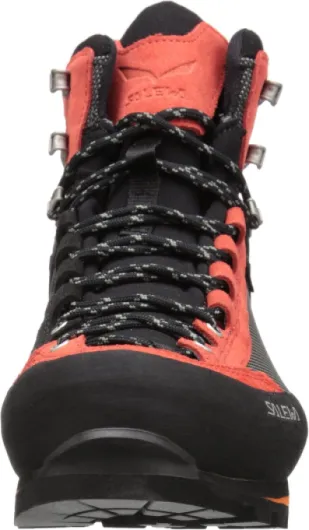
Design-wise, these boots scream “mountain” from the start. The Wallnut Fluo Orange colour is pretty loud in person – brown base with bright orange hits. I don’t mind it because I use them in the mountains, not the office, but if you like discreet gear, this colourway is a bit in-your-face. The overall shape is quite narrow and technical, more like a climbing boot than a chunky hiking boot.
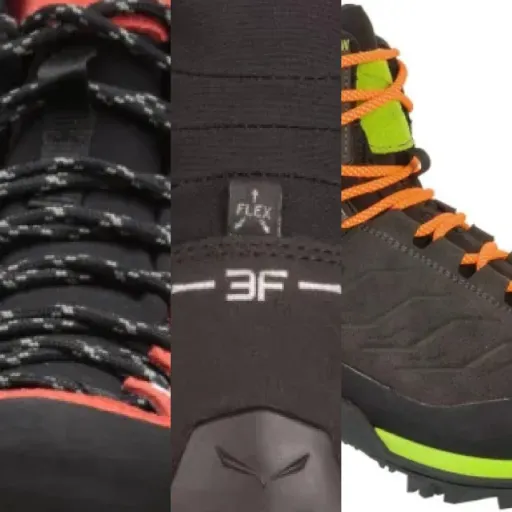
The lacing system is one of the best parts. You can lace quite far down towards the toes, which lets you fine-tune the fit in the forefoot. There’s also that “cinch” lace hook at the ankle that locks the tension between the lower and upper part of the boot. In practice, it means you can keep the lower section tight for precision, and loosen the top hooks a bit on easier ground or descents. I played with this a lot on a 1,000 m descent and it really helped prevent pressure on my ankle bones.
There’s a full rubber rand wrapping around the boot. I’m pretty hard on my footwear on rocks, and after several routes with a lot of scree and scrambling, the rand just shows some cosmetic scuffs, nothing serious. The toe bumper is solid and takes hits from loose rocks without any drama. The mid-height shaft gives good coverage without feeling like a full high alpine double boot, but it’s still higher and more rigid than a typical mid hiking shoe.
Overall, the design is very function-first. Not stylish, not something you wear with jeans in town, but everything seems there for a reason: protection, secure lacing, crampon compatibility. If you value looks over function, you’ll probably call them ugly. If you just want something that feels like proper gear, the design makes sense.
Comfort: blister-free for me, but hard and tiring underfoot
Comfort is where these boots are a bit of a mixed bag. On the one hand, fit and blister prevention are genuinely good. I have slightly narrow heels and usually fight with heel lift in stiffer boots. With the Crow GTX, once I dialled in the lacing, my heel stayed locked in with almost no movement. I did two long days in a row (about 20 km each, 1,200 m up and down) straight out of the box and didn’t get a single blister. Just some mild rubbing the first day around my outer ankle bone, which went away once I loosened the top hooks a notch.
On the other hand, underfoot comfort is not great. After about 6–7 hours of walking, the balls of my feet and my heels felt bruised, especially on hard-packed paths and rocky tracks. The cushioning in the sole is minimal, and you feel every impact more than in something like a cushioned hiking boot or a trail shoe. Swapping the insole for a more supportive one helped a bit, but even then, these boots just feel hard. If you only do 3–4 hour outings, it’s manageable. For long days or multi-day treks, you really notice it.
In terms of flexibility, they’re stiff, no way around it. There is some flex at the toe, but not much. If you’re used to running shoes or soft mids, these will feel like ski boots at first. For technical ground – edging on rock, short scrambling sections, or using crampons – that stiffness is useful. For long, flat forest roads or valley approaches, it just makes your gait feel clunky and tiring. I definitely felt more fatigue in my shins and calves than with softer boots.
Sizing-wise, they run a bit on the small side in length and quite snug in width. I normally wear a UK 9, and the 9.5 gave me the right amount of toe room for descents with thick socks. If you’re between sizes or plan on using them in cold conditions with thick socks, I’d go up half a size, maybe even a full size if you have wide feet. Overall comfort: decent in terms of fit and lack of blisters, but below average in softness and long-distance ease.
Materials: tough upper, proven Gore-Tex, stiff sole
The upper is mostly synthetic textile with suede sections, plus that big rubber rand. It feels tough to the touch, almost like a light approach shoe crossed with a mountaineering boot. After mud, snow and some rocky scrambles, the fabric has held up well – no tearing or obvious weak spots so far. It also dries faster than full leather, which I noticed after a very wet day; I left them in a ventilated room overnight (not next to a heater) and they were usable the next morning.
Inside, you’ve got Gore-Tex Performance Comfort. In real use, it’s properly waterproof. I’ve stood in streams up to just below the ankle for a few minutes, crossed boggy sections, and walked all day in wet snow. My feet stayed dry every time. Water beads off the outer at first, then the fabric wets out a bit, but nothing came through. Breathability is… okay for a mountain boot. On hot days (around 20–25°C), my feet got warm and sweaty, but that’s the case with almost any waterproof boot. It’s not worse than competitors like Scarpa or La Sportiva in that sense.
The sole is Vibram Mulaz-compatible with a stiff midsole (polyamide/fibreglass). Underfoot, it feels quite rigid, especially in the forefoot. You can edge on small rock holds more like in an approach shoe, and the platform feels very stable when you’re front-pointing a little on firm snow with semi-auto crampons. The downside is that walking on flat forest tracks feels a bit wooden; the sole doesn’t roll naturally like a more flexible hiking shoe.
Overall, the materials give you durability and technical performance, but not comfort. There’s not a lot of built-in cushioning foam in the midsole, and the stock insole is very basic EVA. If you want more comfort, I’d plan from the start to swap in a better insole. The boot itself feels like it’ll last a few seasons of serious use, but it won’t ever feel plush.
Durability: built to last, but you feel that in every step
In terms of build quality, these feel solid. Seams are neat, the rand is well bonded, and I haven’t seen any early signs of delamination or fraying. After several trips with rocks, scree, and regular abuse, they mostly show cosmetic wear: surface scratches on the rand, light scuffing on the suede, a bit of dirt in the fabric. Structurally, nothing has loosened or stretched out yet.
The sole is holding up well too. I’ve put probably around 80–100 km on them in mixed conditions, including some sections of tarmac and hard gravel, and the lugs still look sharp. This is where you see the trade-off: a harder, stiffer sole wears slower but feels harsher underfoot. If you want a boot that you can keep for a few seasons of proper mountain use, this is a plus. If you like soft, bouncy soles, this will feel like a brick.
Inside, the lining still looks intact, no peeling or holes. The heel pocket hasn’t collapsed, and the padding around the ankle hasn’t packed out much yet. I expect the stock insole to be the first thing to wear out or compress, but that’s common and easy to replace. The laces and hooks also feel robust; I’ve yanked them hard when tightening and nothing has bent or cracked.
Overall, durability is a strong point, but again, you pay for it in comfort and weight. These don’t feel like boots you’ll destroy in one season. They feel more like the kind of boot you keep for years for specific trips – winter routes, alpine holidays, or tough trekking – while using something lighter and softer for everyday hikes.
Performance: secure on rough ground, flawless waterproofing, heavy for long days
In the mountains, these boots perform well where it matters. Grip on rock and mixed terrain is solid. The sole pattern and Vibram rubber give good traction on dry and wet rock. I’ve had a few moments on wet slabs and greasy steps where I expected to slip and the boot actually held. On mud they’re fine, nothing special, but they bite better than a pure approach shoe. On hard ice or compacted snow without crampons, they’re like any boot: you’ll still slide, so don’t expect miracles.
The ankle support is one of the best points. I’ve rolled my ankle a few times in the past, so I’m a bit paranoid. With these, the combination of the high, stiff cuff and the 3F system really locks the joint in. On steep, uneven ground with a 12–14 kg pack, my ankles felt secure and I didn’t get that feeling of the boot folding sideways. You trade some freedom of movement for that, but on tricky ground I prefer safety over freedom.
Waterproofing performance has been faultless so far. I’ve walked through streams, slushy snow, and soaked trails for hours. My socks came out dry every time. The outer fabric does eventually get wet on the surface, but nothing gets through the Gore-Tex lining. Breathability is acceptable for this type of boot; my feet were sweaty but not soaked on warmer days. If you hike in hot climates, though, I’d look for something lighter and more breathable.
The main downside in performance is fatigue and slipperiness on very wet, smooth surfaces. The weight and stiffness make long, non-technical days more tiring than they need to be. Also, on very wet grassy slopes and polished wet rock, I did notice some slipping. Not worse than similar boots, but don’t expect magic grip in every situation. Overall, as a tool for alpine terrain, they perform well. As an all-purpose boot for every hike, they’re overbuilt and tiring.
What these boots are really made for
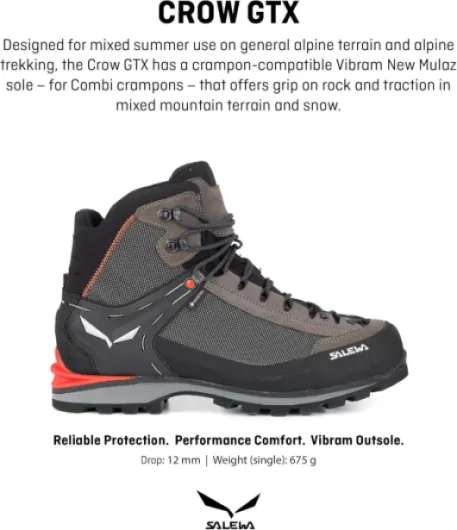
On paper, the Salewa Crow GTX is sold as a versatile mountaineering / alpine trekking boot. After using them, that description is fairly accurate, as long as you understand that “versatile” still sits firmly on the “mountain” side, not the “casual hiking” side. They’ve got a synthetic and suede upper with a full rubber rand, a Gore-Tex Performance Comfort lining, and a Vibram Mulaz-compatible sole that works with semi-automatic (combi) crampons.
Weight-wise, they’re around 675 g per shoe in this size, which you feel. They’re not extreme expedition boots, but they’re not light hikers either. When I did a 3-day trip with about 60 km total and 2,500 m of ascent, I definitely felt the weight by the end of each day. You get stability and protection in return, but beginners or people used to trail runners will probably find them tiring over long distances.
In terms of use, I’d put them in this bucket:
- Good for: alpine routes in summer, Scottish winter days, via ferrata, mixed rocky / snowy terrain, trips where you’ll use crampons occasionally.
- OK for: classic mountain trekking with a heavy pack, rough trails, multi-day hut-to-hut if you’re used to stiff boots.
- Not ideal for: daily city use, easy lowland walks, very long flat treks where you’d rather have more flex and cushioning.
So in practice, they’re a tool for specific conditions. If your usual weekend trip is a marked trail below the snow line, they’re overkill and not very pleasant. If you regularly go above the tree line, deal with snow patches, or want one boot that can handle crampons but still hike decently, then they start to make sense.
Pros
- Very secure heel and ankle hold with effective 3F lacing system
- Gore-Tex lining and construction deliver reliable waterproofing in streams, snow and heavy rain
- Stiff, durable sole and full rubber rand handle rocky, technical terrain and crampons well
Cons
- Hard and tiring underfoot on long days; limited cushioning
- Relatively heavy and stiff for casual hiking or beginners
- Fit runs a bit small and narrow; many people will need to size up and/or add better insoles
Conclusion
Editor's rating
After using the Salewa Crow Gore-Tex men’s boots in real mountain conditions, I’d sum them up like this: serious, stiff, and secure, with excellent waterproofing and durability, but clearly not built for comfort on long, easy walks. They make sense if you spend a decent amount of time on rocky alpine terrain, in snow, or on technical routes where crampons might come out of the pack. In those situations, the firm ankle support, precise lacing, and rigid sole are real assets.
If you’re mainly a hillwalker or casual hiker, though, I’d be cautious. The underfoot feel is hard, the weight is noticeable, and the stiffness makes flat or rolling terrain more tiring than it needs to be. You can improve comfort with better insoles and careful lacing, but they’ll never feel like soft trekking boots. For me, they’ve earned a place as my “serious mountain” boots, not my everyday hiking footwear.
So, who are they for? They’re a good fit for people who want one do-it-all mountain boot for alpine trekking, Scottish winter, and mixed routes, and who accept a bit of discomfort in exchange for security and durability. Who should skip them? Anyone looking for light, cushioned boots for long-distance trails, or people who only hike on easy paths and want something they can also wear day-to-day.