Summary
Editor's rating
Value: pricey, but you do get something for the money
Old-school look, practical design
Comfort: great once broken in, but size and socks matter
Leather, Gore-Tex and Vibram – solid but not very airy
Built to last, but you’ll need to look after them
On the trail: grip, waterproofing and real-world behaviour
What you actually get with the Meindl Burma GTX
Pros
- Very solid build with thick leather and Vibram sole that feels built to last
- Reliable waterproofing with Gore-Tex and good protection in wet, muddy conditions
- Supportive and stable on rough terrain once broken in, with secure lacing system
Cons
- Price is high compared to many decent mid-range boots
- Warm and not very breathable in hot weather
- Needs a short break-in period and some leather care to get the best out of them

Specifications
View full product page →| Brand | Meindl |
Serious boots for people who actually walk
I’ve been using the Meindl Burma GTX boots (UK 8, brown) as my main walking boots for a few weeks now, mostly for 10–20 km hikes in mixed British weather. I’m not sponsored, I paid with my own money, and I’m tight enough that dropping this much cash on boots hurt a bit. So I went into this half hoping they’d be great and half ready to send them back if they felt wrong.
My usual reference is a pair of mid-range fabric boots from a big outdoor brand that cost about half the price. Those were light and comfy but started leaking after one nasty wet weekend and the grip on wet rock was pretty poor. With the Meindl Burmas, I was mainly looking for three things: real waterproofing, good grip on wet ground, and enough support for long days with a daypack.
First impression when I picked them up: these are proper boots, not fashion “hiking style” shoes. They’re a bit heavier than modern fabric boots, they feel solid in the hand, and the leather upper looks like it’s meant to last years, not one season. At the same time, the sole flex is more forgiving than heavy mountaineering boots, so they’re clearly aimed at walking, not ice climbing.
After several muddy walks, a few wet rocky paths, and some boring tarmac stretches, I’ve got a pretty clear idea of what they do well and where they annoy me. They’re not perfect, and I don’t think they suit everyone, but if you do proper hillwalking rather than just strolling round the park, there’s a lot to like and a few things you should know before dropping this kind of money.
Value: pricey, but you do get something for the money
Let’s be blunt: these boots are not cheap. You can easily find hiking boots for half the price, and if you only go for the odd Sunday stroll on flat paths, those cheaper options will probably be fine. Where the Meindl Burma GTX starts to make sense is if you walk a lot, in rough conditions, and you want something that will last longer than a season or two. In that context, the higher upfront cost spreads out over more years and more miles, so the value doesn’t look as bad.
Compared to mid-range fabric boots I’ve owned, the Burmas feel clearly better in three areas: support, durability potential, and waterproof reliability. They’re not miles ahead in comfort or weight – in fact, they’re heavier and warmer – but they give you a more solid platform underfoot and more confidence in foul weather. If you add up the cost of replacing cheaper boots every 1–2 years because they leak or fall apart, paying more once for a boot that can be resoled and kept going starts to sound less silly.
That said, they’re not perfect, and there are valid reasons not to buy them. If you mostly hike in warm, dry climates, you’re paying for waterproofing and thick leather you don’t really need, and you’ll just end up with hot feet. If you’re into fast-and-light hiking or trail running, these will feel like overkill. And if you’re on a tight budget, there are perfectly acceptable boots that cost less and will still get you out on the hills, even if they don’t last as long.
So in terms of value, I’d call them good but not cheap. You’re paying for build quality, materials, and a design aimed at serious walkers rather than casual use. If you walk a lot in wet, mixed terrain and like the idea of one solid pair of boots that you can rely on, the price is easier to justify. If you just want something for the occasional dry weekend, your money is probably better spent on a simpler, cheaper pair.
Old-school look, practical design
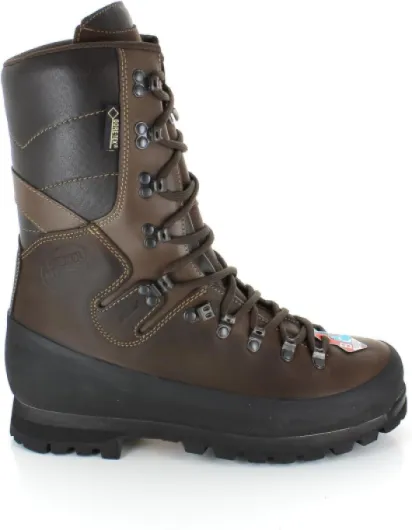
Design-wise, these boots are pretty no-nonsense. Brown nubuck leather, solid stitching, standard lace-up closure with a mix of eyelets and hooks. No flashy colours, no pointless plastic panels, and nothing that screams “Instagram hiker”. If you like a classic leather boot look, you’ll probably be happy; if you prefer sporty running-shoe style boots, these will feel a bit old-fashioned. Personally, I like that they just look like hiking boots and not fashion items.
The lacing system is one of the strong points. You get lower eyelets, then locking hooks at the ankle, then open hooks up the shaft. That means you can tighten the lower part of the boot and keep it locked while leaving the top a bit looser for comfort, or crank the whole thing down for more support on descents. The hooks feel sturdy, and after several muddy trips and a few knocks on rocks, none of them bent or loosened. The tongue is gusseted quite high, so water and mud don’t instantly pour in if you step in a puddle that’s a bit deeper than planned.
The ankle height is what I’d call medium: enough to protect against knocks and give a bit of support if you roll your foot, but not so high that it digs into your calf. Around the ankle and tongue there’s decent padding, but it’s not super thick like some softer boots. That’s probably why they feel more supportive and less like a trainer. The toe has a rubber rand, which is handy because I tend to kick rocks and roots more often than I’d like to admit. It’s not a full 360° rand like some heavier boots, but it covers the front and a bit of the sides where it matters most.
On the downside, the design is clearly prioritising function over ventilation. There are no mesh panels or fancy vents, just leather and a Gore-Tex liner. In cooler weather that’s fine, but on a warmer day I did notice my feet running warmer than in fabric boots. Not a disaster, but if you mostly walk in hot conditions, you might find these a bit stuffy. Still, as a general-purpose boot for mild to cold climates, the design choices make sense and feel consistent with what the boot is meant to do.
Comfort: great once broken in, but size and socks matter
Comfort-wise, these didn’t feel like slippers straight out of the box, but they also weren’t torture. I’d call the break-in moderate. The first two short walks (about 5 km each) were fine, with a bit of stiffness around the ankle and tongue but no blisters. On the first longer day (around 15 km with a light pack), I felt some pressure on the top of my right foot until I re-laced and loosened the upper hooks slightly. After three or four outings, the leather softened up and they started to feel more natural, like they were actually shaped to my feet.
The insole is leather and reasonably firm. If you like very soft, cushioned insoles, you might find these a bit hard at first. Personally, I prefer a slightly firmer feel for walking long distances, but after a week I swapped them for my usual aftermarket insoles with a bit more arch support, and that made them even more comfortable. If you have tricky feet (high arches, plantar fasciitis, etc.), I’d plan on using your own insoles rather than relying on the stock ones.
One thing I agree with in the user reviews: go at least half a size up. In my normal street shoe size, I think they would have been too tight in the toe box on descents, especially with thicker socks. With the half-size up, I’ve got enough room at the front without my heel lifting in the back. With thin socks, I can still get a good lock using the locking hooks. With midweight hiking socks, they feel spot on. I haven’t had any heel blisters, which is usually my biggest problem with new boots.
Ventilation is the only comfort downside. On a cool, damp day they feel great – warm, dry, and stable. On a mild, slightly warm day, my feet ended up a bit sweaty by the end. Not horrible, but definitely warmer than my old fabric boots. So for autumn, winter, and spring, I think they’re very comfortable. In hotter weather, they’re still usable, but you’ll want thin, breathable socks and maybe shorter days. Overall, once broken in and sized correctly, I’d rate the comfort as very solid for a proper leather hiking boot, with the caveat that they’re not airy trainers.
Leather, Gore-Tex and Vibram – solid but not very airy
The upper is nubuck leather, which feels thick and fairly soft once broken in. Out of the box it has a slightly rough, matte finish, not shiny like polished full-grain. After a couple of wet, muddy walks and a clean-up with a brush and conditioner, the leather still looks in good shape, with no cracking or weird creasing. It gives the impression that with basic care (cleaning and proofing every so often) it should last for years, not months. If you’re used to synthetic boots that start to look tired quickly, this feels like a step up in durability.
Inside, you’ve got a Gore-Tex liner plus some leather and synthetic lining materials. In practice, that means the boot is properly waterproof, but breathability is limited compared to unlined leather or lightweight mesh boots. After a 6-hour wet hike, my socks were slightly damp from sweat, not from leaks, which is what I’d expect from any Gore-Tex boot. If you’re someone whose feet sweat a lot, you’ll want good hiking socks that wick well. For me, with midweight merino socks, it was fine, just not airy.
The outsole is Vibram Multigriff, a fairly aggressive hiking tread with decent lugs and a medium stiffness. The rubber compound feels on the grippier side rather than super hard. On wet rock and muddy paths, I felt more secure than in my previous mid-range boots. On tarmac, you can feel the lugs, but that’s normal. The midsole is described as flexible, and that matches what I felt: there’s enough flex for a natural step, but enough support that sharp stones don’t poke through into your foot.
If I had to nit-pick the materials, I’d say the trade-off is clear: durability and protection over ventilation and lightness. These are not ultra-light, airy boots for hot climates. They’re solid, leather, waterproof boots made for rough ground and mixed weather. For UK and northern European walking, that balance works well. If I were going to Spain in summer, I’d pack something lighter and more breathable. But for what they are meant to do, the material choices feel sensible and well executed.
Built to last, but you’ll need to look after them
It’s too early for a multi-year verdict, but based on the first weeks of use and the way they’re made, these boots feel like they’re built with long-term use in mind. The leather upper is thick and the stitching looks tidy and robust. After several muddy hikes, a couple of scrapes on rocks, and getting rinsed and brushed a few times, there are only light scuff marks on the toe rand and some normal creasing in the leather. No loose threads, no lifting of the sole, and no weird deformation around the heel.
The outsole wear so far is minimal. The Vibram Multigriff lugs still look sharp, with no chunks missing or rounded-off edges. Obviously, that’s expected after a few weeks, but I’ve had cheaper boots where the softer rubber started to show real wear much sooner. These feel like they’ll last a good while, as long as you’re not doing 95% of your walking on pavement. They’re clearly designed for trails and rough ground, not daily city commuting.
One thing to keep in mind is that leather boots demand a bit of care. If you just leave them caked in mud in a damp shed, they’ll eventually crack and lose their waterproofing, no matter how good they are. I’ve been rinsing off heavy mud, brushing them when dry, and applying a suitable conditioner/proofer. That’s not a big deal if you’re used to leather boots, but if you want something you can ignore completely, you might be happier with cheaper synthetic boots and just replace them more often.
From what I can tell and from the general reputation of this model, the main failure point over the years is usually the lining or the sole wearing down, not the leather falling apart. If Meindl or a cobbler can resole them where you live, that makes them more interesting long-term. Even if you never resole them, they feel like a pair that could easily outlive two or three cheaper fabric boots, provided you treat them halfway decently. So in terms of durability potential, I’d say they’re strong, with the clear caveat that they’re not maintenance-free.
On the trail: grip, waterproofing and real-world behaviour
Out on actual trails, these boots do what they’re supposed to do. Grip has been noticeably better than my previous mid-range boots, especially on wet rock and muddy slopes. I tested them on a mix of forest paths, wet grassy hills, and some rocky sections that were slick after rain. I’m not saying you’re glued to the ground, but I felt more confident planting my foot and not sliding, which is what I care about. On steep, loose descents they bite into the ground well, and the sole stiffness is enough that sharp stones don’t feel like they’re poking through.
Waterproofing so far has been reliable. I’ve walked through wet grass that came up over the toe, splashed through shallow streams, and spent hours in rain and mud. My feet stayed dry every time. The only moisture I noticed was from sweat, not leaks. Obviously, long-term waterproofing also depends on keeping the leather proofed and the seams in good shape, but out of the box and after a few wet trips, they’re doing exactly what the Gore-Tex label promises. Compared to cheaper boots I’ve had that started to seep after a couple of bad days, this is a clear improvement.
Support is another strong point. With a daypack (around 8–10 kg), my ankles felt well held but still able to move naturally. The flexible midsole means you can walk long distances without that clunky, stiff feeling you get in proper mountaineering boots. On uneven ground, the boot keeps your foot stable enough that you’re less likely to roll your ankle. I had one small slip on very greasy mud, but that was more the terrain than the boot – anything would have slid there.
On the downside, you do pay a penalty in weight and warmth. On long, flat tarmac sections, you’re aware that you’re wearing real boots, not running shoes. If you want something ultra-light and bouncy for fast hiking or trail running, these will feel overbuilt. But if your priority is staying upright, dry, and supported on rough ground, the performance is pretty solid. For normal hillwalking, backpacking with moderate loads, and wet British conditions, they handle the job well and don’t do anything weird or annoying once you’ve dialled in the lacing.
What you actually get with the Meindl Burma GTX
The Meindl Burma GTX is sold as a classic leather hiking boot with a Gore-Tex liner and a Vibram Multigriff sole. Mine are the men’s UK size 8, brown, ankle-high version. On the foot they come up a bit above the ankle bone, so you get support without that ski-boot feeling. They’re listed around 845 g a boot, and in the hand they feel solid but not like bricks. If you’re used to super-light trail runners, you’ll notice the weight; if you’re used to old-school leather boots, these will feel pretty normal.
The boot is built on a fairly traditional last: medium width, slightly roomier in the forefoot than cheap high-street boots, with a reasonably snug heel. I’ve got average-width feet and a slightly high instep, and they felt secure without squeezing. Based on Meindl’s own advice and a few reviews, I went half a size up from my usual shoe size to leave room for thicker socks and swelling on long days, and that was the right call. In thin socks, I can still lock my heel in by adjusting the lacing.
On paper, the spec list is pretty straightforward: nubuck leather upper, Gore-Tex waterproof liner, Vibram Multigriff outsole, flexible midsole (not a stiff mountaineering shank), and a leather insole. They’re made in Germany, which might matter to you if you care about European manufacturing. They’re marketed as all-round walking boots, from fields and forests to hills, not full-on alpine gear.
In real life, that description is fairly accurate. They sit in that middle ground between soft, trainer-like fabric boots and heavy B2/B3 mountain boots. They’re clearly built for long-distance walking on rough paths with a daypack or light backpack. If your idea of hiking is mostly lowland trails, they’ll feel slightly overbuilt. If you’re doing scrambling or winter mountaineering, they’re a bit too soft and low-cut. But for typical UK hillwalking and mixed terrain, the spec and design line up well with what you actually get on your feet.
Pros
- Very solid build with thick leather and Vibram sole that feels built to last
- Reliable waterproofing with Gore-Tex and good protection in wet, muddy conditions
- Supportive and stable on rough terrain once broken in, with secure lacing system
Cons
- Price is high compared to many decent mid-range boots
- Warm and not very breathable in hot weather
- Needs a short break-in period and some leather care to get the best out of them
Conclusion
Editor's rating
After using the Meindl Burma GTX boots on a mix of wet hills, muddy forest paths and some boring road sections, my overall impression is that they’re proper, no-nonsense hiking boots aimed at people who actually walk a fair bit. They’re solid, supportive, properly waterproof so far, and feel like they’re built to survive years of use if you look after the leather. They’re not featherweights and they’re not especially airy, but they give you confidence on rough, wet ground, which for me is the whole point of a hiking boot.
They suit walkers who want a classic leather boot with Gore-Tex, do regular hikes in mixed or bad weather, and don’t mind a short break-in period and a bit of maintenance. If you walk in the UK, Ireland, or similar climates with mud, rain and rocky paths, they fit that environment very well. If you’re used to softer fabric boots, you’ll notice the extra support and stability, especially with a daypack on your back.
On the flip side, they’re expensive, not ideal for hot weather, and overkill for casual park walks. If you mostly hike in warm, dry places, prefer very light footwear, or are on a tight budget, there are better options for you. In short: a pretty solid choice for serious hillwalkers who value durability and support, but not the best fit if you just want something light and cheap for the odd sunny weekend.