
Summary
Editor's rating
Value for money: worth it if you actually use them properly
Design: technical look, functional choices
Comfort and fit: stiff at first, then pretty friendly
Materials: suede, Gore-Tex and a tough sole
Durability: built to take a beating
Performance on the trail: where they shine and where they don’t
What kind of boot this actually is
Pros
- Very good heel hold and ankle support, especially on steep or uneven ground
- Strong waterproofing with Gore-Tex and protective rubber rand for rough use
- Firm, stable Vibram sole with good grip on dirt, rock and muddy trails
Cons
- Quite stiff, especially when new, and not ideal for long tarmac or very easy walks
- Can feel a bit warm in higher temperatures due to Gore-Tex and construction
- Price only feels worth it if you regularly hike in rough or mountainous terrain

Specifications
View full product page →| Brand | Salewa |
Solid mountain boots, but not for everyone
I’ve been using the Salewa Mountain Trainer Mid Gore-Tex in size 10 UK (Black Sulphur Spring) for a mix of dog walks, muddy woodland paths and a couple of proper hill days. I usually wear Meindl and Scarpa, so that’s my reference point. I bought these mainly because prices on my usual brands went a bit mad, and I wanted something lighter but still tough enough for rocky ground and wet UK weather.
First impression when I pulled them out of the box: they look serious. Not fashion boots, more like something you’d trust on a wet scramble in Wales. They felt quite stiff in the hand and on the first try-on, especially in the sole and around the ankle. Not painful, just clearly more boot than a casual hiking trainer. The weight is ok for a leather-ish boot, not featherweight, but not the heavy bricks some full leather boots are.
I’ve put roughly 80–100 km into them so far: mixed terrain, from tarmac and gravel to sloppy fields, wet rock and a bit of snow. That’s enough to get a clear idea about comfort, waterproofing, grip and where they annoy me. They’re not perfect, and I wouldn’t recommend them blindly to everyone, but they do a few things very well.
If you’re thinking about these as your only outdoor shoe, it’s worth knowing what they’re good at: structured support, wet weather, long days with a pack. If you want something soft and flexible for casual walks and city use, there are better options. I’ll break it down by comfort, performance, durability, materials and value so you can see if they match what you actually do outside.
Value for money: worth it if you actually use them properly
On value, it really depends what you’re comparing them to and how you use them. Price-wise, they sit in the same ballpark as decent Meindl, Scarpa or La Sportiva trekking boots. They’re not cheap, but they’re not at the absolute top end either. For that money, you’re getting Gore-Tex, Vibram, a well-built upper and a design aimed at real trekking, not just casual walks. If you regularly go to the mountains or do long, rough hikes, the price feels fair to me.
Where value starts to drop is if you mainly do easy lowland walks, town-to-park loops or short dog walks on flat paths. In that case, you’re paying for features you don’t really use: the stiff midsole, the heavy-duty rand, the more technical sole. A simpler, cheaper walking boot or even a hiking trainer would probably feel nicer on your feet and cost less. So for occasional light use, these are probably overkill rather than a bargain.
Compared to my Meindl boots, I’d say the Salewas feel a bit lighter and more precise, with similar build quality, at a slightly better price (depending on offers). Compared to more casual brands or cheaper Amazon specials, the difference in support, grip and durability is clear. If you’ve ever had a cheap boot fall apart or soak through halfway through a wet weekend, you’ll probably feel the upgrade here.
So, value summary: good value if you’re actually hiking proper hills, carrying a pack or doing mixed terrain in all weather. Just okay value if you’re mostly walking on easy ground. They’re not a hidden bargain, but they’re not overpriced for what they offer either. They sit in that “pay a bit more, get a boot that will last and behave properly when things get rough” category, which I’m fine with for this type of product.
Design: technical look, functional choices
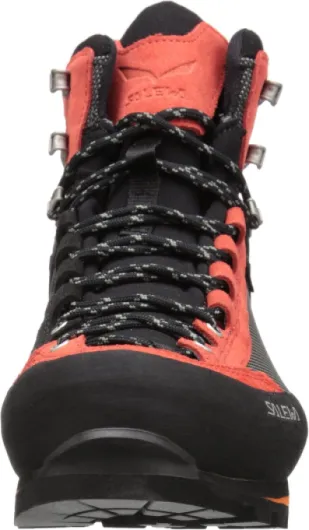
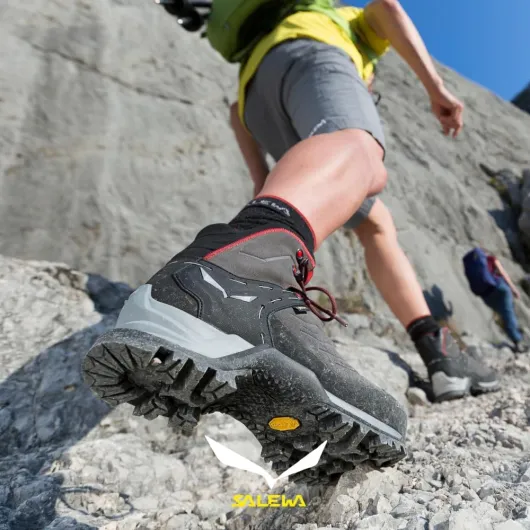
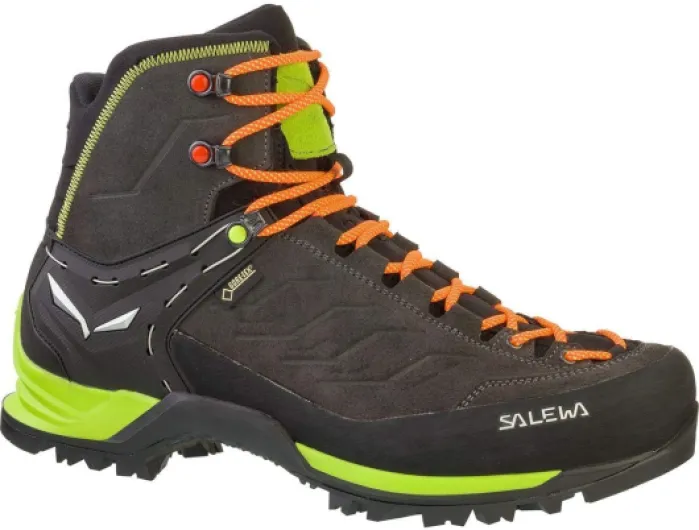
Design-wise, these definitely lean towards the technical mountain boot style rather than a lifestyle look. The Black Sulphur Spring colour is mostly dark, with a few bright accents that make them visible without screaming for attention. The toe has a solid rubber rand that wraps around the front and sides, which I like a lot for rocky ground and kicking steps in soft snow. It also means you’re less worried about scraping them on scree or roots.
The silhouette is quite compact and low-volume for a trekking boot. They don’t look huge and bulky on the foot, more like a slightly beefed-up approach shoe with a higher ankle. Lacing goes far down towards the toes, which is great for adjusting fit – you can tighten the forefoot for scrambling or loosen it a bit for long, flat approaches. The lace hardware is a mix of fabric loops and metal hooks around the ankle, and I never had issues with them bending or feeling cheap.
One design detail I appreciated is the Flex Collar at the back. The cut-out and curved shape actually help when walking downhill; it doesn’t bite into the tendon like some straight, rigid cuffs do. It’s a small thing, but on long descents with a pack, you feel the difference. The boot also has a fairly pronounced heel drop and rocker, so you feel encouraged to roll through the stride rather than stomp flat. Not subtle, but it works.
If you want a boot that can pass as a casual sneaker in town, this isn’t it. They look like what they are: purposeful hiking boots. On the other hand, if you care more about the boot doing its job than matching your jeans, the overall design is pretty solid. Nothing flashy, just practical features that make sense once you’re out on the trail, especially on rougher ground.
Comfort and fit: stiff at first, then pretty friendly
On comfort, I’ll be honest: out of the box they felt stiff, but not painful. I have an average-width foot, slightly narrow heel, and usually wear UK 10 in most brands. In these, my normal size 10 worked fine, but I wouldn’t have minded a half size up for thick winter socks. Toe box is medium – not super wide like some Altra or Keen models, but not tight mountaineering-boot narrow either. After about 20–30 km, they loosened up nicely and started to feel more natural.
The biggest positive for me is the heel hold. That 3F system stuff is not just marketing; my heel stayed locked in with zero lift, even on steep climbs or when side-hilling. That’s a big deal if you hate blisters. I did a 2-hour hilly walk on the first day, fully expecting some rubbing, and got none. The ankle padding is firm but well shaped, so it supports without digging in. The Flex Collar really helps when stepping downhill – I noticed less pressure on the back of the ankle compared to some stiffer boots I own.
Cushioning is on the firmer side. If you like very soft, cushy soles, these might feel a bit harsh, especially the first few outings. Over rocky ground, though, that firmness turns into an advantage because you get good protection and stability. I could stomp over sharp stones without feeling them poke through. On long tarmac sections they’re less pleasant; you feel the stiffness and you might wish for a softer shoe. Inside volume is decent, and with a better aftermarket insole I managed full-day hikes without sore feet.
Breathability is okay but not great – typical Gore-Tex trekking boot. In cool to mild weather (0–15°C) they’re very comfortable. On a warmer day around 20°C, my feet did get a bit warm, but nothing dramatic. For winter with a mid-weight sock, they’re spot on: warm enough without feeling like insulated snow boots. Overall, comfort is good once broken in, but you have to accept the stiffer trekking-boot feel. If you expect trainer-like flexibility, you’ll probably think they’re too rigid.
Materials: suede, Gore-Tex and a tough sole
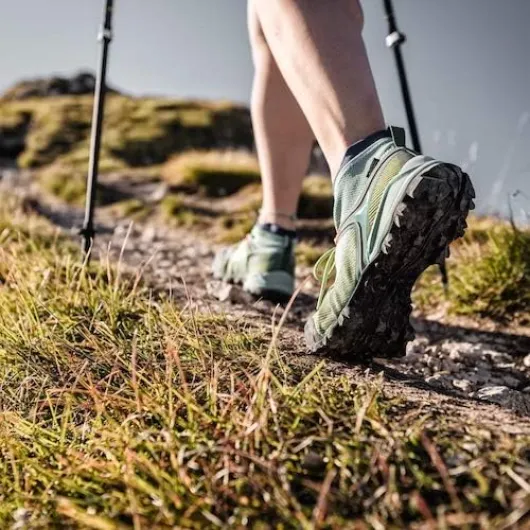
The upper is mostly suede leather with synthetic mesh panels. The suede feels thick enough to take abuse but not like the heavy mountaineering stuff that takes months to break in. The mesh areas help a bit with weight and flexibility, though don’t expect these to feel airy like trail runners. Inside, you’ve got a full Gore-Tex Performance Comfort lining, which basically means reliable waterproofing and moderate breathability aimed at hiking rather than high-output running.
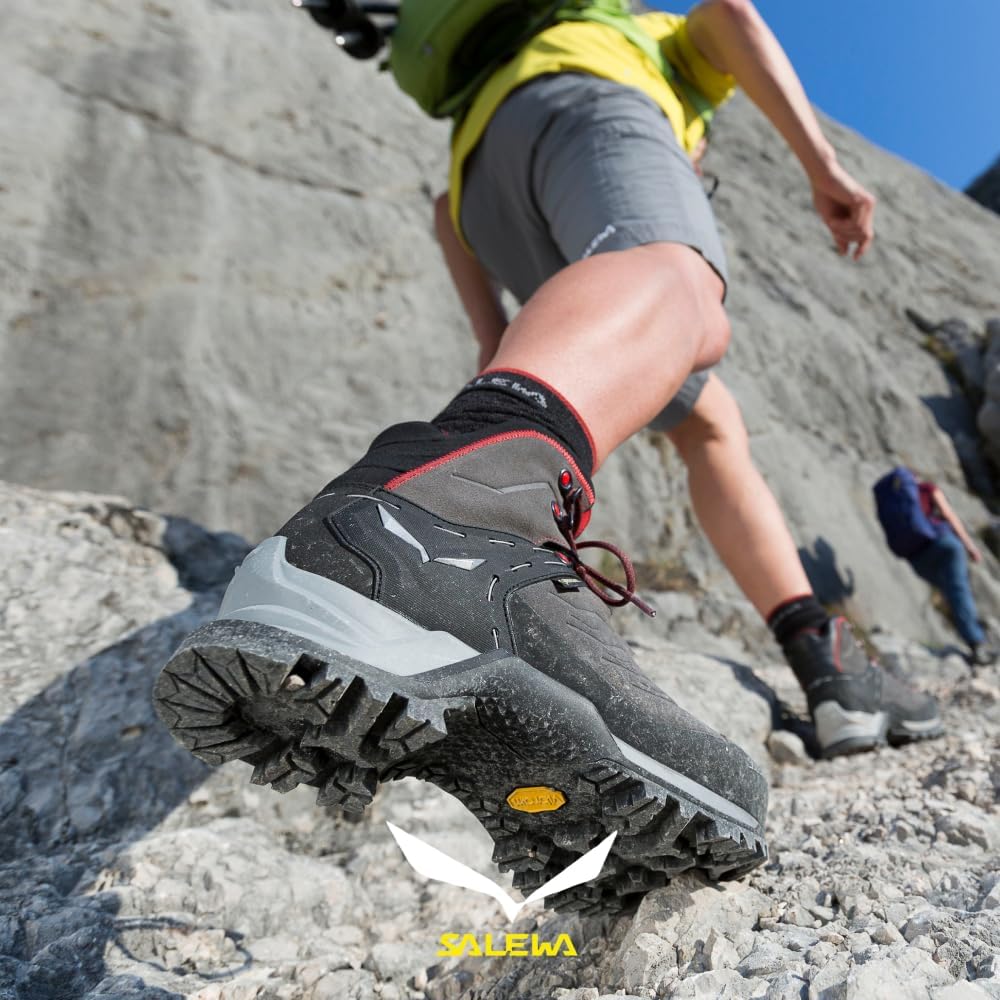
The outsole is Vibram WTC, and the rubber feels relatively firm to the touch. That usually translates into better durability on rock but slightly less grip on smooth, wet pavements compared to softer compounds. The lugs are deep and well spaced, so mud sheds reasonably well. The midsole (Salewa’s Bilight 2-layer) is on the firm side, built more for support and longevity than plush comfort. If you’re used to soft EVA in running shoes, this will feel quite different.
Inside, the insole is a fairly standard mesh-covered foam job. It’s fine, but nothing special. I swapped mine after a couple of weeks for a more supportive insole because I like a bit more arch structure on long days. If you have flat feet or need orthotics, expect to change the insole – the boot has enough volume to accept that. The lining seams are clean; I didn’t find any rough stitching that would obviously cause hot spots.
Overall, the material choice is clearly geared towards durability and weather protection rather than ultra-light minimalism. Compared to some Meindl and Scarpa models I’ve used, the leather is a bit thinner but the mix with synthetics keeps the weight reasonable. If you’re rough on boots – rocks, roots, scrambling, kicking steps – these feel like they can take it. If you mainly walk on forest tracks and tarmac, it may be more boot than you really need, but at least you know you’re not going to destroy them quickly.
Durability: built to take a beating
In terms of durability, these feel reassuring. After a few months of use and roughly 80–100 km on mixed ground, the suede and rubber rand still look solid, with only cosmetic scuffs. The stitching is holding up fine, no loose threads or delamination. The Vibram sole shows some light wear on the heel lugs, which is normal, but nothing that makes me think they’ll be dead anytime soon. Based on how they’re wearing, I’d expect a good few seasons of regular hiking out of them, especially if you rotate with another pair.
The rubber rand around the toe and sides is doing its job. I’ve scraped them on rocks, kicked roots and used them on rough paths, and I’m not seeing chunks peeling off or deep cuts. That extra layer really helps if you tend to destroy the front of your boots quickly. The suede does pick up marks, but that’s just looks, not structural damage. The synthetic mesh panels haven’t torn or frayed, which is usually the weak point on many boots.
Gore-Tex durability is always a bit of a question over the long term, but so far the waterproofing is still solid. No leaks around the flex points yet. Obviously, long-term will depend on how often you soak them and how well you dry and care for them. I’d still recommend cleaning off mud and occasionally treating the suede with a suitable spray to keep the outer material from wetting out too fast.
Overall, these feel more durable than most lightweight fabric boots and just a bit lighter than full-on heavy leather models. If you’re doing regular hikes in rough UK or alpine terrain, I think they hold up well enough to justify the price. If your use is mostly urban and park paths, the durability is almost overkill – you’ll probably get bored of them before they wear out. But from a purely build-quality perspective, they’re pretty solid and inspire confidence.
Performance on the trail: where they shine and where they don’t
On actual trails, these boots feel very secure and predictable. The Vibram WTC sole grips well on dirt, gravel, wet grass and rocky paths. I had them on a muddy hillside and a mix of loose stones, and never felt like the sole was going to slip out from under me. The tread pattern bites nicely when climbing and braking downhill. On smooth, wet pavements they’re okay but not magic – better than some cheap hiking shoes, but still a firm rubber, so you need to pay attention on polished surfaces.
Stability is one of the strong points. The stiff-ish midsole and supportive upper keep your foot from twisting around when carrying a backpack or moving over uneven ground. I noticed less ankle fatigue at the end of a long day compared to softer mid boots. The mid cut and good lacing let you lock the ankle area down without cutting circulation. For light scrambling and rocky steps, they feel trustworthy: good edging, enough precision in the forefoot, and that rubber rand protects the toe nicely when you jam it into rock.
Waterproofing with the Gore-Tex lining has been solid so far. I walked through wet grass, shallow streams and slushy snow, and my feet stayed dry. As usual with Gore-Tex, if water goes over the cuff, you’re done, but that’s not the boot’s fault. Drying time is decent for a lined leather/synthetic mix; not quick like mesh trail runners, but overnight near a radiator (not on it) was enough for me after a wet day.
Where they’re less fun is on long road approaches or very easy flat trails. The stiffness that helps on rocks makes them feel a bit overkill on tarmac, and you’re aware you’re wearing proper boots. For someone mostly doing dog walks on paths and occasional low hills, this might be more boot than needed. For mountain days in Scotland, Wales, the Lakes, or rough alpine-style treks, they hit a good balance between support, grip and protection. So performance is strong in the environment they’re designed for, just not ideal as a casual all-rounder for everyday city use.
What kind of boot this actually is
The Salewa Mountain Trainer Mid GTX is basically a lightweight mountain trekking boot, not a casual hiking sneaker. The mid height gives ankle coverage without going full high-ankle mountaineering, and the whole design is geared towards mixed terrain: rocky paths, muddy trails, some scrambling, and long days with a backpack. It’s clearly built more for function than looks, even if the black and sulphur colour combo is pretty decent in person.
The boot uses a mix of suede leather and abrasion-resistant textile, with a full Gore-Tex lining. That means it’s aimed at people who are out in wet conditions a lot, not just dry summer paths. Underneath you’ve got a Vibram WTC sole, which is a fairly aggressive outsole with proper lugs. The midsole is their “Bilight” 2-layer thing, which in practice just feels like a firm trekking sole with a bit of cushioning, not a bouncy running shoe.
Salewa also pushes their 3F system quite hard in the marketing – that’s basically a structure that links the heel, the sides and the lacing to keep your foot locked in. On top of that there’s a Flex Collar around the ankle, which is cut lower and curved at the back so you can step downhill without the cuff digging into your Achilles. On paper, it’s all about support plus a bit of freedom of movement.
In reality, I’d describe these as boots for people who do proper hillwalking and light alpine-style routes, not just park walks. They feel overbuilt for an easy Sunday stroll but reassuring when you’re on loose rock or sloppy wet grass. If you’re used to trail runners, they will feel like a lot of boot. If you’re coming from heavy leather models, they’ll feel surprisingly manageable and a bit more nimble.
Pros
- Very good heel hold and ankle support, especially on steep or uneven ground
- Strong waterproofing with Gore-Tex and protective rubber rand for rough use
- Firm, stable Vibram sole with good grip on dirt, rock and muddy trails
Cons
- Quite stiff, especially when new, and not ideal for long tarmac or very easy walks
- Can feel a bit warm in higher temperatures due to Gore-Tex and construction
- Price only feels worth it if you regularly hike in rough or mountainous terrain
Conclusion
Editor's rating
Overall, the Salewa Mountain Trainer Mid Gore-Tex is a sturdy, supportive trekking boot that does its best work on proper hills and rough trails. The grip is reliable, the build feels tough, and the heel hold is one of the best parts – very little movement, which means fewer blisters and more confidence on steep ground. Waterproofing has been solid so far, and the mix of suede, rubber rand and Vibram sole gives the impression they’ll last a good while if you look after them.
They’re not perfect though. The sole is quite stiff, especially at the start, so if you’re used to soft, flexible shoes, there’s an adjustment period. On long road sections or very gentle walks, they feel like more boot than you really need. Breathability is decent but not great – fine for UK-type conditions, but they can feel a bit warm in higher temperatures. And the price, while fair for the quality, only really makes sense if you’re going to use them regularly in the terrain they’re built for.
If you’re someone who does regular mountain hikes, weekends in the Lakes, Wales or Scotland, or carries a pack on mixed rocky and muddy trails, these are a strong option and worth the money. If your use is mostly town, parks and easy countryside paths, I’d look for something lighter and cheaper. In short: a pretty solid, no-nonsense mountain boot for people who actually go to the mountains, but a bit overkill for casual strollers.