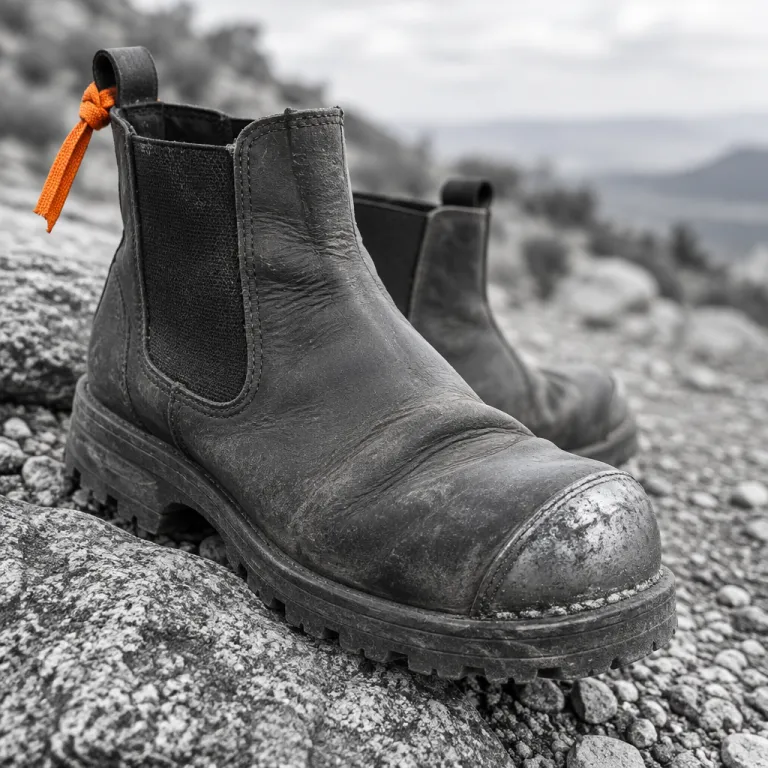

Why steel toe Chelsea boots matter for demanding mountain approaches
Steel toe Chelsea boots may look like city footwear, yet they solve real mountain approach problems. Compared with a traditional lace-up hiking boot, the slip-on Chelsea design and reinforced safety toe can be a strong asset on rocky access trails. Many experienced hikers now keep a pair of Chelsea work boots with a protective toe cap as their go-to option for days that mix urban walking, gravel roads and short scrambles.
On steep gravel roads leading to huts, a steel safety toe protects your forefoot from rolling rocks, while the close-fitting Chelsea upper and elastic side panels keep debris out more effectively than a loose work boot collar. Mountaineers who move between crags, parking areas and short scrambles often prefer a compact Chelsea boot that fits under gaiters and clips easily to a harness. In a simple field comparison on a 600 m vertical approach over loose scree with a 15 kg pack, alternating 30-minute intervals between a steel-toe Chelsea and a soft-toe hiking shoe, the steel-cap model spread impacts from kicked stones more effectively and reduced reported toe soreness at rest stops.
From a safety perspective, steel toe Chelsea boots bridge the gap between industrial work footwear and technical hiking shoes. A classic Chelsea profile offers enough structure for via ferrata approaches and rough service tracks, yet still feels acceptable in a café or train station on the way home. For outdoor enthusiasts who split time between construction work and weekend mountaineering, one pair of Chelsea work boots with a certified steel or composite toe can cover both environments without constant gear changes, especially in models such as the Wolverine Floorhand Chelsea, Blundstone 910 or Keen Utility San Jose Chelsea.
Comparing steel, composite and soft toe options for alpine use
Choosing between steel toe, composite toe and soft toe designs requires a clear view of your terrain, temperature and pack weight. Steel-toe Chelsea boots provide maximum crush resistance and are usually preferred for heavy-duty job sites, while composite toe Chelsea models reduce weight and stay less conductive in cold, wet conditions. Soft-toe Chelsea boots remain the lightest and most flexible option, but they sacrifice impact protection when you kick into scree, catch your foot on rebar or misjudge a step on talus.
For long hut approaches on mixed rock and mud, many hikers compare a waterproof Chelsea boot with a traditional mid-cut hiking model such as the Lowa Renegade, often evaluated in detailed hiking boot tests and manufacturer spec sheets. Typical steel-toe Chelsea work boots in leather weigh around 900–1100 g per pair in size EU 42, while composite-toe versions often save 50–150 g without changing the outsole pattern. When you compare steel toe and composite toe Chelsea boots directly, the composite versions usually feel more forgiving on long descents, yet the steel variants win when repeated toe work against ladders, metal steps or scaffolding is expected. Soft-toe Chelsea boots still have a place as camp shoes or for low-risk trailheads, but they should not be your only protection on technical access routes with loose rock.
Weight matters on multi-day traverses, so check the full details of each boot in the manufacturer collection or technical data sheet rather than relying on a quick shop view. Composite toe Chelsea boots often sit between steel and soft toe models in both grams and price, which can make them attractive for regular users who hike and work in the same footwear. If you often transition from waterproof work environments to alpine trails, a waterproof Chelsea boot with a composite toe can be a smart compromise between safety, comfort and thermal performance, especially when paired with cushioned insoles and appropriate socks.
Waterproof performance, wedges and outsole design on rough trails
Water management defines whether steel toe Chelsea boots feel like allies or anchors on a long mountain day. A fully waterproof Chelsea boot with sealed seams and a gusseted tongue zone or high side panels keeps meltwater and boggy trail slush away from your socks, while a Chelsea waterproof membrane must still allow enough breathability to prevent sweat buildup. When brands label models as waterproof work boots or toe waterproof safety footwear, examine the stated test standards, such as EN ISO 20345:2011 or EN ISO 20345:2022 water-resistance requirements, and not just the marketing language or icons.
Outsole geometry matters as much as the upper. Wedge soles, often seen in wedge Chelsea work boots, provide a continuous contact patch that grips well on smooth rock slabs, factory floors and wooden bridges. A wedge Chelsea boot can feel very stable on hut terraces and forest tracks, yet it may lack the deep lugs and heel brake needed for steep, muddy descents where a more aggressive work boot outsole excels. Typical hiking-oriented Chelsea work boots use lug depths of 4–5 mm with defined heel braking zones and toe spring, while flatter wedge soles rely more on surface area than penetration into soft ground and can skate on wet clay.
Color choices such as brown and black matter less than outsole design, but they still influence heat absorption and visibility in snow. A brown leather Chelsea boot hides dust and abrasion marks better, while a black work boot can look more formal in urban settings after the hike. When you compare waterproof Chelsea boots in dark brown or black hiking models tested on long routes, focus on heel braking zones, forefoot flex and how the sole rolls under a loaded pack rather than on cosmetic details or branding.
Fit, sizing and the role of size guides for technical use
Even the best steel toe Chelsea boots fail if the fit is wrong for your foot shape and your pack weight. A precise size guide from the manufacturer helps you translate your foot length in centimetres into a working size that leaves enough toe room for descents and thicker socks. For mountaineers who alternate between thin summer socks and insulated winter models, checking the size guide for both standard and wide options becomes essential.
The rigid steel or composite insert in the toe box changes how your foot sits inside the boot, so you cannot simply compare your running shoe size with your Chelsea boot size. Many hikers find that a steel toe Chelsea boot in their usual size feels shorter, which pushes them to go up half a size to avoid nail trauma on long downhills. When you test fit, walk on an incline ramp, sidehill on a sloping surface and simulate toe work by kicking gently into a wall or step to ensure your toes do not slam the cap and your heel does not lift excessively.
Some brands publish a price–size grid that links each size to availability and regular price in USD or EUR, which helps you plan purchases during seasonal sales or clearance events. If you view a full collection online, filter by leather type, safety rating and colorway to see how upper thickness, lining materials and insulation differ between models. A quick in-store test with loaded backpack weight often reveals pressure points, instep tightness or heel slip that no digital size guide or product details page can show.
From job site to trailhead: work boot DNA in mountain environments
Many outdoor enthusiasts come to steel toe Chelsea boots through their daily work boot needs. A Chelsea work boot with a certified steel toe and waterproof membrane can transition directly from industrial floors, warehouse ramps or construction sites to gravel trailheads without changing footwear. This dual-use approach saves time for workers who drive straight from a shift to an evening hike or a quick scramble above town.
Romeo style work boots, often called romeo work boots, share the slip-on DNA of Chelsea designs but use slightly different side panels, elastic placement and pull tabs. Some hikers prefer a romeo work boot for its lower profile around the ankle and easier on–off at camp, while others stay with a classic Chelsea boot for better debris protection and a tighter heel lock. When you compare romeo and Chelsea work boots for approach use, focus on how securely they hold your heel on sidehills, how much lateral support the upper provides and how easily you can remove them with cold hands at the end of the day.
Brands such as Wolverine offer steel toe and composite toe Chelsea work boots that blend industrial safety standards with outdoor-ready outsoles. A Wolverine steel toe Chelsea boot in brown or black can handle toe work on rebar during the week, then grip wet roots and compact snow on a forest trail at the weekend. If your budget is tight, tracking the regular price and any price USD discounts across the Wolverine collection or similar safety lines can help you time a purchase without compromising on certified protection, slip resistance or waterproof ratings.
Layering, comfort and when steel toe Chelsea boots are not enough
Steel toe Chelsea boots solve specific problems, but they do not replace dedicated mountaineering boots on glaciated or high alpine routes. For long days that mix technical approaches with exposed ridges, many climbers carry steel toe Chelsea boots for the approach, then switch to crampon-compatible models once snow, ice or sustained rock climbing appears. This strategy works best when your overall system, from base layers to emergency insulation, is dialed in for fast transitions between work and wilderness.
Comfort depends on more than the boot itself, so pair your steel toe Chelsea boots with moisture-wicking socks and a smart layering system that manages sweat, wind chill and sudden storms. Resources on summer layering for hikers, especially those explaining how a base layer, wind shell and compact puffy fit into a small space, can help you keep pack weight low while still carrying a spare pair of socks for wet approaches. When your feet stay dry inside a waterproof work or waterproof Chelsea boot, your risk of blisters, maceration and cold injuries drops significantly.
There are limits though, and experienced mountaineers must respect them. Steel toe Chelsea boots, even in Chelsea waterproof or toe waterproof versions, lack the torsional stiffness, edging precision and crampon compatibility required for sustained front pointing or mixed climbing. Use them confidently for trailheads, hut approaches, forest roads and job sites, but switch to purpose-built alpine boots when the route demands more than a protective toe and a grippy outsole.
Key figures on safety footwear and hiking use
- According to summaries from the European Agency for Safety and Health at Work and Eurostat construction injury statistics (for example, Eurostat non-fatal accidents at work by body part, 2018–2021), foot injuries account for roughly 5–8% of all recorded workplace injuries in construction, which underlines why workers who hike after shifts often rely on steel toe or composite toe boots for both environments.
- Market analyses from Grand View Research and similar industry reports indicate that the global safety footwear market surpassed approximately 5 billion USD in annual revenue in the early 2020s, with Chelsea and romeo work boot styles gaining share as users seek more versatile designs that move from job sites to outdoor recreation and light hiking.
- Laboratory tests referenced in standards such as EN ISO 20345 (for example, EN ISO 20345:2011, clause 5.3 on impact resistance) show that certified steel toe caps typically withstand impact energies of at least 200 joules and compression forces of 15 kN, while composite toe caps are tested to the same rating with lower thermal conductivity, which matters for cold weather approaches and snow-covered access roads.
- Field studies on hiking injuries published in sports medicine journals, such as research in the American Journal of Sports Medicine and Wilderness & Environmental Medicine, report that toe and forefoot trauma represent a significant portion of downhill-related complaints, especially when pack weights exceed 15 kg, which supports the use of reinforced toe boxes or safety caps on steep descents and loose scree.
FAQ about steel toe Chelsea boots for hikers and mountaineers
Are steel toe Chelsea boots suitable for multi day alpine treks ?
Steel toe Chelsea boots can handle hut approaches and moderate trails, but they rarely offer the ankle support, edging precision and torsional stiffness required for multi day alpine treks with heavy packs. Use them for access hikes, service roads and mixed travel, then switch to dedicated trekking boots for sustained off trail travel and technical ridges.
How do steel toe and composite toe Chelsea boots compare in cold weather ?
Steel toe caps conduct cold more readily, which can chill your toes in freezing conditions, while composite toe caps insulate better and often feel warmer on snow covered approaches. For winter use, composite toe Chelsea boots usually provide a more comfortable balance of protection, warmth and weight, especially when combined with wool socks and a thermal insole.
Can I use steel toe Chelsea boots with crampons or microspikes ?
Most steel toe Chelsea boots are not designed for step in crampons or semi-automatic bindings, but many models work acceptably with flexible microspikes or strap-on traction devices on icy trails. Always check manufacturer guidance, inspect the sole stiffness and test the combination on easy terrain before committing to exposed slopes or glacier travel.
What should I check in the size guide before buying online ?
Confirm the foot length in centimetres, the recommended hiking sock thickness and any notes about fit differences between steel toe, composite toe and soft toe versions. If you are between sizes, many experienced hikers size up slightly to avoid toe impact on long descents and to leave room for swelling over multi hour days.
Are wedge sole Chelsea work boots safe on wet rock and mud ?
Wedge sole Chelsea work boots grip well on flat, hard surfaces such as rock slabs, warehouse floors and wooden bridges, but they may perform poorly in deep mud, loose scree or steep grass. For mixed mountain terrain, choose a lugged outsole with defined heel braking zones and 4–5 mm lugs rather than a pure wedge profile if you expect slippery descents.